Entertainment

More people are coming out as Almondsexual – here’s what it means!

It can be difficult to keep up with trends in the ever-changing world we live in today. Just when you think you’ve got a grip on things, something else comes along to reinforce that feeling that you’re getting old before your time.

This can ring especially true as it relates to sexual identity and orientation, with new terms being developed regularly as people look for ways to accurately describe their experiences of attraction.

We’ve already written about individuals who are ‘Abrosexual‘ and ‘Graysexual‘ in the past, but we’ve never touched upon ‘Almondsexuality’. Sound weird? Well, it’s apparently a new microlabel used to help people better define what they’re attracted to.

According to Wikipedia, almondsexuality refers to experiencing primary attraction to male-aligned and androgynous-aligned genders, with occasional or minor attraction to female-aligned genders.

The orientation comes under the broader multisexual umbrella, which also includes potentially more familiar identities such as bisexuality and pansexuality.

So, what makes almondsexuality stand out among the more widely-known orientations? As Fandom explains, it has to do with the pattern and intensity of attraction.

Almondsexual individuals reportedly experience a distinct preference structure: consistent attraction to masculine and neutral presentations, with less frequent or less intense attraction to feminine presentations.

Some individuals might choose to identify as bisexual or pansexual, others find that almondsexual better captures experience of attraction.

If you’ve never heard the term almondsexual then the chances are you’re not the only one. The term has only been in the general sphere since 2023, when it was coined by a Tumblr user known as genderstarbucks.

Berrisexual, meanwhile, is the inverse, used to define a primary attraction to feminine and androgynous genders.

Had you ever heard the term almondsexual? Let us know in the comments.

My Daughter-in-Law Treats Me Like Her Personal Maid, So This Christmas, I Decided to Teach Her a Lesson She Will Never Forget

The transition into widowhood is often described as a series of quiet subtractions. After my husband, Ron, passed away, the silence of our home became a physical weight, pressing into every corner of the house we had shared for forty years. Every floorboard creak echoed with a loneliness I wasn’t prepared for, and Ron’s empty armchair served as a constant, painful reminder of the life that had been severed. Within a month, I realized that living alone in that cavernous space was a form of slow erosion. I called my son, Connor, and his immediate, unhesitating invitation to move in felt like a lifeline. I rented out my old house—a symbolic closing of one chapter—and moved into their guest room, determined to be a contributing member of their household rather than a burden.

Initially, the arrangement was a study in domestic harmony. Connor and his wife, Eve, were exceptionally attentive. Eve, in particular, was the personification of kindness, ensuring I was comfortable and insisting I rest. She would bring me tea and handle the cooking, telling me I had “been through enough.” It was a period of healing, where I felt truly seen and wrapped in the warmth of family. However, as the weeks turned into months, the social contract of our household began to undergo a subtle, almost imperceptible shift.

The transition from “honored guest” to “unpaid domestic” didn’t happen overnight; it was a slow creep of small requests. It began with the dishwasher, then the laundry, and eventually, the cleaning of the entire house. Slowly, Eve’s “requests” morphed into “assignments.” I found myself cooking every meal, scrubbing bathrooms, and organizing their hectic schedules. The kindness that had characterized our early days had been replaced by a quiet entitlement. I realized I was no longer being cared for; I was being utilized. The grief I was carrying hadn’t disappeared, but it was being buried under the daily labor of maintaining a household that wasn’t mine.

The breaking point arrived a few days before Christmas. While I was folding a mountain of towels, Eve casually called out from the couch, where she was watching a movie, and instructed me to handle the groceries and preparation for a Christmas dinner for nine people. There was no consultation, no collaborative planning—just a task list for a holiday marathon. Something inside me tightened. I had spent my life as a mother and a wife, but I had never been anyone’s servant. I didn’t want to ignite a family feud during the holidays, but I knew that if I continued to stay silent, I would lose the last vestiges of my identity as Lucy.

I decided that rather than engaging in a verbal confrontation, I would let my competence speak for me. If I was going to host a dinner for nine, I would do it with the legendary precision and flair that had made my holiday gatherings famous for decades. On Christmas Eve, I rose before the sun, transforming the kitchen into a theater of culinary excellence. I prepared a roast turkey with fresh herbs, garlic-roasted mashed potatoes, and my signature pecan pie. By the time the guests arrived, the house was a sensory masterpiece of rosemary and cinnamon.

The dinner was a profound success. As the guests marveled at the feast, the realization of what had occurred began to settle over the table. When Connor’s friends asked if I had done it all myself, my simple “I did” was not just a statement of fact—it was a reclamation of my status. Eve’s polite smile faltered as she realized she hadn’t contributed a single spoon to the effort. The contrast between her leisure and my labor was finally, undeniably visible.

After the guests departed and the house fell into a post-holiday hush, Eve approached me. To her credit, the lesson had been received. She admitted that she had let me carry too much and apologized for treating me like an extension of the house’s utility rather than a person. My response was firm but gentle: “I don’t mind helping, but I’m not twenty-five anymore. I need partnership, not assignments.” It was a boundary set not with anger, but with the grace of a woman who knows her worth.

Since that Christmas in 2026, the dynamic of our home has fundamentally shifted. We operate as a team now, sharing the labor and checking in on one another’s well-being. I am no longer the “live-in help”; I am family. The silence I feared after Ron’s death has been replaced by the healthy, vibrant noise of a household where everyone is seen. I learned that even in the later stages of life, it is never too late to teach people how to treat you. Boundaries don’t have to be walls; they can be the very things that make a shared life possible.

The experience of moving in with adult children is a complex emotional landscape, particularly for widows navigating the transition from a shared life to a solitary one. Studies on intergenerational living suggest that “role ambiguity” is the leading cause of friction in such arrangements. When roles are not clearly defined, the elder family member often falls into a domestic trap, assuming traditional labor roles to “earn” their place. By setting a boundary through action, I bypassed the resentment that usually poisons these living situations.

Today, I feel lighter. I came to this house grieving and unsure of my place in the world, but I found it by refusing to be invisible. I am Lucy—a mother, a mother-in-law, and a woman who still has much to contribute, but on her own terms. My story is a reminder that we are the authors of our own narratives, and sometimes, the most powerful thing you can do is remind the world who you are without saying a single word.

When I Was Reading My Father’s Eulogy, My Stepmother Sold His Favorite Car – She Turned Pale After Discovering What Was Hidden Under the Spare Tire

I still remember the cold weight of the coffee mug in my hands that morning. It had long since gone cold, but I kept holding it anyway, as if the familiar shape might steady me. The kitchen felt strangely hollow without my father’s quiet presence somewhere in the house. For a moment, I scrolled through the photos on my phone, stopping on one of him laughing with his arm slung around my shoulders. Behind us sat the Shelby he had spent decades restoring, its polished body shining in the afternoon sun.

My stepmother, Karen, wasn’t in any of those pictures.

A sudden car horn jolted me from the memory. My phone lit up with Karen’s name. Her voice sounded strained, almost fragile.

“Hazel… I can’t come today. I just can’t do it.”

“It’s Dad’s funeral,” I said quietly. “I can pick you up if you need.”

“I know,” she whispered. “But the doctor said stress could make things worse. Can you just… handle everything?”

I swallowed hard. “Yeah. I’ll handle it.”

Later that morning, I pulled into the church parking lot driving Dad’s Shelby. My own car had broken down earlier in the week, so I had been using his. Sitting behind that wheel felt strange—like both an honor and something I hadn’t quite earned.

Aunt Lucy hurried toward me as I stepped out.

“Oh, Hazel,” she said, glancing at the car. “Your father would have loved seeing it here today.”

“I figured it deserved to be here,” I replied with a faint smile.

Inside the church, sunlight filtered through stained glass, scattering colors across the wooden pews. For a moment I caught myself expecting Dad to walk in late with some casual excuse about traffic.

The service passed in a blur. When it was my turn to speak, I focused on the things I knew mattered to him.

“Dad believed you don’t give up on the things you love,” I said, my voice trembling slightly. “He spent thirty years rebuilding his father’s Shelby, one bolt at a time. But more importantly, he treated people the same way. He stuck by them, even when it wasn’t easy.”

When the service ended, I lingered near the door while Aunt Lucy stepped back inside to grab her purse.

Outside, the sunlight was blindingly bright.

And the Shelby was gone.

For a moment my brain refused to process what I was seeing. A battered flatbed truck idled where the car had been parked, its ramps still lowered. Karen stood nearby holding a white envelope while a man with a clipboard spoke with her.

I hurried toward them.

“Karen, what’s going on?”

She barely looked at me. “Hazel, it’s just a car. I sold it. The buyer wanted it today, and frankly, so did I.”

My stomach dropped. “You sold Dad’s car? Today? Before he’s even buried?”

“Two thousand dollars,” she said briskly. “Cash.”

Two thousand dollars for the thing my father had spent half his life rebuilding.

“You knew how much that car meant to him,” I said. “To both of us.”

Karen’s expression hardened. “It’s metal, Hazel. We’ll survive.”

Aunt Lucy arrived just in time to hear that.

“Selling his legacy in a church parking lot,” she said sharply, “isn’t grief, Karen. It’s disgrace.”

The flatbed truck pulled away moments later, carrying the Shelby down the road. I watched until the taillights disappeared around the corner, fighting the urge to scream.

All week I had told myself that once the funeral was over, things might settle down.

Instead, the last piece of my father seemed to be vanishing in front of me.

I sat on the curb while Aunt Lucy hovered beside me. Karen drifted toward the cemetery gate, staring at the fresh flowers around Dad’s grave. For a moment she looked smaller somehow, less certain.

Before any of us could say another word, a silver sedan pulled into the lot.

A young mechanic stepped out, holding a sealed plastic bag.

“Are you Hazel?” he asked nervously. “The buyer wanted a quick inspection before finalizing paperwork. We found this in the Shelby. My boss said you should see it.”

Karen moved fast and grabbed the bag, but when she opened it, the color drained from her face.

Inside was a thick envelope.

Receipts slid out first. One of them showed a payment of fifteen thousand dollars to a cruise line.

Karen stared at the receipt in disbelief. “He… he bought us a cruise,” she whispered. “For our anniversary.”

Aunt Lucy gestured toward the folded letter inside.

“Read it.”

Karen’s hands shook so badly she passed it to me.

The handwriting was unmistakably my father’s.

“Karen,

If you’re reading this, it means you finally sold the Shelby. I always knew that car frustrated you. But it was the last thing I had from my father.

I know I wasn’t easy after Megan died. Even though we had divorced years before, she was still Hazel’s mother, and losing her broke something in me.

I bought the cruise because I hoped we could find our way back to each other.

I wasn’t trying to hold onto the past. I was trying to hold onto us.

—Thomas.”

Silence settled over the parking lot.

Karen collapsed onto the curb beside me, covering her face as she cried. The mechanic stood awkwardly nearby until he cleared his throat.

“My boss says we can undo the sale if you want,” he said carefully. “Nothing’s official yet.”

Karen pushed the envelope toward me.

“I can’t take it,” she said hoarsely. “Take the money, the cruise… whatever you want. I can’t even look at it.”

Aunt Lucy folded her arms.

“No,” she said firmly. “This goes through the estate. Lawyers will handle it.”

Karen didn’t argue.

As I gathered the papers, a small photograph slipped from the envelope. It showed Dad and me standing in the garage years ago, both of us laughing with grease smudged across our faces.

On the back he had written a message.

“We don’t quit on things we love.”

Behind the photo was one final note addressed to me.

“Hazel,

If you’re reading this, remember something. Don’t let bitterness shrink you. Stand tall. Love people even when it’s hard.

Everything I leave behind belongs to you and Karen both.

You were always the reason I kept trying.

—Dad.”

Those words hit harder than the funeral ever had.

The Shelby wasn’t gone forever—just temporarily out of reach. The mechanic had already begun making calls to halt the sale.

As the sun dipped behind the church roof, Aunt Lucy placed a steady hand on my shoulder.

“Come on,” she said softly. “Let’s go home.”

I followed her across the parking lot. Grief still pressed heavily against my chest, but something steadier had begun to settle underneath it.

Not forgiveness.

Something stronger.

Control.

With heavy hearts, we announce the passing of this beloved actress at 65!

Actress Jennifer Runyon, known for her appearances in the iconic film Ghostbusters and the television sitcom Charles in Charge, has died at the age of 65.

Her family confirmed that the beloved performer passed away on March 6 after battling cancer for several months. According to reports, she had been fighting the illness for roughly six months before her passing. She died peacefully while surrounded by loved ones.

In a heartfelt message shared on social media and reported by ABC7 Los Angeles, her family expressed gratitude for the time they had with her and the love she shared throughout her life.

“This past Friday night our beloved Jennifer passed away. It was a long and arduous journey that ended with her surrounded by her family. We are so grateful for the time we had with her and for the love and support she shared with so many people throughout her life. She will always be remembered for her love of life and the deep devotion she had to her family and friends.”

A familiar face of the 1980s
Born on April 1, 1960, in Chicago, Illinois, Runyon rose to prominence during the 1980s, becoming a recognizable face in both film and television.

Many fans remember her from the opening scene of Ghostbusters, the blockbuster supernatural comedy that became a defining movie of the decade. Although her appearance in the film was brief, it became one of the memorable moments that introduced audiences to the story.

She also gained attention on television through her role as Gwendolyn Pierce on Charles in Charge, a popular sitcom that aired in the 1980s and followed the life of a college student working as a live-in babysitter for a family.

Television appearances and career highlights
Beyond those well-known roles, Runyon appeared in several successful television series during her acting career. Among them were the time-travel drama Quantum Leap, the mystery series Murder, She Wrote, and the action drama Magnum, P.I..

Her work across these shows helped establish her as a familiar supporting actress of the era, frequently appearing in guest roles that contributed to the storytelling of many well-known programs.

Later in life, Runyon gradually stepped away from acting, choosing to devote more time to her family and personal pursuits.

Family and legacy
Jennifer Runyon is survived by her husband, Todd Corman, as well as their two children, Wyatt and Bayley.

Friends, fans, and former colleagues have remembered her not only for her roles on screen but also for her warmth and dedication to those closest to her.

For many viewers who grew up watching television and films in the 1980s, her performances remain part of the era’s cultural memory.

As tributes continue to appear online, many fans are reflecting on the moments she helped bring to life on screen and the impact she left behind.

Jennifer Runyon’s passing marks the loss of another familiar face from a memorable period in entertainment history. She will be remembered by those who watched her work and by the family and friends who shared her life.

Melania Trump warned people behind leaked Barron photo would face “immediate consequences”

Melania Trump is reportedly taking a firm stance after a private photo of her son, Barron Trump, was leaked during a family gathering at Mar-a-Lago.

According to sources cited by journalist Rob Shuter, the incident occurred around Christmas while the Trump family was at the Palm Beach estate. Barron was reportedly walking with his father, Donald Trump, through the club’s dining area when someone captured a photo of the moment.

The image was later shared publicly, which reportedly upset Melania Trump, who has long been known for carefully guarding her son’s privacy.

A long-standing focus on privacy

Throughout Donald Trump’s political career, Barron Trump has largely remained out of the spotlight compared to other members of the family. Melania Trump has repeatedly emphasized her desire to allow her son to grow up with as much normalcy as possible despite the intense attention surrounding their family.

Sources say that protecting Barron’s personal space continues to be a top priority for her.

One source quoted by Radar Online claimed that Melania made her position clear following the leaked image.

“Melania made it very clear that Barron’s privacy is non-negotiable,” the source said. “Anyone caught filming or taking pictures would face immediate consequences, including potential banning from the club.”

Monitoring access and preventing further leaks

Another source previously told People that Melania keeps a close watch on Barron’s environment to ensure he is not harassed or photographed without permission.

“Melania watches Barron constantly in an effort to be sure nobody messes with him or bullies him,” the source said. “She always knows where he is and what he’s doing.”

According to reports, staff members at Mar-a-Lago quickly responded to the situation once the photo began circulating. Efforts were reportedly made to reinforce rules about photography in certain areas of the club and to remind visitors that private family moments should remain off-limits.

As one source described it, the message was straightforward: private moments involving family members should not be recorded or shared without consent.

Balancing public life and personal boundaries
Barron Trump has grown up during an unusually public chapter of American politics. While many political families live under intense media scrutiny, Melania Trump has consistently attempted to keep her son’s life more private than most.

Supporters say her approach reflects a desire to protect him from unnecessary attention during his formative years. Critics and observers, meanwhile, note that balancing privacy with public curiosity has long been a challenge for families connected to high-profile political figures.

Regardless of the differing views, the recent incident appears to have reinforced Melania Trump’s determination to maintain firm boundaries when it comes to her son’s personal life.

For now, sources suggest the family hopes the situation serves as a reminder that even within highly visible public circles, certain moments remain strictly private.

Miraculous Cafe Encounter Reveals Truth About My Missing Twin Sister

I was five years old when my twin sister, Ella, disappeared into the forest behind our childhood home. I remember that day mostly through fragments. I had a fever and was kept in bed while she played outside with her favorite red ball. I could hear the steady rhythm of it bouncing against the wall outside my window. Then, without warning, the sound stopped.

Soon after, voices rose in alarm. Rain began to fall. Neighbors and police searched the woods for days, then weeks. Eventually they found only her abandoned toy. My parents told me that Ella had been found and that she was gone. After that, her belongings were quietly packed away, and her name was rarely spoken again.

Our house became a place where certain memories lived only in silence.

I grew up carrying a quiet sense that part of my life had been sealed away before I could understand it. My parents never spoke about that day again. When I was older, I tried asking questions, but the answers never came. Even the police records from that time were difficult to access.

Life moved forward, as it does. I married, raised children, and watched my family grow. Yet somewhere inside, there was always the feeling that a chapter of my story had been missing. Sometimes I would look at my reflection and wonder whether Ella might have looked the same if she had grown older beside me.

For many years, that question simply remained unanswered

Then, during a routine visit to see my granddaughter in another state, something unexpected happened.

I was standing in line at a busy café when I heard a voice nearby that carried a strangely familiar tone—almost like my own voice echoed back to me. When I looked up, I saw a woman at the counter whose posture, height, and facial features were strikingly similar to mine.

Without thinking, I called out, “Ella?”

The woman turned, surprised. Her name, she explained gently, was Margaret.

We sat together and began to talk. Piece by piece, a different story emerged. Margaret had been adopted as a child and had always known little about her biological family. She was five years older than me, which meant she could not be my twin.

The conversation stayed with me long after we parted. When I returned home, I began carefully sorting through old family papers. Hidden among them was a document I had never seen before—an adoption record—and a letter written by my mother.

In that letter, she explained that before she married my father, she had been pressured to give up her first child because of family expectations and social stigma. It was a decision that weighed heavily on her for the rest of her life.

A DNA test eventually confirmed what we had begun to suspect: Margaret and I are biological sisters.

Learning this truth did not change the past, and it did not bring Ella back. But it revealed a deeper part of my family’s story—one shaped by loss, difficult choices, and the silence that often surrounds them.

Today, Margaret and I are slowly getting to know one another. We share photographs of our grandchildren, compare small habits and expressions we both carry, and sometimes marvel at the similarities that remained hidden for so long.

For many years, I believed that the forest behind our childhood home held all the unanswered questions of my life. Now I understand that some answers take decades to surface, and when they do, they often arrive quietly.

While one part of my story will always remain tender, another part has opened. And in this later chapter of life, I have gained something I never expected—a sister I can finally know.

This guy dies and his wife gets him cremated!

The story of Fred and Linda was one that their small circle of friends often described as a masterclass in affectionate bickering. For thirty-five years, they had lived in a state of constant, low-stakes negotiation. Fred was a man of practicalities and modest comforts—a man who believed that a coat was meant for warmth, a car was meant for transport, and a bank account was meant for a rainy day that he was certain would eventually arrive. Linda, on the other hand, was a woman who believed that the rainy day was already here and that the best way to handle it was with a designer umbrella and a pair of high-end boots. Their marriage was a long, winding road of unfulfilled promises and playful “somedays” that became the very fabric of their relationship.

When Fred passed away unexpectedly, the silence he left behind was deafening. The house, once filled with the rhythmic sounds of his evening news and the soft clinking of his tools in the garage, suddenly felt cavernous. Linda, however, was not the type of woman to be swallowed by shadows. While her heartbreak was profound and genuine, she possessed a resilient streak of pragmatism—and a wicked sense of humor that Fred had both adored and feared in equal measure. After a dignified service and the cremation Fred had requested, Linda found herself back in their quiet home, clutching a decorative urn that now held the earthly remains of her sparring partner.

A few weeks after the funeral, the initial fog of grief began to lift, replaced by a mischievous clarity. One rainy Tuesday evening, Linda decided it was time for a long-overdue conversation. She poured a generous glass of a vintage Cabernet—the kind Fred always complained was “too pricey for fermented grapes”—and lit a single, elegant candle on the mahogany dining table. With a steady hand, she placed the urn in the center of the table, directly across from her usual seat. The candlelight flickered against the polished surface of the vessel, and for a moment, Linda could almost see Fred’s skeptical eyebrows rising in anticipation of whatever she was about to say.

“Well, Fred,” she began, her voice steady and laced with a hint of a smirk. “We’re finally having that talk. No interruptions this time. No ‘let’s wait until next quarter,’ and certainly no ‘do you really need that, Linda?’” She took a slow sip of her wine, savoring the richness. “I’ve been busy lately. You’d be impressed by my productivity, though perhaps less so by my accounting.”

She leaned back in her chair, the silk of her new sleeves catching the light. “Remember that full-length mink coat? The one I pointed out in the window every winter for a decade? The one you said was ‘extravagant’ and ‘unnecessary for a woman who spends most of her time in a heated car’? Well, Fred, I went down to the boutique last Thursday. I used a portion of that very generous life insurance policy you were so diligent about maintaining. It fits like a dream, and honestly, the way it feels against my skin is almost as good as your hugs. Almost. You’d have hated the price tag, dear, but I look absolutely magnificent in it. I think even you would have had to admit that.”

Linda paused, watching the smoke from the candle drift toward the ceiling. The house felt less empty now; it felt as if the air was charged with their old, familiar energy. “And then there’s the matter of the driveway,” she continued, her eyes sparkling. “The sensible silver sedan is gone, Fred. I traded it in. I know, I know—it had low mileage and excellent safety ratings. But I’ve replaced it with something a bit more… me. A cherry-red convertible. It’s got tan leather seats and a sound system that could wake the neighbors three streets over. I’ve taken to calling her ‘Freddie.’ Every time I put the top down and feel the wind in my hair, I think of how much you’d be complaining about the aerodynamics and the potential for a sunburn. It’s a wonderful tribute to your cautious nature, don’t you think?”

The room remained silent, but Linda could practically hear Fred’s phantom voice muttering about “depreciating assets” and “impulse control.” She laughed softly, a sound that felt like the first real breath she had taken since the hospital. It wasn’t that she didn’t miss him; it was that she knew him so well that she didn’t need him to be physically present to continue their lifelong dialogue. Their love had always been expressed through these playful power struggles, and she wasn’t about to let a little thing like mortality end the tradition.

She leaned in closer to the urn, her voice dropping to a conspiratorial whisper, the kind she used to use when she was about to tell him a secret she knew would make him blush. “Now, Fred, there’s one more thing. We need to settle the score on the final frontier. You remember that… specific favor? The one I promised you for our last anniversary? The one I kept putting off because I said I had a headache or because the late-night talk show was particularly interesting that night?”

She reached out and gently tilted the urn toward her, her expression one of mock-seduction mixed with pure, unadulterated mischief. “Well, Fred, I’m a woman of my word. I told you that one day, I’d finally get around to it. And since you’re currently in a state where you can’t exactly argue or complain about the timing…” She paused for dramatic effect, a playful glint in her eyes. “Well, here it comes!”

Linda let out a peal of laughter that echoed through the dining room, nearly tipping over her wine glass. She shook the urn slightly, a gentle, rhythmic motion that was the ultimate punchline to their decades-long comedy routine. “Oh, if you could see your face right now, Fred! I can see the steam coming out of your ghostly ears. You’d be absolutely mortified.”

She set the urn back down with a soft thud and wiped a stray tear of laughter from her cheek. The weight in her chest, the heavy stone of mourning that had sat there for weeks, felt lighter. She realized that honoring someone’s memory didn’t always have to involve somber reflections or tearful elegies. For a couple like them, who had navigated the ups and downs of life with a sharp wit and a shared sense of the absurd, this was the most honest tribute she could offer.

“I know you’re going to haunt me for that one,” she whispered, raising her glass in a final toast. “I expect the thermostat to act up or the lights to flicker at the most inconvenient times. And honestly, Fred? I’m looking forward to it. I’d take a haunted house over a quiet one any day of the week.”

As the candle burned low, Linda finished her wine and stood up, feeling a sense of peace she hadn’t expected. She knew that the coming months would still have their difficult moments, but she also knew that she had found a way to keep Fred’s spirit alive. It wasn’t just in the expensive coat or the red car; it was in the refusal to let death have the last word. She would move forward, draped in fur and driving a convertible, carrying their shared laughter like a shield against the cold.

She picked up the urn and walked toward the mantle, placing it in a position of honor. “Goodnight, Fred,” she said, turning out the light. “And don’t worry—the car has a five-star safety rating. I checked. Just for you.”

THE SIN OF CREMATION according to the Bible says!!

In the modern era, the landscape of end-of-life care has shifted dramatically. Driven by escalating costs, urban land scarcity, and a cultural push toward minimalist efficiency, cremation has transitioned from a fringe alternative to a dominant preference. However, for those who anchor their lives in the tenets of Judeo-Christian scripture, this shift invites a profound theological inquiry. Is the choice to cremate a body merely a matter of logistical convenience, or does it represent a departure from the sacred reverence prescribed by God for the human form? To understand whether cremation constitutes a “sin” or a deviation from divine intent, one must look beyond contemporary trends and delve into the scriptural narrative regarding the body, death, and the promise of the hereafter.
The Biblical Precedent of Burial

The most compelling argument against cremation is found not in a single prohibitive commandment, but in the overwhelming and consistent pattern of behavior established by the faithful throughout the biblical record. From the patriarchs of Genesis to the apostles of the New Testament, the “right way” to handle the dead was inextricably linked to the earth.

Consider the burial of Sarah. When the matriarch passed away, Abraham did not seek a quick or efficient disposal; instead, he negotiated with the Hittites to purchase a specific cave in Machpelah. This act was a testament to his belief that even in death, Sarah’s physical remains held significance. This precedent continued with Jacob, who, on his deathbed in Egypt, gave strict instructions to be carried back to the land of his fathers to be buried. Even Joseph, rising to the heights of Egyptian power where mummification was the norm, commanded that his bones be carried back to the Promised Land.

The most poignant example, however, is the burial of Moses. Scripture tells us that God Himself buried Moses in a valley in the land of Moab. If cremation were a neutral or preferred method of handling the body, the Creator of the universe would likely have demonstrated it. Instead, the divine act of burial serves as the ultimate stamp of approval on returning the body to the dust from whence it came, in a manner that preserves its integrity.

The Symbolism of the Seed and the Tomb
In the New Testament, the theology of burial is elevated through the metaphors of Jesus Christ and the Apostle Paul. When Jesus was laid in the tomb of Joseph of Arimathea, it was not merely a pause in his journey; it was the fulfillment of a “grain of wheat” falling into the ground. Paul utilizes this exact agricultural imagery in his letters to the Corinthians to explain the resurrection. He posits that the body is like a seed: it is “sown” in corruption so that it may be “raised” in incorruption.

For many theologians, burial acts as a physical profession of faith. By placing a body in the ground, the community of believers is “planting” a loved one in anticipation of a future harvest. Cremation, by contrast, involves the rapid and violent destruction of that “seed” via fire. While fire in the Bible often represents purification, it more frequently symbolizes judgment, wrath, and the destruction of the enemies of God. The rare instances of burning human remains in the Bible—such as the judgment upon Achan or the threats against the kings of Edom—are almost exclusively associated with curse and disgrace, never with the honoring of a saint.

The Body as a Sacred Trust
A central pillar of the Christian faith is the belief that the human body is not a disposable shell or a “prison” for the soul, as some ancient philosophies suggested. Rather, the body is a fundamental part of the human person, created in the image of God. The doctrine of the Incarnation—God becoming flesh in the person of Jesus—forever sanctified the physical human form. Furthermore, the New Testament describes the believer’s body as a “temple of the Holy Spirit.”

If the body is a temple, then its treatment after the “spirit departs” remains a matter of stewardship. Proponents of burial argue that destroying a temple through fire is an act of desecration, whereas returning it to the earth allows for a natural, God-ordained process of decay. This perspective views burial as a final act of worship, a way of returning a borrowed gift back to the Giver with the same dignity with which it was received.

Addressing the Fear of Resurrection
A common point of confusion among the faithful is whether cremation “prevents” God from performing the miracle of resurrection. It is vital to clarify that God’s sovereignty is never limited by the physical state of a corpse. Throughout history, martyrs have been burned at the stake, sailors have been lost at sea, and bodies have been vaporized in explosions. None of these circumstances hinder the Almighty. On the day of resurrection, the sea will give up its dead, and the dust of the earth will hear His voice.

The concern regarding cremation is therefore not about God’s ability to resurrect, but about the believer’s expression of faith. Resurrection is an act of divine reconstruction. Choosing burial is a way of aligning our earthly actions with our heavenly hope—choosing the “sleep” of the grave over the finality of the flame.

The Role of Intent and Necessity
In a world filled with economic hardship, the question of “sin” often hinges on the heart. Is a family “sinning” if they choose cremation because they cannot afford the exorbitant costs of a modern casket, vault, and cemetery plot? The overarching message of Scripture suggests that God prioritizes the heart over the ritual. If cremation is chosen out of dire necessity, poverty, or legal requirement, it is unlikely to be viewed as a rebellion against God.

However, the “sin” may lie in the motivation if the choice is driven by a nihilistic view of the body, a desire to “erase” the memory of the deceased, or a total disregard for the traditions of the faith. When convenience and cost-cutting take precedence over reverence and sacred symbolism, the spiritual integrity of the process is compromised. The Bible calls believers to be “not conformed to this world,” which includes resisting the urge to treat death with the same disposable mindset that modern society applies to consumer goods.

The Call to Dignity and Reverence
While there is no specific verse that explicitly states, “Thou shalt not cremate,” the collective weight of biblical history, symbolism, and theology points toward burial as the more faithful path. Burial honors the body’s history, acknowledges the gravity of death, and looks forward to the hope of the resurrection with patient expectation. It treats the end of life not as a problem to be solved quickly, but as a transition to be marked with solemnity.

For the older adult or the family planning for the future, the decision between the grave and the furnace is more than a financial one; it is a final statement of what they believe about the human person. To choose burial is to follow in the footsteps of the prophets, the apostles, and Christ Himself. It is a choice that favors the quiet, natural rhythm of the earth over the artificial intensity of the fire.

In the final analysis, our destiny is not determined by how our physical remains are handled, but by the life we lived and the faith we held. Yet, even in our passing, we have one final opportunity to bear witness to the truth: that our bodies are not our own, they were bought with a price, and they are destined for a glory that no fire can consume. By choosing the path of reverence, we honor the Creator who fashioned us from the dust and the Savior who promises to call us from it once again.

Inside the love story of Hasnat Khan and Princess Diana

Princess Diana was known for her compassionate hospital visits, where she brought warmth and comfort to those who needed it most. But one visit in 1995 — just two months before her historic Panorama interview — marked the beginning of a private and deeply meaningful relationship that would remain hidden from the world for years.

At the Royal Brompton Hospital, Diana met Dr. Hasnat Khan, a brilliant heart surgeon whose calm presence and quiet charm immediately stood out. He was often compared to the actor Omar Sharif for his dark, striking features, but what captured Diana was something deeper: his sincerity.

The connection between them came through an unexpected link. Diana had accompanied Oonagh Shanley-Toffolo — an Irish nun, acupuncturist, and close friend — whose husband had just undergone heart surgery. During that visit, Diana met Dr. Khan for the first time.

She returned the next day.
Then the day after that.
Soon she was visiting almost every afternoon.

Officially, she visited the hospital to comfort patients and raise awareness for cystic fibrosis — and she did. But beneath the surface, she had discovered someone who made her smile again at a time when her life felt overwhelmingly heavy.

Despite his brilliance, Dr. Khan lived simply. He worked long hours, smoked too much, and often grabbed KFC between shifts. He loved late-night jazz clubs, quiet dinners, and anonymity — everything the princess did not have. Yet they slipped into each other’s lives with surprising ease.

“He’s drop-dead gorgeous,” Diana reportedly told Oonagh with a conspiratorial smile.

A Love Hidden in Plain Sight
To protect their relationship, Diana used the alias “Dr. Armani” when leaving messages for him. She wore disguises to meet him at pubs or jazz clubs. Paul Burrell, her loyal butler, even smuggled Khan into Kensington Palace by hiding him in the boot of a car.

Their bond deepened. They shared private jokes, simple meals, and late-night conversations. Diana read books on Islam, eager to understand the world he came from. She even traveled to Lahore to meet his family, who welcomed her warmly over afternoon tea.

In rare moments of trust, she introduced him to William and Harry, calling him “Mr. Wonderful.” Her friends later said she believed he was her soulmate — the love of her life.

Pressures That Love Couldn’t Hold
But the world around them was relentless.
Diana lived beneath a magnifying glass. Khan, intensely private, feared that public exposure could destroy both his career and his peace. They spoke of moving to Pakistan, even Australia or South Africa, but the balance was impossible. Diana longed for a relationship that could exist openly. Khan longed for one that could exist quietly.

By July 1997, the strain became too great, and they parted ways — a decision neither took lightly.

The Month That Changed Everything
Just weeks after their breakup, news broke that Diana was spending time with Dodi Fayed. Khan said he learned of it only through the media, and the discovery devastated him.

Then, in the early hours of August 31, 1997, the world changed forever. Diana’s death in Paris stunned him. He attended her funeral quietly at Westminster Abbey, mourning a woman he had loved deeply — privately, sincerely, and without need for recognition.

Years later, Khan reflected on their time together with honesty and tenderness:

“She was a normal person with great qualities… a very kind person. We all have our faults, but she had a wonderful heart.”

Life After Diana
In 2006, he married Hadia Sher Ali, a woman of Afghan royal descent, but the marriage ended two years later. Today, he continues his work as a heart surgeon and participates in humanitarian projects in Pakistan and Saudi Arabia. He leads a quiet life, grateful for peace.

“It feels like a sanctuary,” he said in a recent interview. “Very peaceful.”

A Love That Revealed the Woman Behind the Crown
Diana and Hasnat Khan’s relationship remains one of the most intimate chapters of her life — a reminder that behind the public image was a woman searching for sincerity, companionship, and a love untainted by status or duty.

In remembering Diana, we remember not only her global legacy, but also the private connections that helped her rediscover her own humanity. Their relationship shows that even the world’s most photographed woman longed for what every heart longs for — to be seen, understood, and loved for who she truly was.

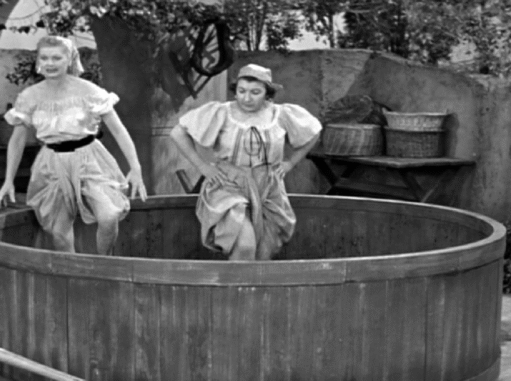
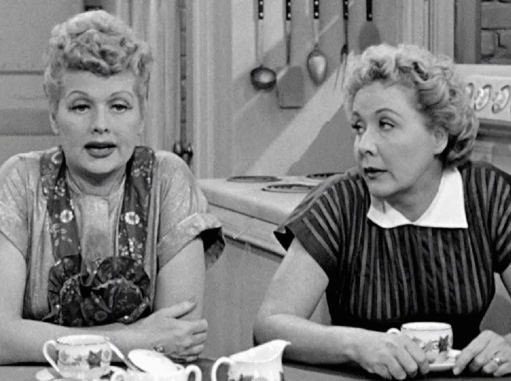
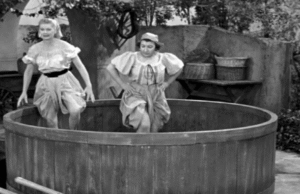
Why ‘I Love Lucy: The Movie’ Remained Unreleased for Decades

The world almost got to see a film adaptation of I Love Lucy in the 1950s. Here’s why MGM didn’t let that happen and why no one saw the movie for years.

I Love Lucy was a huge hit so a movie spin-off was a logical next step — or was it? I Love Lucy: The Movie was completed in 1953. Here’s why MGM decided not to release the movie in the ‘50s and why no one was able to relocate the film for some time.

Lucille Ball and Vivian Vance | CBS Photo Archive/Getty Images

What separates ‘I Love Lucy: The Movie’ from most movies

1953’s I Love Lucy: The Movie was not a conventional movie. According to DVD Talk, it was composed of three episodes of the first season of I Love Lucy edited together. Those episodes were “The Benefit,” “Breaking the Lease,” and “The Ballet.” Of course, simply putting together three episodes of a television show with no changes would create something very disjointed, so the art of editing madethe movie more cohesive. The opening credits of the episodes were edited out. In addition, the creators of the film added a few minutes of linking material to tie the episodes together.

According to the Los Angeles Times, a test audience responded well to the film. So why didn’t it get released back in the ‘50s?

Lucille Ball and Desi Arnaz | CBS Photo Archive/Getty Images

Why the film stayed on the shelf for so long

The film’s editor, Dan Cann, said MGM didn’t think releasing the movie was “smart exploitation.” DVD Talk says it’s also possible — though far from certain — MGM didn’t want to release the film since they were planning on releasing another film starring Lucille Ball and Desi Arnaz: The Long, Long Trailer. Ultimately, MGM shelved I Love Lucy: The Movie. Perhaps this was a good idea considering The Long, Long Trailer broke a box office record for MGM, becoming their highest-grossing comedy.

However, Cann told the Los Angeles Times he never forgot about the film. He said he looked in every vault in Hollywood to find it. Eventually, he found it in a Paramount Pictures vault.

Someone had incorrectly labeled I Love Lucy: The Movie a Desilu Playhouse movie. Finally, members of the public got to see the film at a California convention called Loving Lucy in 2001. Six years later, the film was finally released on DVD — a full 54 years after its completion. The near-release of the movie was to theaters was the closest the world got to seeing I Love Lucy on the big screen until the 2010s.

Lucille Ball | CBS Photo Archive/Getty Images

When ‘I Love Lucy’ did make it to the big screen

According to Entertainment Weekly, Fathom Events released five episodes of I Love Lucy in theaters in 2019 to mark what would have been Ball’s 108th birthday. The classic episodes included “Lucy Does a TV Commercial,” (the episode about Vitameatavegemin) and “Job Switching” (where Lucy had to wrap chocolates). Fans didn’t get to seeLucy Ricardo’s shenanigans on the big screen in 1953. However, they finally got to see them in the 2010s.

Popular

The boy from a smog-drenched city who sang through addiction and...

0
With his global tours, and the iconic, gravelly voice – this star became synonymous with rock and roll. But before that, he was just a lad...