These days, how a beloved TV show ends is as much a part of the conversation about the show as the show itself. For example, though it’s been over 40 years since it aired, the final episode of M*A*S*H* is still one of the most talked-about episodes of TV in history and, according to MeTV, may have even been responsible for a massive plumbing failure in New York City.
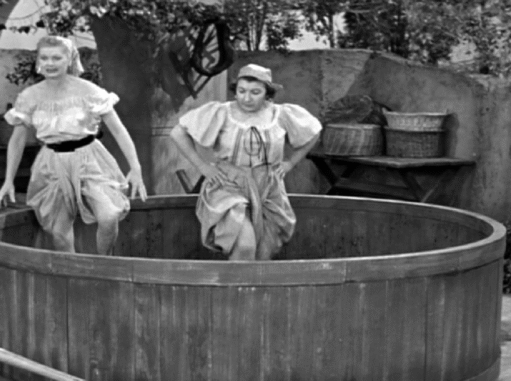
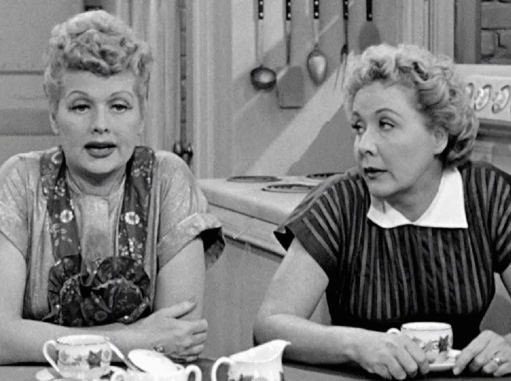
Not all shows are given a big sendoff, however. Sometimes, the producers of a show may not realize it’s coming to an end, and the episode that ends up being the finale fails to tie up any loose ends or give the characters any denouement, and indeed, lands on viewers’ screens as just another episode. Such appears to be the case with “I Love Lucy,” which, according to Showbiz Cheat Sheet, ended its run with an episode that was, by all rights, scarcely different from any other episode of the show.
The final episode of ‘I Love Lucy’ was a routine comedy farce
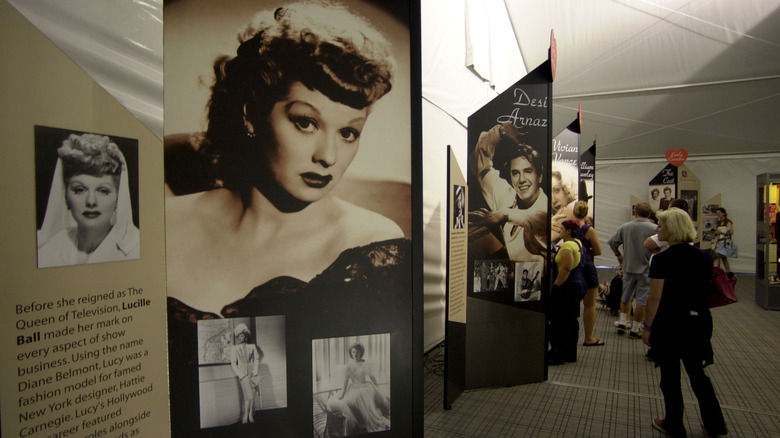
391835 14: Visitors view an exhibition celebrating the 50th anniversary of the “I Love Lucy” television sitcom July 13, 2001 at the Orange County Fair in Costa Mesa, CA. (Photo by David McNew/Getty Images)
Starring Lucille Ball, the final episode of “I Love Lucy,” according to the show’s Wiki on Fandom, was titled “The Ricardos Dedicate a Statue,” and it was the 26th episode of the sixth season, No. 179 overall. The plot contains the same elements that seem to drive just about every other episode of the show: Specifically, Lucy gets in over her head and goes to comedic and embarrassing lengths to cover her tracks.
In this case, Lucy and Desi were tasked with dedicating a statue of a Revolutionary War hero in their town. Unfortunately, Lucy destroys it, and when the time comes to reveal the statue to the townsfolk, Lucy, caked in clay, pretends to be the statue — that is, until her cover is blown by a dog who won’t stop licking her.
Though it would be the last episode of “I Love Lucy,” it wouldn’t be the last of Lucy and Desi working together. “Almost immediately,” says Showbiz Cheat Sheet, the two went to work on their subsequent project, “The Lucy and Desi Comedy Hour.” Unfortunately, that show didn’t survive the couple’s failing marriage and ended after 13 episodes.
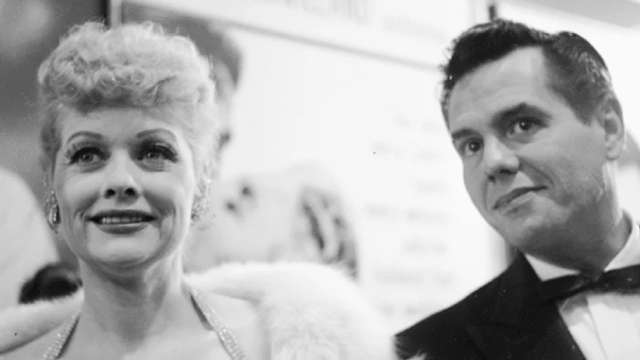
Iconic comedienne Lucille Ball and her charming Cuban bandleader husband Desi Arnaz became one of television’s most famous couples in the 1950s during the popularity of the “I Love Lucy” show. It’s no surprise that their off-screen chemistry was just as obvious after first meeting in 1940, on the set of the movie “Too Many Girls.” A co-star on the film, actor Eddie Bracken, said it seemed like love at first sight. “You could tell the sparks were flying with Lucy,” Bracken said. “It happened so fast it seemed it wouldn’t last. Everybody on the set made bets about how long it would last” (via Biography). The pair eloped later that year, and the marriage did in fact last for the next 20 years.
While it was a tumultuous relationship almost from the beginning, it was also a groundbreaking marriage on several fronts. Not only was “I Love Lucy” the first TV series to show a pregnant woman played by a pregnant woman, it was also the first to show an interracial couple during a time in American history when interracial marriages were still very much taboo and illegal in many states. Indeed, the “I Love Lucy” show premiered in 1951, 16 years before the landmark U.S. Supreme Court case Loving v. Virginia that struck down state laws banning interracial marriage (via Yahoo! News).
Lucille Ball Divorces Desi Arnaz After 20-Year Marriage
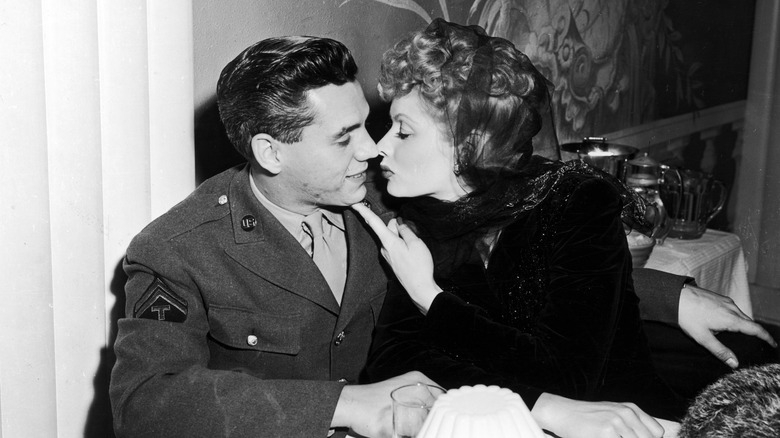
American actress Lucille Ball (1911 – 1989) with her husband Desi Arnaz (1917 – 1986), circa 1944. Desi is wearing the sleeve insignia of a Technician Fifth Grade of the US Army, having been drafted during World War II. (Photo by William Grimes/Michael Ochs Archives/Getty Images)
Another barrier to their romance in the 1940s was age. Ball, who was 28 years old when she met Arnaz, was six years his senior, and marriage to a younger man in those days was considered inappropriate. Though it might have been socially acceptable and taboo, but it didn’t stop Ball and Arnaz.
They lied on their marriage certificate, both listing their birthdates as 1914 to avoid controversy and prevent the public from discovering their age difference. Ball was actually born in 1911, however, and Arnaz in 1917 (via US Weekly). The couple had two children together, but after a turbulent 20-year marriage and Arnaz’s heavy drinking and numerous infidelities, Ball finally filed for divorce in 1960, though the pair remained good friends until the end of their lives. Arnaz passed away at the age of 69 after being diagnosed with lung cancer, and Ball died three years later.
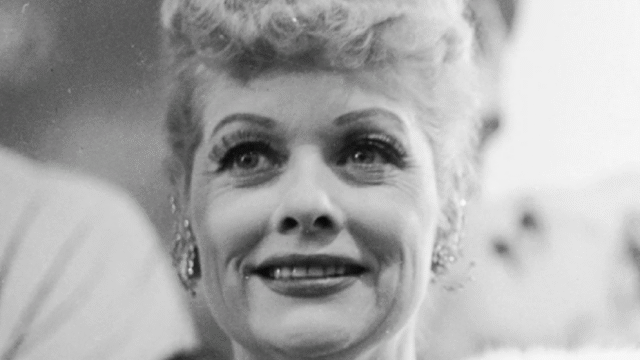
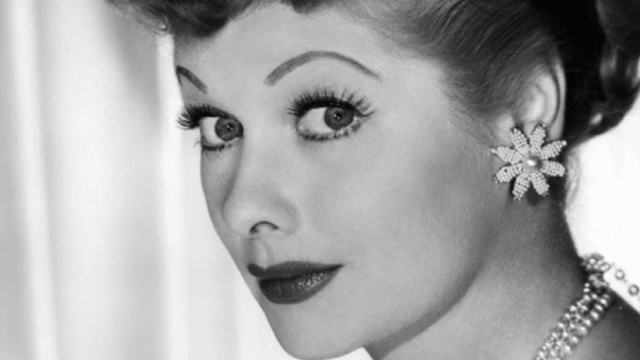
There are many popular TV stars in Hollywood history, but a few seem to stick out more than others. And, one such TV star is Lucille Ball. One of the most recognizable redheads in stardom history, Ball is perhaps best known for her iconic role as Lucy in the TV show “I Love Lucy,” which aired from 1951 to 1957. The show focused on the conflict between Ball’s ambitions in showbusiness and her husband Desi Arnaz’s backward beliefs that thwarted her aspirations at every attempt (via Britannica).
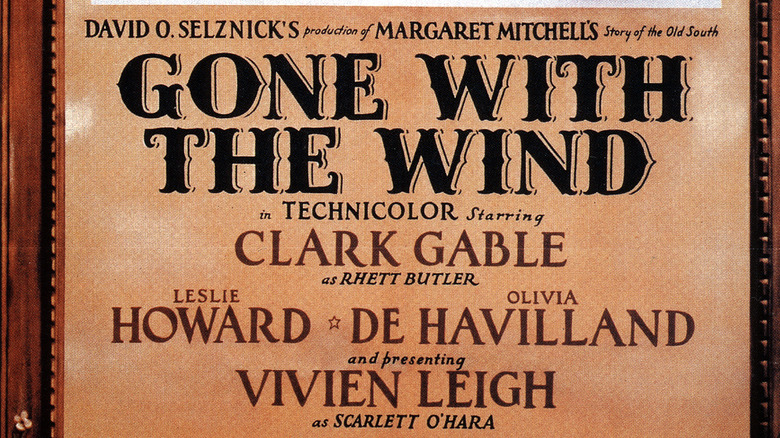
Ball, who died in 1989, led a fairly proliferate and prestigious career, winning 20 awards and racking up 17 nominations, according to IMDb. She also has 70 producer credits, 121 actress credits, and even two directorial credits. With a legacy that large, what more could there be to discover about Ball’s life? Turns out that there are a few interesting tidbits about her that some people may not know about, like the time she auditioned for the film “Gone with the Wind,” as said by Nylon.
Gone with the Wind’s production had some turbulence
“Gone with the Wind” has continued to be influential and quotable in pop culture today. “The Simpsons” referenced it in an episode, and the phrase “Frankly, my dear, I don’t give a damn” has become a memorable and historical quote of its own (via Today). There are also a few factoids about the movie’s production that film fans may not know about.
For starters, there was racial controversy surrounding the script during production. The head of the NAACP at the time, Walter White, urged David O. Selznick, the producer of the film, to put an African American adviser on set to help oversee the handling of sensitive historical matters, according to NPR. Given that the film was set in 1861 Georgia, a time when racial tensions were high, it is understandable why African American activists would be concerned about the movie’s handling of such a sensitive time period. The script was originally due to have the N-word in it, however, Selznick was persuaded by an African American journalist at The Pittsburgh Courier to ultimately take the word out, given its offensiveness (via NPR).
Lucille Ball’s hilarious audition for Gone With the Wind
Over the years, “Gone with the Wind” has been recognized as being one of the greatest and most critically acclaimed movies of all time. It has enjoyed high spots on all-time greatest movie lists, according to the BBC. The 1939 film is about Scarlett O’Hara (Vivien Leigh), a Georgian plantation owner’s daughter, trying to find love with profiteer Rhett Butler, played by Clark Gable (via IMDb).
Some people may not know, however, that Lucille Ball once auditioned for the part of Scarlett, which she retold on the Bob Hope show in 1984. At the time, David O. Selznick was looking for actress suggestions for the lead role, and RKO studio suggested 27-year-old Lucille Ball, as reported by The Atlantic. She recounted showing up drunk on four shots of brandy to the audition, along with being soaking wet from the rain. Ball told Bob Hope, “Selznick said ‘You were very interesting. Very interesting.’ I said, ‘I was not and you know it.’ And, then I just crawled out of the office on my knees holding onto the sweater trying to keep all the vital parts covered.” And, while she never did get the role, she still remained one of America’s beloved actresses.
With his global tours, and the iconic, gravelly voice – this star became synonymous with rock and roll.
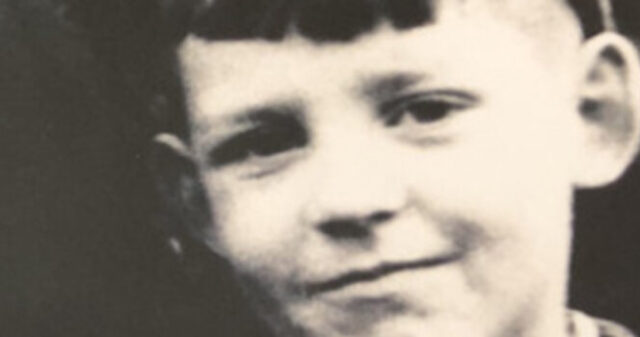
But before that, he was just a lad in one of the worlds most polluted cities.
Growing up in a tough, working-class neighborhood, music became his escape from the hardships of everyday life.
Along the way, he struggled with alcohol, heroin, and the toll of heavy cigarette use, and for much of that period, those battles defined his life. It wasn’t until he met his wife Pam in the 1980s that he began to turn things around.
Surrounded by smoke and soot
Not all rock stars come from drug-filled, broken homes — even if there are countless examples of that path. This star had a relatively stable upbringing, but it was by no means easy. Far from a life of comfort, it still came with its share of struggles, struggles that may well have forged the drive and determination that would one day take him to the top of the world.
A blunt Yorkshireman with the voice of an American soul singer, this artist became one of the most unlikely success stories of the late 1960s and early 1970s.
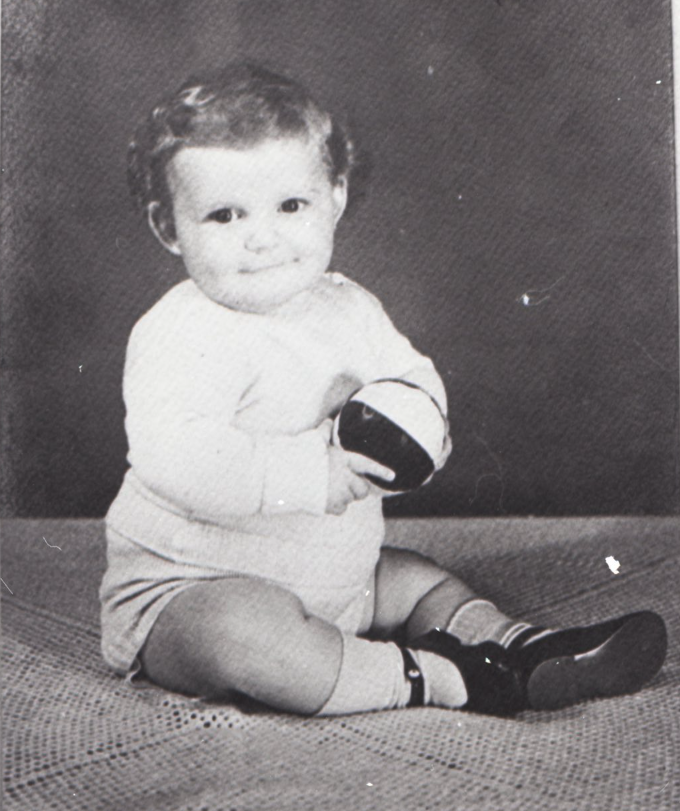
He was born in the midst of World War II in the steel city of Sheffield, where his father served as an aircraftman in the Royal Air Force. His mother was a housewife. At birth, he was given the name John, but it would be under a nickname that he would later become a voice still heard on radios today.
There are, however, two different stories about how he got that nickname, some say it came from a childhood Cowboy game, while others believe it was inspired by the name of a local window cleaner.
Growing up in Sheffield in the 1950s meant being surrounded by smoke and soot every day. For those who lived there, it was simply life — but for outsiders, the scene could feel almost apocalyptic. Streets were lined with darkened stone buildings, stained black by decades of soot drifting down from factory chimneys.
His only real ambition
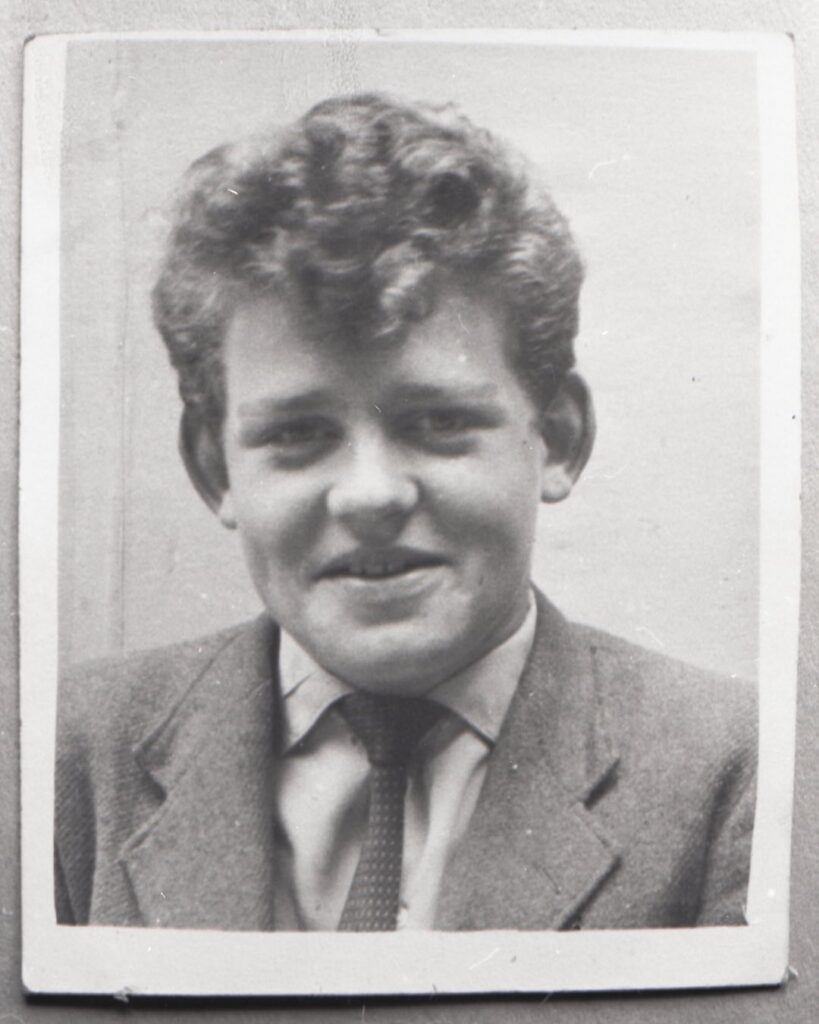
Our star never set out to be a great musician. His only real ambition was to escape his hometown. He left school at 16, his headmaster’s parting words a blunt, “Hard luck.” From there, he became an apprentice gas fitter while simultaneously pursuing a career in music. The young boy spent his days working and his nights chasing something bigger in smoke-filled bars.
“His voice had hardly broken and there was no way you could recognize his talent but his enthusiasm was undeniable and he had that desire to perform which was there throughout his career,” his brother told The Star.
For years, nobody knew who he was.
He borrowed microphones, played to tiny crowds more interested in their drinks than the music, and poured his wages into demo tapes that were rejected time and time again.
Still, he kept going, because singing was the only thing that made life feel real.
”I thought he was going to take up gas fitting as a career. I even got him a lot of books on the subject, and he was interested in gas for a time, but there was always the music. He told me he didn’t want a job where he worked for years and years and then got presented with a gold watch at the end,” his mother once shared.
Took a job packing goods
He cut his teeth in local blues bands before finally catching a break in 1964, when -Decca Records took him to London to record a cover of a Beatles song. He was paid just $1.50 for the session. The single went nowhere.
“Decca were very professional. That’s why they dropped me,” he later joked.
Undeterred, he left the gas board and took a job packing goods. He kept performing, sometimes even drumming, still chasing a dream that, at the time, seemed impossibly far away.
Four years after the setback, the young singer was given another opportunity—and this time, he made it count. He achieved major success with his version of “With a Little Help from My Friends,” originally by The Beatles.
The song climbed the charts in both the UK and the US, and in the UK it reached No. 1 after being released as a single.
“The day it happened, I got a telegram,” he later recalled. “THANKS YOU ARE FAR TOO MUCH, JOHN AND PAUL.”
The success of the song led to his first U.S. tour in 1969, and just a year later his live album Mad Dogs & Englishmen climbed to No. 2 on the American charts.
Iconic performance
By this point, the singer was beginning to develop the raw, powerful vocal style that would soon make him an international name. The true breakthrough came in August 1969 at the Woodstock.
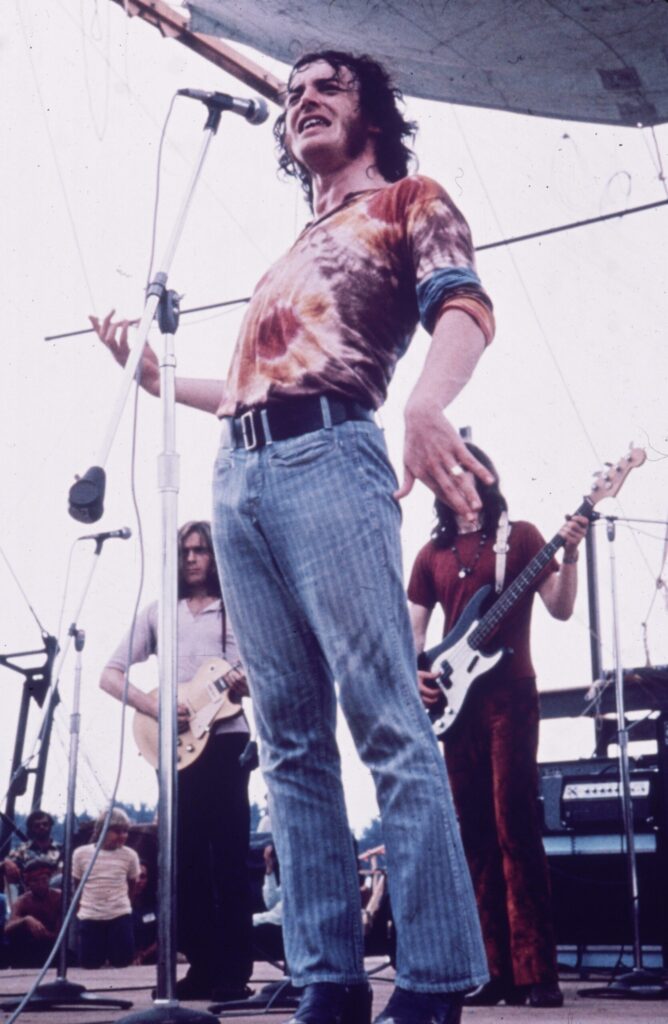
His performance of With a Little Help from My Friends became one of the most unforgettable moments of the entire festival — and later, its iconic film. Dressed in a tie-dyed shirt and jeans, hair wild and mutton chops framing his face, he took the stage with a presence that was impossible to ignore.
What followed was something extraordinary. With unearthly screams, contorted expressions, and seemingly uncontrollable movements, he delivered a version of the song that was both haunting and electrifying. It wasn’t just a cover — it was a complete reinvention, filled with anguish, intensity, and raw emotion.
The performance was as powerful as anything seen across the three-day event. It gripped the audience, overwhelming and deeply human, the kind of moment that defines what great music is meant to do — pull you in, shake you, and leave you changed.
That was the moment a star was born.
His name? John Robert “Joe” Cocker.
Eventually collapsed
He later reflected on the legendary concert with typical modesty, telling Louder, “Were we epic? I dunno… I was wearing a tie-dyed shirt, and when I took it off after, the colors had stained my chest in the exact same pattern.”
After making a lasting impression on an estimated 650,000 people at Woodstock and following it up with a standout performance at the Isle of Wight, Cocker continued touring into early 1970.
August 1969: Full-length portrait of English singer Joe Cocker, wearing a tie-dyed shirt and blue jeans, performing at the Woodstock Music Festival in Bethel, New York. (Photo by Fotos International/Getty Images)
He pushed his intense, high-energy live show to the limit, relentlessly performing until he eventually collapsed from exhaustion in Los Angeles.
During the chaotic “Mad Dogs & Englishmen” era, drugs and alcohol had become part of everyday life on the road. What began as celebration turned into dependence, heroin, cocaine, pills, and heavy drinking all blending into a constant haze behind the music.
The excess didn’t stop when the tour ended. Instead, it intensified. Living in Los Angeles, Cocker fell deeper into alcohol abuse, describing periods where drinking replaced everything else in his life.
Heroin use followed, pulling him further into instability and risk.
“I started taking heroin seriously, even though I’d thought it was the big taboo. I flirted with addiction, but I couldn’t handle it on that level. It was too powerful and intense. I never used the works, I snorted heroin. It made me feel fearless. I’d be driving from London to Sheffield with mates and be speeding like a lunatic down the motorway. They’d be terrified, shouting at me to slow down. I didn’t bat an eyelid,” he admitted.
“They put me in a cell with a bank robber..”
By the mid-1970s, things had reached a breaking point. Performances became unreliable, health deteriorated, and at times he was even too unwell to finish shows.
There were arrests, public incidents, and a growing sense that his career was slipping out of control.
During a tour in Australia, he was arrested for possession of cannabis and reportedly even challenged ten members of the police force. Not long after, he was arrested again in Melbourne following a fight at his hotel, and spent a night in jail.
He later recalled: “They put me in a cell with a bank robber, and an Aborigine who was alleged to have murdered someone. The bank robber seemed like a nice bloke. Said he had all my albums.”
Later, in 1978, he moved to a ranch in California owned by Jane Fonda, where he met Pam Baker, a former summer camp director. The two began a relationship and eventually married in 1987.
Baker is often credited with bringing stability to his life, helping him through his struggles with addiction and supporting a more settled, private lifestyle together at Mad Dog Ranch in Crawford, Colorado.
Joe Cocker cause of death
Sadly, Joe Cocker passed away from lung cancer on 22 December 2014 in Crawford, Colorado, at the age of 70. He had been a long-term heavy smoker, reportedly smoking up to two packs a day until he quit in 1991.
Cocker truly paid his dues throughout his career. While the working-class rock star had several hit singles, his nearly 40 albums didn’t always achieve strong commercial sales. Having started out performing in pubs, he kept up a relentless, fast-paced touring schedule for most of his life.
He also appeared on both the UK and French versions of American Idol, though he was never a fan of talent shows. Reflecting on them, he said: “When you think of all the losers on the show who disappear into nowhere,” he said, “it probably would have been more disillusioning for me if I’d been in a competition like this and lost, than to work in the pubs and come up that way.”
Net worth
Cocker nearly went bankrupt in the mid-1970s due to a mix of poor financial management, the high costs of constant touring, personal addictions, and a lack of business oversight. Later on, his wife Pam played a key role in helping him regain control of his finances and rebuild stability in his life.
According to Celebrity Net Worth, Joe Cocker had an estimated net worth of around $60 million at the time of his death. While the annual income from his estate is not publicly disclosed, it is believed to continue generating significant revenue from his music catalogue.
Cocker is likely to be remembered as one of the world’s most soulful white rock vocalists, with few artists reaching the same level. He was posthumously inducted into the Rock and Roll Hall of Fame in November 2025, an honor many felt was long overdue and entirely deserved.
Every time “With a Little Help from My Friends” plays, and those broken, beautiful notes rise into the air, we’re reminded of the boy from Sheffield who never stopped believing his voice mattered.
Joe Cocker’s life carries a lesson of its own. Success is rarely a straight path, it twists, fractures, and sometimes disappears entirely. But real artists, and real people, find their way back again. Not by denying the pain, but by transforming it into something lasting — into song.
Thank you for everything, Joe. You represented an era when words carried real meaning, singers performed with genuine passion, and music had a special touch – pure magic!
Life has a way of stripping you down to your barest essentials until all that remains is the pulse of survival and the faces of those you love. Being a single father was never the script I would have written for myself, but when the dust of a broken marriage and a series of financial collapses finally settled, it was the only role I had left. I was a man of two worlds, both of them exhausting. By day, I worked with the city sanitation crew, hauling the heavy, discarded remnants of other people’s lives. By night, I moved through the hollow, fluorescent-lit hallways of corporate offices, scrubbing floors and emptying bins. My body was a map of aches, and my mind was a constant calculator of debt, but at the center of that weary existence was Lily.
Lily was seven years old, a burst of kinetic energy in a world that felt increasingly stagnant. We shared a cramped, two-bedroom apartment with my aging mother, whose health was slowly fading like a polaroid left in the sun. Money was a ghost that vanished before you could ever really hold it, but Lily’s spirit was tangible. She found magic in the mundane, and one afternoon, that magic coalesced into a single, crinkled flyer she had pulled from a community center bulletin board. It was an advertisement for a beginner’s ballet class.
The look in her eyes when she showed it to me was something I couldn’t ignore. It wasn’t just a whim; it was a calling. I saw in her a desperate need to be light, to leap, and to move with a grace that our daily life simply didn’t allow. Even though the tuition fee felt like a king’s ransom and the cost of shoes and leotards seemed laughably out of reach, I looked at her and made a promise. I told her we would find a way.
From that moment on, our lives shifted into a new gear of sacrifice. A battered envelope labeled Lily’s Dance sat on the kitchen counter. Every spare coin, every bit of overtime pay, and every dollar saved by skipping a meal went into that paper vessel. I became a master of the quiet struggle, telling myself that her dreams were a luxury I was honored to fund. Our living room, small and cluttered as it was, transformed into her nightly stage. While my mother sat on the couch, clapping her rhythmic, frail hands, Lily would practice. She would spin until she was dizzy, her brow furrowed with a fierce, quiet determination that mirrored my own. She would ask me to watch every plié and every stumble, and no matter how much my back throbbed or how badly I wanted to close my eyes, I stayed present. I was her only audience, and I took that job seriously.
The months of preparation led to the night of her first real recital. It was the summit of our mountain. Lily made me promise—over and over again—that I would be there to see her. I gave her my word, but the universe seemed intent on breaking it. An emergency at the sanitation yard, a burst pipe that required every hand on deck, kept me trapped hours past my shift. By the time I was released, the city was a blur of rain and gridlock. I ran. I ran through the slick streets, my work boots heavy, my breath coming in ragged gasps. I was soaked to the bone and shivering, a frantic man racing against the clock.
I slipped into the back of the darkened school auditorium just as the music began and Lily stepped onto the stage. She looked so small under the spotlight, her eyes searching the vast, dark sea of faces with a heartbreaking uncertainty. I felt a lump form in my throat. Then, she saw me. I raised a hand, a silent signal in the back row, and the change in her was instantaneous. The tension left her shoulders, a bright, genuine smile broke across her face, and she began to dance.
She wasn’t the most technical dancer on that stage, but she was the most alive. She moved with a joy that seemed to defy the gravity of our circumstances. In that moment, the double shifts and the exhaustion didn’t matter. What mattered was the belief in her eyes—the belief that she was seen and that she was worth coming for. Afterward, in the lobby, she threw herself into my arms, smelling of hairspray and sweat, whispering, “You came,” over and over. I held her tight, unable to find the words to tell her that I would have moved mountains to be there.
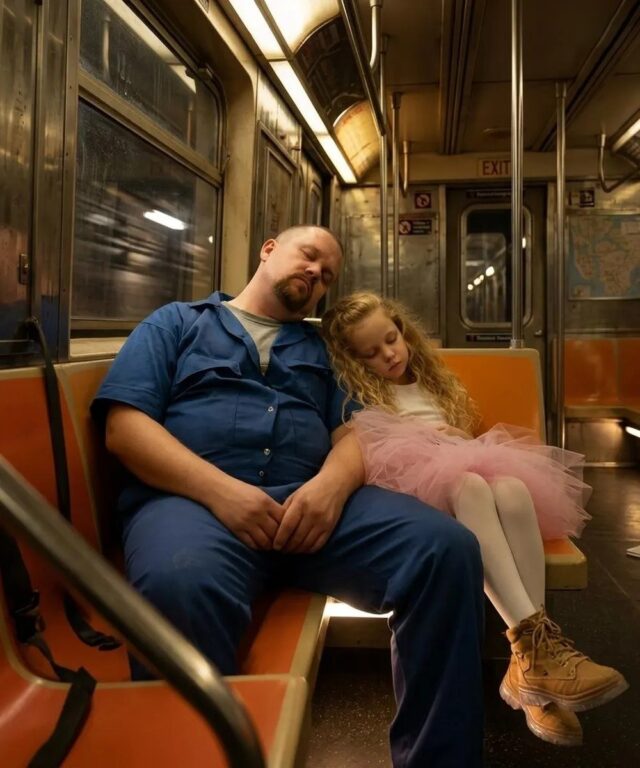
The ride home on the subway was quiet. The car was nearly empty, the rhythmic clatter of the tracks acting as a lullaby. Lily, still in her pink tutu and tights, fell fast asleep against my side, her head resting on my rough work jacket. I sat there, a grimy, exhausted man holding a sleeping angel, feeling a strange sense of peace. Across the aisle, I noticed a man—older, dressed in a sharp overcoat—watching us. He held a high-end camera in his lap. Without a word, he lifted it and snapped a single photo of us. I was too tired to protest, and something about his expression wasn’t intrusive; it was reverent. We got off at our stop, and I figured I’d never see him again.
The next morning, a knock came at our door. I opened it to find the man from the subway. He wasn’t there for a handout or a confrontation. He introduced himself as a retired photojournalist who had spent his career capturing the harshest parts of the human condition. He told me that the image of a soot-stained father holding a ballerina on a midnight train was the most beautiful thing he had seen in decades. He had recognized the exhaustion in my eyes because he had seen it in the mirror for years.
He didn’t offer me charity; he offered an unexpected request. He wanted to buy the rights to that photo for a gallery series he was producing, but he wanted to do more. He had connections to a prestigious arts foundation and a logistics company looking for reliable supervisors. He told me he wanted to invest in a “man who showed up.”
That encounter didn’t just give us money; it gave us a bridge to a different life. A year later, I am no longer scrubbing floors at 3:00 AM. I have a stable career that allows me to be home for dinner. Lily is now a scholarship student at a top-tier ballet academy, her talent flourishing under professional guidance. I still work hard—perhaps harder than ever—but the nature of the work has changed. Now, I make it to every single class and every performance. I realize now that the world is full of spectators, but the people who truly change things are the ones who refuse to let the exhaustion stop them from being there when it counts. Every time Lily takes flight on that stage, I see the reflection of that night on the subway, and I’m reminded that sometimes, the simple act of showing up is the most powerful thing a human can do.
How One Widow Reclaimed Her Husband’s Dream—and Her Peace
For seven months, the house felt larger than it should have—too quiet, too still. My husband, Jerry, had always carried simple dreams, but he held them with care. One of them was a front lawn kept just right, something calm and complete, like a place you could rest your eyes on at the end of a long day. Life moved differently for us. There were children to raise, tuition to cover, and then an illness that changed everything.
After he passed, the yard became something I avoided looking at. Dry patches, weeds, uneven ground—it reflected what had been left unfinished. One morning, without much ceremony, I decided to act. I used the last of my savings to have it done properly. The work was steady: clearing, leveling, laying sod, setting irrigation, planting two Japanese maples—his favorite. When it was finished, there was a quiet sense of order again. Not happiness exactly, but something settled.
A few days later, I came home to find it undone.
Deep trenches cut through the lawn, soil pushed aside, irrigation lines broken. It didn’t take long to understand what had happened. My neighbor, Kimberly, had arranged for a private internet line and allowed the work to pass through my yard. To her, it hadn’t seemed serious.
I didn’t respond immediately. There was no use in raising the moment further. Some situations reveal themselves without pressure.
Two days later, she came back, shaken. The same work that had crossed into my yard had damaged her own sewage line. Her home had flooded. The consequences had reached her directly.
When she stood there, I didn’t speak harshly. I told her what needed to be done—restore the yard properly, with the right permits and care. Not partially, not quickly, but correctly. She agreed. There wasn’t much room left for anything else.
Within days, a new crew arrived. This time the work was measured, deliberate. I stayed present, not to control, but to ensure nothing was overlooked. Slowly, the lawn returned—not just as it was, but with a kind of quiet strength behind it.
One evening, when the sprinklers came on and the light was fading, the maples moved gently in the breeze. The ground felt steady underfoot. It wasn’t just about the lawn anymore. It was about seeing something through without losing yourself in the process.
Some things don’t need force. They need clarity, patience, and a refusal to step away from what matters. In the end, the work held—and so did the peace that came with it.
After a decade in emergency services, I have learned that the human voice is the most sensitive instrument on the planet. I have listened to the booming panic of grown men and the shrill hysterics of the bereaved, but nothing chills the blood quite like the sound of a child trying to be invisible. When the dispatch patched the call through to my unit, the silence on the other end was heavy, punctuated only by the shallow, jagged breaths of someone terrified to draw air. A five-year-old girl named Mia was on the line, and she was whispering that someone was hiding under her bed. In my line of work, we often hear about “monsters” in the dark, but the raw, vibrating terror in Mia’s voice told me this wasn’t a product of an overactive imagination. This was the sound of a child who believed her life depended on remaining unheard.
The situation escalated instantly when we realized Mia was home alone. Her parents were at a social engagement, and though she mentioned a nanny, the woman was nowhere to be found. As we raced through the rain-slicked streets toward Willow Lane, my partner Luis and I prepared for the worst. We expected a home invasion, a prowler, or a kidnapping in progress. The house was a large, pale blue suburban structure that looked perfectly serene from the outside, but as any first responder will tell you, the most horrific secrets are often kept behind the most manicured lawns.
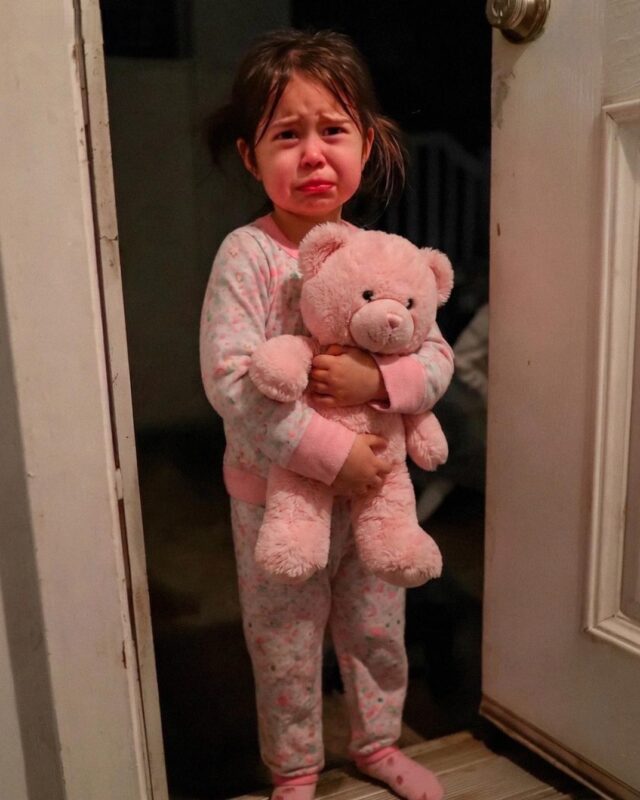
When we arrived, the front door creaked open before we could even knock. Mia stood there, a tiny figure in pink pajamas clutching a worn teddy bear. Her eyes were wide, darting toward the stairs with a frantic intensity. We cleared the house room by room, checking closets, behind heavy velvet curtains, and inside the shadows of the basement. Everything was disturbingly normal. No broken glass, no jimmied locks, and no sign of a struggle. Luis began to suspect it was just a case of nighttime jitters, but when he tried to comfort Mia by telling her she was safe, her face didn’t relax. Instead, it crumpled in a way that signaled a deep, desperate frustration. You didn’t look under the bed, she insisted.
I returned to her room, intending to perform a quick sweep to satisfy her mind, but as I lowered myself onto one knee, the atmosphere changed. I didn’t see a intruder at first, just the typical debris of childhood: a stray sock, a board game box, and dust. But then, I heard a catch in a throat. It was a soft, rhythmic shivering that didn’t belong to the house. I lifted the bed skirt, and my heart nearly stopped. Tucked against the far wall, curled into a ball of sheer misery, was another little girl.
She was smaller than Mia, wearing a thin yellow sweater and shivering with a fever so high I could feel the heat radiating from her skin before I even touched her. Luis joined me, his face a mask of disbelief. We eased the girl out, realizing quickly that she was in the throes of a medical crisis. When we tried to question her, she remained silent, her eyes darting with fear. It was our counselor, Dana, who realized the truth first. The girl wasn’t being defiant; she was using sign language. Her hands moved with a frantic, urgent grace, trying to bridge the gap between her world of silence and our world of noise.
The mystery of her presence was solved when the front door burst open and a woman named Marisol ran in, clutching a bag from a local pharmacy. Marisol was the nanny, and the girl under the bed was her daughter, Polly. Marisol had been faced with an impossible choice: her own child was burning up with a dangerous fever, her mother was out of town, and she had no childcare. She had brought Polly to work, hoping to keep her hidden in the kitchen while Mia slept. When the fever spiked, Marisol had panicked and run to the twenty-four-hour pharmacy just a block away, leaving both children alone for what she thought would be five minutes.
In those five minutes, Polly had wandered upstairs, drawn by the sight of Mia’s dolls. When Mia stirred in her sleep, Polly—terrified of being caught—had scrambled under the bed. When Mia dropped her teddy bear and reached down to retrieve it, she had stared directly into a pair of eyes reflecting back from the darkness. It was a collision of two different kinds of fear: the fear of a child who thought a monster had finally arrived, and the fear of a sick, silent girl who thought she was in trouble.
I have seen many things in my ten years, but the fury of Mia’s parents when they arrived was something I will never forget. They were ready to fire Marisol on the spot, to call for her arrest, and to cast her out into the night. It took every bit of my professional composure to step between them. I didn’t excuse Marisol’s choice—leaving two children alone is a grave error—but I saw the pharmacy bag in her hand and the hollowed-out look of a mother who had no safety net. I reminded them that while their anger was justified, this was a tragedy of circumstance, not malice.
The most profound moment of the night didn’t come from the adults, however. It came from Mia and Polly. While the parents were arguing and the police were filling out reports, the two girls had migrated to the dining room table. Mia was sharing her crayons, and Polly was leaning against her, the fever finally breaking thanks to the medicine. Children have a remarkable capacity for moving past the “sharp parts” of a crisis. They don’t dwell on the legalities or the betrayal; they focus on the coloring book in front of them.
Before we left that house on Willow Lane, I made sure to look Mia in the eye. I told her that she was the bravest person in the building. She had been alone, she had been terrified, and she had heard a monster under her bed, but she hadn’t hidden under the covers. She had reached for the phone. She had whispered her address. She had acted. In a world where we often tell children to be quiet, Mia’s whisper was the loudest thing I had ever heard.
That night stayed with me as a reminder of the invisible threads that hold our society together—and how easily they can snap. It was a story of a nanny who was desperate, a sick child who was silent, and a five-year-old girl who was brave enough to believe her own eyes. Sometimes, the most terrifying thing under the bed isn’t a monster at all; it’s just another human being who is just as scared as you are. We walked out into the cool morning air, knowing that because a little girl had the courage to whisper, two families had been saved from a much darker ending.
My name is Oliver, and for most of my thirty-eight years, I believed that family was something you had to survive rather than something you enjoyed. I grew up in a state-run children’s home, a place defined by cold linoleum floors and the heavy, echoing silence of children who had stopped expecting anyone to come for them. My only anchor in that world was Nora. She wasn’t my sister by blood, but we were bound by the shared trauma of being forgotten. We spent our childhoods whispering about the lives we would build once we were free, making solemn promises over stolen kitchen cookies that we would never let each other be truly alone again. When we aged out at eighteen, standing on those concrete steps with our lives packed into flimsy duffle bags, we swore that we were each other’s only real family.
For years, we kept that vow. While Nora moved into waitressing and I found my niche in the dusty, quiet corners of a secondhand bookstore, we remained the center of each other’s gravity. When Nora called me, weeping with joy, to tell me she was pregnant, I became an uncle before I even understood what the word meant. I held baby Leo when he was only hours old, marveling at his tiny, wrinkled fists and the fragility of his existence. Nora never spoke of the father, and I never pushed. I knew enough about pain to respect her silence. I simply showed up. I was there for the midnight feedings, the first shaky steps, and the endless readings of bedtime stories. I wasn’t his father, but I was the man who made sure the world felt safe for him.
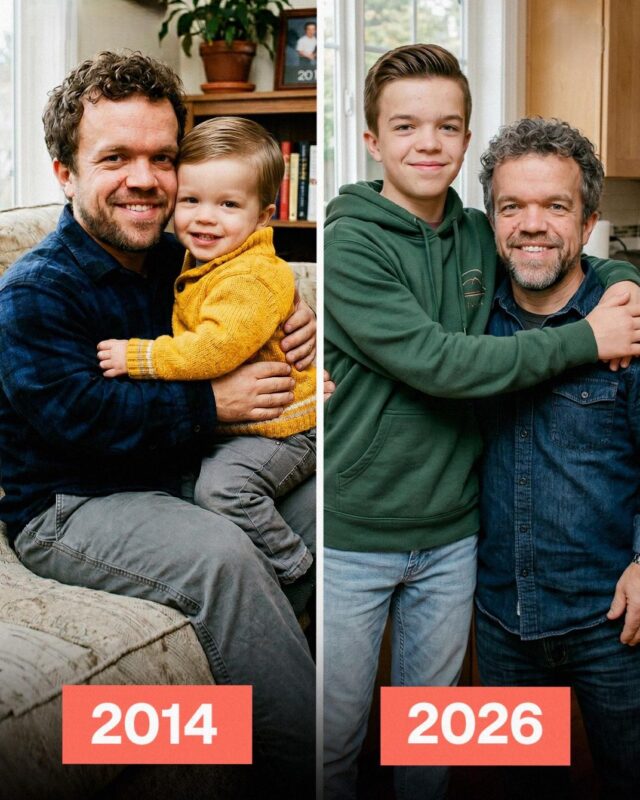
Everything shattered twelve years ago on a rainy Tuesday night. A phone call from a hospital stranger informed me that a car crash had claimed Nora’s life in an instant. The grief was a physical weight, but it was eclipsed by the image of two-year-old Leo, left alone in a world that had already taken his mother. When I found him in the hospital, clutching a stuffed bunny named Fluffy, he reached for me with a desperation that broke what was left of my heart. The social workers talked about foster care and the possibility of adoption by strangers, but I didn’t let them finish their sentences. I was family. I fought through every legal hurdle, every home study, and every background check to prove that a single, grieving twenty-six-year-old man was the right home for that boy. I refused to let him grow up in the same cold system that had raised Nora and me.
The next decade was a blur of school lunches, scraped knees, and the quiet, steady work of building a life. Leo was a thoughtful, serious child who carried his stuffed bunny everywhere, holding it like a shield. I remained single for a long time, prioritizing his stability over my own loneliness, until I met Amelia. She was a breath of fresh air in my bookstore, a woman who didn’t see a single father as a burden but as a man who knew how to love unconditionally. When she married us last year, with Leo standing between us holding both our hands, I finally felt like we were more than just survivors. We were a family.
The peace lasted until one night, a few months ago, when Amelia woke me in a state of visible panic. She had been sewing a small rip in Leo’s old stuffed bunny while he slept and had discovered something hidden deep within the stuffing: a flash drive. She had watched the contents, and the look in her eyes told me my world was about to shift again. We went down to the kitchen, and with trembling hands, I plugged the drive into her laptop.
Nora’s face flickered onto the screen. She looked exhausted, with dark circles under her eyes, but her gaze was fixed with a fierce, haunting love. She wasn’t talking to me; she was talking to Leo. She revealed the truth she had been too ashamed to tell anyone while she was alive. Leo’s father wasn’t dead, as she had claimed. He was a man who had known about the pregnancy from the start and had walked away without a second glance. Nora had lied to protect Leo from the sting of being unwanted, wanting him to grow up feeling loved rather than pitied. But the most devastating part of the video was her confession that she was sick. Long before the car accident, Nora had known her time was running out. She had recorded the message so Leo would know the truth when he was old enough, hiding it in the one thing she knew he would never lose.
I sat in the kitchen and sobbed. The weight of Nora’s secret—that she was dying and alone—was almost too much to bear. But Amelia’s concern was for the present. She feared that Leo, who had hidden this drive for years, was living in a state of constant terror. We went to his room and found him awake, staring at the doorway with a face drained of color. The moment he saw the bunny in Amelia’s hand, he broke down. He confessed that he had found the drive two years prior and had watched it in secret at the school library. He hadn’t told me because he was convinced that if I knew his biological father didn’t want him, I would realize there was something wrong with him, too. He lived in fear that the truth of his “unwanted” status would make me send him away.
I pulled my son into my arms and held him with every ounce of strength I had. I told him that nothing a biological stranger did could ever define his worth. I told him that I hadn’t ended up with him by accident or obligation; I had chosen him. I told him that I would choose him every single day for the rest of my life. Amelia knelt beside us, reinforcing that he was loved for exactly who he was, not for where he came from.
The relief that washed over Leo was palpable. The tension he had carried in his shoulders for years seemed to evaporate in that dark bedroom. Watching him finally let go of that secret, I realized that the truth hadn’t destroyed our family; it had finally finished building it. Blood and genetics are just biological footnotes. Real family is defined by the person who stays when things get hard, the person who chooses to love you even when they don’t have to. Leo is my son because love decided he was, and in our house, that is the only truth that has ever mattered. We aren’t just survivors of the past anymore; we are the architects of a future built on a foundation that no secret can ever shake.
I left my grandson’s birthday party with the cake still uncut, because after seven years of raising my daughter’s children, I learned I was useful—but never truly valued.
“Mom, can you bring out the plates?”
That was the moment I understood exactly who I was in that house.
Not a guest. Not even family, really.
Staff.
My name is Evelyn. I’m sixty-six, a retired public school teacher in Ohio, living on a pension that makes every grocery trip feel like a math problem.
For seven years, I have spent more waking hours in my daughter’s home than in my own.
I got there before sunrise.
I packed lunches, cleaned spills, found missing shoes, signed school papers, drove to practices, sat through fevers, folded tiny socks, wiped bathroom counters, and made dinner before my daughter and son-in-law came home tired enough to say, “I don’t know how we’d survive without you.”
I used to think that meant something.
I thought love counted.
I thought sacrifice was seen.
When my older grandson, Mason, was born, my daughter Rachel cried in my kitchen and held both my hands.
“We can’t afford full-time help,” she said. “And I don’t want strangers raising my boys. Please, Mom. Just until we get on our feet.”
That was seven years ago.
They got on their feet.
Then they kept climbing.
Better jobs. Bigger house. New furniture every season. Travel sports. Fancy birthday themes. A backyard firepit nobody ever used.
Somewhere along the way, I became part of the house too.
Like the dishwasher.
Always running. Never thanked unless broken.
Then there was Linda, my son-in-law’s mother.
Linda lived in Florida half the year and treated grandparenting like a vacation package.
She blew in wearing bright lipstick and expensive sunglasses, carrying giant gift bags and zero responsibility.
She didn’t know Mason’s teacher’s name.
She didn’t know the younger one, Eli, still woke up crying after thunderstorms.
She had never cleaned vomit out of car upholstery, never sat in urgent care for four hours, never spent her own gas money driving to a school because someone forgot a trumpet or a permission slip.
But she was the fun grandma.
The glamorous one.
The one the boys ran to.
Yesterday was Mason’s eleventh birthday.
I had been working on his gift since January.
A quilt.
Hand-stitched. Navy, forest green, and soft gray. Heavy enough to calm him at night because ever since his father started yelling more and listening less, that child had become a restless sleeper.
I also baked the cake myself.
Three layers. Vanilla with strawberry filling. The kind of cake my own mother used to make when money was tight but love wasn’t.
I got to the house at eight in the morning.
I swept, wiped counters, stuffed goodie bags, blew up balloons until my head hurt, and cooked enough food to feed a church basement.
By four, the guests were there.
By five, Linda arrived like she was making an entrance in a movie.
The boys screamed when they saw her.
She laughed, kissed the air near their cheeks, and handed Mason a giant box from an electronics store.
“Open Grandma’s gift first,” she said.
Inside was the newest gaming system, extra controllers, and gift cards.
Mason let out a sound I had never once heard over anything I had given him.
Rachel clapped.
Her husband slapped his mother on the back and called her “unbelievable.”
Someone poured Linda a glass of wine.
I was still standing by the kitchen island holding a knife and a stack of paper plates.
I waited for a pause. Just one.
Then I held out the quilt.
“Mason,” I said. “I made you something too.”
He glanced at it for less than a second.
“Oh. Thanks, Grandma.”
Then he turned back to the screen.
His little brother laughed and said, “It’s a blanket.”
Not cruel.
Just careless.
The kind of careless children learn from watching adults.
I looked at Rachel.
I thought she would step in.
I thought she would say, “That blanket took months,” or “Your grandmother does everything for this family,” or even “Say thank you properly.”
Instead, she gave me that tight little smile adult daughters use when they want their mothers to stop embarrassing them.
“Mom,” she said softly, “don’t do this today. Linda’s the exciting grandma. You’re more the dependable one. The boys love you differently.”
Dependable one.
I stood there with buttercream on my wrist and her words in my chest.
Dependable.
Like a furnace.
Like a mop.
Like something you only notice when it stops working.
Then Linda laughed and said, “Well, every family needs somebody practical.”
Everybody smiled the way people smile when they’re relieved the insult didn’t land on them.
Something in me went still.
Not loud. Not dramatic.
Just finished.
I set the quilt down on the counter.
I placed the cake knife beside it.
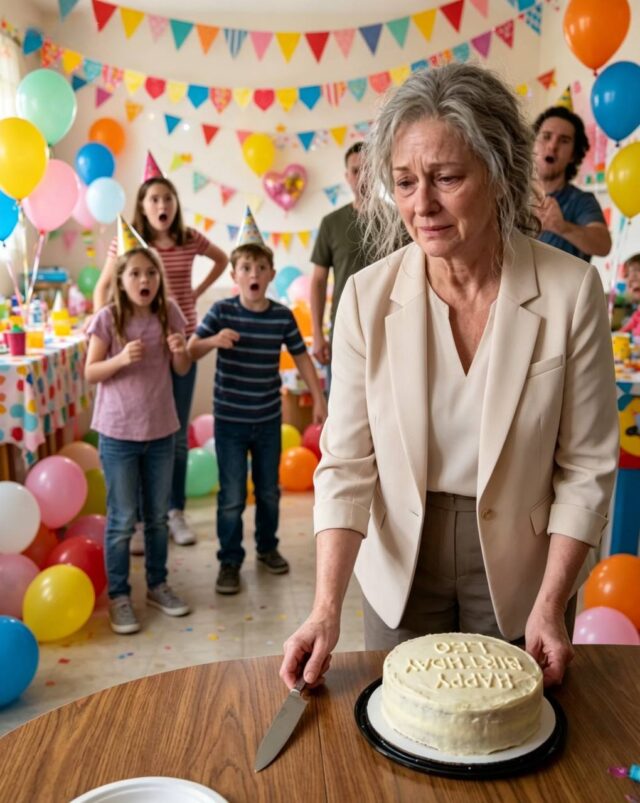
Rachel blinked at me. “Mom? Can you start cutting the cake?”
“No,” I said.
The room got quiet.
She frowned. “What do you mean, no?”
“I mean I’m done.”
I untied my apron and folded it over the back of a chair.
“I am done being the unpaid engine of this house while everybody else gets to be adored. I am done being called dependable when what you really mean is convenient.”
Rachel’s face changed.
Not to guilt.
To panic.
“Mom, please. Not now.”
“Yes,” I said. “Exactly now.”
Her husband stepped forward. “You’re overreacting.”
I looked at him for a long moment.
“Am I?” I asked. “Then tomorrow morning you can pack lunches, find Eli’s sneakers, wash the uniforms, take Mason to school, get groceries, and stay home when somebody spikes a fever.”
Linda suddenly became very interested in her wineglass.
Rachel followed me to the front porch.
Her voice dropped low and sharp.
“You can’t just leave. I have a meeting tomorrow.”
And there it was.
Not Are you hurt?
Not I’m sorry.
Not Mom, please don’t go like this.
Just scheduling.
Just logistics.
I opened my car door.
“I am not quitting the boys,” I told her. “I am quitting this job you dressed up as love.”
She stared at me like I had slapped her.
My phone rang all night.
Rachel. Her husband. Then Rachel again.
Texts came in one after another.
You’re being unfair.
The boys are upset.
We need to talk.
Can you at least come in the morning?
Need.
Not miss.
Need.
This morning, for the first time in years, I woke up without an alarm.
I made coffee and sat on my porch wrapped in the quilt I had made for Mason.
It fit me perfectly.
Around ten, a woman from down the street stopped by and asked whether I still wanted to join the beginner pickleball group at the community center.
Three weeks ago, I had laughed and told her I was too busy raising children I did not give birth to.
Today, I said yes.
Because I love my grandsons.
I always will.
But I will not spend whatever years I have left teaching my own daughter that a mother’s devotion is an endless natural resource.
If they want me in their lives, they can welcome me as a person.
In a major political development, Vice President Kamala Harris has been confirmed as the Democratic Party’s nominee for President of the United States during a convention vote in California. The announcement marks a significant moment in the current election cycle and sets the stage for an intense campaign ahead.
A First in American History Harris’s nomination represents a historic step, as she becomes the first woman of color to lead a major U.S. political party’s presidential ticket. Delegates responded with strong applause, signaling a level of unity as the party moves toward the general election.
A Turning Point After Biden’s Decision The shift follows President Joe Biden’s decision to step aside and endorse his vice president. The transition happened quickly, requiring the party to adapt in real time while maintaining continuity. It reflects both a practical recalibration and a moment of trust placed in Harris to carry the campaign forward.
Key Issues at the Center of the Campaign The campaign is expected to focus on several central concerns shaping public life:
Reproductive rights Economic fairness Healthcare access Climate policy These issues are likely to define not only the campaign’s messaging, but also how it distinguishes itself from opposing priorities.
Support and Political Momentum Supporters see Harris as a candidate capable of reaching a broad coalition, including younger voters and diverse communities. Her experience in national leadership is being positioned as a steady foundation at a time when clarity and direction matter.
Challenges Ahead in a Competitive Race Momentum does not remove difficulty. The campaign must still maintain internal cohesion while speaking to undecided voters whose concerns may not align neatly with party lines. At the same time, opponents are framing the election as a judgment on current policies, sharpening the contrast between the two sides.
A Nation Reacts Reactions across the country have been immediate and varied. For some, the nomination represents progress and possibility. For others, it raises questions about direction and leadership. The responses reflect a broader national divide—one that will shape the tone of the months ahead.
Looking Toward Election Day With the nomination settled, attention turns to the work ahead: building trust, refining strategy, and engaging voters with a sense of seriousness rather than spectacle. Campaigns often bring noise, but what ultimately endures are the decisions made by those who weigh their choices carefully.
Final Thoughts Kamala Harris’s nomination stands as both a milestone and a test. It carries symbolic weight, but also practical responsibility. As the campaign unfolds, the focus will not only be on what is promised, but on how it is carried—through pressure, disagreement, and the steady demands of leadership.