For forty-seven years, the phone rang at exactly eight o’clock every single evening, but tonight, the terrifying silence of my living room told me something was terribly wrong.
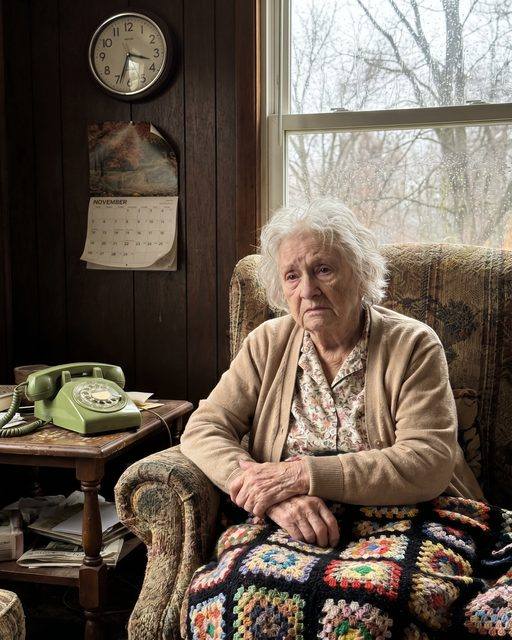
I was already settled in my favorite floral armchair, a crocheted afghan draped over my lap, waiting for the familiar ring. Outside, a cold, drizzly November rain beat against the windowpanes of my apartment. The hallway was perfectly quiet, save for the tired groan of the old elevator making its final evening rounds.
I glanced at the grandfather clock in the corner. It read 8:03.
Then 8:07.
Then 8:11.
Betty was never late.
She never called early, either. It was always at eight o’clock on the dot. The phone would ring three times, never more, never less. I would pick up the receiver and say the exact same phrase I had used for decades:
“Well, are you still kicking?”
And Betty would laugh, a raspy, warm sound, and reply:
“Unfortunately, yes. How about you?”
Sometimes we would stay on the line for ten minutes. Other times, barely two. We talked about the dull ache in our knees, the outrageous price of eggs at the local grocery store, and the new family upstairs who sounded like they were rearranging their furniture every single night. We talked about the weather, which was never quite what either of us wanted it to be.
To anyone else, it was nothing important. Just two old women gossiping. But when you reach a certain age, you come to understand a profound truth: it isn’t the grand, sweeping moments that sustain you. It is the quiet routines. The familiar voices. The simple comfort of knowing that there is still someone in this big, lonely world who remembers you are here.
Betty and I had known each other since we were little girls. We were six years old when the teacher seated us next to each other at Lincoln Elementary. I was the shy, quiet one who dreaded reading out loud. Betty was a firecracker, fearless and loud, but hopelessly terrible at arithmetic. So, we struck a deal. I helped her with her math homework, and she did all the talking for me.
As the years turned into decades, we helped each other with much heavier things. We navigated first heartbreaks, sick parents, and the exhaustion of raising children. We sat in church pews in our black dresses, gripping each other’s hands during funerals. We watched our bustling, noisy houses suddenly become quiet, empty nests.
Neither of us had an easy life, but we did what generations of folks have always done. We rolled up our sleeves, worked hard, and kept moving forward without making a fuss. Our children grew up, moved out of state, and started their own busy lives. They called often at first, and then, as life got in the way, a little less. Our husbands passed away before we did.
And then, almost without realizing it, we found ourselves old. We were living in separate apartments, just two blocks away from each other, surrounded by the same daily pill organizers, the same daytime television shows, and the same long, quiet afternoons.
That was when the nightly phone calls began.
“This way, if one of us falls and breaks a hip, the other will know,” Betty had joked one afternoon over coffee.
We both laughed. But beneath the humor, we knew it wasn’t really a joke at all.
At 8:15, I finally picked up my phone and dialed her number. It rang and rang, echoing into nothing. I hung up. I waited an agonizing minute. I called again. Still nothing.
A heavy, ancient panic began to rise in my chest.
I forced myself out of my armchair. I pulled my thick wool cardigan over my blouse, shoved my feet into my sensible walking shoes, and grabbed my winter coat from the entryway hook. Betty lived just two streets over. We always said that living so close at our age was a blessing. But that night, walking through the freezing rain, those two blocks felt like a hundred miles.
When I finally reached her door, I pressed the doorbell. Silence.
I knocked on the wood. First gently, then pounding with my knuckles.
The door across the hall creaked open. It was David, a young college student who lived in the apartment opposite Betty. He was in his early twenties, always polite, usually carrying a heavy backpack and looking like he needed a good week of sleep.
“Is everything okay, ma’am?” he asked gently.
“No,” I told him, my voice trembling. “She always answers. Always.”
David understood immediately. He didn’t ask silly questions or tell me to calm down. A few months ago, Betty had given him a spare key for emergencies or to bring in her packages. At the time, I thought she was being overly cautious. Tonight, I thanked God for her foresight.
When David swung the door open, the apartment was eerily quiet. The kitchen light was on, casting a harsh yellow glow. The radio in the living room was humming softly with the evening news.
And then, I heard her.
“Mary?”
Her voice was so incredibly weak that my heart shattered into pieces.
She was sitting on the cold linoleum floor of the kitchen, leaning against the bottom cabinets, her hand resting on her leg. There was no blood, nothing visibly broken. But she looked small. Unbelievably small. It is a terrifying thing to see someone you have loved your whole life suddenly look so fragile, trapped on the floor and entirely alone.
I dropped to my knees beside her, not caring about my own aching joints.
“Oh, sweetie…”
Betty tried to smile, but her eyes were brimming with tears.
“I tried to get to the phone,” she whispered. “I wanted to call you.”
David was an absolute angel. He didn’t make a scene. He just quietly brought a kitchen chair, a soft sofa pillow, and a glass of water, helping us lift her safely. Once Betty was seated and breathing normally, my eyes wandered to the kitchen table.
There, written on a notepad in large, shaky handwriting, were the words:
If anything happens to me, call Mary. She is my family.
I stared at that piece of paper, unable to speak. Not because it surprised me, but because it was the absolute truth.
In our culture, especially at our age, we are taught to be fiercely independent. We say we don’t want to be a burden to our children. We insist that we are doing just fine, that we can manage on our own, that everyone else has their own busy lives to worry about. And maybe all of that is true.
But there is another, deeper truth: no human being should ever have to spend hours on a cold kitchen floor, simply waiting and hoping that someone out there will notice they are missing.
Betty wiped her eyes with the back of her wrinkled hand.
“The worst part wasn’t the pain of the fall,” she told me, her voice breaking. “The worst part was knowing you were sitting in your chair, waiting for the phone to ring.”
And right then and there, something shifted inside of me. All the stubborn pride I had carried for years simply melted away.
I reached out and grabbed her hand—that same familiar, warm hand that had held mine since we were six years old.
“We’re done,” I said firmly.
Betty blinked. “Done with what?”
“Done with this foolishness. Done with pretending we have to carry the weight of the world all by ourselves.”
She looked at me, stunned.
“You are moving in with me,” I told her. “Or I am moving in with you. I don’t care which. But I am never, ever going to sit in my living room staring at a telephone again, wondering if my best friend is still alive.”
First, she laughed, as if I was making a wild joke. Then, the tears came. And finally, she laughed again—that beautiful, broken laugh of a tired soul who finally realizes they no longer have to pretend to be strong.
That was three weeks ago.
Today, her favorite coffee mug sits next to mine on the counter. Her winter coat hangs beside mine in the hallway. She complains that I turn the television volume up way too high, and I scold her for putting far too much salt in the chicken soup. We bicker over who forgot to take out the trash and who left the hallway light on.
Which is to say, everything is absolutely perfect.
It is approaching eight o’clock now as I sit here thinking about all of this. The house is warm. The phone does not ring anymore, because it doesn’t need to.
Instead, I hear the soft shuffle of slippers coming down the hall. Betty pokes her head through the kitchen doorway and asks, just like she does every single night:
“Do you want me to put the kettle on for some tea?”
I smile, and every single time, I think the exact same thing.
Growing old is not the worst thing in the world.
The worst thing would be reaching the end of the road without the one person who still notices when you aren’t there.