If youβve ever cut into a hard-boiled egg and noticed a greenish-gray ring forming around the yolk, thereβs no need to be alarmed. This common occurrence is completely harmless and happens because of a natural chemical reaction during cooking. When eggs are exposed to high temperatures for too long, the iron in the yolk reacts with sulfur in the egg white. This reaction produces iron sulfide, which creates the greenish tint around the outer layer of the yolk. While it may not look ideal, it does not mean the egg is spoiled or unsafe to eat.
Even though the discoloration is harmless, overcooking can slightly affect texture and flavor. The yolk may become dry or crumbly, and the egg white can turn rubbery. For many people, presentation also matters, especially when preparing dishes like salads, deviled eggs, or breakfast platters. Fortunately, preventing the green ring is simple with the right cooking method. The key is gentle heat and careful timing. Avoid boiling eggs aggressively or leaving them in hot water for too long.
To prepare perfectly cooked hard-boiled eggs, begin by placing them in a single layer at the bottom of a saucepan. Add enough cold water to cover the eggs by about one to two inches. Heat the pot over medium heat until the water just reaches a gentle boil. Once boiling starts, remove the pot from the heat, cover it with a lid, and allow the eggs to sit in the hot water for approximately 9 to 12 minutes. The exact timing depends on how firm you prefer the yolk. Softer yolks need less time, while fully firm yolks require closer to 12 minutes.
As soon as the cooking time is complete, transfer the eggs immediately to a bowl filled with ice water. This rapid cooling process stops the cooking and helps prevent further chemical reactions that cause discoloration. It also makes peeling easier by separating the membrane from the shell. For best results, use eggs that are a few days old rather than very fresh ones, as they tend to peel more smoothly. Keeping a kitchen timer nearby ensures accurate cooking every time. With proper heat control and quick cooling, you can consistently enjoy hard-boiled eggs with smooth whites and bright, golden yolks that look as good as they taste.
Throughout life, many people search for shortcuts to success, happiness, or intelligence. Yet the most meaningful guidance rarely comes from quick formulas or passing trends. Instead, it grows from thoughtful reflection, steady curiosity, and the willingness to think independently. Ideas often associated with Albert Einstein remind us that wisdom is not limited to scientific discoveryβit also lives in how we approach daily choices, relationships, and challenges. These principles encourage clarity, resilience, and balance in a fast-moving world.
One enduring lesson is the importance of continuous movement. Just as a bicycle must keep moving to remain balanced, we must keep learning and adapting to stay steady in life. Growth does not require dramatic change; it simply asks for consistent effort. Imagination also plays a powerful role in this process. Facts provide information, but imagination allows us to connect ideas, envision solutions, and see opportunities where others might see limits. Intelligence is not about storing knowledgeβit is about applying it creatively and thoughtfully.
Another essential principle is how we view mistakes. Failure is not the opposite of success; it is part of the path toward it. Every setback contains insight if we are willing to reflect and adjust. An open mind strengthens this ability. When we question assumptions, seek context, and reconsider our viewpoints, we expand our understanding. Closed thinking often leads to quick judgments, while open thinking builds wisdom. In the same way, contribution brings deeper fulfillment than status alone. Achievements may fade, but meaningful contributions leave a lasting impact on others.
Finally, simplicity and awareness protect both happiness and judgment. A modest life centered on what truly matters often brings more peace than constant pursuit of recognition. Clear thinking also helps guard against confusion or manipulation. When words and actions do not align, or when details frequently change, it is wise to pause and examine the situation carefully. Asking thoughtful questions, continuing to learn beyond your comfort zone, and reflecting daily can strengthen mental clarity. In the end, lasting growth comes from staying curious, learning from experience, thinking independently, and striving to add value wherever you can.
A longtime television meteorologist has shared that she has been diagnosed with ALS after viewers began noticing subtle changes in her speech during broadcasts. Jeriann Ritter, 49, who has been a familiar face at Iowaβs WHO 13 since 2004, opened up about her health journey in an emotional interview with colleague Keith Murphy. For months, some viewers had questioned why her speech sounded different, with a few even making hurtful assumptions. Now, Ritter has chosen to speak candidly about the medical condition behind those changes.
Ritter explained that she first noticed something unusual last summer when her speech began to shift slightly. At first, she assumed it might be a minor dental issue and scheduled a visit with her dentist. However, her dentist grew concerned that she could be experiencing signs of a stroke and urged her to seek immediate medical evaluation. Although early tests ruled out a stroke, the search for answers continued. After several months of appointments and examinations, doctors ultimately diagnosed her with amyotrophic lateral sclerosis (ALS), a progressive neurological condition that affects nerve cells in the brain and spinal cord.
According to medical professionals, Ritterβs ALS has impacted the bulbar region, which plays a key role in speech and swallowing. Receiving the diagnosis was deeply difficult. She admitted that she initially believed the issue would turn out to be something minor and more easily treated. Learning that there is currently no cure has been challenging to accept. As her speech became more noticeably affected, she said some viewer messages questioning whether she was unwell were painful to read. Despite that, she continued working, determined to remain dedicated to her role and her audience.
Although Ritter acknowledges that the condition brings uncertainty, she remains focused on gratitude and resilience. She says she still experiences good days and intends to keep living with purpose. Rather than withdrawing, she hopes to use her experience to encourage compassion and remind others to value their health and loved ones. With the same warmth she has brought to weather forecasts for years, she now shares a message of appreciation, strength, and living in the present moment.
The U.S. menβs Olympic hockey team made headlines this week following their visit to the White House on Tuesday, February 24, after securing a gold medal victory against Canada with a 2β1 win. President Donald Trump extended the invitation shortly after the teamβs championship success, inviting them to attend his State of the Union address as honored guests. A video shared on social media showed the president congratulating the players during a post-game locker room call and encouraging them to attend the event in Washington, D.C. The clip quickly gained widespread attention online, drawing a mix of reactions from viewers.
During the call, the president also mentioned the womenβs Olympic hockey team, which won gold this year as well and has consistently medaled since the sport was introduced to the Winter Games. His remarks about inviting both teams prompted discussion across social media platforms, with some users expressing differing opinions about the tone of the exchange. In response to the invitation, a spokesperson for the womenβs team later shared that scheduling conflicts and prior academic and professional commitments would prevent them from attending the White House event.
As the menβs team traveled to Washington for the State of the Union address, observers noted that not all members were present. According to multiple reports, five of the 25 players β Brock Nelson, Jackson LaCombe, Jake Guentzel, Jake Oettinger, and Kyle Connor β did not attend the event. While speculation circulated online regarding possible reasons for their absence, no official statement suggested any political motivation behind their decisions. Public conversations highlighted that four of the players have ties to Minnesota, while Connor currently plays for the Winnipeg Jets in Canada.
Kyle Connor addressed his decision directly, explaining that his focus remained on the ongoing NHL season. With games scheduled shortly after the White House visit, he shared that preparing for the second half of the season was his priority. Several of the other absent players are also set to compete in upcoming matches. Despite the mixed reactions surrounding the invitation and attendance, the teamβs gold medal achievement remains a defining moment, marking another successful chapter in U.S. Olympic hockey history.
Modern homes are equipped with a wide range of appliances that make daily routines more convenient, from kitchen tools to entertainment systems. While these devices improve comfort and efficiency, many continue to consume electricity even when they are not actively in use. As households depend more heavily on electronic equipment, understanding how everyday habits affect energy consumption becomes increasingly important. In many cases, rising electricity bills are not caused by one major appliance, but by small, repeated behaviors that gradually add up over time. Becoming more aware of these patterns can help families manage energy use more effectively without compromising convenience.
One often-overlooked source of energy consumption is standby power, sometimes referred to as βphantomβ energy use. Many devices draw small amounts of electricity simply by being plugged in, even when turned off. Items such as phone chargers, gaming consoles, televisions, coffee makers, and computer equipment may continue using power in the background. While the amount each device consumes may seem minimal, the combined effect across multiple appliances can become noticeable over weeks and months. Unplugging electronics when they are not needed or using power strips with built-in switches can help reduce this unnecessary usage in a simple and practical way.
Larger household appliances naturally require more electricity, but how they are operated makes a significant difference. Heating and cooling systems, refrigerators, water heaters, dishwashers, and washing machines are among the biggest contributors to home energy use. Inefficient settings, lack of maintenance, or frequent operation can increase consumption beyond what is necessary. For instance, running partial laundry loads, setting thermostats higher or lower than needed, or neglecting to clean air filters can all lead to higher costs. Performing routine maintenance and using appliances according to manufacturer recommendations can improve efficiency while extending their lifespan.
Fortunately, reducing energy consumption does not require dramatic lifestyle changes. Small, consistent actionsβsuch as turning off lights when leaving a room, adjusting thermostat settings moderately, and choosing energy-efficient models when replacing appliancesβcan make a meaningful impact over time. Reviewing monthly electricity statements may also help identify trends and encourage more mindful habits. By adopting practical strategies and staying aware of everyday usage, households can lower expenses, reduce environmental impact, and maintain a comfortable living space at the same time.
All summer long and deep into autumn, an elderly woman climbed onto the roof of her modest home each day, carefully fixing sharp wooden stakes across its surface. As weeks passed, the number of stakes grew until the roof looked strange and unsettling from a distance. Villagers whispered as they walked by, shaking their heads. Many believed grief had finally overcome her after losing her husband the previous year. She rarely spoke to anyone now and kept mostly to herself, so her unusual project only seemed to confirm the rumors. People watched from afar, puzzled and uneasy, convinced something was wrongβuntil winter finally arrived and revealed the truth.
Soon, quiet curiosity turned into open speculation. Outside the village shop, neighbors exchanged theories, each stranger than the last. Some believed she was trying to protect herself from imagined dangers, while others dismissed the work as a pointless renovation. Few noticed the patience and precision behind her effort. The woman selected every piece of wood herself, choosing strong, dry stakes and sharpening each one carefully before securing it firmly in place. She knew her roof well, understanding where storms hit hardest and where reinforcement was needed most. When one brave neighbor finally asked why she worked so tirelessly, she simply replied, βThis is my protection,β offering no further explanation.
When winter arrived, it did not come gently. Heavy snowstorms were followed by fierce winds that roared through the village night after night. Roofs creaked, fences collapsed, and by morning, broken boards and scattered shingles covered many yards. Families stepped outside in disbelief to assess the damage left behind. Several homes suffered serious destruction, with parts of roofs torn away by the relentless gusts. Yet in the middle of the damaged street stood the old womanβs home, calm and untouched. Not a single plank was missing. The stakes she had installed had disrupted the force of the wind, helping deflect it upward and reducing the pressure on the roof.
Only afterward did neighbors learn the real reason behind her unusual preparation. The previous winter, a violent storm had nearly destroyed her home while her husband was still alive. Before he passed, he reminded her of an old local technique once used to protect houses from strong windsβknowledge many had forgotten over time. Remembering his advice, she patiently prepared throughout the warmer months, determined not to face the same danger again. Standing before her intact home, the villagers finally understood. What they had mistaken for strange behavior was simply wisdom, preparation, and quiet determination. From then on, whenever storms approached, people remembered the lesson her roof had taught them: sometimes, careful foresight looks unusual until the moment it proves its worth.
Avocado has become one of the most discussed foods in modern nutrition. While some social media posts suggest it may cause health problems, scientific research paints a far more balanced picture. In reality, most studies indicate that avocados can be a nutritious addition to a well-rounded diet when consumed in moderation. Like many foods, the overall impact depends on portion size, individual health conditions, and the context of oneβs total eating pattern rather than on a single ingredient alone.
Botanically classified as a fruit, avocado stands out for its rich nutrient profile. It contains monounsaturated fats β often referred to as βheart-healthyβ fats β along with dietary fiber, potassium, folate, vitamin K, and antioxidants such as lutein. Unlike many fruits that are primarily carbohydrates, avocados derive most of their calories from fats, with the majority coming from beneficial monounsaturated sources. These fats are associated with improved cholesterol levels when they replace saturated fats in the diet, such as those found in butter or heavily processed foods.
Research suggests that including avocado as part of a balanced eating plan may support heart health, digestive function, and overall nutrient absorption. Its fiber content contributes to regular digestion and can promote a feeling of fullness, which may help with portion control. Antioxidants like lutein are linked to eye health, while folate and healthy fats support normal brain function. Additionally, the combination of fiber and fat helps slow the absorption of carbohydrates, contributing to steadier blood sugar responses when eaten alongside other foods.
Although avocados offer many benefits, moderation remains important. Because they are calorie-dense, consistently consuming very large portions without adjusting overall calorie intake could contribute to weight gain over time. Individuals taking certain medications, particularly blood thinners, should monitor vitamin K intake and consult a healthcare professional for personalized guidance. Allergies are uncommon but possible in some individuals. Overall, current evidence does not support claims that avocados are harmful for most people. When enjoyed in sensible portions as part of a varied diet, avocados can provide valuable nutrients that support long-term health and well-being.
The journalistic world is often defined by a rigid barrier between the reporter and the story, a professional stoicism that prioritizes the facts over the individual. However, that barrier disintegrated in a historic and heart-wrenching broadcast on February 24, 2026, when Savannah Guthrie, a mainstay of morning television and a beacon of composure for millions, was forced to navigate the most harrowing assignment of her career. The broadcast did not merely relay information; it served as the final, devastating chapter of a missing personβs case that had gripped the nation for weeks. As police officials stepped forward to deliver the ultimate update regarding the disappearance of Guthrieβs mother, the atmosphere of the studioβand the homes of viewers across the countryβtransformed from one of flickering hope to profound, collective mourning.
For the duration of the investigation, the public had watched with bated breath. The search for Savannahβs mother had become a rare moment of national unity, as communities rallied together, local law enforcement agencies coordinated exhaustive sweeps, and volunteers dedicated countless hours to scouring difficult terrain. Through it all, Guthrie had attempted to maintain her professional duties, though the strain was visible to those who knew her work best. The updates throughout the preceding weeks had been sparse, characterized by a frustrating lack of tangible leads, but the sudden scheduling of a live police briefing suggested that the period of uncertainty was finally coming to a close. Unfortunately, the resolution was not the miracle that the family or the public had been fervently praying for.
When the lead investigators took the podium, the shift in their demeanor was immediate and telling. Gone was the cautious optimism of previous press conferences; in its place was a heavy, somber finality. The officials detailed an extensive operation that had utilized every available resource, from high-tech forensic analysis to boots-on-the-ground searches. They expressed a deep, professional sorrow that despite their tireless efforts and the overwhelming support of the community, the evidence had led them to a heartbreaking conclusion. The search was officially over, but it ended with the kind of confirmation that leaves a family forever changed. The closure offered by the police was cold and clinical in its facts, yet it carried a weight that seemed to physically alter the energy within the television studio.
As the cameras cut back to Savannah for her reaction and a summary of the police findings, the poise that has defined her decades-long career finally gave way. In a moment of raw, unfiltered humanity, her voiceβusually so steady and authoritativeβtrembled under the weight of her grief. It was a jarring and deeply moving sight. Viewers were no longer watching a news anchor; they were witnessing a daughter in the first moments of an unimaginable loss. The vulnerability she displayed was a stark reminder that those who deliver the news are not immune to its tragedies. For a few minutes, the machinery of a national broadcast slowed to a crawl. Her colleagues, who have worked alongside her through countless global crises, sat in a respectful, heavy silence. There were no teleprompter scripts or rehearsed transitions that could bridge the gap between the professional world and the personal catastrophe unfolding on screen. Small, quiet gestures of support from those off-camera provided a glimpse into the tight-knit bond of the newsroom, as the team collectively held space for her sorrow.
The impact of this broadcast resonated far beyond the immediate shock of the news. Social media platforms and news outlets were quickly flooded with an outpouring of compassion. The tragedy struck a chord with the public not just because of Guthrieβs fame, but because of the universal nature of the bond between a parent and a child. The narrative of the missing person search had humanized the headlines in a way that few stories do, and the conclusion felt like a personal blow to those who had followed every development. Messages of strength and condolences poured in from every corner of the country, creating a digital vigil for a family navigating the darkest hours of their lives. While the search had ended, the dialogue shifted toward reflection and the honoring of a life lost under such grueling circumstances.
In the aftermath of the announcement, the focus turned toward the incredible efforts of the law enforcement officers and volunteers who had refused to give up. The police departmentβs statement highlighted the synergy between local agencies and the public, noting that while the outcome was tragic, the dedication shown by the community was a testament to the human spirit. This unity provided a small measure of comfort in an otherwise bleak situation. It served as a reminder that even when the truth is painful, the pursuit of that truth is a collective responsibility that brings people together. The exhaustion of the search crews was evident, yet their commitment to bringing Savannahβs mother homeβin whatever capacity possibleβremained the cornerstone of the investigation until the very end.
As the news cycle inevitably continues, the memory of this specific broadcast will likely remain etched in the minds of the audience. It represented a rare moment where the βliveβ element of television captured something far more significant than a breaking headline; it captured the essence of grief in real-time. The tragedy highlighted the precarious balance of being a public figure in a moment of private agony. Savannah Guthrieβs decision to remain present, to face the news with her audience, and to allow her emotions to be seen, was a profound act of courage. It stripped away the artifice of the medium and replaced it with a shared experience of mourning.
The conclusion of the search marks the beginning of a long journey toward healing for the Guthrie family. The agonizing chapters of βnot knowingβ have been closed, replaced by the permanent reality of a heartbreaking truth. In the coming weeks and months, the glare of the spotlight will likely soften, allowing for the private reflection and memorializing that such a loss requires. However, the legacy of this searchβand the dignified, human way it was concluded on airβwill serve as a reminder of the power of community support. In the face of a tragedy that could easily lead to despair, the overwhelming response of kindness and unity offers a glimmer of hope. It reinforces the idea that while we cannot always change the outcome of a search, we can ensure that no one has to face the finality of the findings alone. The story of Savannah Guthrieβs mother is no longer a mystery to be solved; it is now a memory to be cherished and a testament to the enduring bond of family.
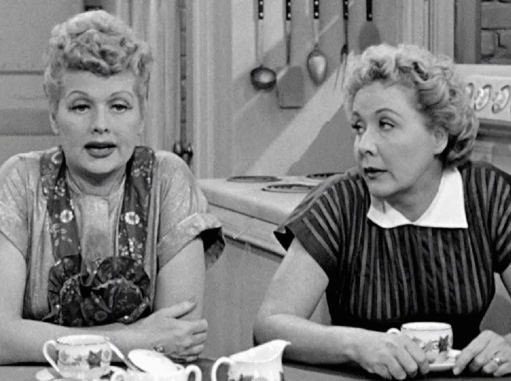
Lucille Ballβs work on βI Love Lucyβ stands the test of time, and itβs tempting to imagine that she was just as lovable, sweet, and daffy in real life as Lucy Ricardo was. In reality, though, the comedic genius could be quite serious, and often single-mindedly focused on the success of her show. βI Love Lucyβ was a testament to the strength of her vision β you can watch it today and reliably still crack up β but also to the extreme level of control she had over the set.
βThere was no ad-libbing β¦ Absolutely not,β said Ball interviewer David Fantle to Fox News. βShe said, βWe knew our characters inside and out. There was no ad-libbing. We came in, read the script and did our jobs.’β That job involved a lot of work.
For Ball, it also frequently involved off-set work. According to βI Love Lucyβ assistant director Jay Sandrich, for an episode in which she had to make pizza, Ball stood outside an Italian restaurant and practiced dough-throwing. βWhatever the project was she was doing, she had to be an expert at it by the end of the week so she could relax and be comedic,β Sandrich said about his βtechnicalβ and βthought-outβ star (via CheatSheet).
βShe is a monsterβ
American actor Lucille Ball (1911-1989) and Cuban-born actor Desi Arnaz (1917-1986) talk to each other in a still from the television series, ‘I Love Lucy’,1956. (Photo by Hulton Archive/Getty Images)
Jay Sandrich said that Lucille Ballβs performance meant that she expected precision from her co-stars as well. β[The] rest of the cast [and] the guest actors had to do the same line-readings to Lucy every time so she could get her timing,β Sandrich said, according to CheatSheet. A slightly different take on a line could throw off the energy of the scene, she thought.
Worse rumors about her behavior exist as well. There are stories of her slapping her makeup artist, throwing scripts on the floor, and even taking the fake eyelashes off of another actress, saying βNobody wears false eyelashes on this show but me!β, according to The Daily Mail. And after Ball lambasted the actor Richard Burton for mumbling his lines on the set of her β60s sitcom βThe Lucy Show,β he wrote in his diary that βShe is a monster of staggering charmlessness and monumental lack of humour.β
Even if Ball could be rigid on set, thereβs no doubt her work paid off. She supposedly did the famous Vitameatavegamin scene in one take, which wasnβt uncommon for her. Could Richard Burton do that?
More than three decades after her death, Lucille Ball remains one of TVβs funniest women. Best known for her role in βI Love Lucy,β Ball also starred in other shows and eventually co-owned a television studio with her husband, Desi Arnaz β a studio that went on to produce legendary shows like βMission: Impossibleβ and the original βStar Trekβ (via Lucy Desi Museum). During her time on TV, Ball broke many taboos, including her starring role alongside her husband on βI Love Lucy,β in what turned out to be one of the first interracial marriages on TV.
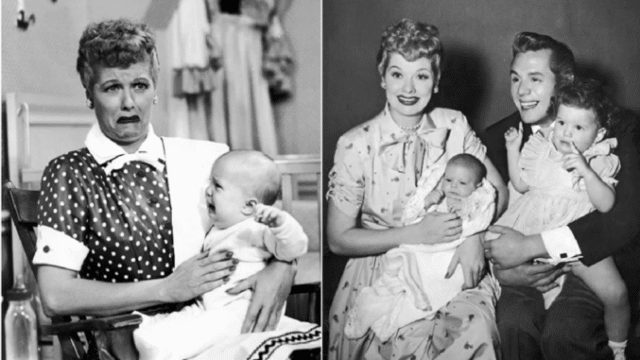
The couple had met and married in 1940 but didnβt have children until over a decade later (per Town and Country Magazine). Baby girl Lucie came first in 1951, not long after βI Love Lucyβ had made its debut in TV. But it was their second child, Desi Jr., who made headlines. According to Good Housekeeping, pregnant women were a big no-no on TV in the 1950s, so when Ball insisted on having her second pregnancy become part of the showβs storyline, it created a major stir. Ball prevailed, however, and in 1953 her son became a sensation as the first βTV baby.β
He appeared on the cover of the first-ever TV Guide issue with the cover line βLucyβs $50,000,000 Baby.β Desi Jr. had been born through a pre-planned C-section on the same day Ballβs character, Lucy Ricardo, delivered her baby on the show. Itβs fair to say Ballβs children achieved fame right out of the womb.
A new era: Lucie Arnaz
American actress Lucille Ball and her husband Desi Arnaz arrive at London Airport with their children Lucie and Desi Jr., 10th June 1959. They have just arrived from Naples for a three-day visit. (Photo by J. Wilds/Keystone/Hulton Archive/Getty Images)
Lucie Arnaz first appeared in TV alongside her mother in βThe Lucy Show,β which debuted two years after Lucille and Desi Arnazβs divorce was finalized. Although these were just guest appearances, they gave Lucie and her brother a start in show business. When Ball debuted her next show, βHereβs Lucy,β a few years later, her children became regular characters (via Best Life Online). Sheβs continued to act in both TV shows and movies for many decades, appearing in βDown To You,β βSons and Daughters,β βWild Seven,β and her own series, βThe Lucie Arnaz Show.β She received a Golden Globe nomination for her role in βThe Jazz Singer.β Sheβs also toured with her own nightclub act (per LucieArnaz.com).
Lucieβs main love has always been musical theater, though. In an interview with Arlene Herson, Lucie Arnaz recalls putting on shows with her friends in the family garage when she was as young as seven. βWe would lip-sync together to βBye Bye Birdieβ and βMusic Manβ and other wonderful musicals and write our own plays and then produce them and then invite the neighbors over, and you know, that was great fun.β
Sheβs had a successful Broadway career with roles in shows like βCabaret,β βGoodbye Charlie,β and βAnnie Get Your Gun.β While involved in the musical βTheyβre Playing Our Song,β she met (and soon after married) her second husband, Broadway actor Laurence Luckinbill. The couple has three children and lives in California.
First TV baby: Desi Arnaz Jr.
American actress Lucille Ball (1911 – 1989) with her children, Lucie Arnaz and Desi Arnaz, Jr., 1962. Desi was at the time making an appearance on ‘The Lucy Show’. (Photo by Michael Ochs Archives/Getty Images)
Desi Jr. was already on the spotlight before he was even born, but his appearance on the cover of TV Guide made him even more popular as a baby. During his teen years, Desi co-founded the band Dino, Desi, and Billy (Dean Martinβs son was a member), which was eventually signed to Reprise Records. According to All Music, the band had a Top 20 song in 1965 and played as the opening act for the Beach Boys tour that same year.
He also appeared alongside his sister in both βThe Lucy Showβ and βHereβs Lucyβ before moving on to a career of mostly TV movies and series in the 1970s and β80s. These included guest appearances in series like βThe Love Boat,β βFantasy Island,β and βThe Streets of San Francisco,β according to IMDb. His last appearance in a movie was in βThe Mambo Kingsβ in 1992, where he played his own father, Desi Arnaz Sr. Together with his sister, heβs also toured across the U.S. to perform βBabalu,β a show created to showcase and honor the music of their father.
Desi has been married twice and now lives in Nevada, where he purchased and restored the Historic Boulder Theatre. The Boulder City Ballet Company (BCBC) performs here regularly, producing shows like βAn Evening with Lucille Ballβ and βThe Nutcrackerβ (as reported via IMDb).