Entertainment

A Revolutionary Show Disguised as a Sitcom

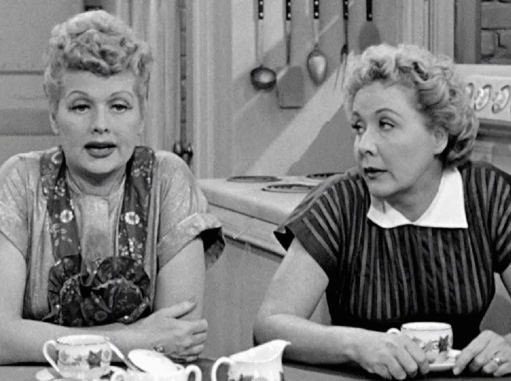
When I Love Lucy premiered in 1951, America thought it was getting a cute comedy about a scatterbrained housewife. What it really got was the most radical experiment in television history—wrapped in laughs, wigs, and wild facial expressions.

Lucille Ball and Desi Arnaz weren’t just playing for ratings. They were rewriting the rules. And nearly every sitcom that followed—from The Office to Friends—owes a quiet debt to their gamble.

Lucille Ball Wasn’t Supposed to Succeed

At 40, Lucille Ball had spent decades in B-movie purgatory, known more for her red hair than any role. Radio gave her a second wind, but television? That was uncharted territory.

CBS offered her a TV show based on her radio hit My Favorite Husband. But Ball wouldn’t sign unless her real-life Cuban husband, Desi Arnaz, was cast alongside her. That request nearly killed the deal.

A Cuban accent on primetime? An interracial marriage on screen? In 1951, that was unheard of.

So they took the show on the road. Literally.

Vaudeville, Vinyl, and Victory

To prove audiences would accept them, Lucille and Desi created a traveling vaudeville act, combining slapstick with Latin flair. The result? Instant success.

Audiences didn’t just “accept” Desi—they adored him.

That tour forced CBS to reconsider. Against industry advice, they gave I Love Lucy a green light. But it came with zero guarantees.

What happened next changed the business of TV forever.

The Birth of the Multi-Camera Sitcom

Lucille and Desi didn’t want to shoot live in New York like everyone else. They wanted to film in Los Angeles—on 35mm film.

They asked to record the show with three cameras simultaneously, in front of a live studio audience. The networks scoffed. It was expensive and unnecessary.

So Desi made them an offer:
“We’ll take a pay cut. But we own the negatives.”

That single sentence changed the economics of television. Desilu Productions would soon control a goldmine of syndication rights.

The format they pioneered—three cameras, live audience, film quality—became the standard sitcom model for the next 70 years.

Lucy’s Pregnancy Was a National Event

In season two, Lucille Ball became pregnant in real life. Rather than hide it, they incorporated it into the show—something unheard of in 1952.

Even the word “pregnant” was banned from being spoken. Instead, characters awkwardly used “expecting.”

Still, when Lucy Ricardo went into labor on-screen, the country stopped to watch. That episode aired on the same day Lucille Ball gave birth to Desi Arnaz Jr. in real life.

It drew 44 million viewers—more than President Eisenhower’s inauguration that week.

Desilu Productions: An Empire Was Born

What started as one risky sitcom quickly became a television empire. Desilu wasn’t just producing I Love Lucy—it was shaping the future.

Ball and Arnaz poured their earnings into developing new shows. Under their leadership, Desilu greenlit The Untouchables, Mission: Impossible, and the original Star Trek.

Without Lucille Ball, Captain Kirk might never have boldly gone anywhere.

She wasn’t just a performer anymore. She was a studio boss. The first woman in Hollywood to run a major TV studio.

Behind the Laughter, a Marriage in Crisis

For all their on-screen chemistry, Ball and Arnaz were growing apart. The pressures of business, family, and fame took their toll. Desi’s drinking and affairs became public secrets in Hollywood.

They divorced in 1960, just one year after the final Lucy episode aired.

Still, they never stopped loving each other. In later interviews, Ball said, “I loved Desi until the day he died.”

Desi, in his final interviews, would reflect, “I Love Lucy was never just a title.”

A Legacy in Black-and-White

Today, I Love Lucy may seem like a relic from another era—corny, slapstick, a product of 1950s optimism. But that view misses its radical core.

The show:

  • Created the three-camera sitcom
  • Normalized syndication reruns
  • Showed a biracial couple in love on American TV
  • Gave a woman full control over a major production
  • Proved that comedy could break barriers

Lucille Ball didn’t just make people laugh. She made television smarter, bolder, and better.

Final Thoughts: A Legacy Carved in Laughter

More than 70 years later, I Love Lucy is still airing somewhere in the world every day. And not just out of nostalgia.

It endures because Lucille Ball insisted that television could be more—more real, more inclusive, more ambitious.

She didn’t ask permission. She demanded ownership.

And in doing so, Lucy didn’t just get into the show.

She took over the whole stage.

“Vitameatavegamin and Victory”: The Episode That Made I Love Lucy Eternal

One Commercial, One Woman, One Historic Collapse

On May 5, 1952, Lucille Ball stepped onto a small studio set, held up a fake bottle of syrup, and changed the trajectory of television comedy forever.

The episode was “Lucy Does a TV Commercial.” The product? A fake health tonic called Vitameatavegamin.

What unfolded in the next few minutes wasn’t just funny—it was historic. A slow, drunken unraveling delivered with impeccable timing, facial control, and fearless physical comedy.

And even now, more than 70 years later, audiences still cite that scene as one of the funniest moments ever aired on television.

But what made it so iconic? And why does it still work?

Comedy in the Face of Control

The brilliance of the Vitameatavegamin sketch lies in its structure. The setup is pure 1950s absurdity: Lucy wants to be on television, despite Ricky’s disapproval. She lands a commercial spot, unaware that the tonic she’s advertising contains 23% alcohol.

Each take she films becomes more slurred, more unhinged, more delightful.

But what makes it timeless isn’t the alcohol gag—it’s Lucille Ball’s performance.

She delivers the lines (“Are you un-poopular? Do you pop out at parties?”) with such sincerity that the comedy never feels forced. Her body betrays her before her voice does. Her slow descent into tipsy chaos is surgical.

It’s comedy under control—and then out of control.

The Physical Genius of Lucille Ball

Ball wasn’t just a funny actress. She was an athlete of comedy.

The Vitameatavegamin scene showcases her strength: precise timing, fearless expression, and the ability to make chaos look effortless. Watch her eyes in that scene. They flicker with confusion, defiance, commitment.

She’s not just pretending to be drunk. She’s showing you every internal calculation her character is making—and letting it leak out through the cracks.

The studio audience couldn’t contain themselves.

Neither could America.

A Moment That Defined a Medium

That single episode did more than boost ratings. It proved that television could deliver not just scripted stories, but moments.

It helped cement I Love Lucy as a new kind of show: one that didn’t rely on guest stars or punchlines, but on character-driven, performance-first storytelling.

And it solidified Lucille Ball as the face of American television.

No wonder the Smithsonian keeps that bottle of Vitameatavegamin on display.

It’s not just a prop. It’s a relic.

Final Thoughts: Still Funny, Still Alive

We live in an age of viral videos, TikToks, and 30-second dopamine hits. But somehow, Lucy’s slow, spiraling collapse while trying to say “Vitameatavegamin” still outshines them all.

That’s not nostalgia. That’s greatness.

And that one episode?

It’s not just funny.

It’s immortal.

The biker refused to give my screaming baby back to me at the hospital and I called security. I’m not proud of that moment.

The biker refused to give my screaming baby back to me at the hospital and I called security. I’m not proud of that moment.

But when you’re a first-time father running on zero sleep and your six-week-old daughter won’t stop crying, and some massive bearded stranger in a leather vest picks her up without asking, you panic.

My name is Adam. My wife Sarah and I had just welcomed our daughter Emma into the world. She was perfect. Beautiful dark skin like her mother. And lungs that could shatter glass.

Emma cried constantly. The pediatrician said colic. Said it would pass. But when your baby screams for six hours straight and nothing helps, you start to break.

Then Emma got a fever. 102 degrees. The doctor said bring her in immediately.

We rushed to the ER at 11 PM. The waiting room was packed. Every chair filled. And Emma was screaming louder than everyone in the room combined.

People stared. One woman said, “Can’t you shut that baby up?” Sarah started crying. I wanted to punch something.

Three hours we waited. Nothing consoled Emma. My arms were dead. My ears were ringing.

That’s when he walked in.

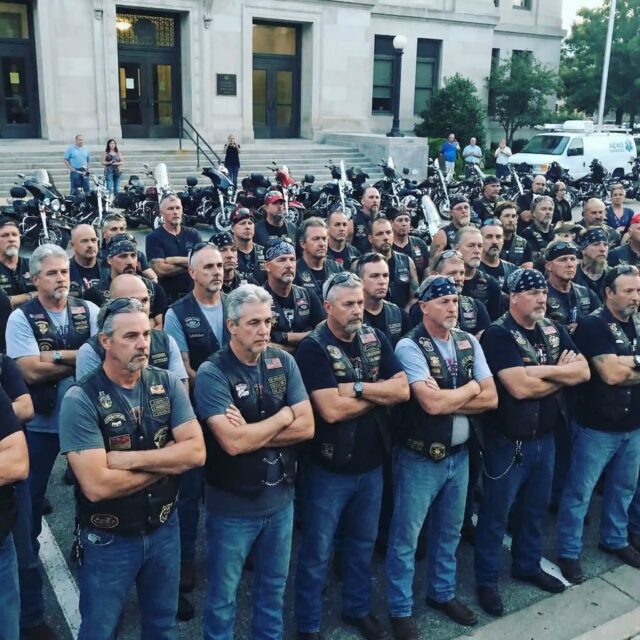
Maybe 6’4″. Easily 280 pounds. Beard halfway down his chest. Arms covered in tattoos. Leather vest with motorcycle club patches. Heavy boots thudding on tile.

He sat three chairs away. I pulled Emma closer.

“How old?” he asked. Deep, rough voice.

“Six weeks.”

“Colic?”

“Yeah. How did you—”

“That’s not hungry crying. That’s pain crying.” He stood up and my body tensed. He walked toward us and I stood, putting myself between him and my family.

“We’re fine,” I said sharply.

He stopped. Looked at me with calm blue eyes. “I wasn’t going to hurt you, brother. I was going to help.”

“We don’t need help.”

He nodded slowly. Looked at Emma turning purple from screaming. Looked at Sarah trembling with exhaustion. Looked at me pretending to be brave.

“You’re right,” he said quietly. “You don’t need help from someone like me.”

He sat back down. Looked at the floor.

And I felt like the worst person alive.

Ten minutes passed. Emma got worse. Overheating. Bright red. Sarah trying to cool her with a wet paper towel. Nothing working.

“I’m sorry,” I said. The biker looked up. “I was rude. I’m exhausted and scared and I don’t know what I’m doing.”

His smile transformed his entire face. “You’re a new dad. You’re supposed to be scared. Don’t apologize for protecting your family.”

“You said you could help?”

He stood slowly. “My name’s Jake. Four kids. My oldest had colic so bad we thought we’d lose our minds.” He gestured to Emma. “May I?”

I looked at Sarah. She was so tired she could barely think. She nodded.

I handed my daughter to this massive, tattooed stranger.

Jake held Emma against his chest and started making a low humming sound. Not a song. Just a deep, rhythmic vibration. He bounced gently, barely moving, supporting her head with one enormous hand.

Emma’s crying started to quiet. For the first time in hours, a break in the screaming.

“Babies feel your fear,” Jake said softly, still humming. “They feed off your energy. You’re tense, they’re tense. Sometimes they just need someone calm.”

Emma’s eyes closed. Her body relaxed. Crying became whimpers. Then quiet breathing.

She was asleep. On a stranger’s shoulder.

Sarah sobbed with relief. “How did you do that?”

“Practice. And sometimes babies just need a different heartbeat.” He transferred Emma carefully to Sarah’s arms. She stayed asleep.

For the first time in six weeks, my daughter was sleeping somewhere other than a moving car.

“Thank you,” I managed. “I’m sorry I—”

“Don’t.” Jake held up his hand. “You see a guy like me and make assumptions. I’m used to it.”

After a while, I asked why he was at the ER.

His expression darkened. “My riding brother crashed tonight. Car ran a red and T-boned him. He’s in surgery.” His voice cracked. “Twenty-three years we’ve been brothers.”

This man was dealing with his own crisis and he’d stopped to help us.

“Most of my club served,” he continued. “Desert Storm. We ride together, watch each other’s backs. That’s what bikers really are. Brothers. Fathers. Regular people who ride motorcycles.”

A nurse called our name. I turned back to Jake. “I hope your friend makes it.”

“Take care of that baby. It gets easier. I promise.”

Emma’s fever had broken. Probably just a virus. We were discharged ninety minutes later. When we walked through the waiting room, Jake was gone. The desk nurse said his friend had come through surgery.

I spent the next week trying to find him. Then Sarah posted in a local Facebook group. “Looking for a biker named Jake who helped us at the ER.”

Three days later, a message from Jake’s friend Tommy. “Jake doesn’t use social media. He says he doesn’t need thanks. Just hug your baby and enjoy every moment.”

I wrote back immediately. Tommy responded: “We’re doing a toy drive next month. Toys for kids in foster care. If you want to help, we could use volunteers.”

Sarah and I showed up to that toy drive. Forty bikers sorting toys and wrapping presents. Jake saw us walk in. That transforming smile. “You brought the little one!”

He introduced us to his club. Tommy, scarred but alive. Maria, a social worker. Carlos, a teacher. Jennifer, a nurse. Every single one had jobs, families, normal lives. They just also rode motorcycles and wore leather.

We helped wrap presents for three hundred foster kids. These “scary bikers” were making sure every one of them had something to open on Christmas.

Jake pulled me aside at the end. “That night in the ER, you weren’t wrong to be cautious. Protecting your family is your job.”

“But I judged you.”

“And then you changed your mind. Most people never give us a chance. You did.” He put his hand on my shoulder. “And showing up today, bringing your family around us, that saves us too. Proves we’re not who people think we are.”

That was three years ago. Emma is three and a half now. She calls Jake “Uncle Jake.” We see his club regularly. Birthdays. Charity events. Weekend barbecues.

When my mother got sick, they organized meal trains. When Sarah’s car broke down, Carlos fixed it for free. When we moved to a bigger house, fifteen bikers showed up with trucks.

People at my office ask, “You hang out with bikers? Aren’t they dangerous?”

I tell them what I learned that night. “They’re the least dangerous people I know. They’re the ones who show up.”

Last week at the grocery store, a biker walked in. Full leather, patches, tattoos. An elderly woman grabbed her purse and moved away. Emma noticed.

“That’s not nice, Daddy,” she whispered. “He’s probably really nice like Uncle Jake.”

The biker heard her. He turned and smiled. Reached into his vest and pulled out a small stuffed bear. “We hand these out to kids. Reminds them bikers are friends.”

Emma took it carefully. “My Uncle Jake is a biker. He saved me when I was a baby.”

The man’s eyes got wet. “That’s what we do, little one.”

Emma sleeps with that bear every night now.

I think about that ER sometimes. How I almost called security on the man who saved us. How fear and prejudice nearly cost my family the greatest blessing we’ve ever known.

Jake taught me the most important lesson of fatherhood. The scariest moments often contain the greatest blessings. You just have to see past your fear.

When to Worry About Veins That Appear Out of Nowhere!?

The human vascular system is a complex, high-pressure network of highways that sustain every organ and extremity. Often, we give little thought to the blue or green lines beneath our skin until the moment they suddenly appear to have multiplied or intensified. Discovering prominent veins on your hands, arms, legs, or chest can be a jarring experience, leading many to wonder if their circulatory system is signaling a crisis. While the sudden visibility of veins is frequently a benign byproduct of lifestyle shifts, genetics, or the natural progression of time, understanding the nuances of vascular health is essential for distinguishing a harmless physical trait from a medical warning sign.

To understand why veins appear “out of nowhere,” one must first understand the variables that keep them hidden. Typically, veins are obscured by a combination of skin thickness, dermal elasticity, and a layer of subcutaneous adipose tissue (body fat). When any of these factors are altered, the vascular network is “pushed” to the visual forefront. One of the most common reasons for increased vascularity is a reduction in body fat. When an individual loses weight or undergoes a period of intense physical conditioning, the insulating layer of fat between the muscle and the skin thins out. As this barrier diminishes, the veins have nowhere to go but up against the underside of the skin, creating a more “shredded” or vascular appearance.

Physical exertion itself is a primary driver of temporary and long-term vein visibility. During a workout, especially weight lifting or high-intensity interval training, the body demands an massive surge in oxygenated blood. This increased cardiac output causes the veins to swell as they work to return blood to the heart. Over time, consistent exercise leads to muscle hypertrophy—the growth of muscle fibers. As these muscles expand, they occupy more space beneath the skin, effectively squeezing the veins and forcing them toward the surface. This is why athletes often display prominent vascularity even when at rest; their anatomy has literally been reshaped to accommodate higher blood flow and larger muscle mass.

Environmental factors also play a subtle but significant role in how our veins present on any given day. In hot weather, the body engages in a process called vasodilation. To prevent overheating, the brain signals the blood vessels near the surface of the skin to widen, or dilate. This allows more blood to flow close to the air, facilitating the release of heat and cooling the body down. Consequently, on a humid summer afternoon or after a hot shower, your veins may appear much larger and more blue than they do on a cold winter morning. This is a healthy, self-regulating physiological response, yet it can be surprising to someone who hasn’t noticed the pattern before.

However, the passage of time is the most universal architect of visible veins. As we age, our bodies undergo two inevitable changes: the skin loses its structural proteins—collagen and elastin—and it becomes significantly thinner. This “crepe-like” quality of aging skin lacks the opacity of youth, making the underlying blue and purple hues of the veins much more apparent. Furthermore, the valves within the veins, which are responsible for preventing blood from flowing backward due to gravity, can weaken over time. When these valves struggle, blood can pool slightly, causing the veins to bulge. While this is often a cosmetic concern, it is a primary factor in the development of more pronounced vascular patterns in the elderly.

Hormonal shifts represent another significant, though often temporary, cause for new vascular visibility. Women, in particular, may notice a sudden prominence of veins during pregnancy, menopause, or while undergoing hormone replacement therapy. During pregnancy, the volume of blood in a woman’s body increases by up to 50 percent to support the growing fetus. This massive surge in fluid volume places extra pressure on the veins, often making them visible on the chest, breasts, and legs. Similarly, fluctuations in estrogen and progesterone can affect the elasticity of vessel walls, making them more prone to dilation.

While the aforementioned causes are largely physiological, there are instances where “new” veins demand a clinical evaluation. The primary concern with sudden vascular changes is the development of venous insufficiency or deep vein thrombosis (DVT). You should be particularly vigilant if the appearance of a new vein is accompanied by localized pain, swelling, or a “heavy” sensation in the limb. If a vein appears twisted, rope-like, and dark purple or blue—characteristic of varicose veins—it suggests that the internal valves are failing to move blood efficiently.

More critically, if a vein appears suddenly and is accompanied by redness, warmth to the touch, or significant swelling in just one leg or arm, it could indicate a blood clot. In such cases, the “visible vein” isn’t just an aesthetic shift; it is a symptom of an obstructed pathway. Furthermore, if you notice a “spiderweb” pattern of tiny veins on the chest or face that was never there before, it can sometimes be an external indicator of internal pressure issues or, in certain contexts, liver health concerns.

Maintaining vascular health involves a proactive approach to circulation. Regular movement is the most effective way to keep veins “hidden” and healthy. The calf muscles, in particular, act as a second heart for the body, pumping blood upward against gravity during walking or running. Staying hydrated is equally vital, as dehydration can cause the blood to thicken and the veins to contract, sometimes making them look more prominent and dark. For those who spend long hours standing or sitting, compression therapy can provide the external support necessary to keep blood moving and prevent the pooling that leads to visible bulging.

In the vast majority of cases, a new vein on the back of the hand or along the bicep is simply a sign of a life being lived—a body that is aging, exercising, or adapting to the heat. It is a testament to the incredible, tireless work of the circulatory system. However, the body is an intuitive communicator. By paying attention to the context of these changes—noting if they are accompanied by discomfort or inflammation—you can ensure that your vascular health remains as robust as the network of veins that keeps you moving.

My Elderly Neighbor Died — After His Funeral, I Received a Letter From Him Revealing He’d Buried a Secret in His Backyard 40 Years Ago

I used to believe I could spot a lie from a mile away.

My mother, Nancy, raised me on straight lines and straight talk. Keep your porch clean. Keep your hair brushed. Keep your secrets buried so deep no one ever stumbles over them.

At thirty-eight, I thought I had mastered that philosophy. I was a mother of two, a wife to a charming man, and the unofficial commander of our block’s neighborhood watch spreadsheet. My biggest internal conflict most weeks was whether tulips or daffodils would look better by the mailbox.

Then Mr. Whitmore died.

And with him went every certainty I had about who I was.

The morning after his funeral, I found a thick envelope in my mailbox. My name was written in looping blue ink.

Richie stepped onto the porch behind me, coffee mug in hand.

“What’s up?” he asked.

“It’s from Mr. Whitmore.”

I opened it.

The letter was short.

My dear girl,
If you’re reading this, I’m no longer here.
This is something I’ve been hiding for forty years. In my yard, under the old apple tree, a secret is buried, one I’ve been protecting you from.
You have the right to know the truth, Tanya. Don’t tell anyone about this.
—Mr. Whitmore

Richie frowned. “Why would a dead man send you to dig in his yard?”

I didn’t have an answer.

All day, the letter burned in my pocket. That evening, as my daughters argued over cereal and Richie stirred spaghetti, I stood at the back window staring at the twisted branches of that apple tree.

“I’ll go with you,” Richie said softly, wrapping his arms around my waist. “You don’t have to do it alone.”

But the next morning, after everyone left, I went by myself.

I crossed into Mr. Whitmore’s yard feeling like both an intruder and a child. The apple blossoms trembled in the breeze. I pressed the shovel into the soil.

The ground gave easily.

After a few minutes, metal scraped against steel.

I knelt and pulled out a rusted box.

Inside was a photograph.

A man in his thirties holding a newborn under harsh hospital lights.

There was a hospital bracelet tucked beside it. My birth name printed in block letters.

My vision tunneled.

“No,” I whispered. “That’s… that’s me.”

There was a letter too.

My darling Tanya,
I did not abandon you. I was removed. Your mother was young, and her family thought they knew best.
I contacted Nancy once. She told me where you lived. I moved nearby so I could watch you grow without hurting you, or her.
You deserve more than secrets.
You are my daughter.
All my love, always,
Dad.

I sank into the dirt, the photo trembling in my hands.

My quiet, orderly life fractured in that moment.

Richie found me sitting under the tree, knees muddy, face streaked with tears.

“Tan… what happened?”

I handed him the letter.

His eyes widened. “He was your father?”

I nodded.

“He lived next door,” I choked. “All this time.”

That afternoon, I called my mother.

She arrived tight-lipped, brisk, composed — until she saw the photograph.

The color drained from her face.

“Why were you digging in his yard?” she asked weakly.

“He asked me to,” I said. “After the funeral.”

Her shoulders sagged.

“I was nineteen,” she whispered. “My parents threatened to throw me out if I stayed with him. They said he’d ruin my life. I thought I was protecting you.”

“You let him live right next to us,” I said, my voice shaking. “You let me grow up thinking he abandoned me.”

“I thought it would be simpler,” she cried. “I didn’t want you to hate me.”

I looked at her — really looked at her — not as the woman who organized my childhood, but as a frightened teenager who made a choice under pressure.

“You didn’t protect me,” I said quietly. “You protected yourself.”

The words landed between us like something fragile and final.

The next week was a storm of phone calls and whispered opinions.

“Your mother did what she had to do,” Aunt Linda said at our family dinner, loud enough for everyone to hear.

I set down my fork.

“No,” I said calmly. “She did what was easiest. I’m allowed to be hurt.”

The table went silent.

For once, my mother didn’t correct me. She didn’t deflect.

She just nodded.

“I’m sorry,” she said.

And for the first time, it didn’t sound rehearsed.

That Sunday, I brought apple blossoms to Mr. Whitmore’s grave.

“I wish you’d told me sooner,” I whispered. “We could have had more time.”

Grief doesn’t disappear when you learn the truth.

It reshapes itself.

I lost a father twice — once without knowing, and once with clarity.

As for my mother, I don’t know if the fracture between us will ever fully seal. Forgiveness isn’t a switch you flip because someone apologizes. Trust isn’t rebuilt with a single confession.

But the secret is no longer buried.

And for the first time in my life, I know exactly where I come from.

No one gets to dig that up and hide it again.

How Leaving One Apartment With Care Created an Unexpected Ripple

When the small apartment I had been renting was finally listed for sale, I felt a quiet certainty that it was time to close that chapter. I packed my belongings slowly, room by room, folding memories into boxes along with clothes and books. Before leaving, I spent hours cleaning every surface, wiping down shelves, scrubbing floors, and opening the windows to let in fresh air. When I locked the door for the last time, it felt like a proper farewell to a space that had quietly carried me through an important season of life.

The following morning, my phone rang.

It was my landlady.

For a brief moment, my chest tightened. I wondered if I had overlooked something or if there was an issue I had missed in my effort to leave everything in good condition.

Her voice, though, carried warmth rather than concern.

Advertisement
She thanked me repeatedly for how carefully I had left the apartment. Then she paused, as if searching for the right words, and asked, “How are you so thoughtful and respectful when so many people leave without looking back?”

There was sincerity in her question. It sounded less like curiosity and more like surprise shaped by experience.

I smiled and told her the truth. I had been taught from an early age to leave a place better than I found it. That lesson stayed with me, not as a rule, but as a habit rooted in gratitude. That apartment had not been only a temporary address. It had been a refuge during a period when everything felt unfamiliar. I had moved for work, knowing no one in the city, navigating long days and quiet evenings. Those walls had held my routines, my doubts, and my gradual sense of belonging. Cleaning it felt natural, like a quiet way of saying thank you.

She listened without interrupting.

When she spoke again, her voice softened further, and she shared something unexpected.

Advertisement
The tenant before me had left the apartment in rough shape. Stains marked the floors, cabinets were damaged, and trash had been abandoned. She tried reaching them multiple times and never received a response. Over time, disappointment had settled in, shaping her expectations of renters as careless and detached.

My small effort, she explained, shifted something inside her.

“You reminded me,” she said gently, “that care still exists. That respect hasn’t disappeared.”

After we ended the call, I sat among half-unpacked boxes in my new apartment. The room felt unfamiliar, quiet, and full of possibility. Her words echoed in the space, lingering far longer than the call itself.

Life moves quickly. People transition from one place to another, often focused on what lies ahead. In that forward motion, it becomes easy to forget the spaces that carried us there. Walls, floors, and rooms may not speak, but they absorb our lives in ways we rarely notice.

Advertisement
Small gestures remain.

They do not announce themselves. They do not demand recognition. They settle quietly into the world and wait.

Cleaning that apartment did not bring me money or reward. It did not change my circumstances or alter my plans. Yet it left something meaningful behind. A moment of reassurance. A reminder that someone cared enough to slow down and treat a shared space with respect.

In return, I carried something forward with me.

The awareness that kindness does not need scale to matter. It does not require witnesses or praise. It lives in everyday choices that reflect who we are, even when no one is watching.

Advertisement
That lesson followed me as I unpacked my boxes, arranged my furniture, and opened the windows of my new place. I found myself treating this new space with the same care, aware that one day, I would leave it behind as well.

Sometimes, the impact we make feels invisible.

Until someone reaches out.

Until a phone rings.

Until a quiet voice on the other end says that something simple restored faith they did not realize had faded.

Advertisement
And that is when we understand that respect leaves an imprint, long after we walk away.

The Night Betrayal Changed My Life—and the Unexpected Path Forgiveness Opened Advertisement

There are moments that quietly divide a life into what came before and what follows after.
You rarely recognize them as they begin. They arrive wrapped in ordinary routines, wearing the disguise of normal days, until one unexpected detail reshapes everything you thought you understood.

For me, that night began with something simple.
Groceries.

I remember the plastic handles pressing into my fingers as I stood at the front door, mentally planning dinner. I had chosen an easy meal. Nothing elaborate. A familiar routine meant to bring comfort at the end of a long day. My toddler was spending the evening with a neighbor, and the house was meant to be peaceful.

Calm was the expectation.

What waited inside was something else entirely.

Advertisement
The Moment That Shattered Everything
The second I stepped inside, a subtle unease settled in. Nothing obvious. Nothing dramatic. The air felt disturbed, as though something important had already shifted.

Then I heard voices.

Soft. Urgent. Low.

At first, my mind searched for harmless explanations. A television left on. A passing sound from outside. Fatigue playing tricks after a long day. Even so, my feet carried me forward, down the hallway, toward the bedroom.

Each step felt deliberate, heavy with hesitation.

Advertisement
When I opened the door, time seemed to stop moving.

My husband.
My sister.
Together. In my bed.

Breath left my body in a way I had never experienced before. My chest tightened, vision blurring at the edges as reality struggled to make sense. They moved frantically, grasping for words that refused to form, reaching toward me without knowing what to say.

I heard my own voice tremble as a single question escaped.

“I loved you both. Why?”

Advertisement
No response could exist that would explain it.

So I turned away.

There was no shouting.
No broken objects.
No dramatic collapse.

I walked into my child’s room, lifted my sleepy toddler into my arms, packed a small bag, and left.

The door closed quietly behind me.

Advertisement
I did not return.

Learning How to Live Alone
The years that followed did not feel heroic. They felt practical. Steady. Heavy in quiet ways.

Single parenthood arrived overnight. I accepted work wherever I could find it. Some jobs offered little security. Others barely covered essentials. I learned how to stretch groceries, prioritize necessities, and hold joy for my child even when my heart felt emptied.

I never told my son what happened.

Not from shame. From protection. Childhood deserves safety and simplicity. Pain did not need to become his inheritance.

Advertisement
Outwardly, life appeared functional. Bills were paid. Schedules kept. Smiles offered at school events. A routine took shape.

Inside, grief lived quietly.
In memories.
In moments of hesitation.
In trust that did not come easily.

Distance felt sufficient. Forgiveness felt unnecessary.

That belief would not last forever.

The Call That Opened the Door Again
Seven years passed.

Advertisement
One morning, my phone rang.

The number felt familiar in a way that tightened my stomach. I almost ignored it.

It was my sister.

Her voice cracked before her sentence ended.

“Please,” she said. “I need to see you.”

Advertisement
Instinct urged refusal. Years of self-protection argued for silence.

Something else stirred beneath that resistance. Weariness. Curiosity. A sense that carrying anger had grown exhausting.

I agreed.

Walking Into a Changed Reality
Her apartment felt quiet in a way that carried weight. Clean. Controlled. Still.

The smell came first. Sharp. Sterile. Then the pill bottles lined neatly along the bedside table.

Advertisement
And then I saw him.

My husband.

Or the fragile version time had shaped him into.

The strength I remembered was gone. His body looked thin, pale, diminished. When our eyes met, no explanation was needed.

Regret filled the space.

Advertisement
My sister stood nearby, hands shaking as she spoke.

“He’s very sick,” she said. “It started two years ago. We stayed silent because we believed we deserved that silence.”

She spoke slowly, choosing each word with care.

“We’ve carried guilt every day. We know how hard your life became. We know we failed you.”

She handed me a small envelope.

Advertisement
Inside was a bank card.

“We saved what we could,” she said. “It’s for your son’s future.”

No excuses followed.
No attempts to rewrite history.
Only remorse.

A Quiet Shift
Forgiveness did not arrive suddenly.

It moved slowly, settling into place as understanding grew.

Advertisement
Forgiveness does not erase memory. It does not approve harm. It releases the grip pain holds on the present.

I saw them as people shaped by consequences they had lived with for years. Changed. Humbled. Trying to repair what could never fully be restored.

I forgave them.

Not because time had softened betrayal.
Not because of money.
Because anger no longer served me.

Then I made a choice that surprised everyone.

Advertisement
Choosing Compassion
I handed the card back.

“This won’t be for my son,” I said.

Confusion crossed their faces.

“It will be for treatment,” I continued. “For him.”

Silence filled the room.

Advertisement
The choice felt clear. Not owed. Chosen.

Compassion is not granted based on deserving. It reflects who we decide to become.

A Different Path Forward
The months that followed were uncertain. Appointments. Waiting. Long days shaped by cautious hope.

Strength returned gradually. Energy followed. Healing moved forward in small, steady steps.

No promises were made. Progress appeared quietly.

Advertisement
My son noticed only lighter days. More laughter. A gentler rhythm returning to life.

What Forgiveness Gave Me
Forgiveness did not repair the past.

It freed the future.

It gave peace.
It gave clarity.
It gave my child a mother no longer guarded by anger.

Life rarely fits into simple categories. Healing moves in complex ways.

Advertisement
Sometimes the most meaningful choice is the one that allows the heart to breathe again.

Forgiveness did not change them.

It changed me.

What Is the Significance of SSSS on Airline Tickets?!

Air travel, for all its speed and convenience, is often a gauntlet of small, cumulative stresses.1 The anxiety begins long before the aircraft doors close—in the frantic weighing of luggage, the timed rush through check-in, and the seemingly endless queues snaking through airport security checkpoints.2 Travelers strive for a smooth, anonymous passage through this system, hoping to melt into the stream of humanity moving toward the gate. However, for a select group of passengers, their journey is flagged for a mandatory detour, signaled by four seemingly innocuous letters printed on their boarding pass: SSSS.3

These four letters stand for Secondary Security Screening Selection, a designation that pulls the chosen traveler out of the standard flow and subjects them to an elevated level of scrutiny by Transportation Security Administration (TSA) officials.4 Discovering “SSSS” printed near your gate information or seat number is the universal signal that your airport experience is about to become significantly more involved, detailed, and time-consuming. It is a moment that can instantly ratchet up the pressure, especially for a traveler already feeling the pinch of a tight connection or the general fatigue of a long day.

The “SSSS” designation is not a random draw, nor is it typically a result of a direct, immediate suspicion. It is a calculated element of the U.S. government’s Secure Flight program, a comprehensive, risk-based pre-screening mechanism managed by the TSA in coordination with airlines.5 This program operates behind the scenes, long before the passenger even sets foot in the airport terminal.6 Its purpose is twofold: to identify passengers who may pose a higher risk to aviation security, and conversely, to facilitate the passage of known, trusted travelers.

The Secure Flight system utilizes biographical information collected during the booking process—the traveler’s full name, date of birth, and gender—to vet them against government watchlists.7 A TSA spokesperson once clarified the mission: “Secure Flight identifies low- and high-risk passengers before they arrive at the airport.8 It matches names against trusted traveler lists and watchlists to enhance security.” Essentially, the system is designed to catch individuals on lists such as the No Fly List—those prohibited from flying—or the CDC Do Not Board List, as well as to ensure that a simple name similarity doesn’t mistakenly flag an innocent traveler who happens to share a name with a person of interest.9

While a match to a genuine high-risk designation certainly results in the “SSSS” code, the vast majority of people selected for Secondary Security Screening have not done anything wrong. The system also selects a certain number of passengers on a random or semi-random basis to maintain the unpredictability of security measures, a common strategy in layered defense systems. This random element ensures that even those who might attempt to study and circumvent the security protocols cannot be certain of avoiding intense scrutiny. For the average, innocent traveler, therefore, seeing “SSSS” can be frustrating, but it is best viewed as a routine, albeit inconvenient, function of modern aviation safety.

When a passenger presents an “SSSS” boarding pass, the standard security process is entirely superseded. The traveler is escorted to a designated area for the secondary screening. This process is exhaustive and typically includes several distinct steps. First, the passenger’s carry-on luggage undergoes a painstaking inspection. Every item may be removed, swabbed for traces of explosives, and scrutinized. Devices like laptops and tablets are often subjected to functional tests, requiring the passenger to power them on.10

The personal screening of the passenger is equally thorough. It moves beyond the standard walk-through metal detector and body scanner. The individual will usually undergo a detailed pat-down search, often more methodical than the routine checks. Furthermore, their shoes, belt, and even specialized medical equipment may be checked with explosive trace detection (ETD) technology, which involves running specialized cloths over the items to test for microscopic particles of explosive residue.11 This entire process can easily add anywhere from 15 to 45 minutes to the security timeline, turning a comfortably scheduled connection into a frantic race to the gate.

A key indicator of an “SSSS” flag is that the passenger will typically be unable to check-in for their flight online or at an airport kiosk. They are forced to interact directly with an airline agent, who must then manually print the boarding pass with the mandated code. This inability to self-check-in serves as the first subtle clue that extra steps await. Once at the checkpoint, the TSA officers are trained to recognize the code immediately, signaling the initiation of the enhanced protocol.

Navigating this situation requires patience and a specific set of actions from the passenger. The most important advice is simple: Stay calm and cooperate fully. Arguing or expressing frustration, while understandable, will only prolong the process and potentially lead to further complications. Security personnel are simply executing a protocol. Travelers should allow themselves ample extra time—ideally an hour more than usual—when they suspect they may be flagged, a prediction sometimes based on recent travel patterns or past experiences.

Furthermore, preparation can significantly streamline the delay. Having all necessary travel documents (passport, ID) immediately accessible, and ensuring electronics are fully charged and easily removable, minimizes the time spent complying with the instructions. Knowing the security procedures—like avoiding wearing excessive jewelry or carrying questionable items—is always beneficial, but especially when under the spotlight of an “SSSS” designation.

The presence of “SSSS” on a boarding pass is, in the end, a tangible reminder of the complex, often invisible security infrastructure underpinning global air travel. While it is certainly a nuisance for the individual, it is presented by authorities as a necessary component of a layered approach to security, an attempt to make the vast network of global flights safer for everyone. For the thousands of travelers who encounter this code each year, it is not a mark of suspicion, but simply the reality of being selected for a vital, if inconvenient, part of aviation security protocol.

Savannah Guthrie makes chilling confession that mom Nancy may be dead

Nancy Guthrie, the mother of Today host Savannah Guthrie, has been missing for 24 days. On Instagram, Savannah now makes a heartbreaking admission, saying that her mother may be dead.

Nancy Githrie, 84, disappeared from her home in the Catalina Foothills area just north of Tucson, Arizona, on February 1st. Since then, police have tried to locate her, looking at all possible outcomes.

A masked man, who was captured on the woman’s ring bell camera, is suspected of the abduction. February 24th marks the 24th day Nancy Guthrie has been missing.

Now, Savannah Guthrie has released a new, heartbreaking video, revealing that she and her family have accepted that their mom may be dead.

“Hi there. I’m coming on to say it is day 24 since our mom was taken in the dark of night from her bed and every hour and minute and second and every long night has been agony since then of worrying about her and fearing about her, aching for her and most of all just missing her,” Savannah Guthrie said in an Instagram video on Tuesday.

Savannah Guthrie says she accepts mom, Nancy, may be dead

“We know that millions of you have been praying, so many people have been praying of every fatih and no faith at all. We feel those prayers.”

The Today show host continued by urging. people to “keep praying without ceasing.” Savannah added that she “still believes in a miracle” and that she “believe that she can come home.”

However, at the same time, she also made the chilling admission that her mother might not be alive.

“We also know that she may be lost. She may already be gone. She may have already gone home to the Lord that she loves and is dancing in Heaven with her mom and her dad and with her beloved brother Pierce and with our daddy,” Savannah Guthrie said. “And if this is what is to be, then we will accept it, but we need to know where she is. We need her to come home,” Savannah added.

Offering a reward of up to $1 million

In the first two weeks of the investigation, Arizona authorities had received more than 18,000 tips, the NY Post reported.

Savannah Guthrie stated she and her family are now offering up to $1 million for any information leading to her mother’s recovery.

“You can call the 1-800 tip line, you can be anonymous if you want. Someone out there knows something that can bring her home. Somebody knows, and we are begging you to please come forward now,” she shared.

Our thoughts and prayers are with the Guthrie family.

What I Found After a Decade of Silence Changed Everything I Believed!

There are moments in life that divide everything into before and after, though you rarely recognize them as they happen. Clarity comes later, when time and distance allow reflection to uncover the exact instant when trust fractured and nothing felt the same again.

For me, that moment unfolded on an ordinary afternoon in a hotel hallway, beneath humming air vents and patterned carpet. A small inconsistency in my husband’s story had stirred unease — subtle, persistent, easy to dismiss. I followed it without drama, almost embarrassed by my own suspicion.

When the door opened and I saw my husband standing beside my sister, something inside me quietly shut down.

I did not scream.
I did not demand answers.
I did not ask questions.

I simply turned and walked away.

In that instant, my marriage ended. My bond with my sister shattered. And the version of myself who trusted easily disappeared.

The years that followed were shaped by swift decisions and emotional survival. I finalized the divorce quickly and cut all contact with my sister. I built walls strong enough to hold back memory. People called me strong, and I repeated it until it sounded true.

Outwardly, life moved forward. I rebuilt my career. I formed new friendships. I learned how to live independently.

Yet invisible losses lingered.

Holidays felt incomplete.
Family gatherings carried quiet strain.
My parents navigated divided loyalties in silence.

In the early years, my sister tried to reach me — letters, voicemails, messages sent into absence. I ignored them all. I believed anger was the only thing keeping me upright. If I let it go, I feared I would collapse beneath grief.

When she became ill, I stayed away.

By the time I learned how serious it was, distance had hardened into habit. I told myself I could not attend the funeral. My father did not argue. He only asked for help sorting her belongings.

His exhaustion pierced through my resistance.

Her apartment felt suspended in stillness, as though life had paused mid-breath. In the back of a closet, I found a small ribbon-tied box from our childhood. Inside was her journal.

I expected excuses.

Instead, I found fear.

She had grown suspicious of my husband long before I had. She wrote about noticing inconsistencies, about feeling uneasy, about deciding to confront him privately before speaking to me without certainty. She wanted proof before pain.

She described that afternoon in the hotel. How she had asked him questions. How she had demanded honesty. How she had been trying to protect me.

And how, when I arrived and misunderstood the scene, everything unraveled beyond repair.

Her entries were not filled with justification. They were filled with regret.

She apologized for failing to reach me sooner.
For underestimating how easily perception can destroy trust.
For believing she still had time.

She wrote about dialing my number and hanging up.
About standing outside my apartment, unable to knock.
About carrying words that never found a place to land.

In the final pages, written shortly before her death, her handwriting weakened.

“I hope someday she understands,” she wrote.

Not to excuse me.
Not to defend herself.
Simply — to be seen.

Reading those words shifted the ground beneath a decade of certainty. The story I had lived inside was incomplete. The anger that had sustained me for years began, quietly, to loosen.

I closed the journal and, for the first time, allowed myself to grieve my sister as she truly was — not as the figure shaped by betrayal, but as a flawed, frightened, loving human being who had tried, imperfectly, to do right.

Forgiveness did not arrive as forgetfulness.
It did not erase pain.

It arrived as understanding.

As the realization that intention and harm can exist side by side.
That love does not guarantee wisdom.
That silence can wound as deeply as deception.

The past remained unchanged.

But my relationship to it softened.

Truth came too late to repair what had been broken. It could not restore what had been lost. But it released what I had carried for too long.

And in that quiet release, I discovered a different kind of mercy — not the kind that rewrites history, but the kind that frees the heart to breathe again.

Popular

A Simple Guide to Tipping at the Nail Salon: Finding What...

0
For a long time, getting my nails done was one of the small routines I truly looked forward to. It was more than just...