
Entertainment

Melania Trump breaks silence on Alex Pretti shooting with rare plea to the U.S.

Melania Trump Calls for Unity After Fatal Shooting of Alex Pretti

First Lady Melania Trump has made a rare public intervention on a matter of national controversy following the fatal shooting of Alex Pretti by ICE and Border Patrol agents in Minnesota over the weekend.

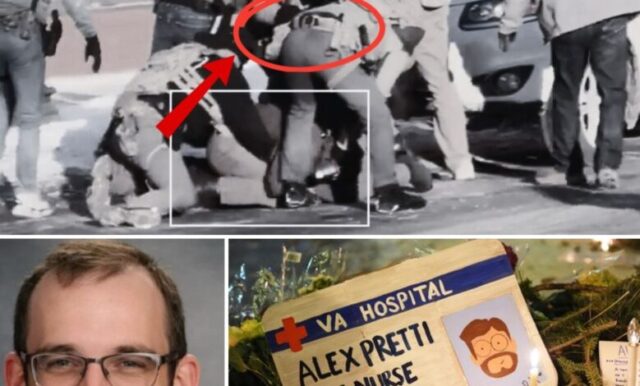
Pretti, a 37-year-old ICU nurse and military veteran, was pepper-sprayed, restrained, and ultimately shot dead on Saturday, January 7. His death comes less than a month after another fatal encounter involving federal agents, the killing of Renee Good, which similarly sparked widespread outrage and scrutiny.

Conflicting Accounts and Public Backlash

The shooting immediately drew attention after multiple video recordings emerged that appeared to contradict early statements from the Department of Homeland Security. Initial claims suggested Pretti posed an imminent threat to officers at the scene. However, footage circulating online shows Pretti’s firearm remained holstered throughout the encounter.

According to reports, Pretti legally carried the firearm with a valid permit. The weapon was only removed after officers disarmed him. Moments later, he was shot.

Despite this, senior figures aligned with the Trump administration framed the incident in stark terms. White House adviser Stephen Miller and former Customs and Border Protection commander Gregory Bovino publicly described Pretti as a “domestic terrorist,” language that echoed reactions following the death of Renee Good weeks earlier.

The public response was swift and intense. Protests erupted, particularly in Minneapolis, with critics accusing federal authorities of excessive force and deliberate misinformation.

White House Softens Its Position

As pressure mounted, the White House appeared to soften its initial stance. Press Secretary Karoline Leavitt later referred to Pretti’s death as a “tragedy,” while Donald Trump stated that his administration would formally review the circumstances surrounding the shooting.

This shift marked a noticeable departure from earlier messaging that implied Pretti bore responsibility for his own death.

Melania Trump Breaks Her Silence

Against this backdrop, Melania Trump addressed the situation during an appearance on Fox & Friends, an unusual move for a First Lady who has largely avoided direct engagement with political crises.

Her message focused not on assigning blame, but on urging calm and cooperation.

“We need to unify. I’m calling for unity. I know my husband the president had a great call yesterday with the governor and the mayor and they’re working together to make it peaceful and without riots,”

She concluded with a clear appeal to nonviolence:

“I’m against violence, so if you protest, protest in peace.”

Her comments were widely interpreted as an attempt to de-escalate tensions amid growing unrest, even as criticism of federal law enforcement continued to intensify.

Federal Response Intensifies

Meanwhile, President Trump confirmed that he was deploying his so-called “border tsar,” Tom Homan, to Minnesota. Homan has been tasked with overseeing a federal operation dubbed Operation Metro Surge and will report directly to the president.

The announcement has fueled further debate, with supporters arguing it will restore order, while critics fear it signals an aggressive federal posture that could deepen divisions.

Family Rejects Official Narrative

The Pretti family has forcefully rejected the administration’s characterization of their son, accusing federal officials of spreading falsehoods in the aftermath of his death.

In an emotional statement, they said:

“Alex wanted to make a difference in this world. Unfortunately, he will not be with us to see his impact. I do not throw around the hero term lightly. However, his last thought and act was to protect a woman.”

They continued with a pointed condemnation of the government’s claims:

“The sickening lies told about our son by the administration are reprehensible and disgusting. Alex is clearly not holding a gun when attacked by Trump’s murdering and cowardly ICE thugs. He has his phone in his right hand, and his empty left hand is raised above his head while trying to protect the woman ICE just pushed down, all while being pepper-sprayed.”

A Nation at a Crossroads

As investigations continue and protests persist, Melania Trump’s call for unity has landed in a deeply polarized political climate. Whether her message resonates—or is overshadowed by anger, grief, and mistrust—remains uncertain.

For now, the case of Alex Pretti stands as another flashpoint in an ongoing national debate over law enforcement accountability, political rhetoric, and the possibility of reconciliation in an increasingly divided America.

What do you make of Melania Trump’s call for unity? Can it realistically be achieved in the current political climate? Let us know your thoughts in the comments.

I Opened My Teen Daughters Bedroom Door Fearing the Worst, and What I Saw Changed Me!

I have a fourteen-year-old daughter, and somewhere along the way I learned that parenting at this age means living in a permanent state of tension. You’re suspended between trust and fear, pride and anxiety, wanting to protect without hovering, wanting to believe without being reckless. Every decision feels like a test you don’t know you’re taking until after it’s over.

If you’ve raised a teenager, you understand this space. It’s quiet, exhausting, and filled with second-guessing.

A few months ago, my daughter started seeing a boy from her class named Noah. From the beginning, there was nothing obvious to worry about. He wasn’t loud or performative. He didn’t try to charm us. He was just… respectful. The kind of respectful that feels genuine. He made eye contact. He said thank you without being prompted. When he came over, he asked whether he should take his shoes off and offered to help carry groceries in from the car.

On paper, he was exactly the kind of boy a parent hopes their child will choose.

And still, that didn’t stop the unease.

Every Sunday afternoon, almost like a ritual, Noah would come over after lunch and stay until dinner. Without fail, the two of them would head straight to my daughter’s room, close the door, and settle in. There was no loud music, no bursts of laughter, no constant chatter drifting down the hallway.

Just silence.

At first, I told myself that the silence was reassuring. They weren’t sneaking around the house. They weren’t trying to hide their presence. My daughter had always been responsible, thoughtful, and open with me. I reminded myself that trust isn’t something you ration out—it’s something you choose to give.

But doubt doesn’t arrive loudly. It slips in quietly, disguised as responsibility.

One Sunday afternoon, I was folding laundry in the hallway. The house was calm, warm, and unusually still. I remember holding a towel fresh from the dryer, heat still trapped in the fabric, when a single thought crept in and refused to leave.

What if?

What if I was being naïve? What if my desire to be the “trusting parent” was blinding me? What if something was happening behind that closed door that I’d regret not stopping?

I stood there longer than necessary, towel forgotten in my hands, my heart racing far beyond what the moment deserved. I told myself I wasn’t panicking. I was being careful. Responsible.

I’d just take a quick look. A glance. The kind of thing parents do and then laugh about later.

Before I could talk myself out of it, I walked down the hallway. My footsteps sounded louder than usual. I stopped outside her bedroom door, took a breath, and opened it.

And then I stopped cold.

My daughter wasn’t on her bed. She wasn’t laughing, whispering, or scrolling on her phone. She wasn’t even looking at Noah.

She was kneeling on the floor.

So was he.

Between them was a large piece of cardboard spread across the carpet. It was covered in handwritten notes, rough sketches, and photographs carefully taped into place. Open notebooks surrounded them. Colored markers lay scattered, uncapped. A laptop sat nearby, paused on what looked like a presentation slide.

They both looked up at me, startled.

“Mom!” my daughter said, her face flushing instantly. “You weren’t supposed to see this yet.”

For a moment, my brain couldn’t catch up with what my eyes were seeing.

“See… what?” I asked.

Noah stood immediately, as if out of instinct. “I’m sorry,” he said quickly. “We were going to clean up. We didn’t mean to make a mess.”

My daughter walked toward me and gently took my hand. Her voice shook just slightly, but she met my eyes.

“We’re working on something,” she said. “Together.”

I looked back at the floor, really looked this time.

One photograph caught my attention. It was my father—her grandfather—lying in a hospital bed, smiling weakly but trying to look strong. Another photo showed a small neighborhood park. Another showed a stack of books with a handwritten sign that read: Community Literacy Drive.

My chest tightened.

“What is all this?” I asked quietly.

My daughter took a breath. “You know how Grandpa’s been struggling since his stroke,” she said. “He told me he feels useless sometimes. Like he doesn’t matter anymore.”

I nodded. I knew that feeling too well.

“Well,” she continued, “Noah’s grandmother helps run a small community center. They don’t have enough volunteers, especially for kids who need help reading. And Grandpa used to be a teacher.”

Noah stepped forward carefully, not interrupting but adding gently, “We thought maybe we could organize something. A reading program. Just a few hours a week. Grandpa could help plan it. Pick books. Feel useful again.”

The cardboard on the floor wasn’t a mess. It was a plan. Dates penciled neatly in the margins. A list of roles. A simple budget. A draft letter asking neighbors to donate books. One section was labeled, in my daughter’s handwriting: How to Make It Fun.

This wasn’t idle time. It was intention.

“You’ve been doing this every Sunday?” I asked.

She nodded. “We didn’t want to tell anyone until we knew it could actually work.”

I sat down on the edge of her bed, suddenly overwhelmed by an emotion I hadn’t expected. All the worry I’d carried, all the assumptions I’d built in my head, collapsed under the weight of what was actually in front of me.

I had opened that door prepared to confront a problem.

Instead, I’d walked into compassion.

“I’m sorry,” I said quietly. “I shouldn’t have assumed.”

My daughter smiled, not smugly, not defensively—just warmly. “It’s okay,” she said. “You’re my mom.”

Noah nodded. “If you want to go through everything, you can.”

So I did.

I knelt on the carpet and looked carefully. I saw effort. Thoughtfulness. Empathy far beyond what I had expected from two fourteen-year-olds. I saw kids who weren’t trying to rush into adulthood, but who were learning how to care about someone outside themselves.

That night at dinner, I watched them differently. Not as children I needed to monitor constantly, but as young people figuring out how to show up in the world.

They talked about school, books, ideas. I realized how easy it is to underestimate teenagers, especially when fear takes the lead.

I had walked down that hallway full of worry.

I walked away carrying something else entirely.

Pride.

That moment taught me something I didn’t know I needed to relearn: not every closed door hides something dangerous. Sometimes it hides growth. Sometimes it hides kindness. Sometimes it hides young people trying, imperfectly and sincerely, to make the world a little better.

I didn’t close that bedroom door relieved that nothing bad had happened.

I closed it grateful that something good had.

List of all 75 countries that have just been banned from entering US!

The Trump administration has sparked global controversy after announcing a sweeping ban on citizens from 75 countries from entering the United States.

The move comes amid a “reassessment” of immigrant visa processing, the State Department says, and affects travelers from Afghanistan, Brazil, Iran, Somalia, and dozens more.

Donald Trump’s second term has gotten off to a turbulent start — and the controversies keep piling up.

Beyond his calls to take Greenland “the hard way,” and his push for military action against Venezuela, including the capture of President Nicolás Maduro, the president has also sparked outrage over immigration policy and the deadly ICE shooting of Renee Good in Minnesota.

Now comes the next major flashpoint: a sweeping ban on citizens from 75 countries, which the administration says is part of a “reassessment” of immigrant visa processing. This was first reported by Fox News.

According to a State Department memo, consular officers have been instructed to refuse visas under existing laws while screening procedures are overhauled.

The freeze is set to begin Wednesday, January 21, and will remain in place “until the U.S. can ensure that new immigrants will not extract wealth from the American people,” a Homeland Security spokesperson explained on X.

“The pause impacts dozens of countries – including Somalia, Haiti, Iran, and Eritrea – whose immigrants often become public charges on the United States upon arrival. We are working to ensure the generosity of the American people will no longer be abused. The Trump Administration will always put America First,” the spokesperson said.

Full list of countries banned
Afghanistan
Albania
Algeria
Antigua and Barbuda
Armenia
Azerbaijan
Bahamas
Bangladesh
Barbados
Belarus
Belize
Bhutan
Bosnia
Brazil
Burma
Cambodia
Cameroon
Cape Verde
Colombia
Cote d’Ivoire
Cuba
Democratic Republic of the Congo
Dominica
Egypt
Eritrea
Ethiopia
Fiji
Gambia
Georgia
Ghana
Grenada
Guatemala
Guinea
Haiti
Iran
Iraq
Jamaica
Jordan
Kazakhstan
Kosovo
Kuwait
Kyrgyzstan
Laos
Lebanon
Liberia
Libya
Moldova
Mongolia
Montenegro
Morocco
Nepal
Nicaragua
Nigeria
North Macedonia
Pakistan
Republic of the Congo
Russia
Rwanda
Saint Kitts and Nevis
Saint Lucia
Saint Vincent and the Grenadines
Senegal
Sierra Leone
Somalia
South Sudan
Sudan
Syria
Tanzania
Thailand
Togo
Tunisia
Uganda
Uruguay
Uzbekistan
Yemen

Critics argue that the justification offered by the administration paints entire populations with a broad brush, ignoring evidence that many immigrants from the listed countries contribute economically and rely less on public assistance than native-born citizens. Immigration advocates warn the freeze will disrupt family reunification, derail long-running legal immigration cases, and leave thousands of applicants in limbo with no clear timeline for resolution.

The announcement has also raised practical and diplomatic questions, particularly with major global events approaching. Trump has repeatedly celebrated the United States’ role as a host nation for the upcoming FIFA World Cup, which the U.S. will co-host alongside Canada and Mexico beginning June 11. Several countries whose national teams are expected to compete—such as Brazil, Colombia, Iran, Ivory Coast, and Uruguay—appear on the suspended list.

While administration officials insist the policy targets immigrant visas rather than short-term travel, uncertainty remains over whether exemptions will be granted for athletes, staff, media, and traveling fans. For now, the suspension is described as a “pause,” but no end date has been provided, and no formal guidance has been issued on special circumstances tied to international sporting events or cultural exchanges.

As legal challenges loom and international reaction intensifies, the visa freeze has become emblematic of a broader shift toward restrictive immigration policies under Trump’s renewed presidency. With investigations ongoing, protests continuing in several U.S. cities, and diplomatic partners seeking clarification, the policy has left both supporters and critics bracing for its long-term consequences.

Why One McDonalds Has Turquoise Arches!!

If you ever find yourself driving through Sedona, Arizona, a small desert city surrounded by majestic red rock formations, you might double-take when you spot the McDonald’s. Something about it feels different — familiar, yet slightly off. Then it hits you. The arches aren’t gold. They’re turquoise.

It’s the only McDonald’s in the world with arches that color — and it’s not a marketing stunt. It’s a story about place, preservation, and the quiet ways a community can hold on to its identity.


A Town Like No Other

Sedona isn’t a typical town, and that’s exactly the point. Nestled between crimson cliffs and ancient sandstone towers, it’s a place that draws people for its natural beauty, spiritual energy, and striking harmony between human life and landscape. Even before it became a tourist destination, Sedona was known for its deep respect for nature. The city’s building codes reflect that philosophy — strict rules ensure that nothing built here overshadows the landscape that defines it.

So when McDonald’s decided to open a restaurant in Sedona back in 1993, the company found itself up against something it rarely encountered: a community unwilling to compromise its aesthetic for a global brand.
The Color Problem

The conflict started with color. The famous “Golden Arches” are one of the most recognizable symbols in the world — bright, loud, and impossible to miss. But city planners in Sedona saw a problem. The iconic yellow would clash dramatically with the surrounding scenery: the deep, rust-colored rocks and soft desert palette that make the city one of the most photographed places in the American Southwest.

Sedona’s architectural guidelines required all commercial buildings to blend into the environment, using natural tones and subdued designs. A golden “M,” glowing against the muted desert backdrop, was out of the question.

McDonald’s executives initially resisted the idea. After all, the arches weren’t just decoration; they were the company’s identity. To change them seemed unthinkable. But Sedona’s officials held firm — if McDonald’s wanted to be part of Sedona, it would have to play by Sedona’s rules.
The Compromise

After weeks of negotiation and discussion, a creative solution emerged. What if the arches weren’t golden, but turquoise? The color, inspired by the gemstone long revered in Native American culture, would harmonize with Sedona’s landscape while maintaining a distinctive charm.

Turquoise, after all, carries its own symbolism. It’s a color tied to protection, healing, and connection to the natural world. In the arid Southwest, it represents the sky reflected in desert stone — a perfect match for Sedona’s spiritual and visual aesthetic.

McDonald’s agreed. When the restaurant opened later that year, locals were pleasantly surprised. The turquoise arches didn’t feel like an intrusion. They felt like they belonged.

A Symbol Reimagined
The change turned out to be more than just a design decision. It became a statement — a small but powerful example of how global corporations can adapt to local culture rather than overwrite it.

For Sedona, it was a victory of identity. For McDonald’s, it became an unlikely lesson in harmony and flexibility. Tourists visiting the city began to take notice. The turquoise arches, contrasting softly against the terracotta cliffs, became a must-see landmark in their own right.

Today, visitors often stop just to take photos of the sign — some without even ordering a meal. The restaurant itself looks nothing like a typical fast-food outlet: earth-toned stucco walls, low-slung architecture, and desert landscaping designed to complement the surroundings rather than compete with them.

Inside, it’s much like any McDonald’s — but outside, it’s something else entirely: a piece of global branding shaped by local values.

More Than Just a Color
The turquoise arches also tell a deeper story about Sedona’s commitment to preservation. The city’s guidelines extend far beyond McDonald’s — from fast-food chains to gas stations to hotels, every building is expected to respect the landscape. Signs must be low to the ground, lighting must remain subdued, and colors must mirror the natural hues of the surrounding terrain.

The philosophy is simple: in Sedona, nature leads, and humanity follows. That’s part of what makes the city so striking. Even as tourism has boomed — millions of visitors come each year to hike, meditate, or simply take in the view — Sedona has managed to hold onto its sense of calm and authenticity.

The turquoise McDonald’s fits perfectly into that vision. It’s a reminder that even the most recognizable global icons can adapt when a community stands firm in protecting its essence.

A Landmark of a Different Kind
Over the years, the turquoise arches have taken on a life of their own. They appear in travel blogs, postcards, and even art prints. Couples stop there on road trips for pictures, and travel guides list it as a “quirky must-see.” For many, it’s a symbol of Sedona’s individuality — proof that even a multinational corporation can be reshaped by the spirit of a place.

Locals often point out that the restaurant’s unusual design has actually enhanced its charm. “It’s funny,” one longtime resident said. “When you see it, you still know it’s McDonald’s. But it feels like Sedona’s McDonald’s — not just another copy of the same thing.”

That sense of ownership reflects something larger: a community’s right to define its own aesthetic. In a world where sameness often feels inevitable, Sedona quietly reminds the rest of us that we don’t have to surrender uniqueness to progress.

Lessons in Turquoise
The story of the turquoise arches might seem small — a simple design change in a single fast-food restaurant. But it carries meaning well beyond color. It’s about compromise, respect, and the ability of a global brand to listen rather than impose.

Sedona’s approach challenges the idea that economic growth and environmental integrity can’t coexist. It shows that preserving beauty and character doesn’t mean rejecting change — it means shaping it thoughtfully.

Today, as more towns grapple with overdevelopment and visual pollution, Sedona’s turquoise arches stand as a subtle model for balance. They remind us that a city’s soul is worth protecting — and that even something as ordinary as a drive-thru can honor the extraordinary land it stands on.

The Color That Became a Legacy
More than thirty years after its construction, the turquoise McDonald’s remains one of Sedona’s most photographed landmarks. Tourists still marvel at the contrast between the gentle teal glow of the arches and the fiery cliffs behind them. McDonald’s executives have acknowledged its fame, and it’s become a favorite example in design and marketing circles of “branding with local sensitivity.”

It’s also a quiet symbol of Sedona itself — resilient, creative, and unwavering in its dedication to harmony.

So, when you pass through Sedona and spot those turquoise arches glinting under the desert sun, know that you’re looking at more than a fast-food restaurant. You’re seeing a rare partnership between commerce and conscience, between a company that learned to bend and a town that refused to.

And maybe, just maybe, that shade of blue-green isn’t just paint. It’s a reminder that beauty isn’t something we build over nature — it’s something we build with it.

SPECIAL MIRACLE, 3 Missing Texas Girls Found Alive in a Hollow Tree 1 Mile From Camp, They Survived Nearly 10 Days Thanks to These 2 Things

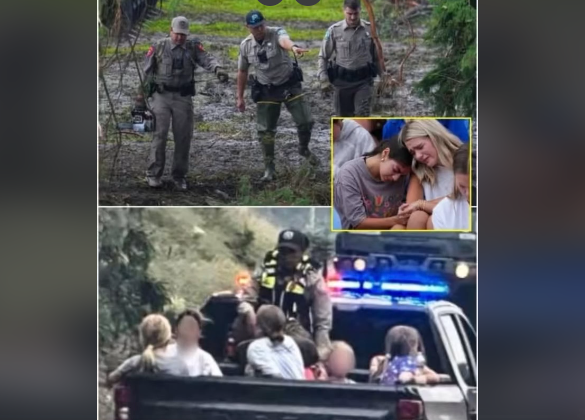
What rescuers are calling an almost unimaginable miracle unfolded Sunday afternoon in the aftermath of the devastating Texas flood disaster. Nearly ten days after Camp Wrenwood was overwhelmed by rising waters, three young girls—among the 27 initially reported missing—were found alive, sheltered inside the hollow trunk of a massive oak tree less than a mile from the destroyed campsite.

The discovery has stunned emergency officials, medical professionals, and families across the country. Against overwhelming odds, the girls endured exposure, hunger, fear, and isolation with nothing but ingenuity, training, and an unbreakable bond with one another.

Search efforts had been relentless since the flooding tore through the area. Helicopters swept overhead. Ground teams combed debris fields, creek beds, and forested paths. Dogs followed scent trails that vanished in mud and water. Day after day, hope dimmed as time stretched on.

On Sunday, that changed.

A volunteer hiker assisting with ground searches had been assigned to a secondary trail—an area that had already been loosely checked earlier in the week. As she navigated around fallen trees and soaked earth, she heard a sound coming from the base of a large, partially collapsed oak. At first, she assumed it was an injured animal or wind shifting through debris.

Then she heard a voice.

“We’re here… please don’t leave.”

The words were faint, barely audible, but unmistakably human. The hiker immediately called for help. Within minutes, trained rescue teams rushed to the scene, carefully pulling away loose bark and debris. What they found left even seasoned responders speechless.

Curled together inside the hollow trunk were three girls—Emily Rivera, Zoey Nash, and Hope Lin, all between eight and ten years old. They were huddled close, wrapped in damp towels, their small bodies pressed together for warmth. A broken shoelace had been tied across a slab of bark, creating a crude flap that helped block wind and insects.

They had been there for nearly ten days.

Paramedics described the scene as surreal. The girls were weak, scratched, dehydrated, and covered in insect bites, but they were conscious, responsive, and—most remarkably—calm. No life-threatening injuries were found.

Doctors later confirmed that two key factors likely saved their lives.

The first was water. With no access to food and no safe way to travel far without risking getting lost, the girls focused on hydration. Using plastic wrappers from their lunch kits, they fashioned a makeshift rainwater catchment system, angling the plastic into the hollow so droplets could collect. They also drank from leaves after storms and wrung moisture from their shirts directly into their mouths.

“They showed an intuitive understanding of survival priorities,” said Dr. Mia Lang, part of the emergency medical team that treated them. “Water is everything in situations like this. Without it, they wouldn’t have lasted more than a few days.”

The second factor was preparation.

Just days before the flood, Camp Wrenwood counselors had run a wilderness safety drill—a routine exercise that many children likely didn’t realize could ever become real. The lesson focused on staying together, finding shelter, conserving energy, and minimizing movement when lost.

The girls remembered every part of it.

“They told us they kept repeating what they learned,” one paramedic said. “‘Stay dry. Stay together. Stay quiet.’ They treated it like a mission.”

Rather than panic or wander off individually, the girls chose the hollow tree as shelter and committed to it. They rationed movement, spoke quietly to avoid attracting animals, and took turns staying awake during storms. When fear crept in, they talked to each other about home—about their mothers, favorite meals, and what they would do when they got back.

One rescuer said that was perhaps the most powerful element of all.

“They never stopped believing they’d be found,” he said. “Even when they thought no one was coming, they believed in each other.”

When news of the rescue reached the family base camp, the reaction was immediate and overwhelming. Parents who had spent days oscillating between hope and despair collapsed in tears. One mother reportedly fell to her knees when she heard her daughter’s name. Nearby towns rang church bells. Strangers embraced.

Within hours, social media flooded with messages under hashtags like #HollowTreeHeroes, #3StrongGirls, and #FaithFoundThem. Across the country, people called it a story the nation desperately needed.

“Ten days,” one widely shared post read. “No fire. No food. Just courage.”

Another said simply, “They saved each other.”

Emergency officials were careful to emphasize that the broader disaster remains tragic. Many families are still waiting for news. The search continues. Loss has been immense. But even in the middle of devastation, this discovery stands as proof that survival is sometimes possible where logic says it shouldn’t be.

Medical teams say the girls will remain under observation for several days. Rehydration, infection prevention, and emotional support are the priorities now. Counselors trained in trauma care are working closely with the families to help the children process what they endured.

Yet even as they recover, the girls have already left a lasting impact.

Rescue leaders have pointed to this case as a powerful argument for practical safety education. Simple drills, often dismissed as routine or boring, can become life-saving knowledge. The importance of staying together, conserving energy, and using the environment wisely cannot be overstated.

For now, the ancient oak tree where the girls sheltered stands quietly in the woods, unremarkable to anyone who doesn’t know its story. But to many, it has already become a symbol—of resilience, preparation, and the strength that can emerge even in the smallest hands.

In a disaster defined by loss, three voices calling out from a hollow tree reminded the nation that hope can survive in the darkest, most unexpected places.

How a Mother Found Healing, Hope, and Compassion After Losing Her Son and Facing Unexpected Change!

When Daniel died at thirty-two, Evelyn felt as though the ground beneath her had simply vanished. There was no gradual adjustment, no soft landing—just an abrupt drop into a reality she did not recognize. For weeks, time lost its shape. Mornings arrived without warning, and nights stretched endlessly, filled with the echo of a voice that was no longer there.

Daniel had been her only son. From the moment she first held him, red-faced and furious at the world, her life had quietly reoriented itself around his existence. Every milestone—his first steps, his awkward teenage years, his wedding—had felt like proof that life, however imperfect, moved forward with purpose. His death shattered that belief.

Three months later, Evelyn still caught herself reaching for her phone to call him. She still set aside recipes she thought he would like. Grief had woven itself into the fabric of her days, subtle and relentless.

What made the pain sharper was Lily.

Lily had been Daniel’s wife for six years. Evelyn had never disliked her, but she had never truly understood her either. Lily was gentle, introspective, the kind of woman who processed emotions inwardly rather than aloud. Where Evelyn grieved loudly and visibly, Lily grieved in silence. That difference had always existed between them, but after Daniel’s death, it became a gulf.

Evelyn learned—through a neighbor, not from Lily herself—that Lily was planning to move away. Worse, she had begun spending time with someone new. The news struck Evelyn like a betrayal. A raw, irrational anger took root in her chest.

How could Lily move forward so quickly? How could she smile, even faintly, while Evelyn still struggled to breathe under the weight of loss?

And then there was the fear Evelyn barely admitted to herself: if Lily moved away, would she take Daniel’s son with her?

Her grandson was five years old. He had Daniel’s eyes. When he laughed, Evelyn sometimes had to leave the room because it felt like being stabbed by memory. But he was also the last living piece of her son. The idea of losing him too felt unbearable.

One quiet afternoon, Lily came to visit.

She sat at the kitchen table, hands folded neatly, her posture calm but cautious. Evelyn noticed how tired she looked—how the lightness Lily once carried had dimmed.

“I wanted to talk to you about Daniel’s inheritance,” Lily said gently. “The ninety thousand he left.”

Evelyn felt her chest tighten instantly. That money was more than a number to her. It was tangible proof that Daniel had existed, that he had planned for the future. It was something she could hold onto.

Her response came sharp and defensive, fueled by months of unprocessed pain.

“You don’t deserve a dime,” Evelyn said. “You’ve already moved on. You’re acting like he never mattered.”

The words hung in the air, heavy and cruel.

Lily didn’t argue. She didn’t cry. She simply inhaled slowly and met Evelyn’s eyes.

“I loved him,” Lily said softly. “I still do. And I will always honor him in my own way. But grieving doesn’t look the same for everyone.”

There was no accusation in her voice. No anger. That calm unsettled Evelyn more than shouting ever could.

“I’m not trying to take your grandson away from you,” Lily continued. “I would never do that. You will always be his grandmother. You will always be Daniel’s mother.”

Something in Evelyn cracked.

She realized, with sudden clarity, how deeply she had misjudged Lily. She had turned her grief outward, looking for someone to blame because facing her own helplessness felt too painful. She had painted Lily as the enemy because it was easier than accepting that loss had no villain.

They had loved the same man. Differently, yes—but deeply.

Evelyn’s shoulders sagged as the fight drained out of her.

“I was scared,” she admitted quietly. “I thought if you moved on, I’d lose him all over again.”

Lily nodded. “I was scared too. I didn’t know how to talk to you. I didn’t want to make things worse.”

They sat in silence for a long moment, the kind that no longer demanded words.

Finally, Evelyn spoke again.

“What if we set the money aside for his future?” she said. “For college. For whatever life brings him. That way, Daniel’s gift still protects him.”

Lily’s eyes filled with tears. “That’s all I ever wanted.”

They agreed to create a trust for the child, something that honored Daniel while ensuring stability and opportunity. It wasn’t about control or possession—it was about care.

For the first time since her son’s death, Evelyn felt something shift inside her. The pain was still there. It always would be. But it was no longer tangled with resentment.

She learned that day that grief can distort perception, turning allies into imagined enemies. She learned that healing doesn’t come from clinging tightly to what we’ve lost, but from finding ways to carry it forward without bitterness.

Love, she realized, does not disappear when circumstances change. It adapts. It softens. It asks us to choose compassion even when our hearts are broken.

And in choosing compassion, Evelyn didn’t lose her son.

She honored him.

A Simple Text Exchange With Perfect Timing!

Some jokes don’t need volume, exaggeration, or spectacle to land. They work because they mirror real life so closely that recognition does the heavy lifting. This is one of those stories—quiet, domestic, and built entirely on timing.

It starts late in the evening, the kind of hour when offices are winding down and people are already half-home in their heads. The husband was finishing up at work, mentally ticking through the familiar checklist of the night ahead: traffic, dinner, maybe a little television, then bed. Nothing remarkable. Just routine.

Before shutting down his computer, he reached for his phone.

He and his wife had been married long enough to understand each other’s rhythms. He knew when she was likely scrolling, when she was distracted, when she was half-listening while doing something else. That knowledge gave him a misplaced sense of confidence.

With a casual grin, he typed out a message.

“Hey love. Can you wash my clothes and make my favorite dinner before I get home?”

He read it once, nodded to himself, and hit send.

Phone back into his pocket. Job done.

He leaned back in his chair, satisfied, imagining the message lighting up her screen. Surely she’d see it right away. Surely there’d be a quick reply—maybe playful sarcasm, maybe a short complaint followed by compliance. Either way, he expected something.

Minutes passed.

Nothing.

He checked his phone again. No notification. No vibration. No preview banner. Just silence.

At first, he assumed she was busy. Maybe she was in the kitchen. Maybe the phone was charging in the other room. Maybe she’d respond in a minute.

Another few minutes slid by.

Still nothing.

The smile faded. In its place came curiosity, then mild irritation, then that familiar internal debate every married person knows well: Do I resend the message? Do I call? Do I wait and pretend I’m not checking my phone every thirty seconds?

He decided not to push. Repeating himself felt risky. Calling felt dramatic. Instead, he sat there, staring at the screen, replaying the wording in his head.

Maybe the message sounded bossy. Maybe it landed wrong. Maybe she saw it and chose to ignore it on principle.

That thought stung more than he expected.

Then, inspiration struck.

If she hadn’t seen the message, he could test that. And if she had seen it and ignored it, well—he could confirm that too.

He opened the messaging app again.

This time, his tone was different. Lighter. More exciting.

“Guess what?” he typed. “I just got a raise at work. Thinking about buying you a brand-new car.”

He sent it and locked his phone.

It didn’t even take a full minute.

The screen lit up almost immediately, buzzing against the desk. He picked it up and smiled.

“OMG, really??” her reply read, complete with enthusiasm and punctuation.

There it was.

Proof.

She had her phone. She was available. She was definitely reading messages.

He took a moment, savoring the clarity of the situation. No confusion now. No ambiguity. Just perfect, undeniable confirmation.

Then he typed his final reply.

“No. I just wanted to make sure you saw my first text.”

And with that, he put the phone away and headed out of the office.

The brilliance of the exchange wasn’t cruelty or triumph. It was precision. No yelling. No accusations. No drawn-out argument. Just a perfectly timed punchline delivered with surgical calm.

At home, the reaction was exactly what you’d expect.

His wife stared at her phone, stunned for a moment, then let out a laugh she tried very hard to suppress. She knew she’d been caught—not doing anything terrible, just doing what everyone does sometimes: prioritizing messages that sound exciting over ones that sound like chores.

By the time he walked through the door, the atmosphere was light. She shook her head, smiling despite herself.

“That was low,” she said.

“That was efficient,” he replied.

They laughed, because humor like that doesn’t wound—it disarms. It exposes something true without turning it into a fight.

That’s why the story sticks.

It’s not about manipulation or one-upmanship. It’s about recognition. About the quiet games we all play with attention, motivation, and selective responsiveness. About how excitement can wake us up faster than obligation ever will.

Everyone has been on both sides of that exchange.

We’ve all ignored a message we didn’t feel like dealing with. We’ve all suddenly become very available when something shiny appeared. And most of us have, at some point, wanted undeniable proof that we weren’t imagining it.

The humor works because it doesn’t exaggerate reality—it simply holds up a mirror.

No insults. No shouting. Just timing.

And sometimes, that’s all it takes to make a joke land perfectly.

I Was Ready to Expose My Neighbors Wife for Cheating, Then She Told Me the Truth That Broke

I still remember the exact moment my certainty hardened into judgment.

I was halfway through dinner at a small Italian restaurant on Maple Street, the kind of place with dim lights, chipped wooden tables, and the constant scent of garlic and wine hanging in the air. I had just lifted my fork when something in my peripheral vision made me stop. Across the room, in a quiet corner, sat my neighbor’s wife.

Sarah.

She wasn’t alone.

A man sat beside her, close enough that their knees nearly touched. His hand rested gently over hers, and she laughed—softly, intimately—leaning in as if the rest of the restaurant had ceased to exist. It wasn’t loud or dramatic. It was worse than that. It looked familiar. Comfortable.

My first reaction was immediate and fierce. How could she?

Her husband, Mark, was everything people say they want in a neighbor and rarely get. He was the guy who cleared snow from sidewalks that weren’t his, who fixed broken fences without asking for a thing in return, who remembered birthdays and checked in when someone was sick. Watching his wife with another man felt like witnessing a personal betrayal, even though it wasn’t mine.

Anger rose hot in my chest, righteous and fast. By the time I paid my bill and stepped back out into the cold night, my mind was already made up. Mark deserved to know. I would tell him. I owed him that much.

For the next few days, I replayed the scene over and over. I practiced what I would say, imagining myself calm and compassionate, a reluctant messenger delivering an unpleasant truth. I told myself I wasn’t gossiping. I was protecting him. That belief made it easier to sit with the discomfort.

But before I had the chance to run into Mark, I ran into her.

It was early morning at the coffee shop, rain streaking down the windows in uneven lines. The place was quiet, the low hum of the espresso machine filling the pauses between orders. I was waiting at the counter when Sarah walked in.

She looked different up close. Thinner. Her face seemed drained of color, her eyes shadowed in a way that makeup couldn’t hide. When she saw me, she paused. Our eyes met, and I knew immediately that my thoughts had betrayed me. Whatever was on my face, she read it clearly.

She hesitated, then walked toward me.

“I know you saw me last week,” she said softly.

My stomach dropped. I hadn’t expected confrontation, let alone this calm acknowledgment. I opened my mouth, unsure whether I was about to defend myself or accuse her, but she didn’t give me the chance.

“That was my brother,” she said. “He flew in from overseas.”

Confusion flickered through me, followed by a sharp stab of embarrassment. But before I could respond, she continued, her voice steady in a way that made my skin prickle.

“I have six months to live,” she said. “Stage four cancer.”

The words landed with physical force. The room seemed to tilt, the background noise fading until all I could hear was my own pulse pounding in my ears.

“I haven’t told my husband yet,” she went on. “I don’t know how. I don’t know how to look at him and take away the future we planned together.”

Everything I’d been carrying—anger, certainty, indignation—collapsed into something heavy and sour. Shame settled in its place.

She explained quietly that her brother had come because she needed someone who already knew, someone she didn’t have to be strong for. They’d been meeting for dinners, talking through impossible decisions, trying to make sense of time suddenly reduced to a deadline. He was her anchor, her safe place to fall apart.

“Every morning I wake up thinking, today I’ll tell him,” she said. “And every night I go to bed having failed again.”

I apologized right there in the coffee shop, standing between the pastry case and the counter. I told her I had judged her. I told her I was wrong. She listened, then offered a small, sad smile, as if forgiveness had never been in question.

A week later, she told him.

She asked me to be there—not to speak, not to intervene, just to sit in the room so she wouldn’t be alone if she lost her nerve. We sat in their living room, sunlight spilling across the floor in warm, ordinary patterns that felt cruel in their normalcy. Mark joked about dinner. He complained about work. He was being himself, unaware that his life was about to fracture.

Then she told him.

I will never forget the sound he made. It wasn’t a word. It was something raw and broken, like air forced through a wound. He wrapped his arms around her as if holding tighter might somehow keep her from slipping away. I stared at the floor, my throat burning, painfully aware of how close I’d come to destroying that moment before she was ready.

Afterward, I went home and sat in silence for a long time.

I had been so sure of my moral clarity. So eager to act, so convinced that seeing part of the truth entitled me to deliver all of it. I had mistaken urgency for righteousness and assumption for understanding.

Now I know better.

Sometimes what looks like betrayal is grief wearing a disguise. Sometimes intimacy is survival, not deception. And sometimes the truth isn’t yours to carry, let alone to hand over.

The most dangerous thing I was holding that week wasn’t information. It was certainty—certainty that I knew enough, certainty that I was right, certainty that good intentions guaranteed good outcomes.

They don’t.

What I learned from Sarah, from Mark, and from my own near-mistake is this: restraint can be an act of compassion. Silence, when chosen wisely, can be a form of respect. And judgment, once released, is nearly impossible to call back.

I almost shattered something fragile and sacred because I thought I understood the story after seeing only one page.

I won’t make that mistake again.

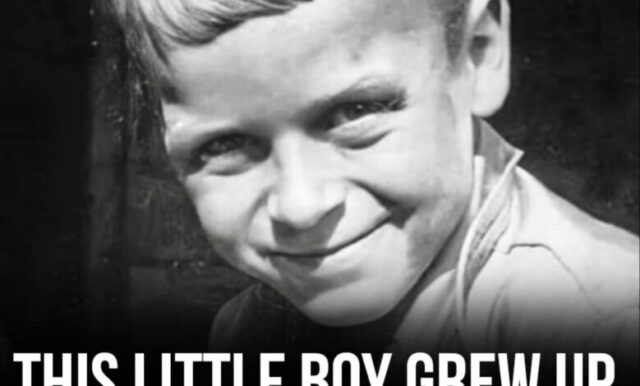
This seemingly harmless boy grew up to become one of Americas most evil men!

He looked like countless other boys growing up in postwar America. Quiet, polite, slightly awkward, the kind of child who blended into the background of a modest neighborhood. He delivered newspapers, attended Boy Scout meetings, and posed for family photos with a shy half-smile. Nothing about him suggested danger. Nothing hinted at the horror that would later follow his name across headlines and into history.

That boy was Ted Bundy, one of the most infamous criminals the United States has ever produced.

His story is unsettling precisely because it does not begin with obvious violence. It begins with secrecy, confusion, and a carefully constructed illusion of normalcy.

Born in 1946 in Burlington, Vermont, Bundy entered the world under a cloud of unanswered questions. His father was never officially identified, and for years his origins were concealed. He spent his earliest months in a home for unwed mothers before being sent to live with his maternal grandparents in Philadelphia. To the outside world, they were his parents. His mother, Louise, was introduced as his older sister. The truth was hidden behind polite lies and family agreement.

As a child, Bundy appeared largely ordinary. Neighbors later recalled him as well-mannered and quiet. He played outside, attended school, and participated in youth activities. On the surface, there was little reason for alarm. Yet the foundation of his identity was built on deception, and that fracture would echo throughout his life.

Bundy later claimed he sensed the truth long before it was confirmed. He noticed how Louise hovered over him, how her care felt different, more intimate than that of a sibling. Accounts vary on when he learned definitively that she was his mother—some say he found his birth certificate as a teenager, others that a relative told him—but when the truth emerged, it left a mark. His sense of self, already fragile, became tangled with resentment and confusion.

Although many descriptions of his childhood emphasize normalcy, there were moments that, in hindsight, feel chilling. One relative later recalled waking to find Bundy standing beside her bed with knives laid out nearby. He was still a child at the time. The incident was brushed aside, never investigated, never confronted. It became another quiet silence added to the chain.

At school, Bundy struggled socially. He had a speech impediment that made him self-conscious and an awkwardness that set him apart from more confident classmates. He longed for acceptance and admiration but rarely received it. Sports teams rejected him. Romantic attention eluded him. By high school, he was deeply isolated, nursing a growing sense of inadequacy.

When Louise married and attempted to form a more conventional family, Bundy reportedly resented his stepfather. The man could not provide the wealth or status Bundy fantasized about. From a young age, Bundy became fixated on appearance, class, and power. He wanted to be admired, envied, desired. He wanted control.

Outwardly, his life seemed to improve. He attended college, appeared intelligent and articulate, and learned to present himself as charming and thoughtful. He volunteered on a suicide prevention hotline, a fact that later horrified the public when the full scope of his crimes became known. To many, he looked like a young man on a promising path.

Privately, however, his inner world was darkening. He later described developing violent fantasies that grew more elaborate and consuming. These thoughts were not fleeting. They were rehearsed. Nurtured. Protected.

By the mid-1970s, fantasy turned into action.

Bundy began targeting young women, often college students, across several states. His methods relied on deception rather than brute force. He pretended to be injured, asked for help, or presented himself as an authority figure. He understood trust and exploited it with precision. Once a victim was isolated, his charm vanished, replaced by sudden and extreme violence.

His first confirmed murder occurred in 1974, though investigators believe his crimes began earlier. Among the earliest suspected victims was eight-year-old Ann Marie Burr, who disappeared from her Tacoma home in 1961. Bundy never confessed to that crime, but suspicion followed him for decades.

As survivors came forward, patterns emerged. The same ruses. The same calculated approach. The same chilling control. By his own later admission, he murdered at least thirty women, though experts believe the true number is higher. His crimes spanned at least seven states, leaving devastation in their wake.

Bundy’s unraveling began in 1975, when a routine traffic stop revealed suspicious items in his vehicle. From there, the investigation widened, and his name became nationally known. Trials followed in multiple states, each one exposing more of the brutality he had hidden behind a polished exterior.

In Florida, he was convicted of three murders and sentenced to death. As appeals dragged on, Bundy’s notoriety grew. Media coverage turned him into a grotesque figure of fascination. Some focused on his intelligence and composure in court, missing the deeper truth: his crimes were not acts of brilliance, but of calculated cruelty.

On January 24, 1989, Bundy was executed in the electric chair at Florida State Prison. He declined a special last meal. His final words were brief and unemotional. Outside the prison walls, crowds gathered. Some mourned the victims. Others celebrated the end of a man who had terrorized countless families. Fireworks lit the sky as confirmation of his death spread.

Even at the end, Bundy remained disturbingly detached. Former FBI profiler William Hagmaier later noted that Bundy spoke about his murders in terms of control, not remorse. He understood what he had done, but not in a way that resembled empathy.

The legacy he left behind is deeply unsettling. Bundy did not fit the cultural image of a monster. He was not visibly threatening. He did not begin life as an obvious villain. His story forces uncomfortable questions about how violence can hide behind charm, intelligence, and apparent normalcy.

It is tempting to search for a single cause—an abusive childhood, a defining trauma, a moment when everything went wrong. But Bundy’s life resists simple explanations. His crimes were shaped by a combination of secrecy, resentment, fantasy, and choice. He was not created overnight. He was formed over time, in spaces where warning signs were missed and silence prevailed.

The photograph of that shy boy remains disturbing not because it excuses what came later, but because it reminds us how easily danger can go unnoticed. Evil does not always announce itself. Sometimes it smiles, blends in, and waits.

Bundy’s story endures not as a source of fascination, but as a cautionary reminder. Ordinary appearances can conceal extraordinary darkness. And when society fails to confront early signs of harm, the cost can be immeasurable.

SHOCKING LEAK REPORTED! Newly surfaced 20-minute CCTV footage in the Alex Pretti case has come to light!

At this point, there is still no verified evidence to support the claim that Alex Pretti intended to carry out violence against federal immigration agents, despite assertions made by the Department of Homeland Security in the immediate aftermath of his death. What has emerged instead is a growing body of video footage, eyewitness accounts, and unanswered questions that complicate any simple narrative about what happened on that Minneapolis street.

The location where Pretti was killed is known locally as “Eat Street,” a stretch of road usually associated with cafés, restaurants, and nightlife. It is a place where people gather to eat, talk, and move freely through public space. In the days since the shooting, that familiar atmosphere has been replaced by grief and unease. Traffic has been diverted. Candles, flowers, and handwritten notes now line the sidewalks. Residents arrive quietly, standing for long moments, trying to reconcile how an ordinary evening in a well-known neighborhood ended in lethal force.

Several videos of the incident have now surfaced, recorded from multiple angles by bystanders and nearby cameras. Together, they span the moments leading up to the shooting, the confrontation itself, and the immediate aftermath. The footage is crowded and disorienting. Federal agents in similar uniforms move rapidly through the frame. Voices overlap. Whistles and car horns cut through the noise. It is difficult, even with repeated viewing, to reconstruct a single, clean sequence of events.

What is striking, however, is not only what appears in these recordings, but what does not.

In none of the publicly available footage is Pretti seen preparing to attack officers or escalating toward deadly violence. There is no clear visual evidence of him raising a weapon, threatening agents, or positioning himself to cause harm. The videos do not show a moment where lethal force appears unavoidable or imminent based on his actions alone.

In one widely circulated clip, Pretti is seen holding his phone and filming immigration officers. This behavior is not unusual in Minneapolis, particularly in recent weeks. Residents have increasingly documented federal immigration activity, citing concerns about aggressive enforcement and asserting their right to observe and record public officials in public spaces. This practice is lawful, and civil rights organizations have repeatedly affirmed that filming officers, by itself, does not constitute a threat.

Audible in several recordings are whistles and car horns. In the neighborhood, these sounds have become informal warning signals used by residents to alert others that immigration activity is taking place. While disruptive, these actions are also legal forms of expression and protest. They reflect community anxiety and opposition, not armed aggression.

At one point, Pretti appears to gesture toward a vehicle, waving it around him as agents move nearby. The moment is brief, but notable. If his intent had been to harm officers, opportunities existed while their backs were turned or their attention was elsewhere. He does not act on them.

Shortly afterward, the situation escalates rapidly. Video shows an officer pushing a woman to the ground. Pretti moves toward the interaction, seemingly responding to what he perceives as excessive force. Moments later, he is pepper-sprayed. The footage does not clearly capture whether a warning was issued or what specific justification was cited for deploying the spray.

What follows happens quickly. Pretti is forced down. In at least one angle, he is seen on his knees when the first gunshot rings out. Additional shots follow. He appears motionless as they are fired. At no point in any of the recordings is he visibly holding, aiming, or firing a weapon.

These images have intensified public concern, particularly because Pretti’s killing comes only weeks after another fatal incident involving federal agents in Minneapolis. Journalists, legal observers, and community organizers who have spent time documenting enforcement actions in the city describe a recurring pattern: encounters that escalate with alarming speed, often in densely populated public spaces.

For many residents, the issue extends beyond one case. Streets that once felt neutral or safe now feel unpredictable. Public spaces are increasingly viewed as potential zones of confrontation, where misunderstandings, fear, and authority collide with deadly consequences.

Another layer of concern lies in how quickly official narratives tend to form. In past incidents, federal agencies have released early characterizations of events that were later challenged by video evidence or witness testimony. In at least one recent case, initial statements were partially retracted after contradictions became impossible to ignore.

This history has fueled skepticism. When authorities describe intent or threat before a full investigation is complete, those descriptions can harden into public belief, even if later evidence complicates them. Once such narratives take hold, they are difficult to undo.

The core issue is not about assuming malice on either side. It is about process, transparency, and restraint. When deadly force is used by agents of the state—especially in crowded civilian settings—the standard for clarity must be exceptionally high. The public is not owed speed; it is owed accuracy.

In Pretti’s case, the existence of extensive footage should, in theory, allow for careful reconstruction rather than speculation. Yet the release of partial information and selective framing risks shaping conclusions before that reconstruction is complete.

There is also the human cost to consider. Pretti was a familiar presence in his community. Friends, neighbors, and colleagues have described him as engaged, compassionate, and deeply committed to helping others. His death has left a vacuum that official statements cannot fill.

As investigators continue their work, the most responsible posture—for authorities, media, and the public alike—is restraint. Not restraint in demanding accountability, but restraint in drawing conclusions before all evidence is examined openly and honestly.

What happened on Eat Street did not occur in a vacuum. It unfolded in a climate of heightened tension, political urgency, and public fear. That context matters. So does the distinction between lawful protest and lethal threat.

In moments like this, the danger is not only the loss of life, but the erosion of trust that follows when clarity is delayed or replaced by expedience. Transparency is not a courtesy; it is a necessity. Without it, each new incident deepens the divide between institutions and the communities they serve.

Alex Pretti’s death has become more than a single tragedy. It is a test of whether truth will be pursued patiently and publicly, or whether it will be shaped to fit a predetermined story. The outcome of that choice will resonate far beyond one street, one city, or one case.

Popular

Fathers Day Drive that turned into a surprise!

0
On Father’s Day, I drove six hours back to the house I grew up in, carrying with me a tray of my mother’s lemon...

Shattered At The Gas Station