Entertainment

Two Simple Signs That Reveal a Person’s True Character

Understanding someone deeply often feels like a process that takes years, built on shared experiences and long conversations. Yet sometimes, clarity comes much faster than we expect—not through dramatic moments, but through quiet, everyday behavior. True character is rarely revealed by words alone. It shows itself in small choices, spontaneous reactions, and the way a person behaves when they think no one is watching. Learning to notice these subtle signals can help us see people more clearly and connect with them more honestly.

Many psychologists and thinkers have suggested that character is shaped not by grand achievements, but by ordinary moments. When people are relaxed and unguarded, their real values often emerge naturally. Instead of focusing on appearances or carefully crafted impressions, it can be more revealing to observe how someone responds to situations that offer no reward or recognition. In these moments, sincerity becomes visible, and personality reveals itself without effort. Paying attention to such details doesn’t mean judging others—it means understanding them with greater empathy and awareness.

One of the most meaningful indicators of character is how a person treats people who cannot offer anything in return. Respect toward strangers, patience with service workers, and kindness toward vulnerable individuals often reflect inner values rather than social performance. Another important sign is how someone reacts when things don’t go as planned. Life is full of delays, mistakes, and unexpected challenges, and these moments can highlight emotional maturity, resilience, and humility. Calm responses, accountability, and compassion often reveal a strong inner foundation, while impatience or blame can signal unresolved tension.

Beyond these two signs, many other behaviors can offer insight into a person’s inner world. The way someone listens, the tone they use when speaking about others, and the kind of humor they share can all hint at deeper attitudes and emotions. Even small habits—like how someone handles responsibility or responds to feedback—can reveal values and priorities. By observing these patterns with curiosity rather than judgment, we gain a richer understanding of people around us. True character is not something people announce; it is something they quietly demonstrate every day, in ways that become visible only when we learn to look a little closer.

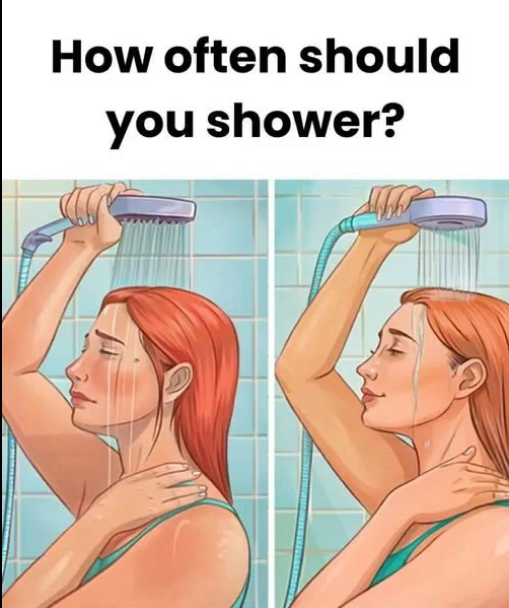
How Frequent Bathing Can Affect Your Skin and Well-Being

Bathing is a daily habit most of us never question. A warm shower feels refreshing, relaxing, and comforting after a long day, and cleanliness is often associated with health and self-care. From childhood, many people learn that frequent bathing equals better hygiene. However, modern research and dermatology suggest a more balanced view. While regular washing is important, bathing too often—especially with hot water and strong products—can quietly affect your skin and overall well-being in ways you might not expect.

The human body has its own natural protection system. The skin produces oils and hosts beneficial microorganisms that help maintain moisture, defend against irritation, and keep the skin healthy. Frequent washing can disrupt this delicate balance by stripping away natural oils and weakening the skin barrier. Over time, this may lead to dryness, itching, sensitivity, and discomfort. These effects are more noticeable in people with sensitive skin and in older adults, whose skin naturally becomes thinner and loses moisture more easily. In such cases, excessive bathing can turn a healthy routine into a source of irritation rather than comfort.

Bathing habits can also influence other parts of the body, including hair and overall physical comfort. Washing hair too often may remove the scalp’s natural oils, making hair brittle and prone to breakage. Extremely hot showers can affect circulation and cause feelings of fatigue or dizziness, while sudden temperature changes may challenge the body’s ability to regulate heat. Additionally, using harsh soaps or antibacterial products too frequently can reduce the skin’s natural defenses, making it more vulnerable to irritation. These effects don’t mean you should avoid bathing, but they highlight the importance of moderation and gentle care.

The key to healthy bathing is balance. For most people, moderate showering with lukewarm water and mild products is enough to maintain hygiene without harming the skin. Moisturizing after bathing, limiting long hot showers, and adjusting washing frequency based on lifestyle and skin type can make a significant difference. Instead of focusing on how often you bathe, it’s more helpful to focus on how you bathe. By listening to your body and adopting gentle habits, you can enjoy the benefits of cleanliness while preserving the natural systems that keep your skin and body healthy.

The Real Reasons Public Bathroom Doors Don’t Reach the Floor

If you’ve ever used a public restroom, you’ve probably noticed the noticeable gap between the stall door and the floor. For many people, this design can feel unusual or even slightly uncomfortable at first glance. However, this feature is not accidental or careless—it is the result of thoughtful planning. Architects and facility designers must balance privacy with safety, hygiene, and practicality, and the gap under restroom doors plays an important role in achieving that balance.

One of the main reasons for the gap is safety. In public spaces, emergencies can happen unexpectedly, and quick access is essential. The open space beneath stall doors allows staff or emergency responders to quickly assess whether someone inside may need help, without forcing the door open immediately. It can also help them communicate or pass items through if necessary. This design reduces response time in urgent situations and helps ensure that people can receive assistance as quickly as possible, which is a priority in crowded public environments.

Another key benefit of the gap is improved air circulation. Public restrooms experience heavy use throughout the day, and proper ventilation is necessary to maintain a clean and comfortable environment. The space under the door allows air to move more freely throughout the restroom, helping ventilation systems work more efficiently. Better airflow reduces lingering odors and moisture, which can otherwise lead to discomfort and maintenance issues. By supporting natural air movement, the door gap contributes to a healthier and more pleasant restroom experience for everyone.

Finally, the gap makes cleaning and maintenance far more efficient. In busy facilities such as airports, malls, schools, and offices, restrooms must be cleaned frequently and quickly. The open space under stall doors allows cleaning staff to mop floors easily without needing to open each stall or navigate obstacles. It also helps reduce long-term wear on doors and fixtures by minimizing constant handling. While it may seem like a small detail, the gap under public restroom doors reflects a practical design choice that keeps facilities safer, cleaner, and easier to manage—showing how thoughtful design often prioritizes functionality alongside comfort.

Why Small, Subtle Experiences Often Leave Us Feeling Calm, Comforted, and Hopeful

In a world that often celebrates big achievements and dramatic changes, it’s easy to forget the quiet moments that shape our emotions and outlook. Yet, it’s often the smallest experiences—a gentle conversation, the smell of fresh rain, or a familiar melody—that leave the strongest impression on our hearts. These subtle moments rarely demand attention, but they quietly restore balance and remind us that comfort can exist even in uncertain times. Without grand announcements or applause, they create a sense of calm that many people find surprisingly powerful.

Modern life moves at a relentless pace. Screens flash with constant updates, responsibilities pile up, and the pressure to stay productive never seems to fade. Against this backdrop, subtle experiences feel like a pause button for the mind. They invite us to slow down and breathe, even briefly. When we encounter something peaceful or familiar, our body responds by releasing tension, and our thoughts become less hurried. This gentle shift in rhythm can nurture a feeling of safety, and safety is often the first step toward hope.

Quiet moments also feel deeply personal. Unlike public achievements or dramatic events, subtle experiences usually happen privately, without an audience. Because they arrive unexpectedly, they often feel like small gifts meant just for us. A memory that surfaces at the right moment or a quiet realization during a walk can feel profoundly meaningful. These experiences don’t try to impress; they simply exist, allowing us to connect with our emotions in an honest and intimate way. In their simplicity, they often touch something deeper than any grand gesture ever could.

Perhaps the most beautiful aspect of subtle experiences is that they leave room for interpretation. A quiet sunrise or a peaceful evening doesn’t tell us what to feel—it gives us space to feel what we need. In that open space, we can reflect, heal, and imagine possibilities. Hope grows naturally there, not as loud optimism, but as a gentle assurance that things can improve, step by step. By learning to notice and value these quiet moments, we discover that comfort and hope are not always found in extraordinary events, but in the ordinary experiences we often overlook.

Classic Ricotta Cream Cake with a Light, Fluffy Texture

Ricotta Cream Cake is a dessert that perfectly captures the beauty of simplicity. Light, creamy, and delicately balanced, it brings together a buttery crust and a smooth ricotta filling that feels both comforting and refined. The gentle blend of milk and vanilla creates a flavor that is rich yet airy, while the golden crust adds a subtle crispness that makes every bite memorable. More than just a cake, it is an experience that feels warm, inviting, and timeless.

This cake reflects the essence of traditional Italian baking, where a few carefully chosen ingredients come together to create something extraordinary. It can be enjoyed in many moments of life—served alongside a cup of coffee in the afternoon, shared with loved ones after dinner, or presented as a centerpiece at a special gathering. Its elegant appearance and delicate taste make it suitable for both casual occasions and celebrations, while its balanced sweetness ensures it never feels heavy or overwhelming.

What makes Ricotta Cream Cake especially appealing is its simplicity in preparation. The creamy filling is created by gently cooking milk, sugar, and vanilla into a smooth base, then folding in ricotta to achieve a soft, velvety texture. The dough, made from flour, sugar, and oil, forms a tender crust that holds the filling beautifully. Once baked, the cake develops a golden surface and a soft interior that becomes even more flavorful after resting, allowing the ingredients to harmonize naturally.

Beyond its taste, this cake carries a sense of tradition and comfort. It reminds us that the most memorable recipes often come from uncomplicated methods and honest ingredients. Whether enjoyed alone in a quiet moment or shared with family and friends, Ricotta Cream Cake offers more than sweetness—it offers warmth, nostalgia, and a gentle reminder that true elegance in food often lies in simplicity. It is a dessert that invites you to slow down, savor each bite, and appreciate the small pleasures that make everyday moments special.

A Vacation That Changed Everything: A Story of Resilience and Self-Respect

For months, Mara had counted down the days to her long-planned vacation. It wasn’t just a trip—it was a promise she had made to herself after years of overtime, skipped weekends, and quiet sacrifices. The approval email from HR sat neatly in her inbox, a small digital proof that her effort had finally earned rest. She imagined slow mornings, distant horizons, and the rare feeling of being unreachable. But two days before departure, everything changed. A brief meeting, a polite tone, and a carefully worded sentence ended her job. When her final paycheck arrived without the vacation pay she had earned, disappointment turned into determination.

Instead of reacting with anger, Mara did something simple but powerful. She reread the company’s policies, highlighted the lines that mattered, and sent them back—calmly, clearly, without accusation. The next morning, a surprising message arrived. There had been a “misunderstanding,” they said. According to their new explanation, she was not terminated after all—she was officially on vacation. The irony wasn’t lost on her, but she chose not to argue. Sometimes, dignity isn’t about fighting loudly; it’s about knowing when to step back and let truth speak for itself.

On the trip, Mara felt something unfamiliar: freedom without guilt. She walked through quiet streets, watched sunsets without checking her phone, and listened to the sound of her own thoughts instead of deadlines. Halfway through her journey, her manager sent a message asking if she could “just answer one quick question.” Mara stared at the screen for a long moment. In the past, she would have replied instantly, eager to prove her value. This time, she didn’t rush. She realized that real value isn’t proven by constant availability—it’s proven by self-respect.

When she returned home, nothing looked the same. Losing her job had once felt like failure, but now it felt like clarity. She updated her résumé, reached out to new opportunities, and began imagining a career built on balance, not exhaustion. The experience taught her something deeper than any performance review ever could: sometimes, life forces you to pause not to punish you, but to redirect you. And as Mara stepped into a new chapter, she understood that the vacation she had fought for wasn’t just a break from work—it was the beginning of a stronger, wiser version of herself.

ELLEN DEGENERES THE PAIN WAS UNIMAGINABLE!!!

Ellen DeGeneres is known worldwide for her humor, optimism, and calm presence, but in late 2020 she faced an experience that stripped away any sense of control or predictability. When she contracted COVID-19 in December of that year, the illness brought with it a level of physical suffering she had never anticipated. What shocked her most was not the fever or fatigue so commonly associated with the virus, but an intense, relentless back pain she later described as almost unbearable.

At the time, public awareness of COVID-19 symptoms was still evolving. Most people associated the virus with respiratory distress, loss of taste or smell, coughing, and extreme tiredness. Back pain was rarely mentioned, if at all. Even Ellen herself admitted that she had no idea such pain could be connected to COVID-19. Yet as the illness progressed, the pain in her back became one of the most dominant and distressing aspects of her condition.

She later spoke openly about the experience, explaining that the pain was constant and overwhelming, making even simple movements difficult. Sitting, lying down, or trying to rest offered little relief. For someone used to an active professional life and a high level of independence, being immobilized by pain was deeply unsettling. It was not just physical discomfort; it was the psychological weight of feeling trapped in a body that would not cooperate.

Ellen’s account resonated with many people who had quietly endured similar symptoms without realizing they were connected to COVID-19. As more stories emerged, it became clear that her experience was not an isolated case. During the global lockdowns, countless individuals reported worsening back pain, joint stiffness, and muscle aches. Some of this was attributed to prolonged inactivity, poor posture from working at home, and increased stress. But medical researchers began to notice that COVID-19 itself appeared to aggravate musculoskeletal pain in ways that were not fully understood at the start of the pandemic.

By 2023, studies examining the long-term effects of COVID-19 confirmed a significant rise in reported back pain during and after infection. Researchers pointed to inflammation, nerve involvement, and the body’s immune response as potential contributors. The virus did not merely attack the lungs; it affected the nervous system, muscles, and connective tissues, leaving many patients dealing with lingering pain long after the initial infection had passed.

Ellen’s willingness to speak about her suffering helped bring attention to these lesser-known effects. She did not dramatize the experience, but she did not minimize it either. Her message was simple and direct: COVID-19 can hurt in ways people are not prepared for, and dismissing those symptoms only adds to the suffering. In a culture that often expects people, especially public figures, to move on quickly and quietly, her honesty stood out.

The timing of her illness also mattered. December 2020 was a period marked by fear, isolation, and uncertainty. Vaccines were only just becoming available, hospitals were overwhelmed, and many people were battling the virus alone at home. For someone in the public eye, there was pressure to reassure others and project stability. Behind that public calm, however, Ellen was dealing with a painful and frightening reality that mirrored what millions of others were experiencing behind closed doors.

Her story also highlighted how incomplete early messaging around COVID-19 had been. Health authorities were focused on the most immediately life-threatening symptoms, which made sense in a crisis. But as time passed, it became clear that the virus’s impact was far broader. Pain, anxiety, depression, and long-term physical complications were not side issues; they were central to the lived experience of the pandemic.

Back pain, in particular, became a silent epidemic within the pandemic. Lockdowns forced people into makeshift workspaces, often hunched over laptops on couches or kitchen tables. Gyms were closed, routines were disrupted, and stress levels were unprecedented. COVID-19 infections layered additional inflammation and nerve pain onto bodies that were already under strain. Ellen’s experience put a recognizable face to a problem many people felt but struggled to explain.

There was also an emotional dimension to her revelation. Pain that cannot be easily explained or seen often leads to self-doubt. People question whether they are overreacting or whether their symptoms are “serious enough” to warrant concern. Hearing someone as well-known as Ellen DeGeneres admit she had been blindsided by pain helped validate those experiences. It sent a clear message: suffering does not need to fit a predefined checklist to be real.

As the world moved into later stages of the pandemic, attention shifted toward recovery and long-term care. Stories like Ellen’s underscored the importance of comprehensive healthcare approaches that address not just survival, but quality of life. Recognizing symptoms such as severe back pain early can lead to better pain management, physical therapy, and mental health support, reducing the risk of chronic issues down the line.

Her account also served as a reminder of empathy. COVID-19 affected people differently, and comparisons were not helpful. Some lost loved ones, others lost their health, their livelihoods, or their sense of normalcy. Pain, whether visible or invisible, deserves acknowledgment. Ellen’s experience did not diminish anyone else’s suffering; it added depth to the collective understanding of what the pandemic truly did to people.

Today, as societies continue to deal with the aftermath of COVID-19, the conversation around long-term symptoms is more informed, but still incomplete. There are many people living with ongoing pain who feel forgotten as the world pushes forward. Ellen DeGeneres’s candid reflection remains relevant because it cuts through statistics and headlines, reminding people that behind every case number was a human being dealing with fear, pain, and uncertainty.

Her story is not about celebrity or drama. It is about listening to bodies, believing people when they say something is wrong, and accepting that a virus can leave scars that are not immediately visible. COVID-19 was never just a respiratory illness, and experiences like Ellen’s made that reality impossible to ignore.

In sharing what she went through, Ellen contributed to a broader understanding of the pandemic’s true cost. It was a cost measured not only in lives lost, but in pain endured, resilience tested, and the slow, difficult process of healing that continues long after the headlines fade.

Trump issues scathing statement after shock approval ratings revealed what Americans really think of him!

Donald Trump’s relationship with public opinion has once again taken center stage after a series of recent polls painted an unflattering picture of his standing with American voters. The numbers, released by multiple polling organizations over the past several weeks, suggest that the president continues to struggle to secure majority approval as his second term progresses. Trump, for his part, has responded with characteristic force, rejecting the findings outright and accusing pollsters and media outlets of deliberate manipulation.

The latest wave of polling arrives at a delicate moment for the administration. Trump’s return to the White House was marked by confident rhetoric and early claims of renewed momentum, particularly on economic issues. His team has repeatedly pointed to easing inflation, more stable food prices, and what they describe as improving macroeconomic indicators as evidence that his policies are working. Yet those arguments appear to be colliding with voter perceptions shaped by a year defined as much by controversy as by policy.

Trump’s first year back in office has been anything but quiet. His aggressive immigration enforcement strategy has dominated headlines, drawing both praise from supporters and fierce criticism from opponents. At the same time, unresolved questions surrounding the Epstein files, along with a sudden diplomatic flare-up involving Greenland, have added to a sense of constant turbulence. Together, these issues have created an environment in which public opinion appears unsettled and, according to polling data, increasingly skeptical.

One of the most cited surveys comes from a January study conducted by the Associated Press in partnership with the NORC Center for Public Affairs Research. Conducted through January 8, 2026, the poll found that 59 percent of U.S. adults disapprove of the way Trump is handling his job as president, while 40 percent approve. Beyond overall approval, the survey examined attitudes toward specific policy areas that the administration frequently highlights.

On the economy, a central pillar of Trump’s messaging, the results were particularly stark. Only 37 percent of respondents said they approve of his economic performance, compared with 62 percent who expressed disapproval. Immigration, another signature issue, produced nearly identical numbers, with 38 percent approving and 61 percent disapproving. Views on foreign policy and trade negotiations followed the same pattern, each registering 37 percent approval against 61 percent disapproval.

The AP-NORC researchers emphasized that all surveys carry margins of error and that opinions can vary significantly across demographic groups. Still, the broader trend appears difficult to dismiss, especially as similar conclusions have emerged from polling organizations with differing political reputations. A survey conducted by The New York Times in partnership with Siena University placed Trump’s approval rating at roughly 40 percent, with a majority of respondents dissatisfied with both the economy and the overall direction of the country.

Other polls show modest variation but no dramatic reversal. A survey by the The Wall Street Journal put Trump’s approval at 45 percent, while a Reuters poll conducted with Ipsos found approval hovering around 41 percent. An average of national polls compiled by RealClearPolitics currently places Trump’s approval at approximately 42 percent, with about 55 percent of respondents disapproving.

What stands out most clearly is the consistency. Trump’s approval rating dipped below the 50 percent mark last March and has not recovered since. Republican pollster Daron Shaw, speaking on Fox News, noted that while support among Republican voters has remained relatively steady, opposition among Democrats has hardened. That growing partisan divide, he argued, has made it difficult for Trump to improve his overall numbers, even if his base remains loyal.

Trump himself has dismissed the polling data entirely. In a lengthy post on Truth Social, the president accused a wide range of media organizations of publishing what he described as misleading and politically motivated surveys. His criticism was sweeping, targeting not only outlets traditionally viewed as left-leaning but also conservative-leaning organizations that have reported unfavorable numbers.

In the post, Trump repeated long-standing grievances about polling during previous election cycles, including the 2020 race. He claimed that many polls were “knowingly wrong” and designed to shape, rather than measure, public opinion. “Fake and Fraudulent Polling should be, virtually, a criminal offense,” he wrote, arguing that inaccurate surveys undermine democracy by discouraging voters and distorting public discourse.

Trump went further, listing major news organizations and asserting that their polling bore little resemblance to final election outcomes in past contests. According to him, accurate pollsters do exist, but their work is ignored because it fails to support what he calls a biased media narrative. He concluded by describing the current polling environment as a “SCAM” and lamenting what he characterized as the broader decline of American journalism.

The president’s reaction reflects a familiar strategy: confronting unfavorable data head-on while framing it as evidence of institutional hostility. For supporters, this approach reinforces a sense of grievance and solidarity against perceived elites. For critics, it underscores concerns about accountability and the willingness of the administration to engage with empirical evidence.

Whether the polls represent a temporary slump or a deeper challenge remains to be seen. Approval ratings often fluctuate in response to events, economic conditions, and shifting political narratives. With the midterm elections still months away, there is time for numbers to change. However, sustained disapproval across multiple policy areas suggests that the administration faces more than a passing optics problem.

What is clear is that Trump shows no inclination to soften his rhetoric or adjust his response to negative coverage. Instead, he continues to frame polling and media scrutiny as adversarial forces to be resisted rather than signals to be addressed. As the political calendar advances and attention gradually turns toward the midterms, these dynamics are likely to intensify, shaping not only Trump’s public messaging but also the broader national conversation around leadership, trust, and accountability.

Justice Served – Man!

The story of Liam Deane, a 22-year-old man from Wakefield in West Yorkshire, stands as one of the most disturbing and heartbreaking cases in recent memory. It is a story that shook an entire community, unsettled a nation, and forced an uncomfortable reckoning with the realities of violence, emotional instability, and the devastating consequences when warning signs go unaddressed. At its center is the brief, fragile life of Luna — a baby girl who lived for just two days before her life was violently taken by the very person who was meant to protect her.

Liam Deane’s crime defies easy explanation. Society instinctively associates parenthood, particularly fatherhood, with responsibility, care, and protection. The idea that a newborn could be harmed by her own father is not only shocking but deeply unsettling on a fundamental human level. Luna entered the world utterly dependent, vulnerable, and trusting, and within 48 hours, that trust was irrevocably betrayed. The loss is immeasurable, not only for her mother and immediate family but for anyone confronted with the reality of how abruptly innocence can be destroyed.

During the trial that followed, the courtroom became a place of quiet devastation. The details surrounding Luna’s death were painful to hear and impossible to forget. Prosecutors laid out evidence that painted a picture of extreme violence inflicted upon a defenseless infant. Jurors, court officials, and observers struggled to reconcile the facts with the idea that such harm could occur within a family setting, so soon after a child’s birth. When the guilty verdict was delivered, it brought a measure of legal closure, but it offered no emotional resolution. Justice, in the narrow legal sense, could not undo what had already happened.

For Luna’s mother, the verdict did not signal an end to suffering. Her grief existed outside the boundaries of the courtroom, untouched by sentencing or procedure. She had lost her child in the most brutal way imaginable, and no prison term could restore what was taken. The silence left behind by Luna’s absence was permanent, echoing through the lives of those who loved her and those who would forever carry the weight of knowing what she endured.

As disturbing as the crime itself was, the case raised broader questions about emotional regulation, mental health, and the systems meant to protect vulnerable individuals. What circumstances led to such an explosive act of violence? Were there signs of emotional instability, unmanaged anger, or psychological distress that went unnoticed or untreated? While these questions can never justify the act, they underscore the need for deeper examination of how society identifies and responds to people in crisis, particularly new parents facing overwhelming pressure.

The transition into parenthood is often portrayed as joyful, but it can also be destabilizing, especially for individuals with limited coping mechanisms or unresolved emotional issues. In Deane’s case, the failure to recognize or address such vulnerabilities resulted in irreversible harm. The tragedy highlights the importance of early intervention, mental health screening, and support for new parents who may be struggling far beyond what they are able or willing to admit.

Following his conviction, Liam Deane was sent to prison to serve his sentence. However, the story did not end there. While incarcerated, Deane himself died under violent circumstances. Reports indicated that he was killed by another inmate, an event that introduced yet another layer of complexity to an already devastating case. His death, while not mourned in the conventional sense, reopened debates about prison safety, inmate protection, and the role of the justice system beyond sentencing.

For some, Deane’s death was seen as a grim extension of justice. For others, it raised uncomfortable questions about whether the system is equipped to prevent further violence, even within its own walls. Regardless of perspective, his death did nothing to lessen the pain endured by Luna’s family. It simply added another tragic chapter to a story already saturated with loss.

Public reaction to the case reflected a mixture of outrage, sorrow, and reflection. Many struggled with the instinct to search for meaning in an event so senseless. Conversations emerged around domestic violence, anger management, and the protection of children, particularly those too young to speak or seek help. Luna’s case became a symbol of how quickly unchecked rage can escalate into irreversible tragedy.

The broader implications of the case continue to resonate. It has prompted renewed discussions about safeguarding measures, social services, and the responsibilities of communities to intervene when signs of danger appear. Protecting children requires more than laws after the fact; it demands vigilance, education, and accessible support systems that can identify risks before they turn fatal.

Luna’s life was heartbreakingly brief, but her story has left a lasting impact. She became a reminder of the absolute vulnerability of newborns and the profound responsibility carried by those entrusted with their care. Her legacy is not one of statistics or headlines, but of an urgent call to address the underlying conditions that allow such tragedies to occur.

As investigations into all aspects of the case concluded, attention rightly returned to the true victim — a child who never had the chance to grow, speak, or experience the world. Remembering Luna means acknowledging the depth of the loss and committing, collectively, to doing better. It means confronting uncomfortable truths about violence, emotional neglect, and systemic failures, and recognizing that protecting the most vulnerable among us must always be a priority.

This case remains a somber testament to the consequences of unchecked anger and the devastating cost of missed opportunities for intervention. It stands as a reminder that while justice may be delivered in courtrooms and prisons, prevention begins much earlier — with awareness, compassion, and the willingness to act before harm becomes irreversible.

A Letter Left at My Door Made Me Confront a Past I Had Buried!

There was a period in my life I rarely spoke about, not because it was dramatic or explosive, but because it was quietly wrong in ways that took years to fully understand. The choices I made then didn’t announce themselves as mistakes. They arrived disguised as emotions, as longing, as the kind of rationalizations people use when they want to believe they are acting out of honesty rather than selfishness.

I became involved with someone who was already tethered to another life, another commitment. At the time, I told myself what people in these situations often do: that the relationship they were in was already broken, that feelings couldn’t be helped, that love didn’t obey rules. I framed my actions as courageous, even principled. I told myself I was choosing truth over convention, emotion over hypocrisy.

What I was really doing was choosing myself.

I didn’t see it that way then. I believed intent mattered more than outcome. I believed that because I didn’t wake up intending to hurt anyone, the damage somehow counted less. That belief made it easier to ignore the other people affected by my choices, easier to narrow my focus until the only thing that mattered was how I felt in the moment.

When everything eventually surfaced, it wasn’t cinematic. There were no shouting matches or dramatic revelations. Instead, there were strained phone calls, clipped conversations, long silences heavy with meaning. Someone else’s life began to unravel in small, visible ways, and I knew—deep down—that I had played a part in that unraveling.

But instead of facing it directly, I defended myself.

I explained. I justified. I minimized. I told myself that the situation was complicated, that responsibility was shared, that life wasn’t black and white. I mistook my refusal to sit with discomfort for strength. I thought holding my ground meant standing up for myself.

Only later did I realize it was fear.

Fear of admitting I had crossed a line. Fear of seeing myself clearly. Fear of accepting that I could be the antagonist in someone else’s story without intending to be.

Time, as it tends to do, softened the sharp edges. The fallout faded into the background of my life. People moved on. Conversations stopped. The quiet returned. About a year later, my days looked stable from the outside. I was taking care of my health, thinking about the future, building routines that suggested maturity and direction. The chaos of that chapter felt sealed off, tucked away like a box on a high shelf.

I mistook that quiet for closure.

Then one afternoon, I came home from a routine appointment and noticed an envelope resting against my door. It wasn’t threatening. No bold handwriting, no dramatic markings. Just my name, written neatly, carefully. No return address.

I stood there longer than I expected, keys still in my hand, caught by a hesitation that didn’t quite make sense. Nothing about the envelope screamed urgency, yet my chest tightened as if I already knew it carried weight. Eventually, I picked it up and stepped inside.

The letter inside wasn’t what I expected.

There was no anger. No accusation. No demand for an apology. The tone was measured, almost restrained, written by someone whose life had been deeply affected by choices I had once defended. Instead of recounting events with bitterness, the writer spoke about accountability—not as punishment, but as acknowledgment.

They wrote about consequences, not as weapons, but as realities. About how actions ripple outward, touching lives we often don’t consider when we’re focused on our own emotions. The letter didn’t exaggerate or dramatize. It didn’t try to make me feel small. It simply refused to soften the truth.

That restraint unsettled me more than rage ever could have.

As I read, something shifted in a way I hadn’t anticipated. For the first time, responsibility settled in fully—not as shame, but as clarity. I saw my past actions without the protective lens I had built around them. I recognized how easily I had centered my own feelings and how dismissive I had been of the stability someone else lost as a result.

I understood, finally, that intent doesn’t cancel impact.

The letter didn’t offer forgiveness. It didn’t ask for anything in return. It didn’t promise closure or absolution. And strangely, that made it more powerful. It wasn’t there to comfort me. It was there to tell the truth and leave me alone with it.

I sat with that letter for a long time.

Not in panic. Not in defensiveness. But in reflection. I realized how much energy I had spent protecting the version of myself who “meant well,” instead of becoming someone who acted well. I saw how often I had equated emotional honesty with moral correctness, without considering who paid the price for my honesty.

That realization didn’t erase the past. It didn’t undo the harm. But it changed how I carried it. Instead of burying it or rewriting it, I allowed it to exist as it was—unfinished, uncomfortable, real.

Moving forward, I understood, required more than vague promises to “do better.” It required awareness in moments where it would be easier to look away. It required empathy that extended beyond my own narrative. And it required honesty that didn’t stop at my intentions, but followed through to my impact.

Life rarely gives us clean endings or neat lessons. Sometimes it offers something quieter and more demanding: a moment that forces us to pause, to sit still, to look inward without distraction. Those moments don’t shout. They don’t accuse. They simply ask us to see ourselves clearly.

That letter was one of those moments.

It didn’t change my life overnight. But it changed the direction of my attention. It reminded me that growth isn’t about defending who we were. It’s about having the courage to acknowledge who we were—and choosing, deliberately and consistently, who we want to become.

Popular

Fathers Day Drive that turned into a surprise!

0
On Father’s Day, I drove six hours back to the house I grew up in, carrying with me a tray of my mother’s lemon...

Shattered At The Gas Station