
Entertainment

She Heard About a Dog Crying in the Mountains at Night – Went to Investigate and Found Something Incredible!

For weeks, people living near the remote stretches of Colorado’s mountains whispered about a sound that carried through the darkness at night. A sharp, aching bark echoed between the peaks, rising and falling with the wind. Most dismissed it as wildlife — a coyote, a fox, something feral adapting to the cold. But for Trinity Smith, the sound meant something else entirely.

Trinity had spent much of her life rescuing animals. She knew the difference between a territorial call and a cry for help. This wasn’t wild. It was desperate. Somewhere in those mountains, she was certain, a dog was alone.

The idea lodged itself in her chest and refused to leave.

The Colorado wilderness is not forgiving. Jagged rock faces, steep drop-offs, and rapidly shifting weather make even short hikes risky. At night, temperatures plunge. For a domestic dog — especially an older one — survival would be nearly impossible without help. When Trinity heard that a family dog had gone missing in the same area weeks earlier, hope sharpened into resolve.

She decided she would search.

On a cool September morning in 2017, Trinity packed carefully. Water, energy bars, thermal blankets, basic first aid supplies, and food soft enough for a weakened animal. She dressed for elevation and wind, pulling on thick hiking boots and layering against the cold. As the sun rose over the mountains, bathing the peaks in pale gold, she started the climb.

The trail was barely visible in places, swallowed by rock and brush. Trinity moved slowly, listening more than walking. For hours, there was nothing but wind and silence. Then, faintly, it came — a bark, distant but unmistakable. It cut through the stillness and raised goosebumps on her arms.

She followed the sound as best she could, but the terrain distorted everything. Echoes bounced between cliffs, making direction hard to judge. By late afternoon, the light began to fade, and Trinity knew continuing would be dangerous. She marked what she believed was the general area and turned back, her heart heavy but focused. She would return.

The next morning, she brought help.

Sean Nichols, a close friend and fellow animal lover, knew the mountains well and didn’t hesitate when Trinity asked. Together, they planned their approach carefully, agreeing to cover different sections while calling out periodically. The goal was simple: find the dog before time ran out.

They climbed for hours, their voices echoing across the rocks. “Hey, pup! It’s okay! We’re here!” The sun rose higher, the air thinning with elevation. Their legs burned. Doubt crept in. The mountains were vast, and hope can wear thin in silence.

Then it happened again.

A bark — weak, but close.

They froze, listening. Another bark followed, closer still. This time, there was no mistaking it. They moved quickly now, scrambling over loose stone, gripping exposed roots, calling out reassurance as they went.

And then they saw her.

She was wedged between rocks near a steep slope, barely lifting her head as they approached. Her body was painfully thin, ribs visible beneath matted fur. Her eyes were sunken but alert, flickering with fear and something else — recognition. She didn’t try to run. She didn’t growl. She simply looked at them, exhausted.

Her name was Chloe.

She was fourteen years old and had been missing for six weeks.

When Trinity and Sean gently touched her, Chloe trembled but didn’t resist. She weighed barely twenty-six pounds, a fraction of her healthy weight. Somehow, she had survived cold nights, hunger, and predators, clinging to life in one of the harshest environments imaginable.

They wrapped her in blankets, speaking softly as they lifted her fragile body. The descent was slow and careful, every step measured. Chloe barely moved, but her tail gave a faint wag when Trinity stroked her head.

On the way down, Trinity posted a brief message online with a photo and location details. It didn’t take long.

Chloe’s family had never stopped looking.

They had plastered the area with flyers, called her name day after day, and walked the trails until exhaustion overtook hope. When they saw Trinity’s post, disbelief turned into urgency. They reached out immediately, asking one question over and over: Is she alive?

They met in a parking lot not long after. The moment Chloe saw her people, something changed. She lifted her head, letting out a soft whine, pushing her nose weakly into familiar hands. Her family collapsed around her, crying openly, holding her as if letting go might make her disappear again.

There were no words for the relief.

Chloe’s condition was critical. At her age, severe malnutrition and exposure could easily lead to organ failure. But she was stubborn. With careful feeding, warmth, hydration, and constant monitoring, she began to recover. Slowly at first, then with surprising speed.

Each day, she grew stronger.

Her weight increased. Her coat softened. Her eyes brightened. Within weeks, she was walking on her own again, tail wagging with confidence rather than fatigue. The dog who had cried alone in the mountains now slept safely at home, surrounded by love.

For Trinity and Sean, the rescue was unforgettable. It reaffirmed something they already believed but were grateful to see proven again: compassion matters. Action matters. Assumptions can be deadly, but curiosity paired with empathy can save lives.

Chloe’s survival became a quiet reminder throughout the community. The wilderness is beautiful, but it is merciless. Pets can wander. Accidents happen. And sometimes, the difference between tragedy and reunion is one person refusing to ignore a sound in the dark.

Today, Chloe is thriving. Her days are slow and comfortable, filled with naps, gentle walks, and the security of familiar voices. Her family never takes a moment with her for granted.

And every so often, when the wind carries sound across the mountains at night, Trinity still listens — just in case someone else is out there, waiting to be heard.


How Many Faces You Notice Can Reveal How You Perceive the World

At first, the image looks simple—just a peaceful sky filled with soft, drifting clouds. But as you continue to look, something unexpected happens. Shapes begin to form, shadows shift, and suddenly, you may start to notice faces hidden within the clouds. Some people spot only one or two faces, while others discover many more. This difference in perception is not random. It reflects how our brains interpret visual information and how we naturally focus on details in the world around us.

Optical illusions are fascinating because they show how the human mind fills in gaps when information is unclear. Our brains constantly search for patterns, using memory, emotion, and experience to make sense of what we see. That is why two people can look at the same image and notice completely different things. Faces, in particular, are one of the strongest patterns our brains recognize. From early childhood, humans are wired to detect faces quickly, even in abstract shapes like clouds, shadows, or reflections.

If you noticed only a few faces, you may have a focused and practical way of thinking. You tend to concentrate on what is most visible and important, rather than getting lost in extra details. People with this style of perception are often calm, reliable, and efficient in decision-making. If you saw a moderate number of faces, your mind may be balanced between logic and intuition. You are likely observant, emotionally aware, and flexible in how you approach situations. If you noticed many faces, you may have a highly imaginative and sensitive mind. You are probably creative, intuitive, and skilled at noticing subtle cues that others might overlook.

Of course, these interpretations are not scientific diagnoses or fixed personality labels. Optical illusions are simply playful ways to explore how differently people perceive the same reality. They remind us that perception is subjective and that our minds shape what we see. The true value of such images lies not in the number of faces we find, but in the awareness that our perspectives are unique. Sometimes, looking a little longer at the same picture can reveal something new—not only in the image, but also in how we understand ourselves and others.

Test Your Observation Skills with This Clever Optical Illusion

Optical illusions have a unique way of capturing our attention because they challenge how we see the world. At first glance, an image may appear ordinary—just trees, rocks, and natural scenery blending into a peaceful landscape. Yet, hidden within this calm environment is a subtle figure that many viewers overlook at first: a woman carefully camouflaged within the surroundings. The real challenge is not simply finding her, but understanding why our eyes and minds sometimes miss what is right in front of us. These visual puzzles invite us to slow down, observe more carefully, and experience the joy of discovery.

What makes this type of illusion so fascinating is the way our brains process visual information. The human mind is naturally drawn to familiar shapes and patterns, especially faces and figures. However, when those shapes are blended into their environment using similar colors, textures, and shadows, our perception can be easily misled. Instead of seeing the hidden figure, our brain focuses on the broader scene, interpreting it as a unified landscape. This delicate balance between what is obvious and what is concealed is what makes such images both beautiful and mentally stimulating.

Interestingly, not everyone spots the hidden figure at the same speed. Some people notice it almost instantly, while others need more time and patience. This difference often comes down to how individuals approach visual details. People who naturally pay attention to small variations in color, light, and shape tend to perform better in these puzzles. Experience also plays a role: those who enjoy optical illusions, visual games, or creative challenges may have trained their eyes to look beyond the surface. Most importantly, staying calm and focused often leads to better results than rushing through the image.

If you are still struggling to find the hidden woman, a gentle shift in perspective can help. Instead of scanning the entire image quickly, focus on areas where light and shadow meet or where shapes seem slightly unusual. Look for outlines that feel different from the surrounding rocks or trees. The figure does not stand apart from nature but blends into it with subtle elegance. Once you finally see her, the image transforms before your eyes—what once seemed ordinary suddenly becomes extraordinary. That moment of realization is what makes optical illusions so captivating: they remind us that perception is not just about what we see, but how we choose to look.

Obama Reacts to Alex Pretti Case and Calls for Accountability

The death of Alex Pretti, a 37-year-old intensive care nurse, has drawn national attention and renewed discussions about the conduct of law enforcement operations in the United States. The incident occurred during a federal immigration-related operation in Minneapolis and was recorded on video that later circulated widely online. As the story spread, it prompted strong reactions from public figures and citizens alike, raising questions about how such operations are carried out and how accountability should be ensured. Many people across the country have expressed concern, emphasizing the need for transparency and careful review of the events that led to Pretti’s death.

Former President Barack Obama addressed the incident in a public statement, describing the situation as deeply troubling and urging Americans to reflect on the broader implications for justice and public trust. Without assigning legal conclusions, he highlighted the importance of responsible leadership, clear standards of conduct, and cooperation between federal and local authorities. Obama also stressed that moments like this should encourage constructive dialogue rather than division, reminding citizens that democratic societies depend on both effective law enforcement and respect for human dignity. His remarks contributed to a wider national conversation about how institutions can better serve and protect communities.

Pretti’s family shared their own perspective in an emotional statement, remembering him as a compassionate professional who devoted his career to caring for others. As an ICU nurse, he was known for his dedication to patients and colleagues, and for his commitment to helping vulnerable people. His relatives expressed grief over the circumstances of his death and called for a thorough and transparent investigation into what happened. They emphasized that beyond headlines and debates, Pretti was a son, friend, and public servant whose life was defined by service and kindness. Their words resonated with many who saw his story as a reminder of the human impact behind complex public issues.

As footage from the incident continues to be reviewed and official investigations move forward, the case has become a focal point for broader discussions about public safety, oversight, and the balance between enforcement and accountability. Communities across the country have responded with reflection and calls for constructive reform, emphasizing the need for clear procedures, ethical standards, and mutual trust between authorities and citizens. While opinions differ on the details and implications of the event, there is widespread agreement on one point: the loss of life is tragic, and it underscores the importance of building systems that protect both security and human dignity. In remembering Alex Pretti, many hope that meaningful dialogue and thoughtful action will lead to safer, more transparent practices in the future.

The Stranger Who Helped Me Heal During My Hospital Nights

When I woke up, the hospital ceiling felt unfamiliar, as if I had opened my eyes in someone else’s life. Doctors told me I had been unconscious for days, my body fighting quietly while the world moved on without me. Recovery was slow, filled with quiet mornings and long nights where the silence felt heavier than the machines around me. Yet, something strange began to happen during those nights—something that made my fear slowly turn into comfort.

Every evening at exactly eleven, a woman in medical scrubs appeared beside my bed. She never rushed, never carried equipment, never checked monitors. Instead, she sat calmly and talked as if she had known me for years. She told gentle stories about small joys, about people who found strength when they thought they had none, about how life sometimes sends help in unexpected forms. Her voice was steady and warm, and somehow, I always felt safer when she was there.

At first, I assumed she was a nurse working late shifts. But when I mentioned her to the staff, confusion filled their faces. No one recognized her description, and no one had worked the hours I described. They checked schedules, security logs, and staff lists, yet nothing matched. I felt embarrassed for asking, as if I had imagined everything. But that night, when I searched through my belongings, I found a small folded note tucked inside my bag—written in neat handwriting I didn’t recognize.

The note didn’t explain who she was or why she came. Instead, it carried a simple message: “You are stronger than you think. When the night feels endless, remember that light always finds its way back.” I never saw the woman again after that, but her words stayed with me long after I left the hospital. Maybe she was real, maybe she wasn’t—but what mattered most was how her presence changed me. I walked out of that hospital with more than healed wounds; I carried a quiet belief that kindness, whether seen or unseen, has the power to guide us through our darkest moments.

Former Beauty Queen Passes Away at 35 After Long Health Struggle

She never stopped believing in life, even when the path ahead became uncertain. For nearly a decade, Andrea faced one of the most difficult challenges anyone can imagine, yet she chose hope over fear and purpose over despair. Her journey was not defined by illness, but by courage, kindness, and an unwavering desire to inspire others. Today, her story stands as a reminder that strength can shine even in the darkest moments.

Andrea’s life changed in 2017 when she was diagnosed with a serious health condition at a young age. What began as unexpected symptoms soon became a reality that reshaped her future. Despite the shock and uncertainty, she refused to let the diagnosis limit her dreams. Instead, she continued pursuing her passions, building meaningful relationships, and spreading positivity wherever she went. Those who knew her described her as genuine, encouraging, and deeply compassionate—a person who lifted others up even when she was facing her own struggles.

Throughout the years that followed, Andrea transformed hardship into purpose. She used her voice and platform to bring awareness, support families, and create moments of joy for children in hospitals. Alongside her loved ones, she participated in charitable initiatives that brought smiles to young patients and comfort to families during difficult times. For Andrea, success was never about titles or recognition; it was about making a difference, showing empathy, and proving that kindness has the power to heal hearts. Even during periods of treatment and recovery, she remained focused on giving back and inspiring others to live with gratitude and resilience.

In her final months, Andrea continued to cherish time with her family and loved ones, finding meaning in small moments and shared memories. Her journey touched countless people who followed her story and learned from her determination. While her life ended far too soon, her legacy lives on through the lives she influenced and the hope she shared. Andrea’s story is not only one of struggle, but also of faith, love, and the belief that every day holds value. She showed the world that true beauty lies not in perfection, but in perseverance, compassion, and the courage to keep moving forward. Andrea Andrade

My Three-Legged Dog Noticed a Stranger First — and It Led to an Unforgettable Moment

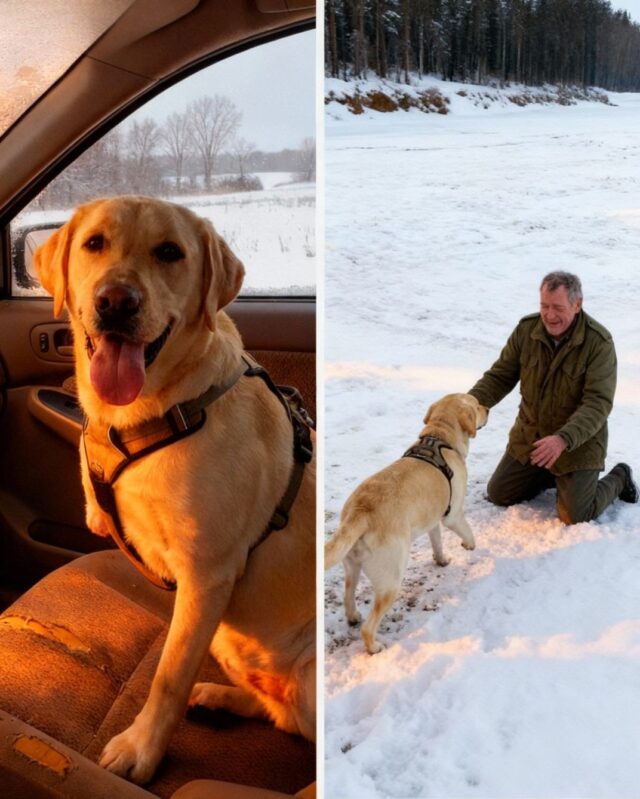
On most days, my world was simple: long roads, urgent deliveries, and the steady presence of my three-legged Labrador, Mooney. At twenty-six, I spent more time with him than with people, partly because work kept me moving and partly because I had learned how easy it was to disappear into routine. Mooney had come into my life after my closest friend from the army, Bennett, passed away. He had once said the dog needed someone who wouldn’t give up on him, and somehow, that responsibility became my anchor. Mooney wasn’t just a companion; he was a reminder of loyalty, memory, and the quiet ways people stay connected long after they’re gone.

One winter night, exhausted from driving through snow and cold, I stopped at a gas station for coffee. Near the pumps, I noticed an older man struggling with a nearly empty fuel can beside an aging van. He wore a worn jacket and carried himself with quiet pride. When I offered help, he declined politely, not out of arrogance but dignity. I understood that feeling too well—the desire to stand on your own even when life makes it hard. I turned back toward my truck, thinking the moment would pass like so many others, but Mooney suddenly began barking in a way I had never heard before. It wasn’t fear or anger—it was recognition.

Before I could react, Mooney rushed toward the man, pressing himself against him as if he had found someone important. The man knelt instinctively, stroking Mooney’s fur and softly calling him by a nickname only Bennett used. When he looked up at me, his eyes were familiar, filled with the same quiet strength I had seen in my friend. He introduced himself as Bennett’s father. In that instant, the past I had avoided for years stepped into the present. We talked, slowly at first, then more openly, sharing memories and fragments of stories that neither of us had fully processed alone. What began as a chance encounter turned into something gentler and deeper: connection, understanding, and the realization that grief doesn’t have to be carried in silence.

That night became the beginning of an unexpected bond. Over time, we shared meals, stories, and small acts of help that felt natural rather than forced. Mooney seemed to understand before either of us did that we weren’t meant to walk alone with our memories. Through him, I learned that healing often arrives quietly, not through dramatic moments but through simple kindness and shared presence. Sometimes, the people we think we’ve lost find their way back to us in new forms, reminding us that family isn’t only what we’re born into—it’s also what we choose to build, one honest moment at a time.

The Truth About Wrapping Food With Aluminum Foil in the Freezer

Using aluminum foil in the freezer has recently become a popular tip shared across social media and home-care blogs. The idea is simple: either wrap certain foods in aluminum foil or use it carefully as part of your storage routine to help preserve freshness. While it may sound like a small change, the way you store food in the freezer can influence both food quality and appliance performance. Understanding how aluminum foil works—and how to use it correctly—can help you make smarter choices in your kitchen without spending extra money or effort.

One of the main reasons people use aluminum foil in the freezer is its ability to reduce air exposure. When food is wrapped tightly, less air comes into contact with its surface, which can help slow down moisture loss and reduce the risk of freezer burn. This is especially useful for foods like meat, bread, and cooked dishes that are stored for longer periods. By preserving texture and flavor, proper wrapping can make frozen food taste closer to fresh when it is thawed. In addition, foil can act as an extra protective layer when combined with airtight containers or freezer bags.

Another potential benefit is improved organization and efficiency. When food is wrapped neatly and labeled, it becomes easier to stack items and use space effectively. This can help cold air circulate more evenly, allowing the freezer to maintain a stable temperature with less effort. Some people also notice that careful storage habits reduce frost buildup and make cleaning simpler. While aluminum foil itself is not a primary insulator, using it thoughtfully as part of an organized storage system can contribute to better freezer performance and more consistent results.

It is important to note that aluminum foil is not a universal solution, and it should be used safely and responsibly. For best results, it should not be placed directly on freezer walls or in ways that could interfere with airflow or appliance components. Instead, it works best as a wrapping material or supplementary layer alongside proper containers. Overall, aluminum foil can be a practical, low-cost tool for improving food storage when used correctly. By combining simple habits—like tight wrapping, labeling, and organized placement—you can keep food fresh longer, reduce waste, and make your freezer work more efficiently.

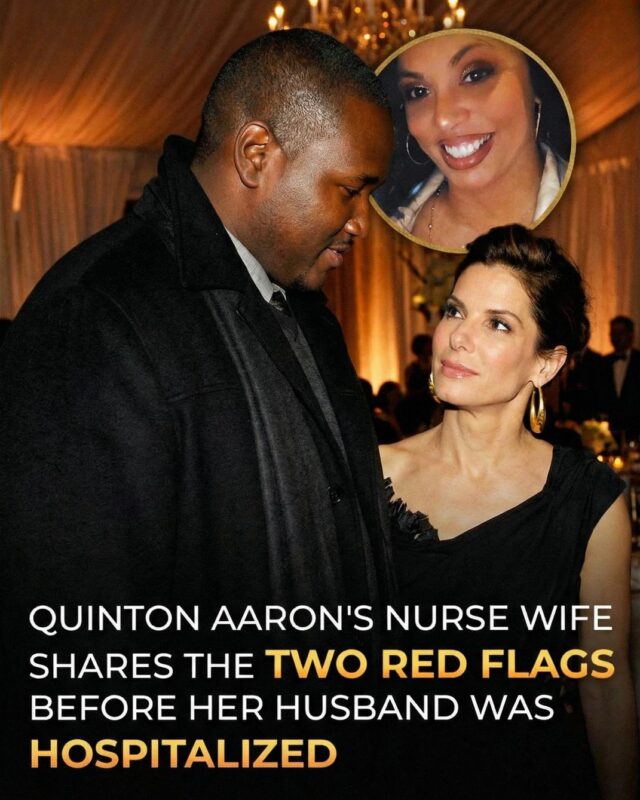
Quinton Aaron’s Wife Shares an Update on His Health

In recent days, actor Quinton Aaron has remained under close medical care following a sudden health emergency that surprised his family and fans. His wife, Margarita Aaron, has shared a hopeful update, saying that while the situation has been serious, there are encouraging signs of progress. According to her, the days leading up to his hospitalization began with what seemed like ordinary discomfort—muscle soreness and fatigue that initially felt like the result of poor sleep. But as the pain intensified and unexpected symptoms appeared, it became clear that something more serious was happening. Thanks to quick action and medical support, Quinton was brought to the hospital, where doctors began careful treatment and monitoring.

Margarita described the moment she realized her husband needed urgent help as frightening but filled with determination. When he experienced difficulty moving and felt weak, she acted immediately, relying on both her instincts and her medical knowledge. At the hospital, doctors placed Quinton under advanced care to stabilize his condition while they conducted tests to understand the underlying cause. Margarita shared that although machines were assisting him, he also showed signs of responsiveness, including opening his eyes and communicating simple gestures. These moments, though small, gave the family renewed hope and strength during an uncertain time.

As doctors continue their evaluations, they suspect that an infection may have contributed to the sudden health crisis, though further testing is ongoing. Throughout the process, Quinton’s family has expressed gratitude for the support and kindness they have received from fans and well-wishers around the world. His representatives have also emphasized the importance of privacy as he focuses on recovery. This incident has reminded many people of how unpredictable health challenges can be, even for those who appear strong and active. For Quinton, it is not the first time he has faced medical difficulties, but it is another chapter in a long journey marked by resilience and determination.

Only months ago, the actor had shared inspiring updates about personal transformation and renewed optimism, celebrating progress in his health and life. Those moments reflected his commitment to growth and positivity, values that continue to guide him during this difficult period. Today, his story is not just about illness, but about hope, family, and perseverance. As Quinton continues to recover, his loved ones remain confident that he will regain strength step by step. His experience serves as a reminder that behind every public figure is a human story—one shaped by courage, faith, and the quiet support of those who stand closest during life’s most challenging moments.

Survivors Share Early Signs They Noticed Before a Bladder Cancer Diagnosis

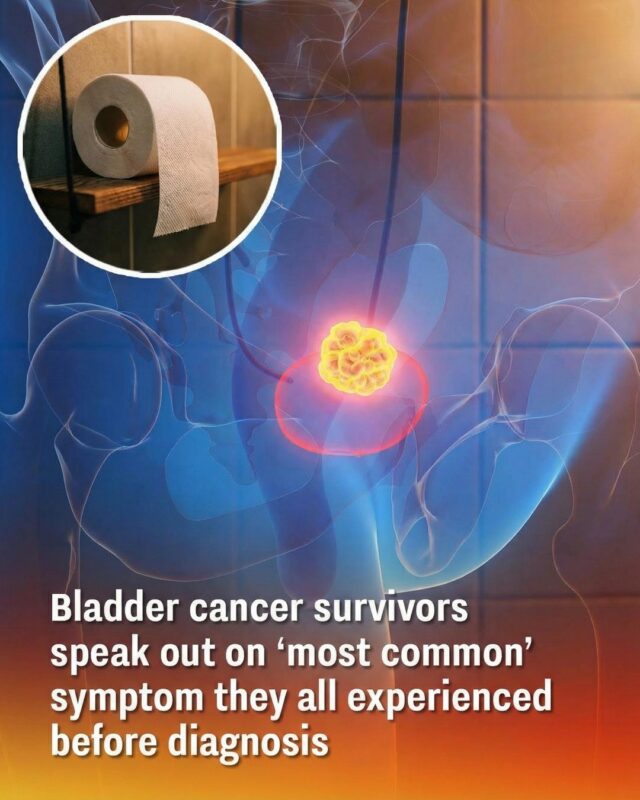
Every year, thousands of people are diagnosed with bladder-related cancers, and many of them share a similar reflection after treatment: there were early warning signs they almost ignored. Health organizations stress that awareness and timely medical advice can make a significant difference in outcomes. While risk factors such as age, genetics, and environmental exposure play a role, specialists emphasize that understanding possible symptoms can encourage earlier checkups and testing. For survivors, speaking openly about their experiences has become a way to remind others that small changes in health should never be dismissed without professional evaluation.

Several survivors recall noticing an unusual change that prompted them to seek medical advice. One retired physician remembered observing a slight color change in his urine one morning. Although the symptom appeared only once and caused no discomfort, he chose to contact a specialist. Testing later revealed a treatable condition that might have remained hidden for much longer. Another survivor, a woman in her fifties, noticed a similar change over the course of a few days. Initial tests ruled out common infections, but further examination uncovered an early-stage condition. In both cases, the individuals emphasized that they felt otherwise healthy, proving that noticeable symptoms do not always come with pain or fatigue.

Doctors explain that changes in urinary patterns or appearance are among the most commonly reported early signs of bladder concerns. Other possible indicators may include increased frequency of urination, discomfort during urination, or persistent lower abdominal discomfort. However, experts caution that these symptoms can also be linked to less serious conditions, which is why proper medical assessment is essential. Survivors often stress that they sought help not because they were certain something was wrong, but because they chose not to ignore a signal from their body. Their experiences underline a simple message: noticing something unusual is reason enough to consult a healthcare professional.

Today, many survivors use their stories to encourage proactive health habits. They remind others that paying attention to physical changes, keeping regular health checkups, and asking for further testing when symptoms persist can be life-saving steps. Health services continue to provide guidance, information, and confidential support lines for anyone who needs advice or reassurance. While no one can control every aspect of their health, listening to your body and seeking medical insight early remains one of the most powerful tools available. The shared experiences of survivors serve as a hopeful reminder that awareness, action, and early care can lead to better outcomes and renewed appreciation for everyday wellbeing.

Popular

Fathers Day Drive that turned into a surprise!

0
On Father’s Day, I drove six hours back to the house I grew up in, carrying with me a tray of my mother’s lemon...

Shattered At The Gas Station