Entertainment

I Overheard a Private Conversation Between My Husband and Our Son — and It Changed Everything

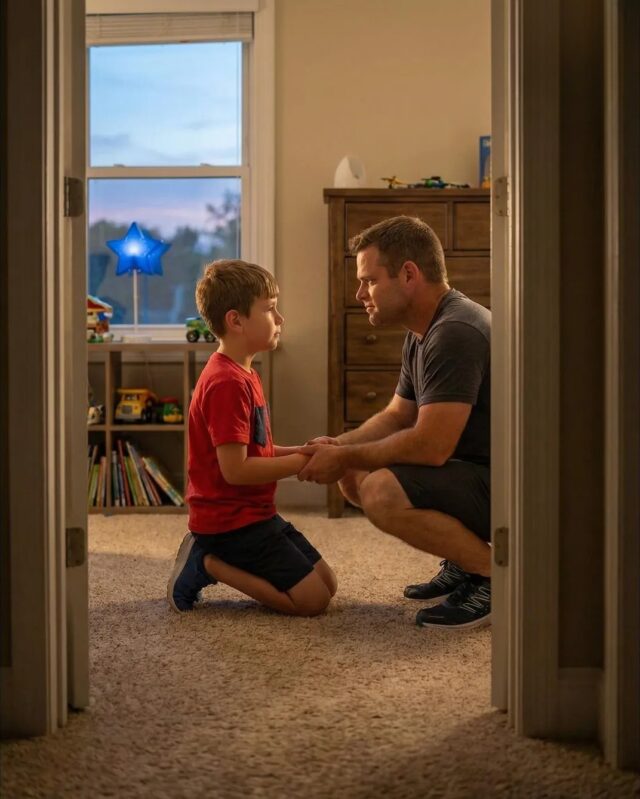
One quiet evening in our suburban home unraveled everything I believed about my marriage. The dishwasher hummed, a streetlight flickered outside, and nothing seemed out of place—until I overheard my husband speaking to our seven-year-old son behind a half-closed door. My name floated into the hallway, followed by a sentence that stopped me cold: “If Mom asks, you didn’t see anything.” He softened it with a joke, with a promise of a gift, the same tone he used whenever he wanted agreement without questions. I didn’t confront him then. I kept walking, telling myself I was protecting my child from adult conflicts. But the weight of that moment followed me, settling deep in my chest.

Later that night, as I tucked my son into bed, I gently asked what his father had meant. He wouldn’t meet my eyes. He said he had promised not to tell, and that it was serious. That was when understanding clicked into place—not what my husband was hiding, but how far he was willing to go to keep it hidden. When I confronted Malcolm in the kitchen, he claimed it was nothing more than old letters from his past, something embarrassing but harmless. He said he’d destroy them and acted offended by my concern, retreating upstairs as if the conversation were finished. But his calm felt rehearsed, controlled, and deeply wrong.

The moment I heard his toothbrush buzz, instinct took over. I went to the garage and searched every shelf, every box—finding nothing. Then I remembered the narrow floor hatch beneath the car, a storage space he had insisted on installing years earlier. Inside, there were no letters. There was a document: the second part of his father’s will. By morning, my unease had sharpened into certainty. I followed Malcolm when he left early, watching from a taxi as he entered a Family Services Center. An affair no longer made sense. A child did. Back home, I reread the document until its meaning settled clearly: Malcolm’s inheritance depended on having two children. Suddenly, his urgency, secrecy, and pressure fit together with chilling precision.

That evening, I placed the envelope between us on the kitchen table. He didn’t deny it. He accused me of betrayal, of ruining his chance to “fix things,” of standing in the way of his future. When he finally shouted the truth—that I was the reason he couldn’t get what he wanted—I felt something steady replace the hurt. I reminded him that our son was not a bargaining chip, and that a family built on conditions and contracts was not one I would raise a child in. I packed quietly, woke my son gently, and left. I didn’t feel broken as I closed the door behind us. I felt clear. I had loved the man my husband once was—but I was strong enough to walk away from the man he chose to become.

Little Girl In Princess Dress Saved Unconscious Stranger She Found In Ditch

Little Girl In Princess Dress Saved Unconscious Stranger She Found In Ditch

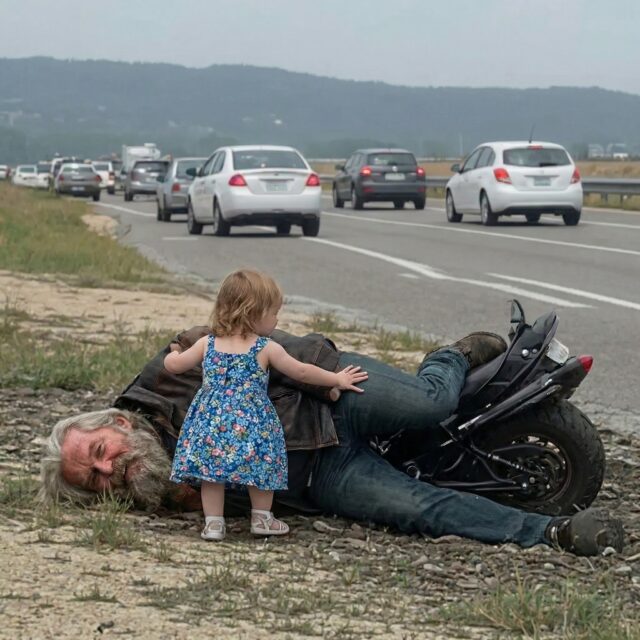
The little girl wrapped her tiny arms around the biker’s leg and refused to let go. Even when the police tried to pull her away, she held on tighter.

“No!” she screamed. “I promised Emma I’d stay!”

Nobody understood what she meant. Nobody knew who Emma was. All they knew was that this five-year-old in a blood-soaked princess dress had somehow saved a dying man’s life.

Her name was Madison Torres. That morning, she’d been a normal kindergartener. She’d eaten cereal. Colored pictures of butterflies. Sang the alphabet song.

By afternoon, she’d become something else entirely.

It started in the car. Her mother Sarah was driving her home from school, listening to Madison chatter about playground drama and goldfish crackers.

Then Madison went silent.

Sarah glanced in the rearview mirror. Madison was staring out the window, her face pale.

“Honey? You okay?”

“Mommy, stop the car.”

“We’re almost home, sweetie.”

“STOP THE CAR!” Madison’s voice was different. Urgent. Adult.

Sarah pulled over, heart racing. “What’s wrong?”

Madison was already unbuckling. “There’s a man. He’s dying. The motorcycle man is dying.”

“What motorcycle man?”

“Down there!” Madison pointed to the embankment. “Please, Mommy! Emma said we have to help him!”

Sarah looked. Saw nothing but trees and rocks. “Madison, there’s nobody—”

But Madison was already out of the car, running toward the edge in her light-up sneakers.

“Madison, stop!”

Sarah chased her daughter to the embankment and looked down.

Her stomach dropped.

Forty feet below, a man lay motionless in a growing pool of blood. His motorcycle was twisted metal twenty feet away. He wasn’t moving.

“Oh my God.” Sarah grabbed her phone, dialing 911 with shaking hands.

Madison was already sliding down the slope.

“Madison, no! It’s too dangerous!”

But her daughter moved with impossible confidence. She reached the bottom, ran to the biker, and immediately pressed her small hands against the worst wound on his chest.

“It’s okay,” Madison whispered to the unconscious man. “I’m here now. Emma sent me.”

The 911 operator kept Sarah on the line. “Is he breathing?”

Sarah scrambled down the embankment. Madison was maintaining pressure on the wound with both hands.

“Yes,” Sarah said. “Barely. He’s bleeding badly.”

“Tell them O-negative,” Madison said calmly. “He needs O-negative blood. Lots of it.”

Sarah stared at her daughter. “How do you—”

“Just tell them, Mommy.”

Sarah relayed the information. The operator confirmed paramedics were eight minutes out.

Madison started singing. “Twinkle, twinkle, little star…”

The biker’s eyes fluttered open briefly. Unfocused. Confused.

“It’s okay,” Madison told him. “Your brothers are coming. Bulldog and Snake and Preacher. They’re twenty minutes away. You just have to hold on.”

Sarah felt ice in her veins. “Madison, how do you know these things?”

“Emma told me. Last night in my dream. She showed me everything.”

Other cars were stopping now. People were climbing down to help. A man tried to take over from Madison.

“Let me help, sweetheart. I’m a nurse.”

“No.” Madison’s voice was steel. “I have to stay. I promised Emma.”

The biker—his vest said “TANK”—was fading. His breathing was shallow. His skin was gray.

Madison kept singing. Kept pressure on the wound. Kept talking.

“Your daughter is beautiful,” she told him. “She has your eyes. She misses you so much. But she’s okay. She’s happy. She wants you to know she’s not scared anymore.”

Sarah felt tears streaming down her face. She didn’t understand any of this.

The paramedics arrived. Professional. Efficient. They immediately tried to take over.

Madison wouldn’t budge.

“His brothers aren’t here yet,” she insisted. “Emma said I have to wait for his brothers.”

“Sweetheart, we need to help him now,” the lead EMT said gently. “He’s losing too much blood.”

“No! Not yet! They’re almost here!”

“Who’s almost here?”

“His brothers! From the motorcycle club! They’re coming!”

The EMTs exchanged looks. The child was clearly traumatized. Maybe in shock.

Then they heard it.

The rumble started distant. Grew into thunder. Dozens of motorcycles appeared on the highway, pulling over in formation.

Riders dismounted. All wearing the same patches. The same colors.

The first man off his bike was massive. His vest said “BULLDOG.” He ran toward the embankment.

The second was lean and scarred. “SNAKE” on his vest.

The third wore a cross pendant. “PREACHER.”

Exactly as Madison had said.

Bulldog reached the edge and looked down. When he saw Madison, he stopped dead.

His face went white as paper.

“Emma?” he whispered. “But you’re dead.”

The world seemed to stop.

Bulldog stumbled. Snake caught him. “What did you say?”

“That’s Emma,” Bulldog said, his voice breaking. “That’s Tank’s daughter. But she died three years ago.”

Madison looked up at them. Smiled through her tears.

“I’m not Emma,” she said gently. “But Emma sent me. She said you’d understand when you saw me.”

Preacher crossed himself. “Sweet Jesus.”

They scrambled down the embankment. Bulldog dropped to his knees beside his injured brother.

“Tank. Brother. We’re here.”

Tank’s eyes opened. Focused on Bulldog. Then on Madison.

“Emma?” he whispered.

“No, Daddy,” Madison said softly. “I’m Madison. But Emma’s here too. She’s been here the whole time. She says she loves you. She says it wasn’t your fault.”

Tank started crying. Deep, broken sobs.

“I’m sorry, baby,” he whispered. “I’m so sorry.”

“She knows,” Madison said. “She’s not mad. She was never mad. She just wants you to stop hurting.”

The paramedics were working frantically now. IV lines. Pressure bandages. Preparing for transport.

But Madison kept her hands on Tank’s chest. Kept singing.

“Twinkle, twinkle, little star…”

Bulldog was crying openly now. “That was her favorite song.”

“I know,” Madison said. “She sings it to me every night. She wanted your daddy to hear it one more time.”

They loaded Tank onto the stretcher. Madison finally let go, but only when Tank reached out and touched her face.

“Thank you,” he whispered. “Tell her… tell her I love her.”

“She knows,” Madison said. “She’s always known.”

Tank survived. Seven hours of surgery. Sixty-three pints of blood. But he survived.

When he woke up three days later, the first thing he asked for was Madison.

Sarah brought her to the hospital. Madison walked into Tank’s room like she’d been there a hundred times.

“Hi,” she said.

“Hi,” Tank said. His voice was rough from the tubes. “You saved my life.”

“Emma saved your life,” Madison corrected. “I just helped.”

“How did you know?” Tank asked. “How did you know about my brothers? About the song? About…”

“She visits me,” Madison said simply. “In my dreams. She’s been coming for a while now. But last night she said she needed my help. She showed me where you’d be. What to do. Who was coming.”

Tank closed his eyes. Tears leaked out.

“I never got to say goodbye to her. The accident… it was so fast. One minute she was there, and then…”

“She knows you love her,” Madison said. “That’s why she sent me. To make sure you knew she loves you too.”

That was eight months ago.

Madison still visits Tank every week. She calls him Uncle Tank now. He calls her his guardian angel.

The club adopted her as an honorary member. Gave her a tiny vest with “LITTLE EMMA” on the back.

Sarah still doesn’t understand how it happened. How her five-year-old knew things she couldn’t possibly know.

But Tank understands.

Some debts transcend death. Some love doesn’t end just because someone’s gone.

Emma saved her father’s life that day. She just needed small hands to do it.

And Madison? She says Emma still visits sometimes. Less frequently now. But she comes.

Usually when Madison’s scared. Or sad. Or needs a friend.

“She says thank you,” Madison told Tank last week. “For being the best daddy. For never forgetting her. For living.”

Tank held her small hand in his scarred one.

“Thank you for being there,” he said. “When I needed someone most.”

Madison smiled. “That’s what angels do.”

A Beloved Hollywood Legend Leaves Us at 65!

Val Kilmer lived a life marked by extraordinary talent, profound loss, and a relentless devotion to his craft. His journey through Hollywood was never a straight line toward fame or comfort. Instead, it was shaped by intensity, discipline, and an almost obsessive commitment to becoming the people he portrayed on screen. He did not chase stardom in the traditional sense. He chased truth, even when that pursuit came at a personal cost.

Born into a family fractured early by separation and tragedy, Kilmer learned young how fragile stability could be. The death of his younger brother left a wound that never fully healed, and that grief quietly followed him into adulthood. Yet even in sorrow, he moved forward with fierce determination. His acceptance into Juilliard, one of the most prestigious acting conservatories in the world, marked the beginning of a serious, disciplined relationship with performance. He was not interested in shortcuts or easy praise. Acting, to him, was a calling that demanded total immersion.

When Hollywood came knocking, Kilmer arrived fully formed. In the 1980s and 1990s, he became one of the most recognizable and compelling faces in film, but what set him apart was not just his charisma—it was his refusal to play characters halfway. In Top Gun, he transformed a supporting role into something unforgettable. His portrayal of the cool, controlled rival was precise and restrained, turning minimal dialogue into maximum presence. He understood how silence, posture, and gaze could speak louder than words.

That intensity reached new heights when he stepped into the role of Jim Morrison in The Doors. Kilmer did not simply play the legendary musician; he inhabited him. He studied Morrison’s voice, movements, and psyche so thoroughly that even longtime fans struggled to distinguish actor from icon. He sang the songs himself, absorbed the contradictions of genius and self-destruction, and delivered a performance that was raw, hypnotic, and fearless. It was not a role meant to be safe or comfortable, and that was exactly why Kilmer embraced it.

Perhaps no performance captured his singular power more clearly than his turn as Doc Holliday in Tombstone. Fragile, lethal, witty, and tragic all at once, his Holliday remains one of the most quoted and admired characters in modern Western cinema. Kilmer infused the role with elegance and menace, humor and decay, creating a portrait of a man already halfway to death yet fully alive in every scene. It was a masterclass in balance, restraint, and emotional precision.

Behind the scenes, Kilmer was known to be demanding—of himself first and foremost, and sometimes of those around him. He could be uncompromising, deeply focused, and resistant to anything that felt dishonest. That reputation followed him, often overshadowing the fact that his intensity came from respect for the work, not ego. He believed that storytelling mattered, that characters deserved full commitment, and that art should never be casual.

As the years passed, his life took a turn far removed from red carpets and box office numbers. His battle with throat cancer became public, and with it came a new chapter defined not by roles, but by resilience. The illness took his natural voice, altered his appearance, and forced him to confront vulnerability in a way no script ever could. A tracheostomy changed how he spoke, how he breathed, and how he moved through the world. Yet it did not diminish his spirit or his identity as an artist.

Rather than retreat into silence, Kilmer chose openness. He shared his struggles, his fears, and his reflections on mortality with a rare honesty. His later years became a different kind of performance—not one of illusion, but of truth. He adapted, learned new ways to communicate, and continued creating. His return to the screen in Top Gun: Maverick was especially poignant. With the help of technology reconstructing his voice, he appeared not as a symbol of nostalgia, but as a testament to endurance. The moment resonated deeply, not because of spectacle, but because it carried the weight of everything he had survived.

Beyond the public figure was a man deeply devoted to his children. Fatherhood grounded him in ways fame never could. Those closest to him spoke of his curiosity, his tenderness, and his constant search for meaning. He was a collaborator who valued ideas, a thinker who questioned everything, and a soul who never stopped exploring what it meant to be human.

Kilmer’s life was never simple, and his legacy resists easy summaries. He was brilliant and difficult, vulnerable and fierce, playful and serious. He chased beauty and truth with equal intensity, whether through Shakespearean monologues, cinematic icons, or quiet moments of reflection far from Hollywood sets. He accepted loss as part of life but never allowed it to define the limits of his creativity.

At 65, his passing leaves a space that cannot be filled by imitation or tribute alone. His work endures because it was never superficial. Every role carried intention. Every performance bore his unmistakable stamp. He reminded audiences that acting is not about being liked, but about being honest.

Val Kilmer did not simply appear on screen. He arrived, fully present, unguarded, and willing to give more than was comfortable. His absence will be felt not only in film history, but in the quieter understanding that true artistry demands courage—especially when the spotlight fades.

He leaves behind a body of work that continues to speak, long after his own voice was taken from him, and a legacy defined not by perfection, but by fearless commitment to the art he loved.

Meghan Markle says she has changed her famous last name!

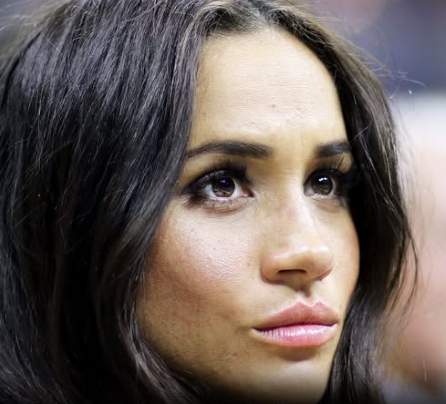
Meghan Markle has sparked a fresh wave of headlines with a simple correction: she says her last name is no longer “Markle.” In casual settings and on camera, the Duchess of Sussex has been using “Sussex” as her family name—matching Prince Harry and their children, Archie and Lilibet—and the choice has reopened the familiar argument about royal titles, surnames, and what’s tradition versus what’s branding.

The moment that set off the latest round of debate happened on Meghan’s new Netflix series, With Love, Meghan. While speaking with Mindy Kaling, Kaling referred to her as “Meghan Markle.” Meghan smiled, but she didn’t let it slide. She pointed out, lightly but clearly, that she goes by “Sussex” now. The reason she gave was personal rather than political: motherhood changed the meaning of names for her. She described it as a quiet milestone—sharing the same name with her children—and said she hadn’t understood how much it would matter until she had them.

To Meghan, “Sussex” isn’t just a title attached to her marriage. It’s a label that, in her view, represents the household she and Harry built. She framed it as a family decision and, more than that, as a symbol of unity: one name for Archie, Lili, Harry, and herself. She’s echoed that idea outside the show as well, describing the name as something that holds emotional weight and feels tied to their relationship story.

The timing is part of why the change has landed so loudly. Meghan’s Netflix series is a lifestyle project—home, food, hosting, and the softer side of public image—and people are already scrutinizing it for what it “means” about her next phase. When she adds a name shift on top of a new show, it becomes instant fuel: some see it as a natural evolution, others see it as a calculated rebrand, and plenty of observers land somewhere in the middle.

It also doesn’t help that the public has been trained to treat royal names like a rulebook. In everyday life, a surname is usually a fixed thing: your legal name, your documents, your identity. In royal life, names can be fluid, situational, and sometimes strategic. Titles can function like surnames. Family names can be used or dropped depending on context. And the same person might be known by different names in different spaces—formal, professional, ceremonial, or private.

That’s exactly where the criticism comes in. Some royal watchers argue that “Sussex” is a courtesy title, not a true last name, and that Meghan’s legal surname should be “Mountbatten-Windsor.” They point out that “Sussex” is a county, not a conventional surname, and question the optics of adopting a place-based title as if it were a standard family name. Others take a more pointed angle, claiming she has little connection to Sussex as a place and therefore shouldn’t treat it as personal identity.

Online reactions have been sharp, and they tend to split into two familiar camps. One side says this is simple, normal, and common in royal circles—something that doesn’t deserve the outrage. The other side treats it like an overreach and insists it’s inaccurate or performative, especially when used in public conversation. The most cynical critiques claim she wouldn’t have “Sussex” on a California driver’s license and is using it selectively to create an image.

Even the way the name is spoken has become part of the story. Meghan has been introduced in at least one major talk-show setting as “Meghan Sussex,” which made the change feel more official to viewers, even if it was just a host following Meghan’s own preference. Hearing it out loud—rather than reading it in a headline—made it real in a way that immediately triggered more commentary. To supporters, it sounded clean and consistent. To critics, it sounded like a title being forced into a format it doesn’t belong in.

The situation is also tied up in the broader, never-ending tug-of-war over what Meghan “should” do. When she uses “Markle,” she’s accused of clinging to celebrity. When she uses “Sussex,” she’s accused of clinging to royalty. When she uses her title, she’s accused of hypocrisy. When she drops it, she’s accused of disrespect. The goalposts move because, for many people, the reaction isn’t really about the name. It’s about the person.

Adding another layer, Meghan’s father, Thomas Markle, has publicly criticized the decision. He has framed it as a rejection of the Markle family and suggested it would have hurt his late mother, who he says was proud of the name. He also used the moment to take a broader swipe at Meghan’s public persona, describing her as inauthentic and overly focused on presentation. Their relationship has been fractured for years, and his recurring media comments continue to be a source of controversy all by themselves, with some sympathizing and others arguing his public approach is exactly why distance exists.

Strip away the noise, and what’s left is a fairly straightforward reality: royals and royal-adjacent figures often use titles as surnames in practice. It’s not unheard of for princes and their families to use a territorial designation as a working name, especially in settings that require a last name but aren’t fully formal. Prince Harry did something similar earlier in life when he used a different title-based surname during his military service. Under that tradition, “Sussex” functions as a practical family identifier tied to the dukedom.

At the same time, it’s also true that formal naming conventions inside royal systems can be more complicated than what people use casually. Legal names, titles, styles, and surnames don’t always align neatly. That’s why this debate never fully dies: people are arguing from different definitions of what a “last name” even means in royal contexts—legal documentation, protocol, custom, or common usage.

What Meghan is doing appears to be a choice about identity and family cohesion, not a courtroom filing. She’s signaling what she wants to be called in daily life and public-facing conversation, especially when she’s speaking as a wife and mother rather than as a character in a royal drama. Whether the wider public and press follow her lead is another matter. Media outlets will likely keep using “Meghan Markle” because it’s the name most readers recognize instantly. Public habits change slowly, and names tied to fame change even slower.

For now, the name “Sussex” is doing what names often do in high-profile lives: it’s becoming a proxy fight. Not just over etiquette, but over loyalty, status, legitimacy, and what people think Meghan represents. And like most debates built on symbolism, it’s louder than it needs to be.

Wow! Popes short message to the United States goes viral

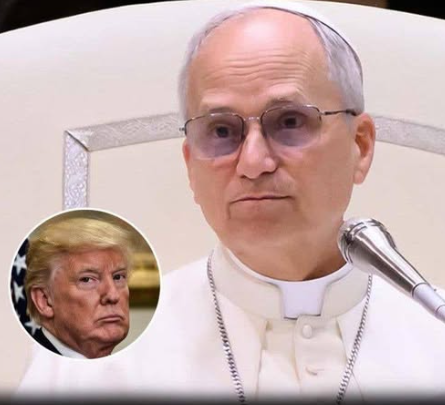
A brief message from Pope Francis has swept rapidly across the United States, igniting widespread discussion and reflection far beyond religious circles. Composed of only a few carefully chosen sentences, the statement spread across social media within hours, shared by millions who found meaning in its tone at a moment marked by political strain, cultural division, and persistent global unease. Its impact was not driven by dramatic language or explicit instruction, but by restraint—by what was suggested rather than declared explicit, and by the calm moral clarity that has become a hallmark of this papacy.

The message itself was striking in its simplicity. Pope Francis spoke of unity, shared responsibility, and the moral obligation to care for one another regardless of political, social, or ideological differences. He avoided naming specific leaders, policies, or conflicts. Instead, he focused on values that transcend parties and borders: compassion, dialogue, humility, and the recognition of common humanity. That lack of specificity is precisely what allowed the message to resonate so widely. People across the spectrum were able to see their own concerns reflected in his words.

In a country where public discourse is often loud, combative, and fractured, the Pope’s understated tone felt almost disarming. Many supporters described the message as a needed pause—a reminder to slow down and reconsider how Americans speak to and about one another. Clergy members from multiple denominations shared the message with their congregations, noting that it echoed long-standing spiritual teachings while also addressing contemporary anxieties.

At the same time, critics engaged with the message from a different angle. Some questioned whether a global religious leader should comment, even indirectly, on the internal climate of a single nation. Others argued that moral appeals, while well-intentioned, risk oversimplifying complex social and political realities. Yet even among skeptics, few denied the message’s reach or the skill with which it was delivered. Debate itself became part of the message’s impact, keeping it in circulation and amplifying its visibility.

Observers noted that Pope Francis has long demonstrated a rare ability to communicate profound ideas with minimal language. Rather than issuing lengthy doctrinal statements, he often relies on short reflections that invite interpretation rather than dictate conclusions. In the digital age, where attention spans are short and content is endlessly competing for notice, this approach has proven remarkably effective. A concise message, delivered at the right moment, can travel farther than pages of analysis.

The viral spread also revealed something deeper about the current American mood. Analysts pointed out that the reaction was not driven solely by interest in religious leadership. Instead, it reflected a broader hunger for reassurance, moral grounding, and a sense of shared direction. In times of uncertainty, people often look beyond political institutions for guidance, turning instead to voices they associate with continuity and ethical perspective.

Social media responses ranged from personal reflections to heated commentary. Some users shared stories of family divisions, workplace tension, and exhaustion with constant conflict, saying the Pope’s words felt like permission to step back from hostility. Others framed the message as a challenge, arguing that unity requires more than goodwill and must be matched by structural change and accountability. The diversity of reactions underscored the message’s openness—it did not prescribe solutions, but prompted self-examination.

Religious scholars noted that this is consistent with Pope Francis’s broader approach to leadership. Since the beginning of his papacy, he has emphasized encounter over instruction, urging people to listen before judging and to prioritize empathy over certainty. His communications often function less as directives and more as mirrors, reflecting back the moral questions societies are already grappling with.

The timing of the message also played a significant role in its reception. Delivered amid ongoing debates over governance, identity, and social responsibility, it arrived when many Americans were already feeling strained and disoriented. In that context, even a neutral call for compassion can feel pointed. Silence would have gone unnoticed; restraint gave the message weight.

Media outlets quickly picked up the story, framing it as evidence of the Pope’s continued influence despite declining religious affiliation in many parts of the country. Commentators emphasized that moral authority does not always correlate with institutional power. Even in a secularized environment, a voice perceived as sincere and consistent can still command attention.

What stood out to many was not just what the Pope said, but what he did not say. There was no condemnation, no warning, no call to action framed as urgency or fear. Instead, there was an appeal to conscience. In a culture accustomed to constant urgency, that calm invitation felt unusual—and effective.

As the message continues to circulate, its meaning is likely to evolve. Some will revisit it as a spiritual reflection, others as social commentary. Its lack of specificity ensures that it will not age quickly, tied to a single event or controversy. That durability is part of its power. It can be reread, reinterpreted, and reapplied as circumstances change.

Ultimately, the viral moment says as much about the audience as it does about the speaker. It reveals a society saturated with noise yet still responsive to quiet. It shows that amid endless commentary, there remains space for moral language that does not shout. Whether embraced or contested, Pope Francis’s brief statement has demonstrated that simplicity, when paired with credibility, can still cut through the chaos.

In an era defined by constant messaging, the episode serves as a reminder that influence is not always measured in volume or length. Sometimes, a few carefully chosen words—offered without accusation or agenda—are enough to stop people scrolling, start conversations, and momentarily reframe how a nation sees itself.

A Strange Moment That Brought a Family Closer

Mara had always thought her bedroom was the safest place in the house. It was small, warm, and filled with soft yellow light from the lamp on her nightstand. One quiet night, as she lay half-asleep, she suddenly felt three light taps on the tip of her toe. Not pressure from a blanket or a twitch—distinct, careful taps, as though someone were testing if she was awake. Her heart fluttered as she sat upright, scanning the corners of the room. Nothing moved. The curtains hung still, the door stood slightly open, and the silence felt unusually thick. She told herself it had to be imagination, exhaustion playing tricks, and eventually, she let sleep claim her again.

Morning arrived with sunlight and normal sounds, pushing the strange moment into the back of her mind. That afternoon, however, her younger brother Liam wandered past her bedroom and noticed the door wide open. Thinking she’d forgotten to close it, he stepped closer to push it shut. Just as his hand touched the knob, he froze. From inside the room came a low, rough sound—like a growl muffled behind a wall. He stepped back quickly, closing the door with more force than he intended. When Mara returned home later, Liam told her what happened, his voice shaky but trying to sound brave. They both laughed nervously, pretending it was nothing, yet unease settled between them.

Their mother, worried by the children’s stories and restless nights, called a local healer known for calming troubled spaces. The woman arrived carrying a small bundle of dried herbs and a gentle smile. She walked slowly through the house, pausing at Mara’s bedroom door. Inside, she closed her eyes, whispering words too soft to understand. After a long moment, she opened her eyes and spoke carefully. She said the room carried the echo of old fear—no spirit, no monster, but an emotional imprint left behind by someone who had once lived there and suffered quietly. Such impressions, she explained, could feel alive, feeding off attention and anxiety.

Together, they worked to change the room’s atmosphere. Windows were opened to let fresh air in. Soft music replaced the heavy silence. Mara rearranged her furniture, hung a new dreamcatcher by the window, and placed a small plant on her nightstand. That night, she lay in bed again, waiting to see if the tapping would return. Nothing happened. The room felt different—lighter, calmer, her breathing steady. She realized that fear itself could create shadows in the mind, and courage could dissolve them just as easily. From that day on, Mara’s bedroom returned to being a place of rest, and the strange night became a story they would one day tell with a smile rather than a shiver

A Remarkable Recovery After Doctors Gave a Low Chance of Survival

In 2022, a Texas family experienced a journey that tested their strength and hope in unimaginable ways. Steven Spinale, a devoted father and brother, had been feeling unwell for several weeks when he was rushed to the hospital. At first, doctors struggled to identify the cause of his sudden decline, noting only that he was suffering internal bleeding. What seemed like a serious but manageable condition quickly turned critical. Steven’s health deteriorated rapidly, and he was placed on life support as doctors worked urgently to understand what was happening inside his body.

Medical teams soon discovered that Steven was battling sepsis, a severe reaction to infection that can damage organs if not controlled. The infection stemmed from a rare type of bacteria that spread aggressively through his system. As if that were not enough, Steven also developed influenza and pneumonia while hospitalized, further straining his body. His lungs began to fail, and he was diagnosed with acute respiratory distress, a dangerous condition that prevents the lungs from delivering enough oxygen. One complication led to another, and his organs began shutting down. The situation grew so serious that he was placed in a medically induced coma to give his body a chance to fight.

As days passed, doctors warned the family that Steven showed no signs of brain activity and suggested that recovery was unlikely. They prepared his loved ones for the possibility that he might not wake up. Still, his family refused to surrender hope. They stayed by his bedside, advocating for continued care and believing that he could still hear them. After four long weeks, something extraordinary happened. Steven began to wake. His sister captured the moment he opened his eyes and slowly responded, a powerful reminder that human resilience can surpass even the darkest predictions.

Steven’s recovery did not end there; it was only the beginning of a new chapter. After leaving the hospital, he started rebuilding strength step by step—learning to sit up, eat independently, and walk again with support. Physical therapy sessions replaced hospital monitors, and family gatherings replaced waiting rooms. Over time, photos and videos showed him smiling, fishing outdoors, and enjoying moments that once seemed impossible. His story became a symbol of perseverance, family love, and gratitude for each day. Today, Steven continues moving forward, inspiring others with the reminder that hope, patience, and care can carry people through life’s greatest trials.

Understanding Mature Relationships: Five Key Traits

With time, love changes from something we chase into something we come home to. After 60, many men are no longer focused on impressing others or proving their worth. They have experienced love, loss, success, and disappointment, and these experiences quietly reshape what they value most. At this stage, relationships are less about excitement and more about peace. What matters now is emotional comfort, shared understanding, and the feeling of being accepted just as one is.

Companionship becomes especially meaningful in later years, but it is desired without dependence. Many older men value a partner who enjoys shared moments without needing constant attention. Sitting together in calm silence, sharing simple meals, or taking slow walks can feel deeply fulfilling. Alongside this, emotional awareness becomes essential. Life leaves everyone with stories and scars, and having someone who listens with patience and empathy creates trust. Being understood without judgment often matters more than grand romantic gestures ever did.

Respect and personal autonomy also take center stage. By this age, people have formed their identities and histories, and they want those honored, not reshaped. A relationship built on mutual respect allows both partners to feel safe expressing opinions, needs, and boundaries. Tenderness plays a quiet but powerful role too. A warm smile, a thoughtful word, or a gentle touch can bring comfort and reassurance. This kind of affection isn’t dramatic; it’s steady, healing, and deeply human.

Above all, authenticity becomes the foundation of lasting connection. After decades of life experience, pretense feels unnecessary and tiring. Men at this stage often seek honesty, shared values, and real conversation. They want to be seen clearly and accepted without masks. Love after 60 is not a fading version of youth—it is a wiser, calmer, and more meaningful bond. It’s not about starting over, but about continuing life’s journey with someone who understands what truly matters.

A Father’s Concern That Led to an Unexpected Discovery

Evan noticed the change before anyone else did. His fourteen-year-old daughter, Lily, once carefree and open, had grown secretive, her phone never leaving her hand. One evening, curiosity and concern got the better of him, and he glimpsed a message notification from someone whose profile picture showed a much older man. His heart tightened. When he confronted Lily, she insisted it was harmless—just someone who “listened” when she felt misunderstood. Evan’s wife, Maria, tried to calm him, saying teenagers went through phases and that trust mattered. But deep inside, Evan sensed something fragile hanging in the balance, something too important to ignore.

Unable to shake the unease, Evan spent a sleepless night researching the profile. The man, named “Daniel,” appeared to live just a few towns away. Every warning article about online safety echoed in Evan’s mind. By dawn, he had made up his mind. He told Maria he needed to take a drive to clear his head, but his destination was already fixed. The road blurred under a gray sky as he rehearsed what he’d say—no anger, no accusations, just firm resolve to protect his child. When he finally reached the address, a small, neat house stood quietly at the end of a cul-de-sac.

Evan hesitated before knocking. The door was unlocked, and calling out received no reply. He stepped inside cautiously, expecting a confrontation, perhaps even danger. Instead, silence greeted him. In the living room, he froze. The wall was covered with photographs—hundreds of them. Not disturbing images, but portraits of smiling teenagers with their families, community event flyers, school fundraisers, certificates of volunteer work. At the center was a large poster: “Youth Digital Safety Outreach Program – Connecting Teens With Trusted Mentors.” The man Evan had feared wasn’t a predator at all but a retired teacher running an online mentorship project, carefully supervised and partnered with local schools.

A voice came from behind him. “You must be Lily’s father.” Daniel stepped forward calmly, explaining the program’s purpose: giving teens a place to talk when they felt unheard, under strict guidelines and parental consent requirements that Lily had bypassed out of embarrassment. Evan’s anger softened into embarrassment of his own. They sat down, talked openly, and agreed to involve Lily’s school counselor to ensure proper boundaries. That night, Evan and Maria had a long, honest conversation with their daughter about trust, communication, and safety. The scare became a turning point—not a story of danger, but of learning, connection, and a family choosing to face the digital world together rather than apart.

A Taste of Tradition: Bologna Salad

This classic bologna salad recipe puts a fresh, modern spin on a timeless favorite. Creamy, flavorful, and delightfully simple, it’s a spread that feels familiar yet satisfying in every bite. Much like ham or chicken salad, bologna salad is perfect for layering onto soft sandwich bread or scooping onto crisp crackers for an easy snack. It’s also a budget-friendly option that uses everyday ingredients, making it ideal for quick lunches, picnics, or casual gatherings. A fun bit of food history suggests that traditional ham salad may have originally evolved from recipes using bologna, giving this dish a nostalgic connection to the past.

One of the best things about this recipe is how quickly it comes together. There’s no complicated cooking or lengthy preparation involved. With just a handful of ingredients and a food processor or blender, you can have a smooth, creamy spread ready in minutes. The balance of savory bologna, rich eggs, tangy pickle relish, and creamy mayonnaise creates a comforting flavor that appeals to both kids and adults. Whether you’re making lunch for the family or preparing a simple party dish, this recipe delivers dependable results with minimal effort.

To start, prepare the eggs by placing them in a saucepan filled with cold water. Bring the water to a gentle boil, then turn off the heat and let the eggs sit for about ten minutes. Once cooled, peel and roughly chop them. Cut the bologna into chunks to make blending easier. Add the eggs and bologna to your food processor, then spoon in the sweet pickle relish and mayonnaise. These ingredients work together to create a pleasant mix of creamy texture and tangy flavor without overpowering one another.

Finally, pulse the mixture until it reaches your desired consistency. Some prefer a smooth, pâté-like spread, while others enjoy a slightly chunky texture. Once blended, transfer the salad to a serving bowl and refrigerate briefly to let the flavors settle. Serve it on fresh bread, toasted buns, or alongside crackers and vegetables. Simple, nostalgic, and satisfying, this bologna salad recipe proves that comfort food doesn’t need to be complicated to be delicious. With just a few minutes of preparation, you’ll have a classic spread that’s ready to enjoy anytime.

Popular

Fathers Day Drive that turned into a surprise!

0
On Father’s Day, I drove six hours back to the house I grew up in, carrying with me a tray of my mother’s lemon...

Shattered At The Gas Station