The wooden crate splashed into the dark river with a hollow sound. At first, I thought I imagined it—the way the man hurled it off the bridge, then jumped into his truck and sped off, his taillights fading into the fog.
I stood frozen, breath clouding in the cold air. The current was fast, and as the crate drifted downstream, I heard it—a faint, muffled cry. My heart clenched. “Please let it be empty,” I whispered, already wading into the icy water.
The current pulled hard, but I reached the crate just before it struck a cluster of rocks. It was heavier than I expected, and the crying grew louder.
My hands shook as I tore through the soaked rope. Inside, wrapped in a drenched blanket, was a newborn baby.
For a moment, the world went still. The tiny face was red, scrunched, trembling from the cold. I pulled the baby close to my chest. “It’s okay,” I murmured, my voice breaking. Then I ran to my truck, wrapped the child in my jacket, and dialed 911.
“I found a baby in a crate by the river,” I said, breathless. “Please hurry.”
“Is the baby breathing?”
“Yes—but barely.”
The dispatcher guided me until I heard sirens in the distance. I followed the ambulance to St. Luke’s Hospital, ten miles away. The nurses rushed the baby inside while an officer took my statement.
My name was Daniel Hayes, a mechanic from a small town called Pine Creek.
Detective Sarah Monroe arrived soon after—sharp, calm, and determined. “You did the right thing,” she told me, jotting notes. “Can you describe the man?”
“Black pickup, no plates. Dark hoodie. He hesitated before tossing it—like he wasn’t sure.”
Later, the doctor said the baby would survive—severe hypothermia, but stable. They called her “River,” a placeholder name that somehow fit.
In the following days, I couldn’t sleep. That sound—the weak cry—haunted me.
Then Sarah called: they’d found tire tracks near the bridge and a burned house twenty miles north. Inside were traces of blood and baby supplies.
The missing woman was identified as Emily Rhodes, twenty-two, last seen with a man named Jake Turner, known for violence and drug charges.
It didn’t take long to piece together: Emily had probably tried to protect her baby from him—and paid the price. When Sarah asked if I’d testify once they caught him, I said yes without hesitation.
But two nights later, I got a call from the hospital. Someone had tried breaking into the nursery. The baby was safe, but witnesses saw a black pickup fleeing the scene.
Sarah’s voice was tense. “Daniel, I think he’s coming back for her.”
“I’m not letting that happen,” I said. “If he wants her, he’ll have to get through me.”
Despite police patrols, Pine Creek wasn’t built for danger. I began watching the bridge each night, waiting. On the third night, headlights cut through the fog—the same truck. A man stepped out, hood pulled low, staring at the river.
I stepped forward. “You looking for something?”
He turned sharply. “Who are you?”
“The guy who saved her.”
He froze, then growled, “You should’ve stayed out of it.”
“Yeah,” I said quietly. “Maybe.”
He reached inside his jacket. I saw the flash of a gun just as blue lights swept through the trees. “Drop it, Jake!” Sarah shouted. Shots rang out. When it was over, he lay bleeding, still alive.
Days later, Emily’s body was found near a cabin. Hidden beneath a loose floorboard was a note: “If anyone finds my baby, please keep her safe. Her name is Lily.”
When I visited her at the hospital, Lily’s tiny hand wrapped around my thumb. Sarah stood beside me. “You saved her life,” she said.
I shook my head. “No—her mother did.”
Months later, I applied to foster her. It wasn’t easy, but when I finally held her again, she smiled in her sleep. As we stepped outside into the sunlight, I glanced toward the river—peaceful now—and thought of that night.
Sometimes the world tries to drown what’s innocent. But sometimes, if you’re lucky, you reach it in time.
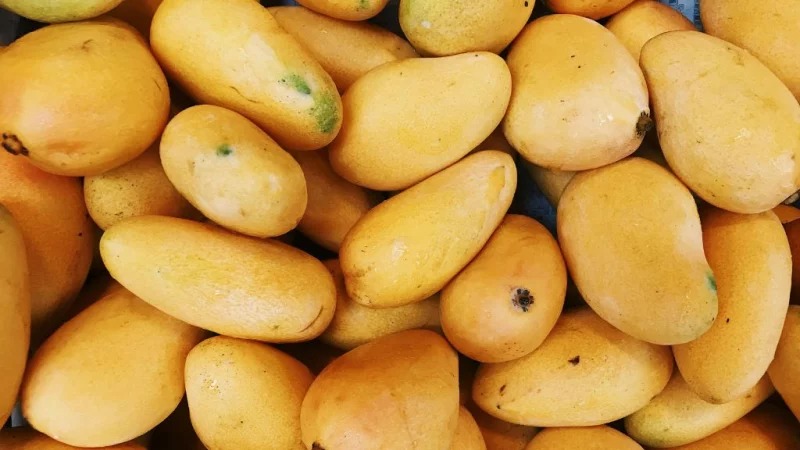
Mangoes are widely celebrated as a “superfruit” – delicious, refreshing, and packed with nutrients.
Many people consume them daily, assuming they are entirely harmless. However, health experts caution that eating mangoes every day, especially in excess, may lead to certain health concerns.
Below are the potential risks and tips to consume mangoes more safely.
1. Blood Sugar Surges and Metabolic Strain
Mangoes are naturally high in sugar. Even though the sugars are natural, consuming large quantities can rapidly elevate blood glucose levels. For those with diabetes, prediabetes, or insulin resistance, daily mango intake without balancing it with protein, fiber, or healthy fats can negatively impact blood sugar management.
2. Digestive Issues and Gut Discomfort
Mangoes contain fermentable carbohydrates and are rich in fiber. For people who have irritable bowel syndrome or are sensitive to high-fiber foods, eating mangoes daily may cause bloating, gas, stomach cramps, or diarrhea.
Excessive fiber intake beyond what your digestive system is used to can also result in indigestion and irregular bowel movements.
3. Allergic Reactions and Oral Sensitivity
Although not common, some individuals may experience allergic reactions when eating mangoes. The peel contains a compound similar to poison ivy, which may cause skin irritation or minor rashes.
Those with latex allergies may also be prone to cross-reactions, which can trigger itching, swelling of the lips or throat, or tingling in the mouth. In more severe cases, the symptoms can resemble oral allergy syndrome.
4. Weight Gain and Excess Calories
Even though mangoes are considered a healthy fruit, overconsumption can lead to weight gain due to their high calorie and sugar content. One medium mango contains more than 200 calories and about 45 grams of natural sugar.
If mangoes are eaten in addition to meals rather than replacing a portion of your daily calorie intake, the extra calories can accumulate as body fat.
5. Vitamin A Overload and Nutrient Imbalance
Mangoes are rich in vitamin A and beta-carotene, both essential for immune health and vision. However, consistently consuming very high amounts—especially when combined with multivitamin supplements—can lead to excessive vitamin A buildup.
Though uncommon, this can result in side effects like skin irritation, nausea, or headaches. Ensuring a variety of fruits and vegetables in your diet helps prevent overload from any single nutrient source.
Tips for Healthy Mango Consumption
Combine with healthy fats, protein, or fiber to slow down sugar absorption and avoid blood sugar spikes.
Rotate different fruits to balance sugar intake and nutrient diversity.
Stick to a moderate portion, typically one serving per day.
Always peel the mango carefully to reduce contact with the irritating sap.
Pay attention to your body’s response and cut back if you notice digestive or allergy symptoms.
Mangoes can still be a beneficial part of your diet—just enjoy them in moderation and with awareness.
Lila is drowning in the chaos of motherhood while her husband sharpens every wound with cutting remarks and cruel comparisons. When she uncovers a betrayal that shatters what little remains of their marriage, she finds an unexpected strength, and delivers a birthday surprise that Dorian never sees coming.
I’m 35 years old, and if someone had told me seven years ago that I’d be writing this story today, I would have laughed until my sides ached and tears streamed down my cheeks.
Back then, I thought I knew everything there was to know about love, marriage, and the man I was planning to spend the rest of my life beside, believing with complete certainty that I understood Dorian’s heart as well as I understood my own.
The truth is that I was so unbelievably wrong about everything I thought I knew, and it took me years to realize just how blind I had been to the man sleeping next to me every night.
When I married Dorian at 28, he possessed this magnetic charm that could transform any crowded room into an intimate space where only the two of us existed.
He would lean casually against doorframes with that crooked smile that made my heart skip. He would tell me jokes that made me snort-laugh until my sides hurt, and I had to beg him to stop before I embarrassed myself completely.
Our tiny apartment felt like a sprawling mansion when we curled up on the couch with our golden retriever, Whiskey, his tail thumping against the old coffee table we’d dragged home from a garage sale.
“We’re going to have the most beautiful life together, Lila,” Dorian whispered one night, his fingers weaving through my hair. “Just you, me, and whatever wonderful surprises life decides to bring us.”
Those surprises came quickly. Emma, our tornado of energy, arrived first. She was curious about everything, never satisfied with one answer, and had the stamina to keep asking questions long after I was ready for bed.
Marcus followed four years later, roaring his way through childhood with the absolute certainty that he was secretly a dinosaur trapped in a little boy’s body.
Then came Finn, whose idea of sleep seemed to involve 20-minute naps spaced throughout the night, leaving Dorian and me stumbling through the days in a haze.
Motherhood hit me like a tidal wave. The days blurred into endless laundry, sticky fingerprints appearing on every surface, and negotiations between siblings that would challenge diplomats.
Meals were scavenged from whatever hadn’t yet expired in the fridge, my coffee went cold before I could finish it, and dry shampoo became my closest ally.
Sometimes, I’d catch my reflection, and I’d lose myself for a moment.
“Where did you go, Lila?” I’d ask.
And honestly, that was the question of the decade. Where had I gone? The woman who used to dress up for dinners, laugh too loudly at Dorian’s jokes, and feel pretty just because he looked at her — she felt like a stranger.
And Dorian noticed.
One Tuesday morning, I was juggling Finn on my hip, while Emma whined about her missing pink crayon, and Marcus was smearing peanut butter through his hair, when Dorian’s voice cut through the chaos.
“You look really tired today, Lila,” he remarked casually, eyes locked on his phone.
“Gee, I wonder why,” I said, letting out a humorless laugh. “Maybe because I was up half the night walking the halls with a crying baby?”
He finally looked up, his lips twitching into a smirk.
“Actually, you kind of look like a scarecrow that’s been left in the rain. You’re all… saggy.”
“Excuse me?” I gasped, the napkin in my hands slipping through my fingers.
“You heard me, Lila,” he said with a shrug, already reaching for his travel mug of coffee.
“That’s what you have to say to me right now, Dorian?” I asked, my voice sharp with disbelief. “Not ‘thanks for getting the kids fed and washed, Lila,’ not ‘can I help you with anything, Lila,’ but that I look saggy like a rain-soaked scarecrow?”
Dorian lifted his shoulders again as if the matter were trivial.
“I’m just saying that maybe you could try a little harder to take care of yourself. If we’re standing together, you look so much older and frumpy than me.”
I stared at him, my chest tightening. In that moment, I wanted to throw my cup of coffee at him. I wanted to see the brown stain on his white shirt. I wanted him to feel the heat of the liquid against his chest.
As always, my kids needed me.
Emma tugged on my arm for help, Marcus started roaring again, and Finn wailed against my shoulder. I wanted to scream at Dorian. I wanted to force him to see me — to see the pain behind motherhood, the anxiety behind every decision regarding my children, and to see the exhaustion that gave me migraines about four times a week.
Instead, the door slammed behind him, leaving his words echoing in the kitchen like a curse.
That afternoon, standing in the cereal aisle with three restless children, my phone buzzed with a message that nearly made me drop the Cheerios.
The message glared at me in bold letters.
“I really wish you would dress more like Melinda did when we worked together, Lila. She always looked so good. Those tight dresses, high heels, perfect hair, and flawless makeup… Wow. You always look like you just rolled out of bed. I miss being with a woman who actually tried.”
Melinda — Dorian’s ex-girlfriend. The woman he had sworn meant nothing to him.
“It was just physical, Lila,” he’d told me once. “There was nothing sustainable about that relationship. Nothing at all.”
I read the message once. Then again. My hands shook so violently that I had to grip the shopping cart to keep myself from falling. Emma tugged at my coat, her little voice full of concern.
“Mommy, why are you crying?” she asked. “Did you get hurt?”
How could I explain to a seven-year-old that her father had just compared me to another woman, that he missed the version of me who didn’t exist anymore?
“It’s nothing, sweetheart,” I said, kneeling down and brushing her hair back with my hand. “Mommy’s just… tired.”
“Are you being cranky like Marcus gets when he doesn’t nap?” she asked innocently.
“That’s exactly it,” I said.
That night, after the chaotic routine of bedtime stories, glasses of warm milk, and negotiations for one more cuddle, I finally stood alone in front of the bathroom mirror.
The house was quiet except for Finn’s occasional whimper from the crib.
The reflection staring back was unrecognizable. I had dark circles smudged beneath my eyes like bruises. My shirt was stiff with dried formula. My hair hung limp despite my desperate reliance on dry shampoo.
“When did I disappear from my own life?” I whispered to the woman in the mirror.
The question clung to the steam on the glass, taunting me. I thought about perfect Melinda with her perfect mornings, and her free time to sculpt herself into something polished. I thought about Dorian sprawled on the couch each evening with a beer and takeout nachos — only ever one portion — criticizing while I managed bedtime, dishes, and bills.
And I thought of the woman I used to be, the one who felt seen, loved, and alive.
Three weeks later, the answer came.
Dorian left his laptop open on the dining room table while he went to shower. A cheerful ping lit up the screen. My heart skipped as I leaned closer. It was a dating app notification.
“What the actual heck, Dorian?” I muttered under my breath.
I clicked on the notification, and my husband’s dating profile filled the screen.
The photos were from our honeymoon, years ago, when his smile was genuine and his waistline was slimmer. The bio claimed that he loved hiking, cooking gourmet meals, and having deep conversations in the dark.
“Hiking?” I said, letting out a bitter laugh. “The man gets winded walking upstairs.”
When he came out of the shower, humming happily, I forced myself to act normal — like I hadn’t just uncovered my husband’s intention to cheat.
“Dorian,” I asked casually. “When was the last time you actually cooked a meal?”
“Why?” he asked, frowning. “What does that matter?”
“No reason,” I said, masking the fire building inside me.
Rage steadied me. I had a phone, I had access to his real life, and I had years of frustration stored like kindling waiting to be used. And in that moment, I knew I was ready to strike the match.
So I started documenting.
At first, it felt almost silly, sneaking photos of my own husband like some undercover journalist. But with each snap of my phone’s camera, I felt stronger. I caught him snoring on the couch, beer balanced on his stomach, crumbs from chips scattered across his shirt like confetti at a pity party.
I caught him picking his nose absentmindedly while glued to sports highlights. My favorite photo, though, was of him drooling on his pillow while Whiskey sat patiently next to him.
Looking at those pictures lined up in my gallery, I realized something. This wasn’t the charming man I had married. This was the man that I had been carrying for years while he criticized me for letting myself go.
Sure, Dorian paid the bills, but I did everything else for us.
When I edited his dating profile, it felt like peeling away a mask. Out went the honeymoon smiles, the curated lies about hiking and deep conversations. In went the sweatpants, the beer belly, and the truth.
The bio was sharper than any insult he had ever thrown my way. Getting into the account was easy — Dorian was a man of one email address and one password for everything.
“Likes beer more than his kids.”
“The couch beats gym every single time.”
“Married for seven years—but the dog is the real man of the house.”
“Will ghost you after three messages when someone easier comes along.”
Within days, the reports piled up, and the profile vanished. For the first time in months, I felt powerful.
In the days after the profile vanished, Dorian was restless. I caught him scowling at his phone more than once, muttering under his breath.
One night, he threw his phone down on the couch and groaned.
“I don’t get it! I can’t even log into that stupid site anymore. Must be a glitch. Figures. The one decent thing I had to distract me from this misery and it just disappears.”
I was making ice cream sandwiches for the kids — Emma was asking about how chocolate sauce was made, and Marcus had stuck his fingers into the tub of vanilla ice cream.
I kept my face carefully neutral so he couldn’t see the spark of satisfaction in my eyes.
“Maybe,” I said evenly. “You should focus less on distractions and more on what’s right in front of you.”
He didn’t catch the double meaning. He just shrugged and reached for the remote.
“Whatever you’re making for the kids, I’ll take two,” he said.
Then came his birthday. Dorian had been dropping hints for weeks, talking about how he wanted “something special” this year.
So I decided to give him exactly that.
I cooked his favorite meal — roast duck with a cherry glaze and creamy mashed potatoes — following his grandmother’s recipes. The house smelled heavenly.
I set the table with candles and flowers, every detail perfect. I even dressed up, makeup carefully applied, hair smooth and glossy after two rounds of conditioner. The children were at my sister’s house, so there would be no distractions.
Everything was perfect — but not for the reason he thought.
Dorian walked in and immediately grinned.
“Now this is more like it, Lila,” he said smugly, slipping off his jacket. He looked around at the candles, the table, and the meal, waiting for him. “I was starting to think you’d forgotten how to make an effort. This is how a real wife behaves.”
“I didn’t forget,” I said softly. “I just needed the right occasion.”
He didn’t notice the edge in my voice. He just sat, rubbing his hands together like a child about to open presents. When I brought out the silver cloche and set it in front of him, his eyes lit up.
“Go ahead,” I said. “Your surprise is ready, honey.”
He lifted the lid with a flourish, expecting perfectly carved duck. Instead, he froze at the sight of the manila envelope.
“What is this?” His smile faltered, and his voice cracked.
“Happy birthday, Dorian,” I replied evenly. “Consider this as my gift to the both of us.”
He opened it with trembling hands. Divorce papers slid out across the white tablecloth.
“Lila… what the heck is this supposed to mean? Is this a joke? Do you really think this is funny?” Dorian’s eyes widened, flicking up to mine.
“It means,” I said calmly, my heart hammering but my voice strong, “that this is the last time you’ll ever mistake my silence for weakness again.”
“But Lila — ”
“But Lila, what? You told me that I looked like a scarecrow. You told me that I don’t try. You said you missed women who made an effort. And you meant every word, didn’t you?”
Dorian’s face drained of color. He stammered, his hands gripping the edge of the table.
“I didn’t mean it like that, honey… I really didn’t.”
“Yes, you did,” I said, pushing my chair back and smoothing down the fabric of my dress.
For the first time in years, I looked beautiful — not because of Dorian, but because I had chosen to do it for myself.
“The truth is, I never stopped trying to be the woman you fell in love with. I just stopped trying for you.”
“Lila, wait,” Dorian said, his chair scraping the floor loudly as he scrambled to stand. “Please. Think of the kids.”
“The kids need a mother who respects herself, Dorian,” I said, pausing in the doorway, my hand resting on the frame. “They need a mother who shows them that love doesn’t mean swallowing cruelty. I’ll be damned if Emma grows up to accept insults, and I’ll be disappointed if my sons end up like you.”
Six months later, I saw Dorian again at a busy intersection. At first, I almost didn’t recognize him. His clothes were stained, his beard grown wild, and his eyes were hollowed out by choices he couldn’t undo.
He looked up, and his gaze locked on mine. Recognition dawned slowly, followed by shame, and then the flicker of desperate hope.
“Lila? Take me back, please.”
I met his eyes for three measured seconds. Then I rolled up my window and pressed my foot on the gas when the light turned green.
That evening, I sat on the porch with a glass of wine, the sunset spilling pink and orange across the sky. Emma’s laughter carried from the yard, Marcus’s dinosaur roars echoing through the air, and Finn’s giggles blended into the soundtrack of a life that was finally mine again.
Even Whiskey lay at my feet, his tail thudding against the boards every few minutes.
I looked down at myself — an old T-shirt covered in paint stains from Emma’s art project, hair pulled into a messy bun, bare feet tapping against the wood. I looked like a woman who had just rolled out of bed, and I had never felt more beautiful.
The woman who married Dorian thought she needed his approval to be whole. She thought she had to earn love by shrinking herself down. But the woman I am now knows better.
I never disappeared. I was here all along, waiting for the right moment to come home to myself.
And part of coming home meant accepting help. The next morning, I dropped Emma and Marcus off at daycare for the first time in ages. It was a Saturday, and I needed some time to myself.
“Mommy, will you come get us later?” Emma asked, looking back at me.
“Of course,” I said, kissing her cheek. “Have fun, baby. And keep an eye on Marcus. We’ll get ice cream when I fetch you.”
As I walked back to the car with Finn in his stroller, the silence felt strange — but good.
Healing, even.
Because I finally understood: it really does take a village. And giving myself that breathing space wasn’t weakness. It was strength. It was the beginning of finding the woman I used to be, one step, one morning, and one deep breath at a time.
After raising her granddaughter alone following the death of her son, June thought the hardest days were mostly behind them. But when her former daughter-in-law suddenly reappeared with a designer gown and an envelope, she discovered that some people were even worse than anyone could have imagined.
Sixteen years ago, when I was 56 and still bouncing between cramped rental apartments, my son Mark achieved something I never could.
At 29, he bought a modest one-story house for his wife, Melissa, and their little girl, Emma. He was a construction worker with calloused hands and big dreams.
“Mom,” he told me over coffee in that tiny kitchen, “I want to add rooms, build a porch, maybe even put up a swing set in the backyard. I’ll even make you a room over the garage, too.”
I was so proud, and because this was a big milestone, he’d drawn up a simple will, just in case. If anything were to happen, the house would go to Emma.
But before his dreams could unfold, a construction accident stole his life. Emma was only two years old.
At the funeral, I clutched Emma’s small hand while Melissa greeted people as coldly as a winter storm.
Once we were at home, I caught her packing her suitcase. She was 27 then. “Take care of her,” she muttered when I tried to stop her at the door and threw her set of house keys at me.
Outside, I saw her getting into a luxury car with a smiling man in the front seat.
The engine purred as they drove away, leaving Emma and me standing in the driveway.
That was the last time I saw her. I moved into Mark’s little house with Emma and worked every job I could find to keep the mortgage paid and food on the table.
I cleaned homes until my knees ached, babysat neighbor kids, and waited tables at a local diner until my feet swelled.
Time passed like pages turning. I aged into my 70s with a back that ached every morning and more wrinkles than I could count.
But I still had my energy, and Emma grew into a beautiful young lady. She was kind and thoughtful.
She never even asked for much, although I knew all her friends came from much better-off families.
Somehow, she made thrifted clothes seem stylish and told me she loved me constantly.
But I knew that all high school girls wanted to feel beautiful at one event: their senior prom.
A few weeks before, I asked if she planned to go. She shook her head and said softly, “Grandma, don’t worry. I don’t need to go. We can’t afford a dress anyway. I already looked at Goodwill. Nothing will work.”
She tried to sound nonchalant, but I knew it hurt her, and I hated any time she had to go without. This girl deserved a moment to shine.
Therefore, the next day, I found a nice soft blue satin fabric at a local vintage shop that wasn’t too expensive.
That night, after my shift at the diner, I dragged my old sewing machine to the kitchen table and began working on her gown
Emma saw this and protested, saying I already worked too much for her sake, but I wasn’t too tired to make her happy.
I poured love into every seam, working until my fingers cramped and my eyes watered.
The night before prom, Emma tried on the finished dress in our narrow hallway, turning slowly in front of the mirror.
The fabric caught the light just right, shimmering gently, and tears filled her eyes.
“It’s the most beautiful dress I’ve ever seen,” she whispered. “Thank—”
But at that exact moment, a sharp knock rattled our front door.
I opened it and froze. Melissa stood on our porch, smiling brightly. I could see the passage of time in her face. She was 43 now, but she still looked great. In fact, better than ever.
Her makeup was flawless, and her hair was perfectly styled. Her designer heels clicked against the wooden boards as she swept inside uninvited.
I saw she was carrying a glossy garment bag over her arm.
“My baby girl!” she exclaimed, pulling Emma into a dramatic hug.
Emma stood stiff in her arms, confused. I watched from the doorway, just as puzzled.
She couldn’t be this dense. She hadn’t even attempted to contact us since she abandoned her daughter.
But she kept up the enthusiasm, and with a theatrical flourish, she presented the garment bag to Emma.
“Here you go!” she said. But when Emma simply started, she unzipped it and pulled a glittering silver gown out. It probably cost more than I made in three months.
“I brought you a special gift,” she purred, holding up the dress. Her eyes flicked over my granddaughter and her homemade gown. “I think I came just in time. Prom’s tomorrow, right? I heard some girls at the boutique talking about it.”
“Ye-yes, it’s tomorrow,” Emma stuttered.
“So, it’s good that I came. You can’t wear that, sweetheart,” she scoffed, wrinkling her nose at the blue dress. “Everyone will laugh at you. Take this — a real dress for prom.”
I felt something was wrong, but for a moment, I wanted to believe she had come back to rebuild a bond with her daughter.
The gown was certainly beautiful, and Emma would look like a princess.
My granddaughter bit her lip, looking between her reflection in the mirror and the designer piece.
Before I could encourage her to at least try it on, an envelope slipped from Melissa’s purse and landed on our worn carpet.
Emma leaned to pick it up, but we both saw her name written across it in bold letters. “What is this?” she asked, not returning it to Melissa.
“Oh, it’s nothing you need to concern yourself with now,” my ex-daughter-in-law said, extending her hand for it.
But Emma began opening it, and I decided to get closer, putting on my reading glasses. Inside were legal papers, as in, official-looking documents with signatures and seals.
“What is this, Melissa?” I asked, feeling dread crawl up my spine.
Melissa’s smile faltered. “June, I can explain,” she said, her voice turning low and coaxing as she looked at Emma. “Sweetheart, this house was meant for us. Your father bought it for our family. Right?”
“I guess,” Emma responded, blinking slowly.
“Don’t you think it makes sense that I handle it now? If you sign those papers, I can sell this place and put us somewhere better,” Melissa continued, flailing her arms. “Somewhere new and glamorous. You don’t have to stay stuck here with this junk in this small town. You and I could finally live the life we deserve.”
The room went dead quiet. I realized that Melissa’s motives were not to reconnect with her girl but to take from her.
Emma’s hands trembled as she held the documents. But her voice was steady when she spoke. “You think a dress makes you my mother? You think now you deserve this house that Grandma tried her best to pay for and upgrade it for these past years, all while raising me? Alone?”
“Sweetheart, that’s not—”
“You left me,” my granddaughter shouted. “And you probably need money to keep up whatever charade you’re doing. Well, you came to the wrong place. This is my house. I’m already 18. Grandma is all the family I need.”
With those words, Emma tore the papers to shreds.
As she stared at the pieces on our floor, Melissa’s smile collapsed. Rage twisted her features into something ugly. “Ungrateful brat,” she hissed, snatching up her purse. “You’ll regret this when you’re stuck in your 20s with no money and taking care of a dying old woman.”
I gasped, but I didn’t have time to slap her like I wanted to.
She picked up the garment bag, and her heels clattered like gunfire as she walked to the door and slammed it behind her.
I felt my granddaughter’s arms wrap tightly around me just then.
The next evening, prom night arrived. Emma smoothed her blue dress in front of the mirror and gave me a determined smile.
“Ready, Grandma?”
I fetched my car keys, and together we walked out to my old sedan. I dropped her off at the school and wished her a good time.
Hours later, just past midnight, I heard gravel crunching in our driveway. One of her friends had driven her back, so I went out to greet her.
Emma climbed the porch steps, and I saw that her curls were loose, and her mascara was smudged, but she had a smile that could light up the darkest night.
“How was it, honey?”
She hugged me tight, whispering into my shoulder, “I was the most beautiful girl there. Because of you.”
We sat on the porch chairs, and she told me everything.
Apparently, instead of mocking her dress, her friends had called it unique and unforgettable. She’d laughed and danced all night with them.
“This was the best night ever,” she said before going inside to rest. I stayed outside for a while longer and considered the future.
This was the first night of the rest of her life. With a partial scholarship to study architecture, Emma was bound for college in the fall, but she would continue living here with me.
After all my sacrifices, I’d raised another good kid who didn’t care about money or the pressures of appearances. She was just like Mark, and this was her house.
In the realm of natural remedies and herbal wonders, Canapum, also known as Physalis, emerges as a true treasure trove of health benefits.
This unassuming plant, adorned with lantern-like fruits, harbors a wealth of secrets cherished in traditional medicine for centuries. Let’s delve into the golden benefits of Canapum leaves and explore why they are revered in the world of natural health.
The Power of Canapum Leaves:
Beyond its visually pleasing appearance, Canapum, or Physalis, boasts a multitude of health benefits, particularly in its leaves. These leaves, often overlooked, are imbued with therapeutic qualities that have been prized for generations.
Alleviating Inflammation:
Canapum leaves contain potent anti-inflammatory compounds, making them an effective remedy for reducing swelling and pain, especially in conditions like arthritis.
Harnessing the anti-inflammatory properties of Canapum leaves can provide relief and improve mobility, particularly in aging individuals.
Boosting Immunity:
Rich in vitamins, notably Vitamin C, and antioxidants, Canapum leaves strengthen the immune system.
A robust immune system is essential for combating illnesses and maintaining overall health, particularly as we age and our immune function naturally declines.
Promoting Digestive Health:
Canapum leaves have a history of use in promoting digestive health. They possess soothing properties that can alleviate upset stomachs, reduce bloating, and support regular bowel movements.
Incorporating Canapum leaves into your diet can foster improved digestion and gut health.
Supporting Heart Health:
Canapum leaves contain essential nutrients that contribute to heart health by helping regulate blood pressure and cholesterol levels.
By integrating Canapum into your daily routine, you can take proactive steps towards maintaining a healthy cardiovascular system.
Embracing Canapum in Daily Life:
Incorporating Canapum leaves into your diet or health regimen is simple and enjoyable. Brew them into a soothing tea or add them to salads and cooked dishes to elevate their nutritional value.
By embracing Canapum, you can tap into a wealth of health benefits and support your well-being naturally.
Many individuals default to side sleeping as their preferred position, yet they may not realize its associated health advantages. Indeed, various sleeping positions can yield diverse effects on the body, both beneficial and detrimental. Generally, it’s advisable for individuals to sleep in whatever position feels most comfortable to them. However, if they experience symptoms such as back pain, jaw discomfort, indigestion, and others, they might contemplate altering their sleeping posture. To delve into specifics, opting to sleep on the left side could be worth considering.
The Benefits of Sleeping on You Left Side
Minimize back discomfort – Sleeping on the stomach may strain the spine and result in pain. Side sleeping maintains the spine in a naturally aligned position, alleviating pressure on the lower back.
Decrease snoring – Sleeping on the back can cause the tongue and soft palate to slide backward, partially obstructing the airway and leading to increased snoring, a common issue for those with sleep apnea. Side sleeping helps keep the tongue forward and the airway unobstructed.
Enhance digestion – Sleeping on the left side, specifically, may alleviate certain gastrointestinal issues such as bloating, constipation, and heartburn. Since the stomach resides on the left side of the body, lying in that position enables gravity to assist in the digestion process.
Potential brain health benefits – It’s not widely known that the brain eliminates waste while you sleep. Research suggests that side sleeping may enhance this process by supporting the glymphatic system, which functions similarly to our lymphatic system but within the central nervous system. Animal studies indicate that this could potentially reduce the risk of conditions like Alzheimer’s and Parkinson’s disease. However, further research on humans is required to better understand and validate these findings.
Enhances blood flow – Optimal circulation is essential during pregnancy to facilitate blood flow to the placenta. This is why it’s advised for expectant mothers to sleep in this position.
How to Train Yourself to Sleep on Your Side
Choose a good pillow and mattress
Find a pillow well-suited to your collarbone structure.
Ensure the pillow is firm enough to support the neck.
Mattresses must often be softer to prevent pressure from building in the shoulders and hips.
Use pillows as barriers and supports
Put a pillow between your knees to support your hips and lower back
You can also hug a pillow to comfortably rest your upper arm.
Invest in body pillows to maintain your position.
Sew a tennis ball onto the back of a shirt to prevent yourself from rolling over.
Sleep on the couch at first
Couches are often narrow and only have room for side sleeping anyway.
Disadvantages of Sleeping on Your Side
Although this position could provide many benefits, it’s not for everyone, especially those who use mattresses and pillows that make side sleeping uncomfortable. These disadvantages include:
Pain in the shoulders and hips
Side sleeping on too-firm mattresses could increase pressure on the shoulders, hips, and knees. However, too-soft mattresses could cause the spine to go out of alignment and also cause pain.
Pressure in the face
People with sinus congestion and glaucoma may experience painful or uncomfortable pressure in their faces when they lie on their sides. Additionally, it could worsen a tight or stiff jaw.
The Benefits and Disadvantages of other Sleeping Positions
In the end, individuals should prioritize sleeping in the manner that feels most comfortable to them. However, it’s essential to acknowledge how your sleep position may impact your body, whether positively or negatively. Beginning your nights on your left side and allowing your body to naturally settle into its preferred position can be beneficial. Additionally, sleeping on the right side also offers advantages, so there’s no need to fret about trying to retrain yourself if it doesn’t come naturally. Similarly, there are both benefits and drawbacks to sleeping on the back and stomach.
Sleeping on your back
Benefits – It may help with:
Hip pain
Knee pain
Arthritis
Fibromyalgia
Sinus congestion
Bursitis
Tips
Place a pillow under your knees to support the spine and lower back.
Spread the legs and arms out to reduce pressure on the joints.
Choose a pillow that offers good support for the neck, and avoid the ones that tilt your chin toward your chest.
Elevate the head with extra pillows or a wedge pillow to help reduce heartburn, headaches, and sinus buildups.
Sleeping on your stomach
Regrettably for enthusiasts of this position, experts caution against it. “If you find yourself experiencing back pain while sleeping on your stomach, there’s likely a cause,” says Bill Fish, a certified sleep science coach. “Given that the bulk of the body’s weight is concentrated around the center, this core pressure sinks deeper into the sleep surface, exerting strain on the spine in an unfavorable direction, leading to back and neck discomfort.”
Still, here are some tips for those who can’t switch to their side:
Use a flat pillow or none at all.
Don’t tuck your arms under your pillow or head, since this could cause arm numbness or shoulder joint pain. Alternate the sides of your head to avoid neck pain.
Don’t lift your leg to one side with a bent knee since this could worsen back issues.
Sources
1. “Side Sleeping: Which Side Is Best and How to Train Yourself to Do It.” CNET. Taylor Leamey. July 7, 2022
2. “Could body posture during sleep affect how your brain clears waste?” Science Daily. August 4, 2015
3. “How These 3 Sleep Positions Affect Your Gut Health.” Healthline. Jennifer Chesak. March 20, 2023
All I wanted was to honor my mother on the most important day of my life. Instead, I found myself facing a betrayal that nearly broke me—minutes before I walked down the aisle.
I’m 26, and if you told me I’d be writing my life’s story with shaking hands, I would have laughed. But what happened on my wedding day still makes me sick when I remember.
I adjusted the veil on my head, my hands trembling as I stared at my reflection. My heart pounded like a warning drum. The bridal suite was quiet except for the low hum of wind outside the window. My dress, my mother’s final gift, hung by the window, glowing softly like it had a soul of its own.
I reached for the edge of the silk bodice and smiled, remembering the day she unwrapped the fabric. That moment was etched in my memory like a prayer. She had already been so tired. The cancer had returned with a vengeance, and the doctors had stopped using hopeful words.
But my mom never blinked, and she didn’t cry. She just said, “Guess I’ll have to work faster.”
At the time, I didn’t understand, not until a few days later when I found her sewing table covered in ivory fabric, lace trim, and a small bag of pearls. She smiled at me then, her cheeks pale, her body frail, but her spirit unshaken.
“I’m making you something no one can ever take away,” she told me, threading her needle with shaky hands.
“Mom… you need to rest,” I said, placing my hand on hers.
“I’ll rest when my girl walks down the aisle.”
That’s how I learned she was making my wedding dress. My mom, Ella, was my everything. She wasn’t just my mom, but my best friend, role model, and my person. When I was little, she’d stay up late sewing dresses for me out of leftover fabric because we couldn’t afford store-bought ones.
She was a seamstress by trade but an artist with a heart of gold. Every stitch she made carried warmth, precision, and love.
Even on days when she could barely lift her head, she insisted on sewing. From her hospital bed by the window, she worked quietly and fiercely. The wedding dress grew, day by day—layers of silk, delicate lace, beads that caught the light like morning dew.
She finished the dress three days before she died. I remember holding it up to the sunlight while it shimmered like it was alive. I held it beside her bed, her thin fingers brushing the hem.
“Now I can go,” she whispered, touching the fabric gently.
That night, she slipped away.
After the funeral, I folded the dress carefully, placed it in a garment bag, and hid it in my closet. I couldn’t bear to look at it. The lavender scent of her lotion still clung to the sleeves. Every time I caught it, my breath would hitch, and I’d have to walk away.
But I made myself a promise: when I got married—no matter when or to whom—I would wear that dress. Not something new or something off a rack. I vowed that dress would walk me down the aisle.
A year after she passed, my dad remarried.
Her name was Cheryl.
And to this day, I can’t understand how my kind, grieving father ended up with someone like her. Cheryl arrived like a gust of cold wind, all perfect smiles and high heels, all politeness and poison. She played the sweet role in front of others, but behind closed doors, she was sharper than broken glass.
“You’re sweet,” she said once, with a pat on my arm. “You just don’t have your mother’s elegance. But I’m sure you’ll get there, eventually.”
I was 18 at the time, and I didn’t know how to fight back without guilt. So I said nothing. I bottled it up.
I learned quickly that my stepmother had a talent for cruelty disguised as “concern.”
When Dad announced their engagement, I smiled even though my stomach turned. I told myself I wanted him to be happy, and if Cheryl brought him laughter again, then I’d find a way to live with it, even if I didn’t trust the woman making him happy.
Over time, I moved out, started college, and only came home for holidays. Dad and I grew distant as the years passed. His wife, although tolerable as long as I didn’t live under her roof, always had a way of inserting herself between Dad and me.
There was always a reason he couldn’t talk long on the phone or spend time alone with me. But Dad was still happy, and I wasn’t going to be the one to rain on his parade.
Then I met Luke.
My boyfriend was everything Cheryl wasn’t. He was calm in a chaotic world, wasn’t loud or flashy, and he made me feel safe in a way I hadn’t felt in years. He had a patient, humble kind of strength that drew me in.
We were together five years before he finally proposed, and I said yes with tears in my eyes.
Dad cried when I told him. Cheryl looked up from her phone and said, flatly, “That’s… fast, isn’t it?”
I blinked. “It’s been five years.”
She gave a tight-lipped smile. “Of course. I just meant… things change quickly.”
I knew better than to argue. Cheryl’s jabs, the kind that made you question yourself without realizing why, were quiet and surgical. The kind that stayed with you long after the conversation ended.
Planning the wedding took over my life for months. There were cakes to sample, music to pick, flowers to choose. But I never once considered wearing anything but the dress my mother had made for me.
It fit perfectly and was timeless, like it was made for that moment. Every time I touched the fabric, I felt closer to her.
The week of the wedding, Cheryl suddenly decided to become “helpful.”
She started showing up early, offering input no one asked for, inserting herself into every vendor meeting. It felt off, but I tried to keep the peace.
“She’s trying to wedge herself in,” Maddy said one night as we packed guest bags. Maddy had been my best friend since kindergarten and had no filter.
“She’s just… being Cheryl,” I muttered, exhausted.
Then one afternoon, she showed up at my fitting uninvited and circled the dress like a predator.
“This one looks… vintage,” she said. “Are you sure you don’t want something new and more fashionable? You could afford a real one.”
I turned to her, laughing off her comment. “It’s sentimental. My mom made it.”
Her face froze for a second, then she smiled. “Oh, right. That dress again.”
Her tone made something twist in my gut, but I brushed it off, thinking she wouldn’t dare sabotage me.
I was so wrong.
The morning of the wedding was bright and calm, but I woke up shaking with nerves. I’d slept over at home to be closer to the wedding venue. When I went down, I found Dad downstairs making coffee, humming.
He looked proud and emotional, like the father of the bride in every movie. My stepmother, of course, was fussing with her makeup. I went and took a bath before leaving with Dad and Cheryl for the wedding venue.
There I got ready with Maddy by my side.
The dress, which Maddy had collected from the seamstress, hung in the suite, sunlight glowing through it like a blessing. My best friend fluffed it while I tried to eat something.
“You ready?” she asked.
I smiled. “As I’ll ever be.”
Then the florist called about a mix-up with the boutonnières. I stepped outside to take care of it. I was gone for maybe 10 minutes, tops.
When I came back, Maddy’s face had lost all color! She was literally chalk white!
“Lila,” she whispered.
I followed her gaze.
My mother’s dress, the one sewn with her last breath, lay on the floor—torn, slashed, and stained!
I couldn’t breathe. I dropped to my knees, my hands shaking as I picked it up. The embroidery was ripped. The silk and bodice were jagged like it had been attacked. Beads were scattered everywhere like tiny shattered bones!
“No… no no no…”
Maddy reached for me, but I pulled away, clutching the ruined fabric. “Oh my God, who would do this?!” she exclaimed.
“These are deliberate scissor cuts,” I said. “This wasn’t an accident.”
She nodded slowly. “I’m sorry, Li. I stepped out to use the toilet while you were on the phone, but—”
I abruptly stood up straight and didn’t wait to hear what else she wanted to say.
I stormed into the hallway, still in my slip. Guests turned. Music played somewhere distant, unaware of the explosion building inside me.
There she was!
Cheryl stood by the catering table, sipping champagne and laughing.
I’d noticed before I stormed off that her perfume lingered faintly in the air of my bridal suite, that expensive rose scent she bathed in.
“You,” I growled.
She turned. “Lila, darling, what’s wrong?”
“You did this!” I yelled. “You destroyed my mother’s dress!”
Her expression shifted just for a second before the fake concern took over. “I beg your pardon?”
“You slashed it! You ruined the last thing she gave me!”
Cheryl sighed like I was a petulant child. “Maybe if you hadn’t left it lying around, it wouldn’t have gotten damaged. Relax, it’s just a dress.”
“It’s not just a dress!” I screamed. “She made it with her dying hands! It was her last gift to me!”
Guests stared, and some had their phones out, recording the drama. Luke rushed over.
My stepmother looked cold and smug as she smiled. “Well, maybe it’s time you stop living in the past. You can go get a real gown now.”
I lunged toward her, but Maddy, who’d followed me out of the suite, held me back! Guests started whispering, the music stopped, and then my dad appeared, his face pale as he took in the scene.
“What’s going on?!” he demanded.
“Your wife,” I spat. “She destroyed Mom’s dress!”
Cheryl’s eyes widened in mock horror. “That’s a ridiculous accusation! I would never—”
Then Maddy stepped forward. “I was trying to tell you earlier that I saw her leaving the suite with scissors. She came in while you were out, before I went to the toilet. She said she wanted to wish you luck. I never thought anything about it, until you mentioned the scissor cuts on the dress!”
Everything stopped.
Dad’s confusion turned to horror. “Is that true?” he asked.
Cheryl opened her mouth, then paused. “I… I was just trying to help.”
“Help with what?!” he said. “What were you doing with scissors?!”
For the first time, Cheryl’s mask cracked. She snapped. “You both treat that woman like some kind of saint! I’m tired of being second. I thought if the dress was gone, she’d finally move on!”
The air left the room.
Dad’s voice dropped. “Get out.”
“What?”
“You heard me. Get out! You’re not welcome here. And when I get home, I want you gone from my house!”
She tried to argue, but Dad turned away as two of the groomsmen, his friends, stepped in.
Cheryl stumbled trying to gather her things and tripped, knocking over a champagne tower before she disappeared out the side doors, the groomsmen escorting her out of the venue.
I stood frozen.
“Sweetheart,” Dad said softly, placing his hand on my shoulder. “I’m so sorry. I never should’ve brought her into our lives.”
I couldn’t speak. My throat hurt from holding back sobs.
Then Maddy took my arm. “Li, we can fix it.”
“It’s ruined.”
But then she said something I’ll never forget.
“No. Your mom’s love isn’t in the stitches. It’s in you. We’ll make it work.”
So we did.
With fashion tape, pins, thread, and sheer will, we patched the dress. It wasn’t perfect—one sleeve was gone, and the bodice was uneven—but when I stood at the end of the aisle, sunlight made it shimmer like new!
Dad held my arm, tears in his eyes.
“She’d be so proud,” he whispered as he walked me down the aisle.
And I swear, in that moment, I could almost feel Mom there—warm, steady, smiling.
As I walked toward Luke, something lifted. The pain didn’t vanish, but it softened. I carried it like the gown—damaged, mended, cherished.
“You look like magic,” Luke whispered.
“That’s what Mom called it.”
We said our vows, then danced under twinkle lights.
Later that night, Maddy showed me a photo.
“She tried to sneak into the reception. Security caught her.”
My eyes widened.
“She tripped when her heel broke on the cobblestone driveway and fell into the fountain! Full splash. Her hair, dress, and makeup—ruined!”
I burst out laughing. Karma had perfect timing!
After the wedding, Dad filed for divorce. Cheryl didn’t get a cent. The prenup Mom insisted on all those years ago held strong.
I had the dress restored. It took months, but I had it framed, and now it hangs above my fireplace in the living room. The faint scars are still there if you look closely.
But I love them.
They remind me that love—real love—isn’t fragile. It’s thread that binds even the torn parts together.
Prom night was supposed to be magical, but one act of cruelty nearly shattered everything. What my stepmom didn’t know was that love, memories, and a father’s quiet strength don’t break so easily.
Hi, I’m Megan, 17, and the most important night of my high school life was finally upon me. For most girls, prom means sparkly new dresses, frantic beauty appointments, and posing in front of flower walls for photos. But for me, it’s always meant one thing — my mom’s prom dress.
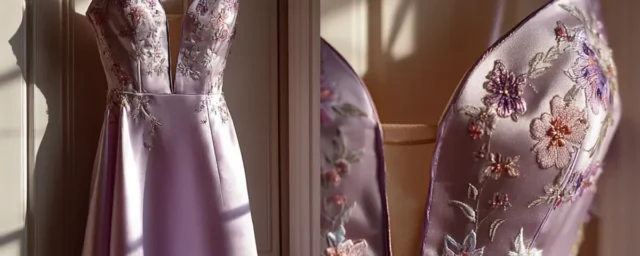
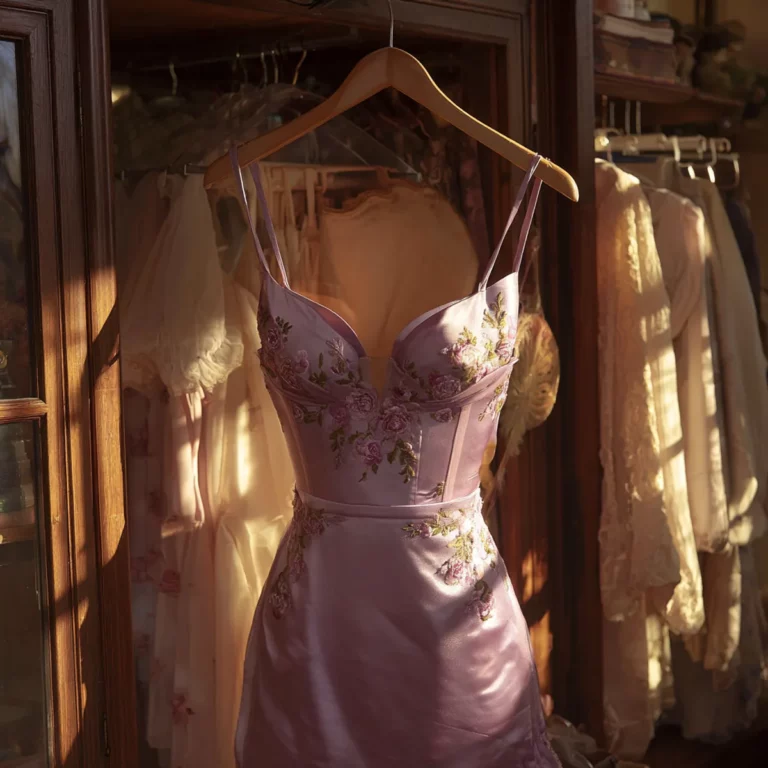
It was lavender satin with embroidered flowers along the bodice and delicate spaghetti straps that shimmered beneath the light. The photos of her wearing it ahead of her high school graduation looked like something out of a late ’90s teen magazine.
She had that effortless look: soft curls, shiny lip gloss, a smile that lit up every room, and the glow of being 17 and on top of the world. When I was little, I used to climb onto her lap and run my fingers over the photos in her scrapbook.
“Mom,” I used to whisper, “when I go to prom, I’ll wear your dress too.”
She would laugh, not the big kind of laugh, but the kind where her eyes softened and her hands smoothened the fabric of the dress like it was a secret treasure. “Then we’ll keep it safe until then,” she’d say.
But life doesn’t always keep promises.
Cancer took her when I was 12. One month, she was tucking me into bed; the next, she was too weak to stand. Not long after, she was gone.
The day she passed, it felt like my whole world broke in two. My dad tried to hold it together for us both, but I could see the way he stared at her side of the bed every morning. We were surviving, not living.
After her funeral, her prom dress became my anchor. I tucked it away at the back of my closet. Sometimes, when the nights were too long and too quiet, I’d unzip the garment bag just enough to touch the satin and pretend she was still there.
That dress wasn’t just fabric. It was her voice, her smell, the way she sang off-key while cooking pancakes on Sunday mornings. Wearing it to prom wasn’t about being fashionable; it was about keeping a piece of her alive.
Then came Stephanie.
My dad didn’t take long grieving; he remarried when I was 13. Stephanie moved in with her white leather furniture, expensive heels, and her habit of calling everything in our home “tacky” or “outdated.”
My mom’s ceramic angel collection disappeared from the mantel in the first week. She called them “junk.” The family photo wall came down next. When I came home from school one day, the oak dining table — the one where I learned to read, where we carved pumpkins, where we ate every holiday meal — was out on the curb.
“Refreshing the space,” Stephanie said with a bright smile as she placed a new throw pillow onto our now expensive furniture. We now had shiny décor.
My dad told me to be patient. “She’s just trying to make it feel like home,” he said. But it wasn’t our home anymore. It was hers.
The first time Stephanie saw my mom’s dress, she wrinkled her nose as if I’d shown her a dead bird.
It was the day before graduation, and I was twirling in front of the mirror in the dress.
“Megan, you can’t be serious,” she said, clutching a glass of wine. “You want to wear that to prom?”
I nodded, holding the garment bag protectively. “It was my mom’s. I’ve always dreamed of wearing it.”
She raised her eyebrows and set the glass down a little too hard. “Megan, that dress is decades old. You’re going to look like you pulled it out of a thrift store donation bin.”
I bit the inside of my cheek. “It’s not about the look. It’s about the memory.”
She stepped closer and pointed at the bag. “You can’t wear that rag! You’ll disgrace our family. You’re part of my family now, and I won’t have people thinking we can’t afford to dress our daughter properly.”
“I’m not your daughter,” I snapped before I could stop myself.
Her jaw clenched. “Well, maybe if you acted like one, we wouldn’t have these problems. You’re wearing the designer dress I picked out, the one that cost thousands!”
But I stood my ground. “This is a special dress for me… I’m wearing it.”
“Your mom’s gone, Megan. She’s been gone for a long time. I’m your mother now, and as your mother, I won’t let you make a fool out of us.”
My hands trembled. I pressed the satin to my chest as if holding onto my mom. “This is all I have left of her,” I whispered, my throat tightening.
She threw her hands in the air dramatically.
“Oh, enough with this nonsense! I’ve raised you for years, given you a home, and everything you could want. And how do you thank me? By clinging to some outdated rag that should’ve been thrown out years ago?”
I cried quietly, unable to stop the tears from spilling. “It’s the only piece of her I can still hold on to…”
“Stop it, Megan! I’m the one in charge now. I’m your mother, do you hear me? And you’ll do as I say. You’ll wear the gown I chose, the one that shows you’re part of my family. Not that pathetic dress.”
If you haven’t noticed, my stepmom only cared about appearances.
That night, I cried with the dress crumpled in my arms, whispering apologies to a mom who couldn’t hear them. But I made a decision. I would wear it no matter what Stephanie thought. I wouldn’t let her erase my mom from this house. Not entirely.
When my dad got home, I didn’t tell him what Stephanie said or the argument we had.
He apologized, telling me he had to work a double shift on prom day. My dad was a regional manager at a warehouse company, and end-of-quarter logistics had pulled him in.
“I’ll be back by the time you return,” he promised, kissing my forehead. “I want to see my girl looking like a princess in her mother’s dress.” He already knew which dress I wanted to wear for prom; we’d spoken about it many times.
“You’ll be proud,” I said, hugging him tight.
“I already am,” he whispered.
The following morning, I woke up with butterflies. I did my makeup the way my mom used to — soft blush and natural lips. I curled my hair and even found the lavender clip she once used to pin hers back. By early afternoon, everything was ready.
I walked upstairs to put on the dress, my heart beating so fast it felt like I could barely breathe.
But when I unzipped the garment bag, I froze.
The satin was ripped straight down the seam. The bodice was stained with a dark, sticky substance that resembled coffee. And the embroidered flowers were smudged with something resembling black ink. I dropped to my knees, clutching the ruined fabric.
“No… no,” I whispered, over and over again.
Then I heard her.
“Oh. You found it.”
Stephanie leaned in the doorway with a smug expression. Her voice was syrupy sweet. “I warned you not to be so stubborn.”
I turned slowly, my hands still trembling. “You… did this?”
She stepped into the room, looking me over like I was an eyesore. “I couldn’t let you humiliate us. What were you thinking? You were going to show up looking like a ghost from the bargain bin.”
“It was my mom’s,” I choked out. “It’s all I have left of her.”
Stephanie rolled her eyes. “Now, I’m your mother! Enough with this obsession! I gave you a brand-new designer gown. One that actually belongs in this century.”
“I don’t want that dress,” I whispered.
She walked forward until she was standing over me. “You’re not a little girl anymore. It’s time to grow up and stop playing pretend. You’ll wear what I choose, smile for pictures, and stop acting like this house belongs to a dead woman.”
The words stung like slaps.
She turned on her heel and left, her shoes clicking down the hallway like gunshots.
I was still on the floor crying when I heard my door squeak open.
“Megan? Sweetheart? No one was answering the door, so I let myself in.”
It was my grandma, my mom’s mom. She’d come early to see me off.
She rushed upstairs when I didn’t answer and found me crumpled on the floor.
“Oh no,” she breathed when she saw the dress.
I tried to speak, but all I could do was sob.
“She destroyed it, Grandma. She actually destroyed it.”
Grandma knelt beside me and took the dress in her hands. She examined the tear, then looked me in the eye with a fire I hadn’t seen in years.
“Get a sewing kit. And peroxide. We’re not letting that woman win.”
Downstairs, Stephanie stayed silent. She never came near us, because she feared Grandma — always had. Something about the way Grandma looked right through her made her uncomfortable.
For two hours, Grandma scrubbed the stains with shaky hands and stitched like her life depended on it. She used lemon juice and peroxide to lift the stains, and she mended the seam with delicate precision.
I sat beside her, handing her tools and whispering encouragement. The clock was ticking, but she never wavered.
When she was done, she held it up like a miracle.
“Try it on, sweetheart.”
I slipped into the dress. It was slightly tighter around the bust, and the repaired seam was a bit stiff, but it was beautiful! And it was hers. Still hers.
Grandma hugged me close and pressed a kiss to my forehead. “Now go. Shine for both of us. Your mom will be right there with you!”
And in that moment, I believed her.
I wiped my tears, grabbed my heels, and walked out the door with my head high.
At prom, my friends gasped when they saw me!
The lavender dress caught the light like magic.
“You look incredible!” one girl whispered.
“It was my mom’s,” I said softly. “She wore it to her prom.”
I danced, laughed, and let myself be 17.
When I got home just before midnight, my dad was waiting in the hall, still in his work uniform, looking tired but proud.
When he saw me, he froze.
“Megan… you look beautiful.” His voice caught. “You look just like your mom did that night.”
He pulled me into a hug, and I let myself cry again. Happy tears this time.
“I’m proud of you, sweetheart,” he whispered. “So proud.”
Then, from the corner of my eye, I saw Stephanie appear at the end of the hallway.
Her eyes narrowed. “So this is it? You let her embarrass us in that cheap rag? James, everyone probably laughed behind her back. Do you realize how pathetic this makes our family look?”
Dad turned slowly, his arm tightening protectively on my shoulder. His voice was calm but firm, like steel wrapped in velvet.
“No, Stephanie. She looked radiant tonight. She honored her mother, and I’ve never been prouder of her.”
Stephanie scoffed, crossing her arms.
“Oh, please. You two are so blinded by sentiment. This family will never get anywhere with that poor-man mentality. You think a five-dollar dress makes you special? You’re nothing but small people with even smaller dreams.”
My chest tightened, but before I could speak, Dad stepped forward, his voice sharper now.
“That ‘five-dollar dress’ belonged to my late wife. It was her dream to see Megan wear it, and my daughter made that dream real tonight. You just insulted her and her mother’s memory.”
“And you wanted to ruin her mother’s dress? The one promise I told her she could always count on?”
Stephanie blinked, caught off guard.
“I… I was protecting our image. You know how people talk.”
“No,” he said, stepping in front of me. “You were tearing down everything Megan had left of her mother. And I will never let you hurt her or her mother’s memory again.”
She laughed bitterly. “You’re choosing her over me?”
“Every time,” he said.
Her eyes darted to me, full of venom. “Ungrateful brat.”
Grandma’s voice rose from the living room. “I’d watch your words, Stephanie. You’re lucky I didn’t tell James worse.”
My stepmom went pale.
She grabbed her purse and stormed out, slamming the door behind her.
“Fine. Stay in your little bubble of grief and mediocrity. I won’t be part of it.”
Dad turned back to me and brushed a loose curl from my cheek.
“She’s gone,” he said. “But your mom would be so proud of you.”
“I know,” I whispered, and for the first time in a long time, I truly believed it.
Grandma, who had stayed after fixing my gown to tell Dad what happened with Stephanie, waited up late to see me when I got back from prom. She left after my stepmom’s rant and came back the next morning, bringing over muffins.
We all sat in the kitchen — me, her, and Dad — for the first peaceful breakfast in years.
That night, I hung the lavender dress back in my closet.
I dragged myself to the laundromat after a night shift, my seven-month-old daughter asleep in my arms. Exhaustion hit me like a wall, and I dozed off while the washer ran. When I woke up, my laundry was folded. But what I found inside the washer made my hands shake.
I work at a pharmacy, and the schedule board says I’m on day shift. That’s the version I tell myself to get through each week, anyway. The truth is messier than that.
When another tech calls out sick or the store runs short on staff, I grab whatever shifts they’ll give me because overtime is the only thing keeping formula and diapers from sliding into the “maybe next week” pile.
My baby girl, Mia, is seven and a half months old. She’s at that perfect age where she smells like warm milk and sunshine, and the smallest smile from her can make me forget about the stack of bills sitting on top of the microwave.
Her father left the minute I told him I was pregnant.
“I’m not ready for this life,” he said, like fatherhood was a shirt that didn’t fit right. I stopped checking my phone for his texts somewhere around my second trimester.
Now it’s just me, my mom, and Mia against the world.
Mom watches her whenever I’m at work, and I tell myself that the tight feeling in my chest is gratitude instead of guilt. Because the truth is, my mother already raised her babies.
She didn’t sign up for late-night bottles and diaper changes at 61 years old, but she does it anyway without a single complaint.
We live in a small rented apartment on the second floor of an old building. The rent is manageable, but there’s no washing machine. When laundry piles up, I have to haul everything down the street to the laundromat on the corner, the one with the flickering neon sign and the permanently sticky floor.
That particular morning, I came home after pulling a long night shift. My eyes felt like they were full of sand, my body ached in places I didn’t know could ache, and I could barely string two thoughts together. But the second I walked through the apartment door, I noticed the laundry basket was overflowing.
I let out a long, tired sigh.
“Guess we’re going to the laundromat, sweetheart,” I whispered to Mia, who was dozing in my arms.
Mom was still asleep in her room after staying up most of the night with Mia while I worked. I didn’t want to wake her. She needed rest as much as I did.
So, I bundled Mia up in her jacket, stuffed all the dirty laundry into one big canvas bag, and headed out into the early morning.
The laundromat was quiet when we arrived, just the steady hum of machines and the sharp, clean smell of detergent hanging in the air. There was only one other person there, a woman in her 50s, who was pulling clothes from one of the dryers. She looked up when we walked in and smiled warmly.
“What a beautiful girl you have,” she said, her eyes crinkling at the corners.
“Thank you,” I said and smiled back.
She gathered her basket and left, and then it was just me and Mia in that fluorescent-lit room. I loaded all our clothes into one washing machine.
We don’t have much, so everything goes in together: Mia’s onesies, my work shirts, towels, and even her favorite blanket with the little elephants on it. I fed quarters into the slot, pressed the start button, and sat down on one of the plastic chairs lined up against the wall.
Mia started fussing a little bit, making those small sounds that meant she was getting uncomfortable.
I rocked her gently, swaying back and forth until her eyes fluttered closed again. The problem was, I didn’t have anything clean to cover her with.
So, I grabbed the thin receiving blanket from the top of the dirty laundry pile, shook it out as best I could, and wrapped it around her tiny body.
She settled against my chest, warm and soft, her breath coming in those sweet little puffs against my collarbone. My head felt impossibly heavy.
I leaned back against the folding table behind me, telling myself I’d just rest my eyes for a second. Just one second.
And then… the world slipped away.
When I opened my eyes again, panic shot through my chest like electricity. The sun was higher now, bright light streaming through the laundromat windows at a sharper angle than before. I blinked hard, trying to remember where I was and how long I’d been asleep.
Mia was still safe in my arms, her little face peaceful and relaxed. But something felt different.
The washing machines had stopped running. The room was silent except for the buzz of the overhead lights. And right next to me, spread out on the folding table, was my laundry. All of it. Folded perfectly.
For a long moment, I couldn’t even move. I just stared at the neat stacks of clothing. My work shirts folded into crisp squares. Mia’s tiny onesies arranged by color. Our towels stacked like they’d come from a department store display.
Someone had done this while I slept.
My first thought was fear. What if someone had taken something? What if they’d touched Mia?
But everything was there, and she was fine, still sleeping soundly against me.
Then I noticed the washing machine I’d used. It wasn’t empty like it should have been. The door was closed, and through the glass, I could see it was full. But not with dirty clothes.
I stood up slowly, my legs shaky, and walked over to it. I pulled the door open, and what I saw inside made my heart skip a beat.
There was a whole pack of diapers, baby wipes, two cans of formula, a stuffed elephant with floppy ears, and a soft fleece blanket. On top of everything was a folded piece of paper.
My hands were trembling as I picked it up and unfolded it.
“For you and your little girl. — S.”
I just stood there, holding that note, staring at the simple words written in neat handwriting.
My throat felt tight, and tears started burning behind my eyes. I looked around the laundromat, but it was completely empty. Whoever “S” was, they were long gone.
I sat back down in that plastic chair, still holding the note, reading it over and over. The words were so simple, but they hit me harder than anything anyone had said to me in months. Someone had seen how tired I was, how hard I was trying, and they’d decided to help.
When I finally got home, I spread everything out on my bed. Mom came into the room and gasped when she saw it all laid out.
“There are still kind people in this world,” Mom said softly, her voice thick with emotion.
I kept that note. I stuck it to the fridge with a magnet shaped like a sunflower. Every single time I looked at it over the next few days, it reminded me that someone out there cared enough to help a complete stranger.
About a week later, I came home from another brutal double shift. My feet were killing me, and I was so tired I could barely see straight. But when I climbed the stairs to our apartment, there was something waiting outside the door.
A wicker basket, the kind you’d take on a picnic.
Inside were groceries, including a container of oatmeal, bananas, several jars of baby food in different flavors, and a box of crackers. And tucked between everything was another note in the same neat handwriting.
“You’re doing amazing. Keep going. — S.”
I stood there in the hallway and laughed and cried at the same time, tears streaming down my face while this weird, choked sound came out of my throat. Who was this person? How did they know where I lived? How did they know exactly what we needed?
That night, after Mia was asleep and Mom had gone to bed, I wrote my own note. I slipped it under the doormat outside our apartment.
“Thank you. Please tell me who you are. I want to thank you properly.”
Days went by with no response. I checked under the doormat every morning and every evening, but the note just sat there, untouched. I started to wonder if maybe I’d imagined the whole thing, or if whoever “S” was had decided to stop.
Then one morning, as I was coming home from work around seven, I saw a man standing near the gate of our building. He looked uncertain, shifting his weight from one foot to the other like he wasn’t sure if he should stay or leave. When our eyes met, he gave me a small, nervous smile.
“Sarah?” he said quietly.
It took me a second to place him. Something about his face was familiar, but I couldn’t quite grab hold of the memory. “Wait,” I said slowly. “Sean?”
He nodded, his smile getting a little wider. “Yeah. From high school.”
Everything clicked into place. Sean. The quiet boy who always sat in the back corner of English class. The one everyone used to pick on because he was shy and wore clothes that didn’t quite fit right. I used to sit next to him.
I was the only person who ever talked to him, the only one who told the bullies to back off and leave him alone.
“I hope this doesn’t sound weird,” he said, rubbing the back of his neck in a gesture that reminded me of the awkward teenager he’d been. “But my mom goes to that laundromat near your place sometimes. She lives just a few blocks away. A couple weeks ago, she told me about this young woman she saw there one morning. She said this woman was sitting by the machines with a baby asleep in her arms, looking completely exhausted. She said you reminded her of someone she used to know. Then she realized it was you.”
My breath caught in my chest. “Your mom? She was the woman I saw that morning?”
“Yeah. Her name’s Lorraine. She told me how tired you looked, how you were washing everything you owned, and how gently you held your little girl even though you could barely keep your eyes open. She said she couldn’t stop thinking about you after that. And when she told me, I couldn’t either. You were the only person who was ever kind to me back in school, Sarah. The only one who made me feel like I mattered. I wanted to do something for you, even if you never knew it was me.”
I stood there holding Mia a little tighter. “Sean, you didn’t have to do any of that. You don’t owe me anything.”
He shook his head. “You once stood up for me when everyone else was laughing. You told me not to let people change who I was. I never forgot that, Sarah. Not once. I just thought maybe it was finally time to return that kindness.”
Tears filled my eyes and spilled down my cheeks. I didn’t even know what to say. There were no words big enough for what I was feeling.
After that day, Sean started stopping by every now and then. He’d bring a pack of diapers, or some groceries, or he’d offer to fix something in the apartment that had been broken for months. He never asked for anything in return.
My mom started calling him “Uncle S,” which always made him blush and duck his head. There was nothing romantic between Sean and me. It was something different, like a kind of quiet bond that didn’t need many words to make sense.
Months later, my boss called me into his office and told me he was giving me more stable hours and a small raise. He said someone had called the pharmacy to recommend me, said I was one of the hardest-working and most reliable people they’d ever known. He wouldn’t tell me who it was, but I didn’t need him to.
When I got home that evening, I looked at the note still stuck to the fridge, a little faded now but still readable.
“For you and your little girl. — S.”
I smiled through my tears, running my fingers over the words. Because sometimes the kindness you give years ago finds its way back to you in ways you could never imagine or predict.
Sean didn’t just help me with laundry or groceries or getting a better schedule at work. He reminded me that goodness never disappears. It just waits quietly, patiently, until it’s time to return home.
I spent weeks crocheting the perfect Maid of Honor dress for my 10-year-old daughter. She twirled like a fairy princess when she tried it on. But the day before my wedding, I found out what my future mother-in-law had done to it, and my heart broke. I never forgave her, and karma handled the rest.
Love after heartbreak feels different. It’s cautious but hopeful. When my first marriage crumbled five years ago, I thought my chance at happiness was over. Lucy was just five then, her tiny fingers wrapped around mine as we moved into our cramped apartment.
“It’s okay, Mommy,” she whispered that first night. “It’s our cozy castle now.” That’s Lucy for you. She’s always been my anchor when the world felt unsteady.
So when Ryan walked into our lives two years ago, Lucy’s opinion mattered more than anything. After everything we’d been through together, her trust didn’t come easily. I held my breath during their first meeting at the park, my palms actually sweating as I watched them size each other up. Would she like him? Would he see what I saw in her—this incredible little soul who’d been my strength through everything?
I needn’t have worried. Within minutes, Ryan was pushing Lucy on the swings while she giggled about her latest art project, something involving glitter and what she called “rainbow dragons.” He listened to every word like she was telling him the secrets of the universe, asking follow-up questions that made her beam with pride.
“He’s nice, Mom,” she said later, chocolate ice cream smeared on her chin and down the front of her favorite purple shirt. “He doesn’t talk to me like I’m a baby.”
That’s when I knew… really knew that our family was going to be perfect.
When Ryan proposed six months ago, Lucy was more excited than I was. She’d been in on the plan, apparently helping him pick out the ring during a “secret mission” to the jewelry store.
“Do I get to wear a fancy dress?” She asked, bouncing on her toes like a little kangaroo.
“Better than that, sweetie,” I said, my heart swelling with the kind of love that makes your chest ache in the best way. “You’re going to be my maid of honor.”
Her eyes went wide, bigger than I’d ever seen them. “Really? Like a grown-up lady?”
“Exactly like that.” I pulled her into a hug. “My most important grown-up lady.”
I’ve been crocheting since I was 15, when my high school guidance counselor suggested I find something constructive to do with my restless energy. It started as something to do with my hands when anxiety crept in, a way to quiet the racing thoughts that kept me up at night. Over the years, it became my meditation and therapy, the rhythmic motions as soothing as a lullaby. It became my way of creating something beautiful when everything else felt broken.
For Lucy’s dress, I chose the softest pale lilac yarn I could find, running it through my fingers at three different craft stores before settling on the perfect shade. I sketched designs for weeks—high neckline for elegance, bell sleeves because she’d always loved fairy tales, and a delicate scalloped hem that would dance when she walked down the aisle.
Every evening after she went to bed, I worked by lamplight in the quiet of our little living room. Each stitch carried my love for her in every loop, and each row held my hope for our new beginning. The dress was becoming more than fabric and thread. It was becoming a promise.
I had no idea someone would try to destroy that promise before Lucy ever got the chance to wear it.
“What are you making, Mom?” she’d ask, peeking over my shoulder with curious eyes while I quickly covered my work with a pillow.
“A surprise,” I’d say, hiding my work behind my back like I was the child instead of her. “But it’s going to be magical.”
Magical. That’s what I wanted this day to be for Lucy, and for all of us. A fresh start wrapped in lilac yarn and sealed with love.
But Ryan’s mother, Denise, had strong opinions about every detail of our wedding planning, and she wasn’t shy about sharing them. She questioned our choice of an outdoor venue when her church would have been more appropriate, complete with a lengthy explanation about “proper ceremonies.”
She critiqued our intimate guest list, reminding us at least three times that people from her social circle would be “disappointed” not to get an invitation. She even suggested a formal sit-down dinner when we’d planned a casual reception, citing some etiquette book she’d read in 1987.
She had a way of delivering these suggestions like commands, always with that practiced smile that never quite reached her eyes, making it clear she knew what was best for everyone involved. Every conversation left me feeling drained, like I’d just survived a polite interrogation.
I should have seen the warning signs then. But I was so focused on making everyone happy that I missed the most important clue about what Denise was really capable of.
“I just want what’s best for Ryan,” she’d say whenever I pushed back gently, her voice taking on that martyred tone that made my skin crawl. “After all, a wedding sets the tone for a marriage.”
I bit my tongue. A lot. So much that I’m surprised it didn’t fall off entirely.
“She’ll come around,” Ryan assured me after every tense conversation, rubbing my shoulders while I vented my frustrations. I believed him because I wanted to.
Four days before the wedding, Lucy tried on her finished dress. The moment had finally arrived. I held my breath as she slipped into it, my hands shaking slightly as I helped guide her arms through the sleeves. The fit was perfect, and the color brought out her eyes in a way that made her look almost ethereal. She looked like the fairy princess she’d always dreamed of being.
She spun in front of my bedroom mirror, arms outstretched, the scalloped hem flowing around her legs like water. “I look like a fairy princess maid!” she squealed, her voice pitched high with pure joy.
I blinked hard, willing myself to hold it together. “You look perfect, sweetheart. Absolutely perfect.”
In that moment, watching her twirl in the dress I’d made with my own hands, I felt like I’d given her the world. I had no idea that in less than 48 hours, someone would take it all away.
“Will everyone think I’m pretty?” she asked, suddenly shy.
“Everyone’s going to think you’re the most beautiful Maid of Honor in the world, honey.”
We stored the dress carefully in a garment bag in my closet. Lucy asked to see it every day leading up to the wedding.
“Just to make sure it’s still there,” she’d say.
***
The day before the wedding, I was in the kitchen making her breakfast when I heard a scream that froze me in place. I dropped the spatula and ran toward my bedroom. I found Lucy on the floor next to my closet, her small body shaking. In her hands was a pile of lilac yarn.
My legs gave out, buckling beneath me like I’d been struck. I sank to the floor beside her, staring at what used to be her dress, my mind struggling to process the devastation spread across my bedroom carpet. It hadn’t been torn or damaged in some accidental mishap. It had been methodically unraveled, stitch by careful stitch, starting from the back neckline and working down with deliberate precision.
Someone had sat in my bedroom, in the sanctuary of our home, and undone every hour of work and every loop of love. They’d taken their time with it, making sure nothing could be salvaged.
“Mom,” Lucy sobbed, her voice breaking on the word, “it’s gone. My dress is gone.”
I pulled her against me, my tears falling into her hair as the reality hit me in waves. I couldn’t speak or think past the roaring in my ears. I just held her while she cried, both of us surrounded by the ruins of something beautiful.
“Who would do this?” she whispered against my shoulder, her small voice muffled by my shirt. “Who would be so mean?”
I knew. God help me, I knew exactly who would do this. The woman who’d smiled that practiced smile while criticizing every choice we’d made. The one who thought a homemade dress wasn’t “appropriate” for her son’s wedding.
Ryan found us there an hour later, still on the floor surrounded by the lilac yarn. My eyes were swollen from crying. Lucy had cried herself to sleep in my arms.
“What happened?” he asked.
I looked up at him, feeling hollow inside. “Your mother happened.”
“What? No. Mom wouldn’t…”
“Look at this,” I said, gesturing to the pile of yarn. “This wasn’t an accident. Someone sat here and unraveled every single stitch… by hand. It would take hours.”
Ryan’s face went pale. “You think my mother did this?”
“Who else has been in our house? Who else has made it clear she disapproves of everything about this wedding?”
He ran his hands through his hair. “I need to call her.”
“No,” I said, my voice stronger than I felt. “I’ll call her.”
My hands shook as I dialed her number. She answered on the second ring. “Hello, Sophia. I hope you’re having a lovely day before your big event.”
“Denise,” I said, fighting to keep my voice steady. “Lucy’s dress is gone.”
Silence. “Denise? Did you hear me?”
“Yes, I heard you.” Her voice was cool and detached. “I’m sorry about that.”
“Sorry? That’s it? Someone destroyed something I spent weeks making.”
“I didn’t think it was appropriate,” she said, not even denying her involvement. “A homemade dress for your wedding party? This isn’t a school play, Sophia.”
I couldn’t breathe for a second. “You did THIS? You actually did this to a 10-year-old child.”
“I thought Lucy would make a lovely flower girl. You gave her a title that doesn’t make sense for her age. I was just trying to help.”
“Help?” I was shaking now. “You DESTROYED something that meant everything to her.”
“I made a difficult decision. I thought once it was done, you’d see the reason and get her something more suitable.”
I hung up. My hands were trembling so hard I could barely hold the phone. I didn’t scream or throw things. But I did make some phone calls. First, I called my photographer, Jenny, who had taken progress shots of the dress during fittings. “I need those photos,” I told her. “All of them.”
Next, I called my friend Mia, who runs a wedding inspiration page with thousands of followers. “I need a favor,” I said.
That night, after Lucy was asleep, I crafted a simple, honest, and heartbreaking post with three photos: Lucy trying on her dress, twirling with joy. The finished dress on its hanger. And the pile of yarn on my bedroom floor.
The caption read: “I crocheted this Maid of Honor dress for my 10-year-old daughter. She twirled in it two days ago, so excited to be part of my second chance at love. Today, we found it in a pile of yarn. My future mother-in-law was displeased with it from the beginning. And then someone unraveled every stitch. But love can’t be undone.”
I tagged Mia’s account and hit post. Within an hour, it had hundreds of shares. By morning, it was everywhere.
***
The wedding day dawned gray and cloudy, matching my mood. I’d stayed up all night working on a new dress for Lucy. It was simpler this time, but made with the same love.
Denise arrived at the venue wearing head-to-toe white. A white dress, white jacket, and white shoes… at her son’s wedding.
The guests’ reactions said everything as whispered conversations rippled through the crowd and pointed stares followed her every move. My post had reached our small town, and people knew exactly who Denise was and what she had done.
She approached me while I was getting ready. “How dare you humiliate me like this?” she hissed. “That post of yours has made me a laughingstock.”
I looked at her reflection in the mirror. “I didn’t humiliate you, Denise. You did that all by yourself.”
“You had no right to air our family business publicly.”
“Family?” I turned to face her. “Family doesn’t destroy a child’s dreams out of spite.”
“I was trying to help…”
“You were trying to control. There’s a difference.”
Ryan appeared in the doorway. He’d heard everything. “Mom, you need to leave,” he said.
“Excuse me?”
“You’re not welcome at the reception. You don’t get to hurt my daughter and still expect a free meal.”
Denise’s face went red. “Your daughter? She’s not even…”
“She’s more my daughter than you are my mother right now,” Ryan snapped. “Leave. Now.”
Denise left, fuming and muttering about ungrateful children.
Lucy walked down the aisle in her new dress, carrying my bouquet with the biggest smile I’d ever seen. The crowd rose to their feet, applauding my little fairy princess maid.
“I’m still magical, right Mom?” she whispered as she reached me.
“The most magical girl in the world,” I whispered back.
The ceremony was perfect in its simplicity, small and intimate, filled with people who genuinely loved and supported us. There was no drama to overshadow our vows, no criticism to dampen our joy, just pure love surrounding us as we promised forever to each other.
During the reception, Mia found me. “Your post is still going viral,” she said. “People are messaging, asking if you take commissions.”
I laughed. “Commissions? I just wanted justice for Lucy.”
“Well, you got that and more. Check your phone!”
Hundreds of messages flooded my inbox from people wanting custom dresses for their daughters, granddaughters, and nieces. They had all seen my story and understood what love looked like when it was carefully stitched by hand into every thread.
***
Six months later, my online boutique is thriving. My little shop keeps me busier than I ever imagined. I donate 10 percent of every sale to children’s charities, and Lucy helps me pack orders and pick colors.
“This one’s going to make someone really happy,” she said yesterday, carefully folding a lavender dress.
“How do you know?”
“Because you made it with love. Just like you made mine.”
As for Denise? Her church group quietly asked her to step down from leadership. She’s become known around town as “that woman who destroyed the little girl’s dress.” She calls Ryan sometimes, but he rarely answers.
Last week, a woman recognized me at the grocery store. “You’re the crochet mom,” she said. “The one who stood up to that awful mother-in-law.”
I smiled. “I’m just a mom who loves her daughter.”
“Well, what you did was brave. My daughter saw your story and asked me to teach her to crochet. She wants to make something beautiful too.”
That night, I told Ryan about the encounter. “Any regrets?” he asked. “About exposing all this?”
I thought about Lucy who was asleep in her room, surrounded by yarn samples and sketches for new designs. I thought about all the little girls who would wear dresses made with love because of our story.
“Not one,” I said. “Some battles are worth fighting. Especially when you’re fighting for love.”
Sometimes the best revenge isn’t revenge at all. It’s simply refusing to let someone else’s cruelty define your story and turning your pain into something beautiful. And sometimes, justice serves itself.
Kurt Russell, one of Hollywood’s most respected and beloved actors, has captivated audiences for decades with his charisma, versatility, and memorable performances. From his...