
Entertainment

Chin Hair in Women: Common Causes and Helpful Tips

Noticing a few coarse hairs on the chin can be surprising, but it’s actually a common experience for many women. Facial hair growth varies naturally from person to person and is often influenced by genetics, age, and normal hormonal changes. In most cases, occasional chin hairs are simply a cosmetic concern. However, when hair growth becomes more noticeable or appears suddenly, it may be helpful to understand what your body could be signaling. Learning the possible causes allows you to decide whether simple grooming solutions are enough or if a medical check-in might be useful.

One of the main factors behind chin hair growth in women is hormonal fluctuation. Women naturally produce small amounts of androgens — hormones often associated with male characteristics — but when levels rise slightly, they can stimulate hair follicles on areas such as the chin and jawline. These changes may occur during menopause, after starting or stopping birth control, or due to thyroid function shifts. Sometimes, increased chin hair appears alongside other signs like acne, irregular menstrual cycles, or weight changes. If multiple symptoms occur together, a healthcare provider can recommend basic hormone testing to ensure everything is balanced.

Another possible contributor is Polycystic Ovary Syndrome (PCOS), a common hormonal condition that affects many women during their reproductive years. One of its well-known features is hirsutism, which refers to increased hair growth in areas where women typically have minimal hair. PCOS may also be associated with irregular periods, difficulty managing weight, or skin changes. It’s important to note that chin hair alone does not automatically mean PCOS is present. A proper medical evaluation is the only way to confirm this condition, and early guidance can help manage symptoms effectively.

In many situations, chin hair is simply part of the natural aging process or inherited traits. Some women develop a few coarse hairs over time without any underlying health issue. Cosmetic options such as trimming, waxing, threading, or professional hair removal treatments can help manage appearance if desired. The key takeaway is awareness rather than worry — paying attention to sudden changes and seeking professional advice when needed. By understanding your body’s signals and responding thoughtfully, you can make confident decisions about both your health and self-care.

An Ordinary Sofa That Turned Out to Be Something More

What began as a casual scroll through furniture listings turned into something far more memorable than I expected. I wasn’t searching for a specific piece—just browsing out of habit—when a vintage sofa stopped me in my tracks. It had a timeless look, with carved wooden legs and softly patterned fabric that felt warm and familiar. It looked like the kind of sofa that had quietly witnessed decades of family conversations and afternoon naps. At first glance, it seemed charming but ordinary, the sort of piece you admire briefly before moving on. Then I noticed something unexpected that made me look twice.

Along the arms of the sofa were neatly stitched zippers. Zippers on a sofa felt unusual, almost out of place, and I initially assumed they were decorative or part of a repair. But they were clearly intentional, carefully integrated into the design. The more I thought about it, the more intriguing it became. These weren’t added later—they were part of the original structure. The zippers allowed sections of the sofa to be opened, adjusted, or removed with ease. It was a small design detail, but one that completely changed how I viewed the piece. What looked like a simple couch suddenly revealed a clever layer of thought and purpose.

That discovery led me to reflect on how furniture was designed in earlier decades. Older pieces often balanced beauty with adaptability, especially when homes were smaller and every item needed to serve more than one role. Designers didn’t just focus on appearance; they considered how furniture could evolve with its owners’ needs. A sofa might double as storage, a seating area, or even a quiet place to keep personal items close at hand. These hidden features weren’t meant to impress guests but to quietly improve daily life. In that sense, furniture felt more personal, shaped by real routines rather than trends.

Seeing that sofa also brought back memories of my childhood, particularly visits to my grandmother’s house. Her furniture was sturdy and unassuming, but it held surprises if you paid attention. Once, while playing near her couch, I discovered a small compartment tucked beneath a cushion. Inside were old photographs, handwritten notes, and small keepsakes she had saved over the years. It felt like opening a private archive, filled with moments that mattered to someone long before me. Today’s furniture may be sleek and efficient, but it rarely carries that sense of quiet storytelling. An older sofa with a hidden detail isn’t just something you sit on—it’s a reminder that even ordinary objects can hold history, creativity, and a little bit of mystery if you take the time to look closely.

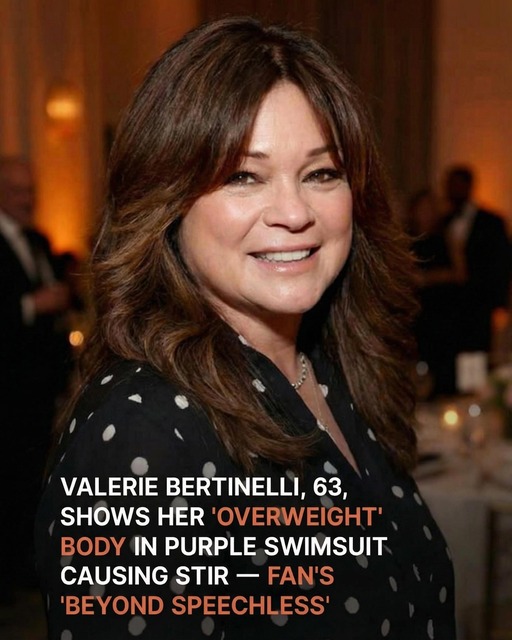
Valerie Bertinelli, 63, Shares a Candid Swimsuit Photo and Inspires Online Conversations

Valerie Bertinelli recently sparked an important conversation about body image, confidence, and self-acceptance after sharing a throwback swimsuit photo from 2014 on social media. In the post, she openly reflected on how her body was once labeled “overweight” despite being healthy and strong, highlighting how narrow and often unrealistic societal standards can be. Rather than seeking approval, her message focused on honesty and perspective, encouraging people to question long-held beliefs about weight and worth. The response was overwhelmingly positive, with many followers praising her authenticity and applauding her courage for addressing a topic that affects people of all ages. Supportive comments emphasized strength, aging with confidence, and the value of self-respect over appearance.

In her reflection, Bertinelli also shared how years of focusing on the scale shaped her mindset. She described repeatedly trying to lose the same small amount of weight for decades before realizing how emotionally draining that cycle had become. That realization marked a turning point, prompting her to let go of constant self-judgment and instead focus on living fully in the present. The loss of her former husband, Eddie Van Halen, in 2020 further deepened her understanding of what truly matters. These insights are explored in her memoir, Enough Already: Learning to Love the Way I Am Today, where she emphasizes that life is too valuable to be measured by numbers alone.

A key part of Bertinelli’s message centers on unlearning decades of social conditioning. She has spoken about growing up around harsh criticism related to weight and appearance, experiences that left lasting impressions. Over time, she has worked to replace those beliefs with compassion and self-kindness, reminding herself that personal value is not tied to body size. Her story resonates because it is grounded in real experiences rather than perfection. By choosing to treat herself with patience and understanding now—rather than waiting to meet an arbitrary goal—she models a healthier approach to well-being, one that prioritizes emotional balance, gratitude, and personal growth.

Her message also fits into a broader cultural shift, as other well-known women have sparked similar conversations by embracing confidence at every stage of life. Actress Helen Mirren has previously spoken with humor and honesty about a viral beach photo that captured an unplanned moment, while Demi Moore has received widespread praise for sharing joyful moments from her travels, focusing on connection and experience rather than perfection. Even talk show host Ellen DeGeneres has joked about how unexpected moments can resonate most with audiences. Together, these stories reinforce a simple but powerful idea: confidence, kindness, and self-acceptance are timeless qualities that matter far more than appearances.

My Parents Chose New Paths and I Was Raised by My Aunt — Years Later, They Returned

Ivy grew up learning to navigate a childhood shaped by absence. Though her parents never formally left her life, they slowly stepped away as they built new families and new routines that no longer included her. By the time Ivy was ten, she understood that she was no longer a priority. Eventually, both of her parents remarried and welcomed new children, and the space Ivy once occupied grew smaller until it disappeared altogether. When her mother and father finally agreed that Ivy should live with her Aunt Carol “for a while,” they packed her belongings into trash bags and left without answers. But what they saw as an easy solution became the beginning of a life-changing relationship. Aunt Carol welcomed Ivy with warmth, consistency, and encouragement—qualities Ivy had almost forgotten existed. She created a safe home, nurtured Ivy’s growing love for art, and reminded her every day that she was valued.

Under her aunt’s steady support, Ivy flourished. Her small sketches grew into full canvases that lined the hallway, and her confidence blossomed through every art fair, contest, and opportunity she embraced. While her parents remained distant, sending the occasional holiday card or none at all, Aunt Carol showed up to every milestone and wiped every tear. Ivy carried her aunt’s lessons with her into adulthood, eventually entering an international art competition with a deeply personal piece titled Inheritance. The artwork, which reflected a story of rebuilding from broken beginnings, gained widespread attention and earned her a major award. The recognition brought Ivy not only financial stability but a newfound voice—one that told the world who she was and where she came from. And with that spotlight came something she never expected: a sudden reappearance from the parents who had once left her behind.

When Ivy’s parents showed up wanting to reconnect, she greeted them with calm reserve rather than anger. She agreed to dinner, sensing that their motives were more practical than heartfelt. It didn’t take long for their intentions to surface—financial help, support for new transitions in their lives, and the hope of benefiting from Ivy’s success. Instead of confronting them in frustration, Ivy invited them to an event at the community center, hinting that she had something special to share. What her parents didn’t realize was that the evening was a celebration of the one person who had stood by Ivy’s side through every hardship: Aunt Carol. As they took their seats, the presentation opened with photographs of Ivy and her aunt over the years—school projects, late-night art sessions, and victories won together. The room filled with admiration as Ivy stepped onstage, ready to speak the truth she had carried for years.

With a steady voice, Ivy honored Aunt Carol as the parent who had shaped her into the woman she became. She thanked her for her love, guidance, and unwavering support—qualities that had carried Ivy through both struggle and triumph. Then Ivy addressed her parents, acknowledging their hopes but gently drawing a clear boundary. She explained that their departure years ago had closed a chapter that could not be rewritten through her success. They had asked for help, but Ivy chose this moment not to give financial support, but to offer clarity and closure. As the audience stood in applause, she released the weight of her past. That night, Ivy walked home beside her aunt, grateful for the family she found and the strength she built. She didn’t need to look back; she was already where she belonged.

Lisa Rinna Introduces a New Look With Updated Hair Color

A long and varied career can still offer moments of surprise, and Lisa Rinna provided one such moment during a high-profile appearance in London. Attending The Fashion Awards 2025, presented by Pandora, at the Royal Albert Hall on December 1, she stepped onto the red carpet with a striking new look that immediately drew attention. Known for her confidence and willingness to experiment, Rinna’s appearance reminded many observers that reinvention can remain part of a public figure’s story well into an established career, especially within the ever-evolving world of fashion.

For the event, Rinna debuted a bold platinum-blonde hairstyle styled with dramatic volume and a sculptural finish that framed her face. The hair transformation was paired with polished makeup that emphasized her brows, lashes, and signature lips, creating a cohesive and high-fashion aesthetic. She completed the look with an avant-garde black-and-white plaid ensemble featuring oversized sleeves and a structured silhouette. The outfit’s architectural lines and gathered neckline amplified her presence, aligning her appearance with the experimental spirit often celebrated at global fashion events.

Online reactions quickly followed, with many viewers commenting on the artistic and couture-inspired nature of the look. Some praised the styling for its runway-ready impact, while others noted how different it felt compared to Rinna’s more familiar hairstyles from past appearances. Rather than focusing on shock, much of the conversation centered on the creativity of the transformation and how it reflected current fashion trends. The response highlighted how a carefully curated appearance can spark discussion while remaining rooted in style, performance, and personal expression.

Rinna’s fashion moment fits naturally into a career defined by versatility and reinvention. Over the years, she has built a résumé spanning daytime television, prime-time drama, reality TV, Broadway, hosting roles, and business ventures in beauty and fashion. More recently, she has spoken openly about drawing inspiration from her daughters, Delilah Belle Hamlin and Amelia Gray Hamlin, both of whom work within the fashion industry. Their influence has encouraged her to embrace bolder styling choices and approach fashion as a shared creative space. Her appearance at The Fashion Awards underscored that curiosity, adaptability, and collaboration continue to shape her public image, proving that long-standing careers can still evolve in fresh and unexpected ways.

During One of the Hardest Moments of My Life, an Unexpected Encounter Gave Me Strength

The room felt impossibly quiet after everything that had happened, as though sound itself had decided to step back and give grief some space. I sat by the window, watching light move slowly across the floor, trying to understand how the world could continue when mine had just shifted so completely. The words spoken to me during that time echoed in fragments, some gentle, others deeply painful, but none of them offering real comfort. What stayed with me most was the overwhelming sense of loss paired with disbelief—that something so hoped for could end so suddenly, leaving behind questions with no clear answers.

The following day, as I prepared to leave the hospital, I felt hollow rather than sad, like my emotions had grown tired and gone quiet. I moved slowly through the hallway, focused only on putting one foot in front of the other, when a soft voice interrupted my thoughts. An elderly woman stood nearby, her posture calm, her presence steady. She spoke with certainty but without urgency, offering words that felt less like advice and more like an invitation—to pause, to hold onto something meaningful rather than rushing to let everything go. Before I could respond, she placed something small in my hand, something symbolic rather than practical, and then gently stepped away.

At home, I kept that small item tucked away, unsure why it mattered yet unable to part with it. Days turned into weeks, and grief came in waves—some sharp, others quiet and reflective. Over time, I realized that healing did not mean forgetting or moving on as though nothing had happened. It meant finding a way to carry the experience without letting it define every moment. That small object became a reminder that loss and love are not opposites; they often exist side by side, shaping us in ways we do not immediately understand.

Looking back, I see that moment not as a turning point, but as a beginning. It marked the first time I allowed myself to believe that even in the deepest sorrow, there could still be meaning, connection, and growth. The woman’s words were not a prediction or a warning—they were a quiet acknowledgment that some things deserve care, even when they bring pain. Healing did not arrive all at once, but slowly, through reflection, support, and the gentle understanding that moving forward does not mean letting go of what mattered.

He’s a Hollywood Star’s Brother and a Notable Father—Meet This 1980s Heartthrob

For decades, Eric Roberts has been recognized as one of Hollywood’s most intense and versatile performers. Rising to prominence in the late 1970s and early 1980s, he became known for his commanding screen presence and emotionally layered performances in films such as “King of the Gypsies,” “Star 80,” and “Runaway Train.” His work earned critical acclaim, including Academy Award and Golden Globe nominations, and positioned him as a defining leading man of his era. Behind the scenes, Roberts’ career was shaped by a deep commitment to acting that began in New York City theater, where he honed his craft and gained early recognition on Broadway before transitioning to film.

As his career expanded, Roberts proved himself remarkably adaptable. Throughout the 1980s, 1990s, and beyond, he appeared in a wide range of projects, from independent films to major studio productions. His filmography grew to include blockbusters, festival favorites, and character-driven roles that showcased his range. Television also became an important part of his professional life, with recurring and guest appearances on popular series that allowed him to explore new dimensions of storytelling. Even decades into his career, Roberts continued working steadily, taking on roles that reflected both experience and curiosity, reinforcing his reputation as one of the industry’s most prolific actors.

Alongside his professional achievements, Roberts has spoken candidly over the years about the complexities of his personal life. In interviews and memoirs, he has reflected on strained family relationships, particularly with his daughter and his famous sister, acknowledging that periods of personal struggle created emotional distance. Rather than framing these experiences with blame, Roberts has described them as moments of regret and learning, shaped by circumstances he now views with greater clarity. He has openly expressed pride in the accomplishments of his family members while also recognizing the importance of respecting boundaries and allowing relationships to evolve at their own pace.

In recent years, Roberts’ reflections have taken on a more measured and introspective tone. He has emphasized accountability, growth, and gratitude—especially for the support he received from his wife, Eliza Roberts, whom he credits as a stabilizing and transformative presence in his life. By openly discussing his past challenges, he has sought not to redefine history, but to understand it. Today, Roberts continues to work, reflect, and speak with honesty about the lessons he has learned, presenting a portrait of an artist whose legacy includes not only a vast body of work, but also an ongoing commitment to personal responsibility, resilience, and renewal.

A Consistent Presence During Television’s Most Influential Decades

Linda Evans is an American actress best known for her work in television during the 1960s through the 1980s. She gained early recognition for her role as Audra Barkley on The Big Valley, which aired from 1965 to 1969 and starred Barbara Stanwyck. The series helped establish Evans as a prominent television actress and provided her with long-term visibility in the industry. Her performance was noted for its consistency and professionalism, contributing to the show’s success during its run.

Evans achieved her most significant career milestone in 1981 when she was cast as Krystle Carrington on the prime-time soap opera Dynasty. The series became one of the most-watched television programs of the decade and ran until 1989. Her portrayal of Krystle Carrington earned her a Golden Globe Award and multiple People’s Choice Awards. The role solidified her status as a leading television actress and made her one of the most recognizable faces on American television during the 1980s. Reports from cast interviews indicate that the production maintained a professional working environment throughout its run.

Born Linda Evenstad on November 18, 1942, in Hartford, Connecticut, Evans grew up in a Norwegian-American family before relocating to North Hollywood, California, as a child. She began acting after encouragement from classmates and went on to study drama. Prior to her television success, she appeared in guest roles on several series during the early 1960s. Over the course of her career, Evans also appeared in television films and limited theatrical releases, but her work in long-running television series remained her primary professional focus.

After Dynasty concluded, Evans significantly reduced her acting workload and chose to live outside the Hollywood spotlight. She later published a memoir, Recipes for Life: My Memories, which combines personal reflections with recipes. In 2009, she appeared on Hell’s Kitchen UK and won the competition. In subsequent years, Evans has lived privately in the Pacific Northwest. She has spoken publicly about prioritizing personal well-being and maintaining a quieter lifestyle. While she no longer works regularly in entertainment, her contributions to television history remain documented and widely recognized.

When an Old Chapter Resurfaced, I Protected My Peace

Years ago, my marriage ended in a way I never imagined. My husband left suddenly, and I was left to raise our two children on my own. There were no dramatic goodbyes or long explanations—just a quiet absence that forced me to grow stronger than I thought possible. Life became a careful balance of work, parenting, and emotional healing. Over time, I rebuilt stability for my children and myself, learning how to stand on my own without resentment guiding my decisions. The past remained painful, but it no longer controlled me.

Then one afternoon, without warning, he appeared at my door. Standing beside him was a young girl—his child from the life he had built after leaving. He spoke casually, as though time had erased everything, and asked if I could help by watching her for a while. I felt frozen, not out of anger, but out of disbelief. I had spent years managing responsibility alone, never asking for help from him, and now he expected something from me without acknowledging the weight of our history. I calmly said no, explaining that I could not take on that role.

His reaction was sharp and sudden. He accused me of being unkind and stormed away, leaving behind tension that lingered long after the door closed. For a while, I replayed the moment in my mind, wondering if I should have responded differently. But as days turned into weeks, I realized I had done what was necessary for my own well-being. Setting boundaries did not make me cold; it meant I finally valued the life I had worked hard to protect. Eventually, the incident faded into memory, just another chapter I believed was finished.

Two months later, a phone call reopened that chapter in an unexpected way. This time, it was his wife on the line. Her voice was calm and respectful, and she explained that she wanted to clear the air. She apologized for the uncomfortable situation and acknowledged that I had been placed in an unfair position. The conversation was brief but sincere, and it brought a sense of closure I hadn’t known I needed. When the call ended, I felt lighter—not because everything was resolved, but because I had learned something important. Strength sometimes means saying no, choosing peace, and trusting that you do not owe explanations for protecting your own life.

Travis Kelce’s Pre-Game Movements During the Anthem Spark Online Discussion

A recent moment involving Travis Kelce reignited online debate during a nationally televised game, drawing attention not only to player behavior during the national anthem but also to how quickly such moments can be interpreted in the age of social media. The incident occurred on October 27, 2025, when the Kansas City Chiefs faced the Washington Commanders at Arrowhead Stadium. As the anthem played, cameras captured Kelce moving energetically—shifting his weight, tapping his feet, and bouncing slightly—while nearby quarterback Patrick Mahomes stood still with a composed posture. The contrast quickly spread online, prompting mixed reactions from viewers.

Critics on social media argued that Kelce’s movements appeared inappropriate for the moment, with some interpreting his actions as a sign of disrespect. Others referenced his past, recalling that in 2017 he knelt during the anthem in solidarity with a movement originally sparked by Colin Kaepernick. Those commenters suggested the new incident fit a broader pattern, even though no protest was explicitly stated. At the same time, many fans defended Kelce, pointing out that his hand remained over his heart and that players often move slightly to stay loose before kickoff. Supporters emphasized that pre-game routines vary widely and should not automatically be seen as political or symbolic.

While debate continued online, Kelce’s performance once the game began shifted attention back to football. He delivered one of his strongest outings of the season, finishing with six receptions for 99 yards and a touchdown. That score marked the 83rd of his career, tying him with franchise legend Priest Holmes for the most total touchdowns in Chiefs history. With Taylor Swift in attendance for a third straight game, the Chiefs secured a decisive 28–7 victory, extending their winning streak to three games after an early-season slump. Mahomes also had an efficient night, while the Chiefs’ defense limited Washington’s offense and forced multiple turnovers.

The renewed attention also brought back memories of Kelce’s 2017 decision to kneel during the anthem, a move that made him one of the most prominent players at the time to publicly support calls for social awareness within the league. That moment, like the current one, underscored how athlete actions—intentional or not—can take on broader meaning. Together, these episodes highlight a continuing challenge for professional sports: balancing individual expression, public perception, and the intense scrutiny that accompanies high-profile moments. Whether praised or criticized, Kelce’s career continues to spark conversation both on and off the field.

Popular

A Mother’s Love: Vienna’s Journey with a Birthmark

0
Love compels parents to do extraordinary things for their children’s well-being. Celine Casey, a British mother, took remarkable steps to ensure her daughter Vienna’s...