
Entertainment

Melania Trump’s closest confidante isn’t a celebrity—yet you probably recognize her

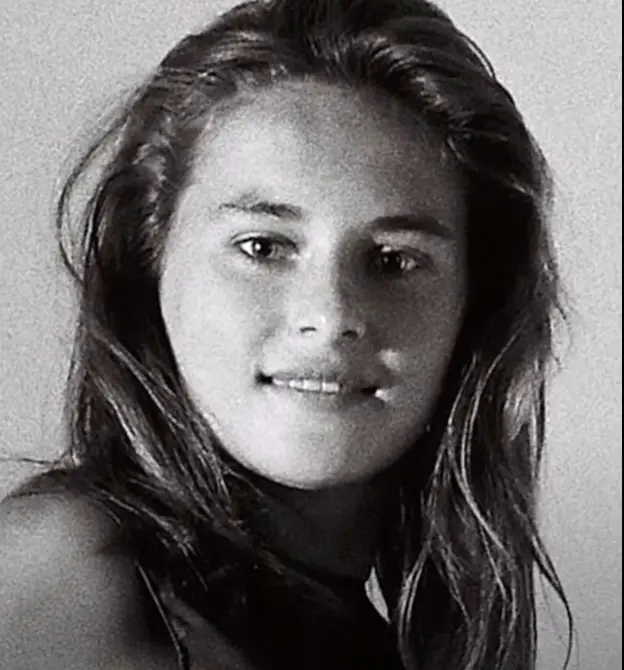
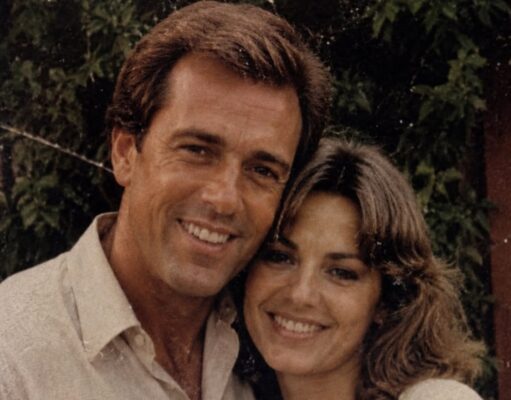
Melania Trump is a name known world-wide. Being married to the President of the United States of America and business mogul Donald Trump, it doesn’t come as a surprise that the public is interested in her private life. She, however, tends to stay out of the spotlight, which is also true for her son Baron and another person very close to the former First Lady, her older sister Ines Knauss.

Growing up, the two sisters shared a very strong bond, and today, that hasn’t changed even a bit.

The sisters were born in Novo Mesto, Slovenia, but grew up in the small railway town of Sevnica. Their father, Viktor, who was a car mechanic and chauffeur, and their mother, Amalija, who worked as a pattern-maker at a clothing factory, were able to provide a good life for Melania and Ines.

“I grew up with a beautiful family and had a wonderful childhood,” Melania Trump said. “My mother and father taught us the importance of education, hard work and family.”

Viktor and Amalija took their daughters on vacations in France, Italy, and Germany. Today, they live in the States but they still own their home in Slovenia which they visit several times a year.

The two sisters were always dressed impeccably as their mom spent hours designing and making clothes for them. Later on, Melania designed the clothes her mother sewed for her herself.

“She was very pretty,” Tomšič, who has run a local hospital to which Melania donated $25,000 after marrying Donald Trump, told GQ in 2016. “She was always very fancy.”

At the age of 16, Melania was scouted by fashion photographer Stane Jerko who spotted her leaning on a fence while leaving a fashion show at the Festival Hall.

“By the staircase at the entrance, I saw this girl,” Jerko recalled. “She was tall, slim, with long hair. I told her who I was, what I did, and why I would photograph her.”

It was back in 1987 when young Melania decided to drop out of the University of Ljubljana and focus on modeling instead. It took her only a year to get a contract with a modeling agency in Milan.

Once in Milan, Melania focused on her goal of making a name for herself and went home after work instead of partying.

“She kept to herself, she was a loner. After a shoot or a catwalk, she went home, not out. She didn’t want to waste time partying,” Jerko said.

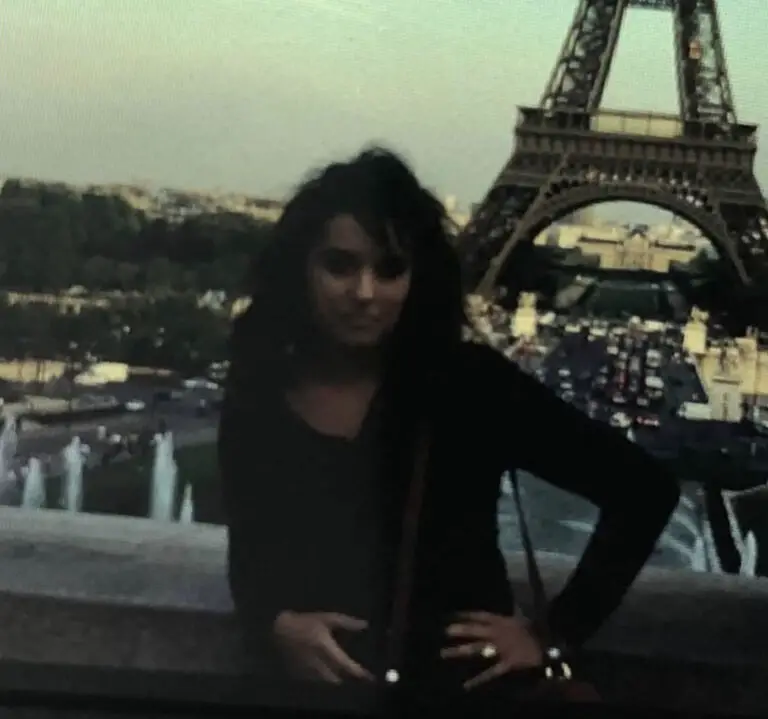
Melania didn’t embark on this adventure by herself, her sister Ines, who also wanted a career in the world fashion, as a designer, accompanied her.

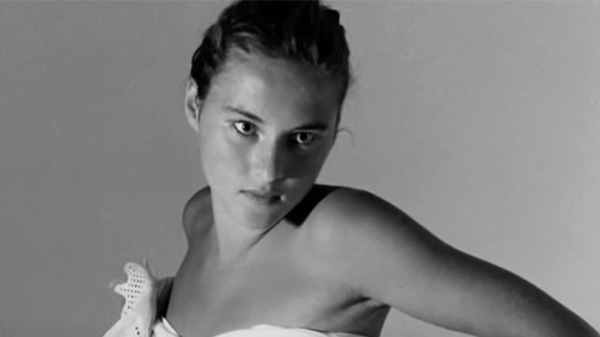
Speaking of Ines, Paris-based photographer Ale de Basseville who took the nude photos of Melania for the French magazine told the New York Post, “She really wanted to be in fashion but didn’t know how to break in.

“Ines wasn’t like the other girls you would meet there, who behave like queens. She was really polite and very mellow.”

When Melania met famous Italian businessman Paolo Zampolli, who helped her get a work visa to the U.S., her sister went with her.

At a Kit Kat Club event during the New York Fashion Week in 1998, Zampolli brought a friend, Donald Trump. He was with a date that night, but when he saw Melania, he immediately wanted to know more about her.

One of Melania’s friends, Edit Molnar, spoke of that night and explained that Donald asked Melania for her number, but she didn’t give it to him because he wasn’t alone. “Melania said, ‘He’s here with a woman. I am absolutely not giving him my number,’” Molnar told New York Post. “She wouldn’t even consider it. Donald did all the work.”

Melania also spoke of the night she first met Donald Trump. “He wanted my number,” she told Tatler. “But he was on a date, so of course I didn’t give it to him. I said, ‘I am not giving you my number; give me yours and I will call you.’ If I give him my number, I’m just one of the women he calls.”

Well, the rest is history, and as much as Melania wants to ‘hide’ from the world, we still know a thing or two about her, which can’t be said about Ines, who isn’t only Melania’s sister but also her closest confidante.

According to People, Ines was her sister’s maid-of-honor at her wedding to Donald Trump.

Ines is reported to be residing in a Trump-owned apartment – in a building on the Upper East Side in which Jared Kushner and Ivanka Trump also resided before they moved into their new home. Her apartment is just four blocks away from her sister’s triplex penthouse at Trump Tower.

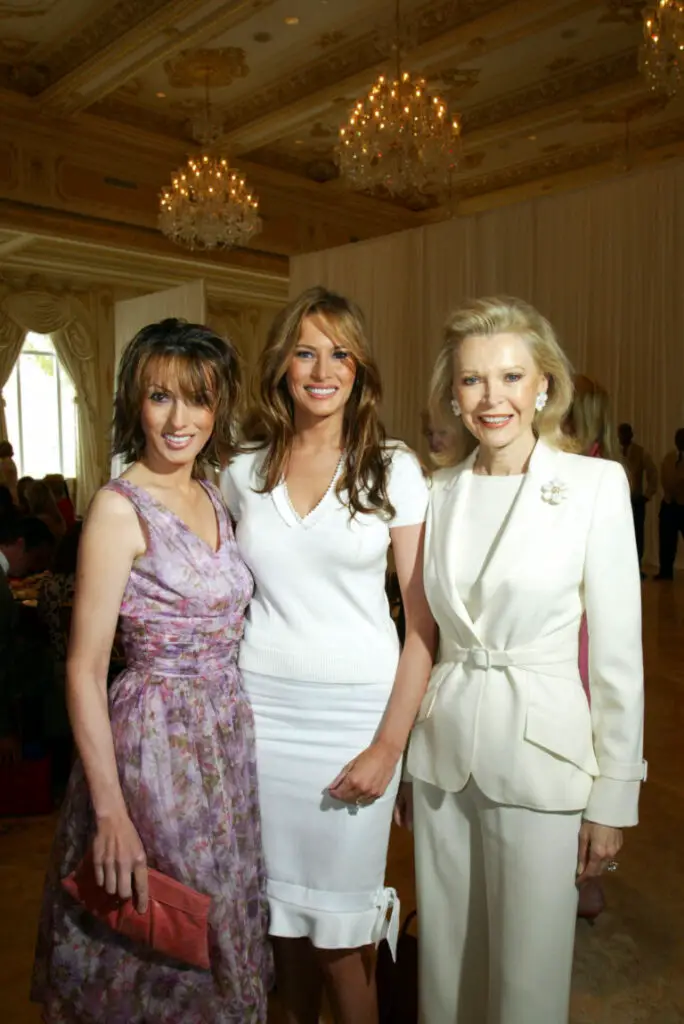
Palm Beach philanthropist Audrey Gruss met Ines at a fundraiser for the Boys’ Club of New York at Mar-a-Lago in 2005. She said Ines struck her “as a lovely person, and extremely creative,” adding that the two sisters are extremely close.

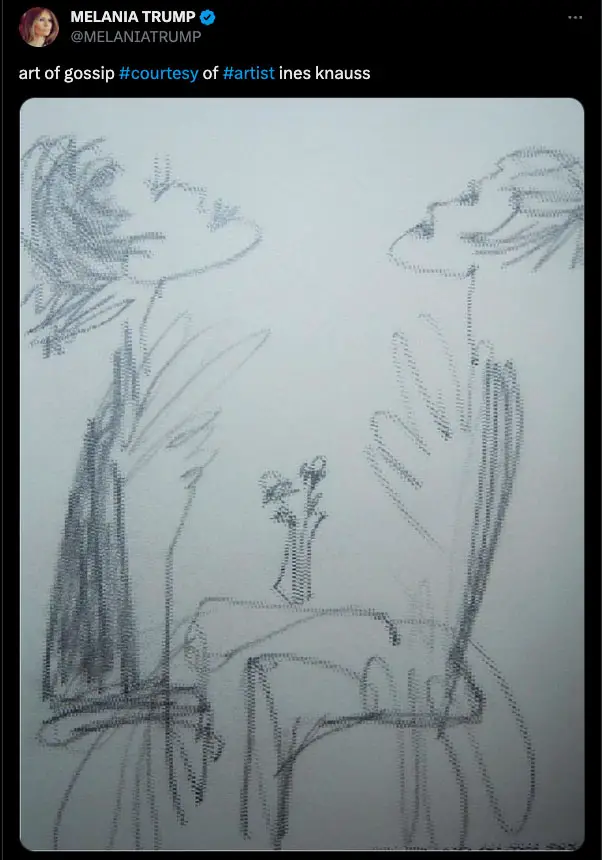
Ines appears to be an artist. In the past, Melania shared on the social media illustrations done by her sister.

Speaking to The Post, Milan-based fashion designer Luisa Beccaria confirmed that the two sisters are like best friends and added that when Barron was born, Melania relied on her sister the most. “Melania had all the professional help she needed at that point,” he said. “But it was her sister she trusted.”

Please SHARE this article with your family and friends on Facebook.

Kai Trump makes bold admission about Barron Trump in new interview

Kai Trump has grown up adjacent to power, but until recently she had largely avoided speaking publicly about it. Now 18, the daughter of Donald Trump Jr. and Vanessa Trump is beginning to define herself in her own right—through athletics, social media, and selective public appearances.

Over the past year, Kai has been seen more frequently alongside her grandfather, Donald Trump, accompanying him to major events and sharing glimpses of that world with her followers. She documented time aboard Trump Force One, attended a SpaceX launch in Texas, and appeared at the Ryder Cup. Those moments helped elevate her profile, but they were not the foundation of it.

At her core, Kai Trump is a competitive golfer. She made her debut on the women’s professional golf tour last year and is set to continue her athletic career at the University of Miami. Golf, not politics, has been her primary focus, even as public curiosity about her family has grown.

That curiosity intensified when Kai appeared on Impaulsive, hosted by Logan Paul. In the interview, she spoke candidly—not provocatively—about her family and the broader political climate. Rather than echoing talking points, she expressed concern about polarization, arguing that social media encourages people to move toward extremes by reinforcing one-sided narratives.

She described feeds that “make your world one way or the other,” suggesting that constant reinforcement can distort perspective and intensify division. Her remarks were notable less for ideology than for tone: reflective, cautious, and measured for someone just entering adulthood under public scrutiny.

Kai also addressed curiosity surrounding her uncle, Barron Trump, who is only a year older than she is. When asked what he is really like, she described him simply as “a great guy” who prefers privacy and avoids the spotlight. She rejected speculation about him, emphasizing that he is kind and low-key rather than performative.

The conversation also touched on the practical realities of her life—particularly dating under constant Secret Service protection. Kai described the experience as awkward, noting that agents often sit just a few tables away. Over time, she said, she has learned to tune it out, but the adjustment was difficult at first.

What emerged from the interview was not a political figure in waiting, but a young woman navigating visibility, family legacy, and independence at the same time. Whether Kai Trump ever enters politics remains an open question, but for now, her trajectory appears anchored elsewhere: athletics, personal growth, and learning how to live publicly without letting public life define her.

In an era eager to assign roles early, Kai Trump’s story is still being written—and she seems intent on holding the pen herself.

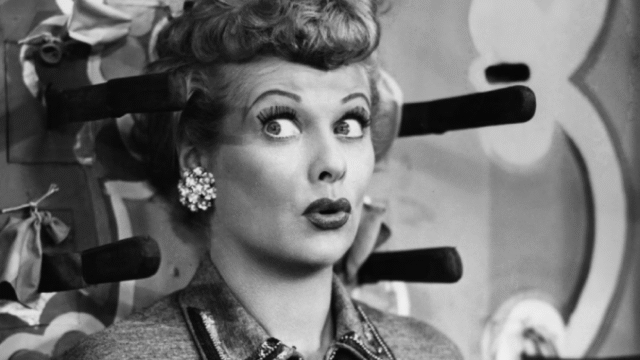
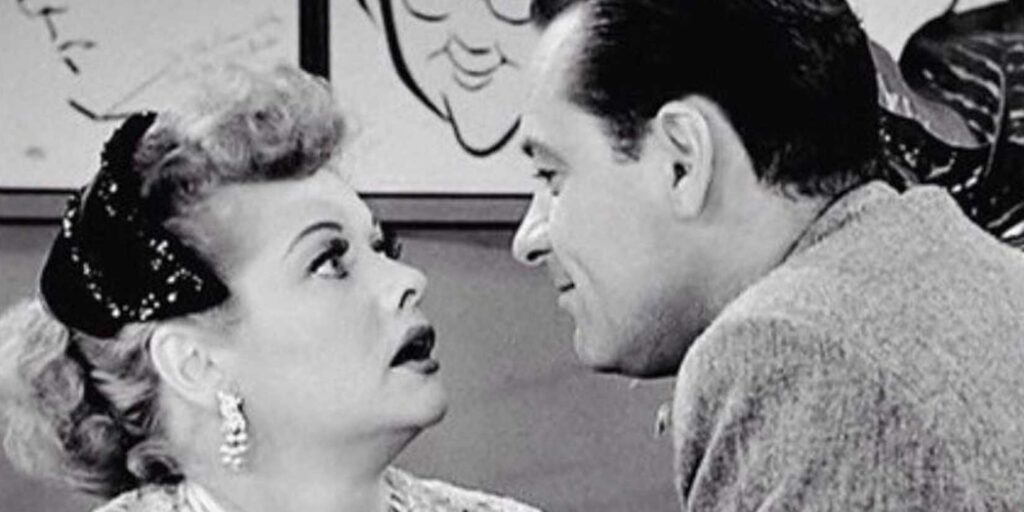
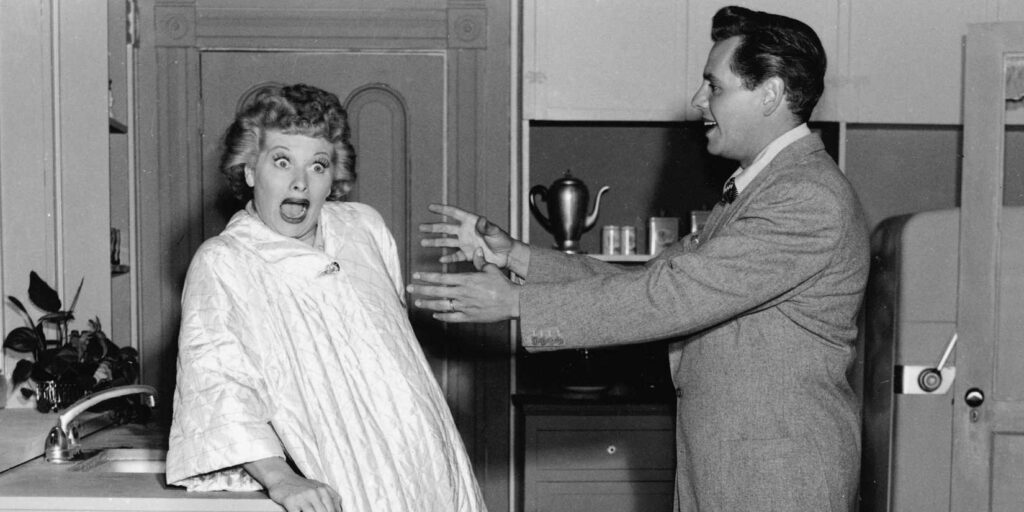
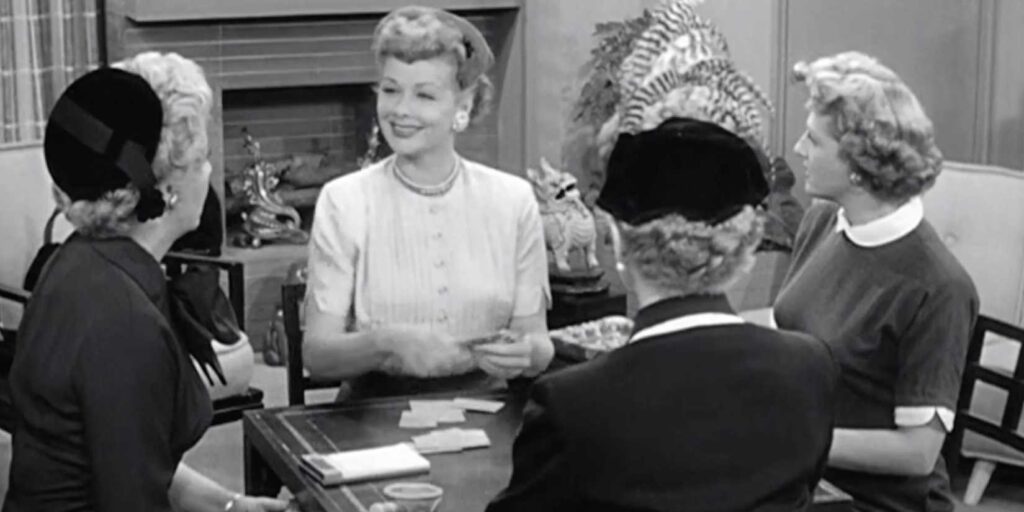
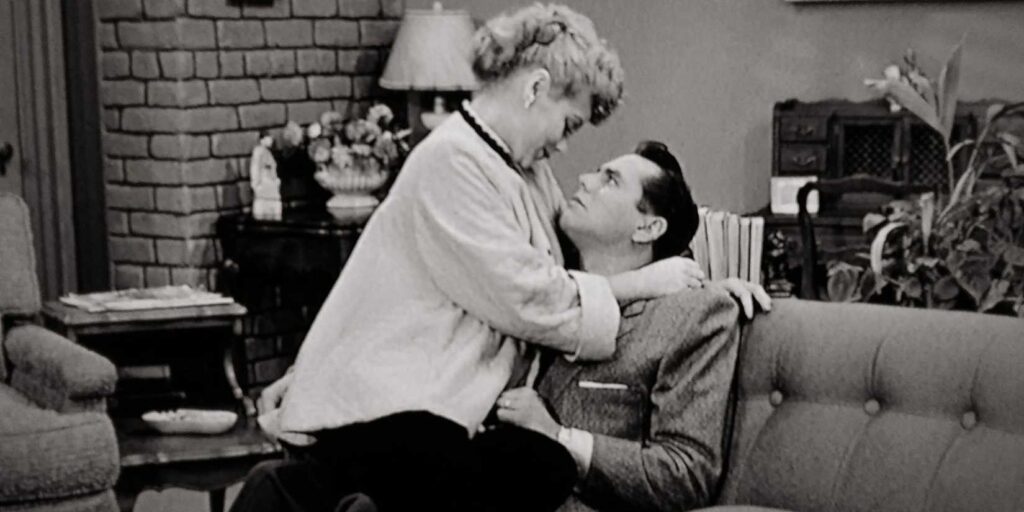
10 I Love Lucy Episodes That Prove Lucille Ball Is A Comedic Genius

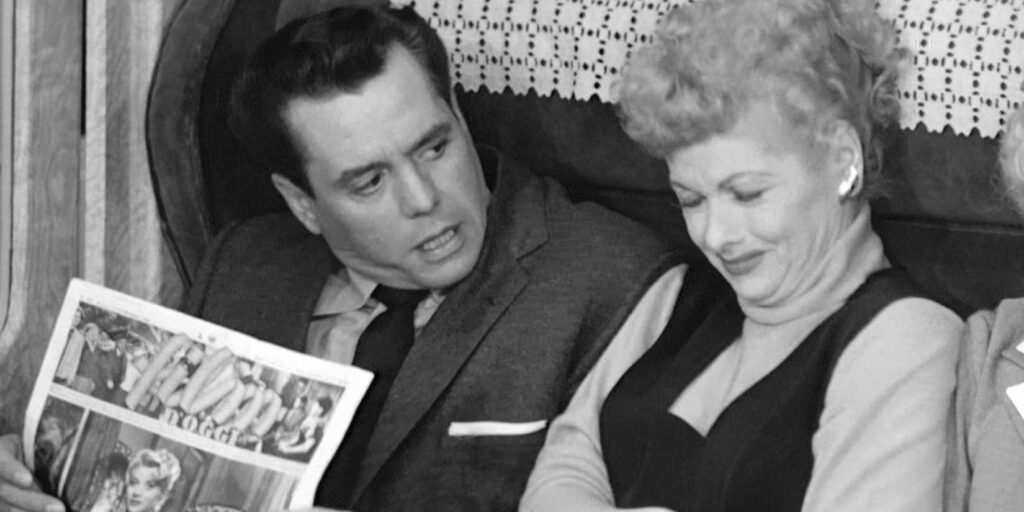
Lucille Ball is a comedic genius who blazed the trail for women in comedy, and there are certain classic I Love Lucy episodes that perfectly encapsulate her once-in-a-generation talent. In the absurdly regressive 1950s, Ball was one of the early female comedians who proved to the patriarchal powers that be that they were just as funny as their male counterparts. I Love Lucy practically invented the sitcom.

Most sitcoms from that era don’t hold up today; in terms of their social attitudes, cultural reference points, and the attention span of the average audience member, it’s a completely different world than we live in today. But I Love Lucy, along with The Dick Van Dyke Show and All in the Family, is a rare mid-20th-century sitcom that’s just as funny today.

Lucy & Harpo Marx

Season 4, Episode 28

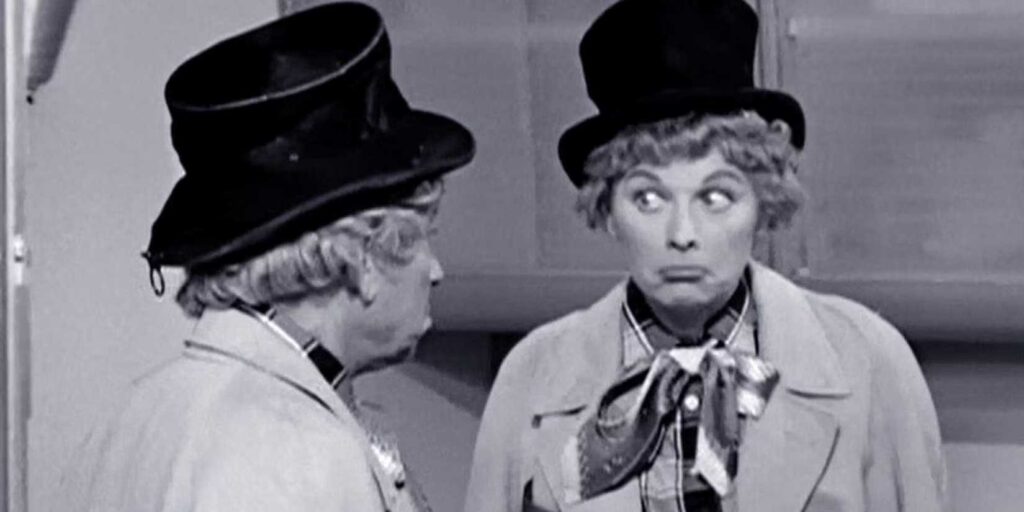
It takes a special kind of comic performer to be able to do an iconic Marx Brothers routine with an actual Marx Brother and actually pull it off. But that’s exactly what Lucille Ball did in I Love Lucy’s season 4 episode “Lucy and Harpo Marx.” As the title would suggest, Lucy meets Harpo Marx.

While doing a series of celebrity impressions to fool a near-sighted old woman, Lucy dresses up as Harpo Marx and unexpectedly comes face-to-face with the real Harpo Marx. This leads to a hilarious recontextualization of Harpo’s classic mirror gag from Duck Soup.

Lucy Goes To The Hospital

Season 2, Episode 16

The pregnancy storyline in I Love Lucy’s second season was groundbreaking. It dealt with the subject of pregnancy in more depth than most TV shows dared to do at the time, and it marked one of the first times that a TV show covered a cast member’s real-life pregnancy with a fictional pregnancy for their character.

That storyline culminated in “Lucy Goes to the Hospital,” the episode that made I Love Lucy a true national phenomenon. The publicity of Ball’s real-life pregnancy overshadowed her performance in the episode, but she did a great job of playing the grueling process of childbirth for laughs.

The Quiz Show

Season 1, Episode 5

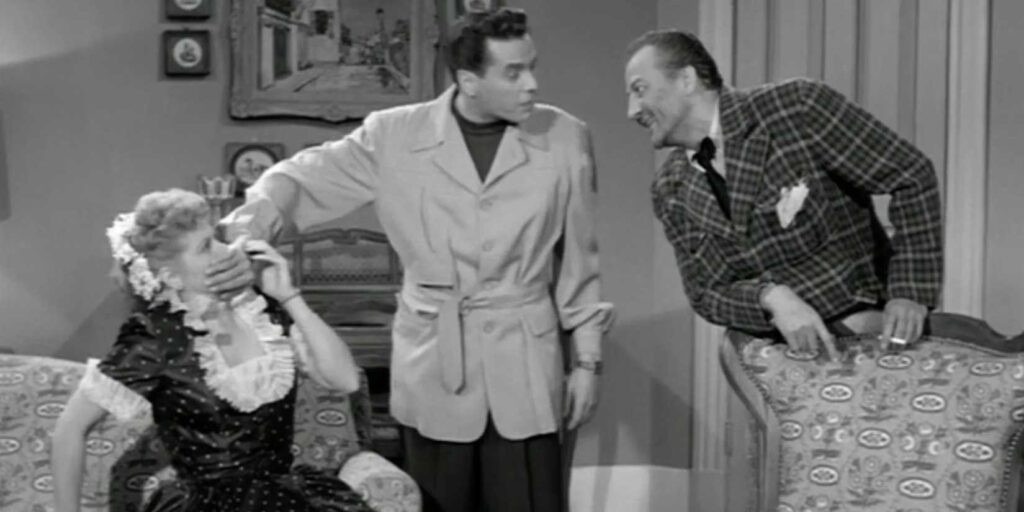
Ball gives a performance within a performance in this early episode. After going on a game show to win some prize money, Lucy ends up agreeing to introduce an actor to Ricky as her long-lost husband as part of an on-camera prank. But Lucy ends up bringing home the wrong guy.

This episode is masterfully acted, because there are so many perspectives to keep track of. A homeless man is pretending to be Lucy’s husband to see how far it gets him, Ricky believes this man is actually Lucy’s missing husband, and Lucy believes she has a ruse to maintain. Ball’s razor-sharp performance-within-a-performance holds it all together.

L.A. At Last!

Season 4, Episode 17

Season 4’s “L.A. at Last!” is another great episode where Lucy clashes with a celebrity. While Ricky is meeting with movie executives, Lucy goes celeb-hunting and bumps into William Holden at the Brown Derby restaurant in Hollywood.

The famously stoic Holden is a hilarious foil for Ball’s zany antics. The look on his face as he reacts to Lucy, when she’s just turned around from “fixing” her nose, gets one of the biggest laughs in the whole series.

Lucy Thinks Ricky Is Trying To Murder Her

Season 1, Episode 4

After getting engrossed in a good murder mystery novel, Lucy begins to suspect that Ricky is plotting to kill her. This is a timeless premise, because we’re still infatuated with murder mysteries (except now, that obsession takes the form of true-crime documentaries and podcasts).

This is such a ludicrous comic scenario that it takes a really great actor to sell it. But Ball not only sells Lucy’s paranoia; she spins it into comedy gold.

Lucy Tells The Truth

Season 3, Episode 6

Ricky and the Mertzes bet Lucy she can’t go a whole day without lying in the season 3 episode “Lucy Tells the Truth.” After she spends 24 hours telling them exactly what she thinks of them, they’re surprised by her candor.

Besides pre-empting the Jim Carrey vehicle Liar Liar, “Lucy Tells the Truth” presents Ball with a juicy comedic bit to chomp on. The inability to lie is an excuse to be brutally honest.

Lucy Is Enceinte

Season 2, Episode 10

During a routine checkup, Lucy is surprised to learn that she’s pregnant in the season 2 episode “Lucy is Enceinte.” Throughout the episode, she struggles to break the news to Ricky as she tries to come up with the perfect way to tell him.

Ball grounds her comic performance in an emotional reality. This episode epitomizes the real-life romantic chemistry that she and her husband Desi Arnaz brought to the screen. The ending is so sweet, and feels so real, because you’re really watching two people in love.

Pioneer Women

Season 1, Episode 25

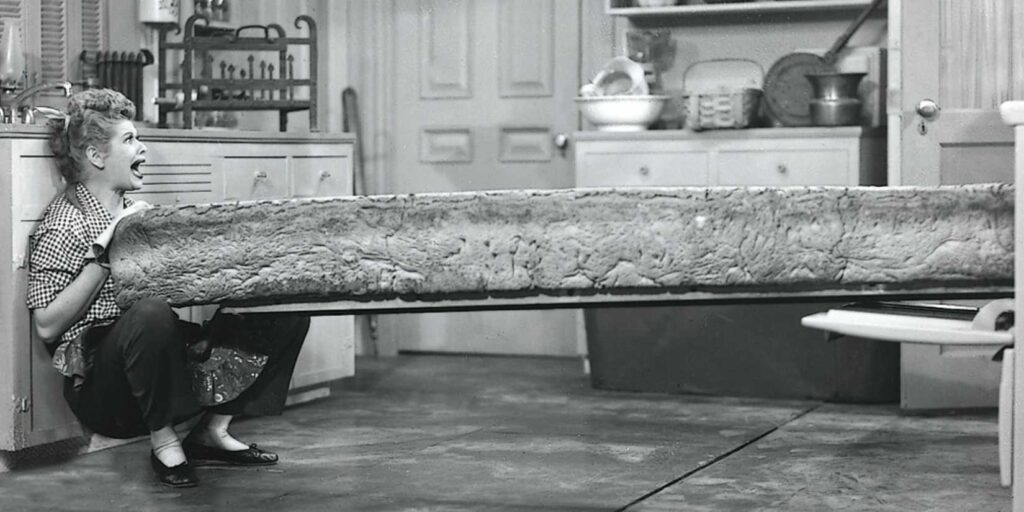
When a born performer and monumental talent like Lucille Ball is handed a ridiculous prop, like a giant loaf of bread, or a ridiculous costume, like a dress from the 1800s, they can create magic. So goes the classic I Love Lucy episode “Pioneer Women.”

After Lucy asks for an electric dishwasher, Ricky bets her she can’t live like her ancestors did in the pioneer days, when you had to do everything for yourself. This setup gives Ball plenty to do.

Job Switching

Season 2, Episode 1

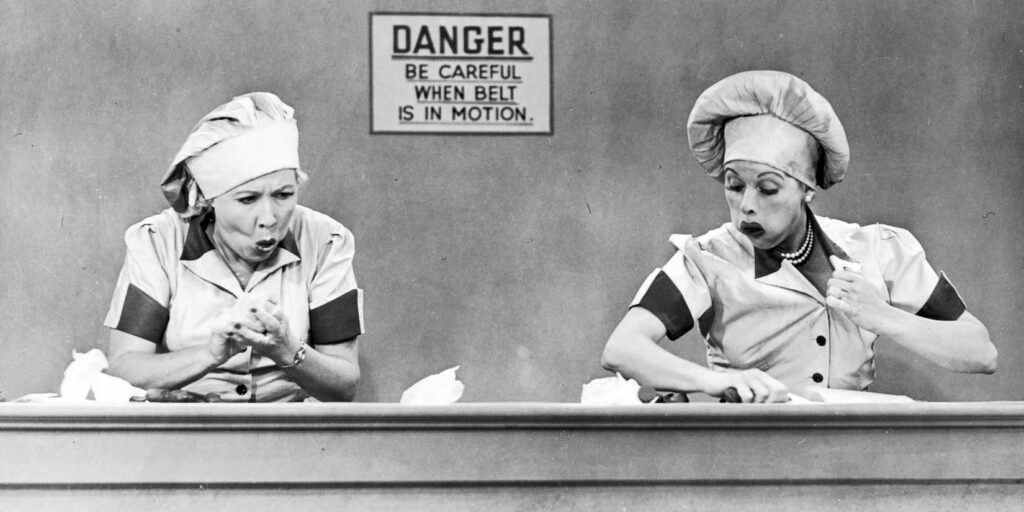
I Love Lucy’s season 2 premiere “Job Switching” is one of the earliest examples of a trading-places storyline. When Ricky and Fred become frustrated with Lucy and Ethel’s spending, they make a deal: Lucy and Ethel will go off to work, and Ricky and Fred will stay at home and do the housework.

It’s a great satire of gender politics, deconstructing traditional gender roles, but it’s also just a masterpiece of physical comedy. The sequence of Lucy and Ethel struggling to keep up with the conveyor belt at the chocolate factory is one of the funniest comedy scenes ever put on TV.

Lucy Does A TV Commercial

Season 1, Episode 30

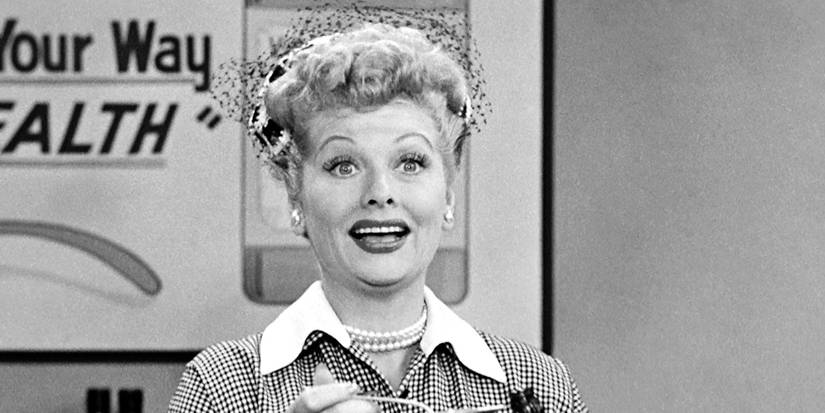
This is the episode that everyone points to as an example of Lucille Ball’s comedic genius, and for good reason. In “Lucy Does a TV Commercial,” Lucy cons a professional actress in order to steal her gig on a TV ad for a ridiculous health product called Vitameatavegamin.

Lucy takes a few spoonfuls of the product in preparation for the role, and it turns out to have a hefty dose of alcohol. Most of the episode is just Ball performing for a camera, and it’s a joy to see. This is one of those I Love Lucy episodes that laid the groundwork for the entire sitcom genre.

A Leaking Washer, a Folded Note, and an Unexpected Friendship

The washing machine leaked, so I called a technician.

He arrived quietly, fixed the problem in less than half an hour, and I paid him with the usual polite gratitude.

But when he was about to leave, he hesitated. His face reddened slightly as he handed me a small folded piece of paper.
Curious, I opened it after the door closed behind him.

It read:
“Thank you for treating me kindly. Most people just see me as someone who fixes things and rush me out the door. When you offered me tea and asked about my day, it reminded me of my late wife. She never let me leave the house without a warm drink. For a moment today, I felt seen again.
Here’s my number—if you ever need help again, or just someone who understands what it feels like to be alone.”

I stood there for a long while, holding that note, unsure whether to cry or smile.


It wasn’t a love note. It was a fragment of a heart speaking honestly — gratitude wrapped around grief.

That evening, I showed the note to my son.
He read it, thought for a moment, and said softly,
“Mom, maybe he just needs a friend. Everyone needs one.”

A week later, I sent a message — not for another repair, but an invitation.
“Would you like to join us for coffee this weekend?”

He came, nervous and neat, carrying a small bouquet of wildflowers he’d picked on the way.
Over tea, he told us about moving here after his wife’s death, about the silence that had followed her absence, and about how fixing broken things helped him feel useful again.

Slowly, he became more than a technician.
He became a friend — someone who helped with the garden, joined us for Sunday lunches, and taught my son how to fix a fence post.

What began as a leaky washing machine turned into something quietly redemptive: two families, once lonely in different ways, becoming part of each other’s story.

Sometimes the repairs that matter most don’t involve tools or wires.
They happen when one small act of kindness reminds a stranger that they were never invisible after all.

Missing 4-year-old Johnathan ‘John John’ Boley found dead in wooded area in Alabama

Johnathan “John John” Boley, the 4-year-old boy who went missing on New Year’s Eve, was found dead today in a wooded area near his father’s home in Walker County.

Sheriff Nick Smith said there were no immediate signs of foul play, and that it appears the boy wandered off while playing with his brother.

Nationwide protests follow fatal ICE shooting in Minneapolis

A volunteer doing a grid search discovered John John’s body near a creek in a wooded area about two miles from his father’s home in the Thach community.

After an intensive three-day search that drew hundreds of volunteers and law enforcement agencies, the search for young Johnathan Boley has ended in heartbreak. The body of the toddler, affectionately known as “John John,” was recovered on the afternoon of Friday, January 2, 2026, in a wooded area in Jasper, Alabama.

Details of the Disappearance

Johnathan was last seen around noon on New Year’s Eve, December 31, 2025. He was playing outside his father’s residence with his 6-year-old brother and the family dog, a black Labrador named Buck. According to his brother, Johnathan and the dog crossed the property line and wandered into the dense woods.

The boy lived with his mother in Florida but was in Alabama visiting his father for the holiday season.

The Discovery

The child’s body was discovered near a creek, approximately two miles away from his father’s home. In a touching but tragic detail, the family dog, Buck, was found alive at the scene. It appears the loyal dog stayed by the boy’s side until help arrived; it was Buck’s presence that eventually led searchers to Johnathan’s location.

Cause of Death and Investigation

Preliminary autopsy results released this week indicate that Johnathan died from hypothermia due to exposure to the elements. Authorities stated there were no signs of physical trauma or foul play directly related to his death. It is believed the 4-year-old became disoriented and succumbed to the freezing temperatures overnight.

Related Arrests

While the search was ongoing, the boy’s father, Jameson Kyle Boley (40), was taken into custody. However, Walker County Sheriff Nick Smith clarified that the charges are not directly linked to the child’s wandering away:

  • Charges: He faces counts of Unlawful Manufacture of a Destructive Device (after explosives were found on the property) and Chemical Endangerment of a Child (related to the presence of methamphetamine).
  • Status: He remains in the Walker County Jail on a $400,000 bond.

Community Reaction

The Jasper community has been deeply affected by the loss. A memorial service is scheduled for today, January 10, 2026, to honor the life of “John John.” Local authorities have urged the public to respect the family’s privacy as they grieve this unimaginable loss.

Blinding Lights: Why American Roads Are Getting More Dangerous

The glare hits you before you even see the car. Your vision flares white, your heart jumps, and for a split second, you’re driving half-blind at 60 mph. Drivers across the United States are saying the same thing: this isn’t just “bright” anymore—it’s a public safety crisis.

As complaints to the NHTSA (National Highway Traffic Safety Administration) surge, a silent war is breaking out on our highways between automotive styling and human biology.

1. The “Arms Race” on American Roads

In the U.S., the shift toward SUVs and lifted pickup trucks has turned LED brightness into a weapon. Because these vehicles sit higher off the ground, their ultra-bright LED housings are positioned exactly at the eye level of anyone driving a sedan or a compact car. When a modern heavy-duty truck pulls up behind a Toyota Corolla, it’s not just illuminating the road—it’s burning into the driver’s retinas through the rearview mirror.

2. The Blue Light Problem

Not all light is created equal. Older halogen bulbs emitted a warm, yellowish glow. Modern LEDs emit a high-intensity blue-white light.

  • The Science: Human eyes are naturally more sensitive to blue light at night. This spectrum causes the pupils to constrict and creates a “scattering” effect inside the eye, leading to a halo of glare that obscures everything else on the road.
  • The Result: “Flash blindness” that can last several seconds—at highway speeds, you could travel the length of a football field while unable to see clearly.

3. Regulations Are Stuck in the Dark Ages

For decades, U.S. federal safety standards required high beams and low beams to be two separate settings. Meanwhile, Europe has used Adaptive Driving Beam (ADB) technology for years. ADB uses sensors to “cut out” the part of the light beam that would hit an oncoming car, keeping the rest of the road bright.

While the NHTSA finally green-lit this technology for the U.S. in 2022, the rollout has been agonizingly slow due to overly complex testing requirements. Until these systems become standard, we are stuck with “dumb” lights that pump out maximum lumens with zero precision.

4. The “Safety” Paradox

Engineers argue that brighter LEDs make the road safer for the person behind the wheel by spotting pedestrians and deer sooner. But safety experts argue this is a zero-sum game. If you illuminate a deer for yourself but blind the driver coming toward you, you haven’t prevented an accident—you’ve just changed who is likely to crash.

The Bottom Line

We are currently living in a “wild west” of automotive lighting. With an aging population more sensitive to glare and a vehicle fleet that keeps getting taller and brighter, the “LED War” is far from over.

Until the DOT enforces stricter aiming standards and manufacturers prioritize eye comfort over “cool” blue aesthetics, the best we can do is look toward the white line on the shoulder and hope for the best.


Key Takeaways for the U.S. Driver:

  • Keep it clean: A dirty windshield scatters light even more, intensifying the glare.
  • Flip the tab: If you don’t have an auto-dimming mirror, remember to use the manual “flip” tab on your rearview mirror to kill the glare from behind.
  • Check your aim: If you’ve leveled your truck or changed your own bulbs, make sure your headlights are aimed down at the road, not at the horizon.

A Simple Act of Kindness at the Grocery Store Led to an Unexpected Visit the Next Day

For six months, my mornings began the same way: alone, clutching my son Luke’s hoodie and breathing in the scent that still felt like him. He was seven when a sudden accident took his life, and in one moment, the world I knew ended. Grief hollowed out our home, and my marriage didn’t survive it. My husband left, not out of cruelty, but because he couldn’t bear watching me fall apart. Friends faded, family gatherings felt unbearable, and even the sound of a baby crying could undo me. I learned how isolating loss could be, how it reshapes everything, leaving you unsure whether life will ever feel whole again.

One afternoon, forced by an empty fridge, I went to the grocery store. The noise and crowds overwhelmed me, and I just wanted to escape. In the checkout line, I noticed a young mother struggling to pay for a single can of baby formula. She was juggling three children, counting coins with shaking hands while strangers behind her whispered harsh judgments. I watched her shrink under their words, and something inside me cracked open. Before I could overthink it, I stepped forward and paid for the formula. It took seconds, but the relief and gratitude in her eyes stayed with me long after she left.

The next morning, a knock came at my door. A man in military uniform stood outside, introducing himself as the woman’s husband, freshly home from deployment. He thanked me—not just for the formula, but for seeing his wife when she felt invisible. He shared how hard she’d been working, how she hid her struggles so he wouldn’t worry. His gratitude touched a part of me grief hadn’t destroyed. Soon after, I met their family. Their home was loud, imperfect, and full of life. For the first time since Luke’s death, I didn’t flinch at a baby’s cry. Instead, I felt purpose returning.

That single act of kindness grew into something larger than I ever imagined. Together, we created a small support space for struggling mothers—a place built on dignity, not shame. It grew into a community, then a family. Through it, I healed piece by piece and eventually found love again with someone who saw my strength without needing my past explained. Grief never disappeared, but it softened, making room for connection and hope. I learned that life doesn’t always give back what it takes—but sometimes, through compassion, it gives you something new. And sometimes, everything begins with one small, human act of kindness.

A Life Dedicated to Sharing Other People’s Stories Comes to a Gentle Close

He built his career quietly, guided by patience rather than publicity. While many writers chased attention, he focused on craft, believing that meaningful stories reveal themselves only through time and care. His work was defined by steady dedication, careful listening, and a commitment to accuracy. Rather than dramatizing the lives he chronicled, he sought balance and context, trusting readers to appreciate truth without embellishment. Over the years, this approach earned him deep respect among readers who valued substance over spectacle.

Growing up far from major cultural centers shaped his grounded outlook on life and storytelling. Curiosity, not ambition, fueled his education. Learning extended well beyond classrooms into archives, interviews, and long stretches of independent research. He believed that understanding another person’s life required humility and patience, not assumptions or shortcuts. Whether writing about well-known figures or overlooked individuals, he approached every subject with the same seriousness, convinced that each life deserved to be understood on its own terms.

His writing covered a wide span of American experience. He documented the lives of musicians, artists, athletes, cartoonists, and historical figures who might otherwise have faded from public memory. He was particularly drawn to stories connected to the Great Lakes, where he chronicled shipwrecks, storms, and maritime history with restraint and precision. These works reflected his belief that history is not merely a collection of dramatic events, but a record of human endurance, loss, and perseverance shaped by place and time.

Michael J. Schumacher passed away at the age of 75, marking the end of a life devoted to thoughtful storytelling. His legacy lives on through his daughter, his readers, and a body of work that continues to set a standard for ethical biography. More than a chronicler of notable lives, he was a reminder that stories gain their power from honesty, patience, and respect for lived experience. In an age often driven by speed and noise, his work stands as proof that careful observation and quiet dedication can leave a lasting mark.

A Comforting Cheesy Beef and Potato Casserole for Cozy Family Meals

This comforting baked dish tells a familiar story—one of warmth, patience, and simple ingredients coming together to create something deeply satisfying. Inspired by the photo, this cheesy beef and potato casserole is the kind of meal that feels right on a quiet evening, when the table is set, the kitchen smells rich and inviting, and time slows down just enough to enjoy it. It’s not fancy or complicated, but it carries the kind of care that makes people linger over their plates and ask for seconds.

To begin, thinly sliced potatoes form the foundation of the casserole. They’re layered into a baking dish and lightly seasoned with salt and pepper, creating a sturdy base that becomes tender and comforting as it cooks. Meanwhile, ground beef is browned slowly in a pan with chopped onion and garlic, allowing the flavors to deepen. A simple tomato-based sauce—made with crushed tomatoes or tomato sauce and a few gentle spices—binds everything together without overpowering the dish. This balance is important; the goal is harmony, not heaviness.

Once the components are ready, the casserole comes together in layers. Potatoes on the bottom, followed by the savory beef mixture, then a generous layer of shredded cheese. This process is repeated, building depth in both flavor and texture. As it bakes, the potatoes soften, the sauce settles into every layer, and the cheese melts into a golden, lightly bubbling topping. The result is a dish that looks rustic and inviting, with edges just crisp enough to contrast the soft center.

When served, this casserole feels like home. It pairs beautifully with a simple green salad or steamed vegetables, but it’s satisfying enough to stand on its own. Leftovers reheat well, making it a practical choice for busy days, and the flavors often deepen overnight. More than just a recipe, this dish represents shared meals and quiet comfort—a reminder that good food doesn’t need to be complicated to be meaningful. Sometimes, all it takes is a warm oven, a few honest ingredients, and the intention to feed the people you care about.

I Became a Surrogate for My Sister—What Happened After the Birth Changed Everything

Love was always the foundation of my life—or so I believed. My sister Rachel and I grew up inseparable, sharing secrets, dreams, and a promise that our children would grow up side by side. While my life filled with the noise and joy of four sons, Rachel’s dreams quietly unraveled. One miscarriage became two, then three, until grief hollowed her out. She withdrew from family gatherings and avoided children altogether, as if the sight of what she wanted most was too painful to bear. When doctors finally told her motherhood wasn’t possible for her, something in her broke—and that was when she asked me for the impossible: to carry her child as a surrogate, her last hope. After long nights of fear and discussion, my husband and I said yes, believing love could carry us through anything.

The pregnancy revived Rachel. She attended every appointment, painted a nursery with trembling joy, and whispered to my growing belly as if the baby could hear her promises. My boys eagerly claimed their future cousin, arguing over who would teach what and who would protect whom. By the time labor began, this child already felt deeply loved. But when the baby was born—a healthy, beautiful girl—Rachel and her husband arrived late, their faces stripped of joy. What they said next shattered everything: this wasn’t the baby they wanted. The child didn’t match their expectations, and they refused to take her home. In that moment, love revealed its limits—and its conditions.

I held that baby closer, instinct and fury blending into something fierce and unmovable. When they spoke of alternatives—of distance, of giving her away—I knew I would not let this child become collateral damage of someone else’s fear. My boys met her with instant devotion, their innocence cutting through the cruelty of the situation. Looking at her tiny fingers wrapped around mine, I made a choice that felt as natural as breathing: if her parents couldn’t claim her, I would. She deserved certainty, safety, and unconditional love—and I had more than enough to give.

Weeks later, Rachel returned alone. She was quieter, stripped of illusions, but her eyes held resolve. She had chosen to walk away from a marriage built on expectations instead of love. Holding her daughter again, she wept—not from shame, but from clarity. Motherhood, she realized, wasn’t about perfection or plans, but about choosing love even when it terrifies you. We rebuilt slowly, imperfectly, together. Watching Rachel grow into the mother she was meant to be taught us all something lasting: family is not defined by outcomes, preferences, or dreams fulfilled exactly as imagined. It is defined by the courage to love fully—especially when love demands more than you ever expected to give.

Popular

A Mother’s Love: Vienna’s Journey with a Birthmark

0
Love compels parents to do extraordinary things for their children’s well-being. Celine Casey, a British mother, took remarkable steps to ensure her daughter Vienna’s...