When you’re standing in the grocery aisle, it’s easy to pause over the chicken display. One package looks pale and almost pink, while another has a deeper yellow tone. They’re the same cut and close in price, yet the difference in color raises questions. Many shoppers instinctively assume that darker or yellower chicken is healthier or more natural, while paler meat seems less appealing. In reality, color alone rarely tells the full story. With chicken, appearance can be influenced by many factors that have little to do with safety, nutrition, or overall quality.
In most supermarkets, pale chicken is the result of standard commercial farming practices. These birds are typically raised indoors, bred to grow quickly, and fed carefully formulated diets designed for efficiency and consistency. This system produces affordable meat with a mild flavor and uniform appearance, which is why pale chicken is so common. While some people associate lighter meat with lower quality, it is generally safe and nutritious when properly handled and cooked. The color reflects the production system more than it reflects freshness or health value.
Yellow-toned chicken, on the other hand, is often linked to diet. Feed that includes corn or other natural pigments can deepen the color of the skin and fat, creating a richer yellow hue. Birds that grow more slowly or have more space to move may also develop firmer meat and a slightly stronger flavor, which some consumers prefer. However, it’s important to remember that color can be influenced intentionally. Some producers adjust feed formulas specifically to create a yellower appearance because shoppers tend to associate that color with traditional or higher-quality chicken, even when the living conditions are similar.
Because of this, relying on color alone can be misleading. A better way to evaluate chicken is to look beyond appearance. Labels such as organic, pasture-raised, or Certified Humane offer more meaningful information about how the animal was raised. Freshness indicators—like a clean smell, firm texture, and clear packaging dates—are far more reliable than color. In the end, there is no single “best” color of chicken. The right choice depends on your values, taste preferences, and how much importance you place on farming practices. Color is simply one small clue in a much bigger picture.
I once believed that family was defined by bloodlines, shared names, and faces passed down through generations. That belief came from a place of longing, not experience. I grew up without parents, moving through an orphanage where affection was scarce and promises rarely kept. Life taught me early to rely only on myself. People came and went, and attachment felt dangerous. The only constant I had was my friend Nora. We met as children in the system, two lost souls finding safety in each other. She became my anchor—defending me, comforting me, reminding me that even in a harsh world, loyalty could exist. As adults, distance never weakened our bond. She was my chosen family, present for every milestone, including the day she became a mother, even though she never spoke about the child’s father.
Everything changed the morning I received a call that shattered my world. Nora was gone, taken suddenly in an accident. Her young son, Leo, survived. When I arrived at the hospital, he sat quietly, waiting for a mother who would never return. There was no one else to claim him—no relatives, no safety net. Holding his small hand, I understood something deeply: I had been chosen once in my life, by Nora’s trust. Now it was my turn to choose. I signed the adoption papers without hesitation. I knew what it felt like to be unwanted, and I refused to let Leo grow up with that same emptiness. The early years were difficult. Grief lingered in our home, but so did healing. Through shared routines and quiet reassurance, we built something solid and real.
Years passed, and Leo grew into a thoughtful, kind young person. Our home became a place of warmth, laughter, and trust. When Amelia entered our lives, she did so gently. She never tried to replace anyone or rewrite the past. She simply showed up—supportive, patient, and present. Together, we formed what felt like a complete family. Then one night, everything felt fragile again. Amelia woke me, shaken, holding a notebook she had found. It belonged to Leo. Inside were drawings and words revealing that he knew I wasn’t his biological father. He had discovered the truth on his own and feared losing me. His letter made one thing painfully clear: he wasn’t searching for someone else—he was protecting the bond we shared.
When I went to his room, he was waiting, full of fear and hope. Before I could speak, he apologized, afraid that honesty would cost him everything. I held him close and told him the only truth that mattered: family isn’t created by biology, but by choice, consistency, and love. That night didn’t break us—it strengthened us. I chose him once, and I choose him every day. Because family is not about where you come from. It’s about who stays, who shows up, and who never lets go when the truth comes out.
Anouchka Delon, the French-Dutch actress and daughter of screen legend Alain Delon, recently offered the public a rare and intimate glimpse into her father’s life by sharing a new photo of him on Instagram. Delon, who turned 88 in November, remains one of the most iconic figures of French cinema, remembered worldwide for his striking presence and unforgettable performances. The image, taken during a quiet breakfast they shared together, quickly drew attention—not for glamour, but for its tenderness. In a world that often rushes past aging icons, the moment felt deeply human, reminding fans that behind the legend is a father, aging and vulnerable, yet still dignified.
For decades, Delon embodied the golden era of European film. With piercing blue eyes and an intense on-screen charisma, he became a symbol of post-war cinema and starred in more than 90 films over a career spanning half a century. His work in classics such as The Leopard helped cement his status as an international star, admired not only for his looks but for his ability to portray complex, often conflicted characters. He lived a life many would call extraordinary—filled with acclaim, influence, and artistic achievement. Yet time, as it does for everyone, has reshaped his story in quieter and more complicated ways.
In recent years, Delon’s health has declined following a serious stroke, leaving him physically weakened and largely out of public view. At the same time, tensions within his family have become public, with legal disputes involving his children—Anthony, Anouchka, and Alain-Fabien—drawing media attention. Reports have described disagreements related to medical decisions and transparency, creating the impression of a family struggling to navigate care, responsibility, and trust during an already difficult chapter. While these matters remain complex and deeply personal, they highlight how even the most celebrated lives can face painful challenges behind closed doors.
Amid this backdrop, Anouchka’s message stood out for its warmth and restraint. She described the photo as a cherished memory, expressing gratitude for simple moments spent together. She wrote of her father’s enduring presence—his familiar gaze, his quiet strength—and shared that he approved the image being made public, reassuring those concerned about him with a simple message: “Don’t worry.” Rather than focusing on conflict, her words emphasized connection, respect, and love. In doing so, she reframed the narrative—not as one of decline, but as a reminder that legacy is not only built on fame, but also on the private bonds that endure long after the spotlight fades.
Authorities in Alabama are continuing an investigation after former sports journalist Christina Chambers and her husband were found unresponsive inside their home in Hoover on December 16, 2025. According to local officials, a family member arrived at the residence in the morning and contacted emergency services after being unable to reach the couple. First responders arrived quickly, and officials later confirmed that the two adults had passed away. A young child who was present in the home at the time was found to be safe and is now with family members. Police have stated that they are carefully reviewing all circumstances to understand what led to the incident, while asking the public for patience as the process continues.
As the news spread, an outpouring of emotion followed from colleagues, friends, and viewers who remembered Chambers for her professionalism and warmth. Her former station, WBRC 6, shared a statement expressing deep sadness and offering condolences to her loved ones. Coworkers described her as dependable, energetic, and passionate about local sports and community storytelling. Many recalled how she grew up watching the station before later fulfilling her dream of joining the newsroom herself. Public figures, including Katie Boyd Britt, also shared messages of sympathy, encouraging support and compassion for the family and media community affected by the loss.
Beyond her professional accomplishments, Chambers was widely known as a devoted mother and mentor. She often spoke about the joy of parenthood and shared moments with her young son, describing motherhood as one of life’s greatest blessings. After stepping away from full-time broadcasting, she transitioned into education, leading a broadcast journalism program at a local high school. Her dedication to teaching earned her recognition from the Alabama Scholastic Press Association, and her students frequently received honors for their work. Even after shifting careers, she remained connected to sports media through freelance contributions and special event coverage, maintaining strong ties to the field she loved.
The Alabama investigation has drawn broader attention as other high-profile cases across the country have also prompted reflection within the media and entertainment communities. In Los Angeles, officials are separately examining the passing of filmmaker Rob Reiner and his wife, Michele Singer Reiner, whose absence has deeply affected colleagues and admirers. While these cases are unrelated, they have underscored the importance of sensitivity, accuracy, and respect during times of loss. Authorities in both states emphasize that investigations take time and that conclusions should not be rushed. For now, friends, family members, and communities are focusing on remembrance—honoring lives defined by creativity, dedication, and positive impact rather than the difficult circumstances surrounding their passing.
Music legend Barry Manilow has revealed that he’s been diagnosed with lung cancer, forcing him to postpone his January tour dates as he focuses on treatment.
But singer, known worldwide for hits like Mandy, Copacabana, and Somewhere Down the Road, won’t undergo chemotherapy or radiation.
Ordered an MRI
In late December, Barry Manilow shared that he has lung caner.
The 82-year-old explained that the diagnosis came after a long battle with bronchitis. “As many of you know I recently went through six weeks of bronchitis followed by a relapse of another five weeks,” Manilow wrote. “Even though I was over the bronchitis and back on stage at the Westgate Las Vegas, my wonderful doctor ordered an MRI just to make sure that everything was OK.”
The scan revealed a “cancerous spot” on his left lung. “It’s pure luck (and a great doctor) that it was found so early. That’s the good news,” he said.
The star reassured fans that chemotherapy and radiation will not be part of his treatment.
“The bad news is that now that the Christmas Gift Of Love concerts are over I’m going into surgery to have the spot removed. The doctors do not believe it has spread and I’m taking tests to confirm their diagnosis. So that’s it. No chemo. No radiation. Just chicken soup and I Love Lucy reruns.”
New update
Manilow’s arena tour, originally set for January 2026 across nine U.S. cities, has been rescheduled to late February through April.
The shows will still honor all original tickets. He also confirmed that his Valentine’s weekend concerts at the Westgate Las Vegas Resort and Casino — his “home away from home” — will go on as planned.
“Something tells me February is going to be one big party,” Manilow wrote, adding a heartfelt reminder to fans: “I hope you have a wonderful Christmas and New Year and remember, if you even have the slightest symptom, get tested!”
On Friday (Jan. 2), the Copacabana singer posted an uplifting update on Instagram, sharing a smiling selfie taken in what looks like a hospital bed while wearing a gown. A gray text bubble in the image reads, “Better today!”
This isn’t the first time health challenges have impacted Manilow’s career.
In 2022, he tested positive for COVID-19 just hours before the opening night of his stage musical Harmony. The setback was devastating, but he encouraged fans to attend the performance in his place, emphasizing the resilience of live audiences.
Reflecting on his longevity, the 82-year-old Manilow shared in a 2023 interview that he has no intention of slowing down.
“I think of people who are 80… they look older than I do. They’re retired. You know, that ain’t me,” he said. “I’m just getting started. Staying busy keeps me feeling sharp and energized. You stay young if you keep working… your brain stays working.”
Even as he faces surgery, Manilow remains focused on the music and performances that have defined his life.
“I’m still healthy. I’m strong and I’ve still got my voice and my energy. The night I can’t hit the F natural on Even Now, that’s the night I throw in the towel. But I can still do it.”
Lung cancer, a disease for which cigarette smoking is the leading risk factor, according to the CDC. Barry Manilow has been candid about his decades-long relationship with smoking.
“I smoked for 30 years. I started when I was 9 years old,” the singer told The Standard in 2012, revealing that he later quit before starting the habit again.
Manilow eventually shifted to vaping.
Fans rally around the star
Since sharing the news, fans have flooded his social media with messages of love and support.
One wrote, “You even make that hospital gown look fine! 😉🥰 Be well! ❤️” Another encouraged, “Keep healing, Barry… You can do it. God is good all the time.”
Through decades of hits, sold-out shows, and life’s ups and downs, Barry Manilow has always been a performer who connects deeply with his fans. Now, as he faces this personal health challenge, the world is cheering him on every step of the way. We’re Praying for your recovery, Barry!
Family is supposed to be forever — the people who know us best, love us most, and remain our anchor through every storm.
Yet for many parents, there comes a quiet ache that’s hard to put into words: the phone that never rings, the visits that grow shorter, the grandchildren who feel like strangers.
The silence doesn’t usually happen overnight. It builds slowly. A missed call here, a shorter visit there, until one day, the space between parent and child feels impossible to cross.
For parents, it’s heartbreaking. For children, it’s often self-preservation.
Here’s the painful truth: when adult children start to pull away, it’s rarely out of malice. More often, it’s the result of years of small misunderstandings, emotional exhaustion, or patterns that never got addressed. Love hasn’t disappeared, it’s just become too heavy to carry the same way.
1. When care feels like constant criticism
It starts with good intentions, concern about their health, their choices, their lifestyle. But when every visit feels like a performance review, love begins to feel like judgment.
“Are you eating enough?” turns into “You’ve gained weight.”
“Are you happy at work?” sounds like “You should be doing better.”
What feels like care to a parent can sound like disapproval to an adult child. Over time, they stop showing up, not because they don’t love you, but because they’re tired of defending themselves.
2. Boundaries aren’t insults — they’re protection
When your child says, “Please don’t bring up politics,” or “We’re trying a new parenting approach,” they’re not rejecting you, they’re protecting their peace.
But when those boundaries are brushed aside with, “Oh, don’t be so sensitive,” or “I’m your mother, I can say what I want,” what they hear is: my comfort matters more than yours.
Respecting boundaries, even the ones you don’t understand, is the foundation of rebuilding trust.
3. The replay button on the past
Some parents can’t stop revisiting old stories, old wounds, or old grievances. The same arguments resurface, the same people get blamed, the same pain gets polished like a family heirloom.
For children, it’s draining. They leave visits feeling like they’ve been pulled back into decades-old drama they never caused. Eventually, distance becomes their way of escaping the emotional weather that never changes.
4. The missing apology
Every family has its scars, words said in anger, decisions made without understanding the cost. But healing can’t start without acknowledgment.
When a child brings up the past and the response is, “I did my best” or “That’s not how it happened,” it shuts the door on healing. They don’t want perfection — they want recognition.
Without it, the distance grows wider, filled with the weight of everything that was never said.
5. When their partner never feels accepted
You may love your child deeply, but if you treat their partner like a guest who overstayed their welcome, your child will eventually stop visiting.
The subtle comments, the cold silences, the nostalgic “before they came along” stories — all send the same message: you’re not really part of this family. Loving your child means embracing the person they love, too. Otherwise, every visit becomes an exercise in choosing sides.
6. Parenting their kids — in front of them
Grandparents love to help, but there’s a line. Correcting your adult child’s parenting in front of their kids (“When I raised you, we never did that…”) undermines their authority and creates tension that’s hard to undo.
When they stop bringing the grandchildren around, it’s not punishment — it’s protection of their family dynamic.
7. Generosity with strings
Money, gifts, help, they’re meant to show love, not control.
But when every act of generosity becomes a reminder of what’s “owed” (“After all I’ve done for you…”), it poisons gratitude.
Children will always choose freedom over conditional affection. They’d rather struggle on their own than accept help that costs their independence.
8. Loving who they were, not who they are
Many parents stay attached to the version of their child that existed years ago — the student, the athlete, the dreamer. But that child has grown.
If conversations are always about the past (“You used to love this!” “Remember when you were little?”), the person they are now feels invisible. Being unseen by your own parents is a unique kind of loneliness, one that drives even the most loving children away.
A love that hurts on both sides
The truth is, this heartbreak goes both ways. Parents aren’t villains, and children aren’t ungrateful. Everyone’s trying, just differently.
For parents, it feels like rejection. For children, it feels like survival.
Reconnection begins not with guilt, but with curiosity. Ask who they’ve become, not what they’ve forgotten. Listen to understand, not to defend. Say, “I’m sorry,” even if it’s uncomfortable.
Because the tragedy isn’t that they stopped visiting, it’s that visits stopped feeling like home.
If this touched you, please share it with someone who might need to read it today. Sometimes the hardest distance to cross is the one between love and understanding — but it’s never too late to try.
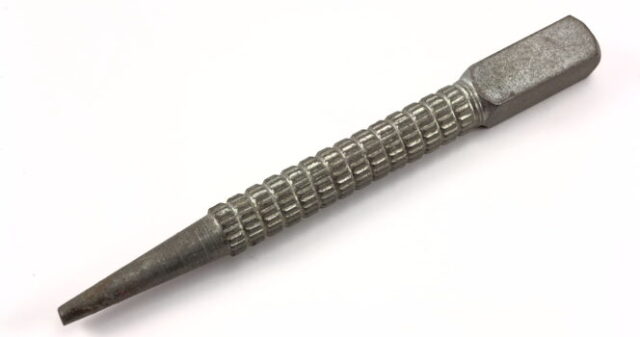
Sometimes, you come across an item that really confounds you. You have to scratch your head and turn to others (sometimes the internet) to figure out what it can be.
This item might also confuse you, but if you do not know what it is and you want to learn more about it, then you are in the right place.
Keep reading to learn more about the unsung hero of the construction world!
The nail punch is a modest tool with origins dating back to ancient civilizations, where building and crafting required innovative ways to manage nails. In its early iterations, craftsmen used rudimentary tools like chisels or hardened stones to drive nails below the surface of wood, achieving a smooth finish essential for decorative or functional purposes.
According to sources, “it is actually believed that these tools might be the first tools our prehistoric ancestors used to carve in wood and stone and create pieces of clothing. Although very simple in their constructions, these tools are highly versatile, which makes them indispensable in any tool collection.”
Also known as a nail set, a nail punch is a small, handheld tool designed to drive nails slightly below the surface of a material, typically wood.
The tool – commonly used for a smooth, finished appearance – features a pointed tip that aligns with the nail head and a blunt end, which is struck with a hammer to push the nail head beneath the surface.
Next, “the small depression remaining is filled in with putty,” according to Britannica.
Sinking nails
The Industrial Revolution brought a wave of innovation to tools and machinery, and the nail punch was no exception. Factories began mass-producing nails, and with them came the necessity for consistent tools that could cater to varying nail sizes and woodworking needs.
Over the years, the simple punch evolved and became a go-to item in every toolbox, allowing carpenters to sink nails below the wood surface with precision. Covering these nail heads with filler not only enhanced the visual appeal but also increased the longevity of the structure by preventing rust and wear.
Modern-day nail punches
Fast forward to the 21st century, the nail punch tool has undergone substantial evolution, embracing modern materials and ergonomic designs. Today, you can find nail punches made from high-carbon steel or titanium, often featuring cushioned grips for comfort during prolonged use.
Key features
Material: Usually made from durable metals like steel or titanium to withstand repeated hammering.
Design: Often cylindrical, with a tapered tip that matches the size of the nail head for precise placement.
Sizes: Available in various sizes to accommodate different nail diameters.
Uses
Aesthetic finishing: It allows nails to be recessed below the surface, enabling wood filler to be applied over the nail for a seamless look.
Prevention of damage: Keeps the hammer from denting or scratching the wood surface during nail placement.
Improved durability: By sinking nails, it protects them from exposure to elements that could lead to rust or wear.
A tool for everyone
Modern nail punches come in sets catering to a wide range of nail diameters. Some even include laser etching for size identification, making them ideal for both hobbyists and seasoned carpenters. Technological advancements have introduced automatic or spring-loaded versions, reducing the physical effort required to sink nails into hard surfaces.
Why it still matters
In an age dominated by power tools, one might wonder if a manual tool like the nail punch still has a place. The answer is a resounding yes!
Its simplicity, reliability, and affordability make it indispensable for tasks requiring precision, such as trim work, cabinetry, and restoration projects.
Whether you’re crafting a delicate jewelry box or building a deck, the nail punch ensures a clean, professional finish. It’s also a favorite among restorers who value traditional methods over contemporary alternatives.
The nail set may not boast the glamour of high-tech gadgets, but its evolution from a simple tool to a sophisticated instrument underscores its importance in construction and woodworking.
Do you have one of these old tools hiding in your toolbox?
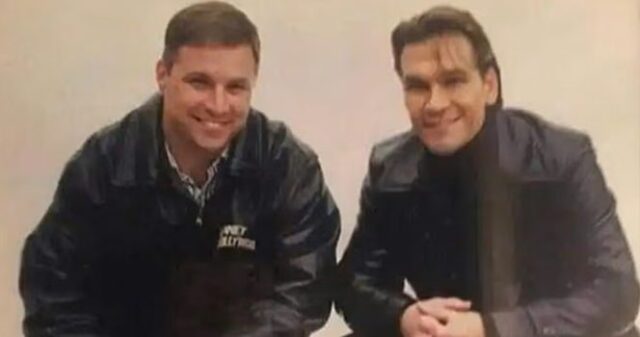
Sean Swayze, the younger brother of late Hollywood icon Patrick Swayze, has died at the age of 63.
His passing marks yet another heartbreaking loss for a family long touched by tragedy.
The news was confirmed by his son, Jesse Swayze, who told TMZ that Sean died in Los Angeles on December 15. According to the Los Angeles County Medical Examiner’s Office, the cause of death was “an acute upper gastrointestinal bleed and severe metabolic acidosis brought on by cirrhosis of the liver.”
Sean is survived by his daughter Cassie and sons Kyle and Jesse.
Loved ones pay tribute
In the days following his death, family members shared emotional tributes honoring Sean’s life and spirit.
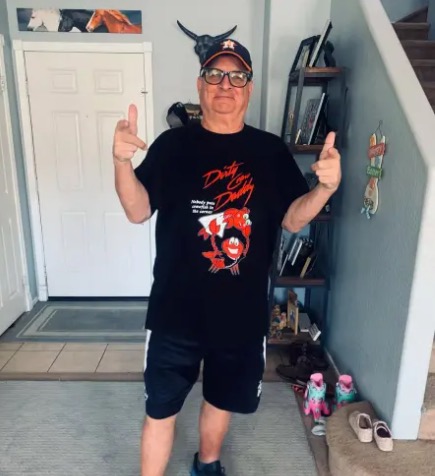
His cousin, Rachel Leon, took to Instagram to express her grief, posting a photo of Sean wearing a Dirty Dancing themed shirt.
“I’m heartbroken to share that my cousin Sean Swayze passed away today,” she wrote.
“This is a picture he took recently for us to promote the Dirty Dancing crawfish theme.” “He was always fun and full of life.”
Though he never reached the same level of fame as his brother Patrick, Sean worked as a character actor and film crew member, appearing in projects such as Letters from a Killer.
A family marked by loss
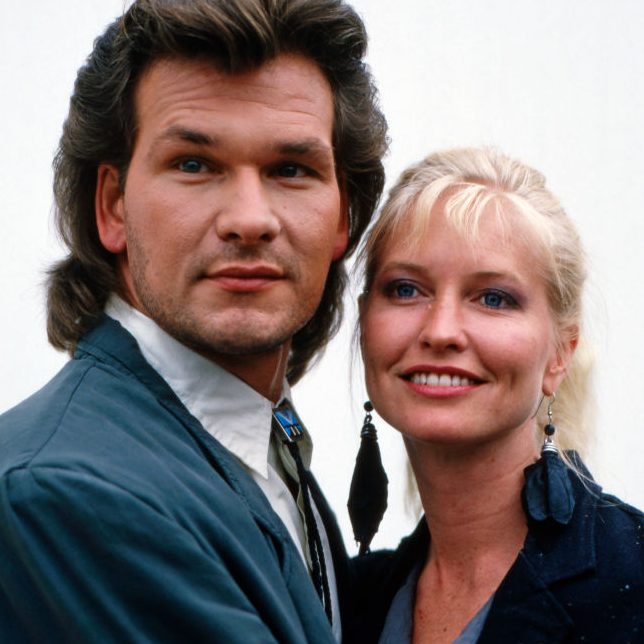
Sean’s death comes more than 16 years after Patrick Swayze passed away in September 2009 at the age of 57. The Dirty Dancing star had been diagnosed with Stage 4 pancreatic cancer in January 2008 and spoke openly about his battle with the disease in a televised interview with Barbara Walters not long before his death.
Patrick was married to writer and dancer Lisa Niemi at the time and remained a beloved figure in Hollywood for his roles in Dirty Dancing, Ghost, and Road House.
The Swayze family’s history has been shaped by repeated heartbreak. Sean and Patrick are survived by their brother, actor Don Swayze, now 67, and their sister, actress Bambi Swayze, 66.
Their father, Jesse Wayne Swayze, died in November 1982 at the age of 57. Their mother, Patsy Yvonne Helen Swayze, passed away in September 2013 at 86. Another sibling, Vicky Swayze, tragically took her own life in 1994 at just 45 years old.
While he lived largely outside the spotlight, Sean Swayze remained closely tied to his famous family and the legacy left behind by his brother Patrick. His passing adds another somber note to a family story filled with talent, resilience, and loss.
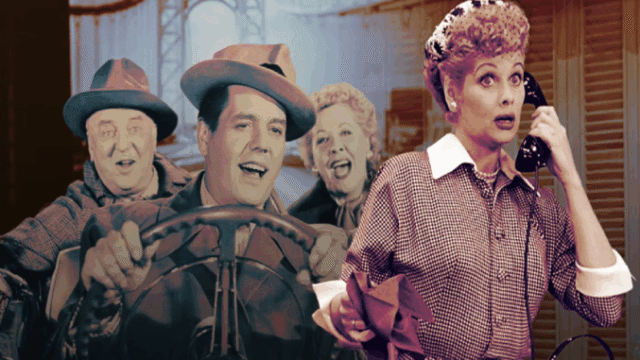
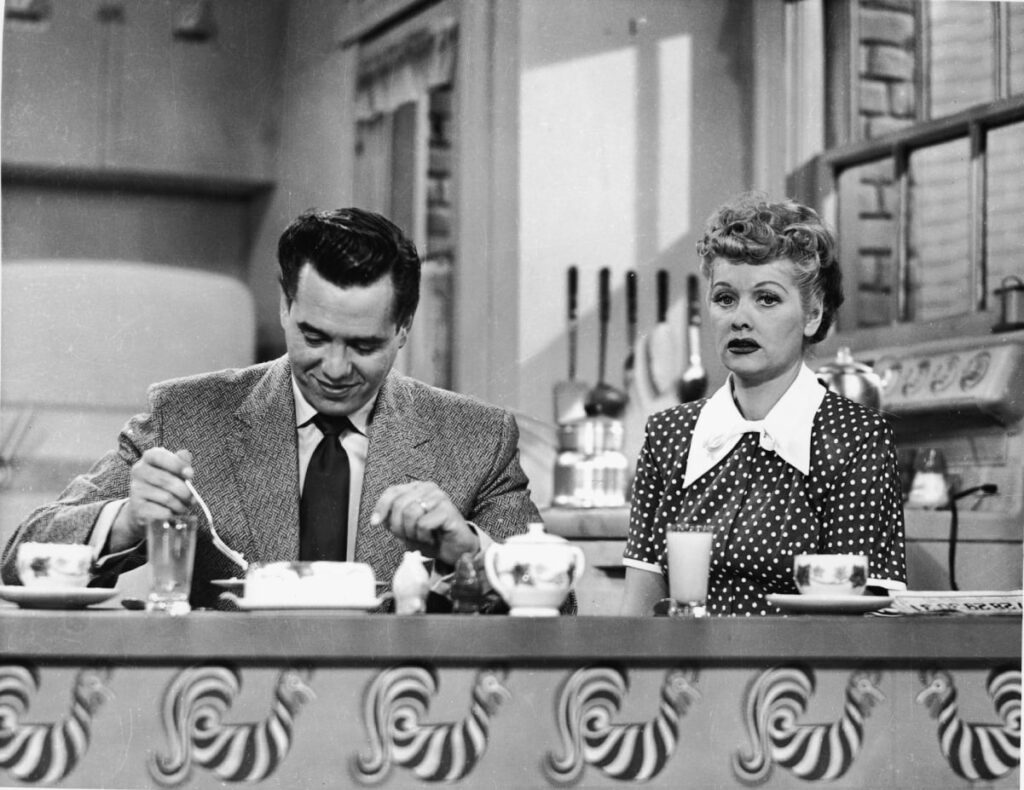
I Love Lucy typically focuses on the marriage between Lucy and Ricky Ricardo, played by real-life Hollywood power couple Lucille Ball and Desi Arnaz. Lucy cooks up wild schemes to sneak into Ricky’s nightclub act, often including her best friend, Ethel Mertz (Vivian Vance).
Occasionally, the 1950’s sitcom featured a celebrity guest star. In the show’s fourth season, the Ricardos and the Mertzes travel to Hollywood for Ricky to star in a movie. While there, they meet the biggest names in Hollywood. These episodes are iconic and memorable with fans. The celebrities, including these 10 blockbuster icons, made the episodes timeless entertainment for fans of all ages.
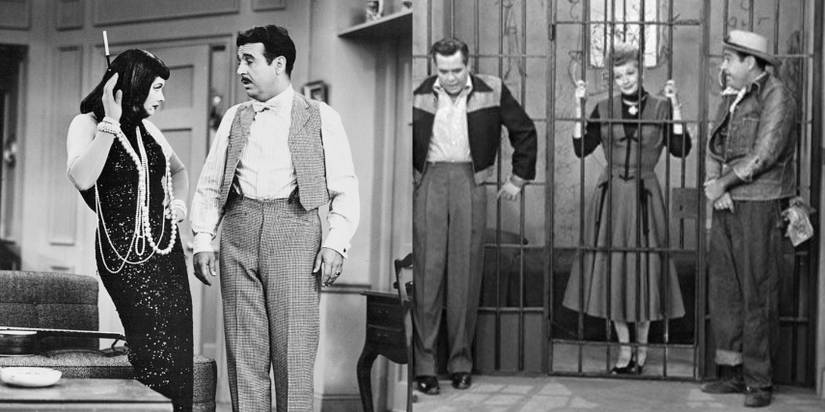
Tennessee Ernie Ford
In the show’s third season, country music star, Tennessee Ernie Ford, guest-starred in two back-to-back episodes: “Tennessee Ernie Visits” and “Tennessee Ernie Hangs On.” Instead of playing himself, Ford played Cousin Ernie, who visits the Ricardos from Bent Fork, Tennessee. He uproots their lives and quickly overstays his welcome, but his Southern charm is hard to resist.
Later, in the season four episode “Tennessee Bound,” the Ricardos and the Mertzes meet Cousin Ernie in Bent Fork when Lucy ends up in jail. Cousin Ernie does whatever it takes to help his friends. With these three episodes, Ford was the most frequent celebrity to appear on the show. Already gaining success as a musical artist, the guest star appearances helped the singer establish his own variety show, The Ford Show, from 1956 to 1961.
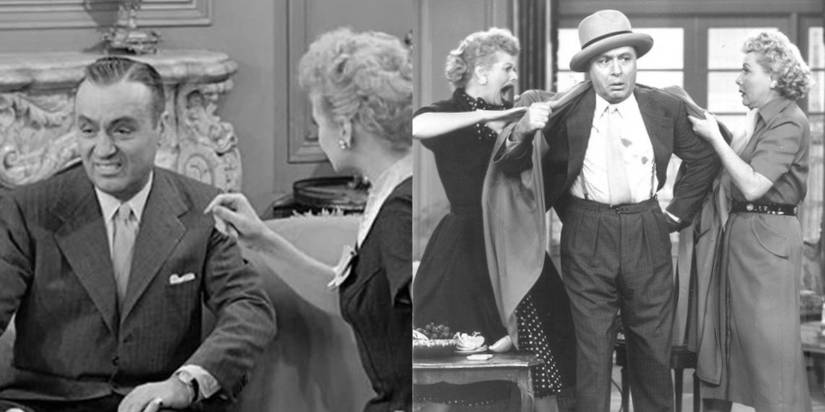
Charles Boyer
In the show’s fifth season, the Ricardos and the Mertzes travel abroad for a European trip. In “Lucy Meets Charles Boyer,” Lucy meets popular French-American actor Charles Boyer. Known for Gaslight, Love Affair, and several other movies, Lucy is enamored with him.
Upon Ricky’s request, Boyer disguises himself as a fake French actor, Maurice DuBois. Boyer was a romantic, dramatic actor. However, in this episode, he didn’t hesitate to showcase his comedic skills, participating in slapstick comedy acts, including getting ink sprayed in his face, ripping his clothes, and hitting his head on a door.
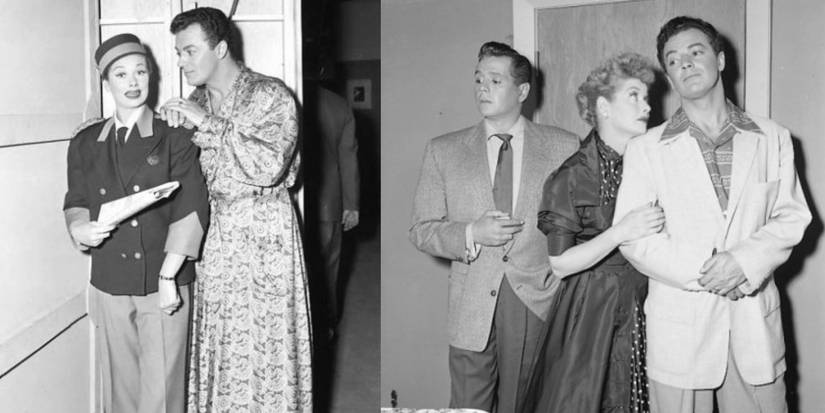
Cornel Wilde
In the season four episode “The Star Upstairs,” Lucy is determined to sneak upstairs to Cornel Wilde’s penthouse suite. Wilde was a leading man in the 1940s and ‘50s, known for Leave Her to Heaven, The Greatest Show on Earth, and The Big Combo, which was promoted in the episode.
In the episode, Wilde is fun and playful. He’s relaxing in the suite, and it looks like the actor enjoyed the opportunity to be himself for a change.
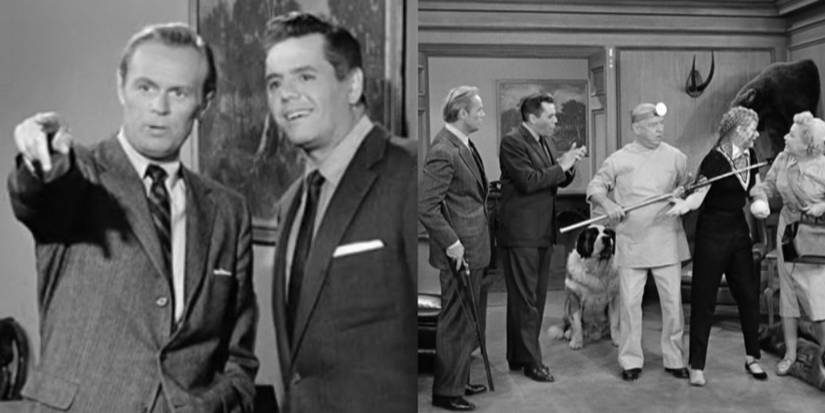
Richard Widmark
Despite the season four episode, “The Tour,” being the lowest-rated episode of I Love Lucy, it’s a memorable episode for fans, mostly due to Richard Widmark’s guest star appearance. The dramatic actor, known for his villainous role as Tommy Udo in Kiss of Death, was another Hollywood heartthrob. In fact, Lucy mentions that Widmark is her “idol” and her “dream man.”
Like most episodes, Lucy finds herself in trouble when she’s accidentally trapped at Widmark’s home after taking a bus tour of celebrities’ homes. Ricky had lunch with Widmark and they arrive back at his home. Like other stars, Widmark mentions his upcoming movie release, A Prize of Gold. Of course, Lucy is eventually discovered, and Widmark is casual and even comical as he listens to her story.
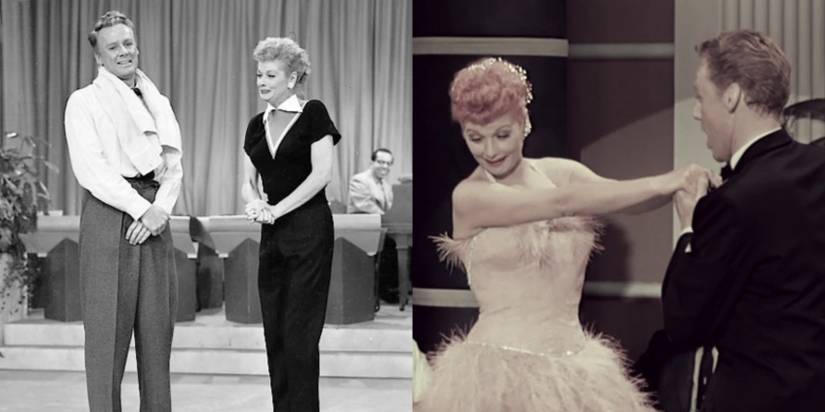
Van Johnson
The season four episode, “The Dancing Star,” is one of the more popular I Love Lucy episodes set in Hollywood. Featuring actor, singer, and dancer Van Johnson, the episode also highlights Ball’s hidden talent: dancing. Lucy convinces Johnson to dance with her in his nightclub routine at the Beverly Palms Hotel. They perform “How About You?”, first introduced by Judy Garland and Mickey Rooney in the 1941 musical, Babes on Broadway.
No one could take their eyes off Lucy as she dances with Van. It’s a beautifully choreographed scene, showcasing that Lucy Ricardo is talented. The episode was originally written for The Wizard of Oz star, Ray Bolger, but he was replaced by Johnson, a close family friend of Ball and Arnaz. He starred with Ball in Too Many Girls (also featuring Arnaz), Easy to Wed, and they later co-starred again in the 1968 family movie, Yours, Mine and Ours.
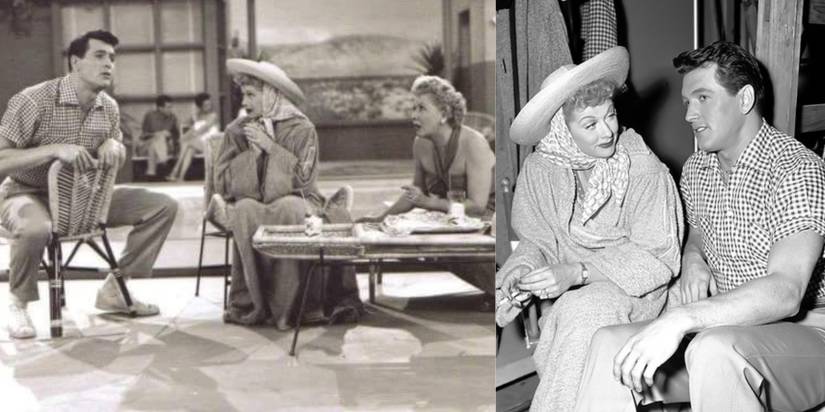
Rock Hudson
Rock Hudson was perhaps the biggest romantic lead of the 1950s and ‘60s. Because of this, it’s not surprising he guest-starred in the season four episode, “In Palm Springs.” Hudson appears in the final scene, visiting Lucy and Ethel in Palm Springs.
In an elaborate monologue, Hudson tells the story of a husband and wife who argued over a strange habit. When the husband died, it was too late for forgiveness. Hudson is emotional and heartfelt during his monologue, presenting a rare sentimental scene in the sitcom.
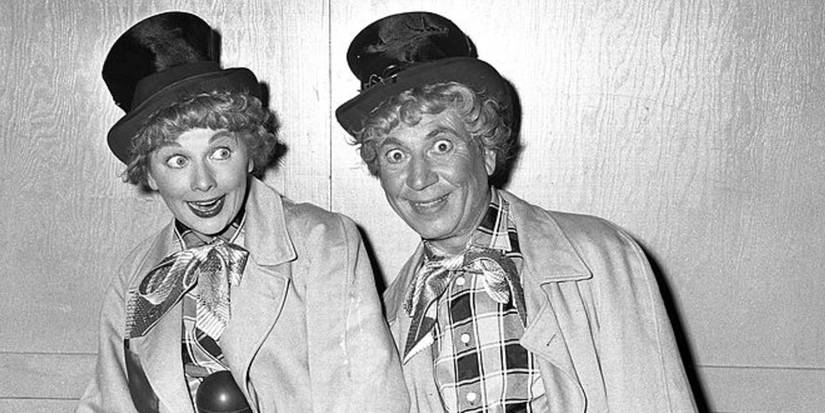
Harpo Marx
As part of the sibling comedy group, The Marx Brothers, Marx guest-starred in the season four episode, “Lucy and Harpo Marx.” Needing celebrities to attend her party to impress her visiting friend, Carolyn Appleby (Doris Singleton), Lucy dresses up as celebrities, including Clark Gable and Gary Cooper.
Ricky convinces Marx to surprise Lucy at the party, even though she’s already dressed up as the mime comic. In his scenes, Marx plays his signature harp and makes audiences laugh with his facial expressions. However, the best part of the episode is Lucy and Marx’s reenactment of the mirror routine first presented in The Marx Brothers’ 1933 movie, Duck Soup. Marx and Ball brilliantly performed the skit together, inspiring one of the most famous scenes in the sitcom’s history.
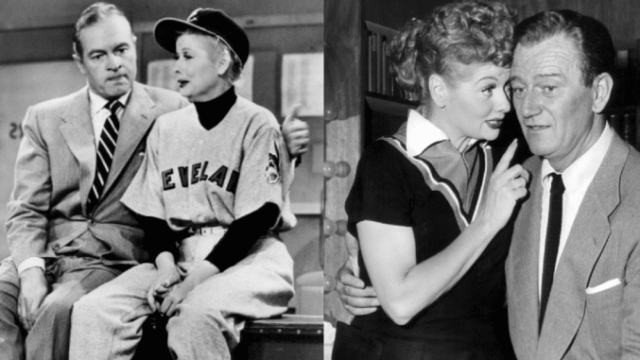
Bob Hope
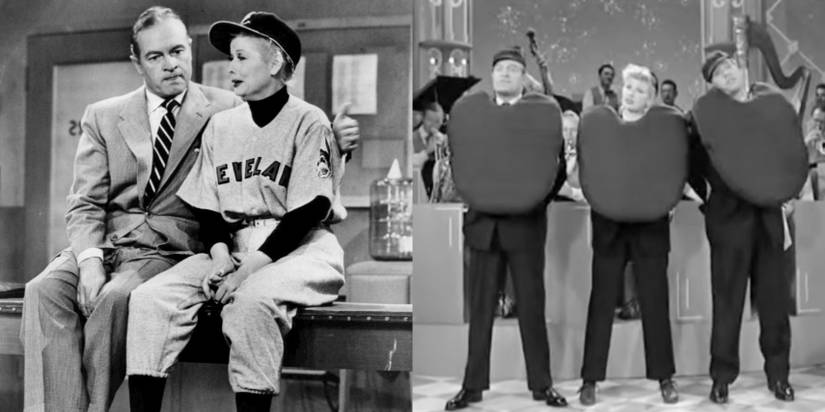
I Love Lucy needed a celebrity guest star to kick off its sixth and final season. The obvious choice was Ball’s close friend and fellow comedian, Bob Hope. Ball co-starred with Hope in two prior movies, Sorrowful Jones and Fancy Pants. They later co-starred in two other movies: The Facts of Life and Critic’s Choice. Because the two were friends, their on-screen chemistry in the episode “Lucy and Bob Hope” is impeccable.
The episode incorporates Hope’s real-life love for baseball. Not only did part of the episode take place at Yankee Stadium, but Hope, Ball, and Arnaz also performed “Nobody Likes the Ump” at Ricky’s newly re-opened Club Babalu nightclub. Following numerous comedic spectacles between Ball and Hope, the episode concludes with a sentimental version of Hope’s signature theme song, “Thanks for the Memory.” Based on their interactions in the song, it’s obvious Ball and Hope cared for each other as friends.
John Wayne
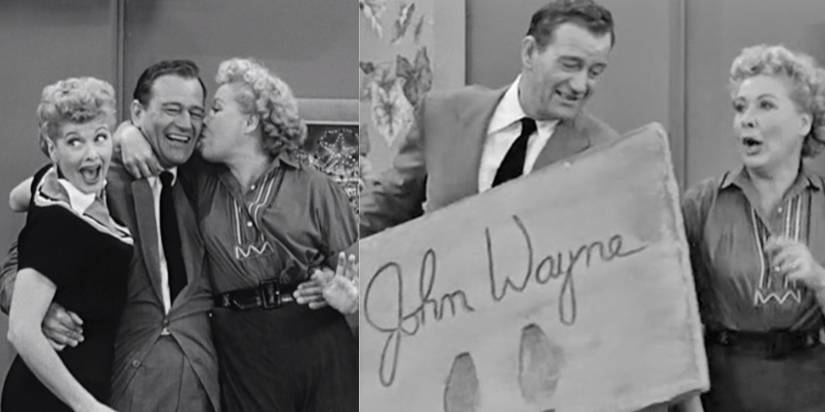
The show’s fifth season began with two back-to-back episodes about Western movie icon, John Wayne: “Lucy Visits Grauman’s” and “Lucy and John Wayne.” He was perhaps the most famous, well-rounded actor to appear on the show, appealing to all audiences.
By subscribing, you agree to receive newsletter and marketing emails, and accept Valnet’s Terms of Use and Privacy Policy. You can unsubscribe anytime.
After Lucy and Ethel steal Wayne’s footprints from Grauman’s Chinese Theatre, they try (and fail) to get Wayne to step into another block of cement and leave his signature before they get in serious trouble. Wayne didn’t realize how many times he would have to help the Ricardos and the Mertzes.
Wayne was a fan of I Love Lucy and requested to be a guest star, in exchange for just $280 and the promotion of his new movie, Blood Alley. To fans, it was surprising to see the tough Duke perform comedy, but that’s what makes the episodes stand out from others. Wayne was an enthusiastic guest star who had fun with his performance.
William Holden
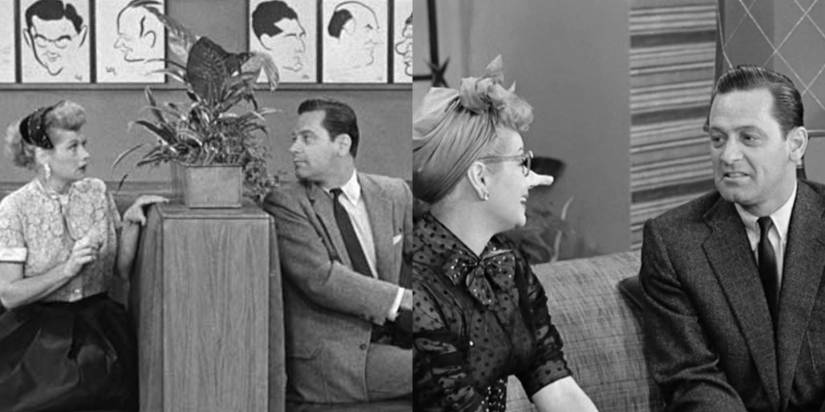
“I kissed Bill Holden!” That is the iconic line from the high-rating season four episode, “L.A. at Last.” The Ricardos and the Mertzes have just arrived in Hollywood and Lucy, Ethel, and Fred have lunch at the famous Brown Derby restaurant. While at lunch, they encounter William Holden.
In 1954, Holden was the heartthrob of Hollywood, starring in Sabrina, Sunset Boulevard, and others. Being a professional, Holden never breaks character, even when Lucy has trouble eating spaghetti, and later, when she lights her fake nose on fire. In the episode, Holden is classy and resonates with the level of sophistication associated with Hollywood celebrities of the 1950s.
After six seasons on the air, the iconic television comedy I Love Lucy concluded its historic run on CBS. Through those years of physical comedy, laughs, and tears, the show came to an end in 1957 with Lucille Ball, Desi Arnaz, Vivian Vance, and William Frawley performing their final episode to avid fans.
Here’s what happened in the finale of the pioneering series.
Little Ricky actor Keith Thibodeaux recalled his ‘sad’ final visit with Lucille Ball
Keith Thibodeaux portrayed Little Ricky in the series from 1955 until its end in 1957. He was 5 years old when he began playing the Ricardos’ son. In a conversation with the Television Academy Foundation, the actor recalled his last visit, along with his wife and daughter, with Lucille Ball.
“This is typical Lucy: She’s standing at the end of her hall, it’s about 50 feet down. She’s not greeting me at the door, she’s way down by the staircase, she’s got her hands wide open. Like, ‘Come to me!’” Thibodeaux said as he laughed at the memory. “There was this big hug, Lucy when she hugged you she just squeezed the life out of you. We spent a good hour there.”
The Louisiana-born percussionist recalled how it saddened him to see that his former boss was alone.
“It was kind of sad because it was her birthday and there was nobody there on her birthday,” he said. “She was by herself. I really thought it was a good thing that we were there. It was just cool. She said, ‘I hear good things about you, I’m proud of you.’”
The final episode of ‘I Love Lucy’ was another day in Lucy’s world
During the sixth season, the Ricardos and the Mertzes made Connecticut their home. The Ricardos first moved to the Constitution state by the 16th episode that season, “Lucy Hates to Leave”; by the 19th episode, “Lucy Raises Chickens,” the Mertzes have pulled up stakes, left New York City, and joined them.
Episode 27 of the season turned out to be the series’ finale, although it may not have been known at the time to anyone, even to Ball or Arnaz. And so, I Love Lucy‘s last episode had no emotional farewells or even a concluding storyline wrapping up the previous five seasons. It was another episode featuring Ball in her element, and it was anticlimactic.
“On April 4, 1957, they filmed the last I Love Lucy in the half-hour format, “The Ricardos Dedicate a Statue,” in which Lucy wrecks the town’s memorial to a Revolutionary War soldier,” Kathleen Brady wrote in her biography of Ball, Lucille: The Life of Lucille Ball. “She passes herself off as a stone sculpture for the unveiling until a dog—one of the many animals that loved Lucy—licks her face.”
Ball and Arnaz went on to do hour-long shows
Once I Love Lucy wrapped up, production began almost immediately on Ball and Arnaz’s next project: The Lucy-Desi Comedy Hour.
“The following season, the Ricardos and the Mertzes made only five one-hour comedy programs, each of which featured guest stars,” Brady wrote. “The first, co-starring Ann Sothern and Cesar Romero, was the story of how Lucy met Ricky Ricardo and convinced Rudy Vallee to give him a job with his band. Desi got so caught up in the plot that he let it run to 75 minutes and then convinced U.S. Steel to shorten its program, which followed, so the entire episode could be aired. The Lucy-Desi special ran on Wednesday, November 6, 1957, and helped propel The U.S. Steel Hour to its highest rating ever.”
After 13 episodes, The Lucy-Desi Comedy Hour ended in 1960, along with Ball and Arnaz’s marriage with their divorce on May 4 that year.
Love compels parents to do extraordinary things for their children’s well-being. Celine Casey, a British mother, took remarkable steps to ensure her daughter Vienna’s...