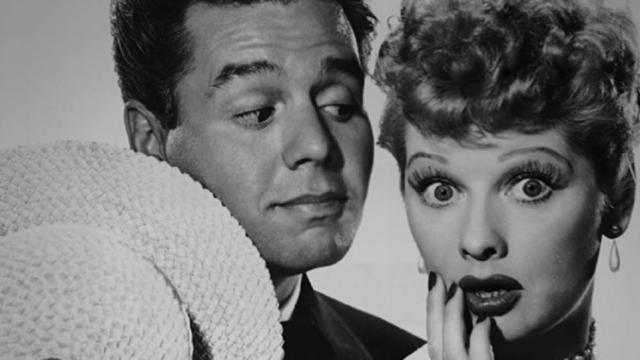
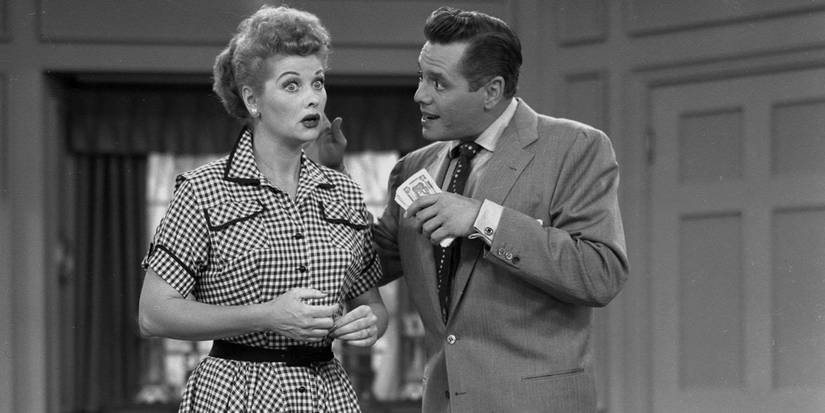
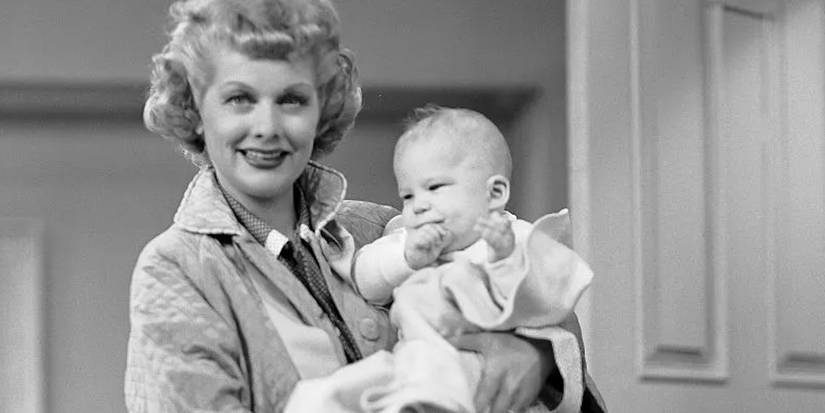
I Love Lucy star Lucille Ball was married to Desi Arnaz for 20 years. Here’s what she revealed about the moment she realized it was time to divorce Arnaz. Lucille Ball and Desi Arnaz tried to divorce each other a couple of times It was tough for Ball to finally divorce Arnaz. They had a …
I Love Lucy star Lucille Ball was married to Desi Arnaz for 20 years. Here’s what she revealed about the moment she realized it was time to divorce Arnaz.
Lucille Ball and Desi Arnaz tried to divorce each other a couple of times
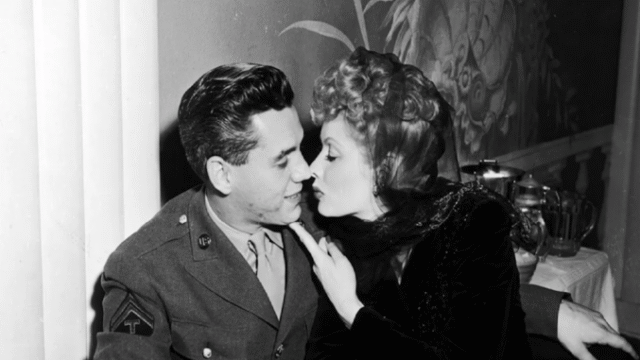
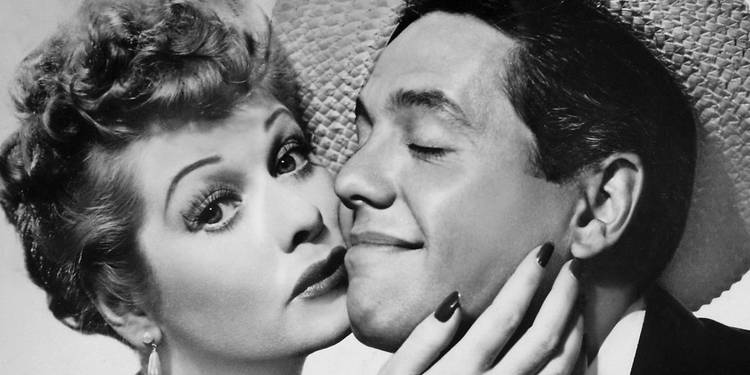
American actress Lucille Ball (1911 – 1989) with her husband Desi Arnaz (1917 – 1986) at the Mocambo nightclub in West Hollywood, July 1942. (Photo by Pictorial Parade/Archive Photos/Getty Images)
It was tough for Ball to finally divorce Arnaz. They had a couple of false starts. One of the times she thought about divorcing him was in the summer of 1944. In her book Love Lucy, Ball said Arnaz suddenly stopped coming home.
“During the summer of 1944, Desi stopped coming home,” wrote Ball. “One night I tossed sleeplessly until dawn wondering where our marriage had gone awry and what I had done wrong. Finally, I hit upon a desperate measure. I still loved Desi; he was the only man in my life. But I decided to divorce him.”
Arnaz wasn’t ready to let Ball go, telling her he was going to be a better husband the next time he got married. Ball responded by saying she would be a better wife. Arnaz suggested they give their marriage another try, and Ball agreed. “I didn’t believe Desi could change, but he did for a time,” wrote Ball. “I gulped a bit when I paid $2,000 in fees for the divorce I never got, but it was worth it.”
That was one of many attempts Ball made to leave Arnaz. However, Ball said they were completely estranged by the spring of 1960.
The couple stopped speaking to each other
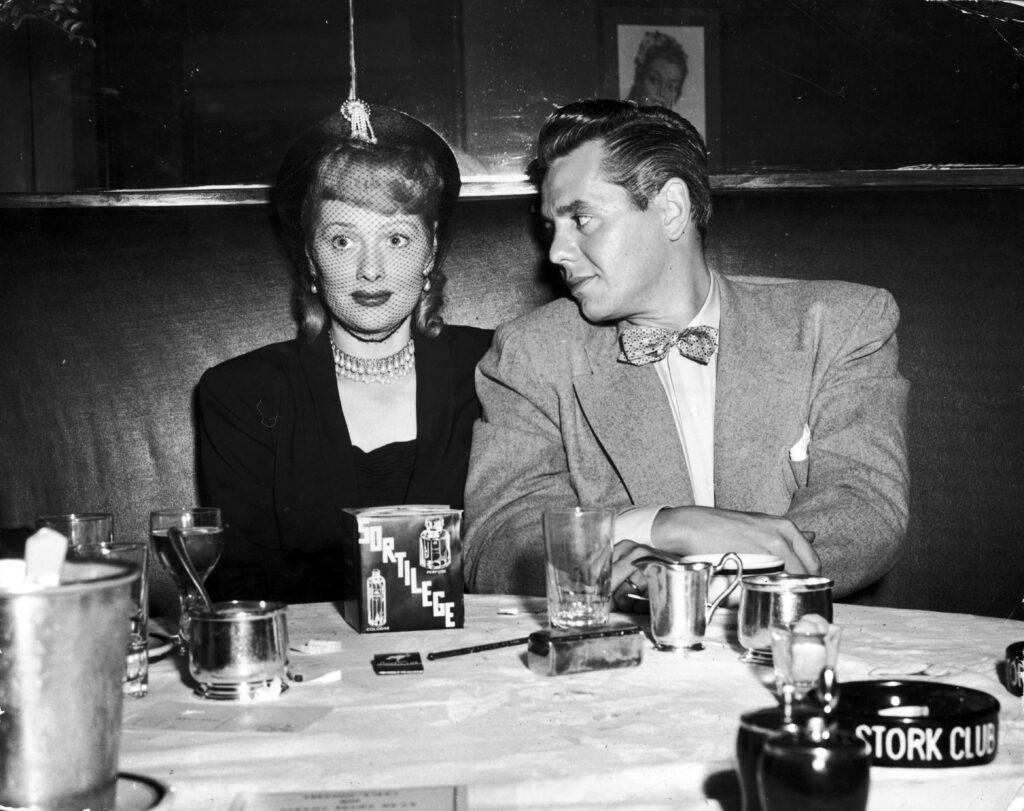
American actress Lucille Ball (1911 – 1989) with her husband Desi Arnaz (1917 – 1986) at the Stork Club in New York City, circa 1945. Lucille has a bottle of the club’s house perfume, Sortilege. (Photo by Phil Burchman/Archive Photos/Getty Images)
Arnaz and Ball’s reconciliation didn’t last long, and they eventually stopped speaking to each other. Ball said things started going downhill once again after a press trip in England.
“Big Desi was restless, uncommunicative, and bored,” wrote Ball. “When he wasn’t drinking, he spent most of his time on the phone with the studio or checking the Del Mar racetrack, where his horses were running. I was completely disenchanted, bitter, and unforgiving . . . and the kids saw and heard way too much.”
The moment Lucille Ball decided to divorce Desi Arnaz
Ball said she knew it was time to get a divorce when she started becoming angry and losing her sense of humor. She also said she was “miserable” for years. She partly blamed herself for the breakdown of her marriage. Ball said even her hairstylist knew the marriage was coming to an end. “I remember Irma Kusely, our hairdresser, saying, ‘We all knew it was over. It was so sad. There was nothing anyone could do.’”
“I was at fault too,” wrote Ball. “I had lost my good humor and sense of proportion. When you’re too mad and too rattled to see straight, you’re bound to make mistakes. You can’t go on and on for years being miserable about a situation and not have it change you. You get so you can’t stand yourself. I decided to divorce Desi.”
I Love Lucy, the 1950s sitcom starring Lucille Ball and Desi Arnaz, was groundbreaking in many ways. The casting of Cuban band leader Arnaz in a lead role was a hard sell to CBS until Ball and Arnaz proved they worked better as a team by developing a popular live vaudeville show. They challenged CBS’s insistence on filming in New York City by successfully shooting in front of a live studio audience with three 35mm film cameras in Hollywood, a practice that set a new standard going forward. Their partnership off-screen was a powerful entity itself, with their production studio, Desilu Productions, championing series like Star Trek when no one else would. Yet the popular show came very close to cancelation one time, all thanks to a conflict with the National Association of Broadcasters over one seemingly innocuous event: Lucille Ball’s pregnancy.
‘I Love Lucy’ Had to Deal With the Television Code
Not unlike the infamous Hays Code that dictated the film industry between 1934 and 1968, the Code of Practices for Television Broadcasters, aka the Television Code, was a self-regulation initiative adopted by the National Association of Broadcasters between 1952 and 1983. It set ethical standards that television programming should adhere to, standards that hewed closely to its movie industry kin. Profanity, illicit sex, drunkenness, and drug addiction were prohibited outright. Television programs also couldn’t portray family life, God, religion, and law enforcement officials in a negative light. Conversely, crime and horror weren’t to be portrayed in a positive fashion. Performers were to dress and move within the “bounds of decency.” News reporting was expected to be “factual, fair, and without bias,” with any commentary and analysis of the news clearly defined as being such (maybe this one should come back into play, no?). Religious programming was a must, and broadcasters were discouraged from charging religious organizations for that time.
The implementation of the Television Code fell within weeks of the I Love Lucy premiere. As a result, it became the environment the series was working under, and successfully at that. Her Lucy Ricardo wasn’t the stereotypical American housewife, modeled on TV by the likes of Barbara Billingsley‘s June Cleaver on Leave it to Beaver. Lucy was a disaster waiting to happen, a woman whose actions were fodder for an array of comic routines that have since become legendary. As Carol Burnett once said, “She took you on some kind of a wild journey over those 22 minutes, and you could not wait to see what else she was going to cook up.” Lucy constantly exasperated Arnaz’s Ricky Ricardo, but there was no doubt the two loved one another. The series was a winning mix of flat-out comedy and sentiment, with an audience that reached 11 million within six months of its premiere, 67 of every 100 nine o’clock Monday night viewers. Success like that breeds clout, and Ball and Arnaz weren’t afraid to use it.
The Television Code Opposed ‘I Love Lucy’ Referencing Lucille Ball’s Real Pregnancy
The series was nominated for an Emmy for Best Comedy Show, and on May 26, 1952, Time magazine had Ball on its cover, with a headline that read, “Lucille Ball, Rx for TV: A Clown with Glamour.” I Love Lucy was thriving under the Television Code, but the two were about to clash as Ball was pregnant with her second child. The Draconian code was clear that anything sexually suggestive was not allowed on the air, which included the topic of pregnancy. If you’re confused about how point A gets to point B, well, you’re not alone, so here’s the logic. Talking about pregnancy implied that a couple, married or not, had engaged in a sexual act. Ball and Arnaz, however, not only planned on talking about pregnancy, they were prepared to have the pregnancy as a focal point on the series, with the on-screen couple mirroring what was happening off-screen.
CBS and sponsor Philip Morris vehemently opposed the prospect, and Arnaz was told, in no uncertain terms, “You cannot show a pregnant woman on television” by the Biow advertising agency. The less-than-subtle implication was that acknowledging Ball’s pregnancy on the program could hold dire consequences for the program’s future. According to the previously cited Time article, Arnaz pushed back, saying, “What is so wrong if she has a baby in the show as Lucy Ricardo?” Executives, seeking a compromise, suggested that Lucy could simply hide the pregnancy by being filmed behind chairs or tables, a suggestion Arnaz responded to with a simple, “Not Lucy.”
‘I Love Lucy’ Found a Way Around the Television Code
With that, Arnaz and I Love Lucy writer Jess Oppenheimer sat with CBS and sponsor Philip Morris to find a mutually agreeable solution. That solution was to do something that had never been done to that point: the pregnancy would be incorporated into the script. To do so, they borrowed a trick from filmmakers working under the Hays Code and skirted the Television Code by committing fully to it. The word “pregnancy” wasn’t allowed on TV, and they complied by not using that word. Instead, they used phrases like “expecting,” “with child,” and in one case, titling an episode “Lucy is Enceinte,” the French word for pregnant. Time reports that the script was handed out to a priest, a minister, and a rabbi (not the beginning of a joke, by the way) to read, and each gave their blessing to the series’ “blessed event.” Seven episodes were written, and the TV-birth episode was filmed in advance.
It all came to a head on January 19, 1953, with CBS airing the birth episode the same day that Ball was scheduled for a cesarean delivery. If American viewers turned away, the proponents of the Television Code would have won the day, and I Love Lucy would likely face cancelation. If American viewers tuned in, Arnaz and Ball would be proven right, and change the industry in a major way. The latter proved to be the case, with 44 million Americans watching “Lucy Goes to the Hospital.” As Entertainment Weekly reports, legend has it that nationwide water supplies dropped significantly when the episode was over, as no one wanted to step away from the TV to use the bathroom until Lucy had Little Ricky. The episode got so much attention that the inauguration of Dwight D. Eisenhower the same day failed to generate interest even remotely close.
Ball would win an Emmy for Best Comedienne the following month, while Arnaz and Oppenheimer were awarded their own for Best Situation Comedy. I Love Lucy would go on to become one of TV’s most iconic comedies, Ball was celebrated as one of its great comic talents, and the Television Code ended for good in 1983.
Lucille Ball and Desi Arnaz are two of the most influential figures in the history of entertainment, as I Love Lucy is responsible for revamping the way that the industry thought of television and its potential. Given how much attention the duo received from the press throughout the entirety of their careers, it’s not surprising that there have been many attempts to retell their stories in a different medium. Aaron Sorkin famously tried to look at a particularly controversial moment in the history of I Love Lucy with his biopic Being the Ricardos. While it featured Oscar-nominated performances from Nicole Kidman, Javier Bardem, and J.K. Simmons, the toothless commentary on the show’s political ramifications robbed Being the Ricardos of any substantial value. However, Amy Poehler earned a much more intimate, inspiring, and thought-provoking perspective on Ball and Arnaz with her underrated documentary.
Lucy and Desi was just one of many celebrity-focused documentaries that debuted on streaming services, which has made it hard to distinguish them in terms of quality. Although there are certainly recent celebrity docs like Sly or aka Charlie Sheen, that seek only to lionize their subjects, Poehler took a meticulous approach to showing how radically I Love Lucy changed American culture and how the show was able to be at the forefront of progressive movements. While generations of viewers grew up with “Lucy and Desi” as characters on their favorite show, Poehler’s films suggest that there was a lot of truth within the performances by Ball and Arnaz.
‘Lucy and Desi’ Shows the Private Lives of Hollywood’s Most Famous Onscreen Couple
Although there’s obviously a lot of attention paid to the inception of I Love Lucy, Lucy and Desi sought to explain why the notion of seeing this pair on television was such a significant change of pace for the entertainment industry. Lucy and Desi examines how bigotry made it challenging for Ball and Arnaz to put themselves at the center of a show; not only did senior executives within the industry believe that “women aren’t funny,” but they refused to think that audiences would be interested in seeing a mixed-race couple as the embodiment of the idealistic American family. Ironically, the success of I Love Lucy was that it took advantage of scenarios that a vast majority of its audience could relate to, such as balancing work and family life, considering raising a family, and dealing with financial setbacks. While the show employed some of the finest writers in comedy at the time, much of its success came from how authentic it was to have a real couple playing versions of themselves. In order to convey how groundbreaking this was, Poehler assembled interviews with many influential television icons, including Carol Burnett, Bette Midler, and Norman Lear.
Poehler was keen to point out how the show made decisions that were surprisingly controversial at the time that I Love Lucy was on the air; the suggestion that Lucy and Desi would sleep in the same bed even incurred some backlash from network executives. However, Poehler shows how the style of comedy in I Love Lucy impacted all future sitcoms, including her own work on Parks & Recreation. The implementation of a strong laugh-to-minute ratio was critical in keeping the audiences hooked, as was finding just the right moment to land a punchline. Films that explore the perils of being an artist can often be quite negative in their depiction of the industry at large, but Poehler also showed the joy that Ball and Arnaz took from their show, and why it meant so much to them that I Love Lucy had connected with fans across the nation.
‘Lucy and Desi’ Benefits From Amy Poehler’s Experience With Television
Lucy and Desi examine the various challenges that the show faced due to conservative backlash, conflicts with advertisers, and the economics of television, but it suggests that the integrity of Ball and Arnaz’s relationship helped them make it through tough times. Poehler made the smart choice to differentiate the characters that Ball and Arnaz were playing on television and their real personas, as conflicts within the show often spilled over into reality; Arnaz often felt undermined, as his wife had earned more fame from their work. However, the strength of Ball and Arnaz’s mutual faith in one another’s abilities as artists is quite inspiring, especially when compared to the last several decades of celebrity culture. It’s often that a documentarian inserts a more saccharine touch on the material, but Poehler’s approach to Lucy and Desi was effective because she largely allowed Ball and Arnaz to speak for themselves through archived content.
Although debuting shortly after the divisive response to Being the Ricardos certainly made Lucy and Desi feel more focused and considerate in comparison, the film was also able to address the dramatic shifts within entertainment in recent times. Lucy and Desi examine why having a monoculture event likeI Love Lucy is important to society, as it allows entertainment fans of different backgrounds to share something they are passionate about. Poehler puts a fine point on the work that both Ball and Arnaz did to advance entertainment in the industry, and even implies that they may have been partially responsible for her own career. Many future artists saw themselves represented on screen for the first time with I Love Lucy, and Lucy and Desi encapsulate that same sentiment.
Donald Trump and Erika Kirk joined together in a hug on stage as they celebrated the life of Charlie Kirk at the memorial in Arizona last weekend. They have grown close because of the tragic incident, but now it appears as if they share a very bizarre connection, one that goes back years.
Charlie Kirk’s widow, Erika Kirk, appeared at the memorial service at State Farm Stadium in Glendale, Arizona, when tens of thousands of people came to say their last goodbyes to the conservative political activist.
Erika gave a speech in front of a packed stadium, and when she appeared on the Charlie Kirk Show a day before, she thanked many for their support. That included President Donald Trump.
Speaking through tears, Erika Kirk thanked President Donald Trump and his family for their support after the shooting. She is now taking over as the new head of Turning Point USA, the non-profit organization founded in 2012 by Charlie Kirk.
“Mr President, my husband loved you. And he knew that you loved him too. He did. Your friendship was amazing. You supported him so well, as did he for you,” she said.
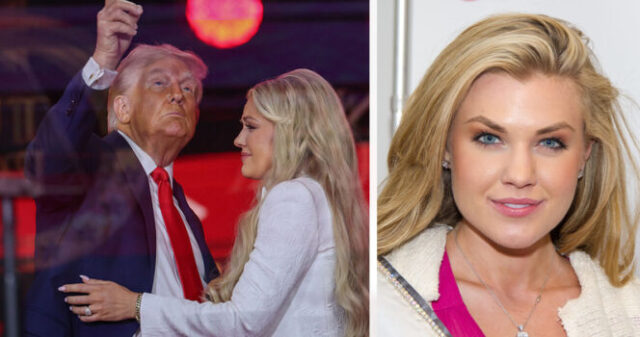
Donald Trump also held a speech at State Farm Stadium with Erika standing beside him. When finalizing his speech, the president pulled Erika into a hug as the crowd roared with applause. But on social media, people had opinions about the look on Trump’s face.
Donald Trump and Erika Kirk’s bizarre connection
Donald and Erika have been close since the recent tragic events, but it appears as if their paths have crossed many years ago. One user on X had found a picture of Erika from her days as a beauty pageant – and made a connection no one had thought of before.
“Oooooh. Erika Kirk competed in the 2012 Miss USA competition, which was owned by Trump. Her talent portion for the Miss Arizona contest was performing a dribbling exhibition with two balls. Her website still lists contact info to book her for modeling and acting,” the user wrote.
Donald Trump ran the Miss USA competition for many years as a co-owner of the Miss Universe Organization. He ended his cooperation with the competition in 2015, but reports state that he not only was in charge but also played a significant role in determining who competed and who won.
Erika Kirk won the Miss Arizona pageant in 2011 and, as a result, competed in the 2012 Miss USA competition. At the time, Kirk, then known by her maiden name Frantzve, said, “What really matters is making a difference, and I want to change the world. The bling is just a bonus.”
Donald Trump was rumored to have ‘picked winners’ of Miss USA contests Kirk also competed in Miss Teen USA pageants. Speaking to The New Yorker, preliminary judges revealed Trump had picked winners and even commented on them.
“They told us not to share how we voted with each other, but we did anyway,” one judge told the New Yorker, adding that they were “shocked” when winners were announced, although they hadn’t been selected.
“I didn’t know what had happened. I felt ridiculous,” they added.
It’s not known whether Erika was one of the individuals Trump selected as a winner. However, the odds of them not meeting at the time must be considered very low.
What’s your take on this? Please share this article on Facebook and give us your opinion in the comment section.
The night my wife mentioned her high school reunion, I barely looked up from my phone. She stood in the kitchen, holding the invitation with a hopeful smile I didn’t fully register until it was gone. I told her, carelessly and arrogantly, that it might be awkward for her now—that she was “just” a stay-at-home mom and might feel out of place. The words landed heavier than I intended, but I didn’t stop them. She didn’t argue. She simply nodded, folded the invitation, and placed it in a drawer. In the days that followed, our house felt unusually quiet. She moved through routines with efficiency but little warmth, and we spoke only when necessary. I told myself it would pass, not realizing how deeply I had wounded her.
Two weeks later, a large, heavy box arrived on our porch with her name written clearly across the label. She was out running errands, so I brought it inside, curiosity getting the better of me. The box was heavier than I expected, solid and deliberate. When I opened it, my breath caught. Inside were framed certificates, old notebooks, carefully preserved awards, and a stack of letters tied with ribbon. On top lay a handwritten note. As I read it, the room felt smaller. She had written about dreams she once had, goals she achieved, and paths she chose willingly—how staying home to raise our children was not a lack of ambition, but a conscious, loving decision. She hadn’t stopped being capable or accomplished; she had simply redirected her strength.
I sat there for a long time, surrounded by the quiet evidence of a life I had underestimated. The letters were from former teachers and mentors who praised her leadership and determination. The notebooks held plans for projects she once led and ideas she still revisited late at night after the house was asleep. I realized how easily I had reduced her to a single role, ignoring the depth and resilience that existed long before I entered her life. The reunion invitation, tucked into the box, suddenly felt symbolic—not of the past, but of a confidence she had momentarily allowed me to dim.
When she returned home, I didn’t wait. I told her I was sorry—not in passing, but fully, carefully. I admitted that my words came from my own insecurities and a failure to see her completely. She listened quietly, then smiled in a way that was gentle but firm. She told me the box wasn’t meant to shame me, but to remind herself of who she was, in case she ever forgot again. That night, we talked longer than we had in months. I learned that respect isn’t shown through grand gestures, but through daily recognition of someone’s worth. And I understood, finally, that love grows strongest when we honor not just who someone is to us—but who they are, fully, on their own.
Throughout history, the writings attributed to Nostradamus have often been interpreted not as direct predictions, but as symbolic reflections on cycles of human experience. Some readers believe these texts hint at moments of economic expansion that do not align with standard calendars or traditional timelines. Instead of full years, they describe transitional periods—specific months when effort, timing, and circumstance converge. One such moment frequently discussed in modern interpretations is January 2026, seen not as a guarantee of wealth, but as a symbolic turning point where preparation may finally meet opportunity for certain individuals.
These interpretations suggest that the shift is selective, not universal. Rather than sudden fortune or chance, it emphasizes alignment—between past effort, personal strengths, and changing conditions. Six zodiac signs are often highlighted in this context, each for different reasons. Taurus is associated with consistency, where long-term discipline and steady planning begin to show tangible results. Leo is linked to visibility and leadership, with progress emerging when confidence is fully expressed. Scorpio’s symbolism points to transformation, where challenges or transitions may open unexpected doors. Capricorn represents endurance, often tied to reaching long-sought stability after years of persistence.
Aquarius, in these readings, is connected to innovation and originality. Growth is said to come through unconventional thinking, technology, or ideas that challenge existing norms. Virgo is often described as the most deeply affected, not through dramatic change, but through a gradual sense of security earned by recognizing personal value and skills. Across all signs, the theme remains consistent: progress is portrayed as the result of awareness and readiness, not luck or external force. The emphasis is on internal shifts—how individuals respond to opportunities rather than waiting for outcomes to arrive on their own.
Interpreters of these ideas often stress practical reflection rather than belief. Organizing finances, learning new skills, reviewing habits, and approaching decisions thoughtfully are recurring themes. Small, deliberate actions are portrayed as more meaningful than bold but unplanned risks. January 2026, in this symbolic framework, is not presented as magical or guaranteed. It represents a moment when clarity, patience, and effort may align more easily with external circumstances. Whether that moment becomes meaningful depends less on astrology and more on how prepared a person is to recognize and act when opportunity appears. In the end, the message is not about destiny—but about choice, awareness, and the value of long-term intention.
I hadn’t planned to stay long. My husband was working late, so I decided to drop off a small box of cookies for his mother, Margaret—a simple gesture, nothing more. When I arrived, the house felt unusually quiet. My father-in-law wasn’t home, and Margaret didn’t answer the door, even though her car was in the driveway. I texted her husband, who replied casually that she was resting and suggested I head back home. It should have eased my mind, but it didn’t. Margaret never “rested” when someone was expected. As I turned toward the stairs, I heard a faint tapping sound from above—slow, uneven, and unmistakably intentional.
I followed the sound to the attic door, a place I’d been told was always locked and private. That day, the key was still in the lock, as if someone had forgotten it in a hurry. My heart pounded as I turned it, unsure of what I expected to find. Inside, the attic was dim and dusty, filled with old furniture and forgotten boxes. In the center sat Margaret, pale and shaken, perched on an old chair. She looked embarrassed more than afraid, as if she’d been caught in a moment she never meant to share. When I asked what she was doing there, she hesitated, then sighed, as though the truth had been pressing on her chest for a long time.
She told me the attic had become her place of escape—not from danger, but from loneliness. Over the years, the house had grown quieter, the conversations fewer, the attention gone. Her husband worked late, her children were busy with their own lives, and she felt invisible in a home she had once filled with warmth. The attic, she said, was the only place where she felt she could think without being interrupted or judged. The tapping I’d heard was her trying to get my attention, too weak to call out, afraid of causing trouble. She wasn’t hiding a secret so much as carrying a sadness she didn’t know how to name.
I helped her downstairs, made her tea, and sat with her longer than I’d planned. We talked about small things at first—recipes, memories, the way time seems to move faster when no one is watching. Before I left, she squeezed my hand and thanked me for not asking too many questions. That night, I realized how easily we overlook the quiet struggles of those closest to us. Sometimes, the most important discoveries aren’t about locked doors or hidden rooms, but about noticing when someone needs to be seen. And sometimes, simply listening is enough to unlock what truly matters.
A Nevada vanity license plate that began as a playful joke unexpectedly grew into a much larger public conversation. What started as a humorous remark aimed at recent arrivals to the state quickly touched on sensitive topics such as housing affordability, community identity, and the pace of change in growing regions. While the original intent appeared lighthearted, many long-time residents interpreted the message as a reflection of real frustrations. Rising rent, increased competition for jobs, and crowded infrastructure have made everyday life more challenging, and for some, the plate seemed to capture those concerns in a blunt, symbolic way.
At the same time, others viewed the message very differently. Critics argued that humor can easily cross into exclusion, especially when it singles out newcomers rather than addressing broader economic realities. From this perspective, the plate risked reinforcing stereotypes and fostering an “us versus them” mindset. When the Nevada Department of Motor Vehicles decided to recall the plate, the move was meant to enforce policy and prevent potential offense. Instead, the recall drew far more attention to the issue. Photos of the plate circulated widely online, and what might have gone unnoticed by most drivers became a viral talking point across social media platforms.
The DMV’s decision sparked debate about free expression and the responsibility of public institutions. Supporters of the recall emphasized that license plates are state-issued identifiers, not personal billboards, and must meet standards that avoid hostility or discrimination. Others countered that the plate was clearly satire and that removing it set an uncomfortable precedent. As the discussion unfolded, people began sharing examples of other vanity plates that had been rejected over the years. These lists highlighted how often agencies must weigh humor, intent, and public impact when approving personalized messages, especially in a diverse and rapidly changing society.
Beyond the plate itself, the controversy revealed deeper social and economic pressures shaping public sentiment. High housing costs, wage gaps, and migration driven by new opportunities have altered the character of many communities, not just in Nevada but nationwide. The license plate did not create these challenges, yet it became a symbol of them. Its brief presence on the road demonstrated how everyday objects can become flashpoints when they reflect uncertainty and change. Ultimately, the debate showed that even small expressions can carry significant meaning, reminding communities of the importance of empathy, dialogue, and thoughtful responses during times of transition.
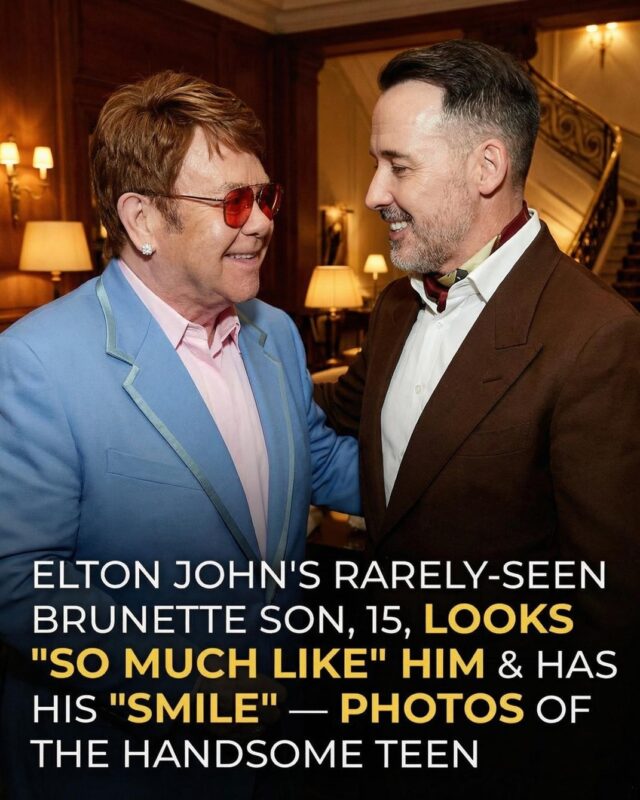
As the world welcomed a new year, a rare and heartfelt family moment quietly captured the attention of fans. Legendary musician Elton John shared a glimpse into his private life while celebrating New Year’s Eve 2026 alongside his husband, David Furnish, and their two sons, Zachary and Elijah. The celebration took place at an elegant, invitation-only gathering hosted by Donatella Versace, bringing together close friends, family, and a small circle of well-known figures. The image Elton posted on social media was simple yet meaningful, offering fans a rare look at the family he has worked so intentionally to protect from public scrutiny.
The photo, shared as part of a New Year’s Eve carousel on Instagram, showed Elton, David, and their sons dressed in formal attire, standing confidently beside their host in a beautifully decorated setting. Also present was Edward Enninful, adding to the evening’s understated glamour. While the event itself was star-studded, it was Zachary and Elijah who drew the most attention. Now teenagers, the boys appeared poised and self-assured, a contrast to the carefully guarded privacy that has defined much of their upbringing. Fans responded warmly, with many commenting on how quickly time seems to have passed and praising the family’s closeness and grace.
That admiration reflects years of respect for how Elton and David have approached parenthood. Zachary, born in 2010, and Elijah, born in 2013, have grown up largely away from the spotlight, despite their father’s global fame. Their parents have consistently chosen discretion over exposure, allowing the boys to experience a sense of normalcy. This made their appearance at the New Year’s Eve celebration especially poignant—not as a publicity moment, but as a quiet milestone that acknowledged how much they have grown. The reactions online focused less on celebrity and more on family, with fans expressing appreciation for seeing such a grounded, loving dynamic.
In recent years, Elton has spoken more openly about how fatherhood reshaped his life and priorities. That theme is explored in the documentary Elton John: Never Too Late, which reflects on aging, legacy, and the value of time spent with loved ones. In interviews, Elton has shared that stepping back from touring allowed him to focus on what matters most—being present for his sons. After decades defined by music and performance, this chapter of his life is centered on family, balance, and gratitude. The New Year’s Eve photo was more than a celebration; it was a quiet reminder that behind the accolades and achievements, the moments Elton treasures most are the ones spent at home, welcoming the future with the people he loves most.
Many people question how often they should wash their hair, especially as they grow older and begin to notice changes in texture, moisture, or scalp sensitivity. Hair and scalp needs can shift over time due to natural aging, lifestyle habits, and environmental exposure. According to dermatology professionals, most individuals benefit from washing their hair about three to five times per week. However, there is no universal rule. The primary focus should be maintaining a healthy scalp, since that is the foundation for comfortable, manageable hair and long-term hair health.
Regular shampooing plays an important role in removing excess oil, sweat, and buildup from styling products or pollution. When these substances accumulate, they can leave the scalp feeling itchy, irritated, or heavy. One common misconception is that washing too often causes the scalp to produce more oil. Experts explain that oil production is largely controlled by hormones and genetics, not by how frequently you shampoo. Waiting too long between washes can actually lead to discomfort, flaking, and a dull appearance, particularly for people who live in warm climates, wear hats often, or exercise regularly.
Choosing the right products is just as important as choosing the right washing schedule. As hair ages, it may become drier, finer, or more prone to breakage, making gentle shampoos a better option. Many dermatologists recommend mild or sulfate-free formulas for those with sensitive scalps or color-treated hair. Conditioner can be helpful for maintaining softness and reducing frizz, but it works best when applied mainly to the mid-lengths and ends. Applying conditioner directly to the scalp may weigh hair down or contribute to oiliness. For especially dry or coarse hair, a weekly moisturizing treatment can provide added comfort and manageability.
Everyday washing habits also make a meaningful difference. Using warm—not hot—water helps protect both the scalp and hair fibers. Gently massaging the scalp with your fingertips encourages cleansing without irritation, while thorough rinsing prevents leftover product residue. Avoiding heavy oils or thick styling products directly on the scalp can further support balance. Ultimately, the best hair-washing routine is one that fits your daily life and leaves your scalp feeling clean, calm, and refreshed. Listening to how your hair and scalp respond is often the most reliable guide to finding what works best for you.
Love compels parents to do extraordinary things for their children’s well-being. Celine Casey, a British mother, took remarkable steps to ensure her daughter Vienna’s...