One week after the deaths of Spencer and Monique Tepe, new information has emerged that has deepened both public concern and community grief. The Columbus couple was found inside their home on December 30, 2025, after loved ones requested a welfare check when repeated calls and messages went unanswered. What began as quiet worry quickly escalated into a heartbreaking discovery. Since then, investigators with the Columbus Police Department have confirmed the case is being treated as a homicide, while releasing limited details as forensic work and leads continue to develop. Flowers and notes left outside the home reflect a neighborhood struggling to process the loss of two people described as warm, generous, and deeply devoted to their children.
According to the Franklin County Forensic Science Center, both Spencer, 37, and Monique, 39, suffered gunshot wounds, though officials have emphasized that toxicology testing and further analysis are still underway before final conclusions are released. Investigators have ruled out a murder-suicide and have not named any suspects. Surveillance footage made public shows a person of interest walking near the home in the early morning hours, and police are urging anyone with relevant information to come forward through Central Ohio Crime Stoppers. While online speculation has grown, authorities continue to caution the public against drawing conclusions as the investigation remains active.
As the search for answers continues, attention has also turned toward the family left behind. A fundraiser launched by a relative describes Spencer and Monique as people who lived with joy and openness, whose home was often a gathering place for friends and family. The couple shared two young children, now surrounded by extended family and community support. Spencer was a respected dentist associated with Athens Dental Depot, and colleagues there noted that his failure to arrive at work on the morning of December 30 was the first sign that something was wrong. Those who knew him described his reliability as unwavering, making his silence immediately alarming.
Beyond the official updates, the case has left a lasting impact on the surrounding neighborhood and wider Columbus community. Neighbors have spoken about the unease of realizing such violence occurred on an otherwise quiet block, while friends and family have emphasized the couple’s kindness and dedication as parents. Law enforcement has acknowledged the many questions still unanswered, including how the person of interest entered the home and what motivated the crime. For now, the investigation remains ongoing, defined by careful police work, public tips, and patience. As the city waits for clarity, the story of Spencer and Monique Tepe is being remembered not only through the details of the case, but through the lives they lived and the community now determined to honor them by seeking truth, justice, and healing.
Sharon Stone has never fit neatly into Hollywood’s preferred narrative. Her career isn’t a straight line of constant wins or carefully managed reinventions engineered by studios. It’s a long, demanding arc shaped by intelligence, persistence, setbacks, and an unusual willingness to start over when the ground shifts. While many stars flash briefly and disappear, Stone has endured by adapting, questioning, and refusing to be reduced to a single moment of fame.
Born on March 10, 1958, in Meadville, Pennsylvania, Sharon Vonne Stone grew up far from the glamour she would later inhabit. Her parents lived modestly—her mother worked as an accountant, her father in manufacturing—but what stood out early was her mind. She was academically gifted, skipped grades, and entered Edinboro University of Pennsylvania at just fifteen. There, she studied creative writing and fine arts, disciplines that sharpened her analytical instincts and gave her a deep respect for storytelling. Acting, for her, was never about attention. It was about interpretation, psychology, and control.
That intellectual foundation would become one of her defining strengths. Even early on, Stone approached performance with precision. She wasn’t interested in being decorative or agreeable. She wanted to understand characters from the inside out, to find their contradictions and sharpen them rather than smooth them away.
Her entry into the entertainment world came through modeling, a pragmatic move rather than a dream fulfilled. After winning beauty competitions, she signed with Ford Modeling Agency in New York City. The work paid the bills and opened doors, but it never satisfied her creatively. Modeling was static. Acting, with all its rejection and uncertainty, offered motion and depth. By 1980, she made the deliberate pivot to film, fully aware that the path would be slow and unforgiving.
Those early years were exactly that. Stone took small roles, background parts, anything that allowed her to observe how sets worked and how scenes were built. Her first notable appearance came in Stardust Memories, followed by supporting roles in films like Irreconcilable Differences and genre projects such as King Solomon’s Mines. None of these performances made her famous, but they trained her. She learned how to hold attention even when the material was thin, how to assert presence without dominating a frame, and how to survive an industry that rarely rewards patience.
The real shift came in 1992 with Basic Instinct. As Catherine Tramell, Stone delivered a performance that was calculated, unsettling, and deliberately intelligent. The character’s power didn’t come from seduction alone; it came from control. Stone understood exactly how to weaponize stillness, silence, and gaze. The film sparked controversy, but what often got lost in the noise was the technical mastery of her performance. It wasn’t accidental. It was engineered.
Overnight, she became one of the most recognizable figures in Hollywood. But instead of leaning into repetition, Stone did something riskier: she pushed for roles that exposed fragility and chaos. In 1995, she starred in Casino as Ginger McKenna, a character built on addiction, desperation, and emotional volatility. The role demanded rawness rather than polish, and Stone delivered one of the strongest performances of her career. She won a Golden Globe and earned an Academy Award nomination, silencing any lingering doubts about her depth as an actor.
Then came the interruption no career strategy could prepare for. In 2001, Stone suffered a severe brain hemorrhage that nearly killed her. The recovery was brutal. She lost physical strength, speech clarity, and time—seven years of rehabilitation that unfolded largely outside the public eye. Hollywood, predictably, moved on. Offers dried up. Momentum vanished.
Stone did not dramatize the loss, but she didn’t ignore it either. Recovery forced her to rebuild not just her body, but her sense of self. When she returned to acting, it was on different terms. She chose roles that interested her rather than ones designed to reclaim a spotlight. Television projects like Huff and later Ratched showcased a performer with sharper restraint and deeper gravity. She wasn’t chasing relevance. She was redefining it.
Outside of acting, Stone became increasingly outspoken. She advocated for HIV and AIDS research, women’s rights, and pushed back against Hollywood’s entrenched ageism. Her public presence shifted from icon to truth-teller. In her memoir, The Beauty of Living Twice, she wrote candidly about illness, loss, recovery, and the cost of fame. The book wasn’t polished for comfort. It was direct, often uncomfortable, and deeply human.
What makes Sharon Stone’s career endure isn’t just her filmography. It’s her refusal to be simplified. She has been underestimated, overexposed, dismissed, and rediscovered, often in cycles. Each time, she adapted without erasing herself. She didn’t pretend setbacks were blessings or package resilience as inspiration. She did the work, quietly and persistently.
Her legacy is not built on perfection or consistency. It’s built on endurance, intelligence, and the courage to evolve when the old version no longer fits. Sharon Stone’s story is a reminder that longevity isn’t granted. It’s earned—through discipline, self-awareness, and the willingness to start again without apology.
Aging is a beautiful, inevitable journey – one that comes with wisdom, confidence, and a stronger sense of self. But let’s be real, dating dynamics can shift over time, and for women over 50, certain traits or habits might be perceived as “unattractive” by some men.
Does that mean you need to change? Absolutely not. But understanding these perceptions can be eye-opening and a lot entertaining. So, let’s dive into the top 10 things some men might find unappealing about women over 50 – and why they really shouldn’t matter if you’re living life on your terms.
1. Resistant to change
Some men assume that women over 50 are too comfortable in their routines, unwilling to embrace new experiences or spontaneity. But let’s flip the script: being discerning about what you like isn’t the same as being closed-minded. If you know what you want and aren’t afraid to say it, that’s a power move, not a turnoff.
Experience brings confidence, and confidence is sexy!
2. Retrospective
We all have stories, and sharing life experiences is normal. The issue? If every conversation circles back to “that one ex” or “the good old days,” it can feel like you’re mentally living in the past.
Keep the conversation balanced. Reflect on the past but focus on what’s next. Your future is just as exciting as your history.
Always remember that your past shaped you – but it doesn’t define you.
3. Appearance
There’s an outdated notion that women should keep up their appearance to stay attractive. Let’s ditch that narrative. Prioritizing health, fitness, and self-care isn’t about meeting someone else’s standards – it’s about feeling your best.
Move your body in ways you love, eat what makes you feel good, and invest in self-care that boosts your confidence.
Taking care of yourself is about you, not impressing someone else.
4. Makeup
Some men claim to prefer a natural look, but let’s be real – most couldn’t tell the difference between BB cream and full-coverage foundation. If you love a bold red lip or dramatic eyeliner, rock it. What matters most is that you feel fabulous.
Wear makeup for you. Confidence is the ultimate beauty enhancer.
5. Constant Negativity
Negativity is draining, no matter your age. A habit of constant complaining can make it tough for others to enjoy your company. That doesn’t mean you need to fake happiness 24/7, but a little gratitude and lightheartedness go a long way.
Focus on what excites you. Positive energy is magnetic.
6. Too independent
Gone are the days when women needed a partner for financial stability or validation. However, some men feel intimidated by a woman who doesn’t “need” them. The truth? Independence isn’t about rejecting relationships – it’s about wanting a partner, not needing one.
If you want a relationship, make sure your independence doesn’t come off as emotional unavailability. Let someone in – without losing yourself.
7. Insecurities about aging
Aging is a sensitive topic, especially for women who’ve been bombarded with “anti-aging” messages their entire lives. But the truth is, confidence at any age is stunning. The more you embrace your age, the more attractive you become – not just to men, but to yourself.
Shift your mindset from “anti-aging” to pro-aging. Celebrate the wisdom and beauty that come with time. Aging is a privilege, not a curse!
8. Lack of passion
Some men assume that women over 50 are less interested in romance, adventure, or intimacy. But passion doesn’t have an expiration date. If anything, experience makes love (and life) even more enjoyable.
Keep your curiosity alive. Explore new hobbies, embrace your sensuality, and stay open to adventure. Passion isn’t about age – it’s about attitude.
9. Communication
Effective communication is key in any relationship, and sometimes, years of experience can make people more set in their ways. But relationships thrive on open dialogue, not assumptions.
Be clear about what you want and listen in return. Great communication leads to great connections.
10. No time for a relationship
Having a full life is amazing, but if you’re actively looking for a relationship, leaving no space for a partner might send the wrong message.
Your time is valuable – just make room for what matters. If you’re open to love, make space for it. If you’re not, own that choice.
At the end of the day, attraction is highly subjective. Some men might be put off by certain traits, but the right person will appreciate you exactly as you are. The key isn’t changing yourself to fit someone else’s idea of attractiveness – it’s about being authentic, happy, and unapologetically you.
So, if you’re over 50 and thriving? Keep doing you. Because confidence, self-love, and a vibrant life will always be attractive – no matter your age!
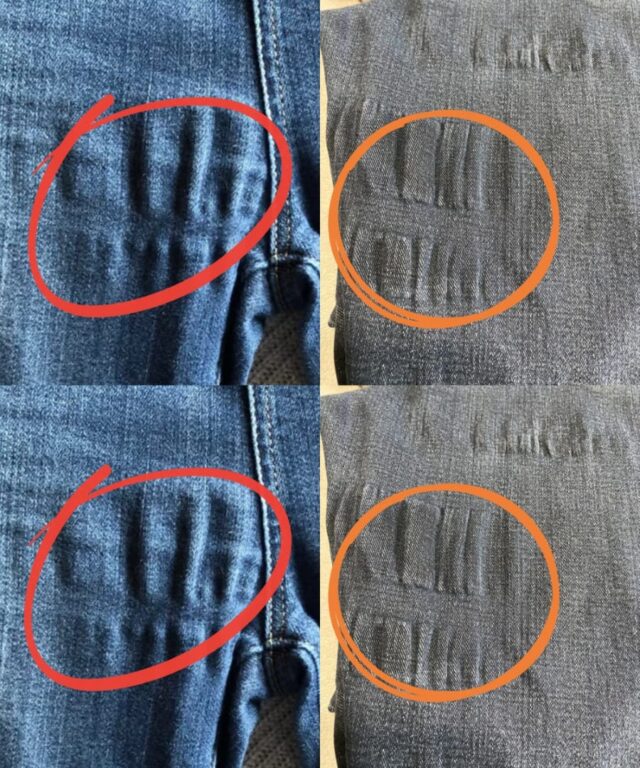
Many people notice that their jeans develop ripples, puckering, or a slightly wavy texture after washing, and this change can be confusing. In most cases, it has less to do with poor quality and more to do with how modern denim is made. Today’s jeans are rarely 100 percent cotton. Instead, they usually include a small amount of stretch fiber, such as elastane, to improve comfort and fit. While this blend makes jeans more flexible and flattering, it also makes them more sensitive to heat. Warm or hot water, along with high dryer temperatures, can weaken the stretch fibers, causing the surrounding denim to shift and lose its original structure.
Washing habits also play a major role in how jeans age. Denim is designed to be durable, but frequent washing gradually breaks down the fibers. Many people wash their jeans after only one or two wears, even when they are still clean. Over time, this repeated exposure to water and agitation can lead to uneven shrinkage. Inside the washing machine, jeans twist, fold, and stretch in different directions, especially if the load is too full. This uneven stress doesn’t always affect the entire garment equally, which is why ripples often appear in specific areas like the thighs, knees, or seams.
Another factor is how denim absorbs and releases moisture. Fabric does not always soak up water evenly, particularly when stretch fibers are involved. Some sections may swell more than others during washing, and as the jeans dry, those areas shrink at slightly different rates. If jeans are packed tightly in the washer or dryer, they may dry in awkward positions, locking in wrinkles or waves. Over time, these distortions can become more noticeable and harder to smooth out, even with ironing or steaming.
Fortunately, preventing ripples and puckering is mostly about gentle care. Washing jeans in cold water helps protect stretch fibers and reduces the risk of warping. Turning them inside out before washing minimizes friction and helps preserve the fabric’s surface. When possible, air drying is the safest option, but if you use a dryer, choose a low-heat setting and remove the jeans while they are still slightly damp. Allowing them to finish drying flat or on a hanger helps maintain their shape. Finally, avoid overloading your washing machine so jeans have room to move naturally. With these simple steps, jeans can stay smooth, comfortable, and well-shaped for years to come.
The passing of a long-serving political leader marked the close of a meaningful chapter in America’s civil rights journey. His career reflected decades of dedication to fairness, opportunity, and public service, shaped by growing up during a time when segregation and inequality were everyday realities. Rather than accepting those limitations, he worked to challenge them, helping to reshape the political landscape during a period of national transformation. His efforts focused on expanding access to opportunity, strengthening democratic participation, and ensuring that historically underrepresented communities had a stronger voice in government.
His path into public service was rooted in local activism and community organizing. Early on, he became involved in peaceful demonstrations and neighborhood initiatives aimed at addressing discrimination and economic imbalance. These experiences gave him a deep understanding of how policy decisions affect daily life, especially for working families. As he moved into larger leadership roles, he carried those lessons with him, consistently advocating for fair labor standards, workplace protections, and policies that promoted dignity and stability. He believed that civil rights and economic opportunity were closely connected, and that lasting progress required addressing both together.
Beyond his national influence, he remained deeply committed to the place he called home. He worked with labor groups, local businesses, and civic organizations to support job creation, infrastructure improvements, and community development. His leadership style was often described as direct and principled, guided by a clear sense of purpose and responsibility. While his approach earned strong opinions on all sides, it also earned respect for its consistency and focus. He took pride in mentoring younger leaders, helping them navigate public service and encouraging broader representation in political life.
Over decades in Congress, he played a key role in shaping legislation that improved working conditions and expanded protections for millions of Americans. He also helped establish a congressional caucus focused on strengthening the collective voice of Black lawmakers, creating a lasting institution within the legislative process. His legacy is defined by persistence, advocacy, and a belief in the power of public service to drive positive change. Long after his passing, the policies he supported and the leaders he inspired continue to influence the nation’s path forward. This enduring impact serves as a reminder that progress is built through sustained effort, principled leadership, and commitment to the common good—values exemplified throughout the life of Bill Clay.
Tiger Woods returned to competitive golf in a meaningful way in December 2024, sharing the experience with his two children during the PNC Championship at the Ritz-Carlton Golf Club in Orlando. The tournament, known for pairing professional golfers with family members, offered a warm and personal setting rather than a high-pressure comeback. At 48, Tiger Woods was joined by his 18-year-old daughter, Sam Woods, who stepped into a caddie role for the second consecutive year, and his 15-year-old son, Charlie Woods, who once again competed alongside his father. Together, the trio drew attention not just for their famous name, but for the genuine family bond they displayed throughout the event.
Fans watching the tournament were quick to notice how much Sam resembles her mother, Elin Nordegren, sparking affectionate conversations online. While Charlie continues to follow a competitive path in golf, Sam has chosen a different relationship with the sport. Though she grew up around golf, Tiger has shared that Sam does not aspire to compete, largely because the game once meant long stretches of time apart during her childhood. Instead, their connection has grown through shared experiences beyond the course, making her presence as a caddie especially meaningful. Her calm confidence and supportive role reflected a relationship built on mutual respect rather than expectation.
Charlie, meanwhile, delivered one of the tournament’s most memorable moments. During the final round of the PNC Championship, the teenager achieved his first-ever hole-in-one on a par-3 hole, sending the crowd into celebration. His reaction—surprised, joyful, and immediately shared with his father—captured the spirit of the event. Tiger’s pride was unmistakable as he embraced his son, later describing the moment as one of the highlights of their time playing together. For Charlie, the achievement was both exciting and humbling, adding to a growing list of milestones in his young golfing journey.
Although Team Woods ultimately finished as runners-up, the result felt secondary to the experience itself. Tiger openly acknowledged that his greatest reward was spending uninterrupted time with his children, working together as teammates. He continues to emphasize that Charlie’s path should be his own, free from comparisons and pressure, encouraging him to grow not just as a golfer but as a person. The weekend served as a reminder that while Tiger Woods’ legacy in golf is firmly established, the moments he now treasures most are rooted in family, shared joy, and watching his children grow into confident individuals—on the course and beyond.
When my father passed away, the aftermath was quiet in the way grief sometimes is—heavy, awkward, and filled with unfinished conversations. At the reading of his will, it became clear that he had left nothing of material value to my stepmother. Some relatives whispered, others laughed uncomfortably, assuming it confirmed their long-held opinions about her place in the family. She stood there composed, offering no defense, no explanation. When the gathering ended, it was obvious she had nowhere to go. Against the advice of my siblings, who warned me I would regret it, I invited her to stay with me. It didn’t feel heroic or dramatic—it simply felt like the decent thing to do.
Living together wasn’t always easy, but it was quietly meaningful. She kept mostly to herself, filling her days with small routines: early morning tea, tending to the garden, folding laundry with meticulous care. Over time, we developed a gentle rhythm. She never spoke poorly of my father or the will, never asked for help beyond what she truly needed. Instead, she offered presence—listening when I was overwhelmed, cooking meals that tasted like patience, and treating my home with respect as if it were sacred. I began to realize how little anyone had truly known her, and how quick people can be to judge what they don’t bother to understand.
Two years later, she passed away peacefully. Sorting through her room was harder than I expected. Every drawer and shelf felt like an echo of quiet kindness. While cleaning under her bed, I found a small shoebox tucked carefully against the wall. Written neatly on the lid was my name. My hands trembled as I opened it, unsure of what I might find. Inside were letters, documents, and keepsakes—each one placed with intention. There were handwritten notes thanking me for giving her a home when she felt invisible, and records showing she had quietly set aside money over the years, saving what little she could.
She had been planning all along. The box contained details of accounts she had created in my name, along with a letter explaining that my father’s will had been his choice, not hers, and that she had never wanted resentment to define the family. She wrote that kindness should never be wasted, and that love doesn’t always show up in obvious ways. Sitting on the floor, holding that box, I understood something my siblings never did: generosity isn’t measured by what you receive, but by what you give when no one is watching. In the end, the greatest inheritance wasn’t what she left behind—it was the reminder that compassion, once given, often returns in ways you never expect.
In a digital age filled with quick advice and viral trends, some safety reminders stand out because they are both simple and practical. Recently, a short video shared on TikTok by creator Mary Alice sparked conversation about a small habit that can make a difference for people who live alone. Her advice was easy to remember: when arriving home at night, avoid turning on the lights immediately. Rather than creating fear, her message focused on awareness and intentional choices. The video quickly resonated with viewers, many of whom appreciated how such a small action could offer an added sense of control in everyday situations.
The idea behind the tip is rooted in visibility. When lights are turned on right away, especially in homes or apartments that face the street, it can clearly indicate which residence someone has just entered. While this may not seem important at first, it can unintentionally reveal personal information to anyone nearby. For people returning home after dark, maintaining a bit of privacy during those first moments can be helpful. Mary Alice explained that her perspective came from a personal experience that made her more mindful of how small details can affect one’s sense of safety.
She shared that on one particular evening, she felt uncomfortable while walking home and sensed she might be drawing unwanted attention. Instead of switching on the lights as soon as she stepped inside, she paused and waited. With the exterior remaining dark, it became harder for anyone outside to tell exactly where she had gone. That brief moment allowed her to settle in before fully lighting her space. Her story encouraged others to reflect on their own routines, and many viewers commented with similar experiences, turning the video into a broader discussion about situational awareness and practical safety habits.
Personal safety experts often point out that protection is built through small, thoughtful actions rather than drastic measures. Being aware of surroundings, listening to instincts, and making intentional choices can help people feel more confident in their daily routines. Delaying the lights for a short time is not about living in fear, but about creating a buffer that allows you to feel more secure as you transition from outside to inside. Ultimately, the goal is to ensure that home remains a place of comfort and peace. Taking a few extra seconds before turning on the lights may seem minor, but it can contribute to a greater sense of safety and calm in everyday life.
A short video circulating online recently drew widespread attention, prompting many viewers to pause and look twice. The clip shows Nicolás Maduro arriving at a New York airport, accompanied by his wife, Cilia Flores. Shared widely on YouTube, the footage quickly became a topic of discussion across social media, blending global politics with the internet’s tendency to focus on unexpected details. For many observers, the moment stood out not only because of who appeared on camera, but because it marked a rare and closely watched public sighting during a period of intense international scrutiny.
What immediately caught viewers’ attention was the calm, almost casual tone of the arrival. Cameras briefly captured Flores walking nearby, a small detail that fueled curiosity and speculation online. Commentators analyzed everything from body language to facial expressions, reflecting how public figures are often examined in moments far removed from formal speeches or official settings. Reports from media outlets described the appearance as significant, noting that it was the first widely shared footage of Maduro in this context. As with many high-profile moments, the clip became less about the setting itself and more about what people believed it symbolized.
The most replayed moment came unexpectedly. As Maduro noticed the camera, he briefly raised his hand in a peace sign—a gesture lasting only seconds, yet powerful enough to dominate conversations online. Some viewers interpreted it as a sign of composure, others as symbolic messaging, while many simply described the moment as surreal. In the fast-moving world of digital media, a single gesture can take on a life of its own, reshaped by commentary, memes, and speculation. What might once have passed unnoticed instead became the defining image of the video, transforming a straightforward arrival into a viral moment.
The contrast between this footage and earlier public appearances added to the fascination. Previous images of Maduro and Flores often show them at formal events, standing before large crowds or attending cultural presentations with a polished, official presence. Seeing that familiar formality juxtaposed with candid airport footage highlighted how quickly public narratives can shift. For now, the video continues to circulate, replayed and analyzed from multiple angles. Whether it is ultimately remembered as a political footnote or a brief pop-culture moment, it underscores a modern reality: in an age of constant recording and instant sharing, even the smallest unscripted moments can leave a lasting impression far beyond their original context.
In a marketplace saturated with options, consumers rarely have the time or energy to analyze every detail before making a purchase. Decisions are often made in seconds, guided by shape, size, color, and familiarity rather than close inspection. Companies understand this reality well. Packaging is not just a container; it is a silent salesperson, engineered to signal value, quantity, and trust at a glance. When that visual signal shifts—even slightly—the consequences can be significant.
Small differences matter more than most people realize. A few ounces less product, a slightly altered container, or an opaque design choice can change how shoppers perceive value without them ever noticing why. These changes are not always accidental, and when they occur in widely trusted household brands, the impact extends far beyond a single purchase. A recent legal dispute in the spice industry illustrates how seemingly minor packaging decisions can trigger major backlash.
At the center of the controversy is a disagreement between industry giant McCormick & Company and smaller competitor Watkins Incorporated. What sparked the conflict was not flavor, sourcing, or quality, but the size of a pepper container. A change subtle enough to escape many shoppers’ notice has now become the focus of lawsuits, consumer complaints, and broader questions about corporate transparency.
The issue began when McCormick reduced the amount of pepper in one of its popular containers. What had previously held roughly eight ounces was quietly adjusted to closer to six ounces, a reduction of about twenty-five percent. Despite this significant decrease, the exterior dimensions of the container remained largely the same. On the shelf, the product still looked familiar, still looked full-sized, and still appeared to offer the same value as before.
Watkins argues that this change creates a misleading visual impression. While the quantity inside was reduced, the packaging continued to occupy the same physical space, giving consumers little reason to suspect a difference. Compounding the issue is the fact that McCormick’s containers are opaque, preventing shoppers from seeing how much product is actually inside. The only indication of the change is the net weight printed in small text, a detail many shoppers overlook.
Watkins, by contrast, sells its pepper in smaller, clear containers that allow customers to see the contents directly. According to Watkins, both brands now offer the same amount of pepper by weight, but McCormick’s packaging makes its product appear larger and more substantial on the shelf. The argument is not about legality alone, but about perception. When two products contain the same quantity but one looks bigger, consumers are naturally drawn to what seems like the better deal.
The issue began when McCormick reduced the amount of pepper in one of its popular containers. What had previously held roughly eight ounces was quietly adjusted to closer to six ounces, a reduction of about twenty-five percent. Despite this significant decrease, the exterior dimensions of the container remained largely the same. On the shelf, the product still looked familiar, still looked full-sized, and still appeared to offer the same value as before.
Watkins argues that this change creates a misleading visual impression. While the quantity inside was reduced, the packaging continued to occupy the same physical space, giving consumers little reason to suspect a difference. Compounding the issue is the fact that McCormick’s containers are opaque, preventing shoppers from seeing how much product is actually inside. The only indication of the change is the net weight printed in small text, a detail many shoppers overlook.
Watkins, by contrast, sells its pepper in smaller, clear containers that allow customers to see the contents directly. According to Watkins, both brands now offer the same amount of pepper by weight, but McCormick’s packaging makes its product appear larger and more substantial on the shelf. The argument is not about legality alone, but about perception. When two products contain the same quantity but one looks bigger, consumers are naturally drawn to what seems like the better deal.
Judge Sarah B. Wallace presides over the final day of a hearing for a lawsuit to keep former President Donald Trump off the state ballot in court Friday, Nov. 3, 2023, in Denver. (AP Photo/Jack Dempsey, Pool)
For consumers, the effect is both financial and psychological. Most shoppers rely on visual cues to assess value, especially for everyday items like spices. A taller or wider container signals abundance, even when that signal is no longer accurate. When McCormick and Watkins products sit side by side, the visual comparison favors the larger-looking container, despite equal contents. Over time, these small misjudgments add up.
McCormick’s defense rests on technical correctness. The company points out that the net weight is clearly printed on the label and that consumers are responsible for reading it. From a legal standpoint, that argument carries weight. From a practical standpoint, critics say it ignores how people actually shop. Brands invest heavily in design precisely because they know consumers do not study labels line by line. Visual impression is not an accident; it is the point.
The dispute escalated when McCormick customers filed a class action lawsuit, claiming they were misled by the packaging change. These customers argue that they continued buying the product under the assumption that it contained the same amount as before. The case has moved into federal court, where judges will have to consider not just what is technically disclosed, but whether the overall presentation creates a deceptive impression.
Beyond the courtroom, the situation highlights a deeper issue: trust. Brands like McCormick are built over decades, often passed down through generations of households. That trust is fragile. When consumers feel tricked, even subtly, the damage can linger long after the legal arguments fade. A company may win a case and still lose goodwill.
This is why the dispute resonates beyond the spice aisle. It reflects a broader tension between corporate optimization and consumer expectation. Shrinkflation, redesigns, and quiet quantity reductions have become increasingly common across industries. Each individual change may seem minor, but collectively they erode confidence. Consumers begin to question not just one product, but the brand as a whole.
The McCormick and Watkins case serves as a reminder that transparency is more than fine print. Honest communication requires aligning what a product looks like with what it actually delivers. When presentation and reality diverge, even slightly, people notice eventually. And when they do, the response is rarely forgiving. In a world where trust is already in short supply, the smallest differences can make the biggest impact.
Love compels parents to do extraordinary things for their children’s well-being. Celine Casey, a British mother, took remarkable steps to ensure her daughter Vienna’s...