Entertainment

Surprising reason men have hands down their pants in public

Men lounging with a hand down their pants isn’t just a frat-boy move – it’s a bizarrely common habit seen everywhere from couches to crosswalks.

While it might earn a few side-eyes, this ball-cupping behavior is surprisingly normal.

For many men, putting their hands down their pants is as automatic as checking their phone. It doesn’t necessarily mean anything is wrong or inappropriate. In fact, as bizarre as it might look from the outside, the reasons behind it are rooted in biology, psychology, and plain old comfort.

Warm and cozy

In a popular subreddit called Ask Men, one user asked why her male friends constantly had their hands in their pants, and the responses came pouring in. One said it was “warm down there,” while a second suggested it’s “comforting to lightly massage.”

A third explained that “it’s cozy and makes them feel all safe.” And another joked: “They’re very insecure about their masculinity, so they need to reassure themselves that they still have a penis.”

A few even admitted they barely even noticed they were doing it.

Calming

Psychotherapist Lisa Spitz said the habit is often subconscious and often “self-soothing.”

“I would say that some men touch their genitals mostly as an unconscious act of self-soothing, like checking themselves is an act of masculinity and making sure everything is in its place, a calming technique or even displacement of genitalia,” she told Cosmopolitan.

Meanwhile, Dr. Babak Ashrafi, a general practitioner with Superdrug Online Doctor and a specialist in sexual health, agreed that “some men may engage in this behaviour absentmindedly or as a coping mechanism.”

“Rubbing certain parts of your body in a non-sexual way releases oxytocin, a calming hormone which reduces nerves,” Dr Ashrafi told Cosmopolitan, before adding: “Just don’t do it during your work presentation.”

Adjustment

Beyond psychology, the experts say that sometimes, it’s about plain and simple adjustment.

As Ashrafi explains, men might experience discomfort caused by friction or shifting in the genital area, especially if their underwear is too tight or bunches in awkward places.

“Men may need to adjust their genitalia for comfort. This is a routine, physiological response to discomfort caused by friction or shifting of the genital area. Maybe their boxers are too tight, or they just need to readjust downstairs,” the doctor said.

Itchy

Other times, there’s a medical reason. Skin irritation, fungal infections, or general itching can cause men to unconsciously touch or scratch the area. While not exactly a polite dinner party move, it can be a quick fix for minor discomfort.

“Medical conditions such as fungal infections or irritation can lead to itching or discomfort in the genital region. Men may put their hands down their pants to relieve this itching or discomfort,” Ashrafi said.

Of course, if the scratching seems excessive, it could be time to gently suggest a trip to the doctor.

Climate control

Temperature regulation is another surprisingly valid reason.

Dr. Ashrafi explains that the genital area is extremely sensitive to temperature shifts, and men may instinctively use their hands to warm things up or cool things down.

“The genital area is sensitive to temperature changes, and men may adjust their hands or genitals to regulate temperature. This could be due to feeling too hot or too cold in that area, which in turn can cause further discomfort,” the doctor shared.

Self-protection

But according to Men’s Health, there’s another possible reason: self-protection.

Vanessa Van Edwards, body language expert and author of “Human Lie Detection” and “Body Language 101” told the outlet that guys may do it instinctively as a way to shield their most vulnerable parts.

“You could think of the hand there like insurance against a friend who might give them a nut jab or a kid who accidentally hits a ball at them,” she said.

It’s not paranoia – it’s just being prepared.

So, the next time you see a guy casually parked with one hand down his pants, don’t be too quick to judge. Remember that they aren’t just randomly fondling themselves in public – they’re regulating stress, maintaining comfort, and maybe even staying safe.

Why do you think men are frequently caught with their hand in their pants? Please let us know your thoughts and then share this story so we can get the conversation started!

The true story about the ‘Angelina Jolie-lookalike’

We’ve written a lot in the past about people who would do anything to achieve their dream look.

Suffice it to say that Sahar Tabar from Teheran has taken things one step further.

The Iranian Instagrammer, who calls herself Sahar Tabar, gained massive online fame and caused quite the stir after sharing some pictures of herself back in 2017. The photos Shahar shared were drastically different from anything you normally see online – and shocked a lot of people.

According to Turkish media, she’s had more than 50 plastic surgeries, as well as lost 90 pounds in order to obtain the look she wants.

More than 400,000 people soon started following Sahar’s transformation on Instagram – and she made sure to keep everyone updated on her progress.

As she became world-famous, a local newspaper wrote that Sahar Tabar had only one dream with her transformation: To look like the actress Angelina Jolie.

But according to Sahar, whose real name is Fatemah Khishvand, that was never her goal. The Angelina rumor was not true; it wasn’t her intention to look like the Hollywood megastar. Others thought Sahar looked like Emily the Corpse Bride, a character in Tim Burton’s stop-motion movie Corpse Bride.

“I had no interest at all to be like Angelina Jolie, and I did not want to look like the character from “Corpse Bride”. I understand that I do have some similarities with them, but I am my own muse and I did not want to look like anyone. That was not my aim,” Sahar told Sputnik News in 2017.

Sahar also said that her photos were a form of art and that she loved playing with makeup and photo editing. Over the years, she has done Rhinoplasty, Botox for lips, and liposuction operations.

Iran has a thriving plastic surgery industry – the country has the highest rate of nose surgery in the world. It’s been very popular with young Iranians for decades, and for Sahar, who dreamed of becoming famous, it was easy to turn to cosmetic surgery for attention. Even though her mom hated it, Sahar persisted in building her Instagram fame.

“I don’t see anything bad in this. It’s simple and many people around the world do it. Here in Tehran the cost of one operation is 10 million Iranian rials ($283),” Sahar said.

She posted one extreme picture after another, and her following only grew. Finally, some of the most prominent newspapers in the world picked up her story, and Sahar became a massive name in her home country.

“People react normally when I appear in the city. They recognize me, call out my name, talk to me and hug me. They support me and I don’t feel any negativity from them,” she said in 2017.

Of course, some were of the opinion that Sahar had gone too far with changing her appearance. Many thought she looked much better before all the surgeries.

“For me the most important thing is to have the acceptance of my family and God. I have those and that is enough for me. Opinions from the rest of the world are not important, I ignore their negativity,” Sahar explained.

But it seems the Iranian regime and lawmakers were less pleased with Sahar and her newfound celebrity status.

In October 2019, she was arrested and put on trial. Her Instagram account was deleted and she was accused of “corruption” and “blasphemy”. In December 2020, she was sentenced to 10 years in prison.

An Iranian human rights activist, Masih Alinejad, then called out for help.

“Sahar Tabar is only 19. Her joke landed her in jail.

“Her mother cries every day to get her innocent daughter freed. Dear Angelina Jolie, we need your voice here. Help us.”

Then something unexpected happened. After just 14 months, Sahar was released from prison. Right now is a turbulent time in Iran, with widespread protests triggered by the death of Mahsa Amini. That may have prompted the regime to release Sahar earlier. According to Sahar, the judge had agreed to convert the arrest order into a bail order.

Sahar’s official Instagram account, @sahartabar_official, is still deactivated but there are several other social media accounts that still post old and new pictures of her.

After being released from jail, Sahar made a TV appearance and showed her natural face. She revealed that she had undergone several cosmetic procedures – but confessed and said that many of the infamous images that made her famous resulted from make-up and editing in Photoshop.

I’m not one to judge others. People are free to be who they want to be and look however they want to be.

In Sahar’s case, it seems there’s a lot more to the story than just some eyebrow-raising pictures, and I really hope she is out of trouble for them now!

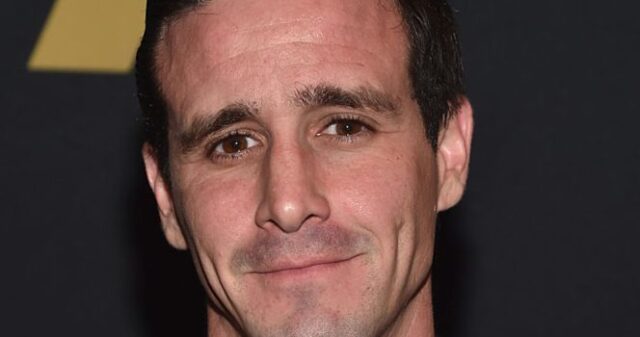
Actor James Ransone takes his own life aged 46 as police release new details

Actor James Ransone, best known for his unforgettable role as Ziggy Sobotka on The Wire, has died at the age of 46.

Authorities in Los Angeles confirmed that Ransone was found unresponsive at a property in the Fairfax area on Friday afternoon, December 19.

Police were called to the scene shortly after 2 p.m. Officers reported no signs of foul play, and the Los Angeles County Medical Examiner’s Office is handling the case. His death was later ruled a suicide.

Born in Maryland, Ransone discovered acting at a young age after struggling to fit in at traditional public schools. Ransone was the son of Joyce and James Finley Ransone II, who served as a Vietnam War veteran.

”My dad was a Green Beret and he got shot in Vietnam. He had to come home. It really affected him and it still affects him to this day. I only saw the bad parts because that’s my dad,” Ransone once told Interview Magazine.

As a young boy, Ransone attended the Carver Center for Arts and Technology in Towson, an experience he would credit with changing, and even saving, his life.

“I did not fit in well with all of the kids,” he once said. “Adolescence was a really hard time for me — as I think it is for most kids.”

Reflecting on his move to an arts school, he added: “I think it saved me as a kid. Going to arts school saved me.”

Several acclaimed horror films

Ransone went on to build a career marked by intensity and vulnerability, becoming a familiar face on television and in film. In addition to The Wire, he appeared in several acclaimed horror films, including Sinister, The Black Phone, and It: Chapter Two, where he played adult Eddie Kaspbrak alongside Bill Hader, Jessica Chastain, and Bill Skarsgård.

A passionate defender of the horror genre, Ransone often pushed back against claims that it lacked artistic merit, once telling critics to “tell that to William Friedkin or Stanley Kubrick.”

In the popular HBO series Generation Kill, Ransone played Corporal Josh Ray Person. The series is based on Evan Wright’s 2004 book about his time embedded with a U.S. Marine unit during the 2003 Iraq invasion.

”It’s still a highlight of my life – and not just the show. Living in Africa (the series was shot there), being around the dudes who were being written about—since my dad is a Vietnam vet. Being around these marines who had fought in war and they were young, I got to see some version of my dad as a young man,” Ransone shared.

Off screen, Ransone spoke candidly about his struggles. He was open about his battles with addiction, revealing that he became sober at 27 after years of heroin use. In May 2021, Ransone wrote on his Instagram account that he had been sexually abused by his math tutor in 1992. He chose to speak publicly in hopes of helping others feel less alone.

Following news of his death, The Wire creator David Simon paid tribute, calling the loss “grievous and awful.” In a statement, Simon wrote that Ransone committed not only to his craft, but also “to the camaraderie that turns every good film production into something familial and caring.”

James Ransone is survived by his wife, Jamie McPhee, and their two children. In the wake of his passing, McPhee shared a fundraiser benefiting the National Alliance on Mental Illness, honoring his legacy and the causes he cared deeply about.

Trump sparks buzz after sharing bizarre detail about Melania’s panties

President Donald Trump left little to the imagination during a recent campaign rally after making an unexpected — and deeply personal — remark about First Lady Melania Trump.

“I had these animals trying to attack me..”

The 79-year-old president spoke to supporters in Rocky Mount, North Carolina, on Friday, December 19, covering his administration’s policies and the economy ahead of the 2026 midterms.

During the 90-minute event, which he dubbed a “quick little stop” on his way to Mar-a-Lago for the holidays, Trump periodically addressed economic issues.

However, what started as a routine political speech soon took an unexpected turn.

While revisiting the FBI’s 2022 search of his Mar-a-Lago estate, Trump abruptly shifted from discussing the investigation to sharing details about his wife’s wardrobe, specifically, her underwear.

Referring to the FBI search of his Florida property, he said, “I had these animals trying to attack me at Mar-a-Lago.”

Recounting the raid on the Palm Beach estate, Trump also told the crowd: “They went into my wife’s closet … they looked at her drawers.”

He then went on to emphasize just how meticulous Melania is, describing her organization habits in unusually vivid detail.

“Her undergarments, sometimes referred to as panties, are folded perfect, wrapped. They’re, like, so perfect.”

Trump didn’t stop there, adding another detail that drew audible reactions from the audience: “I think that she steams them.”

Describing what he called unnecessary disruption during the search, Trump said:
“She opened the drawers and it was not that way,” he said. “They were a mess. It was all over the place. And she said, ‘Oh, what happened? That’s so terrible.’”

Most talked-about part of the rally

The moment quickly became one of the most talked-about parts of the rally, with many stunned that a discussion about federal investigations had somehow led to commentary on the first lady’s laundry routine.

The FBI search took place in August 2022 as part of a criminal investigation into the handling of presidential records. Earlier that year, the National Archives and Records Administration (NARA) revealed that 15 boxes of documents had been removed from the White House and stored at Mar-a-Lago, despite federal rules requiring all official records to be returned at the end of a presidency.

Following the raid, the search warrant and property receipt were made public, showing investigators were looking for evidence related to possible obstruction of justice, destruction or concealment of records, or violations of the Espionage Act.

During the search, agents recovered 11 sets of classified materials, including documents marked “top secret,” which are typically restricted to secure government facilities.

In June 2023, Trump was indicted by a federal grand jury over the alleged mishandling of classified documents, making him the first former U.S. president to face federal criminal charges. He was arrested and arraigned in a Florida federal court, where he pleaded not guilty.

Although additional charges were later filed, the case was ultimately dismissed in July 2024.

His Final Walk Into Legend!!

They built the night to celebrate him, but no one was prepared for what it felt like when he finally stepped into the spotlight. The room had been buzzing in that self-important way award galas always do—too much perfume, too much champagne, too many people pretending they’re not terrified of being forgotten. Then the doors opened, the murmurs thinned, and a single man in a black tuxedo walked in with the deliberate, fragile steadiness of someone who’d made peace with gravity.

That was the moment everything changed.

The spectacle they’d rehearsed—the glowing set, the flawless camera cues, the polished jokes—suddenly felt ridiculous next to him. He didn’t need choreography. He didn’t need staging. His presence alone crushed the noise of an industry obsessed with youth and reinvention. You could practically feel the crowd shrinking, straightening, recalibrating. People who’d spent years chasing relevance found themselves hoping he wouldn’t disappear before they had the chance to applaud him properly.

He moved slowly, each step measured, as though he were rationing the strength he had left. The tux didn’t hide the tremor in his hand, and the lighting didn’t soften the reality: this wasn’t a triumphant return. It was a final appearance. A deliberate goodbye.

But he never played the victim.

He didn’t limp for sympathy or milk the moment for sentiment. He stood tall enough to remind everyone that legends don’t need perfection to be monumental—they just need truth. And the truth was right there on his face: exhaustion, pride, pain, stubbornness, and that faint, weary smile that said he knew exactly what everyone was thinking and refused to let them grieve prematurely.

Phones came out. Cameras zoomed. Producers leaned forward in their seats. Even the people who had spent years dismissing him as “past his prime” felt the punch of seeing someone who had given everything—every muscle, every breath, every piece of himself—to a craft that never gave the same in return.

No scripted tribute could have matched the raw electricity in that moment.

He didn’t give a speech. He didn’t need to. The weight of his silence was enough. His body, thinner now, carried decades of stories—roles that broke him open, performances that rearranged people’s lives, battles fought off-screen with health, aging, and the brutal spotlight that never dims for a man once labeled irreplaceable.

When the applause started, it wasn’t the usual manufactured roar. This was something desperate, almost frightened. People clapped like they were trying to keep him alive through sheer force of appreciation. The sound shook the rafters. It drowned out the whir of the cameras. It carried everything that words couldn’t: gratitude, guilt, love, fear, and a quiet acknowledgment that they were witnessing the end of something that wouldn’t come again.

Later, when the video hit the internet, the reaction fractured the way everything does now. Some slowed the footage to study the strain in his walk. Some argued about his health. Some insisted he looked better than expected. Memes sprouted, tributes poured in, and strangers on social media debated what they believed they saw. But all the noise still pointed back to a single undeniable truth: authenticity hits harder than spectacle.

What he showed on that stage wasn’t weakness. It was a man refusing to disappear quietly. A man who knew his legacy didn’t depend on one night, one award, or one speech. It depended on showing up—one last time—with dignity intact and ego stripped away. It depended on letting people see the cost of greatness, the toll of decades spent pouring everything into a world that claps for you and then forgets you when the next star rises.

And the people in that room felt it. That’s why they stood longer than they should have. That’s why the applause swelled until it sounded like grief. That’s why even the cynics blinked back tears. They weren’t cheering for a performance. They were cheering for a life lived in service to a craft that can consume you if you’re not careful.

When he finally turned to leave, it felt like a slow tear in the night. He didn’t wave dramatically. He didn’t look back for approval. He just walked offstage, steadying himself with the quiet pride of someone who had given everything he had left and expected nothing more in return.

Once he was gone, the room didn’t snap back to normal. It couldn’t. Something had shifted. The air felt thinner. The stage looked too big. The people in it felt too small. They’d all just witnessed a man take his place in his own mythology—not through triumph, but through truth.

And years from now, long after the gossip fades and the headlines are forgotten, people will remember exactly how they felt watching him take that final walk. The rise of goosebumps. The tightness in the throat. The silent, shared understanding that they were watching a legend say goodbye without ever speaking the word.

Not everyone gets to choose their last moment in the spotlight.
He did.

And he turned it into something unforgettable.

This house looked like it was about to fall into itself until one family stepped in!

In the realm of architectural preservation, there are stories that defy the logic of spreadsheets and renovation budgets, existing instead in the realm of pure passion. One of the most legendary of these tales is the “heroic rescue” of the Hench House in York, Pennsylvania.

Built in 1887 during the height of the Industrial Revolution, this Queen Anne Victorian had survived the turn of two centuries, only to face a death sentence in the early 2000s. Abandoned, crumbling, and condemned by local authorities, the house was considered a “big ruin” so dangerous that most people wouldn’t even step onto its rotting porch. Yet, where others saw a pile of debris, Jim and Jean Leaman saw a masterpiece waiting to be rediscovered.

The Hench House, located at 505 Linden Avenue in the historic “Avenues” neighborhood, was a shell of its former self when the Leamans intervened in October 2006. Decades of neglect had allowed the elements to wreak havoc; a quarter of the roof had been missing for years, allowing rain and snow to pour directly into the structure’s core. The result was a cascading failure of ceilings and walls. Termites had claimed much of the frame, and the attic had become a sanctuary for a family of opossums. The house was hidden behind towering, overgrown maple trees, looking very much like it was about to fall into itself. Most residents expected a wrecking ball, but the Leamans—a retired couple with a deep-seated love for York’s historic charm—decided to buy the ruin and embark on a journey that would consume the next five years of their lives.

To understand the scale of their dedication, one must look at the “day in, day out” nature of the work. The Leamans were not wealthy developers; they were hands-on preservationists who performed a significant portion of the labor themselves. Their mission was not just to fix the house, but to restore it to its original 1880s splendor with absolute historical accuracy. This meant stripping away decades of “modern” additions—removing 1930s-era Greek columns that weren’t original and replacing them with period-correct pocket doors salvaged from architectural warehouses. They even went as far as installing magnetic Plexiglas storm windows on the interior so as not to mar the intricate exterior aesthetics.

The transformation of the exterior alone is breathtaking. Once a gray, decaying ghost, the house now stands as a beacon of Queen Anne design, painted in a vibrant palette of historically accurate colors. The intricate woodwork, gables, and ornate finishes have been meticulously restored, inspiring neighbors to follow suit and sparking a “snowball effect” of revitalization throughout the Avenues. The Leamans’ work was so transformative that the Hench House was eventually chosen to grace the cover of the definitive guide, Restoring Your Historic House, by Scott T. Hanson, who described the project as one of the most dramatic “before and after” examples in the country.

However, it is the interior of the home—now affectionately known as “The Lady Linden”—that truly leaves visitors breathless. Stepping through the front door feels less like entering a house and more like stepping onto a film set, with a magical, “Harry Potter-esque” atmosphere. The grand staircase and soaring ceilings create a sense of scale that is rarely seen in modern construction. The flooring is a masterclass in Victorian craftsmanship, utilizing five different types of wood to create intricate patterns. Throughout the day, the house is illuminated by a “rainbow of colors” as light pierces through restored stained-glass panels, casting kaleidoscopic patterns across the restored family room.

Each of the five bedrooms on the second floor has been uniquely decorated to tell its own story. The Leamans filled these rooms with period-accurate antiques, including a 19th-century Weaver organ and family heirlooms, creating a warm and inviting atmosphere that bridges the gap between a museum and a home. Perhaps the most charming detail is found at the very top of the house: a small, sun-drenched room in the attic that serves as a perfect office or retreat, offering a quiet view over the neighborhood that the couple fought so hard to save.

Beyond the aesthetics, the Leamans modernized the “bones” of the structure to ensure it would stand for another 130 years. They replaced every inch of plumbing and wiring and installed a comprehensive interior and exterior sprinkler system—a rare and expensive safety feature for a private residence. Their dedication was fueled by a desire to connect their future guests to the history of York. After the restoration was complete, they opened the Lady Linden as a bed and breakfast, using the house as a tool to encourage visitors to explore the city’s downtown and appreciate its architectural heritage.

The story of Jim and Jean Leaman is a powerful reminder that “anything is possible” when vision is backed by determination. They didn’t just save a house; they saved a piece of American history. In April 2019, the Leamans eventually passed the torch to new owners, but their legacy remains etched into every piece of natural wood stripped by hand and every Victorian-style wallpapered ceiling. The Lady Linden stands today not as a ruin, but as a “magical place” and a stunning showpiece that proves even the most neglected structures can be restored to glory with enough love and hard work.

After My Surgery, I Found a Bill for Expenses of Taking Care of Me Taped to the Fridge – So I Taught My Husband a Lesson in Return!

For seven years, Rachel believed her marriage was a masterclass in stability. She and Daniel had constructed a life that felt architecturally sound: a house with a porch swing, two reliable incomes, and a shared vocabulary of “someday” when it came to children. Daniel, an accountant by trade, was the guardian of their order. Rachel had always found his rigidity endearing, viewing his penchant for spreadsheets and itemized budgets as a sign of a man who cared deeply about their security. She called him “detail-oriented” with a fond smile, never realizing that the same precision used to manage their mortgage could one day be weaponized against her heart.

The collapse of their “someday” happened with brutal swiftness. A series of routine checkups escalated into an emergency hysterectomy. The physical trauma of the surgery was compounded by a profound existential grief: complications had ensured Rachel would never carry children. The names they had whispered over morning coffee and the future they had mapped out vanished into a sterile hospital room. Daniel’s initial reaction was the picture of support. He spoke the right words, promising that their bond was the only foundation they truly needed. Rachel clung to those promises like a life raft, unaware that beneath his comforting facade, Daniel was already opening a new ledger.

Three days after the operation, Rachel managed to shuffle into the kitchen, her body still screaming from the surgical incisions. She was looking for a moment of normalcy—a cup of tea or a ray of sunlight. Instead, she found a piece of paper taped to the refrigerator door. At first, she thought it was a recovery plan or a grocery list. But as she leaned in, the words began to blur with the sheer absurdity of their content. It was an itemized invoice, written in Daniel’s neat, professional script, titled: “Expenses of Taking Care of You – Please Reimburse ASAP.”

The list was a cold, calculated autopsy of their recent days. Daniel had billed her $120 for driving her to the hospital. He had charged $75 a day for helping her shower and $50 per meal for cooking basic soup. He even included a $300 surcharge for a “missed poker night” and, most devastatingly, a $500 fee for “emotional support and reassurance.” The total due, circled in red like a delinquent utility bill, was $2,105.

Standing in the quiet of her kitchen, Rachel felt a pain that bypassed her nerves and hit her soul. This wasn’t a joke; it was the ultimate betrayal of the marital covenant. Daniel hadn’t seen her recovery as an act of love, but as a series of billable hours that had disrupted his personal economy. Something inside Rachel—a softness she had carried for seven years—hardened into a diamond-sharp resolve. If Daniel wanted to treat their marriage as a business transaction, she was about to show him that he was vastly underestimating the cost of operations.

For the next month, Rachel became a meticulous auditor of her own life. While she continued to heal, she opened a spreadsheet that documented seven years of “unpaid labor.” She didn’t just track the present; she went into the archives. Every meal she had prepared over nearly a decade was billed at a chef’s private rate. Every shirt she had ironed, every grocery run she had managed while fatigued, and every social event she had coordinated for his family was assigned a market value.

She dug deeper into the “emotional labor” sector. She charged $75 per session for “therapeutic listening” whenever he complained about work. She added a flat fee of $150 for “conflict mediation” regarding his mother’s passive-aggressive comments. Finally, she added a retroactive section for “conjugal duties,” calculated at a standard rate for seven years, though she dryly noted a “friends and family discount.” By the time she hit “save,” the ledger showed that Daniel owed her $18,247 in back payments.

On a rainy Saturday morning, the confrontation finally arrived. Daniel was sitting at the table, casually scrolling through his phone, when Rachel placed a professional manila envelope next to his coffee. It was stamped with “FINAL NOTICE” in bold red ink.

As Daniel read through the pages, the color drained from his face. The smugness of his accounting background vanished as he saw his own logic turned against him. When he stammered that the list was “ridiculous” and “insulting,” Rachel didn’t flinch. She pointed out that he was the one who had set the precedent. By billing her for his compassion during her most vulnerable moment, he had redefined their marriage as a service-level agreement. She asked him a single, piercing question: “Do you really want to live in a house where every kiss and every bowl of soup has a price tag?”

The silence that followed was heavy with the weight of his shame. Daniel eventually crumpled his original invoice into the trash, whispering an apology that seemed to encompass both his greed and his cowardice. He admitted that he had felt overwhelmed by the “cost” of her illness—not just the money, but the time and the emotional weight—and had tried to regain control by putting it into a spreadsheet.

Rachel didn’t offer him immediate absolution. She informed him that while she wasn’t leaving, she was also no longer a line item in his book. She demanded couples therapy and made it clear that her presence in the house was a gift, not a debt. She told him that marriage is about the things you give that can never be repaid, and that if he ever attempted to “call in” a debt of love again, the next invoice he received would be from a divorce attorney.

From that day on, the refrigerator remained clear of invoices. Daniel finally understood that some prices are too high to pay, and that the cost of being “right” is often the loss of the person you love. Rachel had taught him the most important lesson in accounting: the things that truly matter are the ones you can’t put a price on.

This Child Grew Up To Be One Of The Most Evil People In The World!!

The girl in the faded childhood photograph looks harmless, even sweet — wide-eyed, small-framed, and unaware of the darkness waiting for her. But she would grow into one of the most infamous female serial killers in American history, a woman whose life spiraled from early trauma into violence that shocked the nation.

Born in 1956 in Rochester, Michigan, she entered the world already marked by chaos. Her father, a man with a long record of violent and sexual offenses, was sentenced to life in prison for kidnapping and raping a seven-year-old girl. Not long after receiving that sentence, he died by suicide behind bars. Her mother disappeared soon after, leaving the little girl and her brother abandoned before they were old enough to understand what was happening.

The children were taken in by their maternal grandparents. Any hope of stability died quickly. The girl later alleged that her grandmother drank heavily and that her grandfather physically and sexually abused her repeatedly throughout her childhood. She grew up in a home soaked in fear, instability, and secrets — a breeding ground for future tragedy.

At just fourteen years old, she became pregnant after being raped, and rumors circulated for years that the father of her child may have been her own brother. She gave birth to a baby boy and placed him for adoption immediately, believing it was the only chance he had at a decent life. Before she could legally drive a car, she had already endured more loss and trauma than most people face in a lifetime.

When her grandmother died, she dropped out of school and survived by selling her body on the streets. It wasn’t a choice — it was survival. Between 1970 and 1980, her life unfolded like a police blotter: arrests for disorderly conduct, drunk driving, assault, shoplifting, and prostitution. She was constantly drifting, constantly scraping by, constantly fighting. Her brother died in 1976, and her grandfather ended his own life not long after. Each loss pushed her further off the rails.

Eventually she hitchhiked to Florida, hoping distance might reset her life. Instead, she plunged deeper into instability. In 1982, she was arrested for armed robbery and served time. By then, she had already attempted suicide six times between ages fourteen and twenty-two. Mental illness, trauma, and poverty were carrying her toward a breaking point.

Florida was where her story took its final, violent turn.

Working as a prostitute along highways and truck stops, she met Richard Mallory, a 51-year-old electronics store owner. The two ended up together in a secluded wooded area outside Daytona. What happened next would become the center of national debate. She shot Mallory three times, leaving his body to be discovered two weeks later.

She initially claimed they argued over money. Later, she testified that Mallory assaulted her, beat her, and raped her before she fought back in self-defense. Her story was complicated by the fact that Mallory had a history of sexual violence — something that would only become public after her conviction. But by then, the narrative was set: a dangerous drifter had killed a man.

What no one yet knew was that she would soon confess to killing seven more men.

Between December 1989 and November 1990, her trail of victims stretched across Florida. All were middle-aged white men. Some were construction workers, one a rodeo hand, one a retired police chief, one a truck driver. The pattern was the same: she met them while prostituting, claimed they attempted to assault her, and shot them in what she insisted was self-defense.

But the sheer number of bodies and the consistency of the circumstances overwhelmed her claims. Police linked the murders through ballistics and stolen items. Her confession calls — emotional, frantic, and contradictory — sealed her fate.

She was charged with six counts of first-degree murder. One victim’s body was never found, though she admitted to killing him as well. Ultimately, she received six death sentences.

Her name was Aileen Wuornos.

Dubbed the “Damsel of Death,” she became a media obsession. Her life story — the abuse, the homelessness, the violence — was picked apart, sensationalized, and debated endlessly. Was she a predator? A victim of lifelong trauma who snapped? A woman fighting for her life on the margins of society? Psychologists pointed to severe mental illness, untreated trauma, and years of instability. Prosecutors painted her as a cold-blooded killer.

On October 9, 2002, at age forty-six, Aileen Wuornos was executed by lethal injection. In her final years, she vacillated between claiming self-defense and expressing rage and paranoia. To some, she was a monster. To others, a tragic product of abuse and neglect. To most, she remained an unsettling reminder of what can emerge from a childhood steeped in pain.

In the end, the little girl in the picture didn’t stand a chance. The world failed her long before she ever laid a hand on anyone — and by the time she became infamous, there was no path left back to who she might have been.

A Hollywood Actor’s Real-Life Story Beyond the Screen

For many fans of 1980s cinema, Andrew McCarthy was more than just an actor—he was a symbol of quiet sensitivity and youthful longing. With his soft-spoken presence and thoughtful gaze, he stood apart from louder Hollywood personalities and became a defining face of a generation. Films like Pretty in Pink and St. Elmo’s Fire turned him into a household name almost overnight. Yet behind the posters and magazine covers, McCarthy’s rise to fame was anything but smooth. Thrust suddenly into the spotlight, he found himself unprepared for the pressures of success and uncomfortable with the attention that came with it, even as audiences embraced him.

Born and raised in New Jersey, McCarthy’s early life was far removed from Hollywood glamour. He discovered acting as a teenager while feeling disconnected from his peers, eventually enrolling at New York University to study the craft. That path was cut short when he struggled academically and left school, only to land his breakout role in the film Class through an open casting call. The role unexpectedly launched his career and opened doors across the industry. As the decade progressed, McCarthy became closely associated with the so-called “Brat Pack,” a label that brought fame but also stereotypes he never felt comfortable carrying. While his career flourished on screen, privately he wrestled with insecurity and turned to alcohol as a way to manage anxiety and self-doubt.

By the late 1980s, the disconnect between his public image and private reality became impossible to ignore. McCarthy recognized that his reliance on alcohol was taking a toll and made the difficult decision to step away and seek help. Recovery was not instant, but it marked a turning point that reshaped his life and career. Gradually, he moved away from leading-man roles and began exploring work behind the camera, directing episodes of popular television series such as Orange Is the New Black and Gossip Girl. This shift allowed him to stay creatively engaged while working in a way that better suited his temperament and values.

In recent years, McCarthy has reinvented himself yet again—this time as a writer and storyteller beyond film and television. He found a passion for travel writing, contributing to respected publications like National Geographic Traveler and Men’s Journal, and earning recognition for his work. Today, he balances directing, writing, and family life in New York, far removed from the intense spotlight of his youth. While fans still celebrate his iconic roles, McCarthy himself looks forward rather than back. His journey—from teen idol to thoughtful creative—stands as a powerful reminder that lasting success is not defined by early fame, but by growth, resilience, and the courage to build a meaningful second act.

Nine People Lose Their Lives in Shooting Incident Near Johannesburg

A tragic shooting incident near Johannesburg has left nine people dead and at least ten others injured, once again highlighting concerns about violent crime in South Africa. The incident took place shortly before 1 a.m. local time outside the Kwanoxolo bar in Bekkersdal, a township located roughly 28 miles west of the country’s largest city. Authorities confirmed that several victims were transported to nearby medical facilities, where they are receiving treatment. The shooting marks the second such large-scale attack reported in the country within a three-week period, raising renewed alarm among residents and officials alike.

According to police, approximately twelve unidentified suspects arrived at the scene in a white minibus and a silver vehicle before opening fire on people gathered outside the establishment. Law enforcement officials stated that the attackers continued firing as they fled the area, striking individuals both near the bar and along surrounding streets. Among those killed was a driver working for an online ride-hailing service who happened to be in the area at the time. Provincial police commissioner Major General Fred Kekana described the attack as unprovoked during interviews with broadcasters including SABC and Newzroom Afrika, emphasizing that patrons were simply socializing when the violence erupted.

Residents of Bekkersdal expressed deep concern following the incident, with some stating that nighttime gunfire has become an unsettling part of daily life in the community. One local resident, speaking anonymously, said the repeated sound of gunshots has created a climate of fear and anxiety, particularly after dark. Community members say such incidents disrupt everyday life and make it difficult for families and businesses to feel secure. Police have since launched a manhunt, with Gauteng Serious and Violent Crime Investigations working alongside specialized tracing units to identify and apprehend those responsible.

The shooting is part of a broader pattern of violence affecting taverns and social venues across the country in recent years. Similar incidents have occurred in other townships, including a deadly attack in Soweto in 2022 and another recent case near the capital that claimed more than a dozen lives. Official crime statistics show that South Africa recorded nearly 26,000 homicides in 2024, averaging over 70 per day. While the country maintains relatively strict gun control laws, authorities note that illegal firearms remain widely used in criminal activity. Government officials continue to call for stronger enforcement and community cooperation as investigations into this latest tragedy continue.

Popular

A Mother’s Love: Vienna’s Journey with a Birthmark

0
Love compels parents to do extraordinary things for their children’s well-being. Celine Casey, a British mother, took remarkable steps to ensure her daughter Vienna’s...