
Entertainment

Bill Clinton, Michael Jackson and Mick Jagger among famous faces pictured in newly released Epstein files!

The legal and cultural aftershocks of the Jeffrey Epstein case continue to reverberate as a massive new trove of documents and visual evidence has been unsealed, offering a stark look into the sprawling social network of the late financier. This latest release, comprising a staggering 300,000 files, includes a series of photographs that place some of the most recognizable figures of the 20th and 21st centuries within the orbit of Epstein and his long-time associate, Ghislaine Maxwell. From former presidents and British royalty to icons of the music and film industries, the files provide a panoramic view of a high-society world that has since been defined by its proximity to unimaginable crimes.

Among the most discussed items in the collection are images featuring former U.S. President Bill Clinton. One photograph captures Clinton in a candid moment, swimming alongside Ghislaine Maxwell, illustrating the level of casual access the pair maintained within elite circles. Perhaps even more bizarre is the inclusion of a photograph of a controversial portrait—a painting found in Epstein’s New York townhouse depicting Clinton in a blue dress and red heels, an image that has become a surreal symbol of the strange fixations found within Epstein’s inner sanctum.

The documents also cast a wide net across the entertainment industry. The files contain images of the “King of Pop” Michael Jackson, Rolling Stones frontman Mick Jagger, and legendary singer Diana Ross. Other candid shots reveal Epstein and Maxwell in the company of comedian Chris Tucker and various socialites. The presence of these figures in the files serves as a reminder of how deeply Epstein had embedded himself into the fabric of global celebrity culture, using his wealth and private aviation to curate an environment of exclusivity and influence.

British royalty remains a central fixture in the unsealed evidence. Prince Andrew, whose association with Epstein has already been the subject of intense legal scrutiny and public fallout, appears in several images, as does his ex-wife, Sarah Ferguson. The geographical reach of this network is further highlighted by a photograph of Ghislaine Maxwell standing outside 10 Downing Street, the residence of the British Prime Minister, suggesting an proximity to political power that extended far beyond American borders.

It is critical, however, to approach these files with a nuanced understanding of legal and ethical boundaries. The investigative teams and legal experts overseeing the release have repeatedly emphasized that appearing in a photograph or a contact book does not, in itself, imply criminal wrongdoing or knowledge of Epstein’s illicit activities. Many of the photographs were recovered from Epstein’s estates and may have been taken during large social functions where guests were unaware of the host’s private conduct. The timing of many images is also unclear, with many predating the public disclosure of Epstein’s crimes.

In response to the latest release, a spokesperson for Bill Clinton issued a clarifying statement, reiterating that the former President had severed all ties with Epstein well before the full extent of his horrific crimes became public knowledge. The statement drew a firm line between those who may have had a superficial or social association during a time of public ignorance and those who maintained connections after the nature of Epstein’s operations was exposed.

Despite the high-profile nature of the celebrity photographs, the most significant portions of the 300,000 files remain shrouded in secrecy. The release is heavily punctuated by redactions—the black ink of the Department of Justice used to protect the sensitive details of an ongoing investigation. This includes a “masseuse list” that has been entirely blacked out, as well as a 119-page grand jury document that remains completely inaccessible to the public. These redactions are not merely bureaucratic hurdles; they are vital legal safeguards intended to protect the privacy and safety of the survivors.

Officials involved in the document review stated that their work has led to the identification of over 1,200 victims and their families. For these individuals, the release of these files is not a matter of celebrity gossip, but a painful step toward a transparency that has been decades in the making. The sheer volume of material—which includes flight logs, personal contact books, and handwritten notes—provides a logistical map of how Epstein moved people across borders, often under the guise of “massage therapy” or business consulting.

The flight logs, in particular, remain a cornerstone of the investigation. Known colloquially as the “Lolita Express” logs, these documents track the movement of Epstein’s private fleet between his properties in New York, Palm Beach, New Mexico, Paris, and his private island in the U.S. Virgin Islands. While the names on these logs include many of the famous faces seen in the photographs, they also contain the names of young women whose presence within this network was far more predatory in nature.

As the public and the press sift through this mountain of data, the narrative that emerges is one of a systemic failure of accountability. Epstein’s ability to move within the highest echelons of power for so long, despite a 2008 conviction in Florida, remains a subject of intense debate. The documents suggest a world where wealth acted as a cloaking device, allowing a predator to hide in plain sight among the world’s most photographed people.

Ultimately, the release of the Epstein files is less about the individuals pictured and more about the light they shed on the structures of power that allowed such a network to flourish. While the world may be captivated by the sight of a former president or a rock star in the company of a criminal, the true weight of the files lies in the redacted pages—the stories of the 1,200 victims whose names remain hidden, but whose pursuit of justice continues to drive the unsealing of these long-buried truths. The files stand as a sprawling, complex ledger of an era defined by the abuse of influence, a ledger that is still being settled one page at a time.

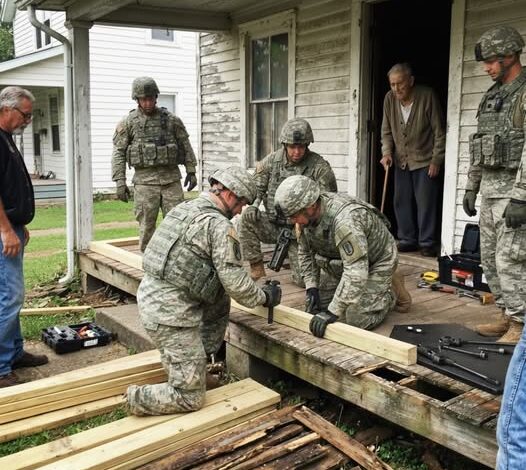
They Abandoned Their 91-Year-Old Veteran Father and Waited for Him to Die for the House, Then 23 Soldiers Showed Up, Built Him a New Porch, and Gave Him the Family, Honor, and Dignity His Own Children Refused to Give Him

I watched my elderly neighbor’s porch collapse one board at a time while his own children waited for him to die.

What finally broke wasn’t the wood. It was the illusion that family always shows up.

My name is Margaret, and I have lived beside Harold Peterson for more than three decades. Long enough to see a full life unfold. Long enough to know when something sacred has been violated.

Harold is ninety-one years old. A U.S. Navy veteran. A carpenter by trade. The kind of man who spent his younger years fixing roofs for widows, building wheelchair ramps before the phrase “home accessibility” became a policy buzzword, and charging people less if he knew they were struggling. He believed in quiet service, personal responsibility, and dignity earned through work.

He raised three children in the house on Oak Street. I watched them ride bikes, go to prom, move away, and build comfortable lives. And then, one by one, I watched them abandon their father when he needed them most.

Harold’s porch had been unsafe for years. Rotting boards. Crumbling steps. No railing. As his mobility declined, the porch became a hazard instead of a welcome. He fell twice trying to navigate a makeshift plywood ramp. Each fall left him shaken, bruised, and more afraid of his own front door.

Then the city notices came. Code violations. Warnings. Threats of condemnation. The kind of bureaucratic pressure that hits hardest when someone is old, disabled, and living on a fixed income. Harold’s military pension and Social Security totaled just over a thousand dollars a month. Repair estimates were fifteen thousand and up. He had less than nine hundred dollars in savings.

So he did what any parent would do. He called his children.

The responses were chilling in their practicality.

His oldest son, a banker with a luxury electric car and a mortgage bigger than Harold’s entire net worth, told him to “consider assisted living” and hinted the house wasn’t worth saving.

His daughter, a real estate agent, didn’t even bother lowering her voice. She said fixing the porch “didn’t make financial sense” and that the property would be more valuable after Harold was gone.

After you’re gone.

His youngest sent a text. No call. No visit. Just a suggestion to hire someone, as if elder care were a line item instead of a moral obligation.

That evening, I found Harold sitting on the dangerous porch that could have killed him, holding a faded photograph of his late wife. He was crying in a way that comes from shame, not pain.

“She would be ashamed,” he kept saying. “We taught them better than this.”

What do you say when adult children reduce their father’s life to an inheritance calculation? When elder neglect hides behind success and legal distance?

I didn’t know what to say. But I knew where to go.

Three blocks away is a small veterans’ post. No banners. No self-promotion. Just a building and people who understand words like duty, loyalty, and honor without needing to say them out loud. These were active-duty service members, retired soldiers, combat veterans. The kind of people who still answer a call even when no one is watching.

I walked in and told them the truth. About Harold. About the porch. About his children. About time running out.

No one interrupted. No one asked for proof. One man asked a single question.

“What’s his name?”

When I told him, he went quiet. Then he said something I will never forget.

“He built my father’s deck in the eighties. Charged half because my dad lost his legs in Korea.”

Within hours, soldiers arrived at Harold’s house. They didn’t make speeches. They didn’t ask permission. They assessed the structure the way professionals do. Calm. Focused. Respectful.

By the end of the day, twenty-three men and women had shown up. Lumber was donated. Tools appeared. Skills materialized. Engineers, medics, carpenters, logistics specialists. This was not charity theater. This was coordinated action.

Harold sat in his wheelchair, watching strangers do what his own children refused to do. He cried openly. No one told him to stop.

The porch they built was not just repaired. It was redesigned for safety, accessibility, and dignity. A proper wheelchair ramp. Solid railings. Non-slip decking. Lighting. Weatherproofing. They fixed a leaking roof and replaced the front door. It met every modern standard for aging-in-place home modifications.

When his daughter arrived screaming about property rights and inheritance, she was told to leave. When his son threatened lawsuits, a soldier calmly explained elder law and neglect statutes. They disappeared as quickly as they had arrived.

The soldiers stayed.

They set up a rotation to check on Harold daily. Groceries. Yard work. Companionship. They invited him to meals, Veterans Day events, and community gatherings. They treated him like what he was: a man who had served his country and still deserved respect.

The local news ran the story. Not because the soldiers asked for attention, but because the contrast was too stark to ignore. A neglected veteran. Absent children. Strangers who became family.

Harold rewrote his will the next morning. His estate now supports veteran housing assistance and elder support programs. He said it plainly.

“My children decided I was already dead. These soldiers reminded me I’m still alive.”

Two weeks later, a young woman arrived with two small children. Harold’s granddaughter. She had seen the story. She hadn’t known the truth. She brought his great-grandchildren into his arms for the first time.

That porch did more than keep him safe. It brought life back into his house.

Harold turned ninety-two last month. The soldiers threw him a birthday party. Veterans, neighbors, city leaders. He stood, steady behind the railing they built, and spoke.

“My children waited for my death. These men and women gave me my life back.”

The porch cost money. The labor was free. What they gave him was dignity, community, and proof that honor doesn’t expire with age.

Every morning now, Harold wheels himself onto that porch and waves at the street. Sometimes his children drive by. They don’t stop.

He doesn’t seem to mind anymore.

He knows exactly who his family is.

He Wanted Me to Pay for His Daughters Wedding, I Said No!

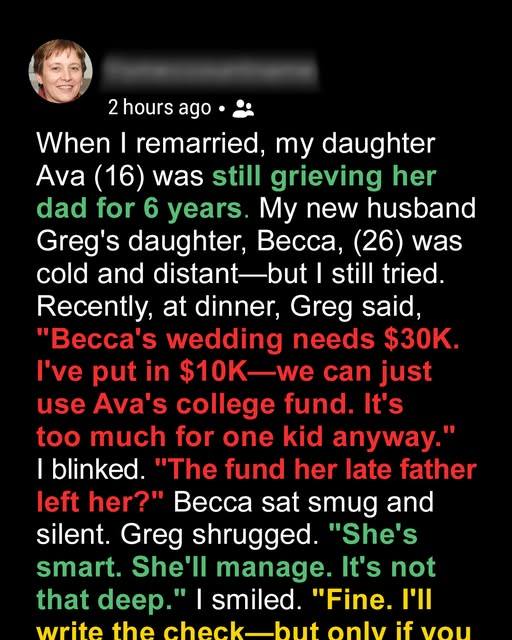
In the delicate architecture of a blended family, trust is the mortar that holds everything together. But when that mortar is mixed with entitlement and greed, the entire structure is destined to crumble. For Sarah, the stability of her second marriage to Greg had always felt somewhat precarious, a balancing act between the needs of her sixteen-year-old daughter, Ava, and Greg’s adult daughter from a previous marriage, Becca. However, the true fragility of their union was never fully exposed until the evening Greg leaned across the dinner table and casually suggested a betrayal that felt like a physical blow.

Greg’s proposal was delivered with the nonchalance of someone asking to pass the salt. He suggested “borrowing” from Ava’s college fund to pay for Becca’s upcoming wedding. The request was not just financially audacious; it was a desecration of a legacy. That fund had been established by David, Ava’s biological father, before his untimely death. It was a sacred trust—David’s final, calculated act of love to ensure that his daughter would have the educational opportunities he had struggled to obtain. It was not a savings account; it was a promise kept from beyond the grave.

The entitlement in Greg’s voice was matched only by Becca’s chilling silence. As Ava spoke excitedly about her dreams of studying marine biology, Greg interrupted her to suggest that her future could wait, or perhaps be funded by loans, so that Becca could have the “Pinterest-perfect” wedding she desired. He spoke of the fund as if it were spare change rattling in a communal jar rather than the bedrock of a young girl’s future. In that moment, the “blended” family dissolved, leaving two distinct camps: those who valued a party, and those who valued a life.

Sarah remained calm, a cold clarity settling over her that only a mother protecting her cub can know. She looked at Greg—a man she thought she knew—and realized he saw David’s sacrifice as an inconvenient obstacle to his own daughter’s social status. He assumed that Sarah, who often played the role of the peacemaker to keep the household harmonious, would eventually sigh and acquiesce. He mistook her patience for weakness. When she told him she would “think about it,” Greg flashed a confident, triumphant smile, believing he had already won. He had no idea that Sarah was not thinking about the money; she was thinking about the exit.

The next forty-eight hours were a masterclass in quiet determination. Sarah didn’t argue, and she didn’t scream. Instead, she visited her attorney and her bank. She realized that the threat to Ava’s future wasn’t just the wedding; it was the man sitting at her table who believed he had a right to a dead man’s labor. If he was willing to suggest this now, what would he suggest when Ava was mid-degree? The safety of her daughter required a scorched-earth policy.

Two days later, Sarah called a meeting in the living room. Greg and Becca sat on the sofa, looking expectant, likely imagining they were about to receive a check. Instead, Sarah placed two documents on the coffee table with the precision of a surgeon. The first was a legally binding repayment contract. It stated that if a single cent was withdrawn from Ava’s trust, Greg would be personally liable to pay it back in full, with interest, within twelve months, secured against his own retirement assets.

The second document was a set of divorce papers.

The silence that followed was heavy with the sudden realization of a power shift. Sarah spoke with a steady, unwavering voice. “If you truly believe that ‘family’ means supporting one another, you will sign the contract and guarantee Ava’s future is made whole. If you refuse, it proves that you are not here for her, but for what you can take from her. And if that is the case, you have no place in this house.”

Greg’s sputtered excuses and Becca’s indignant huffing were the sounds of a lost cause. Greg refused to sign the contract, claiming it was “insulting” and “unnecessary among family.” In his refusal, he inadvertently confirmed Sarah’s darkest suspicion: he never intended to pay it back. He intended to consume Ava’s inheritance and leave her to navigate the world in debt.

Within weeks, the house felt lighter. Greg had moved out, and the engagement with the divorce was final and swift. Becca’s wedding eventually took place on a much smaller scale, funded by the resources her own father was actually willing to provide. The socialites were absent, the expensive floral arches were replaced by simpler arrangements, and the “aesthetic” was diminished, but the integrity of Sarah’s home was restored.

The true resolution, however, didn’t happen in a lawyer’s office or on a wedding altar. It happened late one night when Ava found her mother sitting on the porch swing, staring at the stars. Ava, who had lived through the tension and the fear of losing her home, hugged Sarah tightly. She whispered four words that made every sacrifice worth the cost: “Thank you for choosing me.”

Protecting the college fund was never about the digits in a bank app. It was about honoring the memory of a man who worked himself to exhaustion so his daughter wouldn’t have to. It was about showing Ava that her dreams were not “spare change” to be traded for someone else’s fleeting vanity. Sarah had learned that being a mother often means being a gatekeeper—standing at the threshold of a child’s future and deciding who is worthy of entering. By choosing her daughter, Sarah ensured that David’s last gift remained a bridge to the future, rather than a casualty of the past.

What is in Paprika? The Answer Stuns Social Media Users!

In the pantheon of the kitchen spice rack, few inhabitants are as ubiquitous, yet as misunderstood, as paprika. It is the vibrant, crimson dust that lends a smoky depth to Hungarian goulash, a decorative flare to deviled eggs, and a subtle warmth to roasted potatoes. For generations, home cooks have reached for those iconic red tins without a second thought, treating the contents as an elemental substance—a foundational spice that simply “is.” However, a recent wave of viral revelations on social media has shattered this domestic illusion, leaving millions of users stunned by a simple, botanical truth: paprika does not come from an exotic “paprika tree,” nor is it a mysterious blend of ancient roots. It is, quite simply, dried and pulverized red bell peppers.

The shock began to ripple through platforms like TikTok and Instagram when influencers and food scientists started sharing “behind the scenes” looks at spice production. One particularly viral post from the Australian brand Nutra Organics summarized the collective epiphany: “Learning that paprika is just dried and crushed red capsicum was really shocking. I thought there was a paprika tree somewhere.” The comment sections quickly transformed into a digital confessional, with users admitting they had imagined everything from exotic seed pods to rare desert shrubs. The realization that one of the world’s most popular spices is merely a dehydrated version of a common vegetable found in every grocery store’s produce aisle felt, to many, like a culinary glitch in the matrix.

This widespread misunderstanding speaks to a larger disconnect in the modern food system. As our supply chains have become more globalized and our ingredients more processed, we have lost the tether between the whole plant and the powdered result. We have come to view spices as “faraway treasures,” a remnant of the ancient spice trade routes where black pepper and cinnamon were worth their weight in gold. To discover that paprika is essentially a concentrated “capsicum” (the botanical name for peppers) strips away the veil of exoticism and replaces it with a surprisingly humble reality.1

The Botanical Reality: From Vine to Tin

The truth about paprika is rooted in the Capsicum annuum species.2 While we often associate “peppers” with heat, the varieties used for paprika are primarily sweet or mild. The specific flavor profile of the powder—whether it is sweet, hot, or smoked—depends entirely on the variety of the pepper used and the method by which it is dried.

In Hungary, the spiritual home of the spice, paprika is categorized into several grades based on color and pungency.3 The most common variety is “Noble Sweet” (Édesnemes), which provides the rich color and mild flavor most of us recognize. In Spain, the spice is known as pimentón, and it often carries a distinct smokiness derived from a traditional drying process where the peppers are hung over oak fires.4 Regardless of these regional nuances, the core ingredient never changes. It is the red pepper, allowed to ripen to its most vibrant state, then stripped of its moisture and ground into oblivion.+1

The Art of Transformation: How Paprika is Made

The process of turning a bulky, watery vegetable into a fine, shelf-stable powder is a masterclass in food preservation. It begins in the fields, where the peppers must reach full maturity. Green peppers are simply unripe; only when the fruit turns a deep, saturated red does it develop the sugar content and carotene pigments necessary for high-quality paprika.5

Once harvested, the peppers undergo dehydration.6 Historically, this was done by stringing the peppers together in long garlands called “fűzér” and hanging them from the eaves of houses to air-dry in the sun. In modern industrial production, large-scale dehydrators are used to ensure consistency and food safety.7 After the peppers have become brittle and lost nearly all their water weight, they are sent to high-speed mills.+1

The complexity of the flavor can actually be manipulated during the grinding stage. For a milder, sweeter powder, the seeds and the internal white membranes (which contain the heat-producing capsaicin) are removed.8 For a “hot” paprika, these elements are left in, providing a spicy kick. The result is a concentrated essence of the vegetable—one pound of paprika can require up to ten pounds of fresh peppers.

The DIY Revelation: Making It at Home

One of the reasons this social media trend took such firm root is that it empowered people to try the process themselves. Making homemade paprika is a slow but rewarding endeavor that produces a flavor far superior to the dusty, stale versions often found at the back of a pantry.

To create artisanal paprika, one simply needs a batch of ripe red bell peppers or mild pimientos. By slicing them thinly and placing them in a low-temperature dehydrator or an oven set to its lowest possible heat (around 140°F), the moisture slowly evaporates over several hours. Once the slices are “cracker dry,” they can be pulsed in a spice grinder or crushed with a mortar and pestle. The result is a powder that smells vividly of the garden—sweet, earthy, and intensely floral. This DIY approach has led many to realize that they have been paying a premium for a “spice” they could have been harvesting from their own backyard gardens.

Why the Truth Matters

Does knowing the origin of paprika change how it tastes? Physically, no. But psychologically, it alters our relationship with the kitchen. It shatters the “illusion of exoticism” that often makes cooking feel like an inaccessible science. When we realize that a complex, smoky stew is seasoned with nothing more than a common garden vegetable, the kitchen becomes a more approachable, transparent space.

Furthermore, this revelation highlights the importance of freshness. Because paprika is a ground vegetable, it is essentially a dried produce item.9 Like any dried herb or vegetable, its oils and flavors degrade over time when exposed to light and heat.10 Most culinary experts suggest that if your paprika has been sitting in a tin for more than six months, it has likely lost its soul, becoming little more than a red coloring agent.+1

The “Paprika Revelation” is more than just a viral moment; it is a symptom of a growing movement toward food literacy. In an age where we are increasingly disconnected from the sources of our sustenance, rediscovering the humble red pepper behind the brilliant crimson powder is a step toward a more conscious way of eating. Next time you garnish a dish with a dusting of paprika, you aren’t just adding a spice—you are adding the concentrated, sun-dried legacy of the red pepper, a kitchen workhorse that finally has a brilliant marketing team in the form of the internet.

Only a few people can find all the faces hidden in this tree – are you one of them?

If you’re one of the people who absolutely loves teasing and challenging their brain with optical illusions, then I salute you.

I myself am hopeless at them. When I was six, my grandma gave me a ‘train your brain’ book for my birthday. Needless to say, it didn’t leave the bookshelf until I was almost 16. Even then, I couldn’t get my head around half of the puzzles hidden within its pages.

And yet, I know brain teasers and illusions are immensely popular on the internet. People the world over like to test their skills when it comes to deciphering pictures and finding hidden things that are quite literally right in front of their eyes.

It’s with that in mind that I thought it would be a good idea to share one I stumbled upon recently. Low and behold, it has me stumped when it comes to getting a high score, but I can readily accept that I hardly have the keenest eyes of the human population. In the brainteaser below, readers are tasked with counting the faces in the “National Leaders Tree” …

It’s unclear where the image in question first surfaced, but it’s proving popular online as people try to one-up each other regarding how many faces there are to be found.

Of course, everyone can see the two faces at the bottom of the tree, but the fun comes in when you try and locate the others.

Apparently, the number of faces you see says something about your memory.

We know … there are more ‘academic’ ways to prove your aptitude in such things, but if you’re willing to have a go then write down how many faces you see. When you’re done, scroll down to see what your number means.

2 to 4 faces

As previously mentioned, the two faces at the bottom of the tree are there for all to see. If, however, you can only spot one or two additional faces, it may indicate that you have a memory disorder.

5 to 6 faces

Found more than four faces in the picture? Good. Keep looking, but if you only find five or six then it could mean you’re at risk of Alzheimer’s or dementia.

7 to 8 faces

Your memory is at a perfectly acceptable level, but it’s not great. You can continue training your brain by studying puzzles like these!

More than 9 faces

Congratulations, if you found 9 or more faces then you have excellent memory and facial recognition skills.

Did this picture get your blood boiling? Alright, have a look below to see where most of the faces are hidden.

How many famous faces were you able to get from the picture? Let us know in the comments box below!

If you want to challenge your friends and family to the same game, share this article on Facebook.

The Christmas Invoice That Changed Everything!

For nearly a decade, the month of December was not a season of peace for me, but a logistical marathon. For eight consecutive years, the heavy mantle of Christmas was laid squarely upon my shoulders. It wasn’t a shared responsibility or a rotating honor; it was an entrenched tradition that my house was the designated holiday headquarters. Every year, the scene was identical: the scent of balsam pine candles competing with the roasting turkey, and the same lopsided angel perched precariously atop a tree I had hauled, set up, and decorated entirely by myself.

My parents and my younger brother arrived every year with the practiced ease of hotel guests who had stayed at the same resort for a lifetime. They knew where the glasses were kept, they knew which chairs were the most comfortable, and they instinctively understood that their only duty was to exist while I labored. Coats were shed, shoes were lined up, and the familiar drift into the living room began. They sat as if dinner were a reservation they had made months in advance, and I was the harried staff working overtime to ensure the “customer” experience was seamless.

I had spent years telling myself that this arrangement made sense. I was the single sister, the one without children, the one with “no real responsibilities.” In the eyes of my family, my time was a surplus commodity that could be harvested for their convenience. My brother, conversely, was shielded by the “chaos” of his life—a wife, two toddlers, and a home that was perpetually deemed too disorganized to host. And so, the chaos was exported to me.

Every December, I burned through my precious vacation days not to relax, but to prep. I managed menus, scrubbed floors, and timed the oven with the precision of a master clockmaker. I smiled through the exhaustion because I believed that being the dependable one was synonymous with being valued. I thought that by making myself indispensable, I was earning a seat at the emotional table. What I failed to realize was that I was actually training them to view my labor as invisible and my time as free.

The awakening didn’t come during the holidays; it came in the quiet of a spring afternoon. My father had experienced a minor health scare—a warning shot that sent the family into a frantic bout of estate planning. Being the “competent one,” I was summoned to help organize their paperwork. We sat at the dining table, surrounded by the smell of lemon cleaner and old dust, sorting through decades of life. That was when I found the folder labeled “Final.”

Inside, the will was laid out with cold, clinical precision. My eyes skipped the boilerplate legal text and landed on the inheritance section. The house, the life savings, even my grandmother’s heirloom jewelry—the pieces I had been told would one day be mine—were all allocated to my brother. At the bottom of the page, a single sentence served as the justification for my erasure: “Because he has a family.”

In that moment, the air in the room seemed to thin. Eight years of hosting, of cleaning their messes, of managing their emergencies, and of being their emotional bedrock apparently didn’t qualify as being “family.” To my parents, I wasn’t a daughter to be provided for; I was a support beam—functional, necessary, but ultimately just a part of the structure they intended for someone else to inherit. I didn’t scream or make a scene. I put the papers back, finished the filing, and drove home. I sat in my car in the driveway and cried the kind of silent, burning tears that come when a fundamental truth is finally revealed. I wasn’t counted.

As the following December approached, the usual dread I felt was replaced by something cold and analytical. I decided that if I was being treated like a service provider rather than a daughter, it was time to provide a bill. I opened a spreadsheet and began to quantify eight years of “magic.” I tallied the groceries, the wine, the utilities, the broken ornaments, the professional cleaning fees, and the value of the vacation days I had sacrificed. I was conservative with the numbers, yet the final total was staggering.

I didn’t send an angry letter. I simply attached the PDF to an email with a subject line that read: “Christmas Hosting Costs.” The fallout was instantaneous. My brother called to laugh, assuming it was a joke, until the silence on my end told him otherwise. My mother sent a barrage of emotional texts, accusing me of “keeping score” and “ruining the spirit of family.” My father stayed silent. For the first time, I didn’t rush to soothe their feelings. I let the discomfort sit in the air like smoke.

The next morning, my mother appeared at my door. She looked smaller, her shoulders hunched as if she were carrying the weight of the invoice I had sent. She handed me a white envelope and asked me to read it inside. It contained a revised will, now splitting everything exactly down the middle. There were no footnotes about who had a “real family.”

The accompanying letter was a humble admission of their blind spots. My mother wrote that because I never complained and always made everything look easy, they had simply assumed I didn’t need anything. They had mistaken my strength for a lack of desire. My father, she noted, had been the one to insist on the change immediately after seeing the spreadsheet. He realized that fairness wasn’t about who had children to support; it was about honoring the person who consistently showed up.

That Christmas, the lights remained dark at my house. For the first time in nearly a decade, I didn’t defrost a turkey or polish silver. My brother hosted. It was, by all accounts, a disaster. The food was late and dry, the kids were out of control, and the stress in the room was palpable. But as I sat on his sofa, holding a store-bought pie and a glass of wine I hadn’t had to pour for anyone else, I realized I didn’t mind the imperfections.

I learned that love often requires a boundary to be visible. By over-giving, I had allowed my family to become comfortable with my disappearance. The invoice wasn’t about the money; it was a demand to be seen. Things aren’t perfect now, but the dynamic has shifted. They ask before they assume. They thank me before they expect. And most importantly, I’ve learned that the “spirit of Christmas” isn’t found in the labor of one person, but in the mutual respect of everyone at the table. I am no longer the support beam; I am a resident of the house, and for the first time, the holidays feel like they finally belong to me too.

Iowa National Guardsmen Were Among the Victims of the Syria Attack, Officials Confirm

The news moved across Iowa like a shockwave — sudden, heavy, and impossible to prepare for.

In towns large and small, across neighborhoods where front doors are still left unlocked and names are known without introductions, people paused mid-routine as the reality settled in.

Two young soldiers from Iowa, serving far from home on a mission most Americans rarely see or hear about, had been killed in an ambush in Syria.

There was no gradual buildup, no warning. One moment, families were going about ordinary days; the next, they were confronted with the kind of loss that reshapes time itself.

The grief traveled swiftly, from military bases to farm towns, from city streets to quiet rural roads, leaving disbelief and heartbreak in its wake.

Leaders spoke carefully, knowing that words — even sincere ones — cannot fill the space left behind by lives cut short.

The soldiers were Sgt. Edgar Brian Torres Tovar, 25, of Des Moines, and Sgt.

William Nathaniel Howard, 29, of Marshalltown. They were sons of Iowa — raised in communities where service is not abstract and sacrifice is not theoretical.

In these places, military service is often woven into family histories, community traditions, and everyday conversations. It is not something admired from afar, but something lived and understood.

Though they wore the same uniform, the two men carried different stories. They grew up in different households, walked different streets, and imagined different futures.

Each had their own hopes, ambitions, and personal plans waiting back home.

Yet both answered the same call: to serve their country in one of the world’s most volatile regions, far removed from the rhythms of Midwestern life they knew so well.

They were killed while conducting a meeting with local leaders — part of the ongoing effort to stabilize areas still threatened by ISIS. It was not a dramatic combat operation or a headline-driven mission.

It was the quiet, persistent work that defines much of modern military service:

building trust, gathering information, supporting local stability, and preventing extremist groups from regaining ground.

This kind of work rarely draws attention. It does not dominate nightly news broadcasts or generate widespread public discussion.

It often happens beyond the awareness of most Americans — until tragedy forces it into view.

The ambush claimed the life of an American civilian as well and left three others wounded.

What should have been a routine engagement turned into chaos within moments, the kind of sudden violence that military families understand all too well. In places thousands of miles away, the impact was immediate.

In Iowa, flags were lowered to half-staff, a visual acknowledgment of loss that carried weight across the state.

Governor Kim Reynolds and Maj. Gen. Stephen Osborn addressed the tragedy with somber remarks, attempting to hold the grief of an entire state within carefully chosen words.

Their statements were measured and respectful, recognizing both the individual lives lost and the broader meaning of their sacrifice.

No official message could offer comfort equal to what had been taken away. Still, the acknowledgment mattered — especially in a state where military service runs deep.

Nearly 1,800 Iowa National Guard members are currently deployed in the region. For every one of them, there is a family waiting.

Parents check their phones more often than they admit. Spouses learn to live with uncertainty. Children ask questions that do not have easy answers.

Time is measured in missed holidays, delayed plans, and the distance between messages.

For the families of Sgt. Torres Tovar and Sgt. Howard, the waiting ended in the most devastating way possible.

The knock on the door — the moment that every military family dreads — arrived at their homes and changed everything.

That sound now echoes in the hearts of families across Iowa, a reminder that behind every uniform is a person deeply loved.

A son. A daughter. A sibling. A partner. A parent. A friend.

Military service carries with it a quiet understanding of risk, but that knowledge does not soften the blow when loss becomes real.

It does not lessen the pain of birthdays that will go uncelebrated, milestones that will be missed, or futures that will remain unwritten.

In moments like these, political arguments and global debates fade into the background.

What remains is the human cost of service — the courage of those who step forward, the resilience of those who remain behind, and the grief of communities that lose their own.

Iowa grieves not only for the soldiers themselves, but for the lives they were building. The routines they were meant to return to.

The careers they were developing. The relationships they were nurturing. These are the unseen losses that ripple outward, touching far more people than a headline can convey.

Communities in Des Moines and Marshalltown began gathering almost immediately. Vigils formed. Conversations grew quieter.People shared memories, even if they had known the soldiers only indirectly. In towns where everyone is connected by just a few degrees of separation, loss feels collective.

Teachers think of former students. Coaches think of players. Neighbors think of familiar faces.

Employers think of empty chairs. Every connection becomes part of the mourning.

As the investigation into the ambush continues, officials will search for answers — tactical, strategic, and logistical.

These questions matter for future missions and for the safety of those still deployed. But for families and communities, answers do not heal grief.

They may provide clarity, but they cannot restore what has been lost.

For now, the focus remains on remembrance.

Honoring Sgt. Torres Tovar and Sgt. Howard means recognizing not only how they died, but how they lived.

It means acknowledging the decision they made to serve, knowing the risks and accepting them anyway.

It means understanding that their sacrifice was not abstract — it was personal, deliberate, and rooted in a sense of duty that extends beyond self.

Their names now become part of Iowa’s story.

They will be remembered in ceremonies and quiet moments alike — in folded flags, in prayers spoken softly, in the stillness that settles over families adjusting to a new reality.

Their service will be taught to younger generations, not as a distant concept, but as something that came from their own towns and neighborhoods.

For those still serving overseas, the loss carries another weight. Military units feel these deaths deeply.

Bonds formed in service are unlike any other, and the loss of one reverberates through the entire unit.

Grief is carried forward alongside duty, a burden shared silently among those who continue the mission.

Interesting Cranberry Juice results

Cranberry juice has enjoyed a surge in popularity in recent years — not only because of its sharp, refreshing flavor, but because many people associate it with meaningful health benefits. From UTI prevention to antioxidant support and heart-healthy compounds, cranberry juice has earned a place in wellness conversations. Curious to see how much of this translated into everyday life, the author committed to a 7-day cranberry juice challenge, hoping to observe small but noticeable shifts in their overall well-being.

Going into the experiment, the author was in generally good health but experienced occasional digestive discomfort, low-energy mornings, and the kinds of subtle skin fluctuations many people recognize. The plan was simple and consistent: drink one glass of unsweetened, pure cranberry juice each morning — no added sugar, no blends, just the concentrated tartness of cranberries.

The first days brought mixed reactions. The juice’s intensity was undeniably strong, almost startling, especially when consumed first thing in the morning. Yet alongside the tart punch came two early observations: slightly smoother digestion and a mild lift in energy. Whether this was from hydration, the antioxidants, or simply the novelty of a new routine was unclear — but the shift felt real. To offset the natural acidity, the author made sure to increase their daily water intake, which helped prevent stomach irritation.

As the week progressed, the benefits became more noticeable. Digestion felt steadier and less sluggish. Afternoon energy dips softened. The author also observed subtle improvements in skin clarity — not dramatic, but enough to reinforce the connection between hydration, antioxidants, and overall complexion. Still, there were challenges: the acidity occasionally triggered mild heartburn, a reminder that even natural remedies require moderation and self-awareness.

By the end of the seven days, the takeaway was clear: cranberry juice is not a miracle cure, but it can be a supportive addition to a balanced lifestyle. Scientific research strongly supports its role in reducing the risk of urinary tract infections, particularly when consumed as pure, unsweetened juice or in supplement form. Its antioxidants — including polyphenols and vitamin C — contribute to long-term health, though benefits tend to accumulate gradually rather than dramatically.

The author plans to continue incorporating cranberry juice, but more gently — perhaps every other day, or mixed with water or other natural juices to soften the acidity. The experiment reinforced something deeper than taste preferences: that small, consistent habits can meaningfully influence how we feel, as long as we stay attentive to both the benefits and the limits of what we consume.

In the end, the 7-day challenge wasn’t about transformation, but about tuning in — to digestion, energy, skin health, and the quiet signals the body offers when we try something new with curiosity and care.

The Promotion That Changed Everything!

I’d been at Meriton Systems for five years, and I truly believed I’d already seen every brand of workplace nonsense the corporate world could invent. I thought I was seasoned. Immunized. Unshakable.

Then one Tuesday, my manager walked into our team area holding a letter like it was a prize certificate and announced, far too brightly, “Good news! We’re promoting Hollis.”

I blinked, waiting for the rest.

He didn’t add it.

So I asked, even though something heavy in my gut already knew the answer. “To what role?”

He smiled like he was delivering a gift. “To your role. Same title. Same responsibilities.”

She still asked me how to submit a PTO request without accidentally submitting it as a support ticket.

Then he told me the salary increase.

Forty thousand dollars.

More than I’d received across five years of raises combined.

My stomach dropped, but my face did what it always does when my insides are screaming. It smiled. I’m annoyingly good at smiling when I want to throw something.

“Well,” I said in my sweetest tone, “congratulations to her. I hope she does really well.”

He thanked me like I’d given him a gift instead of swallowing an insult whole.

And that’s the moment something clicked. Not rage, exactly. Not revenge. Something calmer and sharper.

Survival.

The quiet kind. The smart kind. The kind people don’t notice until the lights go out and they can’t find the switch.

Because the truth was simple: I had been doing two jobs for years and being paid for half of one. I’d been “dependable,” which is corporate slang for “we can load her up and she won’t complain.”

So I made a decision.

If they wanted to undervalue me, fine.

But I was done donating free labor to people who confused my competence with obligation.

Over the next few months, I slowly—quietly, methodically—stopped doing anything that wasn’t explicitly in my job description.

Not in a dramatic way. Not in a childish way.

I didn’t slam drawers or announce boundaries with speeches. I didn’t dump tasks on random people or create chaos out of spite.

I just stopped being the safety net.

When someone tried to hand me tasks that belonged to the “senior” responsibilities now attached to Hollis’s shiny promotion, I redirected them politely.

“Oh, that’s Hollis’s scope now.”

When questions came my way that I’d been answering for years because I “knew the system,” I smiled and said, “That’s above my pay grade now.”

Was it petty?

Maybe.

But it was also honest. And people rarely like honesty when it reveals the lie they’ve been living on.

About six weeks after Hollis got the promotion, the cracks started showing.

The weekly reports were late—because apparently no one had realized I’d been assembling them for years. The intern sat for an entire afternoon waiting for onboarding instructions because, as it turned out, I’d been doing that “voluntarily.” Payroll got messed up for three people because the spreadsheet I maintained “for fun” wasn’t being updated.

Hollis tried. I’ll give her that. She really did.

But she’d been tossed into a role she wasn’t equipped for, and everyone could see it. She looked exhausted every day. Her hair frizzed permanently. She stopped wearing lipstick. She started arriving early and leaving late, like she could brute-force competence into existence.

Still—not my circus.

Then came the client presentation.

Our biggest one of the year. The kind of meeting that could make or break an entire quarter.

My boss called me into his office as if nothing had happened. Like he hadn’t just told me to smile while someone else took my job and my money.

“Can you help Hollis get ready for the presentation deck?” he asked. “You’re good at this.”

I kept the same pleasant expression I’d worn the day he announced her raise.

“Oh,” I said lightly, “that falls under her responsibilities now, right? I wouldn’t want to step on her toes.”

His left eye twitched. Just a little. Like a dying moth.

Three months in, upper management started asking questions.

Real questions.

Why were deadlines slipping?
Why were errors increasing?
Why were clients emailing and asking for me by name?

And the funny thing was—I didn’t gloat.

I didn’t smirk.

I didn’t tell anyone, “I told you so.”

I just did my job.

The one they paid me for.

Nothing more.

Then on a Thursday morning, I got an email from HR.

“Please come to the HR office immediately.”

No friendly greeting. No corporate fluff. The wording read like someone typed it with clenched teeth.

When I walked in, the HR director—usually calm, usually neutral to the point of being robotic—looked stormy.

“Why didn’t you tell us?” she demanded.

I blinked. “Tell you what?”

“That you’ve been doing the workload of two roles for the last two years.”

She dropped a thick folder on the table like it weighed a hundred pounds.

Printed emails.
Task assignments.
Old onboarding notes.
Performance summaries.
Client threads.
Meeting follow-ups.
All of it.

It looked like someone had dug through the company’s skeletons and found my fingerprints on every bone.

“We were never informed these duties were yours,” she said, flipping pages. “Your workload exceeded your job description by nearly seventy percent.”

Then she turned another page, so aggressively the paper bent.

“And now,” she said, “everything is falling apart because the work you used to do isn’t getting done.”

I sat there.

Calm. Polite. Still smiling a little, because by then the irony was too clean not to.

“Why,” she pressed, “didn’t you report this? We didn’t know you were carrying so much of the department.”

I shrugged softly. “I assumed management knew. They assigned the work. I just stopped doing responsibilities that weren’t tied to my title once someone else was promoted into that role.”

She pinched the bridge of her nose like she was fighting off a headache.

“This is a mess,” she whispered.

What happened next moved faster than I expected.

Upper management wasn’t furious with me.

They were furious with my boss.

Because promotions are supposed to be based on skill, contribution, and readiness—not vibes, favoritism, or someone’s personal “spark.” And promoting someone without understanding the real workload? Apparently that’s a serious HR violation when it impacts client delivery, compliance, and payroll.

Within a week, my boss was “transitioned into a different opportunity,” which is corporate for fired.

Hollis was reassigned to a role that matched her actual experience level. She cried—not from embarrassment, but from relief. Like someone had finally taken a boulder off her chest.

And then I got called into a meeting with the HR director and the COO.

The COO looked at me the way people look at a locked door they’ve been ignoring—until they realize it was the only thing holding the building together.

“We didn’t know,” he said plainly. “But now that we do, we want to fix this.”

They offered me the senior role.

The real title.
The actual responsibilities.
The authority to match the work I’d already been doing.

And the raise they should have given me a year ago.

I was ready to accept that.

But then came the real twist.

They offered me a salary increase fifty percent higher than Hollis’s raise.

“Consider it backpay,” the COO said, “for the workload you carried and the years you kept this department running.”

I didn’t cry in front of them.

But something warmed in my chest that I hadn’t felt in a long time—something like being understood without having to beg.

I accepted.

A week later, Hollis stopped by my desk with a muffin and a quiet voice.

“I’m really sorry,” she said. “I think we both knew I wasn’t ready. But they told me you didn’t want it.”

I stared at her. “Who told you that?”

She hesitated, then said my former boss’s name.

Of course.

He hadn’t just promoted her—he’d manipulated her into believing she was his brave, generous choice. That I’d refused. That I didn’t want more responsibility. That she was “helping” by stepping in.

Suddenly her awkwardness made sense. She’d thought I was silently supporting her because I didn’t care about the role.

“I never said that,” I told her gently. “You didn’t do anything wrong. You were set up too.”

Her shoulders dropped like she’d been holding her breath for months.

“Then I’m glad it worked out,” she said. “You deserve it.”

And that’s the part that stayed with me—how the person who benefited from the unfair decision was the only one who showed real decency once she understood the truth.

In the months that followed, everything changed.

The department stabilized. Workflows became structured. Clients stopped escalating issues. Deadlines became normal again instead of emergency triage.

And the strangest part?

People treated me differently.

Not just because of the title.
Not just because they knew I now had authority.

They treated me differently because they finally saw the truth: how much I’d been carrying, how much I’d built, how much I knew.

Recognition isn’t applause.

It’s reality catching up.

One afternoon, the HR director caught me near the elevator.

“For what it’s worth,” she said, “this exposed a bigger issue. We’re reviewing workloads across the company now. You may have saved a lot of people from being quietly overloaded.”

I hadn’t been trying to start a movement.

I’d just stopped being convenient.

But I guess ripples happen when you step back and let people see what you were holding up.

The final twist came during the annual company town hall.

The COO called me up—not the directors, not the senior managers—me.

He asked me to speak briefly about “sustainable workload management.” And in front of the entire company, he said, “Sometimes the most valuable people are the quiet ones doing the work no one bothers to look at. Today, we want to acknowledge what happens when dedication goes unnoticed.”

People applauded.

Hollis clapped louder than anyone.

And for the first time in years, I didn’t feel invisible.

I felt seen—fully, plainly, undeniably.

Because sometimes life doesn’t reward hard work immediately. Sometimes people overlook you because they assume you’ll always hold things together no matter how much weight they pile on you.

But the moment you stop carrying what was never yours?

The truth reveals itself.

And when karma finally shows up, it rarely comes empty-handed. It brings interest.

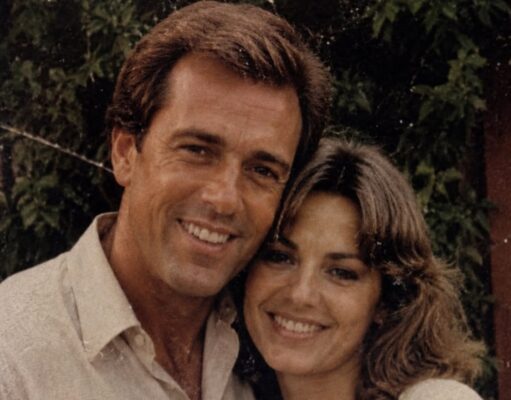
Renowned hitmaker and teen favorite passes at the age of 82!

The world of music said goodbye to another legend this year. Lou Christie, the unforgettable voice behind the 1966 hit “Lightnin’ Strikes,” passed away on June 17 at the age of 82. Known for his soaring falsetto and a string of infectious pop melodies, Christie defined an era of youthful energy and emotional storytelling that left a mark on generations of listeners.

Christie was born Lugee Alfredo Giovanni Sacco in Glenwillard, Pennsylvania — a small town on the banks of the Ohio River, where steel mills and church steeples shaped much of daily life. From the start, his voice was a gift that couldn’t be ignored. He often spoke about discovering his love of singing during a first-grade Christmas pageant. Standing on stage before his classmates, he sang “Away in a Manger” and felt the room erupt in applause. That moment, he later said, “was when I knew. It was like lightning striking — I wanted that feeling forever.”

By his teenage years, Christie was singing in local choirs and small clubs, balancing dreams of music with the reality of a working-class upbringing. His early performances blended doo-wop harmonies, church influences, and a flair for drama that hinted at the showman he would become. Friends remembered him as the kid who was always humming a tune, who’d run home after school to scribble lyrics in a notebook instead of doing homework.

After high school, he started recording demos with friends in a makeshift studio — a small, two-track setup housed in the back of a local music shop. He had no label, no producer, and no money to spare, but he had a voice that could fill a room. One of those early recordings eventually landed in the hands of a regional radio DJ, and soon Lou Christie was a name people were beginning to talk about.

His stage name came almost by accident. Lugee Sacco didn’t sound like the name of a pop star, and a producer suggested something simpler, something that would roll off the tongue. “Lou Christie” was born, and with it, a new identity — half dreamer, half hitmaker.

Christie’s first real break came in 1963 with “The Gypsy Cried,” a haunting, romantic tune that showcased both his falsetto and his knack for storytelling. The song climbed the charts, reaching the Top 30, and introduced listeners to a singer who wasn’t afraid to blur the lines between heartbreak and theater.

He followed that success with “Two Faces Have I,” another hit that captured his signature blend of innocence and intensity. By this time, he had teamed up with Twyla Herbert, a classically trained pianist and composer who would become his lifelong musical partner. Herbert, more than twenty years his senior, understood his voice in a way few others did. Together, they wrote songs that walked the line between pop and opera — lush, emotional, and completely distinct.

But nothing prepared Christie for what came next.

In 1966, he released “Lightnin’ Strikes,” a song that would define his career. It was bold, dramatic, and unapologetically theatrical. With its sweeping strings, pounding rhythm, and that unmistakable falsetto soaring over the chorus, it captured the spirit of the mid-’60s — youthful, defiant, and electric. The song hit No. 1 on the Billboard Hot 100 — on Christie’s 23rd birthday, no less — and instantly cemented his status as one of pop music’s brightest stars.

“Lightnin’ Strikes” wasn’t just a song; it was a phenomenon. Christie’s sound stood apart from the folk-rock and Motown trends of the time. His high-register vocals and emotional delivery made him a favorite among teenage fans, particularly young women who found something both powerful and tender in his voice. His performances were magnetic — full of energy, mischief, and a touch of vulnerability that made audiences feel like he was singing directly to them.

The late 1960s brought both success and turbulence. As musical tastes shifted toward psychedelia and rock, Christie’s style — part romantic crooner, part pop dramatist — struggled to find the same commercial traction. Yet he continued recording, experimenting with new sounds while staying true to his roots. Songs like “Rhapsody in the Rain” and “I’m Gonna Make You Mine” showcased his willingness to evolve.

“Rhapsody in the Rain” was particularly controversial at the time for its romantic imagery, even being banned on some radio stations. But its lush arrangement and cinematic storytelling foreshadowed the kind of bold, personal songwriting that would become common in later decades. Christie didn’t chase trends; he created his own lane, and it kept him relevant far longer than many of his contemporaries.

As the years passed, Christie found new ways to reinvent himself. He became a fixture on the nostalgia circuit, performing alongside other legends from the ’60s like Frankie Valli, Lesley Gore, and The Shirelles. Audiences never stopped wanting to hear “Lightnin’ Strikes,” and Christie never stopped delivering it with the same passion he had in 1966.

Offstage, he remained humble about his fame. He often credited his upbringing and faith for keeping him grounded. “I came from a place where people worked hard,” he once said in an interview. “You didn’t dream of being famous. You just dreamed of doing something you loved — and I got lucky that people loved it too.”

Christie also spent years mentoring young artists, offering advice and encouragement to those trying to find their own voice in an industry that often chews people up. His philosophy was simple: “The voice is an instrument, but the soul is what makes it sing.”

When news of his passing broke, tributes poured in from across the music world. Fellow artists described him as “a true original” and “one of pop’s great dramatists.” Fans shared memories of hearing “Lightnin’ Strikes” for the first time — on transistor radios, at high school dances, or blasting from jukeboxes in corner diners. For many, his songs weren’t just hits; they were soundtracks to moments that defined their youth.

“Lou had this way of making you feel every word,” one fan wrote online. “He could break your heart and make you smile in the same breath.”

Christie’s influence can still be heard in artists who embrace theatrical vocals and emotional storytelling — from Freddie Mercury’s operatic flair to Adam Lambert’s modern falsetto-driven performances. His music bridged eras, proving that passion never goes out of style.

He is survived by his family, close friends, and the countless fans who kept his songs alive for more than six decades.
Lou Christie’s story is one of resilience, artistry, and the power of believing in your own sound — even when it doesn’t fit the mold. From a small-town church choir to the top of the charts, he followed his voice wherever it led him.

And though “Lightnin’ Strikes” may have been his biggest hit, it’s his spirit — bold, brilliant, and unapologetically unique — that continues to resonate.

As one of his lyrics once put it, “When lightning strikes again, love always finds its way.” For those who still hum his songs, that line feels like the perfect farewell to a man who turned every note into a spark.

Popular

A Mother’s Love: Vienna’s Journey with a Birthmark

0
Love compels parents to do extraordinary things for their children’s well-being. Celine Casey, a British mother, took remarkable steps to ensure her daughter Vienna’s...