Entertainment

‘I Love Lucy’: Lucie Arnaz’s Favorite Memory of Her Mother, Lucille Ball, Is a Little Sad

Lucie Arnaz reflects back on what it was really like being the daughter of Lucille Ball.

Being Lucille Ball’s daughter, Lucie Arnaz grew up surrounded by show business. When she was younger, she was even taught by a tutor on set as opposed to attending a regular school. Arnaz, of course, also famously appeared in some of the shows that made her mother so famous. Unsurprisingly, she grew up to be an actress, singer, and producer. It’s in her blood, after all.

When reflecting back on her favorite memories with her mother, Arnaz longs for the simpler times.

Lucie Arnaz, Lucille Ball, and Desi Arnaz | Bettmann, Getty Images

Lucie Arnaz’s favorite memories with her mother, Lucille Ball

In an interview with Yahoo Entertainment, Arnaz recalled, growing up, many people telling her they’d kill to have a mother like Ball to create “magical memories” with. But Arnaz says her childhood wasn’t really like that.

“Really? Would you?” she’d respond. “Because she’s a pretty busy lady.”

While Arnaz spent plenty of time with her mother on set, her favorite memories were when they were together at home.

“I sort of always come back to the idea that any memory where she’s just home and has time to just be with us, any of those simple, the simplest of dumbest of memories, you know, making a grilled cheese sandwich in the kitchen,” she said.

Lucie Arnaz says Lucille Ball ‘did not have a great business mind’

Despite Ball’s life revolving around show business, Arnaz says her mother didn’t ever really take to the business side of things.

“My mother did not have a great business mind, didn’t want one, was not interested in that end of it at all,” she said.” She wanted to play in the sandbox, period. She wanted to go to work and play those characters and have fun and do shows.”

Desi Arnaz, however, was “a great business mind,” according to his daughter.

“He ran the studio and [Lucille Ball] was never happier than when she could rely on that,” said Arnaz.

But what Ball lacked in business sense, she made up for in instincts.

“What she was good at was instincts,” said Arnaz. “She had great instincts. So once in a while she made a couple of calls that were pretty brilliant, like, ‘No, don’t cancel Star Trek. No, I think Mission: Impossible is fun, let’s leave it on.’ You know? Those were smart calls, but it wasn’t what I would call business sense, and she did not enjoy that at all.”

What Lucie Arnaz thinks ‘I Love Lucy’ is really about

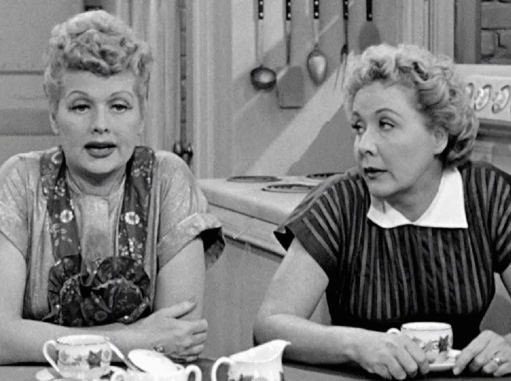
When Arnaz reflects on her mother and her legacy, she thinks of I Love Lucy and what it stood for.

“The older I get, I think it’s unconditional love. Teaching people about unconditional love,” she says. “I think that show, with everything else that it was: hilariously funny, brilliantly written, timeless — you could put a kid in front of it today, the same way you could five generations ago, and they would laugh and they wouldn’t be insulted — but, I think, when push comes to shove, that show was about forgiveness and love. It could have been called I Love Lucy Anyway.”

‘I Love Lucy’ Was So Popular It Caused This Strange Phenomenon

The sitcom was so popular, in fact, that during the ad breaks during I Love Lucy, so many Americans were using the bathroom that it affected water pressure.

I Love Lucy, which began airing in 1951 made its star Lucille Ball an icon of TV. The sitcom was so popular, in fact, that during the ad breaks during I Love Lucy, so many Americans were using the bathroom that it caused this wild phenomenon to occur nation-wide.

‘I Love Lucy’ lead cast member, Lucille Ball, was a ‘trailblazer’

Lucille Ball as Lucy Ricardo works in a candy factory on an episode of I Love Lucy titled “Job Switching” from 1952 | CBS Photo Archive/Getty Images

Per The New York Times, thanks to I Love Lucy, “Lucille Ball was not only a superstar by 1960.”

“She was also a trailblazer, a female mogul,” the paper continued. As The Times explained, her dominance over the media industry was widespread:

Desilu Productions, the business empire she split with Desi Arnaz, her ex, owned the most TV-studio space and was ‘the single biggest filler of television time’ in the industry, as Life Magazine put it.

While the sitcom I Love Lucy is one of the most recognizable products in American television history, it’s easy to forget just how ubiquitous the show was in American culture at the time it aired.

“One measure of her popularity: The nation’s reservoirs dipped whenever I Love Lucy broke for a commercial,” The New York Times reported.

The huge effect on the water reservoirs was due to the fact that most viewers were using the ad breaks to go to the bathroom. Because they simply could not miss one second of Lucy and Ricky.

“A whole country, flushing as one,” the publication put it, quite poetically.

During the episodes, ‘I Love Lucy’ viewers timed their bathroom breaks with commercials

In the current age of TV, when every platform is making its own content and several people watch shows on their phones and laptops, it’s nearly impossible to imagine just how many people were all watching I Love Lucy — and hitting the toilet during commercials. But with fewer options on TV during the 50s — and the fact that Ball had a mega-hit on her hands — the impact was felt, even in the sewers.

Media Post seemed to confirm this theory. In a post commenting on the supposed “sudden revelation that consumers are skipping commercials,” they commented on how TV watchers missing out on ads goes decades back.

“… the phenomenon was first identified in the 1950s when water pressure dramatically dropped in St. Louis during commercial breaks in I Love Lucy,” Media Post reported.

What did Lucille Ball do after her popular TV show ended?

The New York Times also recently reported on one of Ball’s least successful ventures: the Broadway musical she starred in after I Love Lucy came to a close.

Actor Lucille Ball as Lucy Ricardo and her husband, actor Desi Arnaz as Ricky Ricardo, in an episode of I Love Lucy from 1954 | CBS Photo Archive/Getty Images

I Love Lucy had just ended,” the publication explained. “Her marriage had too. The last kiss with Desi fell on the last moment of their last episode. His face in her hair; her blubbering through tears: “You’re supposed to say ‘Cut.’” The final clinch. The next day she filed for divorce.”

Afterwards, in a reportedly “tough spot,” Ball decided to follow through on a long-held dream: the theater. She chose a show called Wildcat and started rehearsals.

What was Ball’s new venture Wildcat all about? The Times:

The writer of Wildcat, N. Richard Nash, had conceived of it as a drama — the story of ‘a woman in dungarees’ who swings into a Southwestern oil town with dreams of striking it rich. … Wildcat ‘Wildy’ Jackson, ‘the cat with more bounce to the ounce,’ as [Ball] put it in her autobiography, was the kind of ‘rough-talking, and unbelievably energetic’ character she wanted to play.

However, the I Love Lucy star met her match with the Broadway show; the rehearsals were “grueling,” especially for someone who didn’t have much background in singing and dancing.

Still, Ball will always have one thing under her belt from her days on I Love Lucy: the power to affect an entire nations’ timing of their bathroom breaks.

What It Might Mean When You Find a Coin on the Street

In the rush of daily life, it’s easy to overlook small details—like a coin resting quietly on the sidewalk. For many, it may seem insignificant, something not worth a second glance. Yet across different cultures and personal beliefs, finding a coin is often seen as more than coincidence. It can feel like a gentle reminder to pause, reflect, and notice the world around us. These small moments invite us to slow down and reconnect with a sense of awareness that is often lost in busy routines.

Some people view found coins as meaningful symbols, reminders of connection, care, or guidance. Whether or not one sees them as messages, the act of noticing and picking up a coin can carry its own quiet significance. It represents a choice to be present and attentive rather than distracted or hurried. In that simple action, there is a subtle shift—from overlooking life’s details to appreciating them. Even something small can inspire a moment of gratitude or reflection, encouraging a more mindful outlook.

This mindset can influence how we approach everyday experiences. When we remain open to small, unexpected moments, we become more aware of opportunities, kindness, and positive changes around us. A found coin might not hold much material value, but it can serve as a gentle interruption—a pause in the day that brings clarity or calm. These brief moments of awareness can help reduce stress and remind us that not everything meaningful has to be large or dramatic.

In a world increasingly shaped by digital interactions, a physical coin carries a sense of tangibility that feels almost nostalgic. It connects us to simple, real-world experiences that are easy to forget. The next time you come across a coin, consider taking a moment to notice it rather than walking past. Whether you see it as symbolic or simply as a chance to slow down, it can serve as a reminder that even the smallest details can hold value, offering a quiet sense of connection, perspective, and appreciation.

Elegant and Unique Perfumes for a Refined, Timeless Style

Perfume has always held a special place where art, memory, and personal identity meet. Throughout history, it has been more than a simple luxury—fragrance has been used in rituals, healing practices, and everyday life to reflect emotion, culture, and social presence. Even today, a scent can instantly bring back memories or create a lasting impression. It speaks quietly yet powerfully, allowing a person to express who they are without saying a word.

In modern life, fragrance remains one of the most personal choices a woman can make. A well-selected perfume can suggest confidence, elegance, or softness, depending on its composition and how it interacts with the skin. True sophistication in fragrance is not about intensity but balance. The most refined scents enhance natural presence rather than overwhelm it, leaving behind a subtle and memorable trail that feels effortless and authentic.

Selecting the right perfume requires more than a quick test at a store. Factors such as skin chemistry, body temperature, and even daily routine can affect how a fragrance develops over time. This is why understanding fragrance families can be helpful. Floral scents often feel romantic and graceful, citrus notes are fresh and energizing, woody tones add depth and warmth, while gourmand fragrances bring a soft, comforting sweetness. Each category reflects a different mood, allowing individuals to choose a scent that aligns with their personality and lifestyle.

Some fragrances have become timeless for a reason. Fresh and vibrant options like Light Blue by Dolce & Gabbana offer a clean, uplifting feel that works beautifully in warm weather. Warmer scents such as La Vie Est Belle by Lancôme provide a soft blend of sweetness and elegance, perfect for cooler days. Classic perfumes like J’adore by Dior and Chanel N°5 continue to symbolize sophistication, while more distinctive choices such as Ange ou Démon by Givenchy introduce a sense of mystery. Ultimately, perfume is not just about scent—it is a lasting expression of individuality and personal style.

A Stranger’s Gift After My Daughter’s Accident Revealed a Powerful Message of Comfort

The call came just after sunset, the kind that makes your heart stop before you even answer. A stranger’s voice, calm but urgent, told me my daughter had been in a car accident and that he had taken her to the emergency room. I don’t remember the drive, only the feeling of my hands gripping the wheel and my mind racing with fear. When I arrived, I found her alive but unconscious, surrounded by doctors and machines. Standing quietly near the doorway was a man I had never seen before. He gave me a small, reassuring smile, placed a red tie into my trembling hands, and said softly, “Don’t lose this. When she wakes up, tell her not to blame herself.” Before I could ask anything, he turned and disappeared down the hallway.

The hours that followed felt endless. I sat beside my daughter, holding her hand, whispering words I hoped she could somehow hear. The red tie stayed in my lap, its presence strangely comforting, even though I didn’t understand why. When she finally opened her eyes, relief washed over me like a wave. I told her what the man had said, repeating his exact words. She looked confused but didn’t respond much, still weak and overwhelmed. In the days that followed, she slowly began to recover, and life started to settle again, though the memory of that mysterious man lingered in my thoughts.

Weeks later, while I was folding laundry, the red tie slipped from a drawer and fell onto the floor. My daughter saw it and froze. The color drained from her face as she stared at it, her hands beginning to shake. “Where did you get that?” she whispered. I explained everything again, this time noticing how deeply it affected her. After a long silence, she told me the truth she had been carrying alone. The night of the accident, she had been distracted, overwhelmed with guilt over a mistake she thought she couldn’t fix. A man had appeared at the scene, helped her out of the car, and stayed with her until help arrived. He wore that same red tie.

Through tears, she told me something that changed everything. “Mom,” she said, “that man… he looked exactly like Grandpa.” My father had passed away years earlier, but he had always worn a red tie to every important moment in our lives. In that instant, the weight she had been carrying seemed to lift. The message made sense now—not just words, but a reminder of forgiveness, love, and second chances. We never saw that man again, but the tie remained, no longer a mystery, but a quiet symbol that sometimes, in our darkest moments, we are not as alone as we think.

Kathy Bates Shines at 77 with a Remarkable Health Transformation and Renewed Confidence

From award-winning performances to deeply personal health challenges, Kathy Bates has lived a life marked by resilience and transformation. Once known for her commanding presence on screen, she is now drawing attention for a remarkable personal journey that reflects years of determination and self-care. Born in Memphis, Tennessee, Bates discovered her passion for acting early and pursued it with unwavering dedication. After studying drama, she moved to New York City, where she worked tirelessly through small jobs and auditions before finally earning recognition. Her breakthrough success eventually led to an Oscar-winning career, but her most profound battles would take place far from the spotlight.

Over time, Bates began focusing more seriously on her health, a decision that would change her life. Over several years, she lost more than 100 pounds through consistent effort and mindful habits. She has emphasized that her transformation was not the result of shortcuts, but of discipline and long-term commitment. Her motivation grew stronger after being diagnosed with Type 2 Diabetes, which pushed her to reevaluate her lifestyle. Simple changes—such as portion control, avoiding late-night meals, and paying attention to her body’s needs—became the foundation of her progress. These adjustments not only supported weight loss but also improved her overall well-being.

Her journey, however, has included significant medical challenges. Bates previously faced Ovarian Cancer and later Breast Cancer, experiences that deeply impacted her physically and emotionally. She also lives with Lymphedema, a condition that became more manageable as her health improved. Through these experiences, she developed a stronger sense of self and a deeper appreciation for everyday life. Rather than focusing solely on appearance, Bates has spoken about feeling renewed from within—stronger, more confident, and more connected to her well-being.

Today, at 77, Bates continues to inspire audiences not just through her performances, but through her authenticity and perseverance. Her recent public appearances have sparked admiration, with many praising her elegance, confidence, and vitality. Yet beyond the headlines and reactions, her story carries a meaningful message: transformation is not about perfection, but about persistence, self-awareness, and growth. Her journey stands as a reminder that it’s never too late to make positive changes—and that true strength often reveals itself in the quiet determination to keep moving forward.

My Husband Brought Another Woman Home—So I Invited Someone Too, and the Truth Changed Everything

The night my marriage finally came undone began like any other Thursday—quiet, familiar, and carefully planned. Thursdays had always been ours, a pause in the chaos of life. I had cooked dinner, set the table for two, and lit a candle from our anniversary years before. But as the minutes passed, the food grew cold and the silence heavier. When the door finally opened, Ethan walked in with calm confidence—and with him came a woman who clearly didn’t belong in my home. He spoke of “honesty” as if it were a gift, admitting their relationship without hesitation. I didn’t argue or raise my voice. Instead, I stayed still, because I already knew something he didn’t: he wasn’t the only one bringing a surprise that night.

Right on cue, the doorbell rang. I welcomed my guest—a man named Daniel—who stepped inside just as the other woman turned and recognized him. The shock on her face said everything. In seconds, the room filled with tension as truth replaced every excuse. What followed wasn’t loud or chaotic, but it was undeniable. Hidden messages, quiet suspicions, and long-avoided questions all came into the open. As each person faced the reality of what had been happening, it became clear that the situation was more complicated than it first appeared. Misunderstandings and assumptions had played their part, but so had poor choices and a lack of honesty.

In that moment, I realized something important: this wasn’t just about betrayal—it was about clarity. For too long, things had been left unsaid, ignored, or quietly accepted. That night, everything was finally spoken out loud. It wasn’t easy, and it wasn’t comfortable, but it was necessary. When the conversation ended, there was no dramatic scene—just quiet decisions being made. Some people left, and with them went the version of my life I had been holding onto.

After the door closed, the house felt different—still, but no longer heavy. I stood there for a moment, taking it all in, and understood that while something had ended, something else had begun. Not everything broken can be fixed, but sometimes the truth gives you the strength to rebuild in a way that’s honest and whole. That night didn’t take everything from me—it gave me back something I hadn’t realized I had lost: my sense of self.

Why Hotels Place a Fabric Strip at the Foot of the Bed and What It’s Used For

When you walk into a hotel room after a long day, your attention might be drawn to a neatly placed strip of fabric across the foot of the bed. At first glance, it may seem like a simple decorative touch. However, this item—often called a bed runner—serves several practical purposes that go beyond appearance. Hotels design every detail of a room with both comfort and cleanliness in mind, and the bed runner is no exception.

One of its primary functions is to protect the bedding. Guests often sit or rest at the edge of the bed while still wearing travel clothes or even shoes. This can transfer dirt, oils, and dust onto the sheets. The bed runner acts as a protective layer, helping keep the main bedding clean and reducing the need for frequent sheet changes. It also minimizes wear and tear, allowing hotels to maintain a fresh and well-kept sleeping environment for every guest.

In addition to protection, bed runners provide a convenient surface for everyday items. Guests frequently place belongings such as handbags, jackets, laptops, or room service trays on the bed. Using the runner instead of the sheets helps prevent stains and keeps the sleeping area more hygienic. Since runners are typically made from durable, darker fabrics, they are better suited to handle these items and can be cleaned more easily when needed.

Finally, bed runners support both housekeeping efficiency and overall presentation. They can be washed separately and more frequently than larger bedding pieces, helping maintain high hygiene standards. At the same time, they add a layer of visual appeal, bringing color, texture, and a polished look to the room. What may seem like a small detail actually plays an important role in keeping hotel spaces clean, functional, and welcoming for every guest.

My Graduation Celebration Was Canceled After a Family Change—What Happened Next Meant Everything

I had been looking forward to my honors graduation party for months—not for attention, but because I had earned it. Late nights, discipline, and quiet determination had carried me there, even in a home where my achievements rarely came first. My older brother, Brandon, had always been the center of attention. When he struggled, everyone adjusted. When he was upset, plans changed. And I was always expected to understand. The night before my celebration, a storm canceled his trip, and his frustration quickly filled the house. What hurt most wasn’t his reaction—it was how easily my parents shifted everything to protect his feelings, without considering mine.

The next day, unaware of what had already been decided, I spent hours preparing. I set up chairs, arranged food, and decorated the backyard with care, believing the evening would be meaningful. But as time passed, no one arrived. The yard looked perfect, yet completely empty. When I finally asked my parents what was happening, they calmly told me they had canceled the party. Their reason was simple: Brandon was upset, and it didn’t feel right to celebrate. In that moment, I realized this wasn’t just about one night—it was about years of being overlooked. When I tried to speak up, I was told to show empathy, as if my feelings mattered less.

Then the doorbell rang. My grandfather, Walter Sutton, stepped inside, immediately noticing the silence and the untouched setup outside. When he asked what happened, I told him everything—how the party had been canceled, and how this pattern had shaped my life. He listened carefully before turning to my parents with quiet clarity. He revealed that he had been supporting their business for years and had even helped fund my celebration. Then, with calm finality, he said that support would end—not out of anger, but because of the choices they had made.

That night changed everything. When my grandfather asked if I wanted to leave with him, I said yes. It wasn’t just about leaving a house—it was about choosing a different kind of life. One where respect didn’t have to be earned through silence, and where my voice mattered. In the months that followed, I built a new path, one grounded in balance and self-worth. Looking back, that empty party wasn’t a loss. It was a turning point—the moment I stopped trying to fit into a space that never truly made room for me.

What Shapes Loyalty in Relationships? A Thoughtful Look at Personality and Life Influences

Grand gestures and kind words can be meaningful in any relationship, but what truly sustains a lasting connection is consistency over time. Strong partnerships are built through everyday actions—showing up, communicating honestly, and choosing each other even during difficult moments. While some people enjoy exploring personality patterns, including those linked to seasons or birth months, it’s important to remember that loyalty and commitment are shaped by personal values and life experiences. Still, looking at general tendencies can offer an interesting way to reflect on how different individuals approach long-term relationships.

For instance, people born in January are often described as responsible and grounded. They may prefer stability and tend to approach challenges with patience and practicality. Rather than avoiding problems, they often work through them step by step, which can help create a sense of security in relationships. Those born in April are commonly associated with energy and determination. They may bring passion into their partnerships and show a strong willingness to keep moving forward, even when situations become complicated.

Individuals born in August are often seen as confident and dependable. They may take pride in being supportive partners and value consistency in their relationships. Their sense of responsibility can help build trust over time. Meanwhile, those born in November are sometimes described as emotionally aware and deeply intuitive. They may form strong personal connections and place a high importance on honesty and trust, which can strengthen emotional bonds in meaningful ways.

In the end, no single factor defines a successful relationship. Every couple experiences both joyful and challenging times, and what matters most is how they navigate those moments together. Open communication, mutual respect, and shared effort are far more important than any personality category. While general traits can offer insight, it is the daily choice to care, understand, and grow together that truly creates a lasting and meaningful connection.

Popular

SHAMAR ELKINS DARKEST POSTS REVEALED AFTER SHREVEPORT TRAGEDY AS CHILLING WARNING...

0
The city of Shreveport, Louisiana, has long been a place where community ties run deep, but on the morning of April 19, 2026, those...