Entertainment

Team USA Shares Update on Lindsey Vonn’s Condition Following Olympic Downhill Crash

An official update has been released regarding Lindsey Vonn after the celebrated American alpine skier was involved in a crash during the women’s downhill final at the Winter Olympics in Cortina. Vonn, a former Olympic champion and one of the sport’s most recognized figures, lost balance shortly after starting her run when her ski pole clipped a gate. The contact disrupted her rhythm and led to a fall on the high-speed course. Medical personnel quickly reached her, and she was transported by helicopter to a nearby medical facility for evaluation, prompting widespread concern among fans and fellow athletes.

The incident carried extra weight given Vonn’s determination to compete despite recently suffering a torn anterior cruciate ligament in her left knee during a World Cup event just days before the Olympic race. Many observers admired her resilience in completing training runs to qualify for the final, hoping to add another milestone to her storied career. She had aimed to become the oldest alpine skier to win an Olympic medal, a goal that showcased both her competitive spirit and enduring passion for the sport. Although the race ended sooner than hoped, her effort highlighted the determination that has defined her career.

Following hours of speculation about her condition, the U.S. Ski and Snowboard Team confirmed that Vonn is in stable condition and receiving treatment from both American and Italian medical specialists. Family members, including her sister Karin Kildow, shared that early information was limited but expressed relief that Vonn was receiving expert care. Kildow noted how difficult it was for loved ones to watch the incident unfold but emphasized their hope and confidence that Vonn would recover well with the support of her medical team, trainers, and therapists already present at the Games.

Reports later confirmed that Vonn remained in Cortina for treatment rather than being transferred to a larger regional hospital, which reassured many observers. Sports reporters covering the event noted that while the crash initially raised serious concerns, updates from team officials and fellow athletes suggested the situation was stabilizing. Teammates expressed support and admiration for Vonn’s courage, recognizing her impact on skiing and the inspiration she continues to provide. As fans await further updates, the focus has shifted from competition results to wishing the skiing icon a smooth recovery, underscoring the deep respect she has earned throughout her remarkable career.

Guess Who: Can You Recognize This Well-Known Figure Today?

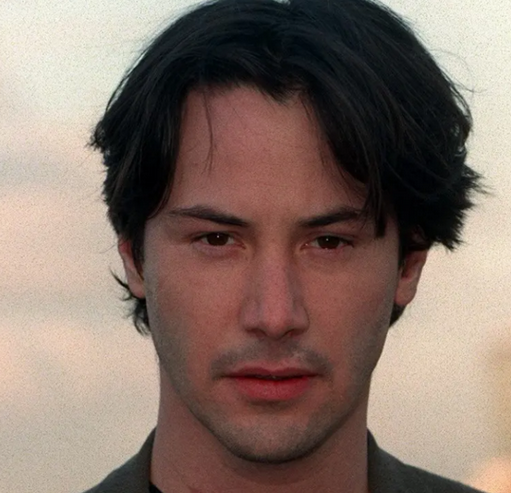
At first glance, his life appears completely visible, documented through interviews, film premieres, and countless online discussions. Many people assume his success arrived easily, as if recognition simply followed talent without struggle. Yet the reality behind the familiar image is far more layered. Long before he became a household name, his journey was marked by uncertainty, personal loss, and professional setbacks that might have convinced others to give up entirely.

In his early years, opportunities were inconsistent, and rejection was a common experience. Casting decisions didn’t always go his way, and career progress often felt slow compared to others rising quickly in the industry. Friends and colleagues from those early days recall how easily he could have stepped away from acting altogether. Instead, he kept showing up, taking small roles, learning from every experience, and slowly building confidence. His eventual success was not the result of a single lucky break, but of persistence and the willingness to continue even when progress felt invisible.

Even after reaching international fame, misunderstandings about his life continued. Public attention often focuses on premieres, awards, and box office numbers, overlooking the quieter parts of his story. Behind the scenes were long stretches of uncertainty, personal hardships, and sacrifices that shaped both his work ethic and his perspective. Despite becoming one of the most recognizable actors in the world, he maintained a reputation for humility, generosity, and professionalism, qualities developed long before the spotlight found him.

The man behind this journey is Keanu Reeves, widely known today for roles in some of cinema’s most successful films. But beyond the action scenes and celebrity status lies a story defined by resilience and quiet determination. Learning more about his path reminds us that success is rarely as simple as it appears. It often grows from perseverance through setbacks, staying true to personal values, and continuing forward when outcomes are uncertain. His story serves as a reminder that behind every public success stands a person who overcame challenges most audiences never see, proving that lasting achievement is built on patience, persistence, and character rather than instant fame.

My Son Didn’t Invite Me to His Wedding Due to My Disability — One Message Helped Us Reconcile

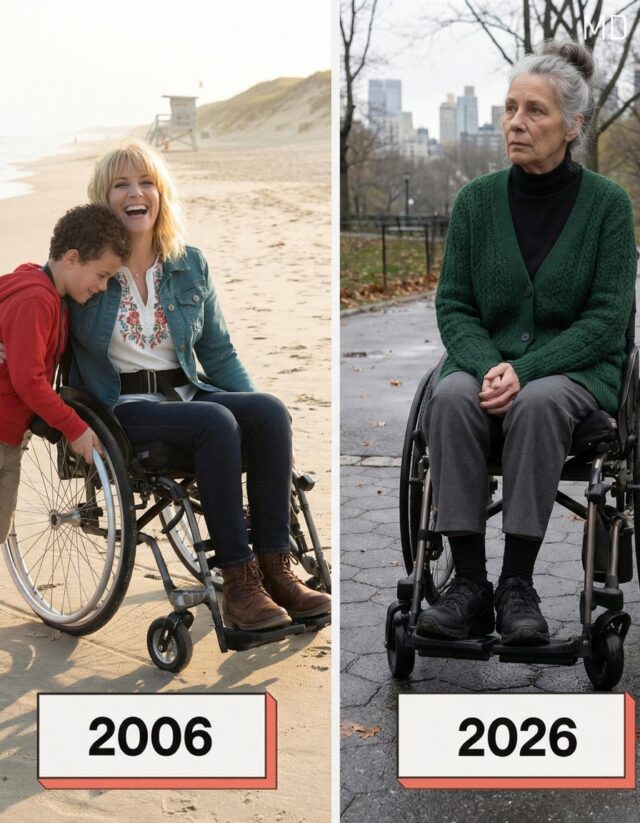
I have lived in a wheelchair for nearly twenty years, but before that, life moved quickly and freely. My son Liam was just a small boy when the accident changed everything. One ordinary afternoon turned into a lifetime of adjustments after I was injured while protecting him from an oncoming car. His father had already left when Liam was still a baby, so from that point on, it was only the two of us. Recovery was long and difficult, yet raising my son gave me purpose. We learned how to adapt together, and despite the challenges, our home was filled with laughter, late-night homework sessions, and the small victories that come with growing up side by side.

As Liam grew older, he became independent and successful, and I was proud of the man he became. When he announced his engagement to Jessica, I felt nothing but happiness for him. I eagerly prepared for the wedding, imagining the joy of watching him begin a new chapter. But a week before the ceremony, Liam visited with news that shattered my expectations. The venue was not accessible, he explained, and adjustments were considered inconvenient. More painfully, he admitted that my wheelchair might distract from the carefully planned atmosphere of the wedding photos. As gently as he tried to say it, the message was clear: it would be better if I stayed home.

That night was one of the loneliest I have known. I packed away the dress I had chosen and tried to convince myself not to feel hurt. Still, I knew there was something important Liam didn’t understand about our past. So, on the morning of his wedding, I sent him a simple package through my brother. Inside was a photo album filled with memories of his childhood, along with an old newspaper clipping explaining the accident that left me unable to walk—the accident that happened when I pushed him out of harm’s way. I had never told him the full story because I never wanted him to feel responsible or burdened.

Later that afternoon, Liam arrived at my door still dressed for the ceremony, overcome with emotion. He told me that seeing the truth had made him realize how much I had sacrificed and how wrong it felt to exclude me from one of the most important days of his life. We talked honestly for the first time in years, both of us apologizing for misunderstandings that had quietly grown between us. Life rarely offers perfect moments, but it does offer chances to learn and reconnect. My intention was never to cause guilt, only to share the truth. And in doing so, we found our way back to each other, reminded that love and respect matter far more than appearances ever could.

Tarzan star Ron Elys tragic final years after son stabbed wife Valerie to death

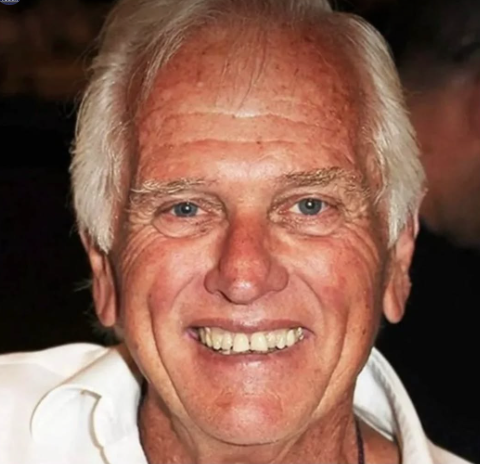
Actor Ron Ely, best known for playing Tarzan in the 1960s television series, has passed away at the age of 86. His later years were marked by devastating tragedy, following the violent deaths of his wife, Valerie Lundeen Ely, and their son, Cameron Ely. The loss capped a long and complicated chapter in the life of a man once celebrated for his heroic on-screen persona.

Ron Ely rose to fame portraying the jungle hero Tarzan in the NBC series that aired from 1966 to 1968. Athletic, charismatic, and strikingly handsome, he embodied the adventurous energy of the role, performing many of his own stunts and earning a reputation as a real-life action star. Beyond Tarzan, he appeared in a variety of television shows and films, and later found a second career as a host, notably presiding over the Miss America pageant in 1980 and 1981. By the early 2000s, he had largely retired from acting, living a quieter life with his family in Santa Barbara, California.

That peace was shattered in October 2019, when Ely’s wife of 35 years, Valerie Lundeen, was killed at their home. Valerie, a former flight attendant and beauty queen, was found dead at the age of 62 after being stabbed multiple times. The attacker was identified as their son, 30-year-old Cameron Ely. Police were called to the family residence in the upscale Hope Ranch area after receiving a 911 call reporting a domestic disturbance. When officers arrived, they discovered Valerie’s body inside the home.

According to the Santa Barbara County Sheriff’s Office, deputies located Cameron outside the house shortly afterward. Authorities stated that he was considered a threat and that deputies fired multiple shots after being unable to gain control of the situation verbally. Cameron was pronounced dead at the scene. The Sheriff’s Office later released a statement confirming that Ron Ely had been present in the home but was unharmed. He was taken to a nearby hospital for evaluation following the trauma of the incident.

Valerie Lundeen’s life had been marked by grace and accomplishment long before the tragedy. In 1980, she was crowned Miss Airline International, a beauty pageant for flight attendants. The following year, she went on to win Miss Florida USA and competed for the national Miss USA title. Her future husband, Ron Ely, was also connected to the world of pageantry at that time, serving as host of the Miss America competition in both 1980 and 1981. The two met soon afterward and married in 1984.

Their marriage lasted more than three decades, during which they raised three children—Kirsten, Kaitland, and Cameron. The family enjoyed a close bond and maintained a low public profile despite Ron’s celebrity. In 2018, Ron and Valerie became grandparents for the first time when their daughter Kaitland welcomed a baby boy. Friends and neighbors described Valerie as devoted, warm, and deeply family-oriented—a mother who dedicated herself to raising her children and creating a nurturing home.

The deaths of Valerie and Cameron sent shockwaves through the Santa Barbara community and the entertainment world. In the aftermath, Ron Ely filed a federal wrongful death lawsuit against the Santa Barbara County Sheriff’s Office, alleging that officers used excessive force when they shot Cameron. Court documents claimed that Cameron had been attempting to surrender and posed no immediate threat when deputies opened fire, reportedly shooting him more than 20 times. The lawsuit further alleged that authorities failed to handle the initial 911 call properly and did not provide adequate medical care after the shooting. The case reignited debate over the use of deadly force by law enforcement, especially in situations involving mental health crises or family violence.

In his later years, Ron largely withdrew from public appearances, focusing on his recovery and maintaining privacy after the dual losses. Though he had long been known for his physical strength and commanding presence, those close to him said the tragedies deeply affected his spirit. Having spent decades in Hollywood and later retreating into a quiet coastal life, Ely’s story became one of both achievement and heartbreaking loss.

Ron Ely’s death in 2025 marks the end of a turbulent but remarkable life. Born in Hereford, Texas, in 1938, he grew up in Amarillo and attended the University of Texas at Austin before heading west to pursue acting. His breakout role as Tarzan came at just 28 years old, and he became one of television’s most recognizable adventure heroes. Unlike earlier portrayals that emphasized Tarzan’s primal nature, Ely’s version of the character was articulate and intelligent—a reflection of the more refined image of the 1960s.

Following Tarzan, Ely appeared in films such as Doc Savage: The Man of Bronze (1975) and guest-starred in numerous television series including Fantasy IslandThe Love Boat, and Sea Hunt. His on-screen career tapered off in the late 1990s, though he made a brief return in the 2014 television movie Expecting Amish. Outside of acting, he wrote novels, including the 1994 adventure thriller Night Shadows.

Friends and colleagues often described him as disciplined, thoughtful, and deeply committed to his family. His marriage to Valerie was seen as a Hollywood rarity—long-lasting and grounded. In interviews over the years, Ely often spoke about stepping away from fame to prioritize his children and the simple pleasures of life away from Los Angeles.

The tragedy that struck the Ely family in 2019 left an indelible mark on their legacy, a shocking contrast to the wholesome, heroic image that defined Ron’s career. Yet even through profound loss, Ely’s name remained tied to a bygone era of television adventure, a time when heroes swung from vines and the line between courage and vulnerability blurred.

As news of his passing spread, tributes poured in from fans and fellow actors who remembered him not only for his iconic portrayal of Tarzan but for the dignity with which he carried himself through unimaginable personal sorrow. His story is one of talent, endurance, and the fragility of even the strongest among us.

Ron Ely is survived by his daughters, Kirsten and Kaitland, and his grandchildren. His wife Valerie and son Cameron remain a haunting memory of the personal trials he endured in his later life. For many who grew up watching him conquer the jungle each week on television, Ely will forever remain the embodiment of quiet heroism—both on-screen and off.

The Secret Lucille Ball Tried To Hide About Her Marriage

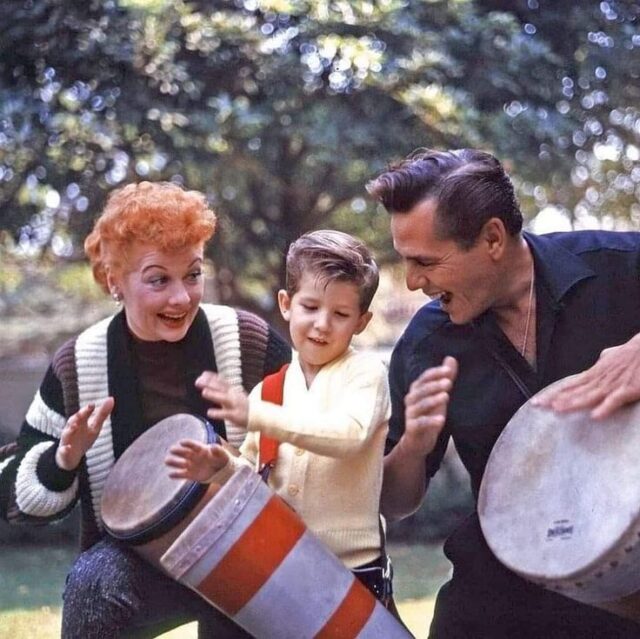
Comedy legend Lucille Ball and actor and musician Desi Arnaz — who scored television gold in the 1950s with “I Love Lucy” — arrived in Connecticut on the morning of November 30, 1940 and went to see a justice of the peace. The couple had met in Hollywood during the filming of the RKO movie “Too Many Girls” that summer. From the start their relationship was volatile and passionate. It contained several hidden truths Ball and Arnaz wanted to keep from the public. When the two were already deeply in love, in the press they both denied their romance was serious.

And then, in Connecticut, after Arnaz slipped a cheap brass ring he’d gotten from the five-and-dime store Woolworth’s to seal their whirlwind nuptials, the couple lied about their ages on the marriage license. Ball was nearly six years older than Arnaz. At the time, an older woman marrying a younger man was considered scandalous. It could have derailed both their careers just as they were climbing the ladder to success.

Love at first sight?

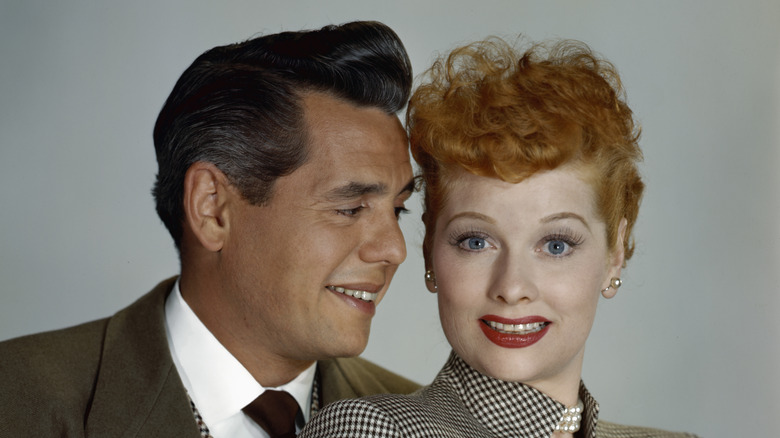
Actress Lucille Ball and her husband actor Desi Arnaz circa 1950’s. (Photo by Archive Photos/Getty Images)

When Lucille Ball met Desi Arnaz, she was struggling to further her Hollywood career. Before heading to Los Angeles, she had been a model in New York City who used the stage name Diane Belmont. Arnaz had come from money but fled Cuba for Miami with his family as a teenager following a revolution in 1933 that left them destitute. He held a string of menial jobs before making it big as a musician who introduced conga line dancing to America.

The actor Maureen O’Hara, in her book “Tis Herself: An Autobiography,” recalled that when Ball first saw Arnaz at the movie studio she knew her friend was smitten. O’Hara could “almost hear the bells ringing in” the actress’ “head.” In O’Hara’s version of the meeting, Arnaz snubbed Ball, calling her the “queen of B-movies” who would be bad for his career. But in a separate version of their first meeting, Arnaz saw Ball on the set of the film and commented “whatta hunk o’ woman” (via “The Real Story of Lucille Ball”). However their first meeting actually went down, they were soon enraptured by each other. Six months after they first met, Arnaz was back in New York City performing with his band. Ball was also in town and he came to her hotel. She was in the midst of an interview in which she denied their relationship was going anywhere. Minutes later, he popped the question.

Lucy and Desi’s marriage broke new ground

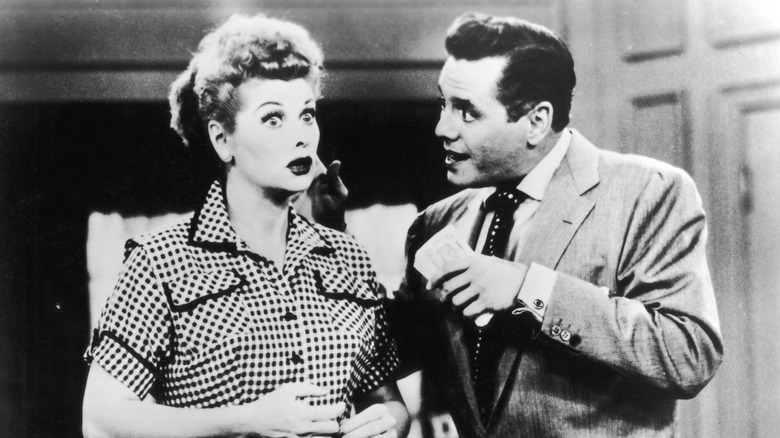
American film and television actress Lucille Ball (1910 – 1989) with her husband and co-star Desi Arnaz (1917 -1986), together they starred in 179 episodes of the sitcom ‘I Love Lucy’. (Photo by MPI/Getty Images)

When Lucille Ball and Desi Arnaz married that morning in November 1940, on the marriage license, Ball, who was then 29 and born in 1911, gave her birthdate as 1914. Likewise, the 23-year-old Arnaz, who was born in 1917, altered his age to appear older by also giving his birthdate as 1914. To the world at large, Ball and Arnaz were now the same age. And soon it wouldn’t matter anyway. They were about to make television history for a different reason.

Although the couple managed to hide their age difference, when “I Love Lucy” premiered in 1951, there was no hiding that they became the first interracial couple on television at a time when it was even more taboo than an older woman marrying a younger man. This made Ball and Arnaz’s marriage groundbreaking considering that at the time interracial marriage was against the law in many U.S. states. The show ran for six years and was a smash hit. Behind the scenes, things weren’t so comedic. By 1960, Ball had enough of Arnaz’s heavy drinking and affairs. She divorced him but they continued to work together. They had two children, Lucie and Desi Jr. Two days before his death from lung cancer in December 1986, Ball’s heartbreaking final words to Arnaz were “I love you,” which she repeated over and over. Ball outlived Arnaz by three years, dying of a ruptured aorta in April 1989.

Twisted truth about conjoined twins with 290,000 followers confirms rumors!

In the rapidly evolving landscape of digital media, the line between biological reality and synthetic perfection has become increasingly porous. The latest phenomenon to test the limits of public belief centers on Valeria and Camila, two purportedly conjoined twins who have become an overnight Instagram sensation. Since their debut on December 13, 2025, the pair has amassed nearly 300,000 followers, captivating an audience that is simultaneously mesmerized by their aesthetic beauty and deeply suspicious of their physical existence.

The twins are presented as being joined at the base of the neck, sharing a single, flawlessly sculpted body. Their feed is a curated gallery of high-end lifestyle content: posing in revealing bikinis on sun-drenched beaches, enjoying dinners at upscale restaurants, and lounging with a circle of equally glamorous friends. For many, the account is an inspiring glimpse into the lives of two women navigating a rare medical condition with grace and confidence. For others, it is the opening salvo of a new era of sophisticated digital deception.

As the account’s following surged to 289,000 in early 2026, the skepticism surrounding Valeria and Camila reached a fever pitch. The controversy highlights a growing cultural anxiety regarding Generative AI and its ability to manufacture human identity. Experts and laypeople alike have begun dissecting the imagery with forensic intensity, looking for the tell-tale “glitches” that often betray synthetic origins.

Andrew Hulbert, an AI prompt engineer and consultant who specializes in the integration of artificial intelligence within marketing and business processes, is among the most vocal critics. In an interview regarding the twins’ sudden rise, Hulbert stated that the narrative feels engineered for maximum engagement. “It’s the perfect story of the perfect person to give the perfect result of engagement,” he explained. From a marketing perspective, Valeria and Camila represent the “personification of what the media thinks beauty is.” Their images lack the inherent flaws of the human form—there are no stray hairs, no skin textures that react naturally to light, and no physical inconsistencies that usually accompany rare medical conditions.

The skepticism isn’t limited to professionals. The comments section of their Instagram page has become a battlefield of digital forensics. Skeptics point to the “uncanny valley” effect, where the imagery is close enough to reality to be convincing but “off” enough to trigger an instinctive sense of unease. Users have highlighted background anomalies, such as menus with illegible, distorted text and environmental details that seem to warp from one photo to the next. One follower challenged the duo directly, writing, “If it’s real, go live stream. I know you won’t.”

The demand for a live stream is a common litmus test for AI-generated influencers. While static images and short, filtered video clips can be meticulously edited or rendered using high-end AI tools, real-time interaction remains a significant hurdle for synthetic creators. Maintaining the physical consistency of a complex anatomy—such as two heads on one body—during a live, unscripted broadcast is currently beyond the capabilities of most consumer-grade AI models.

In a defiant response to the mounting pressure, Valeria and Camila posted an Instagram story attempting to shut down the rumors. “We move, we talk, we’re obviously not AI,” the caption read. However, in the age of deepfakes and advanced motion-capture technology, a simple video clip is no longer the definitive proof of life it once was.

Hulbert warns that the danger of these accounts lies in their ability to distort our perception of reality. He notes that the probability of three “perfect” people with flawless bodies appearing in a single, candid photo is statistically improbable. He advises social media users to look for the subtle failures of current AI technology: the irregular shape of ears, the inconsistent number of fingers, or the shifting placement of small marks and scars. AI often struggles with “spatial permanence,” meaning a mole visible in one photo might vanish or migrate in the next.

The phenomenon of Valeria and Camila raises deeper questions about the future of influencer culture and the ethics of digital identity. In late 2025 and early 2026, the rise of “synthetic influencers” has become a billion-dollar industry. These entities are cheaper to manage than human talent, they never age, and they are immune to the scandals that often plague real-world celebrities. However, when an account presents a rare and significant physical disability—like being conjoined twins—without disclosing its synthetic nature, it treads into a moral gray area. It potentially exploits the curiosity and empathy of the public for financial gain through engagement and brand partnerships.

Statistically, the occurrence of conjoined twins is extremely rare, happening in roughly one out of every 200,000 live births. The specific anatomy presented by Valeria and Camila—dicephalic parapagus, where two heads share one torso—is even rarer, and the survival rate into adulthood for such individuals is remarkably low. The most famous real-world example, Abby and Brittany Hensel, have spent their lives under intense medical and public scrutiny. In contrast, Valeria and Camila appeared out of nowhere with a fully formed, high-fashion aesthetic, lacking the history of medical documentation or community presence typically associated with such a condition.

As the debate rages on, the twins continue to post, their follower count ticking upward with every new bikini shot and cryptic denial. Whether they are a genuine medical marvel or the most sophisticated social experiment of 2026, Valeria and Camila have successfully exposed the fragility of truth in the digital age. They are a mirror reflecting our obsession with perfection and our growing inability to distinguish the born from the built.

If they are revealed as AI, it will mark a significant milestone in the capability of prompt engineering to create emotionally resonant, if deceptive, human narratives. If they are real, they represent a radical new way for individuals with unique bodies to reclaim their narratives—albeit in a way that is so polished it accidentally mimics the very technology designed to replace them. For now, the world watches, waits for a live stream, and scrolls through a feed that is either a miracle of biology or a masterpiece of code.

Police find girl missing!

The moment the cruiser’s doors opened and the young girl stepped onto the pavement of her driveway, the air in the neighborhood seemed to thicken with a collective, jagged intake of breath. For months, this street had been a gallery of grief, lined with yellow ribbons that had faded under the sun and posters whose ink had begun to run from the rain. When the officers finally brought her home, the reunion was not the cinematic, polished moment of joy the public had envisioned. It was something far more visceral—a raw, trembling collision of relief and agony. Her parents did not just hug her; they clung to her with a desperate, white-knuckled intensity, as if the sheer force of their grip could retroactively undo the months of her absence.

The girl who returned, however, was not exactly the same person who had vanished. The physical changes were the first to be noted: a hollowing of the cheeks, eyes that seemed to have retreated into a permanent state of hyper-vigilance, and a silence that felt heavy and impenetrable. Behind the closed doors of their suburban home, the family has now begun the grueling, quiet labor of recovery. This is the stage of the story that the news cameras rarely capture—the slow, fragile work of rebuilding a sense of safety in a world that has proven itself to be profoundly dangerous. It is a process of navigating night terrors, flinching at sudden movements, and trying to find the words for experiences that defy language.

While the family retreats into a necessary privacy, the machinery of justice has only just begun to grind. Investigators are meticulously retracing the girl’s movements during the period of her disappearance, working to construct a comprehensive timeline of her captivity. The inquiry is focused on three critical pillars: where she was held, who was responsible for her abduction, and the systemic failures that allowed a child to slip through the cracks of the community’s safety net. Forensic teams are analyzing digital footprints and physical evidence, searching for the “why” behind an act that feels fundamentally incomprehensible to the average citizen.

The community, which once mobilized in the hundreds to search through muddy fields and dense woods, now finds itself in a different kind of vigil. The initial surge of adrenaline and communal purpose has been replaced by a somber demand for accountability. Questions are being raised about the speed of the initial response and the efficacy of local alert systems. There is a growing movement among the residents to advocate for better protections for vulnerable children, ensuring that the “miracle” of this girl’s return serves as a catalyst for permanent change rather than just a fleeting headline.

The psychological toll on a child survivor of long-term abduction is immense and multifaceted. Experts in pediatric trauma emphasize that “coming home” is merely the commencement of a new, internal battle. The brain’s limbic system, which governs the fight-or-flight response, often remains stuck in a state of high alert long after the physical threat has been removed. Recovery involves a complex process of “re-associating” the home environment with safety, a task that requires specialized therapeutic interventions and an almost infinite amount of parental patience.

For the investigators, the girl’s resilience is as much a focus of study as the crime itself. They are looking into the coping mechanisms she employed to survive such harsh, isolating conditions. Often, children in these situations develop sophisticated internal worlds or dissociative strategies to endure physical and emotional trauma. Understanding these “survival traits” is essential for both the criminal case and the long-term therapeutic plan designed for her reintegration into social and educational life.

The legal repercussions are expected to be significant as the identities of those who failed her begin to emerge. Whether through direct malice or criminal negligence, the investigation is casting a wide net. Prosecutors are looking for evidence of a broader network or a pattern of behavior that might suggest other children remain at risk. The return of one girl has illuminated the dark corners of a localized crisis, turning a singular event into a broader mandate for public safety.

As the weeks pass, the “normal life” the family once knew feels like a distant, unreachable memory. They are learning to define a “new normal,” one that acknowledges the trauma without letting it become the sole defining feature of their daughter’s identity. The work of healing is not a linear progression; it is a series of two steps forward and one step back. There are days of unexpected laughter followed by nights of inconsolable grief. Through it all, the family remains a fortress, protecting her from the lingering gaze of a curious public while they navigate the wreckage of the past year.

The return of a missing child is a rare light in a often dark investigative landscape, but it is also a somber warning. It serves as a reminder that survival is a continuous act. The physical rescue is only the first chapter in a narrative that will span the rest of the girl’s life. Her story is a testament to human endurance, but it also underscores the absolute necessity of vigilance. The posters may be gone from the streetlights, but the memory of the void she left behind remains a permanent fixture in the neighborhood’s consciousness.

The nation continues to watch from a distance, balanced between relief for her return and a deep, unsettling curiosity about the nature of the evil she faced. As the investigation yields more details, the public’s demand for “answers” must be tempered by a respect for the girl’s right to heal in peace. The most inspiring part of her story is not the sensational details of her escape or the dramatic arrival of the police, but the quiet, everyday bravery she displays as she learns to trust the world again. Until the truth is fully revealed and justice is served, the community stays in its quiet vigil, hoping that the “miracle” of her return will eventually lead to a lasting, transformative peace.

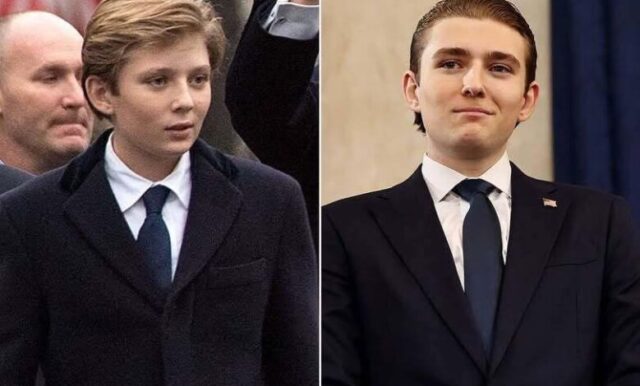
SOTM – At 18, Barron Trump FINALLY Admits What We All Suspected!

In the high-decibel arena of American political life, where every gesture is scrutinized and every word is amplified, Barron Trump has spent the better part of two decades as a figure of quiet mystery. Born in Manhattan on March 20, 2006, the only child of Donald and Melania Trump entered the world as a scion of immense privilege, yet his path has been defined by a deliberate, protective distance from the chaotic center of the spotlight. As he enters adulthood, the public fascination with the youngest Trump has reached a fever pitch, driven by a desire to understand the character of a young man who has managed to remain remarkably poised despite the unprecedented scale of his surroundings.

The foundation of Barron’s upbringing was laid almost exclusively by Melania Trump. While his father navigated the complexities of global real estate and later the American presidency, Melania remained steadfast in her commitment to providing a sense of normalcy and groundedness. She reportedly rejected the heavy reliance on a retinue of nannies, choosing instead to be the primary architect of his daily life. Her focus was on instilling solid values and a sense of humility—a task that required a careful balancing act given the gilded corridors of Trump Tower and the high-security confines of the White House. This maternal bond is described by close associates as the emotional anchor of Barron’s life, a relationship built on shared language, cultural heritage, and a mutual preference for privacy.

Barron’s educational journey reflects this pursuit of excellence tempered by a need for security. His schooling has spanned some of the most prestigious institutions in the country, from Columbia Grammar and Preparatory School in New York to St. Andrew’s Episcopal School in Maryland during his time in Washington, D.C. He concluded his secondary education at Oxbridge Academy in Florida, graduating in the spring of 2024. These institutions provided more than just academic rigor; they offered a controlled environment where a presidential son could engage with peers away from the lenses of the paparazzi. Those who have encountered him during these formative years describe a young man of significant intelligence and compassion, possessing a temperament that is often described as more reserved and observant than that of his elder siblings.

One of the most striking aspects of Barron’s intellectual development is his linguistic versatility. Growing up in a household where his mother’s Slovenian roots remained a point of pride, Barron became fluent in Slovenian at a young age. He also studied French, adding to a repertoire that allows him to navigate international circles with ease. This multilingualism is more than just a skill; it is a bridge to his heritage and a testament to Melania’s influence in ensuring her son remained connected to his roots even while living in the quintessential American residence.

Physically, Barron has undergone a transformation that has made him an unmistakable presence. Standing at an imposing 201 cm (approximately 6’7”), he towers over his father and siblings. This height, combined with a sharp, tailored sense of style, has made him a subject of fascination within the fashion and social media spheres. Despite his access to the most exclusive designers, Barron often leans toward a blend of classic elegance and modern casual wear. He is frequently seen in well-fitted suits that echo his father’s professional silhouette, yet he retains a youthful edge, often opting for casual sneakers that signal a desire to maintain a connection with his own generation.

While his public appearances are rare, they often center around the shared interests he holds with his father. The bond between Donald and Barron is most visible on the golf course. Golf is the “common language” of the Trump family, a sport that allows for hours of uninterrupted conversation away from the noise of political rallies and corporate meetings. Barron is reportedly an accomplished golfer, possessing a swing that reflects his height and natural athletic coordination. Beyond the greens, his passion for sports extends to tennis and, most notably, football (soccer). His dedication to the sport was evidenced by his participation in the DC United Youth Academy during the family’s tenure in Washington. His interest in football is often cited as a reflection of his European influence, favoring the tactical and fluid nature of the world’s most popular sport over the more traditional American pastimes.

The transition from a protected childhood to a public adulthood is a significant milestone for any individual, but for Barron Trump, it carries the weight of a legacy. At 18, he is no longer just a “son of the president”; he is an individual beginning to define his own place in the world. The suspicions that have long swirled around him—questions of whether he would follow in his father’s political footsteps or chart a completely different course—are beginning to find their answers in his quiet, dignified conduct. He has shown a remarkable ability to handle the pressure of public scrutiny with a level of maturity that belies his age.

There is a quiet intelligence in the way Barron navigates his environment. He seems to have inherited his father’s confidence but tempered it with his mother’s preference for discretion. This combination makes him a unique figure in the Trump lineage. As he prepares for the next chapter of his life, likely involving higher education at a premier institution, the public remains captivated by the “Barron mystery.” Is he the quiet strategist, the compassionate scholar, or the future athlete?

The truth is likely a combination of all three. Barron Trump is a product of two distinct worlds: the high-stakes, aggressive environment of American business and politics, and the private, disciplined world of his mother’s upbringing. By admitting, through his actions and his poise, that he is his own man, he has confirmed what many suspected: that he is a person of depth and substance who refuses to be reduced to a caricature or a headline.

In the years to come, as he steps further into the light, Barron will undoubtedly continue to surprise those who seek to define him. For now, he remains a tall, silent sentinel of his family’s legacy, a young man who understands that in a world of constant noise, there is immense power in silence. His journey is a reminder that even in the most public of lives, it is possible to cultivate a private soul. Whether on the golf course, in a university lecture hall, or at a state function, Barron Trump carries himself with the quiet assurance of someone who knows exactly who he is, regardless of the Suspicions of the world outside.

Missing girl is found in the bush, her grandfather!

The silence of the dense, unforgiving bushland was finally broken not by the rustle of wind through the scrub, but by the sharp, rhythmic crackle of a police radio confirming the impossible: she had been found. After a grueling search that had effectively paralyzed the local community for hours, a missing young girl was located alive deep within a remote stretch of wilderness. The discovery sparked a visceral wave of emotion that rippled through the command center—a turbulent mixture of profound relief and lingering shock. For the search teams who had spent the night battling exhaustion and the elements, the sight of the child, conscious and breathing amidst the shadows of the brush, was the only reward that mattered.

The operation had been a massive, coordinated feat of human endurance involving state police, specialized emergency services, and a small army of local volunteers. The terrain where she was eventually discovered was described by rescuers as “hostile”—a labyrinth of thick, tangled vegetation and treacherous, uneven ground where visibility was often reduced to a few meters. Navigating this landscape in the dark required more than just flashlights; it required a meticulous, grid-based discipline. Authorities confirmed that the breakthrough came following the synthesis of fresh digital leads and localized tips, which allowed commanders to narrow the search radius to a specific, high-probability zone of the bush.

Once located, the girl was immediately wrapped in thermal blankets and stabilized by on-site paramedics. While she was alert and able to respond to basic commands, she was quickly evacuated to a nearby medical facility for a comprehensive evaluation. In cases of exposure, the primary concerns for medical staff are dehydration, hypothermia, and the psychological impact of prolonged isolation in a survival situation. As she began her physical recovery under the watchful eyes of doctors, investigators back at the scene were already transitioning from a rescue operation to a forensic inquiry. Officers secured the area where she was found, treating it as a potential crime scene to determine how a child of her age could have traveled so far into such a difficult environment unaided.
The Mechanics of the Investigation

As the sun rose over the search site, the focus of the investigation broadened to include the domestic circumstances surrounding the disappearance. In the clinical, necessary world of police work, the initial hours following a recovery are dedicated to establishing an airtight timeline. This involves interviewing every individual who had contact with the child in the twenty-four hours leading up to her disappearance. Among those brought in for questioning was the girl’s grandfather.

The news of his involvement in the questioning process quickly circulated through the community, but authorities were quick to provide context. They emphasized that in high-stakes missing persons cases, the “inner circle” of the family is always the first point of forensic contact. The grandfather’s interview was described as a standard procedural step aimed at gathering facts rather than assigning culpability. Investigators are looking for small, seemingly insignificant details: a door left unlatched, a favorite hiding spot mentioned in passing, or a specific window of time where supervision may have lapsed. Officials have urged the public to refrain from speculation, reminding them that an interview is not an indictment and that no definitive conclusions can be drawn until all forensic evidence—including digital footprints and physical site analysis—has been fully reviewed.
A Community in Transition

The local community, which had spent the previous evening taping posters to streetlights and walking the perimeter of the bush with flashlights, is now navigating the complex emotional “aftermath” of a crisis. While the overriding sentiment is one of gratitude, it is tempered by a growing demand for clarity. How did she get out? Was she alone? Could this have been prevented? These questions are a natural part of the communal healing process, as residents seek to restore the sense of safety that was shattered when the girl first went missing.

The rapid response of the public was cited by police as a major factor in the successful outcome. In modern search and rescue, the “Golden Hour” has been replaced by the “Digital Window,” where the immediate dissemination of information via social media and local alerts can turn hundreds of residents into additional eyes and ears for the police. The cooperation in this case was described as exemplary, with residents providing a steady stream of doorbell camera footage and localized tracking information that helped refine the search grid.
The Path to Recovery

For the child, the rescue from the bush is merely the end of the first chapter. Pediatric specialists note that the psychological “thaw” following a traumatic disappearance can be a long and non-linear process. The focus now shifts to providing a “soft landing”—a controlled environment where she can feel safe enough to eventually share her account of what happened. For the family, the road ahead involves balancing the need for answers with the absolute priority of the child’s mental well-being.

The investigation remains a high-priority “active” file. Forensic specialists continue to piece together the physical evidence from the site where she was found, looking for signs of third-party involvement or environmental factors that may have influenced her direction of travel. Searchers noted that the girl was found in a “hollow” that provided some protection from the wind, a detail that may suggest an instinctive survival response or the assistance of a specific landmark.

As the forensic teams conclude their work in the bush and the legal interviews continue in the city, the story remains a powerful testament to the efficacy of coordinated emergency response. It serves as a reminder that in the face of a terrifying void, the collective effort of a community—guided by professional expertise—can still produce a miracle. However, until the final report is filed and the timeline is fully understood, the investigation remains a pursuit of the truth behind the relief.

The Hidden Meaning Behind the Fig Hand Gesture and Its Journey Through History!

The human hand is perhaps the most sophisticated instrument of communication ever devised by nature. Long before the written word and parallel to the development of complex spoken language, the hands served as the primary interface for human expression. Among the vast lexicon of manual signals, few are as enigmatic, ancient, or culturally versatile as the “fig” gesture. To the uninitiated, it appears as a simple, perhaps even clumsy, clenched fist. However, the positioning of the thumb—tucked firmly between the index and middle fingers—transforms the hand from a blunt instrument of force into a sophisticated carrier of subtext. This gesture, known historically as the mano fuca, has traversed centuries of human history, evolving from a potent symbol of fertility and warding to a quiet tool of social resistance and, eventually, a playful relic of childhood games.

The journey of the fig gesture begins in the ancient world, where physical symbols were often imbued with a sense of cosmic or spiritual weight. In the Mediterranean basin, particularly within the Roman Empire, the gesture was far from a casual flick of the wrist. It was deeply tied to the “evil eye,” a pervasive belief that malevolent glares could bring misfortune, illness, or death. The fig gesture was thought to act as a metaphysical shield. Because the visual arrangement of the fingers resembled certain anatomical forms—specifically the fruit of the fig tree, which has long been a metaphor for fertility and life—it was believed to possess a generative power that could neutralize the “dry” and destructive energy of a curse. In this context, the gesture was an act of profound self-defense, a way for the common person to navigate a world they believed was populated by unseen spiritual threats.

As Europe moved into the Middle Ages and the early modern period, the utility of the fig gesture shifted from the supernatural to the social. In rural communities where social hierarchies were rigid and the consequences of open defiance could be severe, the gesture became a vital tool for the “politics of the weak.” When tax collectors, local lords, or unwanted officials arrived in a village, a direct verbal refusal could lead to imprisonment or worse. Instead, residents developed a repertoire of silent signals. The fig gesture, delivered discreetly from the shadows of a doorway or under the concealment of a shawl, allowed a person to communicate a firm “no” without the escalation of a shouting match. It was an act of quiet sovereignty. By using the gesture, an individual could maintain their dignity and set a clear boundary while avoiding the catastrophic fallout of open conflict. This era cemented the gesture’s reputation as a symbol of resilience—a way to say “I see you, and I refuse you” with absolute calm.

The cultural geography of the gesture is equally fascinating, as its meaning underwent a radical transformation depending on which border one crossed. In Italy and Brazil, the figa evolved into a good-luck charm, often carved out of wood, gold, or silver and worn as a pendant. In these cultures, the gesture lost its edge of refusal and became a beacon of protection and prosperity. Conversely, in parts of the Slavic world and Turkey, the gesture—often referred to as the kukish or nana—retained a more aggressive, mocking tone. In these regions, showing someone the fig was a visceral way of saying “you get nothing,” a visual representation of a void or a zero. It was used to puncture the arrogance of someone asking for an unreasonable favor or to mock a person who had failed in an endeavor. This duality—luck on one hand, mockery on the other—highlights how human beings can take a single physical form and imbue it with diametrically opposed intentions.

As societies modernized and the threat of the “evil eye” faded into the background of folklore, the fig gesture found a new home in the world of childhood. For many born in the twentieth century, the gesture is inextricably linked to the “I’ve got your nose” game played by parents and grandparents. In this sterilized version of the ancient sign, the thumb protruding between the fingers represents the stolen nose of a laughing child. It is a remarkable example of cultural survival; a gesture that once warded off demons and defied feudal lords was domesticated into a tool of familial bonding and innocent deception. Yet, even in this playful context, the core essence of the gesture remained: it was a secret, a trick, and a way of using the hand to represent something that wasn’t actually there.

In the contemporary era, the fig gesture has largely retreated from the public square. We live in an age of hyper-verbalization and digital saturation, where disagreement is usually expressed through the clatter of a keyboard or the selection of a standardized emoji. The nuanced, tactile language of the hand has been flattened into a series of pixels. Yet, there is something lost in this transition. The fig gesture represented a form of communication that required physical presence and emotional restraint. It was a “low-resolution” signal that required “high-resolution” social awareness to interpret. To use the gesture effectively, one had to understand the timing, the relationship, and the cultural context of the moment. It was an exercise in social intelligence.

The enduring legacy of the fig gesture lies in its lesson of measured response. In a modern world where every disagreement feels like it must be litigated at maximum volume, the history of this clenched fist offers an alternative path. It reminds us that power does not always reside in the loudest voice or the most aggressive stance. Sometimes, the most effective way to stand one’s ground is through a quiet, symbolic act of refusal. There is a certain grace in the “fig”—a refusal to engage in the theater of hostility while still maintaining a firm position. It is the physical embodiment of the phrase “speak softly and carry a big stick,” or perhaps more accurately, “speak not at all and let your hands tell the story.”

As we look back at this journey from ancient talismans to the kitchen tables of our grandparents, we see a reflection of the human condition itself. We are a species that craves connection but requires boundaries; we are driven by a need for protection but possessed by a sense of humor. The fig gesture, in all its various forms, managed to capture all of these facets. It was a charm, a shield, a taunt, and a toy. While it may never return to its status as a primary mode of communication, its memory serves as a bridge to a time when our hands were as eloquent as our tongues. In remembering the fig, we reconnect with a lineage of human ingenuity that valued the subtle over the shrill and the symbolic over the literal. It remains a testament to the idea that even the smallest movement of a thumb can carry the weight of a thousand years of history.

If you find yourself in a situation where words feel insufficient or where a loud argument seems like a waste of breath, there is a quiet dignity to be found in the lessons of the past. The fig gesture reminds us that we have always had the tools to navigate tension with a touch of wit and a steady hand. It is a reminder that resilience doesn’t have to be noisy, and that sometimes, the most profound thing you can do is tuck your thumb, hold your ground, and let the silence speak for itself.

Popular

Words From Nancy Guthrie Change Everything for the Family!?

0
The disappearance of Nancy Guthrie has transitioned from a private family tragedy into a sprawling narrative that has gripped the collective public consciousness. This...