Entertainment

A Payroll Mistake Taught Me an Unexpected Lesson About Fairness at Work

When Daniel checked his bank account late one evening, he was surprised to see two identical salary deposits instead of one. At first, he assumed it was some kind of bonus or delayed payment finally processed. But after reviewing the details more carefully, he realized it was likely an accounting error. The extra money would have helped with overdue bills and repairs he had postponed for months, and for a moment he felt tempted to ignore it. Still, he knew mistakes in payroll systems rarely went unnoticed for long, and uncertainty weighed on his conscience.

The next morning, human resources contacted him, explaining that a duplicate payment had been made and politely asking him to return the extra amount. Daniel, frustrated by how often employees complained about unpaid overtime and delayed reimbursements, responded defensively. He felt that the company rarely took responsibility when mistakes hurt workers, so why should he rush to fix one that worked in his favor? The conversation ended awkwardly, and although HR remained professional, Daniel sensed tension building around the situation.

The following day, however, things changed. A company-wide email arrived explaining that a technical error had affected multiple payroll accounts. Several employees had either been underpaid or paid incorrectly, and the finance team was urgently working to correct the situation. The message reminded staff that accurate payroll depended on cooperation from everyone, including returning accidental overpayments so that corrections could be made quickly. Reading the email, Daniel felt his earlier reaction differently. What he had seen as a small personal win was actually part of a larger problem affecting coworkers who were missing money they relied on.

Later that afternoon, Daniel contacted HR and arranged to return the extra payment. The conversation this time was calm and constructive. The representative thanked him and explained how even small delays in corrections could create complications for others. The experience left Daniel reflecting on how workplace situations often look different when seen from multiple perspectives. In the end, he realized the issue wasn’t about blame but about fairness and trust. Mistakes happen in any organization, but how people respond to them helps shape the environment they share. By choosing cooperation over frustration, Daniel helped restore a small piece of balance—and learned that integrity at work often matters more than a temporary advantage.

The Meaning Behind My Mother’s Morning Routine Finally Made Sense Years Later

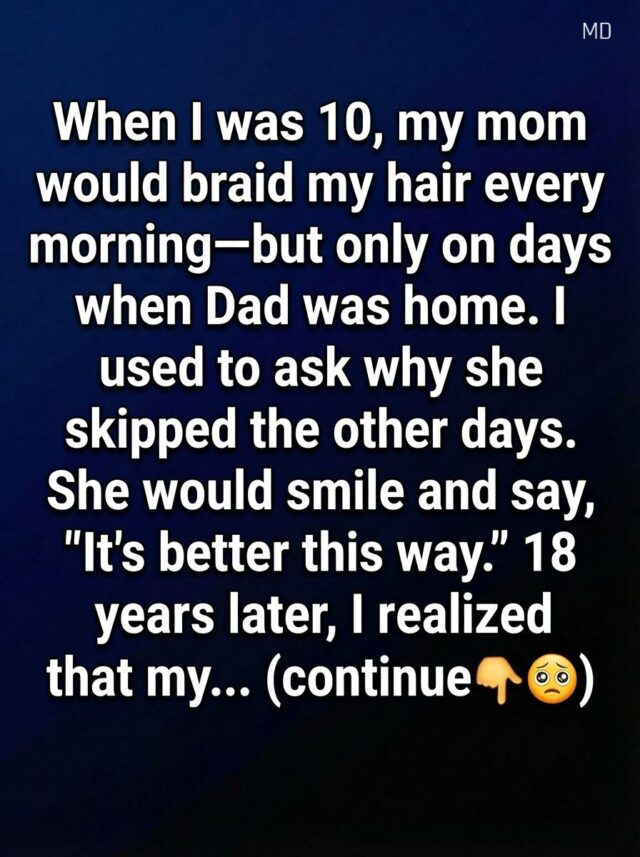
When I was 10, my mom would braid my hair every morning—but only on days when Dad was home. I used to ask why she skipped the other days. She would smile and say, “It’s better this way.” Back then, I thought it was just one of those mysterious grown-up answers, something parents said when they didn’t want to explain things to children. I didn’t question it much. I simply enjoyed the gentle tug of her fingers through my hair, the quiet moments we shared before school, and the feeling that everything in our small world was perfectly normal.

On the mornings Dad traveled for work, Mom seemed more relaxed. We ate breakfast slowly, sometimes laughing over spilled cereal or a silly story from the radio. My hair stayed loose, and we rushed out the door together, carefree and unhurried. I never noticed the difference in her mood until much later. To me, she was just being practical, saving time when it was just the two of us. Childhood has a way of hiding adult worries behind ordinary routines.

Eighteen years later, while helping her sort old photos, I casually mentioned how pretty my braids looked in those childhood pictures. She smiled, then grew quiet. After a long pause, she explained that my father, though loving, believed appearances mattered deeply and expected everything in the house to look orderly, including me. On the days he was home, she woke earlier to braid my hair so mornings would stay calm and peaceful. On the days he was away, she allowed herself—and me—a little freedom and extra rest.

In that moment, I finally understood what she meant by “It’s better this way.” She had quietly balanced everyone’s needs, protecting the harmony of our home while still giving me small pockets of ease and comfort. Those braids were never about hairstyle alone—they were her silent way of keeping our family steady. Now, whenever I braid my own daughter’s hair, I remember those mornings and recognize the quiet strength in the small things parents do, often unnoticed, simply to keep love at the center of everyday life.

Chilling new video reveals blood trail outside Nancy Guthrie’s front door

Nancy Guthrie’s mysterious disappearance continues to baffle police and her family.

Now, a shocking new video shows blood drops and splatter on the front porch of the Arizona home of the Today anchor’s missing mother.

100 sheriff’s detectives working on the case

Nancy Guthrie has been missing since Saturday, January 3. Police have confirmed that the case is now being treated as a criminal investigation.

The disappearance has drawn widespread attention, in part because 84-year-old Nancy is the mother of one of the U.S.’s top TV personalities, “Today” show anchor Savannah Guthrie.

“We do believe Nancy was taken from her home against her will,” Sheriff Chris Nanos said during a press conference on Tuesday.

Four days into the frantic search for, and with roughly 100 sheriff’s detectives on the case, the mystery surrounding Nancy’s disappearance has only grown more baffling.

Chilling new footage

According to police sources and reports, authorities began to suspect something terrible had occurred after certain discoveries at Nancy’s Tucson home. It has been reported that blood was found inside the house, along with signs of forced entry.

Police have described the scene at Nancy Guthrie’s Tucson home as alarming but have declined to provide additional details.

Sources, however, told New York Post that blood was discovered inside the residence and that personal items, including her phone, things she normally wouldn’t leave behind, were still at the home.

Shocking new footage also shows a trail of blood leading from the Arizona home of “Today” host Savannah Guthrie’s missing mother. Captured by NewsNation Senior National Correspondent Brian Entin, the video reveals dark red blood drops and splatter across the front porch of the Tucson residence, matching earlier descriptions of a chaotic crime scene, sources told The New York Post.

Credits: NewsNation

According to NewsNation, blood could still be seen outside the front door even after authorities cleared the crime scene and returned the property to her family.

It’s still unknown whose blood it is, but the footage surfaced just hours after an unverified ransom note was sent to TMZ, demanding millions in Bitcoin for Nancy’s safe return.

Another detail reported by the media is that a Ring doorbell camera, which had been installed near the entrance, was missing. Pima County Sheriff Chris Nanos confirmed that investigators are looking into whether the device was deliberately taken by the suspect.

Nancy Guthrie, who lived alone in a ranch-style home in the Catalina Foothills community, was last seen Saturday night when family members dropped her off at her residence. Local authorities say she may have been forcibly taken in the middle of the night.

Her family grew concerned after she failed to show up for church services Sunday morning, according to the Arizona Department of Public Safety.

Investigators noted that Nancy’s pacemaker stopped syncing with her devices around 2 a.m., suggesting she may have been taken at that time. Authorities warn that without her essential medications, her life could be in immediate danger.

Pulls out of Winter Olympics coverage

Savannah Guthrie has been absent from the Today show since the investigation began. She also withdrew from covering the Winter Olympics in Italy to “focus on being with her family” and has thanked the public for their support. Later, on Instagram, the 54-year-old posted a photo with the caption, “Please Pray.”

“We believe in prayer. We believe in voices raised in unison, in love, in hope. We believe in goodness. We believe in humanity. Above all, we believe in Him,” Savannah wrote.

“Thank you for lifting your prayers with ours for our beloved mom, our dearest Nancy, a woman of deep conviction, a good and faithful servant. Raise your prayers with us and believe with us that she will be lifted by them in this very moment.”

She concluded, “We need you. He will keep in perfect peace those whose hearts are steadfast, trusting in the Lord.” A verse from Isaiah, “for all time, for all of us. Bring her home.”

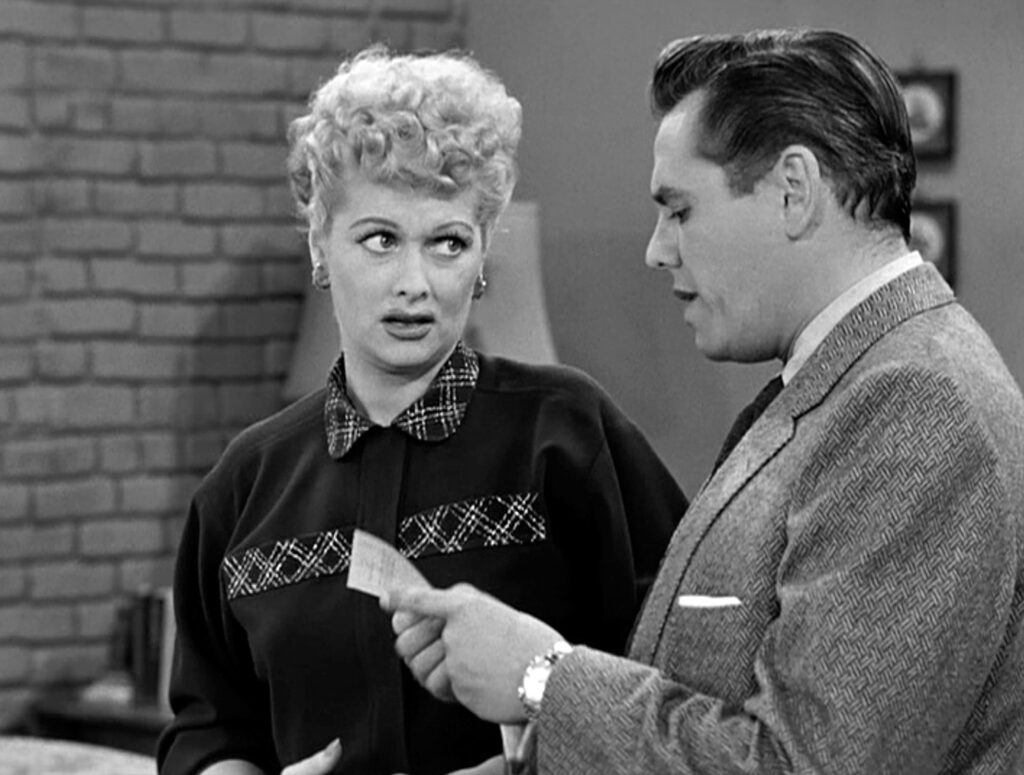
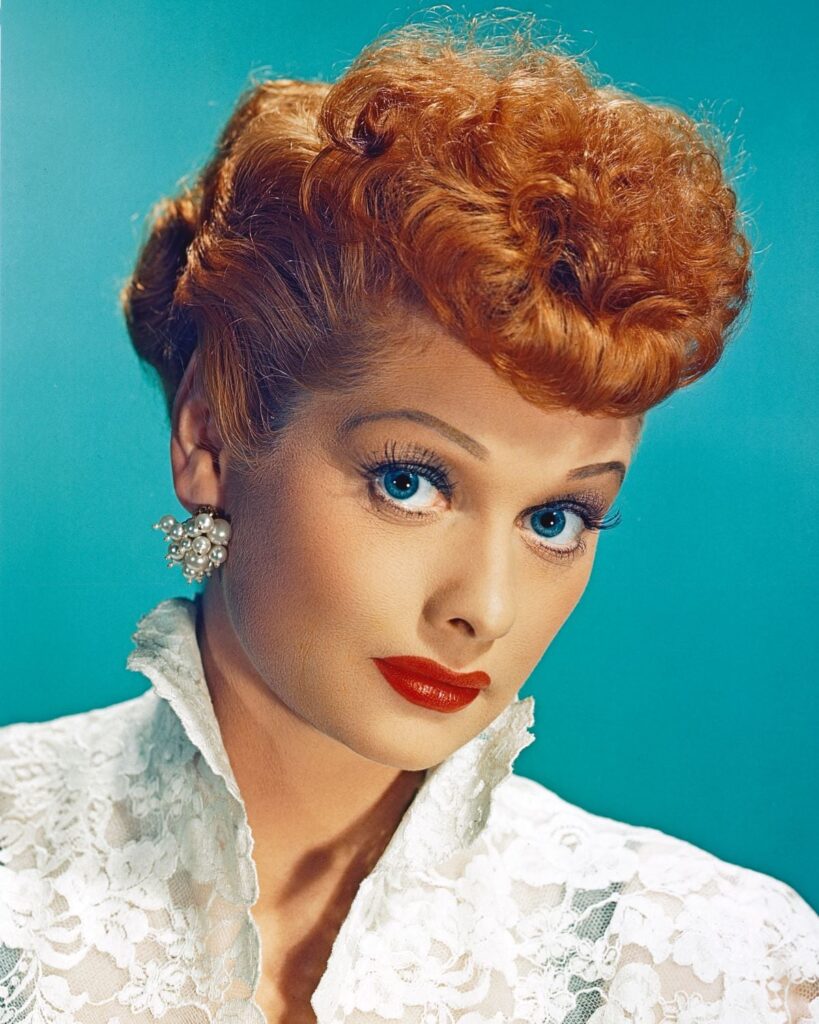
‘I Love Lucy’: Lucille Ball Wasn’t a Natural Redhead — Here’s 1 Trick She Used to Get Flaming Red Results

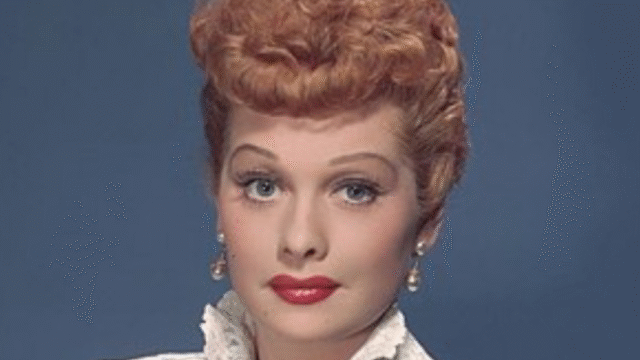
Lucille Ball was born a brunette. But fans can only picture her as the redhead Lucy Ricardo on ‘I Love Lucy.’ Here’s how she kept her hair so flaming red.

Lucille Ball is one of the best-loved actresses of all time. Best known for her work on the sitcom I Love Lucy, the actor became a legendary comedian for her generation. She went from modeling to acting to proving her business acumen behind the camera as a producer. Amazingly, the talented Ball became the first woman to run a major television studio: Desilu Productions.

The Emmy Award winner put her heart and soul into her work. However, some of her deepest emotions remained hidden from the public. And not everyone knew the true Ball. Some fans don’t even realize she wasn’t a natural redhead.

Lucille Ball didn’t get famous until she was almost 40

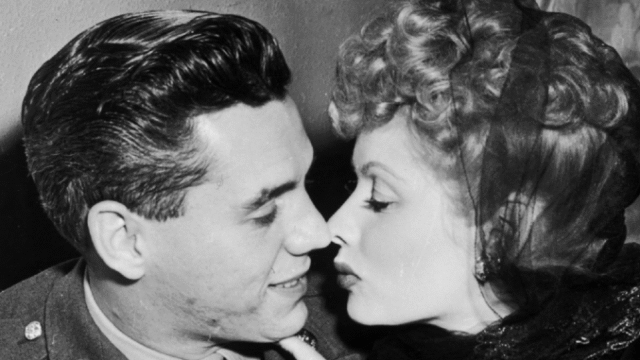
Lucille Ball and Desi Arnaz | CBS Photo Archive/Getty Images

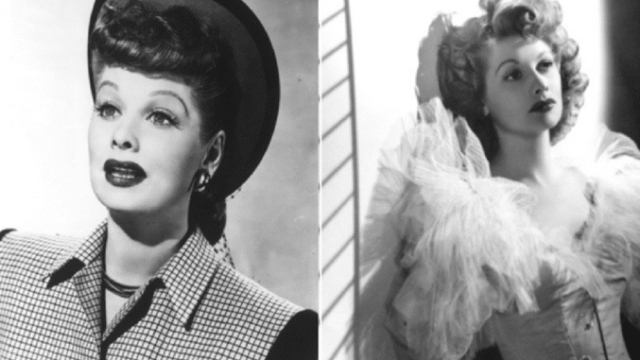
She eventually became one of the biggest stars in Hollywood. But before her breakout role on I Love Lucy, Ball was just a struggling actress trying to make it big, landing small parts and modeling gigs sporadically without finding true success. At the time, the actor still maintained her natural brown hair color.

Ball fought hard to get her real-life husband, Desi Arnaz, cast alongside her on the sitcom I Love Lucy. The show was based on the popular radio program My Favorite Husband, which Ball also starred in. Ball was almost 40 when the sitcom premiered in 1951.

Ball was a natural brunette

Lucille Ball | CBS via Getty Images

It’s not the only factor in Ball’s lack of Hollywood stardom. However, as a brunette, the actor wasn’t standing out from the crowd of talent the same way she did after dyeing her hair. Ball first changed her look from brown to red for the project Du Barry Was a Lady. Her preferred color was called “golden apricot.”

But even then, Ball hadn’t quite achieved the flaming red mane Lucy Ricardo became known for. The show’s former stylist revealed how they got the color so bright.

Lucille Ball’s stylist used 1 weird trick to turn her hair bright red

Lucille Ball | Silver Screen Collection/Hulton Archive/Getty Images

There were other redheaded actresses at the time but no one looked just like Ball. That’s because of the effort from I Love Lucy hairstylist Irma Kusely, who is credited with maintaining the color. She did it by swapping out regular hair dye for henna.

“A lot of people think of it as red — it’s not red at all,” Kusely said, according to Good Housekeeping. “[Ball] met a very wealthy sheikh and he had heard about her problem [getting the right coloring], he said he would send her a lifetime supply of henna, which he did! [We kept it] in my garage, locked away in a safe.”

That flaming hair became an integral look for Lucy on the series, matching her zany personality and unique outlook on life.

Her hair wasn’t the only thing she changed

During her quest to become a movie star, Ball made several changes, including her name. The actor was born Lucille Désirée Ball. However, she briefly used the name Diane Belmont while trying to break into the modeling world, HuffPost reported. Ball allegedly thought the new name sounded more “glamorous.”

Of course, Ball would find true success with her real name and fake hair. Who would have thought?

Why ‘I Love Lucy’ Wasn’t Called ‘I Love Lucille,’ According to Desi Arnaz

Lucille Ball and Desi Arnaz were the stars of I Love Lucy. Arnaz explained why he didn’t want the show to be called I Love Lucille.

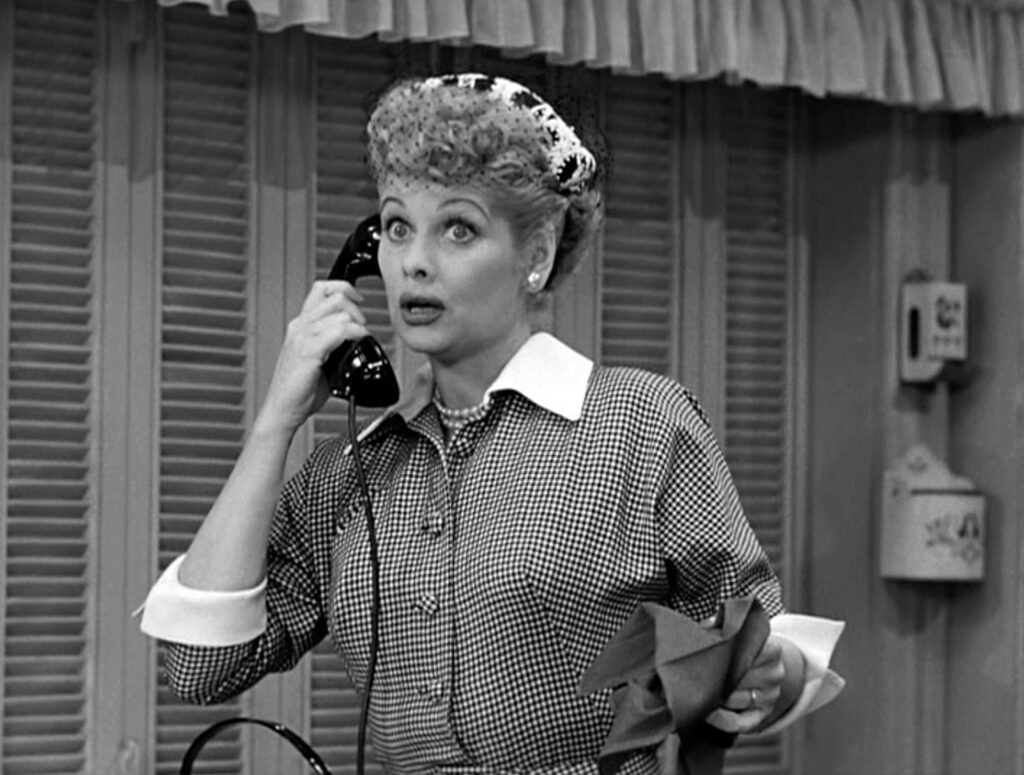
I Love Lucy has been a presence in many homes for decades. When you hear the name of the show, the first thing you likely think of is Lucille Ball with her bright, red hair and hilarious facial expressions. Here’s the interesting reason I Love Lucy wasn’t named I Love Lucille, according to Desi Arnaz.

‘I Love Lucy’ was a hit for Lucille Ball and Desi Arnaz

Lucille Ball | CBS Photo Archive/Getty Images

I Love Lucy aired from 1951 to 1957. Ball played the role of Lucy Ricardo and Arnaz played the role of Ricky Ricardo. Their TV neighbors, Fred and Ethel Mertz, were played by William Frawley and Vivian Vance.

Ball and Arnaz got a lot of attention because they were an interracial couple on television. I Love Lucy also caused a stir by showing a pregnant woman on TV. The duo almost ended I Love Lucy after they received baby news. During that time, it was considered controversial for a visibly pregnant woman to be on TV. Even saying the word “pregnant” on television was forbidden.

Why ‘I Love Lucy’ wasn’t called ‘I Love Lucille’

When Arnaz and Ball first met, he called her Miss Ball, but she told him to call her Lucille. According to his book, A Book, Ball jokingly said she would call him “Dizzy.” As they grew more familiar, Arnaz changed how he addressed Ball.

Arnaz later explained why the show was called I Love Lucy. He says he didn’t like the name Lucille because other men before him called her by that name. He preferred to call her Lucy instead.

“I had started calling her Lucy shortly after we met; I didn’t like the name Lucille,” wrote Arnaz. “That name had been used by other men. ‘Lucy’ was mine alone. That’s how eventually our television show was called I Love Lucy, not I Love Lucille.”

Lucille Ball was the star of ‘I Love Lucy,’ according to the producer

Jess Oppenheimer, the producer and head writer of I Love Lucy, said the show wouldn’t be the same without Ball. He considered her the star of the show. “The entire project rode on the talent of one woman,” wrote Oppenheimer in his book Laughs, Luck, and Lucy: How I Came to Create the Most Popular Sitcom of All Time. “In every sense, she was a star,” he added.

Oppenheimer said Ball accurately interpreted the script every time. According to him, she consistently gave a stellar performance and brought the script to life exactly as he had imagined it. He said every week, “she kept astounding us.”

Oppenheimer went on to say the audience was so mesmerized by Ball that they would forget she was acting. To them, she really was Lucy Ricardo. They were sitting in her living room and watching her life with Ricky Ricardo. Said Oppenheimer, “If you looked carefully, you would marvel that every fiber in the woman’s body was contributing to the illusion.”

‘I Love Lucy’: A Traumatic Event Caused Lucille Ball to Avoid Pictures of Birds

I Love Lucy star Lucille Ball described her childhood as “challenging” and marked by “death and cruel circumstances.” One event in particular caused her to avoid pictures of birds for the rest of her life.

Lucille Ball said her mother tried to ‘keep her under control’

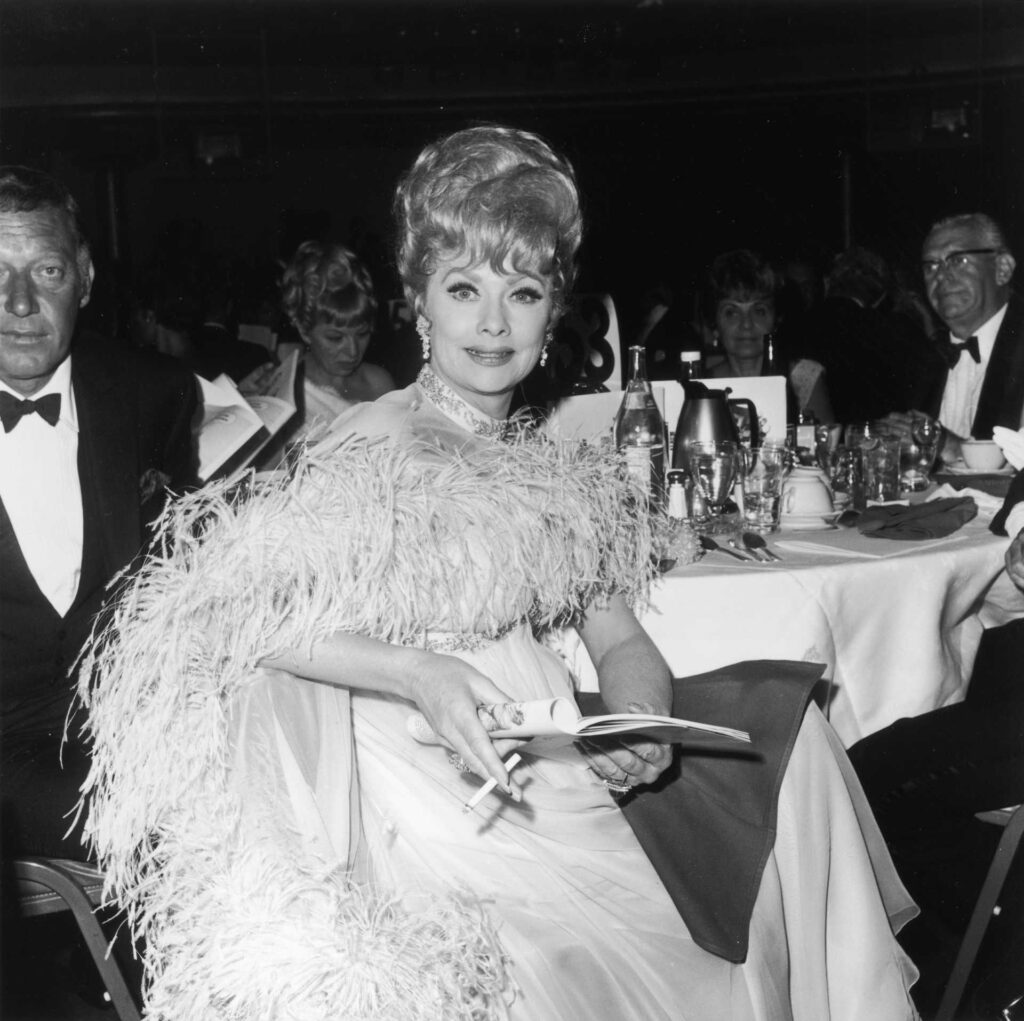
Lucille Ball in 1968 | Max B. Miller/Fotos International/Getty Images

According to Ball, her mother, DeDe, had difficulty keeping her “under control,” so she would sometimes tie her to a dog leash and keep her in the backyard. In her book, Love, Lucy, Ball says life became difficult for her mother during her father’s illness and eventual death. She was overwhelmed with work and childrearing, so she looked for ways to keep Ball occupied.

DeDe would sometimes leave Ball with the local grocery store owner. “My mother finally made arrangements with our kindly corner grocery store owner, Mr. Flower,” wrote Ball. “He let me prance up and down his counter reciting little pieces my parents had taught me. My favorite was apparently a frog routine where I hopped up and down harrumphing. Then I’d gleefully accept the pennies or candy Mr. Flower’s customers would give me—my first professional appearance!”

Why Lucille Ball avoided pictures of birds

Ball said her father died after developing the flu and typhoid fever. He was just 28 years old and her mother was 22. Ball, who was almost 4 years old at the time, said she remembered that day vividly. After her mother told her about her father’s death, she noticed birds in the window. From that moment on, she couldn’t stand to be around anything with an image of a bird on it.

 And I remember at that very moment, a picture suddenly fell from the wall. And I noticed on the kitchen windowsill some little gray sparrows feeding. I’ve been superstitious about birds ever since. I’ve heard that birds flying in the window are supposed to bring bad luck.

I don’t have a thing about live birds, but pictures of birds get me. I won’t buy anything with a print of a bird, and I won’t stay in a hotel room with bird pictures or bird wallpaper.

Lucille Ball, Love, Lucy

Lucille Ball’s mother became very depressed

Ball’s brother, Freddy was born four months after her father died. She said her mother became very depressed after his birth. Consequently, the family separated so that DeDe could take care of herself. Ball said she was jealous of Freddy at first because she was ignored, but she eventually learned to love her sibling.

“After Freddy’s birth, my mother became more and more depressed, so finally it was decided that she should go to California for a complete change of scene,” wrote Ball. “Freddy stayed with my mother’s parents, while I was sent to live with my aunt Lola, my mother’s younger sister.”

DeDe eventually moved back, and the family was together again for a short time. Ball’s mother remarried, but Ball said she didn’t have a chance to get to know her stepfather. DeDe and her new husband moved to Detroit to look for jobs, leaving Ball and her brother behind.

In a significant breakthrough, Arizona law enforcement office

The announcement sent shockwaves across the country. Authorities in Arizona have publicly identified a suspect in connection with the alleged kidnapping of Savannah Guthrie’s mother, transforming what had already been a deeply unsettling disappearance into an even more intense and closely watched investigation.

What began as a quiet evening in a residential neighborhood quickly unraveled into a scene of flashing lights, patrol units, and mounting fear. Neighbors who had once described the area as peaceful now find themselves replaying every unfamiliar sound and passing car in their minds, wondering what they might have missed.

Investigators say the suspect is now under significant scrutiny as detectives work methodically to reconstruct the hours leading up to the disappearance. Authorities are carefully reviewing surveillance footage, digital activity, phone data, and witness accounts in an effort to build a precise timeline. Each detail, no matter how small, is being examined for potential significance.

Law enforcement agencies at multiple levels have joined the search effort. Local officers, federal partners, forensic specialists, and digital analysts are collaborating in what officials describe as a coordinated, high-priority response. The case has drawn national attention not only because of the family involved, but because of the troubling nature of the alleged crime itself.

Savannah Guthrie, widely known for her role on Today, has long reported on major national events and personal tragedies affecting others. Now, she faces an intensely personal crisis unfolding under the glare of public attention. While authorities continue their work, her family waits in uncertainty, navigating both private anguish and widespread media coverage.

Police emphasize that no conclusion has been reached beyond what has been formally charged or alleged. They continue to stress that a named suspect remains innocent unless proven guilty in court. At the same time, they underscore the seriousness of the investigation and the urgency of locating Guthrie’s mother safely.

Behind the investigative updates and court filings lies a family enduring an unimaginable ordeal. Loved ones have remained hopeful, expressing gratitude for public support while urging caution against speculation. Officials have repeatedly asked the public to rely on verified information rather than rumors circulating online.

Community members have stepped forward with prayers, tips, and offers of assistance. Detectives say that public cooperation may prove critical, as even minor observations could help clarify key gaps in the timeline. Law enforcement has reiterated that anyone with relevant information should contact authorities immediately.

As the investigation develops, the nation continues to watch closely. The combination of coordinated police efforts, public vigilance, and careful legal process reflects the gravity of the situation. For now, investigators remain focused on one overriding objective: bringing Savannah Guthrie’s mother home safely and ensuring that justice is pursued through proper legal channels.

Turning Point USA halftime Super Bowl show lineup revealed – and everyone is saying the same thing

The stage is set for Super Bowl LX on February 8, 2026, but the headlines surrounding the event are increasingly dominated by a deepening cultural and political chasm. While the NFL has officially tapped global phenomenon Bad Bunny to headline its halftime extravaganza, a significant counter-movement has emerged from the conservative nonprofit Turning Point USA (TPUSA). In a direct challenge to the league’s programming choices, TPUSA has announced its own “All-American Halftime Show,” a move that highlights the ongoing friction between traditional sports entertainment and the polarized values of the American public.

The friction ignited almost the moment the NFL confirmed Bad Bunny as its marquee performer. Born in Puerto Rico and a U.S. citizen, the artist is a juggernaut of the music industry, yet his selection immediately drew fire from right-wing commentators and political figures. Chief among the critics was President Donald Trump, who publicly questioned the league’s direction. Admitting he was unfamiliar with the superstar, Trump dismissed the choice as “crazy” and “terrible,” suggesting the NFL had surrendered its entertainment decisions to outside interests that were disconnected from its core audience. He further signaled his disapproval by stating he would not attend the game, warning that the selection would only serve to “sow hatred.”

For his part, Bad Bunny has leaned into his role as both a cultural icon and a political provocateur. His accolades are historic; at the 2026 Grammys, he became the first artist to win Album of the Year for a Spanish-language project, alongside wins for Best Música Urbana Album and Best Global Music Performance. During his acceptance speech, he delivered a pointed message aimed at immigration enforcement, declaring, “ICE out. We’re not savage, we’re not animals, we’re not aliens. We are humans and we are Americans.” His 2025 track “Nuevayol” took the confrontation even further, featuring a simulated version of Trump’s voice offering an apology to immigrants—a bold artistic choice that solidified his stance on identity and belonging in the United States.

Known for performing almost exclusively in Spanish, Bad Bunny has shown no intention of changing his approach for the Super Bowl’s massive audience. During a hosting stint on Saturday Night Live in late 2025, he addressed the language barrier with characteristic bluntness, telling viewers that if they couldn’t understand him, they had “four months to learn.”

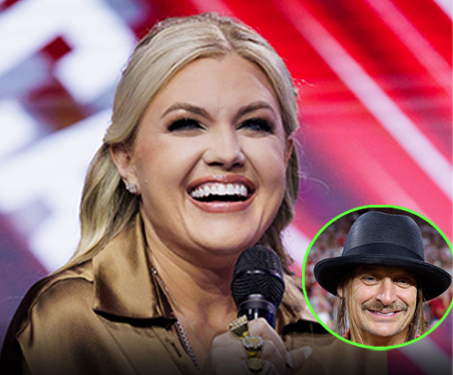
This unapologetic embrace of Spanish-language artistry provided the impetus for Turning Point USA’s alternative broadcast. Under the leadership of Erika Kirk—who stepped into the role following the death of the organization’s founder, Charlie Kirk—TPUSA initially kept its lineup under wraps, allowing speculation to build. This week, however, the organization unveiled a roster designed to appeal to those who feel alienated by the NFL’s “Global Pop” direction. The “All-American” counter-show will feature Kid Rock, Brantley Gilbert, Lee Brice, and Gabby Barrett.

The selection of Kid Rock is perhaps the most symbolic. A vocal ally of Donald Trump and a long-standing figure in conservative cultural circles, Rock frames the competing broadcast as a “David and Goliath” struggle. He acknowledged the difficulty of challenging the “pro-football machine” but doubled down on the mission to provide an alternative for those who “love America.” However, this framing has not been without its own internal contradictions. Critics were quick to point out that Kid Rock’s extensive discography is filled with explicit lyrics and themes that stand in stark contrast to the “Christian” and “family-friendly” values often championed by Turning Point USA.

The country music contingent of the lineup—Gilbert, Brice, and American Idol alumna Gabby Barrett—represents a safe, genre-specific pivot toward the nonprofit’s target demographic. The lineup received a significant boost from political figures like J.D. Vance, who praised the roster on social media, specifically highlighting “Bob Ritchie AKA Kid Rock” as a “fantastic” choice for the event.

Despite this support, the public and online reaction has been fractured. Skeptics have taken to social media to mock the cultural relevance of the TPUSA event, with many labeling it as “un-American” to host a competing show specifically to oppose an American citizen like Bad Bunny. Some users joked that the lineup felt like a “halftime playlist from 2008,” suggesting that the event might struggle to resonate with a modern audience. There is also a notable generational divide; Gen Z commenters, in particular, have expressed confusion over why a Spanish-language performance by a citizen is being framed as an affront to American values, while simultaneously noting the irony of headlining a “Christian-values” show with an artist known for his profane and rebellious lyrics.

Beyond the artists themselves, the competing shows represent a struggle for the “soul” of the Super Bowl’s cultural footprint. For the NFL, Bad Bunny represents the league’s push toward a global, multi-lingual, and youth-oriented future—one that recognizes the massive influence of Latino culture in the United States and abroad. For Turning Point USA, the alternative show is an attempt to reclaim a sense of “traditional” Americanism that they feel is being erased by the encroachment of globalism and left-leaning political messaging in sports.

As February 8 approaches, the duel between these two broadcasts will serve as a real-time metric of American sentiment. The NFL’s official show will undoubtedly command the vast majority of the audience, backed by the sheer scale of the league’s media apparatus. However, Turning Point USA isn’t necessarily playing for a majority; they are playing for a movement. By positioning their event as a sanctuary for those who feel ignored by mainstream media, they are reinforcing a cultural silo that exists entirely parallel to the official Super Bowl festivities.

The spectacle of Super Bowl LX has, in many ways, become secondary to the conversation surrounding it. Whether viewers choose the global, Spanish-language energy of Bad Bunny or the country-rock defiance of TPUSA’s “All-American” stage, the choice itself is a political act. The stadium may be filled with football fans, but the airwaves will be a battlefield of language, identity, and conflicting definitions of what it means to be an American in 2026. The real score of the game might be tallied in television ratings, but the cultural impact will be measured in the ongoing debate over whose values are represented on the nation’s biggest stage.

Melania Comments on Age Difference Between Her and Trump, Sparking Reactions

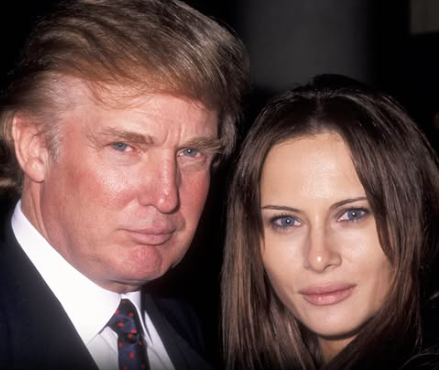
The relationship between Donald Trump and Melania Trump has long drawn public attention. Beyond their wealth, status, and political prominence, one detail has consistently sparked curiosity: the 24-year age difference between them.

From the beginning, their partnership unfolded under intense public scrutiny. Yet, despite ongoing commentary, Melania has rarely framed age as central to their story. In her memoir and select interviews, she has instead emphasized connection, respect, and shared purpose as the foundations of their bond.

A First Meeting in New York

Donald and Melania first met in 1998 at a social event at the Kit Kat Club in New York City. At the time, Melania was building her modeling career, while Trump was already an established figure in business and media.

According to Melania’s account, she felt an immediate sense of ease and familiarity. She later described being drawn to his confidence, energy, and authenticity. Though aware of their age difference and his personal history, she has said these factors did not discourage her.

For her, the initial impression was not defined by numbers, but by character and presence.

Early Connection and Courtship

Melania has spoken of an early sense of chemistry and comfort in Trump’s company. She described feeling understood and at ease—an experience she considered rare.

Their courtship developed gradually. Reports indicate that Trump pursued the relationship with persistence, eventually leading to a more formal partnership. As their connection deepened, the couple became frequent subjects of New York’s social pages, with their appearances closely followed by the media.

Even then, they maintained a degree of privacy, choosing not to publicly respond to every rumor or interpretation.

Marriage and Public Life

In January 2005, Donald and Melania married at Mar-a-Lago in Florida in a ceremony that reflected their public stature and personal taste. The event drew significant attention, symbolizing their entry into an even more visible chapter of life together.

Soon after, they focused increasingly on family. The birth of their son, Barron, in 2006 became a central priority. Both parents emphasized stability, protection, and structure, seeking to shield him from excessive public exposure.

Melania, in particular, adopted a reserved public profile, balancing visibility with strong personal boundaries.

Life in the White House

From 2017 to 2021, Melania served as First Lady of the United States. During this period, she navigated diplomatic duties, public initiatives, and constant media scrutiny.

Her “Be Best” campaign focused on child well-being, online behavior, and emotional health. Throughout her tenure, she maintained a measured public presence, often emphasizing dignity, discretion, and independence.

Despite political pressures and intense coverage, the couple continued to appear together at official events, projecting unity and continuity.

Reflections on Their Bond

In her writings and interviews, Melania has consistently framed their relationship around mutual respect and emotional compatibility. She has stated that age never defined their connection, describing it instead as grounded in understanding, shared experiences, and personal growth.

For her, maturity was not a disadvantage, but a source of stability.

Donald Trump has likewise spoken publicly about his admiration for Melania’s intelligence, composure, and dedication to family. Both have portrayed their partnership as one shaped by loyalty and shared responsibility.

Public Perception and Media Interest

From the outset, media coverage often highlighted the age gap as a defining feature. Analysts and commentators frequently interpreted the relationship through lenses of status, lifestyle, and social dynamics.

Over time, however, this focus softened. Their family life, political role, and public responsibilities came to overshadow earlier speculation.

Still, public fascination remained—partly because of their prominence, and partly because their relationship unfolded under constant observation.

Parenting and Family Priorities

As parents, Donald and Melania emphasized structure, education, and privacy. Melania took an especially active role in Barron’s upbringing, prioritizing discipline and emotional stability.

Despite extraordinary circumstances, they sought to cultivate normalcy within their household—an effort that required deliberate boundaries and restraint.

Their family-centered approach became a recurring theme in Melania’s public statements.

Meaning of the Age Difference

Throughout the years, Melania has minimized the importance of the age gap. In her view, compatibility, trust, and shared values outweigh numerical difference.

She has written that genuine connection is built through patience, respect, and lived experience—not statistics.

This perspective reflects a broader principle: relationships endure not because of perfect symmetry, but because of commitment and mutual care.

Legacy and Continuing Interest

More than two decades after their first meeting, Donald and Melania Trump remain among the most recognizable couples in public life. Their relationship has navigated wealth, fame, political power, criticism, and global attention.

Through these challenges, they have maintained a visible partnership grounded in consistency and personal boundaries.

Their story illustrates how high-profile relationships require not only affection, but endurance, discretion, and inner resilience.

Conclusion

The relationship between Donald and Melania Trump has been shaped by visibility, scrutiny, and responsibility. While the 24-year age difference has drawn attention, both have consistently framed it as secondary to deeper values.

From their first meeting in 1998, through marriage, parenthood, and public service, they have presented a partnership rooted in respect and shared purpose.

Their story suggests that lasting relationships are sustained not by public approval, but by private understanding.

In a world eager to measure love by appearances and headlines, their journey offers a quieter lesson: that endurance is built through patience, loyalty, and thoughtful commitment—long after curiosity fades.

A Heartwarming Bus Encounter That Changed My Day!!

The rhythm of the city often feels like a sequence of hurried, disconnected moments—a blur of faces, the hiss of pneumatic brakes, and the distant hum of traffic. On a Tuesday afternoon that felt otherwise unremarkable, I found myself adrift in this urban flow, riding a cross-town bus that was crowded enough to be stifling but quiet enough for introspection. At seven months pregnant, I had reached that specific stage of physical existence where exhaustion is no longer a feeling, but a permanent resident in your bones. Every joint ached with the peculiar gravity of new life, and my heart, though buoyant with anticipation, felt the heavy strain of the day.

The bus lurched and swayed, a steel cradle carrying its diverse cargo of commuters. When the doors hissed open at a mid-town stop, a gust of cool air swept in, followed by an elderly woman. She moved with a fragile, deliberate grace, her eyes scanning the rows for a place to rest. Without a second thought, I pushed through the fog of my own fatigue. I shifted my weight, anchored myself against the overhead rail, and offered her my seat with a genuine smile. It was a small gesture, the kind of basic courtesy that seems to be flickering out in the digital age, yet it felt essential. She accepted with a soft, appreciative nod, settling into the plastic seat beside where I now stood.

As the journey continued, I noticed her glancing up at me. It wasn’t the intrusive stare of a stranger, but rather a look of profound, almost shimmering tenderness. There was a warmth in her gaze that felt strangely familiar, as if she were looking not just at me, but through me to a memory she held dear. Every time our eyes met, I returned her smile, feeling a quiet sense of satisfaction. In a world that often feels sharp and indifferent, being kind felt like a private victory—especially now, as I prepared to bring a new soul into the mix.

When the bus began to slow for her destination, she rose with careful precision, bracing a weathered hand against the vertical pole for support. The bus hissed to a halt, but before she stepped toward the exit, she paused. She leaned in toward me, her presence smelling faintly of lavender and old paper, and slipped something cool and metallic into my coat pocket. I blinked in startled confusion, my mouth opening to ask what she was doing, but she offered no explanation. She simply gave me a small, knowing smile—the kind of look that suggests a thousand untold chapters—and then she was gone, swallowed by the sidewalk crowd.

As the bus pulled away, curiosity overcame my confusion. I reached into my pocket, my fingers closing around a smooth, heavy object. When I pulled it out, I was holding a locket. It was delicate and tarnished, an old-fashioned piece of jewelry that carried the weight of history in its intricate clasp. My heart hammered against my ribs as I worked the hinge, prying it open with a gentle thumb.

Inside was a faded, sepia-toned photograph of a young woman cradling a newborn. Her face was illuminated by that radiant, unmistakable glow of early motherhood—a mixture of exhaustion and infinite love. But it was what I found tucked behind the frame that truly took my breath away. It was a sliver of paper, yellowed with age, bearing four lines of elegant, handwritten script:

“Thank you.

Years ago, someone offered me their seat

when I carried my child.

I never forgot.”

The air in the bus suddenly felt thin. Tears pricked at the corners of my eyes, not born of sadness, but of the overwhelming beauty found in the continuity of human compassion. I realized then that I wasn’t just holding a piece of jewelry; I was holding a baton in a relay race of kindness that had been spanning decades. That elderly woman had carried that locket, and the memory of a stranger’s grace, for a lifetime. She had been waiting for the right person, the right moment, to pass it on.

I sat back down—the seat she had vacated—and pressed the locket against my palm, feeling the cool metal warm against my skin. It felt deeper than a mere coincidence; it felt like an ancestral blessing. A woman I didn’t know, from a time I hadn’t seen, had reached across the years to touch my life and the life of the child growing within me. She had transformed a mundane bus ride into a sacred exchange.

The bus hummed along its route, but the world outside the window looked different to me now. I looked at the other passengers—the tired businessmen, the students lost in their phones, the laborers leaning against the doors—and I wondered how many of them were carrying secret lockets of their own. How many of them were waiting for a small spark of kindness to remind them of their own worth?

I placed my hand over my belly, feeling the soft, rhythmic flutter of my baby’s movements beneath my ribs. It was a silent conversation between us. In that moment, I made a solemn promise to the life I was carrying. I promised that I would teach them the value of the “small” gesture. I promised that we would not let the world make us hard or indifferent. And I promised that someday, when the silver in my hair matched that of the woman on the bus, I would find another young mother-to-be and pass this locket along once more.

Kindness, I realized, is the only thing in this world that grows when it is given away. It is a quiet, persistent force that weaves through the chaos of our lives, stitching together the stories of strangers into a tapestry of shared humanity. As I stepped off the bus at my own stop, the weight in my bones felt lighter. I walked home with a locket in my pocket and a legacy in my heart, ready to face the road ahead—one gentle act at a time.

Popular

Words From Nancy Guthrie Change Everything for the Family!?

0
The disappearance of Nancy Guthrie has transitioned from a private family tragedy into a sprawling narrative that has gripped the collective public consciousness. This...