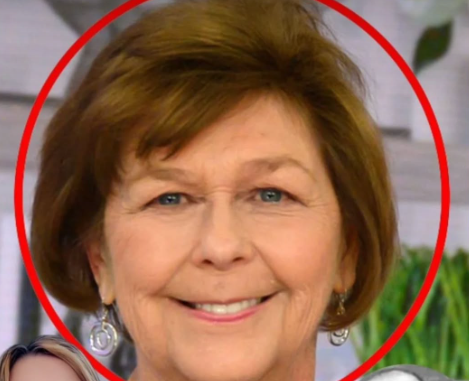
What began as an ordinary weekend evening quickly turned into a deeply troubling situation in Tucson, Arizona, when Nancy Guthrie, mother of television journalist Savannah Guthrie, was reported missing from her home. Family members contacted authorities on Sunday, February 1, 2026, after realizing they had been unable to reach her and discovered she was not at home. Law enforcement officers responded quickly, and it soon became clear that the case required urgent attention. Officials noted that the circumstances surrounding her disappearance did not match a typical missing-person situation, prompting a rapid escalation in investigative efforts.
Authorities confirmed that Nancy was last seen late Saturday night after returning home from dinner. According to investigators, nothing unusual was reported during her final interactions with family members, and there were no immediate signs of concern. However, when relatives became worried the following morning after she failed to appear for planned activities, they checked on her residence before calling police around midday. Investigators have since focused on the overnight hours between late Saturday evening and Sunday morning, reviewing security footage and reconstructing a timeline to better understand what may have occurred.
The investigation intensified after detectives examined the residence and discovered evidence suggesting Nancy did not leave voluntarily. Law enforcement officials announced that the case was being handled as a criminal investigation rather than a search-and-rescue effort. Specialized investigative teams, including homicide detectives, were assigned to the case, and authorities began reviewing surveillance video and cellphone data while asking nearby residents to check home security cameras for any unusual activity. Officials have not released specific details about evidence collected, but they confirmed that all available resources are being used to determine what happened.
Nancy’s family has publicly expressed gratitude for the support and assistance received while urging anyone with relevant information to contact authorities. Savannah Guthrie traveled to Arizona to be with relatives and shared a message thanking the public for their concern while emphasizing that the family’s priority remains Nancy’s safe return. Investigators continue to follow tips and analyze new information as the case draws nationwide attention. While many questions remain unanswered, officials stress that the investigation is ongoing and that even small pieces of information could help bring clarity to a situation that has deeply affected both the family and the surrounding community.
At first, Nancy Guthrie’s disappearance appeared to be a troubling but familiar missing-person case. The 84-year-old grandmother was last seen at her Tucson-area home late on Saturday night, and family members became concerned when they were unable to reach her the following morning. After searching the home themselves, relatives contacted authorities around midday on Sunday, setting off an investigation that has since drawn national attention. As hours passed and updates slowly emerged, investigators began narrowing the timeline to a critical overnight window, suggesting Nancy disappeared sometime after returning home that evening.
Newly surfaced dispatch audio later helped clarify the urgency surrounding the case. According to reports, deputies responding to the call were informed that Nancy lives with significant health concerns, including heart-related issues requiring a pacemaker. Investigators also learned that her personal devices, including her phone and smartwatch, remained inside the home. Law enforcement sources indicated that around 2 a.m., her pacemaker stopped syncing with connected devices, suggesting she may have been moved beyond the normal communication range at that time. These details, combined with the circumstances found at the home, prompted authorities to treat the case as more than a routine disappearance.
Sheriff Chris Nanos later confirmed that investigators believe Nancy did not leave voluntarily, and the case shifted from a search effort to a full investigation. Detectives, including specialized units, have been assigned to review evidence and follow incoming tips. Officials emphasized that Nancy was mentally alert and not suffering from cognitive decline, making her sudden disappearance even more concerning. Authorities also noted she depends on daily medication, increasing urgency as time passes. While officials have not publicly identified suspects, they continue reviewing surveillance footage and requesting assistance from nearby residents who may have recorded unusual activity.
For Nancy’s family, including her daughter Savannah Guthrie, the uncertainty has been deeply distressing. Savannah traveled to Arizona to support her family and publicly thanked those offering prayers and encouragement while urging anyone with information to contact authorities. As investigators continue working across Pima County, the case remains unresolved, leaving loved ones and the community searching for clarity. What began as a worrying absence has grown into a complex investigation, and officials stress that even small pieces of information may help uncover what happened during those critical overnight hours. Until answers emerge, hope remains that new evidence will bring clarity and, ultimately, resolution for a family waiting anxiously for news.
On warm nights, when bedroom air feels heavy and still, falling asleep can become unexpectedly difficult. Many people find themselves tossing and turning as heat builds up, making pillows and sheets uncomfortable and interrupting the body’s natural ability to relax. While air conditioning provides relief, not every home has access to it, and constant use can raise energy costs. Fortunately, a few simple techniques can help create a cooler sleeping environment using everyday household items and a basic understanding of airflow and temperature control.
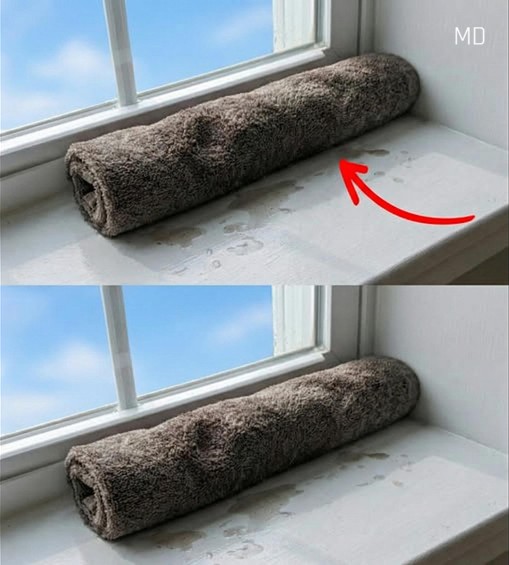
One practical approach involves placing a damp towel near an open window to help cool incoming air. This method works through evaporative cooling, a natural process in which water absorbs heat as it dries. When air passes through or across the damp fabric, some heat is drawn away, allowing slightly cooler air to circulate into the room. While the temperature change may be modest, it can still reduce stuffiness and improve airflow, making the bedroom feel more comfortable without relying on expensive equipment.
Even small temperature improvements can make a meaningful difference for sleep quality. The human body naturally cools down before falling asleep, and excessive warmth can interfere with this process, causing restlessness and frequent waking. By improving air circulation or slightly lowering room temperature, muscles relax more easily and breathing becomes steadier. These subtle changes can help signal to the body that it’s time to rest, making it easier to drift into sleep even during hot weather.
Another simple technique focuses on cooling the body directly rather than the entire room. Placing a pillowcase in the refrigerator or freezer for a short time before bedtime can provide a refreshing cooling effect when you first lie down. Because the head and neck contain many blood vessels close to the skin, cooling this area can help reduce overall body warmth and create an immediate sense of comfort. Though the pillowcase will warm up after a while, those first cool moments are often enough to help someone fall asleep more quickly. Combined with improved airflow, these small adjustments offer an easy, low-cost way to make hot summer nights more restful and comfortable.
Nancy Guthrie’s mysterious disappearance continues to baffle police and her family.
Now, a shocking new video shows blood drops and splatter on the front porch of the Arizona home of the Today anchor’s missing mother.
100 sheriff’s detectives working on the case
Nancy Guthrie has been missing since Saturday, January 3. Police have confirmed that the case is now being treated as a criminal investigation.
The disappearance has drawn widespread attention, in part because 84-year-old Nancy is the mother of one of the U.S.’s top TV personalities, “Today” show anchor Savannah Guthrie.
“We do believe Nancy was taken from her home against her will,” Sheriff Chris Nanos said during a press conference on Tuesday.
Four days into the frantic search for, and with roughly 100 sheriff’s detectives on the case, the mystery surrounding Nancy’s disappearance has only grown more baffling.
Chilling new footage
According to police sources and reports, authorities began to suspect something terrible had occurred after certain discoveries at Nancy’s Tucson home. It has been reported that blood was found inside the house, along with signs of forced entry.
Police have described the scene at Nancy Guthrie’s Tucson home as alarming but have declined to provide additional details.
Sources, however, told New York Post that blood was discovered inside the residence and that personal items, including her phone, things she normally wouldn’t leave behind, were still at the home.
Shocking new footage also shows a trail of blood leading from the Arizona home of “Today” host Savannah Guthrie’s missing mother. Captured by NewsNation Senior National Correspondent Brian Entin, the video reveals dark red blood drops and splatter across the front porch of the Tucson residence, matching earlier descriptions of a chaotic crime scene, sources told The New York Post.
Credits: NewsNation
According to NewsNation, blood could still be seen outside the front door even after authorities cleared the crime scene and returned the property to her family.
It’s still unknown whose blood it is, but the footage surfaced just hours after an unverified ransom note was sent to TMZ, demanding millions in Bitcoin for Nancy’s safe return.
Another detail reported by the media is that a Ring doorbell camera, which had been installed near the entrance, was missing. Pima County Sheriff Chris Nanos confirmed that investigators are looking into whether the device was deliberately taken by the suspect.
Nancy Guthrie, who lived alone in a ranch-style home in the Catalina Foothills community, was last seen Saturday night when family members dropped her off at her residence. Local authorities say she may have been forcibly taken in the middle of the night.
Her family grew concerned after she failed to show up for church services Sunday morning, according to the Arizona Department of Public Safety.
Investigators noted that Nancy’s pacemaker stopped syncing with her devices around 2 a.m., suggesting she may have been taken at that time. Authorities warn that without her essential medications, her life could be in immediate danger.
Pulls out of Winter Olympics coverage
Savannah Guthrie has been absent from the Today show since the investigation began. She also withdrew from covering the Winter Olympics in Italy to “focus on being with her family” and has thanked the public for their support. Later, on Instagram, the 54-year-old posted a photo with the caption, “Please Pray.”
“We believe in prayer. We believe in voices raised in unison, in love, in hope. We believe in goodness. We believe in humanity. Above all, we believe in Him,” Savannah wrote.
“Thank you for lifting your prayers with ours for our beloved mom, our dearest Nancy, a woman of deep conviction, a good and faithful servant. Raise your prayers with us and believe with us that she will be lifted by them in this very moment.”
She concluded, “We need you. He will keep in perfect peace those whose hearts are steadfast, trusting in the Lord.” A verse from Isaiah, “for all time, for all of us. Bring her home.”
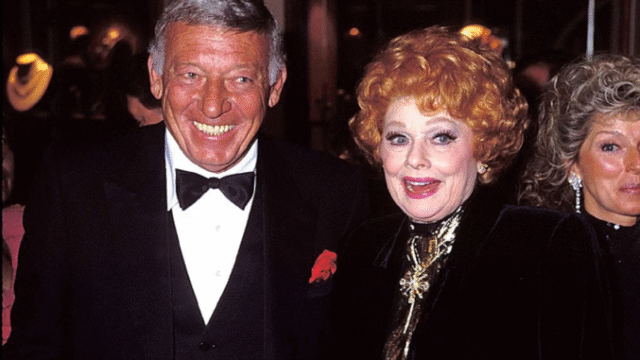
Lucille Ball may have made her name in the iconic television comedy ‘I Love Lucy,’ but her second husband Gary Morton claimed he never once saw the series.
When Lucille Ball ended her 20-year marriage with her husband (and I Love Lucy co-star) Desi Arnaz in 1960, she began dating the man who would become her second husband, comedian and producer Gary Morton, nearly a year after the divorce.
What drew the iconic entertainer to Morton may have been the fact that he simply wasn’t starstruck by her; in fact, Morton maintained he never once watched an episode of the pioneering television series.
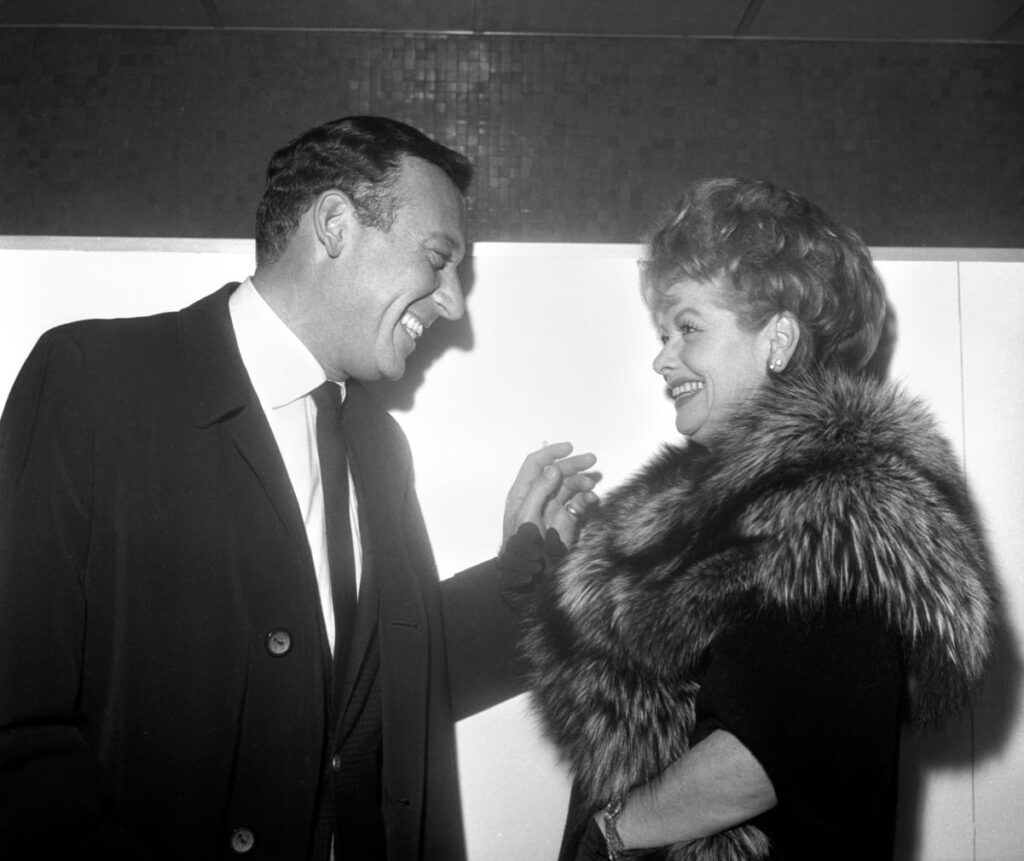
Actor Lucille Ball, right, with husband, comedian, and producer Gary Morton, in 1962 | CBS via Getty Images
Lucille Ball began seeing Gary Morton after her divorce from Desi Arnaz
After 20 tumultuous years of marriage to her husband and I Love Lucy co-star Desi Arnaz, the pair finally divorced in 1960. Nearly a year after the split, Ball took a chance on finding love with another entertainer, a comedian named Gary Morton. His looks, Lucille: The Life of Lucille Ball author Kathleen Brady reported, “were of the kind Lucy called ‘ugly/handsome,’ a composite of broad rugged features that were wrong individually but balanced one another well.”
The two began dating, Brady wrote, soon after Morton had been introduced to Ball at a club and accidentally dipped his tie into her coffee as he went to shake her hand. She sent him three replacements, he called to thank her, and soon they were “considered ‘an item,’ and he was referred to as ‘Lucille Ball’s boyfriend’ in various columns.”
Morton said he never watched ‘I Love Lucy’
Perhaps the redheaded icon’s attraction to Morton was explained, Ball’s biographer surmised, by “the struggling comedian” being unimpressed with Ball’s career accomplishments and more taken with the woman herself: “Gary seemed oblivious of the achievements that so impressed everyone else. He claimed that because he so often worked in clubs on Monday nights, he had never seen I Love Lucy.”
To Ball, “Gary was his own person. She liked him, but she did not love him.” The couple married in New York in November of 1961 with Morton signing on to a prenuptial agreement. “‘I look forward,’ she told journalists, ‘to a nice, quiet life.’ With that, she ended her marriage to Desi Arnaz.”
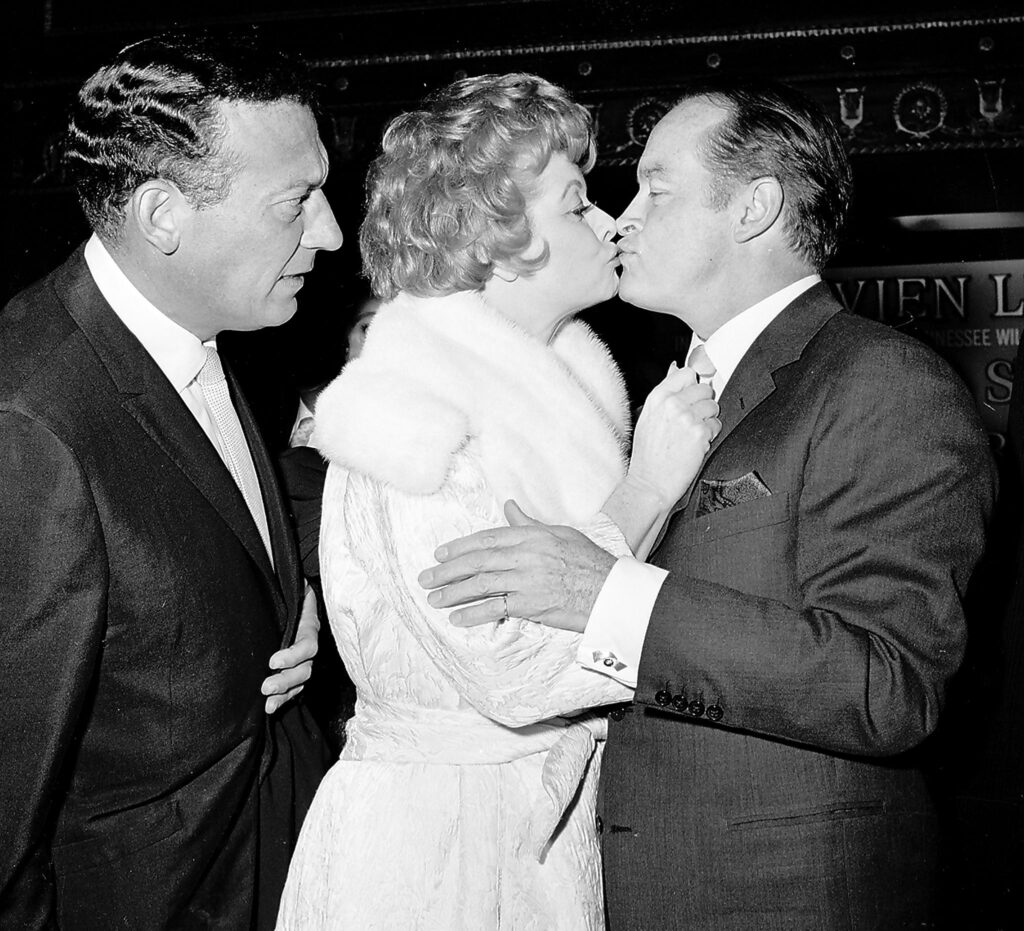
From left to right: Comedian Gary Morton looks on with feigned worry as his wife Lucille Ball and entertainer Bob Hope greet one another with a kiss | Charles Payne/NY Daily News Archive via Getty Images
Bob Hope couldn’t understand what Ball saw in her 2nd husband
For equally iconic comedian Bob Hope, it was beyond him why his longtime friend Ball would settle down to marry Morton. In Hope’s view, the mother of two needed to be with someone in her own sphere, as Brady noted: “That one of the most respected and richest people in show business would take up with a second banana amazed those who did not know her well. ‘What are you going around with that kid for?,’ Bob Hope asked.
“Had she looked for a man her equal, she would have needed Hope himself or the head of a major corporation, someone whose life was as driven and demanding as her own.”
Ball and Morton remained married until her death on April 26, 1989.
Though Lucille Ball and Desi Arnaz divorced after 20 years of marriage, the ‘I Love Lucy’ stars maintained a strong bond.
I Love Lucy catapulted comedian Lucille Ball and her Cuban bandleader husband Desi Arnaz into stardom. Portraying onscreen husband and wife Ricky and Lucy Ricardo, their sitcom marriage was much more idyllic than their real-life union off camera.
Divorcing after 20 years, the couple’s relationship was tumultuous from the start. Though Arnaz subjected Ball to his alcoholism and infidelity over their two decades together, the couple maintained a strong connection to each other after their split which lasted right up until Arnaz’s death.
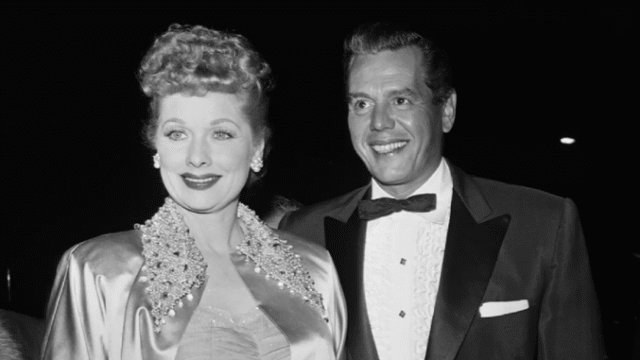
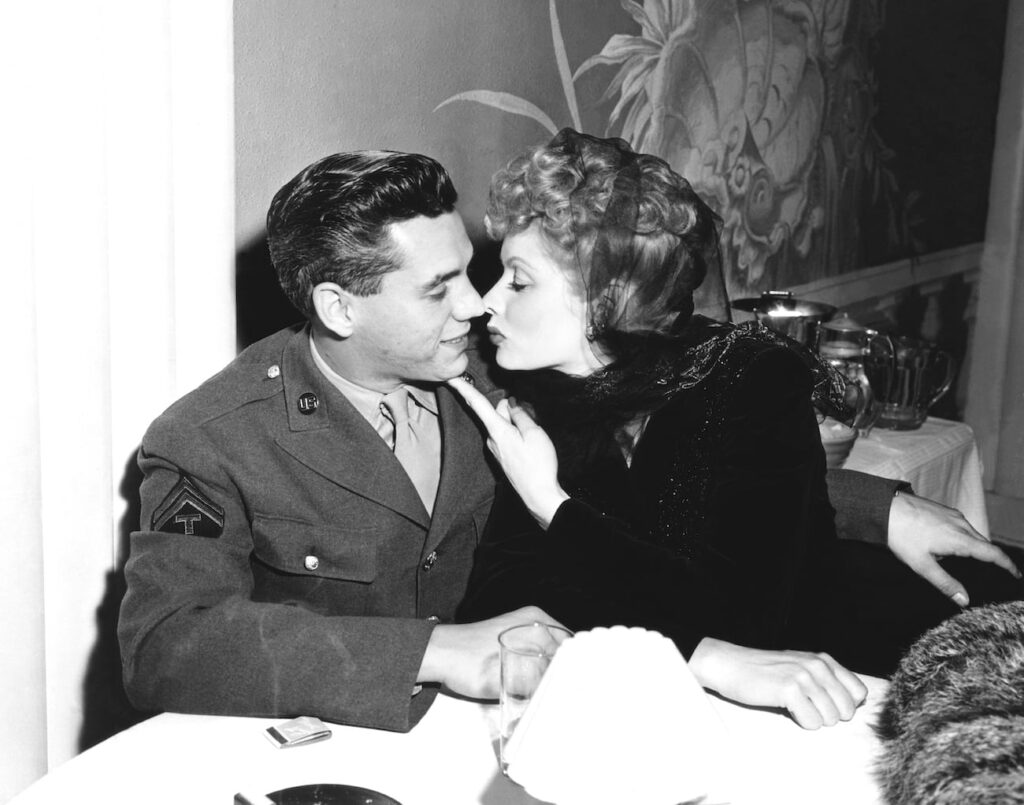
Desi Arnaz and Lucille Ball of ‘I Love Lucy’ | Dick Hanley/Archive Photos/Getty Images
Desi Arnaz died from lung cancer
Arnaz died on December 2, 1986 at the age of 69. Though at that time he and Ball had remarried other people (Arnaz’s second wife Edith died in 1985) the I Love Lucy team were still bonded.
“Mr. Arnaz had been ill with cancer for many months, and my family and I have been praying for his release from this terrible ordeal,” Ball said in a statement, according to the Los Angeles Times. “Desi died early this morning in his daughter’s arms. Our relationship had remained very close, very amiable, over the years, and now I’m grateful to God that Desi’s suffering is over.”
An avid smoker, Arnaz’s physician stated the TV star’s lung cancer was caused by the bad habit.
“It was from smoking those Cuban cigars,” Dr. Charles Campbell said. “That’s the truth.”
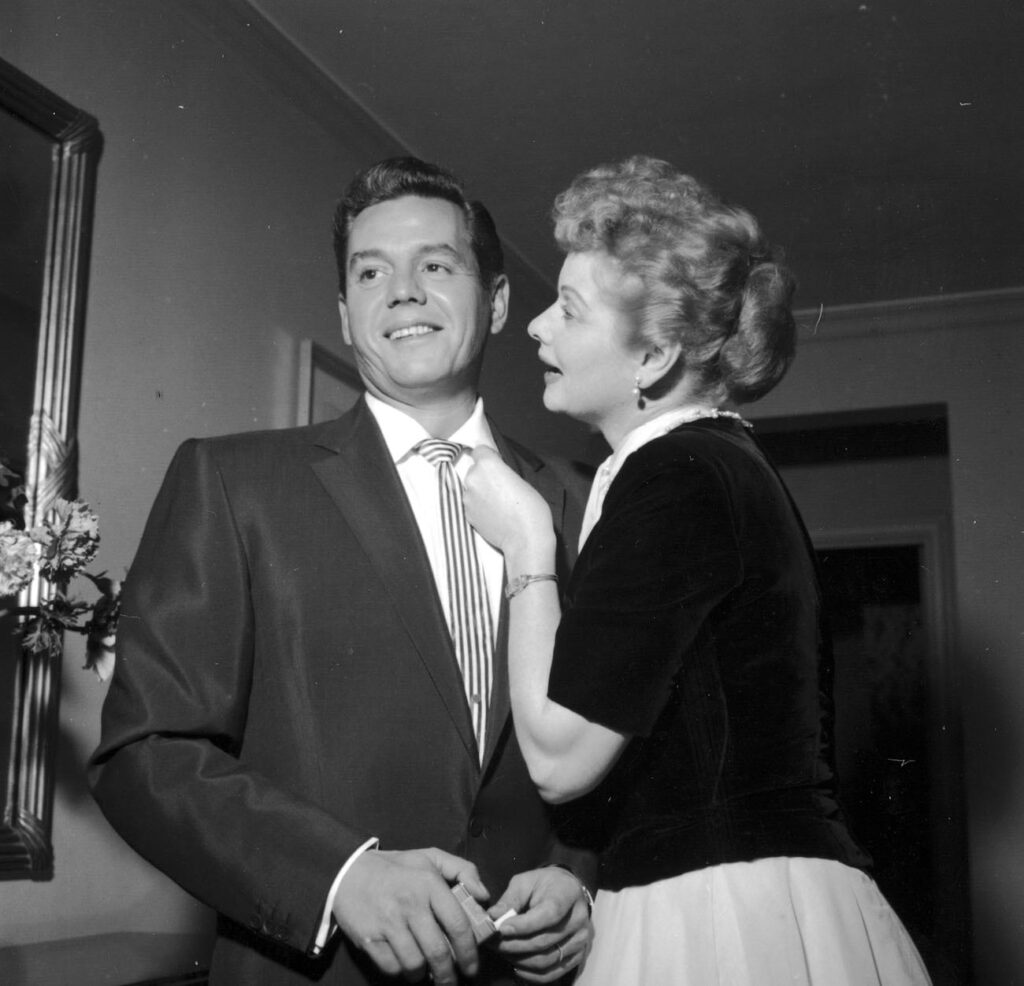
Desi Arnaz | Michael Ochs Archives/Getty Images
‘I Love Lucy’ couple shared some special final moments
Ball and Arnaz had two children from their marriage – Lucie and Desi Jr. Their daughter stayed with Arnaz throughout his illness and recalled a visit from her mom where the two I Love Lucy stars reminisced while watching vintage episodes.
“They laughed and joked,” Lucie said, according to the book Desilu: The Story of Lucille Ball and Desi Arnaz by Coyne Steven Sanders and Tom Gilbert. “I just shut the door and let them have their time together. I started them off, like two kids on a first date.”
When Arnaz was in his final days, he was barely able to speak or eat due to his illness’s progression. Ball called him to have what would be their last conversation.
“I put the phone up to Dad’s ear in the bed,” Lucie recalled of her mother’s phone call. “I said, ‘It’s the redhead.’ He just listened and I heard what he said. She just said the same thing over and over again … It was ‘I love you. I love you. Desi, I love you.’ You could even hear the intonations of the voice change, how she meant each one.”
They exchanged ‘I love you’s’ on their anniversary
Though Arnaz was close to death, he managed the strength to respond to his ex-wife.
“I had to hold the phone. I couldn’t get out of the room.” Lucie remarked, then revealed her father’s response. “And he said, ‘I love you, too, honey. Good luck with your show.’”
Lucie explained that she had told her dad that Ball was to appear on a variety show to present an award. Ball’s former co-star and husband still felt the need to wish her the best when it came to being on camera.
According to the celebrity couple’s daughter, Ball was the last person to whom Arnaz spoke. He died approximately 48 hours after their phone conversation. Lucie also noted one final coincidence that seemed very apropos of the couple.
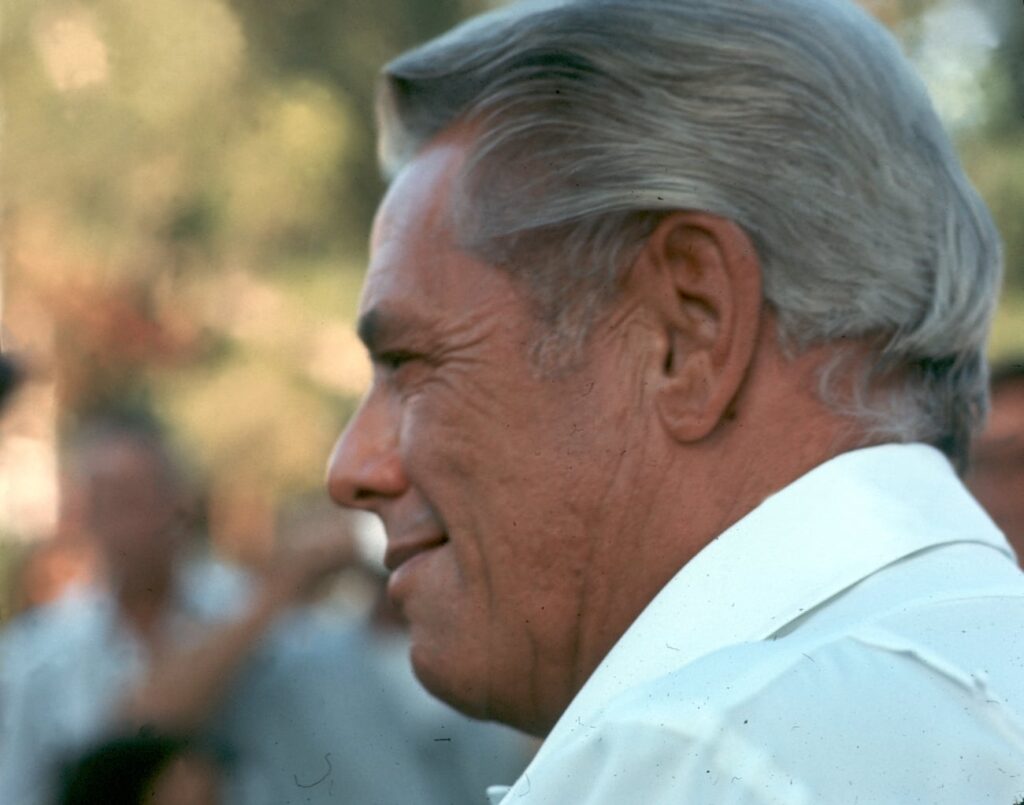
Desi Arnaz and Lucille Ball | Michael Ochs Archives/Getty Images
“Until I went back into my little diary, I never put it together that the date this happened was November 30,” Lucie pointed out of the pair’s last phone call. “The same date as their wedding anniversary.”
There are Hollywood stars, and then there are superstars.
The man we’re focusing on today is one of the biggest A-listers of all time.
He was also named the Sexiest Man Alive twice.
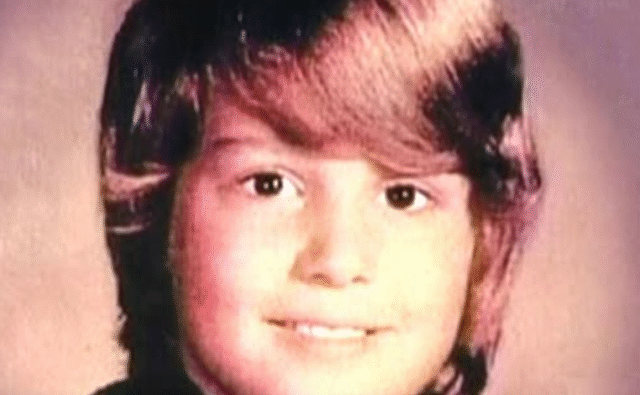
But long before the fame, he was just a little boy — abused and beaten by his own mother and forced to watch his family fall apart.
Never felt safe
Life on the A-list is glamorous, exciting, and filled with red-carpet moments, but for one Hollywood star, the bright lights couldn’t have been more different from the childhood he knew. Despite his success at the box office, his private life at home was, in his own words, nothing short of a true drama.
Born in a small Kentucky town as the youngest of four children, he grew up with a waitress mother and a civil engineer father. The family moved frequently during his childhood, eventually settling in Miramar, Florida, in 1970.
Inside the family home, daily life was, unfortunately, dominated by violence and disorder.
”There was physical abuse, certainly, which could be in the form of an ashtray being flung at you, you know, it hits you in the head or you get beat with a high-heeled shoe or telephone — whatever was handy. So in our house, we were never exposed to any type of safety or security,” the actor once shared.
He added, ”The verbal abuse, the psychological abuse, was almost worse than the beatings. The beatings were just physical pain. The physical pain, you learn to deal with. You learn to accept it. You learn to deal with it.”
The Hollywood star has revealed that it was his mother, Betty Sue Palmer, who was the source of the abuse. On the subject of his father, he reflected on the quiet strength he observed:
”When my mother would go off on a tangent toward my father — and of course, in front of the kids, it didn’t matter to her — he, amazingly, remained very stoic and never, as she was rationing him with horrible things, he stood there and just looked at her while she delivered the pain, and he swallowed it. He took it.”
The actor recalled that there was never a moment when his father lost control, attacked, or even spoke harshly to his mother. On a few occasions, things went so far that he could see his father’s eyes welling up as he stared at her in silence. The worst his father ever did was punch a wall — once so hard that he shattered his hand on solid concrete — but he never touched her or argued with her. Through it all, he remained a gentleman, according to the star.
”To me, as a five-year-old boy, I kept wondering, why does he take it? How does he take this? And why doesn’t he leave her? But he didn’t. He was able to maintain his calm, and his composure. He was able to maintain his relationship with his children. He is a good man.”
Starting taking pills at 11
Eventually, his father left the family, telling his son he couldn’t live it anymore.
The parents split when he was 15. Although he initially thought of his father’s departure as “cowardly,” he later realized his father simply made the choice he felt was best for himself.
After the divorce, his mother’s downward spiral continued.
”She slipped into a deep depression and tried to kill herself by ingesting a ‘multitude of pills.’ She survived but was never the same. She lived on the couch and weighed about 70 pounds.”
Unfortunately, his mother’s drug addiction also became a gateway for the young star. The substance abuse he struggled with for much of his life started at an early age. He has stated that he began taking his mother’s “nerve pills” at the age of 11, was smoking by age 12, and by 14 had tried “every kind of drugs there were.”
His mother passed away in 2016. In retrospect, the actor has said he’s grateful for how she raised him — but not in the way one might expect.
”I thank her for that,” he continued. ”She taught me how not to raise kids. Just do the exact opposite of what she did.”
After dropping out of high school in 1979, the actor joined a band called The Kids and moved to Los Angeles.
Teenage heartthrob
“I ended up acting by accident,” he admitted.
His longtime friend, a well-known actor namned Nicolas Cage, suggested reaching out to his agent, which eventually led to auditions for a major director.
”Somehow I landed a part on ‘Nightmare on Elm Street,’” he recalled.
In the 1990s, he emerged as a teenage heartthrob and a male star — but one of the few male stars to openly reject the traditional expectations of that role. He spoke out against the image and, through his film choices and public persona, began cultivating a new, more unconventional identity in Hollywood.
At 22, he earned a leading role on a police undercover series before landing the role that would cement his place as a global superstar in a blockbuster franchise.
He rose to worldwide stardom with his unforgettable portrayal of Captain Jack Sparrow in the Pirates of the Caribbean film series (2003–2017). His performance earned him three Academy Award nominations for Best Actor, cementing his place as one of Hollywood’s most iconic leading men. And the actor behind these legendary roles? None other than Johnny Depp.
While Depp was making it in Tinseltown, the actor’s first marriage to makeup artist Lori Anne Depp ended. The couple, who married in Florida, were together from 1983 to 1985.
After a few more relationships — most notably with Winona Ryder and Jennifer Grey — he met Vanessa Paradis, the mother of his two children. Their relationship lasted 14 years, and together they raised Lily-Rose, 22, and Jack, 20.
Speaking about his parenting style, he explained that his approach was shaped by the abuse he had experienced as a child.
”When my girl, Vanessa, got pregnant, I knew exactly how to raise children, which was to do the opposite of what they did—of what Betty Sue did,” he said. ”Never raise your voice in front of the children—never. Screaming out the word ‘no’ to them, I never wanted to tell my kids no. I wanted to show them that there were options. You don’t have to stick the coat hanger in the electrical socket.”
He described taking a conversational approach with his children:
”Saying no is an abrupt thing, but to talk to them and say, ‘If you understand the repercussions of something, then you won’t go there. So maybe think about this as opposed to this. Give this some thought, you know, but that could kill you.’ So, I would ease them away from things of that nature with more of a conversation as opposed to a flat-out, ‘Don’t you ever do that again’ and threats and things of that nature,” he testified. “I did not raise my children that way. Nor did Vanessa. And we never raised our voices in front of our children, ever.”
After splitting with Paradis in 2012, he began dating Amber Heard. By Christmas Eve 2013, they were engaged, and in 2015, they were married.
Their relationship eventually led to one of the most high-profile trials of the 2020s. Depp sued Heard for $50 million after she suggested in a 2018 Washington Post op-ed that he had been abusive toward her. Depp denied ever striking her, and a jury ultimately sided with the Pirates of the Caribbean star, awarding him more than $10 million. It was also during this trial that many details about Depp’s troubled childhood came to light.
Reflecting on the lawsuit in 2025, Depp told The Sunday Times:
”It had gone far enough. I knew I’d have to semi-eviscerate myself. Everyone was saying, ‘It’ll go away!’ But I can’t trust that. What will go away? The fiction pawned around the fucking globe? No it won’t. If I don’t try to represent the truth it will be like I’ve actually committed the acts I am accused of. And my kids will have to live with it. Their kids. Kids that I’ve met in hospitals. So the night before the trial in Virginia I didn’t feel nervous. If you don’t have to memorize lines, if you’re just speaking the truth? Roll the dice.”
During the many legal battles involving Depp and Amber Heard, he testified about his struggles with substance abuse, saying he began using drugs “at a very young age, when it was not a particularly stable or secure or safe home life.” He explained that his early use of drugs and alcohol was “the only way that I found to numb the pain.”
Today, Depp is reportedly living a quieter life in England, far from Hollywood. After some turbulent years dominated by his legal fight with Heard, the Pirates of the Caribbean star is renting a private mansion in the Sussex countryside, near the Kent border, according to the Daily Mail.
The estate, which dates back to the 1850s, is tucked away behind towering trees, ornate gates, and Gothic statues. It boasts ten bedrooms, a sunken garden, an open-air amphitheater, water features, and even two staff cottages, offering the kind of seclusion Depp seems to crave.
Looking ahead, the actor is set to appear in Marc Webb’s action thriller Day Drinker alongside his On Stranger Tides co-star Penélope Cruz. He will also take on the iconic role of Ebenezer Scrooge in Ti West’s Ebenezer: A Christmas Carol, scheduled for release on November 13, 2026, starring alongside Andrea Riseborough, Tramell Tillman, Ian McKellen, Rupert Grint, and Daisy Ridley.
In addition, in 2025, he spoke with producer Jerry Bruckheimer about a potential return to the Pirates of the Caribbean franchise for its sixth installment, depending on script development.
In the ever-evolving theater of American political discourse, few voices carry as much weight or historical resonance as that of Jon Stewart. For decades, the host of “The Daily Show” has acted as a satirical barometer for the nation, oscillating between biting wit and profound, earnest concern. However, in his most recent appearances, the humor has largely receded, replaced by a stark and visceral alarm regarding the trajectory of the American presidency under Donald Trump. During a recent and deeply unsettling exchange on “The Bill Simmons Podcast,” Stewart moved beyond his usual role as a critic, instead assuming the mantle of a civic sentinel warning of a looming institutional catastrophe. His central thesis was as grim as it was focused: the current era of American politics may not conclude with a peaceful transition or a quiet curtain call, but rather with a deliberate and destructive detonation of the democratic framework itself.
Stewart’s analysis was sparked by the recent $2 billion lawsuit filed by Trump against media giants CBS and Paramount. While many legal analysts have scrutinized the technical merits of the case, Stewart views the litigation through a much darker, more existential lens. To him, this isn’t merely a legal dispute over broadcasting standards or journalistic fairness; it is a calculated act of intimidation designed to enforce a culture of absolute fealty. Stewart described the maneuver as a demand for tribute—a signal to all major institutions that they must either bow to the prevailing political power or face financial and reputational ruin. He suggested that the lawsuit serves as a “loyalty test” for the free press, a move intended to transform independent media into a synchronized chorus of praise for the executive.
The danger Stewart perceives is not rooted in a single court case or a specific legislative battle, but in the gradual, relentless erosion of the “referees” of democracy. In Stewart’s view, a healthy republic relies on the integrity of its neutral arbiters—the judiciary, the free press, and the non-partisan civil service. When these institutions are subjected to constant, high-pressure attacks, they begin to crack. The host warned that democracies rarely collapse overnight in a single, dramatic coup; instead, they die from a thousand small concessions. By punishing any institution that dares to challenge his narrative, Stewart argues that Trump is effectively dismantling the guardrails that prevent executive overreach. This creates a precedent where the pursuit of power becomes untethered from the obligation of accountability, leaving the nation vulnerable to the whims of a leader who views the law not as a shared boundary, but as a weapon to be wielded against enemies.
Perhaps the most chilling moment of Stewart’s commentary came when he explored the psychological motivations of a leader who feels cornered or rejected by the democratic process. He famously wondered aloud if the country was witnessing a figure who would be willing to “burn the house down for the insurance money.” While the statement is undeniably metaphorical, it highlights a terrifying possibility that haunts Stewart’s vision of the future: the idea that for some, the preservation of personal ego and power is more important than the survival of the nation’s foundational principles. This “scorched earth” philosophy suggests that if the stage is no longer yours to command, you might as well light the curtains on fire as you exit. It is a warning against the narcissism of power, where the leader’s fate is conflated with the nation’s fate, leading to a situation where the failure of the individual is treated as a reason to dismantle the system itself.
Stewart’s prediction for how this era ends is not one of a traditional political defeat followed by a retreat to a quiet retirement. Instead, he sees a period of maximum volatility—a stress test for every pillar of the American government. He fears a scenario where the transition of power becomes a site of chaos, orchestrated by a leader who views the concept of “winning” as an absolute necessity that justifies any means. In this framework, the final act of the presidency becomes a desperate scramble to avoid accountability, potentially involving the deliberate stoking of civil unrest, the further delegitimization of the electoral process, and the total abandonment of political norms. Stewart suggests that we are moving toward a moment where the resilience of America’s institutions will be the only thing standing between a functioning republic and a state of permanent instability.
The broader implication of Stewart’s alarm is a call to action for a citizenry that has perhaps become desensitized to the constant cycle of outrage. He is reminding his audience that the “referees” he speaks of—the journalists, the judges, and the election officials—are not just abstract concepts but the human infrastructure of a free society. When they are intimidated into silence or coerced into compliance, the very concept of truth begins to dissolve. Stewart’s rhetoric reflects a deep-seated fear that the country is losing its ability to agree on a shared reality, making it impossible to hold power to account. If every criticism is dismissed as “fake” and every legal challenge is framed as a “witch hunt,” the mechanisms of correction that have saved the country in past crises may no longer function.
This is not merely the cynicism of a comedian who has seen too much; it is the somber assessment of a man who has spent his career studying the intersection of media and power. Stewart is highlighting the fragility of the American experiment, pointing out that it is sustained not just by the text of the Constitution, but by a collective commitment to the rules of the game. When a major player decides the rules no longer apply to them and begins to tear up the rulebook in front of the audience, the game itself is in jeopardy. Stewart’s prediction is a challenge to the public to recognize the high stakes of the current moment and to understand that the “end” of this political chapter will define the character of the nation for the next century.
Ultimately, Jon Stewart is painting a picture of a crossroads. One path leads back toward the restoration of institutional norms and the messy, difficult work of democratic governance. The other path, the one he fears we are currently on, leads toward a volatile climax where the pursuit of personal vindication takes precedence over the common good. His “terrifying prediction” is less a prophecy of certain doom and more a desperate plea for the country to wake up to the gravity of the situation. He is asking a fundamental question: when the final curtain begins to fall on this era, will there be a stage left for the next generation to stand on? The answer, Stewart implies, depends entirely on whether the American people value their institutions more than they fear the fire. In the end, the “insurance money” of a burned-down country is worthless to everyone but the person who lit the match, and Stewart is making sure everyone knows who is currently holding the flame.
The relentless hum of the corporate machine defines a specific type of existence, one where the soul is often traded for a title and a high-functioning nervous system. This was the life of Arthur Vance, a senior vice president at a global logistics firm. Arthur lived by the calendar, his pulse synchronized to the erratic fluctuations of the stock market and the ping of incoming high-priority emails. He viewed sleep as a strategic weakness and caffeine as his primary fuel source. However, the human body has a way of vetoing a lifestyle that the mind insists is sustainable. One Tuesday morning, midway through a PowerPoint presentation on quarterly optimization, Arthur’s heart gave out.
The heart attack was a brutal wake-up call. Following a successful surgery, his doctor delivered a non-negotiable ultimatum: Arthur was to vacate his corner office and spend a month in total isolation from the digital world. The prescription was simple yet terrifying for a man of his temperament—three weeks of absolute quiet on a remote family farm. Arthur initially fought the suggestion with the fervor of a man defending a merger, but his physical frailty eventually forced him into a reluctant surrender. He packed a bag, left his smartphone in a locked drawer, and drove into the rolling hills of the countryside.
Upon his arrival, the silence was physical. It pressed against his eardrums, uncomfortable and alien. For the first forty-eight hours, Arthur paced the porch of the farmhouse like a caged predator. He missed the adrenaline of the boardroom and the constant validation of being the man with all the answers. By the third day, the tranquility had become a form of psychological torture. He approached the farmer, a weathered man named Silas who seemed as rooted in the earth as the ancient oaks surrounding them, and demanded work. He needed a project, a metric to hit, a mess to manage.
Silas, observing the city man’s frantic energy with a mix of amusement and skepticism, pointed toward the barn. It was a cavernous, neglected structure filled with months of accumulated cow manure. It was backbreaking, filthy work that most city dwellers would recoil from. To Silas’s shock, Arthur attacked the task with a ferocity usually reserved for hostile takeovers. By sunset, the barn floor was immaculate. When Silas expressed his amazement at the speed of the work, Arthur merely wiped the sweat from his brow and offered a grim smile. He told the farmer that he had spent twenty years cleaning up much larger messes at the office; at least the manure in the barn didn’t pretend to be something else.
The next day, Silas presented a grimmer challenge. There were five hundred chickens that needed to be processed for the local market. It was a visceral, bloody task that required precision and a lack of sentimentality. Again, Arthur didn’t flinch. He worked with a cold, mechanical efficiency, and by the time the evening shadows lengthened, every bird was ready for transport. He explained to a stunned Silas that his entire career had been built on making “cuts”—he had terminated departments, ended long-standing contracts, and severed professional ties without blinking. Doing it literally, he remarked, was surprisingly less stressful than doing it metaphorically.
On the third day, Silas decided to give the high-powered executive a reprieve. He led Arthur to a shaded area behind the granary where several massive burlap sacks of potatoes sat on a wooden table. Silas placed two empty crates in front of Arthur. He explained that the task was simple: sort the potatoes. Large, blemish-free potatoes went into the left crate; small or misshapen ones went into the right crate. Silas left him to what he assumed was the easiest job on the farm.
When Silas returned at sunset, he found Arthur exactly where he had left him. The burlap sacks were still full, and the two crates were completely empty. Arthur was slumped over the table, his head in his hands, looking more exhausted than he had after shoveling the barn or processing the poultry. He looked up at Silas with a face etched in genuine agony. He confessed that he couldn’t do it. Silas was baffled, pointing out that Arthur had handled chaos, filth, and blood with ease.
Arthur’s response was a revelation of his own professional pathology. He admitted that in the corporate world, he hadn’t actually made a real decision in years. He realized that he had spent his life hiding behind committees, memos, and data sets. Every choice was deferred to a meeting or buried in a consensus-building exercise so that no single person ever bore the weight of the outcome. In the office, a “bad decision” could be recontextualized or blamed on market volatility. But here, standing before a single potato, there was no committee. He had to decide—large or small—and he had to own it. Every potato felt like a personal performance review that he was failing.
Silas let out a long, slow whistle, realizing that the manager had become a prisoner of his own bureaucracy. The man could handle a crisis, but he was paralyzed by the mundane. That night, Arthur didn’t sleep. He sat in the dark, reflecting on how he had outsourced his own agency to a system designed to avoid accountability. He realized that his “success” was built on a foundation of avoidance.
The next morning, Arthur returned to the table. He picked up a potato, looked at it for a second, and dropped it into the left crate. Then another into the right. He moved slowly at first, but with each toss, he felt a strange sense of liberation. He told Silas that he finally understood: not every decision required a strategic roadmap. Some things were just large, and some were just small, and the world didn’t end if you picked wrong. By the end of the week, Arthur was sorting potatoes with a rhythmic, peaceful confidence. He even took an interest in the culinary side of his labor, learning to prepare a simple dish of roasted potatoes seasoned with olive oil, rosemary, and sea salt—a stark contrast to the complex, overpriced meals he usually ate in the city.
When Arthur’s month was up, he returned to the glass-and-steel towers of the city. He walked into his office a transformed man. He was calmer, more decisive, and possessed a newfound kindness that confused his subordinates. He dismantled the culture of endless meetings and began empowering his team to make their own choices without fear. When his chief of staff asked what had happened during his sabbatical—what groundbreaking management philosophy he had discovered—Arthur simply laughed. He told them that an MBA teaches you how to manage data, but a potato teaches you how to live. He had learned that the courage to make a simple choice is the ultimate form of power, and that sometimes, the best way to lead is to simply get your hands dirty and decide.
Keepingcockroaches out of the bathroom can be frustrating, especially when they seem to appear from the shower drain. These insects are drawn to warmth and moisture, which makes bathroom pipes an inviting passage even in otherwise clean homes. That’s why many people look for low-effort ways to make drains less accessible—one of which uses an everyday item: a simple party balloon.
Cockroaches can move through plumbing systems by exploiting small gaps. Shower drains, which stay damp and open, are a common entry point. The balloon method works by slightly narrowing that opening, making it harder for pests to crawl through without fully blocking water flow.
To try it, remove the shower drain cover and cut off both ends of a standard balloon, leaving a stretchy band. Slip the band around the underside or edge of the drain cover so it forms a snug gasket when the cover is put back in place. The goal is not to seal the drain shut, but to reduce the size of the gaps insects can squeeze through.
Used correctly, this can act as a simple physical barrier. However, it’s not a standalone solution and should be checked regularly to ensure it isn’t trapping debris or slowing drainage. If water begins to pool, the balloon should be removed or adjusted immediately.
The method works best when paired with basic prevention habits. Keeping the bathroom as dry as possible, wiping down wet surfaces, and cleaning drains regularly all reduce the conditions cockroaches seek. It’s also important to inspect for small cracks or gaps around pipes and seal them, since pests often enter from behind walls or under floors rather than through drains alone.
From a deeper lens, pest control is rarely about a single trick—it’s about layering small barriers. Simple, low-cost measures can make a meaningful difference when combined with consistent upkeep.
With regular attention and sensible precautions, techniques like the balloon method can help reduce unwanted visitors and keep the bathroom cleaner and more comfortable—without relying on harsh chemicals or complicated fixes.
The disappearance of Nancy Guthrie has transitioned from a private family tragedy into a sprawling narrative that has gripped the collective public consciousness. This...