
Stories

Unfinished Beauty, Unanswered Questions!

She never asked for the spotlight. It found her before she could spell her own name, before she understood what a camera wanted from her, before she realized the world had already made up its mind about who she was. Thylane Blondeau became a headline long before she became a person in the public’s eyes. Strangers studied her like a symbol, praised her like a prize, condemned her like a controversy. And somewhere in the middle of all that noise, a child tried to grow up.

From the moment her photograph first circled the globe, adults argued about beauty, innocence, and exploitation as if she were an abstract idea—not a little girl with scraped knees, fears, hobbies, and a voice too soft to compete with the chaos around her. “The most beautiful child in the world,” they called her, a title that sounded flattering but felt more like a cage. Praise piled onto her before she even understood what it meant, and criticism came just as quickly, sharp and unforgiving. Her childhood became a public battleground where everyone felt entitled to an opinion about a life that wasn’t theirs.

She learned early that being looked at is not the same as being seen. The camera adored her, but the world behind it often forgot to ask how she felt. She learned to pose, smile, and stay composed even when she didn’t want to. She learned to absorb comments meant for grown women, judgments about her face, her clothes, her body—things no child should ever hear. She learned that fame can feel like a spotlight and a magnifying glass at the same time.

As she grew older, the contradiction tightened around her life. People insisted they were “protecting her innocence” while scrutinizing her every move. They celebrated her beauty while debating whether her very existence in fashion was a moral crisis. Every runway, every photograph, every interview sparked another wave of heated opinions. Was she too young? Too exposed? Too perfect? Too visible? The questions never stopped. No one asked the only question that mattered: Who did she want to be?

But children grow, even in the harshest light. Slowly, she began reclaiming herself from the myth that had been built around her. Acting opened doors that modeling never had. It gave her the freedom to explore emotions instead of expressions, to speak instead of pose, to shift from image to identity. Fashion was no longer something she endured—it became a craft, a choice, something she could walk toward or walk away from without losing herself in the process.

When scandals or criticisms surged again, she stepped back. Not out of fear, but out of understanding: visibility means nothing without boundaries. She learned to say no. She learned to protect her life outside the lens. She learned that a person who was once treated like a symbol can still become whole, real, grounded.

Now, when she walks along the quiet French coastline, the wind brushing through her hair and the sun softening the horizon, she looks nothing like the frozen images people still obsess over. She looks like someone who made it through something most people will never understand. Her hand intertwined with someone who cares for her—not as a headline, not as a generational icon, not as a clickbait relic, but as a woman—tells a story far more powerful than any magazine cover ever did.

There are no spotlights on this beach. No stylists hovering nearby. No critics judging her expression. Just waves, wind, and space—space she fought for, space she deserves. The world may still cling to that old moniker, that impossible idea of “the most beautiful child,” but she no longer carries the weight of it. She outgrew the narrative built for her before she understood it existed.

People still debate what her early fame meant—whether it harmed her, helped her, or sculpted her into someone stronger. But the truth is simpler. What lasted wasn’t the beauty the world projected onto her; beauty fades, shifts, evolves. What lasted was her persistence, her refusal to be flattened into a single idea. What lasted was her humanity.

She is no longer the unfinished story people argued over. She is the author now. She chooses when to be seen and when to walk away. She chooses which parts of her life belong to the public and which parts remain her own. She chooses who she is, not who she’s supposed to be.

And maybe that’s the quiet miracle at the heart of her journey: a child turned into a global image, then into a young woman who rejected the image and chose herself instead.

The waves behind her keep breaking onto the shore, carrying fragments of old stories, letting them slip back into the sea. The world can debate her beginnings forever, but she has already moved past them—stepping into a life defined not by beauty, but by ownership of her own voice, her own future, her own name.

In the end, she didn’t escape the narrative. She outlived it. And that is its own kind of victory.


BREAKING! Devastating Blaze in San Juan de Miraflores Leaves Hundreds Homeless

The fire started just after dusk—one spark in the maze of Pamplona Alta that turned into an inferno before anyone could fully understand what was happening. In San Juan de Miraflores, on a hillside where families had built their lives from wood, tin sheets, and stubborn hope, the sky lit up in a violent orange glow. Within minutes, thick black smoke swallowed entire rows of homes, and neighbors bolted into the narrow pathways shouting warnings, grabbing children, pounding on doors, pulling elders to safety.

People would later say they heard a loud crack, like a small explosion—maybe pyrotechnics, maybe something electrical—but in the moment, there was no time to guess. Flames leapt from roof to roof, carried by the wind and fueled by walls made of plywood and cardboard. The fire climbed upward, dragging everything with it. Those who lived at the top of the hill watched their only path of escape glow hotter and narrower. Those at the bottom watched fire rain down from above.

By the time the first sirens echoed through the district, the blaze had already carved a massive scar through the neighborhood. Entire clusters of homes—places where families had celebrated birthdays, shared meals, survived hard years together—were reduced to smoldering frameworks. In the shadows of the flames, children clung to their parents, barefoot, coughing, their eyes wide with the kind of fear that stays long after the smoke clears.

Firefighters rushed in with hoses and equipment, but the terrain fought them. Pamplona Alta isn’t built for emergencies. It’s a community built on steep slopes, with narrow alleys and tight corners that turn every rescue into a challenge. Water pressure dropped. Crews hauled equipment by hand up the inclines, slipping on hot ash, pushing through crowds desperate for answers. Volunteers formed human chains to carry buckets, pull debris aside, and help anyone who stumbled. For a moment, the entire hillside moved as one—fear and solidarity bound together.

As the flames raged, families stood in the cold night air watching their lives burn. Mothers held infants wrapped in blankets soaked through by the humidity and heat. Elderly men and women with trembling hands stared in disbelief at the place where their homes used to stand. Teens ran back and forth bringing water bottles, flashlights, and updates they gathered from emergency workers. People called names into the smoke, searching for friends, pets, relatives. For many, the only thing left to do was wait and pray that the fire would stop before it consumed everything.

Authorities set up emergency shelters at local schools and community centers. Crowds poured in, carrying whatever they had managed to grab—a cooking pot, an old backpack, a family photo frame scorched at the edges. Volunteers passed out water, bread, and blankets. Children sat on the floor beside strangers who were suddenly their temporary neighbors. No one slept; exhaustion sat heavy in the room, but adrenaline kept everyone alert.

Outside, investigators worked to determine the cause. Rumors spread quickly—maybe fireworks, maybe a short circuit, maybe something more sinister—but officials urged patience. For now, the priority was survival. Aid organizations arrived with trucks of supplies. Government representatives walked through the shelters making lists, gathering names, trying to assess just how many families were now homeless.

By midnight, the fire was mostly contained. Smoke still curled upward from pockets of debris, glowing faintly under the streetlights. Firefighters continued dousing hotspots, their silhouettes moving through the haze like ghosts. The damage was staggering—rows of homes leveled, twisted metal everywhere, ash blowing across the hillside like gray snow. For many residents, it was the first time they truly paused and let the shock settle in. Their neighborhood didn’t look like their neighborhood anymore.

In the shelters, the grief was quiet at first. People whispered, processing. Some cried into their hands. Others kept their eyes on the exit, as if waiting for someone to walk through the door and tell them it was over, that they could go home. But home was now a memory with edges burned away. They would have to rebuild piece by piece, starting from nothing but the community they still had.

Officials vowed support—temporary housing, food assistance, reconstruction plans. The promises were welcome, but the fear lingered. Rebuilding in Pamplona Alta has never been easy. Many of these families had constructed their homes themselves, board by board, paycheck by paycheck. Losing everything in a single night felt brutally unfair.

Yet even in the middle of ruin, moments of strength surfaced. A teenage boy returned to the shelter carrying a lost dog he’d dug out from a collapsed corner wall. A grandmother handed her last piece of bread to a crying child she didn’t know. A man who had lost his own home offered his jacket to another family because they had a baby and the night air was cold. These were the small, stubborn sparks that refused to go out, even when everything else had.

As dawn approached, the smoke thinned into a pale gray mist. The hillside, still smoldering, seemed to exhale after a night of terror. Families filed out of the shelters to see what remained. Some found nothing but ash. Some found fragments they would try to salvage—a metal door hinge, a cracked cup, a surviving plant near what used to be a window. Others found neighbors waiting for them, ready to help sort through debris, ready to rebuild side by side.

Pamplona Alta woke up to devastation, but also to an undeniable truth: even a fire that wipes out homes cannot erase a community’s backbone. People stood shoulder to shoulder again, this time not to flee the flames, but to face the long road ahead.

And as the sun climbed over the destroyed rooftops and the sirens faded, one thing was clear: while hundreds of homes were lost, the people were still standing—shaken, grieving, but unbroken, determined to rise from the ashes together.

If your partner always asks you to do it from behind, its because he! See more

A controlling partner rarely storms in waving red flags on day one. More often, the shift is gradual—small comments, subtle behaviors, and emotionally loaded moments that slowly reshape the dynamic without you realizing how far you’ve drifted from yourself. Control doesn’t always come in the form of shouting or strict rules. Sometimes it’s quiet, calculated, and delivered with a smile that masks the intentions behind it. And that subtlety is exactly what makes it so damaging.

One common tactic is emotional manipulation—nudging you to question your own instincts, undermining your confidence, or warping your perception of what’s actually happening. You might bring up something that hurt you, only to have the conversation flipped until you’re the one apologizing. A controlling partner will lean hard into this pattern because it protects them from accountability. If they can make you doubt your own feelings, they never have to face their own actions.

Over time, the way they communicate begins to shape the way you see yourself. A dismissive comment about your emotions here, a sarcastic jab there, and suddenly you start wondering if you’re “overreacting.” You second-guess what used to feel clear. You hesitate to speak up because you’re not sure whether your concerns are valid anymore. That internal confusion is exactly what manipulation thrives on—when the ground beneath your feet no longer feels solid, you become easier to control.

But not every controlling partner presents the same traits. Some are overt—possessive, jealous, demanding compliance the moment they sense disagreement. Others operate in the shadows, using charm and affection as levers to guide your behavior. It’s not always the loud ones you need to look out for; the quiet ones can be just as corrosive. They may frame their control as “love,” “concern,” or “just wanting the best for you,” which blurs the lines even further. The subtle ones rely on the hope that you won’t notice the shift until they’ve already tightened their grip.

Control can also creep into daily life in practical ways. They might start making decisions for you, claiming they’re “helping.” They might comment on your friendships, suggest certain people are “bad influences,” or question why you’d want time apart. They may “joke” about your ambitions, your habits, or your appearance in ways that sting just enough to keep you off balance. You tell yourself they don’t really mean it. You tell yourself it’s not worth a fight. You tell yourself it’s easier to let it go. That’s exactly how control embeds itself—quietly and consistently.

Another tactic is selective affection. When you behave in a way that aligns with their expectations, you get warmth, praise, connection. When you push back, even mildly, you feel the temperature drop. They become distant. Irritated. Cold. You learn quickly that harmony depends on you staying within their invisible boundaries. You begin performing your relationship instead of living it. You keep the peace instead of speaking your truth. Their approval becomes something you work for rather than something that should naturally exist in a healthy partnership.

Over time, this dynamic builds a version of you that’s smaller, quieter, more cautious than the person you were before. You might start avoiding conflicts entirely because you already know how they’ll twist the narrative. You might stop confiding in friends because you’re embarrassed by how things sound when you say them out loud. You might even start defending your partner’s behavior to others, repeating the explanations you’ve been fed—“They’re just stressed,” “They didn’t mean it,” “It’s not that bad.” That’s the power of gradual control: by the time you see the pattern, you’ve already adapted to it.

Recognizing these tactics isn’t easy, especially when the relationship didn’t start this way. Many controlling partners present their most charming, empathetic, attentive selves early on. They build trust, they build connection, and they learn exactly how you respond to emotional cues. That information becomes leverage later. It’s not that you missed the signs—it’s that the signs weren’t there at the start. They appeared slowly, piece by piece, until the person you’re with barely resembles the person you met.

What makes this even trickier is the way controlling partners handle conflict. They often refuse to engage honestly. If something goes wrong, you’re blamed for “misunderstanding” or “making a big deal out of nothing.” If you call out an issue, suddenly you’re the problem. You’re “too sensitive,” “too emotional,” or “too dramatic.” The more they invalidate your feelings, the harder it becomes to advocate for yourself. You start anticipating their reactions and altering your behavior in advance. This isn’t peace—it’s self-erasure.

In some cases, a controlling partner may weaponize vulnerability. Maybe you confided a fear, a past experience, or a moment of weakness. Later, during an argument or a tense moment, they might use that information against you. It doesn’t have to be overt. A quiet reference. A pointed remark. A reminder that they know exactly where your soft spots are. Control anchored in emotional intimacy is especially manipulative because it twists something sacred into something strategic.

The most dangerous part of all this is how easily you can lose your sense of what “normal” looks like. When small manipulations happen often enough, they start feeling standard. When blame is always placed on your shoulders, you start carrying it automatically. When your emotions are constantly questioned, you start censoring them before they even reach the surface. You shrink without noticing, adjusting yourself to fit a space that was never meant for you.

That’s why learning to recognize controlling behavior matters—not because you’re expected to diagnose your partner, but because you deserve a relationship where your voice isn’t twisted, minimized, or silenced. A healthy partner doesn’t punish you for expressing yourself. They don’t make you fear their reaction. They don’t chip away at your confidence or rewrite reality to protect themselves.

Control thrives in confusion, doubt, and slow erosion. Awareness cuts through that fog. It restores clarity. And it reminds you of a truth that manipulation tries to bury: you’re not the problem for wanting respect, autonomy, and emotional safety. A controlling partner will try to convince you otherwise, but deep down, you already know when something feels wrong. The real challenge is trusting yourself enough to name it—and remembering that you’re allowed to expect better than someone who only feels secure when you feel small.

Remember Brandi Passante From Storage Wars This Is Her Now!

Brandi Passante didn’t just appear on Storage Wars—she carved out a place in the reality-TV landscape with an attitude that refused to be overshadowed. Viewers knew right away she wasn’t there to play a sidekick or fill space on screen. With a sharp eye for hidden value, the ability to shut down nonsense in two sentences or less, and a natural charm that didn’t need polishing, Brandi became one of the show’s strongest personalities. Whether she was outbidding seasoned buyers or calling out Jarrod Schulz for some half-baked plan, she radiated confidence. And that confidence is exactly what kept people watching.

Back then, she and Jarrod were the unpredictable power duo—bickering, hustling, taking chances, and somehow turning dusty storage units into real profit. Fans loved that she didn’t just tolerate the chaos; she mastered it. Even in the heat of a bidding war, she stayed cool enough to slice through the tension with a perfectly timed one-liner. She wasn’t trying to be the star of Storage Wars—she simply was. And audiences connected with her because she felt real. No gimmicks. No manufactured drama. Just a woman who knew her stuff and wasn’t afraid to call things as she saw them.

But reality TV doesn’t show the full story, and life doesn’t stay frozen in old seasons. Off-screen, Brandi had far more going on than the show hinted at. After years of working side by side, she and Jarrod eventually split—something fans suspected but didn’t fully understand until they publicly addressed it. The breakup marked a clear turning point. She didn’t crumble. She didn’t fade into obscurity. She did the opposite: she rebuilt, redefined, and moved forward without apologizing for it.

In the years since Storage Wars first put her on the map, Brandi’s life has shifted in ways that surprised even longtime fans. She still pops up on TV here and there, occasionally returning to the show or appearing in spin-off content, but she no longer revolves her life around storage lockers and auction crowds. Her focus has turned inward—to raising her kids, to building her own ventures, and to actually living instead of always performing. It’s a different pace, and one she seems far more comfortable with.

More importantly, she’s stepped into a role nobody expected but everyone seems to appreciate: a voice for confidence, reinvention, and owning your identity after major life changes. She talks openly about self-worth, about the challenges of starting over, and about the strength it takes to rebuild your life when a chapter ends—not with drama, but with honesty. In a world full of curated highlight reels, her straightforward style hits differently. She doesn’t pretend that transformation is glamorous every step of the way. She doesn’t pretend that independence comes without a learning curve. What she does show is resilience.

Her social media presence reflects that evolution. Sure, she posts striking photos where she radiates the kind of confidence she used to only hint at. But she also shares pieces of real life—laughing at herself, talking about motherhood, making fun of trends, and letting people see the unpolished corners. She looks stronger now, not because she’s trying to impress anyone, but because she’s finally living for herself. Her followers have watched her step into a version of her life that isn’t tied to how she used to be portrayed on TV. There’s a groundedness to her that wasn’t visible back when the cameras were dictating the pace of her days.

Brandi also leaned further into entrepreneurship, the part of her life that existed long before Storage Wars made her a household name. Owning businesses, managing inventory, staying sharp in negotiations—those weren’t skills she learned for television; those were skills she already had. Now she uses that experience to chart her own course, without the noise of a production crew hovering around. And she’s not shy about encouraging other women to do the same. Reinvention, in her world, isn’t about starting over with nothing—it’s about recognizing what you already bring to the table and refusing to let anyone diminish it.

What makes her transformation compelling is that she didn’t become someone new; she became more herself. You can see it in her posture, her unapologetic style, her willingness to draw boundaries, and her commitment to raising her kids in an environment rooted in stability. She’s talked about the importance of showing her children what resilience looks like in practice—not through words, but through action. She’s proven that rebuilding doesn’t just happen in quiet moments; it happens every day you choose to keep moving forward.

People remember her from the show as funny, tough, and sharp. All of that is still there. But now, there’s more depth behind it, more clarity, more strength that isn’t tied to proving herself in an auction lot. She’s lived through change that would shake most people, and she came out with a clearer understanding of who she is. That’s the part fans don’t always see until years later—the part where a public figure becomes a fuller version of a person, not just a personality.

The surprising thing is how naturally she seems to carry that evolution. She doesn’t force anything. She doesn’t posture. She owns her history without letting it define her. She can look back at the Storage Wars days with pride and still push toward something entirely different. That’s a rare quality in anyone, especially someone who built a career under the scrutiny of reality-TV fame.

So if you remember Brandi Passante as the quick-witted, sharp-eyed star hunting for treasures in abandoned storage units, you’re not wrong—but you’re also not up to date. She’s stepped well beyond that world. Today, she’s a woman who rebuilt her life with intention. A mother raising her kids with steadiness and humor. A businesswoman who knows her worth. And a voice encouraging others to stand up, stand strong, and move forward—even after life knocks the wind out of you.

She’s not just the Brandi you watched on A&E. She’s a reminder that reinvention is possible at any stage, that strength doesn’t always shout, and that a person can walk away from one life and step boldly into another without losing who they are.

She’s evolved with grit, grace, and a confidence that’s earned—not handed out. And honestly, she looks better than ever because of it.

Rare Lake Allatoona Investment Opportunity

Rare Lake Allatoona Investment Opportunity – Over 1 Acre with Pool, Two Buildable Lots, and Endless Potential – Priced $200K Below Area Comps!

Full Property Description (AdSense-Optimized | 1,200+ Words)

If you’ve been searching for a rare real estate opportunity near Lake Allatoona that combines location, land, lifestyle, and massive investment potential, this property stands in a class of its own. Priced approximately $200,000 below area comparables, this 4-bedroom, 3-bathroom home on over one full acre across two separate buildable lots offers an exceptional chance for investors, short-term rental operators, renovators, or owner-occupants ready to build sweat equity.

Located within walking distance to the highly sought-after Wilderness Camp Marina, this property places you right in the heart of one of Georgia’s most desirable lake communities. Whether you’re envisioning a fix-and-flip, a buy-and-hold rental, an Airbnb income producer, or your own private lake-side retreat, the possibilities here are truly endless.

Rare Dual-Lot Opportunity – Build, Sell, or Expand

One of the most valuable features of this property is its two separate lots, each measuring over half an acre. You have the flexibility to:

Keep both lots for maximum privacy and yard space

Build a second home on the additional lot

Sell the second lot as a buildable investment parcel

Develop guest housing, a workshop, or future rental unit

This flexibility alone makes the property incredibly attractive for investors seeking multiple exit strategies.

Welcoming Arrival with Abundant Parking

As you arrive, a large semi-circle driveway provides generous parking space for guests, boats, and multiple vehicles. The driveway leads to a two-car carport, offering covered parking and convenient access to the home. A charming covered front porch welcomes you inside, setting the tone for relaxed lake-area living.

Spacious Interior with Character and Natural Light

Step inside and you’re greeted by a massive living room featuring:

Exposed wooden beams

Vaulted ceilings

A wood-burning fireplace

Open sightlines into the kitchen

Direct access to the screened-in porch

This large, open concept living space is ideal for entertaining, family gatherings, or hosting guests in a vacation rental environment. With some cosmetic updates, this could quickly become a show-stopping centerpiece of the home.

Upgraded Kitchen with Dining Space

The large kitchen offers generous room for cooking and entertaining. Features include:

New granite countertops

Abundant cabinet and countertop storage

Bar overhang ideal for barstools and casual meals

Spacious dedicated dining area

With just a few finishing touches, this kitchen could easily rival homes priced far above this property’s current asking price.

Luxury-Sized Primary Suite with Private Deck

The expansive primary bedroom suite serves as a true retreat. It includes:

A private deck overlooking the backyard

A fireplace for cozy evenings

A spacious En-suite bathroom

Double vanity

Jacuzzi tub

Tub/shower combo

This suite alone adds tremendous value for both homeowners and short-term rental guests seeking comfort and privacy.

Additional Bedrooms & Functional Layout

Upstairs, you’ll find three generously sized bedrooms along with a second full bathroom featuring:

Large vanity

Tub/shower combination

Whether you’re housing family, guests, or renters, the layout offers comfort and functionality with plenty of space to spread out.

Massive Finished Basement – Incredible Potential

The huge basement level significantly expands the livable square footage and income-generating potential of the property. This space includes:

Large recreation room or second living area

Full bar area ideal for entertaining

Another fireplace

A full bathroom

An additional large room that can be repurposed as:

A 5th bedroom

Media room

Home gym

Office

Game room

There is also direct access to the garage area from the basement, making this space highly functional and adaptable for multiple uses.

Outdoor Living at Its Best – Pool, Deck & Entertainment Spaces

The outdoor areas are truly a standout feature. A massive deck wraps around an above-ground pool, making it perfect for:

Summer entertaining

Vacation rental guests

Family get-togethers

Weekend relaxation

Overlooking the pool is a small outbuilding located directly on the deck, already outfitted to serve as a potential:

Pool house

Bar area

Snack or serving station

Outdoor entertainment lounge

Additionally, there is a screened-in porch for bug-free outdoor living and a separate storage building offering ample space for tools, lake gear, or seasonal equipment.

Private Setting with Room to Expand

The home sits on a private lot surrounded by mature trees, giving you rarity, privacy, and space all in one. With over an acre of combined land between both parcels, there’s ample room for:

Expansion

Gardens

RV or boat storage

Additional buildings

Outdoor recreation areas

Prime Location Near Lake Allatoona

Properties located within walking distance to Lake Allatoona and Wilderness Camp Marina are extremely rare—especially at this price point. Living here gives you immediate access to:

Boating

Fishing

Jet skiing

Paddleboarding

Lakeside dining

Outdoor recreation trails

This proximity alone makes this property especially attractive for the short-term rental market.

Perfect for Multiple Investment Strategies

This property is priced well below market value specifically to reflect the need for cosmetic updates—creating instant equity for the right buyer. It is ideally suited for:

Fix & Flip investors

Buy & Hold rental investors

Airbnb & short-term rental operators

House hackers

Owner-occupants wanting to build equity

With the size, layout, location, exterior features, and dual-lot advantage, the ROI potential is significant.

Value-Add Opportunities

With renovated homes in the area selling far above this list price, the value-add opportunities include:

Updating flooring, paint, lighting, and fixtures

Enhancing the kitchen and bathrooms

Modernizing the pool area

Finishing basement improvements

Developing the second lot

Each improvement directly increases property value, rental income potential, and long-term appreciation.

Priced to Sell – Not a Typo!

This is not a distressed fire sale—it is a strategically priced opportunity for a knowledgeable buyer. At nearly $200,000 below comparable properties, this home offers built-in equity from day one.

Opportunities like this—with land, location, lake proximity, pool, basement, and dual lots—are becoming increasingly rare in today’s market.

Summary of Key Features

4 Bedrooms / 3 Bathrooms

Two Separate Buildable Lots (Over 1 Acre Total)

Walking Distance to Lake Allatoona & Marina

Pool with Surrounding Deck

Pool House / Bar Outbuilding

Massive Basement with Bar & Full Bath

Private Master Suite with Deck & Fireplace

New Granite in the Kitchen

Screened-In Porch

Storage Building

Semi-Circle Driveway

2-Car Carport

Huge Investment Potential

Priced ~$200K Below Area Comps

Final Thoughts

This is a rare chance to acquire a unique, versatile, and high-upside lake-area property at a price point that simply does not exist for comparable homes within walking distance to Lake Allatoona. Whether you’re planning to renovate and resell, build a short-term rental empire, hold for appreciation, or create your own dream property near the lake, this home checks every box.

With solid bones, incredible outdoor amenities, dual lots, and a location that continues to grow in demand, this opportunity will not last long.

Schedule your showing today before this rare gem is gone.

Listed on Zillow

WOMEN who do this to their partner are the most!

Love isn’t loud. It doesn’t always announce itself with grand gestures or dramatic declarations. Most of the time, it shows up quietly—woven into small choices, daily habits, and the way someone moves around the person they care about. When a woman truly loves her partner, her affection settles into her behavior in ways that feel natural, steady, and genuine. Attraction may spark interest, but real love sustains itself through emotional depth, shared effort, and a kind of loyalty that can’t be faked. And when she feels that kind of connection, her actions begin to reveal it long before the words do.

One of the clearest signs is the way she starts prioritizing her partner’s happiness alongside her own. She doesn’t bend herself out of shape or erase her needs, but she pays attention—really pays attention—to what brings him calm, comfort, or joy. She remembers the little things he mentions in passing. She notices when he seems off. She adjusts small moments of her day so that his world feels a little lighter. It isn’t sacrifice—it’s care. And care, when genuine, becomes second nature.

Hard times are often where the truth comes out. Anyone can be present when life is smooth, but love shows itself in pressure, grief, and uncertainty. A woman who loves deeply doesn’t vanish the moment challenges appear. Instead, she becomes someone her partner can lean on. She listens when he can’t find the right words. She steadies him when doubt creeps in. She reminds him of who he is when he loses sight of it. She may not have all the answers, but she stays, and her presence becomes its own kind of reassurance.

Communication shifts too. She doesn’t hide behind silence or keep her guard up out of fear. Love makes her want to be understood and to understand in return. She opens up about her worries, her hopes, her vulnerabilities, and her dreams. She talks because emotional closeness matters to her. Even when the conversation is uncomfortable, she chooses honesty because the relationship means enough to her to handle the hard topics rather than avoid them.

No matter how crowded her days get, she makes room for him. Love rearranges priorities. She finds small pockets of time—a quick message, a short call, a visit squeezed into a busy schedule—because connection matters. It’s never about how much time she has; it’s about who she wants to share it with. The effort speaks for itself. A woman’s time is valuable, and when she willingly gives it, it carries weight.

Her affection also shows in the simplest, quietest gestures. She might check in during a hectic day just to see if he’s okay. She might remember his favorite meal and make it on a night he’s feeling worn out. She might bring up something he mentioned weeks ago that she quietly stored in the back of her mind. These aren’t acts performed for show; they’re expressions of genuine emotional investment. They’re the kind of gestures that build comfort and trust brick by brick.

A woman in love doesn’t expect perfection, either. She sees the flaws, the quirks, the rough edges—and loves her partner without trying to sand him down into someone he’s not. That doesn’t mean she lets harmful behavior slide or avoids hard conversations; it means she understands that being human comes with imperfections. She encourages growth without demanding reinvention. She accepts him for who he is today while believing in who he can become. That mix of acceptance and encouragement is one of the clearest signs of deep affection.

And then there’s the future—a topic that naturally shifts when love settles in. She doesn’t fantasize alone; she includes him in the possibilities she imagines. She talks about places she wants to travel, goals she wants to reach, holidays she imagines celebrating, or the kind of home she dreams of building. She begins sentences with “we” without thinking about it. She sees him not as a temporary presence but as someone she can grow with, build with, and rely on.

When a woman loves deeply, her actions speak with a consistency that words alone could never match. She shows up. She invests. She nurtures. She listens. She grows with her partner instead of pulling away when things get complicated. Her love isn’t about perfection or fantasy; it’s about partnership, trust, and choosing someone every day even when life isn’t easy.

These behaviors don’t appear all at once. They develop gradually as trust builds and emotional intimacy deepens. They’re not scripted or intentional—they’re instinctive responses to someone she genuinely cares for. And the beauty of it is that none of these signs are loud. They’re grounded. Reliable. Real.

Love reveals itself in the way she softens around her partner, in the way she fights for the relationship instead of against it, and in the way she commits to being present even when vulnerability feels risky. It’s the cumulative weight of small actions that paints the clearest picture. When she loves you, you don’t have to guess. You’ll feel it in the way she shows up, the way she listens, the way she cares, and the way she folds you into her life one steady choice at a time.

Closing Act! An Emotional Goodbye

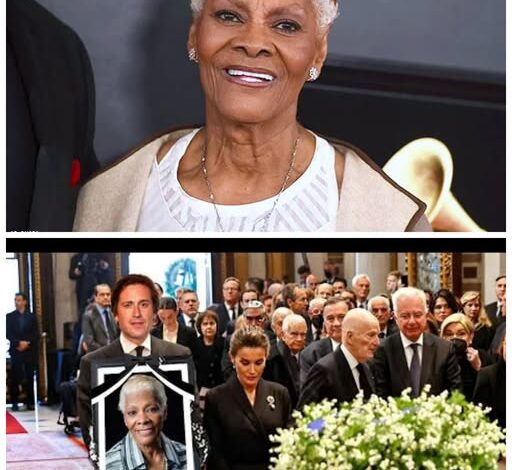
The announcement moved through the entertainment world like a cold wind across empty ground—quiet, chilling, impossible to ignore. News of Dionne Warwick’s passing, in this fictional retelling, arrived without warning and stunned everyone who had ever been shaped by her voice. Radio stations halted their playlists. Studios dimmed their lights. Concert halls fell silent. And for a moment, it felt as if music itself paused to grieve.

For decades, her songs had carried listeners through heartbreak and hope, joy and reflection. Her voice had soothed restless nights, lifted spirits, and woven itself into countless personal histories. Now the world stood in a hushed stillness, struggling to comprehend that such a steady, luminous presence could suddenly be gone.

Her funeral, in this imagined world, became more than a ceremony—it became a crossroads of grief, admiration, and unresolved tension. Friends, rivals, family, and strangers arrived carrying their own versions of the woman they loved, feared, admired, or misunderstood. Among them was Elijah, a longtime collaborator and friend, whose entire emotional landscape shifted the moment he stepped out of his car that afternoon.

The venue chosen wasn’t the grandest, but it was the most meaningful. It was where Dionne had once stood as a young performer, where her voice first filled a room and hinted at what was to come. Now the hall welcomed mourners under an amber-filtered sky, the last light of day casting a warm, aching glow across the entrance.

Elijah walked slowly toward the doors, as if afraid that moving too quickly would fracture the thin shell of composure he still had left. Memories replayed in his mind—late-night sessions chasing the perfect harmony, grueling tours softened by shared jokes, backstage pep talks whispered moments before the curtain rose. He remembered her laughter, sharp and contagious, and the way she could silence a chaotic room with just a single breath before singing.

Inside, the hall had been transformed into a sanctuary of elegance and restraint. Towering arrangements of lilies and orchids framed the aisles, each bloom chosen for its quiet symbolism. Soft golden lighting washed over the room, creating an atmosphere that felt suspended in time. At the center hung a massive portrait of Dionne, captured mid-smile, her eyes bright with the warmth she carried throughout her life. Those eyes seemed to follow her mourners, as if still watching over them.

Elijah felt his chest tighten at the sight. Grief doesn’t always roar; sometimes it arrives like a slow tide, rising until you’re forced to acknowledge how deep the water has become.

People whispered softly, flipping through carefully printed programs, each page filled with photos and lyrics. Industry giants sat beside childhood friends. Protégés who owed their careers to her presence. Legends who had once stood in her shadow. Strangers whose lives she had touched without ever meeting them.

Then the service began.

One by one, speakers stepped forward. Maria—one of her touring partners—was the first. Her hands shook as she described how Dionne had been more than a mentor. She had been a compass, a force of nature, someone who gave strength to others even when she herself was running on fumes. Maria spoke of long nights on the road, moments when exhaustion nearly broke them, and how Dionne had lifted entire rooms with nothing more than her voice.

The hall filled with muffled sobs.

Then the doors at the back opened.

A ripple of shock moved across the room as James, Dionne’s estranged son, stepped inside. His relationship with his mother had long been fodder for speculation. Rumors of arguments, misunderstandings, and emotional distance floated through the public sphere for years. Whether any of it was true hardly mattered now—everyone had their own narrative.

But the man walking down the aisle was not a headline. He was a son in pain. His steps were hesitant, his shoulders heavy, his eyes red from sleeplessness or tears—or both. He stopped in front of the giant portrait of his mother and stood there, silent and trembling. Nobody knew what to expect.

When the officiant unexpectedly invited James to speak, the entire hall stiffened. He stood behind the podium, gripping the edges as though it were the only thing keeping him upright.

“I know a lot of you wonder why I’m here,” he began. “Why I would show up after everything.”

His voice cracked. He admitted to resentment, to feeling overshadowed by her fame, to battling a sense of invisibility no child should ever feel. His honesty wasn’t polished—it was raw, uneven, and painfully human.

“She was my mother,” he said. “And I loved her. Even when anger made it hard to see that.”

Every wall he had built over the years collapsed in front of them. No publicist, no script—just truth.

Then the breaking point came.

Stepping away from the podium, James turned back to the portrait. Something inside him snapped, and the grief that erupted was not quiet or graceful. It came from the deepest part of him.

“You left me!” he cried. “We weren’t done! I wasn’t ready!”

His legs gave out, and he fell to his knees. His sobs echoed through the hall like a wound torn open. Gasps spread among the mourners, but not one person moved to interrupt. It was grief in its purest, most unvarnished form.

Even Elijah felt tears burning behind his eyes.

When the ceremony ended, people gathered in small, supportive groups. Elijah remained seated until most had drifted away. Then he walked toward James, who sat alone, staring at the floor with hollow eyes.

Elijah placed a steady hand on his shoulder.

“You don’t have to carry all of this alone,” he said. “Grief isn’t meant to be held in silence. And love… even complicated love… doesn’t vanish.”

James looked up, lost and searching, and Elijah offered him something he hadn’t expected—understanding. Not judgment. Not pity. Just presence.

It wasn’t forgiveness. It wasn’t reconciliation. But it was something new—a beginning of healing where there hadn’t been any before.

When the hall finally emptied, Elijah lingered. He walked slowly past the flowers, the candles, the silent instruments waiting in the wings. Everywhere he looked, he saw pieces of her life—her joy, her talent, her flaws, her triumphs. Her legacy.

Her music had been the obvious gift, but it wasn’t the only one. Her true legacy lived in the people who gathered to say goodbye, in the courage she inspired, in the humanity she revealed even in moments of imperfection.

As Elijah stepped outside, the evening air carried the faint sound of a street performer playing one of her songs. The melody drifted into the night, fragile and beautiful, lingering long after the last note faded.

Her curtain may have closed, but the echo remained.

Some voices don’t disappear.
Some legacies don’t dim.
Some lives continue through every heart they’ve touched.

For Dionne, the music hadn’t ended at all.
It had just changed form—and continued on.

The Lawson-Lavender House – A Grand Historic Greensboro Treasure Awaiting Restoration and Ready to Shine Again

The beloved Lawson-Lavender House stands proudly as one of Greensboro’s most admired and historically significant architectural gems—a true grande dame from another era. Rich with character, layered with history, and filled with irreplaceable craftsmanship, this extraordinary home is ready to welcome its next steward. For the visionary buyer who appreciates heritage properties and the magic of architectural preservation, this remarkable residence represents an opportunity like no other. With the right restoration, the Lawson-Lavender House has the potential to become one of the most breathtaking and admired homes in the region once again.

Perched gracefully atop a gently sloping double lot, the home commands attention from the moment you approach. Its elevated placement naturally enhances the architecture, giving the home a stately presence and offering beautiful hilltop views. Despite being just a short stroll from Main Street, the setting feels surprisingly private and secluded. Surrounded by lush green woods on three sides, the property provides the best of both worlds: a peaceful retreat wrapped in nature with immediate access to Greensboro’s quaint charm, local shops, and community conveniences.

From the outside, the home exudes warmth, personality, and old-world craftsmanship. The frame exterior, arranged in unique and visually appealing patterns, immediately catches the eye. This artistic use of woodwork is a rare detail seldom found in modern construction, reminding you of a time when aesthetics and artisan skill were central to homebuilding. One of the most distinctive features is the wraparound screened porch, a timeless southern hallmark perfect for relaxing afternoons, evening gatherings, or simply enjoying the breeze while taking in the surrounding greenery. This porch feels like an outdoor room—a peaceful sanctuary ideal for entertaining, reading, or unwinding in a rocking chair as the seasons change.

Adding to the home’s captivating façade is the square turret positioned above the front entrance. This architectural flourish is more than just decorative; it hints at the depth of character and thoughtful craftsmanship that continues throughout the interior. As you step inside, the home welcomes you with a sense of history and authenticity that cannot be replicated. Every room tells a story.

The interior is filled with features that preservationists and historic-home lovers deeply appreciate. Over the decades, the residence has retained countless original elements, many of which are increasingly rare. You’ll immediately notice the high ceilings, which create a sense of openness and grandeur. They allow natural light to flood through the rooms, highlighting the beautiful architectural details and enhancing the overall sense of scale.

The original hardwood floors are another irreplaceable treasure. Their rich color, authentic texture, and time-worn patina carry the beauty of the home’s history while offering immense potential after restoration. With refinishing, these floors could become one of the most breathtaking features in the home, grounding each room with warmth and elegance.

Scattered throughout the residence are original fireplaces, each adorned with antique mantles and period tile surrounds. These fireplaces aren’t merely functional—they serve as centerpieces that speak to the home’s history and the craftsmanship of a bygone era. Their intricate carvings, authentic tilework, and unique mantles provide the perfect opportunity for restoration enthusiasts to preserve and celebrate original details that modern homes simply cannot replicate.

Perhaps one of the most striking interior features is the curved staircase, which greets you like a sculptural masterpiece. The unpainted original wood banister is a rare find, showcasing the untouched beauty of the woodgrain and craftsmanship. Along the staircase, the unique detail on the stair treads further emphasizes the artisan-level construction. These subtle yet meaningful accents remind you that this is not just a home—it is a work of art created with skill, passion, and vision.

Throughout the house, more architectural surprises await discovery. Light filters through charming windows, highlighting intricate trims, built-ins, and original hardware. Spacious rooms offer endless layout potential, whether for a dream primary suite, formal entertaining areas, home offices, or cozy reading nooks. The possibilities are limitless for someone ready to breathe new life into this timeless residence.

While the Lawson-Lavender House requires restoration to fully return to its former glory, its bones, craftsmanship, and historic charm provide an extraordinary foundation. Restoration enthusiasts will appreciate the opportunity to preserve and highlight original materials while also modernizing the home for today’s comforts. Whether you envision a full historical restoration, a tasteful blend of old and new, or a creative redesign that pays homage to the home’s origins, this property gives you the space and structure to bring those dreams to life.

The double lot is another major asset, offering room for expansion, gardens, outdoor living areas, or simply added privacy. The gentle slope creates natural beauty and exceptional curb appeal, while the wooded surroundings make the property feel like a secluded hideaway despite the easy access to town. Imagine crafting stunning landscaping, restoring the wraparound porch to perfection, or even incorporating garden paths or seating areas throughout the grounds.

For those passionate about preserving architectural heritage, the Lawson-Lavender House is a jewel worth cherishing. Homes like this rarely come to the market, especially with so many original features intact. It offers a rare blend of charm, scale, character, and location—all wrapped in a historic package waiting for its next chapter.

Restoring a home like this is not simply a renovation project; it is a labor of love. It is an opportunity to honor craftsmanship, preserve history, and create something extraordinary. Once restored, this grande dame will undoubtedly shine as one of the most dazzling homes in Greensboro, captivating neighbors, visitors, and passersby alike.

From its hilltop setting to its distinctive architectural details, this historic beauty stands as a testament to timeless design and southern elegance. With vision, care, and creativity, the Lawson-Lavender House will once again become a showstopper—a home that radiates warmth, grace, and character for generations to come.

Listed on Zillow

FROM SWASHBUCKLING LEGEND TO TIMELESS ICON! HOW PIRATES OF THE CARIBBEAN AND CAPTAIN JACK SPARROW FOREVER CHANGED CINEMA

When Pirates of the Caribbean: The Curse of the Black Pearl crashed into theaters in 2003, nobody expected it to resurrect a dead genre, rewrite Hollywood’s idea of a blockbuster, or anchor itself into global pop culture the way it did. Pirate movies were considered box-office poison. The genre was a joke in studio boardrooms—too dusty, too campy, too risky. Then Disney rolled the dice on a theme-park ride, hired a director who refused to treat the material like a gag, and let an actor walk onto the set with eyeliner, gold teeth, and the swagger of a rock star lost at sea. The gamble paid off. It didn’t just work—it detonated.

At the center of this cinematic explosion stood Captain Jack Sparrow, a swaggering, staggering, scheming force of nature who didn’t behave like any pirate audiences had grown up imagining. He was too slippery to pin down, too theatrical to ignore, and too unpredictable to fit a mold. He entered the story not with a fierce battle cry but with a grand, comedic descent—gliding into port atop a sinking ship as if chaos itself were his natural habitat. That introduction told the world exactly what kind of pirate he was: not a tyrant or a killer, but a charismatic rogue dancing on the razor’s edge between disaster and brilliance.

Jack Sparrow wasn’t written to be the soul of the film. He hijacked that role through sheer presence. Depp built him from contradictions: a drunk who never misses a beat, a trickster who often tells the truth, a fool who outsmarts everyone in the room. Traditional swashbucklers carried themselves like polished heroes; Jack moved like a man guided by rum, luck, and divine mischief. Yet beneath the odd gait and slurred charm lived a survivor—someone who’d clawed his way through betrayals, curses, and the unforgiving sea. Audiences sensed that depth, even when Jack himself tried burying it under jokes.

What set Pirates of the Caribbean apart wasn’t just Jack’s eccentricity, but the world that formed around him. The film blended gothic fantasy, seafaring myth, and classic adventure storytelling into something that felt both nostalgic and rebellious. Skeleton pirates marched under a moonlit curse. Royal ships hunted rogue crews across storm-thrashed waters. Ancient gold whispered warnings of greed. Every corner of the story pulsed with life, danger, and magic. It was escapism of the highest grade—cinema that invited viewers to taste salt on the wind and feel the deck shift beneath their feet.

Still, one image rose above them all: Jack Sparrow standing at the bow of his ship, silhouetted against a burning sky, the sea stretching infinite before him. That shot distilled everything the franchise wanted to say. Freedom isn’t something handed over; it’s something chased, fought for, maybe even stolen. Adventure isn’t clean. It chews you up and spits you back out with scars you wouldn’t trade for the world. And destiny? Destiny favors those bold—or reckless—enough to reach for it with a grin.

The character and the films resonated because they treated piracy not as history but as myth. These weren’t stories about real buccaneers scraping by on the margins of empire. They were fever dreams about outsiders who refused to bow to any crown. Jack Sparrow embodied that fantasy. He wasn’t the strongest, the bravest, or the most disciplined. He was simply the most unshakably free. In a world ruled by rigid codes—naval, legal, or moral—Jack operated by his own compass, one that pointed not north but wherever his heart, curiosity, or survival instinct led.

The ripple effect on Hollywood was immediate. Suddenly, studios remembered that audiences still craved adventure—real adventure, not sanitized or formulaic. They wanted characters who could make them laugh and still pull off a knife-edge escape. They wanted worlds that felt tactile and unpredictable, where magic and danger lived side by side. The success of Pirates cracked open the door for new fantasy epics, unconventional blockbusters, and genre blends that didn’t play by the usual rules. It made room for risks again.

But the franchise didn’t endure simply because of spectacle. Beneath the swords and curses lived themes that hit harder than expected. Loyalty. Freedom. The cost of ambition. The blurry line between legend and lie. Characters fought not just monsters, but their own past mistakes. And Jack, for all his flamboyance, carried an undercurrent of melancholy that grounded him. His victories were never clean. His escapes left scars. Even at his most ridiculous, he felt human—faulty, cunning, hopeful, and haunted.

Rewatching the films now, it’s striking how much they leaned into practical craft. The ships weren’t just CGI models—they were physical beasts built on real water, creaking under real sails. Sword fights had weight and grit. Costumes looked lived-in, weathered by salt and sweat. The world felt tangible because so much of it truly was. That commitment to physicality gave Jack Sparrow’s antics a rawness and immediacy that digital spectacle alone can’t replicate. When he swung across a mast or leapt from flaming wreckage, it didn’t feel like a physics simulation—it felt like chaos chased by luck.

Captain Jack’s influence settled deep into cultural consciousness. His lines became quoted endlessly. His gait became a Halloween staple. His moral compass—spinning wildly yet somehow landing on the right choice at the right moment—became a shorthand for charming unpredictability. He turned the pirate archetype on its head and rebuilt it in his own image. Before him, pirates were villains or side characters. After him, they became icons of mischief, rebellion, and flawed heroism.

The first film’s ending sealed that legacy. Jack, beaten yet unbeaten, finally retakes the Black Pearl with a small grin and a quiet verse of song. Not triumphant. Not grandiose. Just perfectly, unmistakably Jack. A man who knows the sea will try to kill him again tomorrow and still sets sail with the confidence of someone born for the horizon.

That’s why the franchise endures. Not because of the curses or the swordfights, though they’re memorable. Not because of the spectacle, though it’s impressive. It lasts because Jack Sparrow and the world around him tapped into something timeless: the hunger for freedom, the thrill of uncertainty, and the belief that even the strangest, most chaotic souls can carve a legend out of nothing but wit and will.

Pirates of the Caribbean didn’t just revive a genre. It reshaped it. It carved out a space where whimsy and danger could coexist, where heroes could be messy, and where destiny didn’t have to follow rules. Captain Jack Sparrow became the face of that rebellion—a pirate who stole the world’s heart not through brutality, but through charm, resilience, and the audacity to chase the horizon on his own terms.

If the cat bites you, here is what it really means!

Cats are endlessly intriguing creatures—graceful, unpredictable, affectionate on their own terms, and stubborn in ways that make you question who really runs the household. Anyone who lives with a cat knows they communicate constantly, but rarely in the ways humans expect. Their tails speak, their ears speak, their silence speaks—and sometimes their teeth do, too. A cat bite isn’t always a sign of aggression. In fact, most of the time, it’s a message wrapped in instinct and emotion. Understanding why a cat bites requires patience, observation, and the willingness to see the world through their eyes.

The most common cause behind a cat’s bite is simple playfulness. Young cats especially experience the world through movement and touch. Everything is a potential target—your fingers tapping the couch, your feet shifting under a blanket, even your hair swinging as you walk by. In their minds, they’re practicing the skills of a perfect hunter: pouncing, grabbing, and yes, biting. These playful nips are usually light and precise, not meant to harm but to engage. Still, a cat that gets overly excited can escalate quickly. Redirecting that energy toward cat toys—the kind that keep your hands a safe distance away—teaches them what’s acceptable to bite and what isn’t.

On the opposite end of the spectrum lies a behavior many owners misinterpret: the love bite. A cat curled in your lap, purring softly, suddenly leans down and nibbles your hand or wrist. It’s not a threat—it’s affection translated into feline language. To them, this little nip is a gentle reminder of closeness, a moment of bonding. But sometimes, this same nibble appears when a cat becomes overstimulated. Too much petting can overwhelm their sensitive nervous system, turning pleasure into irritation with little warning. A sharp little bite is their way of saying, “I’m done now.” Learning to read the signs—twitching tails, shifting paws, ears angling back—helps prevent affection from turning into annoyance.

Territorial instincts can also lead to biting. Cats are deeply protective of their spaces, even if the “territory” is just a warm blanket, a window perch, or their favorite human. When another pet gets too close or someone moves in on a spot they’ve claimed, a defensive bite may follow. In multi-cat households, these small conflicts can become more frequent, especially if resources like litter boxes, beds, or attention feel limited. Providing enough space for everyone dramatically reduces this kind of tension.

Fear-based bites are entirely different. A scared cat is a cornered animal, even inside a peaceful home. Loud noises, sudden movements, unfamiliar guests, or past trauma can push them into defense mode. These bites are hard, fast, and fueled by panic. They’re not meant to dominate—they’re meant to survive. The best response is not punishment but reassurance: a calm environment, hiding spots they can retreat to, and slow, respectful interactions. Over time, trust grows, and fear-based reactions fade.

Pain-triggered bites may be the most misunderstood of all. A cat that starts biting unexpectedly, especially one who was previously gentle, may be trying to say something is wrong. Dental pain, arthritis, joint problems, or internal discomfort can make them more reactive. If a usually sweet-natured cat begins biting without clear cause, a vet visit is not optional—it’s necessary. Cats instinctively hide pain, but biting is one of the few clues they allow to slip through.

Kittens, of course, bite for nearly every reason imaginable—mainly because they’re learning everything from scratch. But if you allow them to bite your hands during play, they grow into adult cats who think hands are fair game. Setting boundaries early, providing constant enrichment, and giving them safe outlets for their energy shape them into better-behaved adults.

No matter the reason behind a bite, what happens afterward matters. Cat bites, even small ones, should never be shrugged off. Their sharp teeth create deep, narrow punctures that bacteria love. Washing the wound thoroughly, applying antiseptic, and watching for swelling or redness can prevent a minor injury from turning serious. If the bite becomes painful or swollen, a doctor should be seen immediately.

But beyond first aid, the real work lies in understanding what your cat was trying to communicate. Biting is not random—it’s purposeful. It’s a message, and once you decode it, your relationship with your cat deepens. You begin to recognize when they’re overstimulated, when they’re excited, when they’re anxious, and when they’re simply trying to get your attention. You learn their rhythms: when they want affection, when they want space, when they want to play, and when they want the world to leave them alone.

Cats don’t use words, but they’re constantly speaking through gestures, glances, posture, and yes, sometimes through their teeth. When you take the time to listen—to really listen—you start seeing the bite not as an act of aggression, but as a form of communication that you can respond to and learn from.

In the end, understanding the bite is part of understanding the cat. And when you get it right, the bond that forms is unmistakable—built on trust, respect, and a shared language that doesn’t need a single spoken word.

Popular

Tragic update on surgery-addicted woman who wanted to become a”forest elf”

0
It’s fair to assume many celebrities have undergone plastic surgery. Some have had botox, while others have altered their entire bodies. One of those people...