
Stories

BREAKING! Devastating Blaze in San Juan de Miraflores Leaves Hundreds Homeless

The fire started just after dusk—one spark in the maze of Pamplona Alta that turned into an inferno before anyone could fully understand what was happening. In San Juan de Miraflores, on a hillside where families had built their lives from wood, tin sheets, and stubborn hope, the sky lit up in a violent orange glow. Within minutes, thick black smoke swallowed entire rows of homes, and neighbors bolted into the narrow pathways shouting warnings, grabbing children, pounding on doors, pulling elders to safety.

People would later say they heard a loud crack, like a small explosion—maybe pyrotechnics, maybe something electrical—but in the moment, there was no time to guess. Flames leapt from roof to roof, carried by the wind and fueled by walls made of plywood and cardboard. The fire climbed upward, dragging everything with it. Those who lived at the top of the hill watched their only path of escape glow hotter and narrower. Those at the bottom watched fire rain down from above.

By the time the first sirens echoed through the district, the blaze had already carved a massive scar through the neighborhood. Entire clusters of homes—places where families had celebrated birthdays, shared meals, survived hard years together—were reduced to smoldering frameworks. In the shadows of the flames, children clung to their parents, barefoot, coughing, their eyes wide with the kind of fear that stays long after the smoke clears.

Firefighters rushed in with hoses and equipment, but the terrain fought them. Pamplona Alta isn’t built for emergencies. It’s a community built on steep slopes, with narrow alleys and tight corners that turn every rescue into a challenge. Water pressure dropped. Crews hauled equipment by hand up the inclines, slipping on hot ash, pushing through crowds desperate for answers. Volunteers formed human chains to carry buckets, pull debris aside, and help anyone who stumbled. For a moment, the entire hillside moved as one—fear and solidarity bound together.

As the flames raged, families stood in the cold night air watching their lives burn. Mothers held infants wrapped in blankets soaked through by the humidity and heat. Elderly men and women with trembling hands stared in disbelief at the place where their homes used to stand. Teens ran back and forth bringing water bottles, flashlights, and updates they gathered from emergency workers. People called names into the smoke, searching for friends, pets, relatives. For many, the only thing left to do was wait and pray that the fire would stop before it consumed everything.

Authorities set up emergency shelters at local schools and community centers. Crowds poured in, carrying whatever they had managed to grab—a cooking pot, an old backpack, a family photo frame scorched at the edges. Volunteers passed out water, bread, and blankets. Children sat on the floor beside strangers who were suddenly their temporary neighbors. No one slept; exhaustion sat heavy in the room, but adrenaline kept everyone alert.

Outside, investigators worked to determine the cause. Rumors spread quickly—maybe fireworks, maybe a short circuit, maybe something more sinister—but officials urged patience. For now, the priority was survival. Aid organizations arrived with trucks of supplies. Government representatives walked through the shelters making lists, gathering names, trying to assess just how many families were now homeless.

By midnight, the fire was mostly contained. Smoke still curled upward from pockets of debris, glowing faintly under the streetlights. Firefighters continued dousing hotspots, their silhouettes moving through the haze like ghosts. The damage was staggering—rows of homes leveled, twisted metal everywhere, ash blowing across the hillside like gray snow. For many residents, it was the first time they truly paused and let the shock settle in. Their neighborhood didn’t look like their neighborhood anymore.

In the shelters, the grief was quiet at first. People whispered, processing. Some cried into their hands. Others kept their eyes on the exit, as if waiting for someone to walk through the door and tell them it was over, that they could go home. But home was now a memory with edges burned away. They would have to rebuild piece by piece, starting from nothing but the community they still had.

Officials vowed support—temporary housing, food assistance, reconstruction plans. The promises were welcome, but the fear lingered. Rebuilding in Pamplona Alta has never been easy. Many of these families had constructed their homes themselves, board by board, paycheck by paycheck. Losing everything in a single night felt brutally unfair.

Yet even in the middle of ruin, moments of strength surfaced. A teenage boy returned to the shelter carrying a lost dog he’d dug out from a collapsed corner wall. A grandmother handed her last piece of bread to a crying child she didn’t know. A man who had lost his own home offered his jacket to another family because they had a baby and the night air was cold. These were the small, stubborn sparks that refused to go out, even when everything else had.

As dawn approached, the smoke thinned into a pale gray mist. The hillside, still smoldering, seemed to exhale after a night of terror. Families filed out of the shelters to see what remained. Some found nothing but ash. Some found fragments they would try to salvage—a metal door hinge, a cracked cup, a surviving plant near what used to be a window. Others found neighbors waiting for them, ready to help sort through debris, ready to rebuild side by side.

Pamplona Alta woke up to devastation, but also to an undeniable truth: even a fire that wipes out homes cannot erase a community’s backbone. People stood shoulder to shoulder again, this time not to flee the flames, but to face the long road ahead.

And as the sun climbed over the destroyed rooftops and the sirens faded, one thing was clear: while hundreds of homes were lost, the people were still standing—shaken, grieving, but unbroken, determined to rise from the ashes together.


OMG! The search for Karolina is over!

The search for Karolina is over, but not in the way anyone prayed for. Her name has echoed through streets, across social media, on posters taped to windows, and in the trembling voices of volunteers calling into the woods at dusk. For weeks, the town lived in a suspended state, clinging to hope even as it thinned with every passing day. Now there is an answer, and answers don’t always bring comfort. Sometimes they close a chapter with more weight than relief.

Karolina disappeared on an ordinary morning that should’ve left no mark in history. She left the house wearing her favorite denim jacket, texting a friend about meeting later, and reminding her mother she’d be home before dark. Nothing in her routine hinted at danger. But sometime between school and her walk home, the world swallowed her whole. At first, everyone assumed it was a misunderstanding—a missed bus, a forgotten plan, a phone battery gone dead. The hours stretched, worry sharpened, and by nightfall, her mother’s voice had already cracked from calling her name.

The police launched a search immediately. Officers combed nearby parks, wooded trails, parking lots. Neighbors joined, walking through fields with flashlights that cut thin slices of light through the tall grass. People who had never spoken to each other before shared theories, fears, and borrowed hope. Every rustle sounded like a possibility. Every shadow felt like a threat.

Days passed. Leads evaporated as quickly as they appeared. A blurry security camera photo caught a girl who resembled Karolina near a gas station—false alarm. Someone thought they saw her getting into a car—wrong person. A jacket was found near a riverbank—similar style, different size. With each disappointment, dread tightened its grip.

Karolina’s mother began leaving the porch light on every night. She refused to sleep in her bed, choosing instead to lie on the couch near the window, convinced she’d recognize her daughter’s silhouette if it appeared at the top of the driveway. Her father stopped shaving. He lingered at the police station daily, offering theories, reading maps, second-guessing every detail of the last day he saw his little girl.

Then, as the search entered its third week, a break came in the most unexpected way. A hiker in a remote wooded area—far beyond the initial search radius—noticed something out of place near a cluster of pines. A flash of color. A stillness that didn’t belong. He approached and realized what he’d found before he was even close enough to confirm it. The forest around him suddenly felt unbearably silent. He called authorities with shaking hands.

When the news reached town, people stopped mid-sentence, mid-step, mid-breath. The words spread fast—too fast—and by the time officials made a statement, the community already understood what it meant when the spokesperson stepped up to the microphone wearing that expression. The search was over. Karolina had been found. She was not coming home.

Shock rippled like a cold wind. Even those who had braced themselves for the worst felt the blow. Hope doesn’t die quietly; it breaks abruptly, like glass. Crowds gathered at the community center, outside the school she attended, and along the trail that led to the woods. A memorial formed overnight—flowers, photos, handwritten notes on crumpled paper smudged by tears and rain.

People whispered about how she ended up so far from the original route. Whether she went alone or was taken. Whether she had been lost, frightened, calling for help no one could hear. The authorities promised answers, promised justice, promised that every stone would be overturned until the truth was uncovered. But for the family, none of the explanations could ever equal the loss.

Karolina’s mother closed the curtains for days. Her father stood in the hallway staring at the empty doorway of her bedroom, unable to step inside. Friends who used to share secrets with her sat in circles on the playground staring at the swings she loved, tracing her name into the dirt as though writing it could summon her back. Even people who had never met her felt the weight—because a child disappearing is a wound that doesn’t belong to one family alone.

The story that now replaces hope is difficult but necessary. It’s the story of a community changed. Of parents holding their children a little longer before school. Of strangers who once passed without a glance now acknowledging each other with somber understanding. It’s the story of people demanding safer routes, better systems, more awareness—anything to prevent another name from being written onto posters in black marker.

In time, investigators will reveal more—what happened in those woods, who may be responsible, whether she suffered, whether she knew how desperately she was being searched for. But those details, as important as they are for justice, won’t rewrite the ending. They won’t return the bright-eyed girl who loved drawing horses, who hummed while brushing her hair, who once made her family laugh so hard they cried.

The truth is, Karolina mattered before she became a headline. She mattered before her face appeared on flyers. And she matters now, not as a tragic mystery, but as a reminder of why communities must hold fast to each other, stay vigilant, and refuse to allow darkness to swallow another child unnoticed.

As the town prepares for her vigil, candles are already being placed along the main street. Her classmates have written messages for lanterns that will float into the night sky—tiny, flickering symbols of the hope they held and the love they still carry. Her family will stand together, supported by arms that once belonged to strangers, now united in grief.

The search for Karolina is over, but the mark she leaves behind isn’t fading. It’s etched into the hearts of everyone who prayed for her return. And while her story has ended far too soon, the strength of the community built around her won’t end with her. It will move forward, reshaped by loss but driven by the determination that no child should vanish into silence again.

Karolina is gone, but she’s not forgotten. She never will be.

What Is the Purpose of the Fabric Strip Found on Hotel Beds

If you’ve ever checked into a hotel and noticed a decorative fabric strip stretched neatly across the foot of the bed, you’ve encountered what’s known as a bed runner. Though it may seem like a purely aesthetic touch, the bed runner actually serves several thoughtful purposes designed to enhance both the look and functionality of the room. Hotels pay close attention to small details that create a welcoming atmosphere, and the bed runner adds color, texture, and visual interest while contributing to a cleaner and more organized space for guests.

One of the most practical uses of the bed runner is its role in helping protect the bedding. Many travelers like to snack, enjoy a drink, or relax with a book or electronic device while sitting comfortably on the bed. Instead of placing items directly onto the crisp linens, the bed runner provides a convenient surface that helps minimize marks or small spills. This extra layer keeps the bedding looking fresh throughout a guest’s stay, supporting the hotel’s commitment to cleanliness while allowing guests to enjoy the comfort of the bed without worry.

Bed runners also offer convenience when it comes to storing personal belongings temporarily. When guests arrive, it’s common to set handbags, jackets, or small carry-ons down on the bed while unpacking or settling in. The runner acts as a protective barrier between these items and the white linens below. This simple addition helps reduce contact between the bedding and items that may have been carried through airports, public transport, or outdoor areas. As a result, both the belongings and the bed stay cleaner, and guests can organize their space with ease.MBeyond these practical benefits, bed runners play a subtle yet meaningful role in maintaining the overall comfort of the room. Many people sit at the foot of the bed to tie their shoes, rest briefly, or prepare for the day ahead.

The runner provides a designated spot for this, reducing direct contact with the sheets and preserving their freshly made appearance. It also reinforces the hotel’s focus on hygiene by offering guests a place to sit or rest items without disturbing the bedding. Combined with its decorative appeal, this small strip of fabric enhances both functionality and ambiance, showing how thoughtful design elements can make even a simple hotel room feel more inviting and well-planned. The next time you step into a hotel room and notice a stylish bed runner at the foot of the mattress, you may appreciate it in a new way. Far more than a decorative accessory, it is a well-designed detail that contributes to the comfort, cleanliness, and visual harmony of the space. Its presence reflects the hotel’s attention to guest experience—providing convenience, protecting linens, and adding a touch of elegance that helps make your stay smoother and more enjoyable.

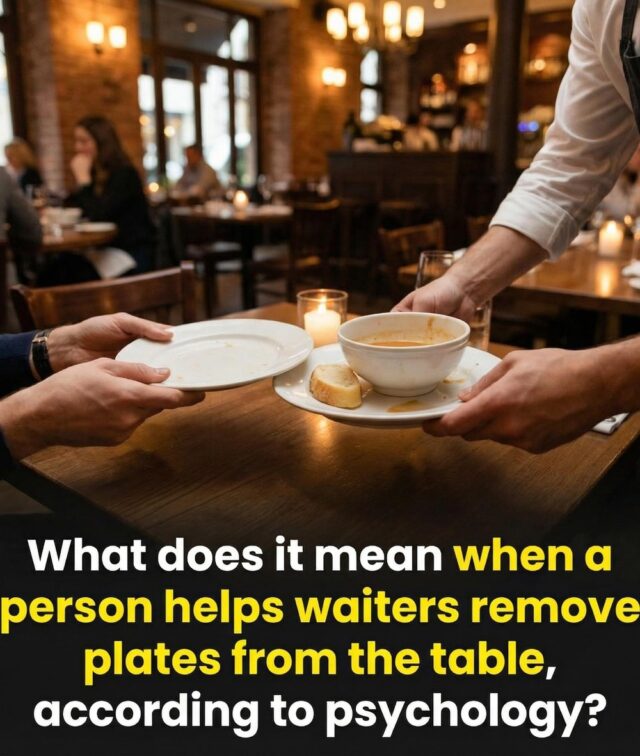
The Psychology Behind Helping Waiters: What This Simple Gesture Reveals

In everyday social situations, small behaviors often reveal more about a person’s character than we might realize, and dining etiquette is no exception. When someone voluntarily helps a waiter remove plates from the table, it can be an indicator of several positive psychological traits. This gesture typically reflects courtesy, cooperation, and social awareness, qualities that help create smoother interactions between individuals. In many cultures, diners are encouraged to simply enjoy their meal while staff handle the rest; however, some people naturally feel inclined to assist when they see an opportunity. Their actions are not meant to be intrusive but rather supportive, showing a desire to make shared spaces more comfortable for everyone.

Psychology also associates this type of behavior with empathy and respect for service roles. Individuals who choose to help often understand the effort that waitstaff put into ensuring a pleasant dining experience. They may recognize that removing a few plates can save the waiter time and make their job slightly easier during a busy shift. This understanding can come from personal experience—perhaps the person has worked in customer service before—or simply from a strong sense of compassion. Helping in small ways becomes a natural extension of their gratitude. Instead of viewing the interaction as strictly transactional, they treat staff members as people deserving of kindness and acknowledgment.

Additionally, assisting a waiter may reflect a person’s sense of responsibility and emotional intelligence. People who are highly aware of their surroundings often notice when a staff member is handling multiple tasks at once. They may instinctively step in to help, not because they feel obligated, but because they prefer to contribute to a positive environment. This behavior also suggests a level of confidence and comfort in social settings. Rather than passively waiting, they take initiative in a respectful, non-disruptive way. Psychologists note that prosocial behaviors like these often arise from internal motivation to be helpful rather than from a desire to receive attention or praise.

Finally, it is important to understand that helping a waiter does not necessarily mean the person is trying to signal anything specific about themselves. People differ in their habits, cultural backgrounds, and upbringing, and this small action can simply be a reflection of personal values. What matters most is the intention behind the gesture. In general, this behavior tends to be associated with kindness, thoughtfulness, and positive social interaction. Whether someone is trying to be helpful, express appreciation, or simply speed up the process so they can continue their conversation, such actions contribute to a more pleasant dining experience for everyone. By recognizing these small moments of cooperation, we gain insight into how simple acts of courtesy can strengthen human connection in everyday life.

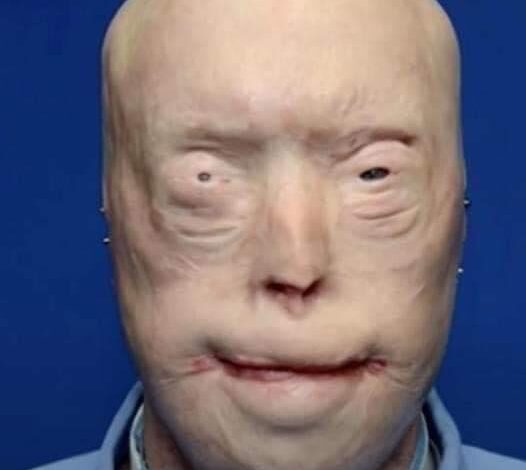
He suffered devastating burns when he tried to rescue a woman trapped in a fire, For years, he was terrified to show his face to the world, and wore caps, sunglasses and prosthetic ears in public

Patrick Hardison’s story still feels unreal, even after all these years. It’s the kind of story you assume belongs in a movie — too dramatic, too punishing, too miraculous to fit inside one man’s life. But it happened. Every brutal detail, every impossible surgery, every moment of grit and humiliation. And today, when you see him, you’d never believe where he started.

Before everything changed, Patrick was just a regular guy from Mississippi — a volunteer firefighter, a father, a man who lived simply and worked hard. He wasn’t chasing glory or trying to be a hero. Running into burning buildings was just what he did. It was instinct.

In 2001, when the call came about a house fire with someone trapped inside, Patrick didn’t hesitate. He threw on his gear and went in. Within seconds, the structure collapsed on top of him. He couldn’t move. Fire wrapped around him, melting his mask, devouring his skin, leaving him conscious inside a nightmare.

His friend and fellow first responder, Jimmy Neal, later said he’d never seen someone burned that badly still breathing.

Patrick suffered catastrophic burns — third-degree damage to his face, scalp, neck, and upper torso. His ears were gone, his lips destroyed, his nose mostly erased. Even the tissue of his eyelids had vanished, leaving his eyes vulnerable and unprotected. The man who walked into the fire was unrecognizable when he came out.

Months passed before he could even look at himself in the mirror. And when he finally did, he broke.

“This is it?” he whispered to his reflection. “I can’t do this.”

He meant it.

The surgeries began — over seventy of them. Skin grafts, reconstruction attempts, procedures designed just to let him blink again. Even then, doctors struggled to protect his vision. Eating was agony. Speaking was difficult. Walking into public places meant bracing himself for staring, children screaming, adults recoiling.

He lived behind sunglasses, a baseball cap, prosthetic ears, and a practiced look that said, “Don’t ask.” But hiding didn’t stop the shame, and it didn’t silence the grief.

“I never got a day off from the injury,” he said. “Everywhere I went, it came with me.”

Years dragged by. His world shrank. Hope did too.

Then a spark — a small one, but enough.

A French woman, Isabelle Dinoire, underwent the world’s first partial face transplant after a horrific dog attack. Her survival cracked open a door Patrick had long believed was sealed. If it could be done once, maybe — just maybe — it could be done again.

He met Dr. Eduardo Rodriguez at NYU Langone. Rodriguez didn’t sugarcoat anything. He told Patrick the risks were enormous. But he also said something Patrick hadn’t heard in years:

“We can try.”

The search for a donor began. It felt impossible. Months passed. Then one day, a match appeared.

David Rodebaugh — a 26-year-old cyclist — had been declared brain dead after an accident. His mother, Nancy Millar, made an unthinkably generous choice: she donated her son’s organs, including his face.

“I told them, save his face,” Nancy said. “He had the face of a porcelain doll.”

When she learned her son’s face would go to Patrick — a firefighter, a man who’d risked his life for strangers — something clicked inside her.

She saw the strength her son had. The courage. The grit. And she felt, in a way only a mother understands, that it was right.

The surgery took 26 hours and required more than 100 medical professionals. Patrick had a 50/50 chance of surviving it.

But he pulled through.

He woke up with a new face — scalp, ears, ear canals, eyelids that blinked naturally, skin soft enough to touch, features that let him feel human again. When the swelling went down, he could see. He could speak. He could close his eyes for the first time in fifteen years.

When he finally met Nancy, he thanked her the way only a man who has been given a second life can.

She had one request — to kiss him on the forehead.

Because she used to kiss David there every night before bed.

Patrick bowed his head. She kissed him. And for a moment, grief and gratitude existed in the same breath.

Today, Patrick still takes anti-rejection medication. He still navigates the physical and emotional complexities of having another man’s face. But he’s living — fully, publicly, proudly. He’s divorced, working on a book, and building a new future instead of hiding from his past.

He doesn’t see himself as a miracle, even though the rest of us do. He sees himself as a man who refused to stop fighting.

“I want people to know there’s always hope,” he says. “I don’t want anyone to think they have to live life broken. You don’t. You can get up. You can change everything.”

Patrick’s survival isn’t just medical history. It’s human resilience in its rawest, truest form — proof that even when fire tries to take everything from you, there are still people who will step in, lift you up, and give you back the chance to be seen.

And in Patrick’s case, that chance came with a new face — and a new life — shaped by courage, sacrifice, and a mother’s final gift to the world.

Zodiac Signs Often Associated with Intuitive or Vivid Dreams — Does Yours Make the List?

Dreams have long fascinated people across cultures, often appearing as gentle impressions or vivid scenes that linger long after waking. Some dreams feel symbolic, offering insight into our emotions, while others seem to highlight thoughts or concerns we haven’t fully acknowledged. Astrologers believe that certain zodiac signs are especially inclined toward intuitive or emotionally rich dream experiences. While not predictive or supernatural, these dreams can offer meaningful guidance by helping individuals better understand their inner world.

Among the zodiac signs, water signs—Pisces, Cancer, and Scorpio—are often associated with heightened emotional awareness, which may translate to a more active dream life. Pisces, influenced by imaginative Neptune, is known for experiencing dreams with deep symbolism or emotional clarity, often reflecting personal transitions or internal realizations. Cancer, guided by the Moon, tends to dream in ways that mirror their emotional state, sometimes uncovering unresolved feelings or highlighting important relationships. Scorpio, shaped by Pluto’s transformative energy, frequently recalls dreams that explore themes of insight, truth, and personal growth. These dreams may encourage Scorpios to reflect more deeply on situations unfolding in their waking life.

Two additional signs, Aquarius and Sagittarius, are also noted for their thoughtful and visionary dreaming. Aquarius often processes ideas and observations through symbolic or forward-thinking imagery, sometimes waking with fresh perspectives on challenges or societal topics they’ve been contemplating. Sagittarius, influenced by expansive Jupiter, may experience dreams that feel motivating or reflective of their aspirations. These dreams often bring clarity about personal goals, new directions, or the desire to explore unfamiliar paths. For both signs, dreaming becomes an extension of their natural curiosity and openness to new possibilities.

While some signs may experience vivid or emotionally resonant dreams more frequently, everyone has the capacity to receive insight through the dreaming mind. Dreams can act as tools for reflection, helping us sort through complex thoughts or feelings. When a dream feels unusually clear or meaningful, astrologers suggest taking a moment to write it down, consider any recurring themes, and reflect on how it relates to current experiences. Not every dream carries a message, but the ones that stay with us often highlight something worth exploring. Ultimately, dreams—whether symbolic, comforting, or simply imaginative—can serve as gentle reminders of our emotional landscape and the wisdom our minds hold, even when we’re asleep.

Unfinished Beauty, Unanswered Questions!

She never asked for the spotlight. It found her before she could spell her own name, before she understood what a camera wanted from her, before she realized the world had already made up its mind about who she was. Thylane Blondeau became a headline long before she became a person in the public’s eyes. Strangers studied her like a symbol, praised her like a prize, condemned her like a controversy. And somewhere in the middle of all that noise, a child tried to grow up.

From the moment her photograph first circled the globe, adults argued about beauty, innocence, and exploitation as if she were an abstract idea—not a little girl with scraped knees, fears, hobbies, and a voice too soft to compete with the chaos around her. “The most beautiful child in the world,” they called her, a title that sounded flattering but felt more like a cage. Praise piled onto her before she even understood what it meant, and criticism came just as quickly, sharp and unforgiving. Her childhood became a public battleground where everyone felt entitled to an opinion about a life that wasn’t theirs.

She learned early that being looked at is not the same as being seen. The camera adored her, but the world behind it often forgot to ask how she felt. She learned to pose, smile, and stay composed even when she didn’t want to. She learned to absorb comments meant for grown women, judgments about her face, her clothes, her body—things no child should ever hear. She learned that fame can feel like a spotlight and a magnifying glass at the same time.

As she grew older, the contradiction tightened around her life. People insisted they were “protecting her innocence” while scrutinizing her every move. They celebrated her beauty while debating whether her very existence in fashion was a moral crisis. Every runway, every photograph, every interview sparked another wave of heated opinions. Was she too young? Too exposed? Too perfect? Too visible? The questions never stopped. No one asked the only question that mattered: Who did she want to be?

But children grow, even in the harshest light. Slowly, she began reclaiming herself from the myth that had been built around her. Acting opened doors that modeling never had. It gave her the freedom to explore emotions instead of expressions, to speak instead of pose, to shift from image to identity. Fashion was no longer something she endured—it became a craft, a choice, something she could walk toward or walk away from without losing herself in the process.

When scandals or criticisms surged again, she stepped back. Not out of fear, but out of understanding: visibility means nothing without boundaries. She learned to say no. She learned to protect her life outside the lens. She learned that a person who was once treated like a symbol can still become whole, real, grounded.

Now, when she walks along the quiet French coastline, the wind brushing through her hair and the sun softening the horizon, she looks nothing like the frozen images people still obsess over. She looks like someone who made it through something most people will never understand. Her hand intertwined with someone who cares for her—not as a headline, not as a generational icon, not as a clickbait relic, but as a woman—tells a story far more powerful than any magazine cover ever did.

There are no spotlights on this beach. No stylists hovering nearby. No critics judging her expression. Just waves, wind, and space—space she fought for, space she deserves. The world may still cling to that old moniker, that impossible idea of “the most beautiful child,” but she no longer carries the weight of it. She outgrew the narrative built for her before she understood it existed.

People still debate what her early fame meant—whether it harmed her, helped her, or sculpted her into someone stronger. But the truth is simpler. What lasted wasn’t the beauty the world projected onto her; beauty fades, shifts, evolves. What lasted was her persistence, her refusal to be flattened into a single idea. What lasted was her humanity.

She is no longer the unfinished story people argued over. She is the author now. She chooses when to be seen and when to walk away. She chooses which parts of her life belong to the public and which parts remain her own. She chooses who she is, not who she’s supposed to be.

And maybe that’s the quiet miracle at the heart of her journey: a child turned into a global image, then into a young woman who rejected the image and chose herself instead.

The waves behind her keep breaking onto the shore, carrying fragments of old stories, letting them slip back into the sea. The world can debate her beginnings forever, but she has already moved past them—stepping into a life defined not by beauty, but by ownership of her own voice, her own future, her own name.

In the end, she didn’t escape the narrative. She outlived it. And that is its own kind of victory.

Why Public Restroom Doors Are Designed with Bottom Gaps

Many people have wondered why public restroom stall doors are built with a noticeable gap at the bottom. At first glance, it may seem like an oversight or a budget-saving measure, but the design is intentional and serves several practical functions. Public restrooms are used by large numbers of people every day, and small design choices can significantly improve cleanliness, safety, and overall efficiency. What appears to be a simple gap is actually a thoughtful solution to the challenges of maintaining shared spaces that must remain functional and sanitary at all times.

One of the primary advantages of the raised door design is the ease it provides for cleaning and maintenance. In busy restrooms, spills and messes are unavoidable. When doors do not extend to the floor, cleaning staff can quickly mop, sanitize, and maintain the full restroom area without needing to open each stall or reach into tight spaces. This speeds up the cleaning process and makes it more thorough, helping to keep restrooms fresher and more hygienic throughout the day. In facilities that serve hundreds or even thousands of people—such as malls, airports, and schools—this efficiency is essential.

Safety is another important consideration behind the design. Public spaces must account for the possibility of emergencies, including fainting, health issues, or individuals in distress. The gap under the door allows others to see if someone may need assistance and creates a point of access for help to arrive quickly. In urgent situations, first responders can enter a stall without damaging doors or delaying aid. Beyond emergency use, the open space improves airflow throughout the restroom. Better ventilation helps reduce moisture, discourage unpleasant odors, and create a cleaner overall environment for all users.

The design also supports convenience and smoother restroom traffic. The gap makes it easy to tell whether a stall is occupied without knocking or waiting uncertainly, which can be especially helpful in crowded locations. This small visual cue keeps lines moving and reduces confusion among users. While some people prefer full-length doors for added privacy, the raised-door style remains widely used because it balances practicality with cost-effective maintenance. Facilities are better able to operate efficiently, and staff can keep restrooms clean and safe for everyone who uses them. In the end, the familiar gap beneath public restroom doors is much more purposeful than it appears. It helps maintain hygiene, supports safety protocols, improves ventilation, and ensures smoother operations in busy environments. Although the design may not provide the same sense of enclosure as full-length doors, its benefits make it a reliable choice for high-traffic public spaces. Understanding the reasoning behind this design can offer a new appreciation for the thoughtful planning that goes into creating spaces that serve large communities comfortably and safely.

What Scientists Want Adults to Know About Long-Term Cannabis Habits

If you are still smoking weed at 30, scientists have some really bad news for you. At least, that is how many headlines tend to frame new research—dramatic, alarming, and often oversimplified. But when you look past the attention-grabbing language, what researchers are really saying is far more balanced and far more helpful. Rather than predicting inevitable harm, studies focus on how long-term habits affect well-being, motivation, daily routines, and emotional balance as people move into adulthood. The goal is not to judge or frighten, but to encourage individuals to think more intentionally about the choices that shape their long-term lifestyle.

By the time people reach their late twenties or early thirties, life often becomes more demanding. Careers develop, responsibilities grow, and personal goals shift. Scientists note that this stage of life is when routines—whether healthy or unhealthy—tend to solidify. Research exploring cannabis use during this period often highlights how habits formed in adolescence or early adulthood can begin to interact with stress, sleep, and overall productivity. Instead of moral conclusions, these studies simply emphasize awareness: understanding how any long-term habit, including cannabis use, might influence energy levels, focus, or emotional clarity. For some, these insights become a gentle reminder to reassess what supports their future ambitions.

It is also important to recognize that people use cannabis for many different reasons. Some seek relaxation, others use it socially, and some rely on it to unwind after stressful days. Scientists studying these patterns do not argue that all use is harmful; instead, they examine how frequency and context matter. They encourage adults to check in with themselves: Is the habit still serving a positive purpose? Does it align with current goals? Could alternative coping methods offer more balance? These questions are not warnings—they are tools for reflection. Many researchers even note that mindful decision-making, rather than fear or shame, leads to healthier outcomes across all areas of life.

Ultimately, the real “news” scientists offer is not bad at all. It is a reminder that growth often requires self-awareness. As people step into their thirties, they naturally reevaluate the habits that once felt harmless or routine. Some choose to reduce or reshape their cannabis use, while others continue with more intention and moderation. What matters most is not judgment, but understanding how day-to-day choices influence overall well-being, productivity, and long-term goals. In a world full of noise and dramatic headlines, the most meaningful message is simple: your life, your health, and your future are shaped by small, mindful decisions—and it is never too late to make choices that support the person you want to become.

The Cake You Choose May Reflect Your Personality

Have you ever wondered why a particular cake flavor always seems to call your name? Whether you’re the type who loves new adventures or someone who prefers quiet moments and cozy routines, your favorite cake might say more about your personality than you realize. While this idea is all in good fun, the flavors we gravitate toward can reflect certain preferences, moods, and traits that make each of us wonderfully unique. So before you take your next bite, consider the possibility that your cake choice is offering a glimpse into the way you approach life.

Cake has long been more than just a celebratory dessert—it often carries emotion, nostalgia, and personal taste. Some people reach for the deep, rich flavor of chocolate when they want comfort or a spark of indulgence. Others enjoy the familiar simplicity of vanilla, finding joy in its timelessness and gentle sweetness. Then there are those who prefer something bright and refreshing, like lemon, a flavor that brings a cheerful burst of energy. Each choice highlights a small part of who we are, turning a simple dessert into a playful reflection of personality. This fun, lighthearted idea reminds us that even the treats we love can say something meaningful about us.

For instance, people who favor chocolate cakes are often described as expressive and confident. They appreciate strong flavors and aren’t afraid to embrace life with passion and intensity. Vanilla cake fans tend to value reliability, comfort, and calm—qualities that make them warm, dependable companions in any setting. Meanwhile, those drawn to lemon cakes may love surprises, creativity, and a lively pace. Their zest for life often mirrors the brightness of the flavor they enjoy. Of course, these interpretations aren’t meant to be taken too seriously—they simply add a fun twist to something most of us already enjoy.

Everyone has at least one cake flavor they can never resist, whether it brings back memories, makes them smile, or simply tastes amazing. Exploring what your favorite cake might say about you is just a playful way to celebrate your individuality. So if you’re curious, now is the perfect time to discover how your dessert preferences might reflect your personality. Enjoy this lighthearted cake personality quiz and see which traits match your go-to flavor. You may even learn something new about yourself—or find a fun reason to try a new cake the next time you’re celebrating something sweet.

Popular

Iran’s Supreme Leader Ayatollah Ali Khamenei Reportedly Killed in Joint U.S.–Israel...

0
The idea that Iran’s Supreme Leader could be killed in a military strike is stark and profound. The office of the Supreme Leader is...