Entertainment

‘Lucy and Desi’ Trailer Reveals Tell-All ‘I Love Lucy’ Doc From Director Amy Poehler

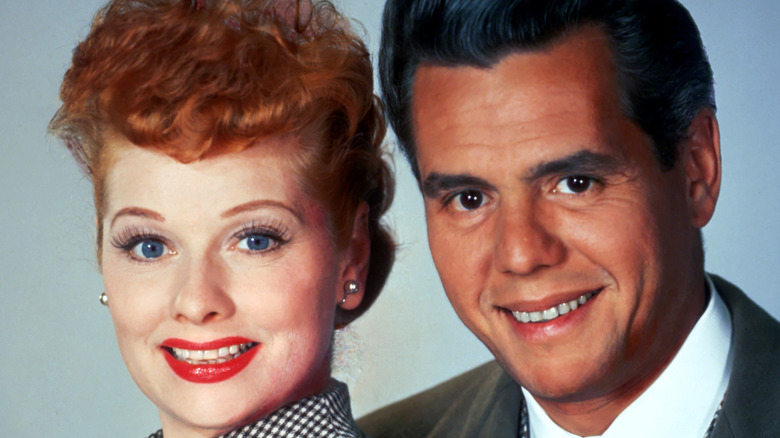
Amazon has just dropped a new trailer for their latest original documentary, Lucy and Desi, directed by multi-hyphenate actress and comedian Amy Poehler.

The film, which premiered at Sundance earlier this year to great reviews, focuses on the unlikely relationship — both on screen and off — shared by golden age TV personality Lucille Ball and Desi Arnaz, both real-life lovers and I Love Lucy co-stars. It examines the love they had for one another, and how their relationship led to Lucy, considered one of the most influential TV shows in Hollywood history. (If you saw WandaVision, you’ll probably already know that Lucy inspired the first couple of episodes.) It’s set to be released on March 4, exclusively on Prime Video.

Featuring interviews with Lucie Arnaz LuckinbillBette MidlerCarol BurnettLaura LaPlacaEduardo Machado CharoJourney GundersonGregg OppenheimerDavid DanielsNorman Lear, and Desi Arnaz Jr.

Image via Prime Video

Check out the new trailer below. Lucy & Desi was directed by Amy Poehler, based on a script by Mark Monroe. Produced by Michael RosenbergJustin WilkesJeanne Elfant FestaNigel Sinclair,Poehler, and Monroe.

Here’s the official synopsis for Lucy & Desi:

“From director Amy Poehler, Lucy and Desi explores the unlikely partnership and enduring legacy of one of the most prolific power couples in entertainment history. Lucille Ball and Desi Arnaz risked everything to be together. Their love for each other led to the most influential show in the history of television, I Love Lucy. Desi – an immigrant from Cuba who lost everything in exile, became a band leader, and eventually a brilliant producer and technical pioneer. Lucille came from nothing and, with an unrivaled work ethic, built a career as a model, chorus girl and eventually as an actor in the studio system. She found her calling in comedy, first in radio. When Lucille was finally granted the opportunity to have her own television show, she insisted that her real-life spouse, Desi, be cast as her husband. Defying the odds, they re-invented the medium, on the screen and behind the cameras. The foundation of I Love Lucy was the constant rupture and repair of unconditional love. What Lucy and Desi couldn’t make work with each other, they gave to the rest of the world. Lucy and Desi is an insightful and intimate peek behind the curtain of these two remarkable trailblazers – featuring interviews with Lucie Arnaz LuckinbillNorman LearDesi Arnaz JrCarol Burnett, and Bette Midler.”

The Truth Behind ‘The Lucy-Desi Comedy Hour,’ Final Chapter of ‘I Love Lucy’

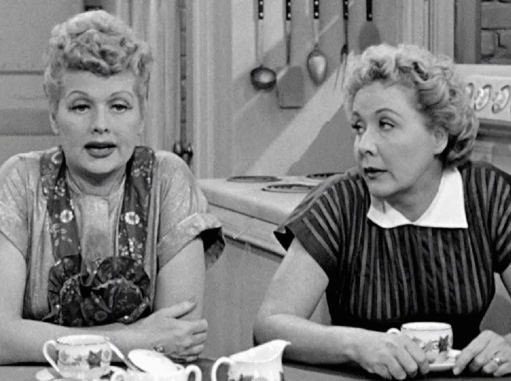
Everybody — we mean everybody — knows I Love Lucy, but how many people really know its spinoff, The Lucy-Desi Comedy Hour or, as it was originally called, The Lucille Ball-Desi Arnaz Show? Well, those 13 one-hour episodes, serving as a continuation of sorts to I Love Lucy and bringing along series stars Ball, Arnaz, Vivian Vance, William Frawley and Keith Thibodeaux as Little Ricky, exist, though they are admittedly tough to find.

Airing sporadically between 1957 and 1960, the extension series was born out of the desire that Lucille Ball and Desi Arnaz had for the show to come to an end following the conclusion of its sixth season in 1957. “They thought they were a little played out,” offers pop culture historian and The Lucy Book author Geoffrey Mark, “Bill Frawley was getting older, Vivian Vance was having marital problems and Lucille and Desi were beginning to have some marital problems of their own.

“On top of that,” he continues, “Mr. Arnaz wanted to retire, basically. His view was, ‘Hey, we’ve got this money, we’ve got this fame. We’ve got these two children. Let’s enjoy all of that.’ But Ms. Ball said, ‘I want to work,’ because that’s who she was. It’s not a bad thing or a good thing. It’s just who she was, so he said, ‘Well, we either retire or we get bigger.’”

So the decision was made not to do I Love Lucy every week so that Desi could really focus on running Desilu Studios without having to show up to focus on the show every day, thus allowing them to find ways to expand. But in the meantime, there was the Comedy Show.

“Since I Love Lucy was the biggest show on television, one would have imagined an hour-long version every month or so would have had the sponsors screaming, ‘Choose me, choose me!’” says Mark, “but the only sponsor Desi could find was the Ford Motor Company and they would only do five of them.”


‘Lucy Takes a Cruise to Havana’

The first episode, “Lucy Takes a Cruise to Havana,” features Hollywood columnist Hedda Hopper, who inquires on how Lucy and Ricky first met, which leads to a flashback in which Lucy McGillicuddy and friend Susie MacNamara (Ann Sothern, bringing her character from the Desilu show Private Secretary over here) taking a cruise to Havana, where their tour guides are Ricky Ricardo and Carlos Garcia (guest star Cesar Romero). Conveniently, Fred and Ethel Mertz are enjoying a second honeymoon on the same cruise and singer Rudy Vallee is there as well.

Geoffrey Mark says, “So this is how Lucy and Ricky meet and the scenes are actually quite splendid. The romance scenes are both very funny and kind of sweet and you watch them fall in love for the first time — and you see him reacting to her singing for the first time.”

Also of note is that when it first aired, “Lucy Takes a Cruise to Havana” was 75-minutes in length, making it the only regularly scheduled show of that length in TV history.
‘The Celebrity Next Door’: The Lucy-Desi Comedy Hour

Hollywood veteran Tallulah Bankhead becomes a next door neighbor to the Ricardos in Connecticut and Lucy attempts to become friends with her by throwing a fancy dinner party in episode two. “It was originally written for Bette Davis, but unbeknownst to the public, she had fallen and broken her back,” says Mark. “There was nothing in the news about that; Bette Davis was afraid if people found out, she’d never work again, so they quietly replaced her with Tallulah Bankhead, which was a natural since on two different episodes of I Love Lucy, Lucy Ricardo did a Tallulah Bankhead impersonation.

“That was a terrible week,” he continues. “Tallulah had a thing when she was going to appear with another woman even close to equal stature where she would pretend to be drunk and not know her lines. She would also pretend not to know her blocking. She would pretend to be confused. But in the final performance, she’d be letter perfect. Meanwhile, the woman she’s doing this to is all worn out from fighting with her all week and from being worried the show won’t come off well, so Tallulah threw Lucille Ball off, which was not easy to do. To the point where filming had to be stopped, because Ms. Ball didn’t know her next line, which had never happened before. There was a lot made of it in the press. Even in publicizing the episode, TV Guide interviewed Tallulah and her excuse was, ‘I had triple pneumonia in all three lungs.’ Really, Tallulah? But the episode is hysterical.”


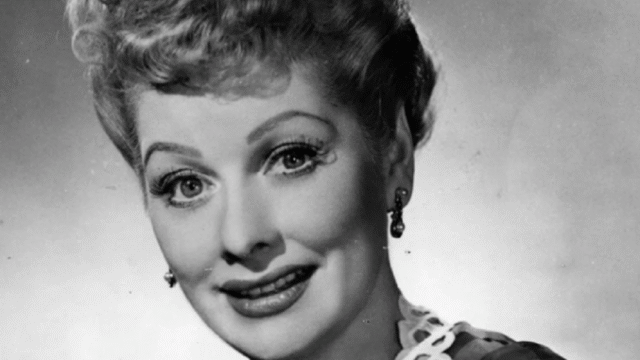
Bettmann/Getty Images

It’s also the last one, he points out, where Lucille Ball wears her hair with the “button back” look. Ann Sothern had given her the advice to start wearing wigs, thus pulling her own hair back and providing something of an “instant facelift. From that point on in Ms. Ball’s entire career, unless she was doing something where wearing a wig would just make it impossible for her and she’d wear her own hair, 98% of the time, from the third episode of these hour-long shows forward, Ms. Ball was always in a wig, because it was her way of doing a facelift.”
Send in the Stars: The Lucy-Desi Comedy Hour


Hulton Archive/Getty Images

One of the really popular storylines on I Love Lucy was when things shifted to Hollywood for seasons 4 and 5 and the characters interacted with various celebrities. Well, the guest stars took a central role in these hour-long episodes, some — particularly Geoffrey Mark — would say to the detriment to the overall concept.

The first group of episodes rounded up with “Lucy Hunts Uranium” (guest starring Fred MacMurray, soon to feature in My Three Sons), “Lucy Wins a Racehorse” (Betty Grable as the guest star) and “Lucy Goes to Sun Valley” (featuring Fernando Lamas).

In year two, Ford was out and Desi Arnaz convinced Westinghouse to sponsor the Westinghouse Desilu Playhouse, an anthology series (which he hosted) that would feature the Lucille Ball-Desi Arnaz Comedy Show once a month.

Season two consisted of “Lucy Goes to Mexico,” guest starring Maurice Chevalier, which sees Lucy in a bullfight; as well as a real highlight of the entire run, “Lucy Makes Room for Danny,” which brings over the cast of The Danny Thomas Show.

Opines Geoffrey Mark, “The Lucy writers went out of their way to be true to the Danny Thomas Show characters. All of the characters — even the children — had moments of mirth that were true to their individual canons. Lucille, Desi, Bill, Vivian, Danny, Marjorie, Keith, Rusty and Angela were all in top form. And Gale Gordon was the cherry on top. A brilliantly written, brilliantly acted hour of comedy.”

“Lucy Goes to Alaska,” which has Lucy appearing on the Early Bird Show of Paul Douglas; and “Lucy’s Summer Vacation,” in which Lucy and Ricky share a vacation cabin with Ida Lupino and Howard Duff, round things off.

The third and final year kicks off with “Milton Berle Hides Out at the Ricardos,” which obviously features TV’s first superstar; “The Ricardos Go to Japan,” guest starring Bob Cummings and in which Lucy and Ethel disguise themselves as geisha girls; and “Lucy Meets the Mustache,” guest starring Ernie Kovacs and Edie Adams.

“By the last season,” points out Geoffrey Mark, “it isn’t that the shows were terrible, but everyone was slowing down and getting older. The original cast looks like it’s gained 10 years. There was no longer any continuity and whatever was needed to make that week’s plot work was used. Towards the end, there wasn’t even a studio audience, so that made it less funny. They didn’t say, ‘Here’s a great plot, what guest star could we get for it?’ It was, ‘What guest star can we get? Let’s make a plot to attach to it,’ and that’s backwards. When he was producer and headwriter, Jess Oppenheimer always started with the plot first and then he figured out what shenanigans Lucy could get into because of the plot or who a good guest star might be. It’s like the James Bond films that would start with the stunts and write a plot around them.

“So, over the three seasons,” he adds, “you just watch this incredible, amazing thing — with these incredible, amazing people — start to lose quality. The actors were getting older, Ms. Ball was approaching 50, Ms. Vance was in her early 50s, Bill Frawley was 70, Desi was having his own problems and struggling with alcoholism, which is a devastating disease that he conquered in later years. The last episode is with Edie Adams and Ernie Kovacs and it’s almost difficult to watch. Lucille Ball and Desi Arnaz have almost no lines together and their characters don’t even talk to each other much.

“They already knew the divorce was happening, they just waited for that last episode to air. After it did, they filed for divorce. They just didn’t want to squash ratings or hurt the characters of Lucy and Ricky. But at that point it was over. All of it.”

What I Love Lucy’s Cast Did After The Show Ended

What did the cast of I Love Lucy get up to after the classic 1950s sitcom came to an end? It may be over 60 years since I Love Lucy aired its last episode, but it still ranks as one of the most popular and influential sitcoms ever produced. Set mostly in New York City, the sitcom starred comedy legend Lucille Ball and her then-husband Desi Arnaz as Lucy and Ricky Ricardo – a married couple who live in the same apartment building as their landlords and best friends Fred and Ethel Mertz.

I Love Lucy was a barrier-breaking sitcom during its original six-season run on CBS back in the 1950s. Not only was it the first sitcom filmed in front of a live studio audience, but it was also one of the first TV shows to feature a mixed-race couple. It’s not an exaggeration to say I Love Lucy helped define the modern sitcom as audiences know it and the fact that millions of people still watch syndicated re-runs of the series speaks to its perennial popularity.

Sadly, most of the main I Love Lucy cast have since passed on but here’s a rundown of their most notable work after the sitcom ended back in 1957.

Lucille Ball – Lucy Ricardo

Lucille Ball was hilarious as I Love Lucy’s title character Lucy Ricardo – a stage-struck housewife who longed to be in showbiz like her bandleader husband Ricky (much to his dismay). Post-I Love Lucy, Lucy and Ricky Ricardo’s journey continued in spin-off The Lucy-Desi Comedy Hour and Ball later starred in sitcoms The Lucy ShowHere’s Lucy and Life With Lucy. Before her death in 1989, Ball was also an executive producer on TV shows including Star Trek and Mission: Impossible.

Desi Arnaz – Ricky Ricardo

Ball’s real-life husband Desi Arnaz played her on-screen spouse Ricky Ricardo – a Cuban-American singer and bandleader. Like Ball, he reprised his role as Ricky in The Lucy-Desi Comedy Hour and went on to direct, produce and guest star in the NBC sitcom The Mothers-In-Law during the late 1960s. Arnaz also cameoed in shows like Alice and Ironside and had his final film role in the 1982 comedy-drama The Escape Artist.

William Frawley – Fred Mertz

William Frawley played the part of Fred Mertz in the classic CBS sitcom – a World War I veteran and former vaudeville performer who owned the New York brownstone the Ricardo family lived in. Frawley later reunited with his I Love Lucy co-stars in The Lucy-Desi Comedy Hour and cameoed in an episode of The Lucy Show, but he’s probably best known for his starring role as Bub O’Casey in the ABC sitcom My Three Sons.

Vivian Vance – Ethel Mertz

Played by Vivian Vance, Ethel Mertz is Fred’s long-suffering wife and Lucy’s best friend. Like most of the main I Love Lucy cast, Vance starred in The Lucy-Desi Comedy Hour and she later reunited with the show’s star Lucille Ball again for The Lucy Show and Here’s Lucy. She also had one-off roles in TV shows including Love, American Style and Rhoda and enjoyed a five-episode stint in the variety series The Red Skelton Show.

Keith Thibodeaux – Ricky Ricardo Jr

The role of Lucy and Ricky Ricardo’s son Ricky Jr (AKA “Little Ricky”) was filled by a few young actors, but he was most notably played by Keith Thibodeaux who was then billed as Richard Keith. During the 1950s and 1960s, Thibodeaux reprised his I Love Lucy role in The Lucy-Desi Comedy Hour and played a recurring character in The Andy Griffith Show but has since largely left acting behind.

When Love Comes with Conditions: A Powerful Lesson for

In everyday family life, the idea of being “enough” can feel fragile, shaped by expectations passed down through generations and reinforced by society. Parents are often led to believe their role is to guide children toward a specific version of success or identity. Yet real-life experiences continue to show that this approach can overlook something far more important—the need for empathy, understanding, and unconditional support within the home.

At its core, a child’s well-being depends not only on physical care but also on emotional safety. Young people need to feel seen, heard, and accepted for who they truly are. When a home becomes a place where honesty is welcomed and individuality is respected, children gain the confidence to express themselves without fear. This kind of environment builds trust and strengthens family bonds in lasting ways.

Research in child development consistently highlights the importance of supportive relationships. Children who feel accepted at home are more likely to develop resilience, maintain positive mental health, and navigate challenges with confidence. On the other hand, when they feel pressured to hide parts of themselves or meet unrealistic expectations, it can lead to stress, anxiety, and a weakened sense of self-worth. A nurturing home can make all the difference.

Ultimately, families thrive when love is offered without conditions. Creating a space rooted in kindness, patience, and open communication benefits not only individuals but also the wider community. By choosing empathy over judgment and understanding over control, parents can help their children grow into confident, secure individuals. A home built on acceptance becomes more than just a place to live—it becomes a foundation for a healthy and fulfilling life.

Woman left dangling 70 feet above ocean shares chilling five-word message to rescuer after dramatic ordeal

Maxime Rancourt spent half an hour clinging to a rock while dangling from a cliff in California, desperately hoping someone would rescue her.

What started as a routine morning quickly took a dramatic turn when she headed out for an early swim in the San Francisco Bay area. What began as a cliff diving session turned into a desperate fight for survival.

“I was looking at the waves and said they are so beautiful. I’m a good swimmer but I don’t usually swim there,” she told ABC News, according to UNILAD.

She said everything initially felt normal as she decided to take on the waves that morning, until, suddenly, everything changed. A powerful current dragged her out to sea.

“All of a sudden, I was pulled away and then I wasn’t very far yet. I thought I could still go in the water, but the water was so intense.

I was stuck in the middle,” she said.

“I could have died”

With no other option, she clung to a rock 70ft above the ocean, hoping someone would come to her rescue.

“The current was extreme. I jumped and grabbed the rock to stay there, and the water was still coming at me,” she said. “Everything went so fast. I was on the rock and started climbing from left to right and then I realized that it wasn’t a good idea, but it was the idea to save myself in the moment.”

She remained on the rock for about 30 minutes before someone spotted her and contacted emergency services. A firefighter was able to reach her and bring her to safety. The wind was reportedly strong that day, and the water temperature was around 56 degrees.

After the rescue, she expressed her gratitude.

“Thank you for saving my life,” she said to her rescuer. “Because of you, I’m going to have a future, and I’m going to have kids.”

“I was told I was grateful to be alive, you know,” she said in an interview with ABC News. “I could have died.”

Bullet in Charlie Kirk killing could not be linked to suspect’s rifle, new court filing claims

New court filings are raising serious questions about key evidence in the murder case against Charlie Kirk, including whether the fatal bullet can even be linked to the suspect’s alleged weapon.

Tyler Robinson, 22, is currently facing capital murder charges over the fatal shooting at Utah Valley University on September 10, where Charlie Kirk was shot in the neck and died. But according to his defense team, forensic analysis may not support the prosecution’s case as strongly as previously believed.

Kirk was shot from a rooftop approximately 410 feet away, and the shooter was able to escape. After the shooting, a large-scale manhunt began. Robinson turned himself in 36 hours after the attack.

Prosecutors claim Robinson drove three hours to the university campus with the intention of killing Kirk. He was ultimately identified after his father recognized what police described as a “unique” rifle in images released during the manhunt.

Tyler Robinson was arrested and charged with Charlie Kirk’s murder

Court documents detail a series of messages allegedly sent by Robinson to his partner, Lance Twiggs, in the aftermath.

“If I am able to grab my rifle unseen, I will have left no evidence. Going to attempt to retrieve it again, hopefully they have moved on,” he allegedly wrote. “I haven’t seen anything about them finding it.”

He also described attempting to return to a “drop point” to recover the weapon, but said the area had been “locked down.”

“I’m wishing I had circled back and grabbed it as soon as I got to my vehicle,” he continued.

In another message, Robinson expressed concern about what his father might do if the rifle was not returned.

“I’m worried what my old man would do if I didn’t bring back grandpas rifle… idek [I don’t even know] if it had a serial number, but it wouldn’t trace to me. I worry about prints I had to leave it in a bush where I changed outfits. didn’t have the ability or time to bring it with,” he allegedly continued, according to Daily Mail.

“I might have to abandon it and hope they don’t find prints. how the f*** will I explain losing it to my old man… only thing I left was the rifle wrapped in a towel.”

Before ending the conversation, Robinson allegedly told Twiggs to delete their messages. Authorities say Robinson eventually confessed to his father, who then alerted police and ensured his son was taken into custody.

Robinson was arrested and charged with Kirk’s murder, but in a motion filed on Friday, his attorneys claim that the Bureau of Alcohol, Tobacco, Firearms and Explosives was “unable to identify the bullet recovered at autopsy to the rifle allegedly tied to Mr Robinson,” according to Daily Mail.

“A complicated process”

The defense has indicated it may introduce testimony from an ATF firearm analyst as exculpatory evidence. At the same time, they are requesting that the preliminary hearing be delayed by at least six months to allow for further review. Part of that delay, they argue, comes down to the complexity of the forensic evidence, particularly DNA.

Reports from both the Federal Bureau of Investigation and the ATF suggest that multiple DNA profiles were found on certain pieces of evidence.

“As these cases indicate, determining the number of contributors to a DNA mixture and determining whether the FBI and the ATF reliably applied validated and correct scientific procedures… is a complicated process which requires the assistance of various types of experts, including forensic biologists, geneticists, system engineers and statisticians, all of whom must review and evaluate” several categories of evidence, the filing states.

According to the motion, the defense has received around 20,000 files, including audio, video, and written documents, from prosecutors.

“The defense team has devoted, and will continue to devote, significant resources, to processing discovery, including identifying materials not yet received to inform readiness for the preliminary hearing,” the filing states, according to Daily Mail. “However, the defense team is realistic, and the comprehensive review required to determine what is missing will take hundreds of hours.”

They also claim they still lack critical forensic files needed to properly examine the scientific evidence expected to be presented in court.

Robinson is next due in court on April 17.

People with “Cicada” Covid variant share warning to others over brutal symptoms

The new COVID-19 strain, named “Cicada,” is spreading and raising concerns. On social media, several individuals claiming to have had it shared harrowing details about the symptoms they had.

The new Covid-19 strain, called BA.3.2 or “Cicada,” is attracting closer attention. One reason is the many changes in the variant’s spike protein, which make it different from other versions now spreading.

“Perhaps more concerning is the variant’s slew of genetic changes in its spike protein, which set it apart from other variants circulating,” Andrew Pekosz, Ph.D., a virologist at the Johns Hopkins Bloomberg School of Public Health, said in an interview with TODAY.

The virus that causes COVID-19 keeps changing as it spreads. This is normal and leads to the emergence of new variants over time. Most variants today are very similar to each other, with only minor differences. But according to experts, BA.3.2 is not like the others — it clearly stands out.

Scientists report that this variant was first identified in South Africa in 2024, but it remained largely unnoticed for an extended period before reemerging.

It has now been detected in over 20 countries worldwide. According to the CDC, it is currently circulating in at least 25 U.S. states.

“Cicada” COVID strain causes concern

This variant carries a high number of mutations, with roughly 70-75 changes in its spike protein. These mutations may make it more transmissible and better able to evade immune defenses.

There is some reassuring news, though. Specialists believe that existing COVID vaccines continue to offer protection against severe illness. So even if the variant spreads widely, it may not necessarily lead to more serious outcomes.

Symptoms include cough, fever or chills, shortness of breath, congestion, and sore throat. Moreover, those infected can feel a loss of smell or taste, headache, fatigue, and/or gastrointestinal symptoms.

Speaking with The Conversation, Kyle B. Enfield, an Associate Professor of Medicine at the University of Virginia, explained that the mutations make it more difficult for our immune systems to detect.

Professor Enfield stressed that ‘even though it’s spreading quickly, there’s no indication that it’s any more dangerous or that it causes more severe disease’ than other variants.

“If you feel unwell, stay home – not just to take care of yourself, but to prevent spreading disease,” he said. “Especially given that current vaccines may not be as effective against it, protection remains important.”

On social media, several users who claim to have been affected by the new COVID-19 strain have shared their harrowing experiences.

Per Tyla, one Redditor warned, “Guys really be careful. I had the worst fever for 2 days it was 104 fever I couldn’t get out of bed. It is extremely contagious!”

A second said, “I’m just now getting over it. Felt like I was dying for three weeks. It sucked.”

Suffered badly

A third user explained that they still suffered badly. However, not as much as they might have because they had been vaccinated:

“Got a vaccine a little over a month ago. Seemed to get this travelling cross country. About a week of symptoms, give or take with the worst peaking day 3-4 and then slowly tapering off each passing day. Brain fog lingered the longest but slightly better by day 7-8. My doc said I was lucky I didn’t have the flu,” the person wrote on Reddit.

A fourth person added, “I am so tired of everyone pretending COVID is no big deal anymore, and not mentioning long covid.”

Please share your thoughts in this in the comment section.

Hidden PFAS in toilet paper linked to cancer risk: 6 types to be aware of

For most of us, toilet paper is not even a blip on the radar screen. It’s the ultimate “invisible” essential, until, of course, it runs out. So, learning that the rolls in your bathroom might have ties to some not-so-great chemicals, well, that’s a bit of a curveball.

But there’s a scientific reason why researchers are looking into this. It seems that some toilet paper out there has PFAS, or what’s sometimes called “forever chemicals,” which means they just don’t go away. That’s not to say that the rolls in your bathroom right now are a health risk or anything, but rather that an unremarkable aspect of our lives has become part of a bigger, more complex story.

The point of all of this, however, isn’t to try and freak everyone out, but rather to consider the facts, determine what, if anything, we should be worried about, and what we should do about it.

How toilet paper joined the PFAS conversation

This is not the result of a social movement; it is the result of a lab. Scientists studied wastewater samples and realized something unusual. Certain types of PFAS were showing up in the sewage. As they back-tracked to determine the origin, toilet paper came into the picture.

A study conducted in 2023 by the University of Florida analyzed rolls from North America, Europe, and Africa. The researchers detected measurable levels of fluorinated compounds in the rolls. The concern, however, was not the presence of these chemicals but the method by which they were being “disposed of.”

While a jacket or a pan might be used and then stored, toilet paper is used and then immediately disposed of. It goes right into the water system, which was not designed to filter out these kinds of molecules. Eventually, millions of households’ worth of toilet paper can make up a large portion of the PFAS in the sewage sludge.

The interesting thing is, these chemicals are not always intentionally added. Sometimes, they are inadvertently added during the manufacturing process, recycled paper pulp, or even machine lubricants in the factory.

Now, let’s get a little more specific. PFAS is a huge category of chemicals, with thousands of different varieties. While some, like PFOA, are associated with serious health problems, such as increased risk of cancer or suppressed immune systems, this risk level is completely dependent on how you are exposed.

The biggest risk with toilet paper, however, is not your skin at all. Most health experts, including those at the EWG, observe that skin absorption of PFAS is very, very low. The big culprits in human exposure are contaminated drinking water and food packaging.

Therefore, while these chemicals are noted in the product, the risk level as a result of using the product is low. The problem lies in the environmental build-up. Since these PFAS do not degrade, they accumulate in our soil and water forever.

Pexels

The bigger picture: Life after the flush

But the real story begins when you push the handle. When the PFAS is introduced into the wastewater treatment, it is frequently included in “biosolids” (treated sewage sludge). It is frequently used as fertilizer for industrial farms.

This is the cycle: the chemicals go from the paper to the water, to the soil, and even into the food we might one day be eating. It is the environmental impact in slow motion, showing the effect our daily choices can have on our footprint.

Recycled vs. Bamboo: Are “eco” options safer?

If we try to do the right thing for the planet, we assume that using recycled or bamboo paper, as opposed to traditional wood pulp, is a get out of jail free card, so to speak, in terms of trees and carbon footprints. But in terms of chemical purity, there are a number of issues, some of which are a little ironic.

The Recycled Paper Paradox: While recycled toilet paper can be a fantastic option for the circular economy, it can be a “magnet” for unwanted chemicals. Consider what we put in the recycling bin. Glossy magazines, shipping labels, and thermal cash register receipts can all make their way into the recycling bin. These items can have BPA or PFAS to make them water-resistant or printable. If we mash them up into pulp, we can end up with unwanted microscopic chemicals in the finished product. Unless a company has extremely stringent filtration, your “eco-friendly” option could have more of these chemicals in it than virgin wood pulp.

The Bamboo Factor: While bamboo itself is considered a miracle crop because of its incredible growth rate and low water requirements, once the bamboo is cut, it must then be processed into soft, white paper. The safety of the finished product, however, rests entirely in the idea of a “closed-loop” factory. If the company uses harsh chemical solvents or even elemental chlorine to leach the difficult bamboo fibers, then we’re right back to square one. To get the full benefits of bamboo, we must find companies that emphasize mechanical processing over chemical-based techniques.

Pexels

How to shop smarter: Products to watch

But when it comes time to fill the bathroom, things get a little fuzzy. While the peer-reviewed studies cited in this conversation so far haven’t mentioned any specific brands, further independent tests have tried to fill in those blanks.

It is, of course, absolutely essential to take these results with a grain of salt, as most of these tests are merely a series of spot checks, not exhaustive tests of a wide variety of brands. Take, for instance, a 2023 report conducted by Mamavation, in partnership with Environmental Health News, where 17 different products were sent to an EPA-certified lab to test for total fluorine, a chemical which is a common indicator of PFAS.

The levels found were generally low, in the range of 10 to 35 parts per million, which Environmental Health News indicates is a level at which these chemicals are “unlikely to be added on purpose, but are instead accidental contaminants from the manufacturing process.”

The “caution list” from limited testing

Within that particular screen of 17 brands, four of these products were shown to have detectable levels of fluorine. This doesn’t mean all rolls of these brands have fluorine in them; however, it is a reminder of how contamination can seep in.

Charmin Ultra Soft: As a major conventional brand, it is placed in this category based on those initial screening tests.

Seventh Generation 100% Recycled: Even green-rated brands are not spared. The company notes that because they use recycled paper, there’s a chance that any impurities in the original source material (such as old inks or coatings) may be found in their final product, too.

Tushy & Who Gives a Crap (Bamboo): Both brands were found in the limited fluorine screening tests. Who Gives a Crap has taken this situation in stride, noting on their site under their Transparency section: “Through our regular testing, we have found some trace amounts of organic fluorine… we won’t stop there! We are sooo committed to investigating where this contamination is coming from.”

These disclosures don’t settle the question, but they do confirm that concerns about contamination are a very real problem for manufacturers, not a purely hypothetical one.

Two categories to approach with extra care

Aside from the names themselves, you can generally protect yourself by being aware of two general categories of chemicals that often cause problems in safety standards such as the 2025 Green Seal GS-1 Standard:

The “Extra” Rolls: This category includes anything heavily scented or treated with lotions. These additives are not really necessary and can include hidden chemicals. The Green Seal standard even bans these kinds of additives in sanitary paper to avoid these risks.

The “Vague” Brands: If a company does not discuss their recycling contamination control or their whitening process, then it might be time to go elsewhere. Transparency is the only guarantee of safety.

What’s the safe bet?

If you want to play it safe, the strongest advice you can follow is this: look for the most basic products available. The current gold standard is trending towards Totally Chlorine Free (TCF) processes. This is a big deal, as the World Health Organization (WHO) has pointed out that previous chlorine bleaching processes have resulted in the creation of Dioxins – a type of toxic by-product.

The moral of this story is this: take a look at those with clear labels and a fragrance-free guarantee, and those with vague promises and luxury add-ons, and think of those as less safe options. It’s not about being perfect, it’s about choosing a brand that is working hardest to be perfect.

Conclusion

Toilet paper is not exactly something we ever thought we’d have to go around “auditing” in terms of safety, and learning that this is another contributing factor to this worldwide problem of PFAS chemicals in our environment is just another thing to add to the list of worries, right? However, let’s keep in mind that this is just a small piece of a gigantic worldwide puzzle, and this is not the entire picture.

The most balanced advice, in this case, would be: Don’t panic, but stay informed. You are not going to change the worldwide chemical situation by changing your type of toilet paper, but you can help change your personal household’s contribution to this situation. Going with simpler, less processed products is a classic example of a “low effort, high reward” situation. It’s a small change, but if millions of people are making this change, then this will start to change the market.

But until that time, a little bit of information and awareness is a big help in keeping your house and the world a little cleaner.

Please SHARE this article with your family and friends on Facebook.

Why Everyone Suddenly Can’t Ignore Tim Walz, The Quiet Leader Now Driving a National Political Shift

For years, Tim Walz built his reputation the slow way—without spectacle, without constant headlines, and without the kind of political theatrics that dominate modern media cycles. He wasn’t the loudest voice in the room. He didn’t rely on controversy to stay relevant. Instead, his approach was grounded in consistency, discipline, and a steady focus on public service.

That approach, for a long time, kept him somewhat outside the national spotlight.

Not invisible—but not central either.

He was known, respected, and recognized, especially within his state. But nationally, he was often seen as part of the broader political landscape rather than a defining figure within it.

That changed—fast.

What began as a routine political development in Minnesota quickly escalated into something far larger. At first, it seemed like just another policy discussion, the kind that typically stays within state lines. But within hours, the conversation expanded. Media outlets picked it up. Analysts weighed in. Political observers across the country began dissecting what was happening and what it might mean.

Suddenly, Walz wasn’t just a state leader handling local matters.

He was at the center of a national conversation.

And the shift wasn’t subtle.

For someone who had spent years operating with a low-profile, results-driven approach, the sudden surge of attention marked a turning point. It forced a broader audience to take a closer look—not just at the situation itself, but at the man behind it.

What they found wasn’t new.

But it felt newly relevant.

Walz’s leadership style has always been defined by a kind of quiet practicality. He doesn’t chase headlines, but he doesn’t avoid responsibility either. He tends to focus on execution rather than presentation—on getting things done rather than ensuring everyone is watching while he does it.

That kind of approach doesn’t always stand out in an environment where visibility often matters more than substance.

But when circumstances shift, that same approach can suddenly feel exactly what people are looking for.

The recent attention didn’t come from a dramatic reinvention. There was no sudden change in tone, no strategic pivot designed to capture attention.

If anything, the attention came because he didn’t change.

While others react quickly, recalibrate messaging, or lean into the moment, Walz’s response reflected the same pattern he’s followed for years—measured, deliberate, and focused on outcomes rather than optics.

That consistency, once easy to overlook, became a defining feature.

Observers began to notice something that had always been there but hadn’t been widely emphasized: his ability to navigate complex situations without escalating them unnecessarily, to communicate without inflaming, and to act without turning every decision into a performance.

In a political environment often driven by urgency and reaction, that kind of steadiness stands out.

And it raises questions.

Not about whether he can handle attention—but about what that attention might lead to.

Because once a public figure crosses from regional recognition into national relevance, expectations change. The scope of influence expands. Every decision carries more weight. Every statement is examined more closely.

That transition doesn’t happen gradually.

It happens in moments like this.

Moments where the spotlight shifts unexpectedly and stays longer than anyone anticipated.

For Walz, the increased attention signals more than just temporary interest. It suggests a broader reevaluation of his role—not just within Minnesota, but within the larger national political landscape.

People are no longer just observing what he does locally.

They’re asking what it means beyond that.

And that shift brings both opportunity and pressure.

Opportunity, because it allows his approach to reach a wider audience—one that may be increasingly receptive to a leadership style that prioritizes stability over spectacle.

Pressure, because visibility changes the stakes. It invites scrutiny, criticism, and expectations that didn’t exist before.

But in many ways, the moment highlights a larger trend.

In a political climate often defined by extremes—by loud voices, rapid reactions, and constant movement—there is growing attention toward leaders who operate differently. Leaders who don’t rely on volume to be heard, but on consistency to be trusted.

That’s where Walz fits.

Not as an outlier, but as a contrast.

And contrast, in the right moment, becomes powerful.

The conversations unfolding now aren’t just about a single decision or a specific development. They’re about what that moment represents. About whether a quieter, more measured approach to leadership can resonate on a broader stage.

About whether consistency, often overlooked, becomes more valuable when uncertainty increases.

And about whether someone who built their reputation without chasing attention can sustain it once the attention arrives.

For Walz, the answer isn’t likely to come from a dramatic shift in behavior.

If anything, it will come from doing exactly what he has always done.

Staying steady.

Focusing on execution.

Avoiding unnecessary escalation.

Letting actions define the narrative rather than reacting to every headline.

That approach may not generate instant reactions.

But it builds something else.

Credibility.

And credibility, once recognized, has a way of changing how people listen.

As the national conversation continues, one thing is becoming increasingly clear.

This moment isn’t just about attention.

It’s about recognition.

Recognition of a leadership style that developed quietly, outside the constant noise, and is now being evaluated on a much larger stage.

Whether that attention grows, stabilizes, or shifts elsewhere remains to be seen.

But the transition itself has already happened.

Tim Walz is no longer just a figure operating within state boundaries.

He is now part of a broader national discussion.

And in politics, once that shift occurs, there’s no returning to the background.

Only the question of what comes next.

My Husband Took Off His Wedding Ring Before Every Trip, So I Set a Trap, I Never Expected Airport Security to Expose It

I was standing behind the glass at the airport, coffee in hand, watching my husband’s carry-on glide toward the scanner.

From a distance, everything looked normal. Mark stood in line like any other traveler—shoes off, phone in the tray, shoulders slightly tense the way they always were before his monthly “business trips.”

He had no idea what was inside that bag.

And I had no idea how public this was about to get.

The carry-on disappeared into the machine. A second passed. Then another. The officer leaned forward, squinting at the screen. He called over a colleague. They both stared, exchanged a look, and then turned toward Mark.

“Sir, we’re going to need to open this.”

Mark nodded casually. “Sure. Just clothes and toiletries.”

If only.

The zipper slid open in one smooth motion.

And then everything exploded.

A neon-pink object burst out of the bag like it had been waiting for its moment. It expanded across the inspection table, bright, loud, impossible to ignore.

Heads turned instantly.

Phones lifted.

And then Mark saw it.

His face drained of color, his entire body stiffening as realization hit him all at once.

“ANDREA!” he shouted across the terminal.

Loud. Panicked. Echoing.

A child nearby started crying. Someone gasped. A couple of people laughed under their breath. And me?

I just stood there behind the glass, frozen between satisfaction and instant regret.

Because this didn’t start at the airport.

It started six months earlier.

The first time I noticed was almost nothing. A small, quiet moment in our bedroom. Mark was packing for one of his trips to Chicago, folding shirts with that careful precision he always had.

And then, just before closing his bag, he slipped off his wedding ring and tucked it into the back of his sock drawer.

He didn’t look at me.

He didn’t explain.

I saw it in the mirror.

When I asked later, he had an answer ready.

“Clients are conservative,” he said. “It’s just optics.”

I wanted to believe him.

I did—for about fifteen minutes.

By the third trip, the explanation had evolved. More polished. More rehearsed.

“Professional image.”

“Networking expectations.”

“The Chicago office is different.”

Each version sounded smoother than the last, like he’d practiced them somewhere I couldn’t hear.

So I stopped asking.

And I started watching.

The ring was the most obvious thing, but it wasn’t the only change. His phone habits shifted. He kept it face down, took it everywhere—even into the bathroom. He stopped charging it next to the bed.

He started grooming differently before trips. Came back acting different too—sometimes distant, sometimes unusually upbeat.

None of it was proof.

But together, it was a pattern.

And patterns tell stories even when people don’t.

I thought about confronting him more times than I can count. I’d rehearse the opening line in my head, imagine the conversation, the denial, the way he’d turn it around until I felt unreasonable.

So I didn’t.

Instead, I made a decision.

If I wanted the truth, I needed to take control of the moment.

Three weeks before that airport scene, I ordered something online. It sat hidden in my car trunk, waiting.

The night before his next trip, while he was in the shower, I moved.

Fast. Quiet. Precise.

I opened his carry-on, cleared space at the top—right where it would be impossible to miss—and placed it inside.

What I chose was deliberate.

Bright. Personal. Impossible to explain without context.

I zipped the bag, put it back exactly where it had been, and went to bed pretending nothing had changed.

I imagined him finding it alone, in a hotel room. Maybe calling me. Maybe confessing.

I didn’t imagine airport security getting to it first.

The next morning, he was restless. Distracted. Moving through the house like something was off but he couldn’t name it.

“Bag feels weird,” he muttered.

“Probably just packed differently,” I said.

I drove him to the airport—something I never did before.

He didn’t question it.

That told me everything.

And then we arrived.

I stayed back behind the glass as he moved through security. I wanted to see his reaction without being part of it.

I got more than I bargained for.

Because when that bag opened, the item inside didn’t just reveal itself.

It announced itself.

A giant pillow, neon pink, inflated instantly across the inspection table.

And printed across it?

Our wedding photo.

Every anniversary we’d celebrated lined the edges.

And in the center, in bold, unmistakable letters:

“DON’T FORGET YOUR WIFE. YES, THE ONE YOU LEGALLY MARRIED. NO CHEATING.”

The silence lasted exactly half a second.

Then came the reactions.

A few stifled laughs. Someone whispering “Oh wow.” An officer trying—and failing—to stay neutral.

“Sir,” the officer said carefully, holding the pillow. “Are you married?”

Mark turned.

He found me immediately.

Our eyes locked through the glass, and I watched panic, confusion, embarrassment, and something else—something softer—flash across his face.

“I’m not cheating!” he blurted out, loud enough for everyone to hear.

No one moved.

No one spoke.

The entire space seemed to pause just for him.

“It’s the ring,” he said, hands pressed to his face. “Six months ago, at a hotel pool—it slipped off. I thought it was gone. I panicked. A maintenance guy found it later.”

He looked at me.

“I didn’t tell you because I thought you’d be mad. So I started taking it off before trips… so I wouldn’t lose it again.”

And just like that, everything I had built in my head collapsed.

All the patterns.

All the conclusions.

All the certainty.

Gone.

Security wrapped things up quickly. People drifted away, disappointed the drama was over. Mark repacked his bag, dignity barely intact, and walked over to me.

We sat down near the departure board, the noise of the airport filling the silence between us.

“You could’ve told me,” I said.

“I know,” he replied.

“I spent six months thinking…” I stopped.

“I know what you thought,” he said quietly.

“And the phone?” I asked.

He blinked, then laughed.

“TikTok videos,” he said. “Me and the guys trying to dance. I looked ridiculous. I didn’t want you seeing them.”

I stared at him.

Then I laughed.

Harder than I expected.

Because the truth wasn’t dramatic.

It wasn’t betrayal.

It was fear. Embarrassment. Silence.

And somehow, that had almost cost us everything.

“Next time,” I said, still laughing, “just lose the ring.”

He smiled, finally.

“For what it’s worth,” he said, “your plan was… thorough.”

“I spent 40 minutes choosing that font,” I replied.

We walked to his gate together, lighter than we had been in months.

Because in the end, it wasn’t the secret that nearly broke us.

It was everything we didn’t say around it.

And sometimes, that’s the real danger—not what you’re hiding, but what you’re too afraid to ask.

Popular

A Mother’s Love: Vienna’s Journey with a Birthmark

0
Love compels parents to do extraordinary things for their children’s well-being. Celine Casey, a British mother, took remarkable steps to ensure her daughter Vienna’s...