Entertainment

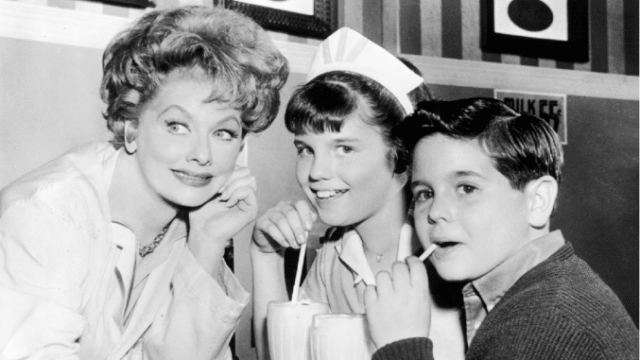
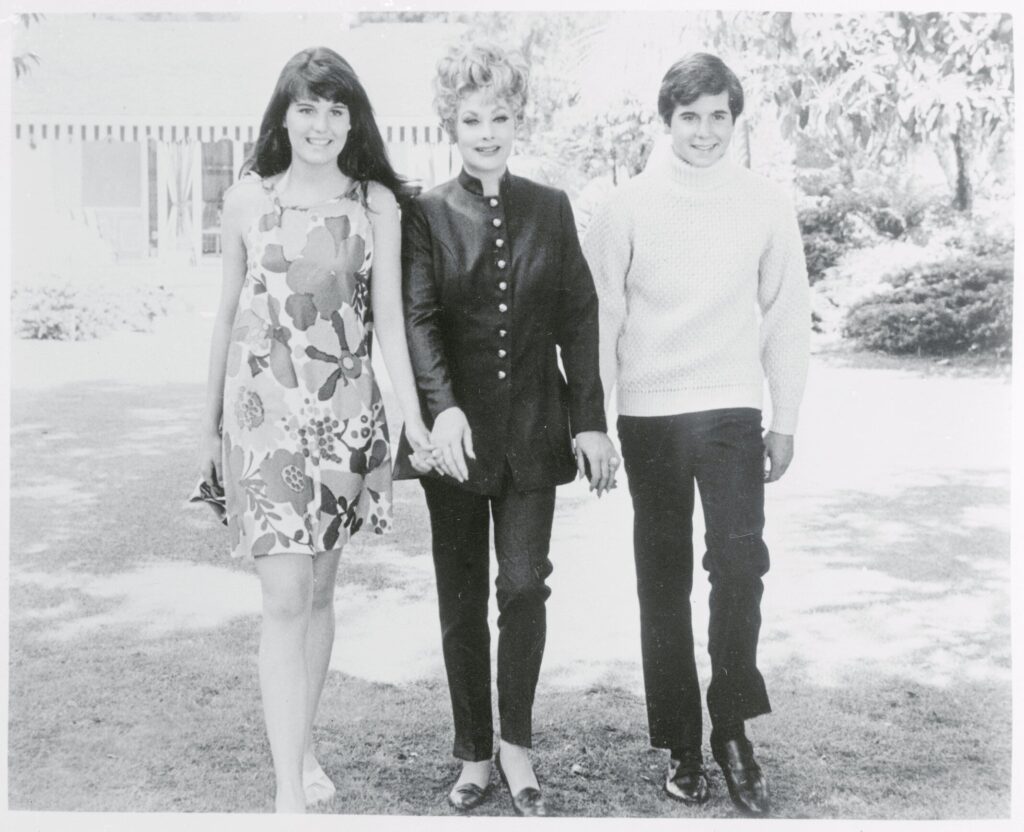
‘I Love Lucy’: Lucie Arnaz Shares What It Was Really Like Being the Daughter of Lucille Ball

Lucille Ball’s daughter reflects on what it was like growing up with the ‘I Love Lucy’ star as a mother.

When Lucie Arnaz was a young girl, her friends would tell her all the time that they wished they had her mom, famed I Love Lucy actor Lucille Ball, to make lasting, hilarious, magical memories with. But, according to Arnaz, her childhood wasn’t always filled with hilarity and magic as her peers might have imagined.

Lucille Ball wasn’t home a lot

When friends would tell Arnaz they wish they had Ball as a mother she remembers responding: “Really? Would you? Because she’s a pretty busy lady.”

While Aranz spent lots of time with her mother on set, she says her favorite memories of her mother were the quiet moments at home.

“I sort of always come back to the idea that any memory where she’s just home and has time to just be with us, any of those simple, the simplest of dumbest of memories, you know, making a grilled cheese sandwich in the kitchen,” she told Yahoo Entertainment.

Until she was 7 years old, Aranz says the only family time she and her brother really really got took place “very late at night and weekends, and we were very fortunate to have some hiatus times, weekends off, and summers, summers off, when we had a house in Del Mar.”

At home, Lucille Ball was all business

While Ball is best known for her kooky character on I Love Lucy, Arnaz says “she wasn’t like that at all” at home.

“She played a very funny person in her show, very crazy, outrageous person, and all my friends used to think my mother was really like that,” Arnaz told the Television Academy Foundation. “But, at home, of course, she wasn’t like that at all. She was very responsible, took care of business. She worried a lot about her household, whether the kids were being taken care of, if the garage was being cleaned out, homework was being done. She fashioned herself as a homemaker of sorts.”

Since Ball was very much a “working mom,” Arnaz thinks she felt guilty about not being able to dedicate more of her life to her children, especially raising a family in the 50s.

“I think because she was a working mom in the 50s, there probably was a lot of guilt involved in not being home with the kids because you’re supposed to be, I guess.”

But when Ball was home, she very much enjoyed the moments she could be with her family and partaking in domestic activities like cooking.

“She really enjoyed when she could get in the kitchen and make chicken and dumplings or something, but there wasn’t a whole lot of time for that,” Arnaz said of her mother. “My earliest memory of my mother was that she worked.”

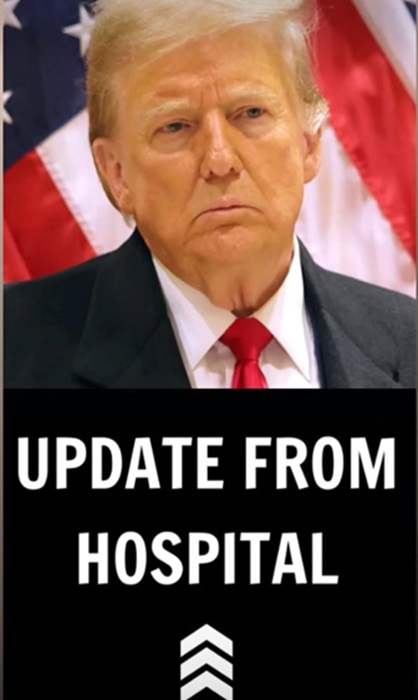
Donald Trump’s Health Becomes a Topic of Discussion Following Recent Expert Opinions

Public debate over the cognitive and physical health of former President Donald Trump has once again intensified, highlighting the intersection of medical assessment.

Public perception, and political discourse. While official medical evaluations continue to describe Trump as fit, stable, and capable of fulfilling the duties of the presidency.

New commentary from external mental health experts has drawn attention and fueled discussion. The contrast between verified medical reports and opinion-based analysis underscores the challenges of evaluating high-profile leaders in real time, especially when public appearances and media coverage are closely scrutinized.

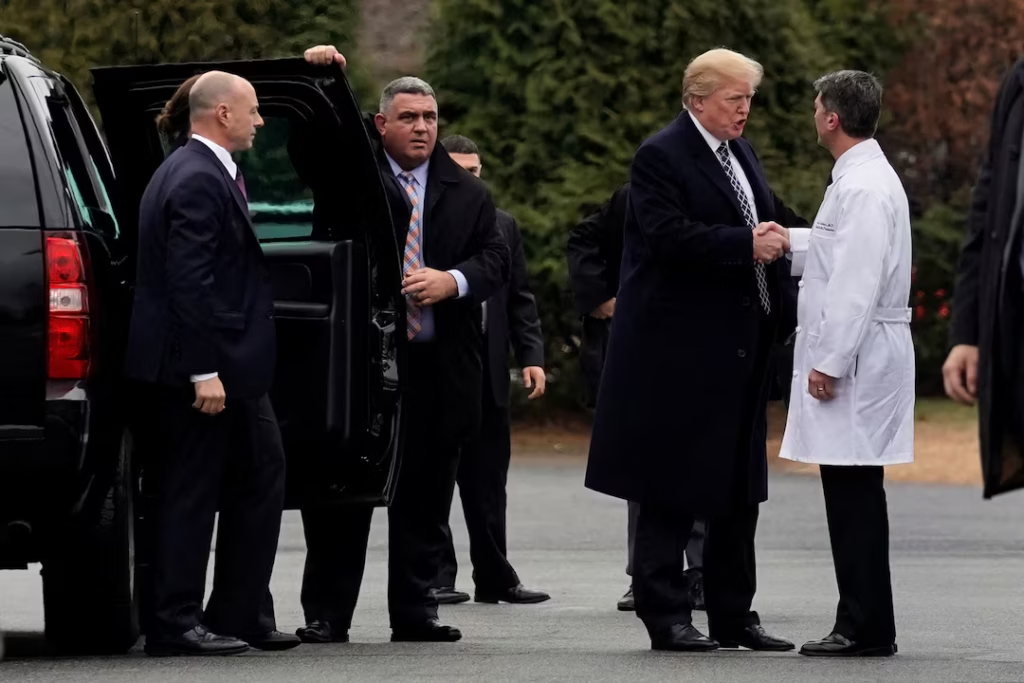
Earlier in the year, the White House released a comprehensive medical assessment conducted by Dr. Sean Barbabella, Trump’s personal physician.

This report offered a detailed overview of the former president’s health, including physical measurements, laboratory results, and an evaluation of cognitive function.

According to the document, Trump stands 75 inches tall, weighs 224 pounds, and exhibits normal findings in examinations of the cardiovascular system, eyes, ears, throat, and neurological function.

The report also notes his prior cataract surgery, ongoing prescription medications, and completion of a routine colonoscopy, which identified a benign polyp and mild diverticulitis.

Importantly, none of these findings were described as limiting or concerning, and Barbabella characterized Trump’s overall condition as strong and resilient.

The physician cited an active lifestyle and ongoing public engagement as contributing factors to both physical and cognitive stability.

In his written conclusion, Barbabella stated that Trump demonstrates excellent mental acuity and is fully capable of performing the responsibilities of the commander-in-chief and head of state.

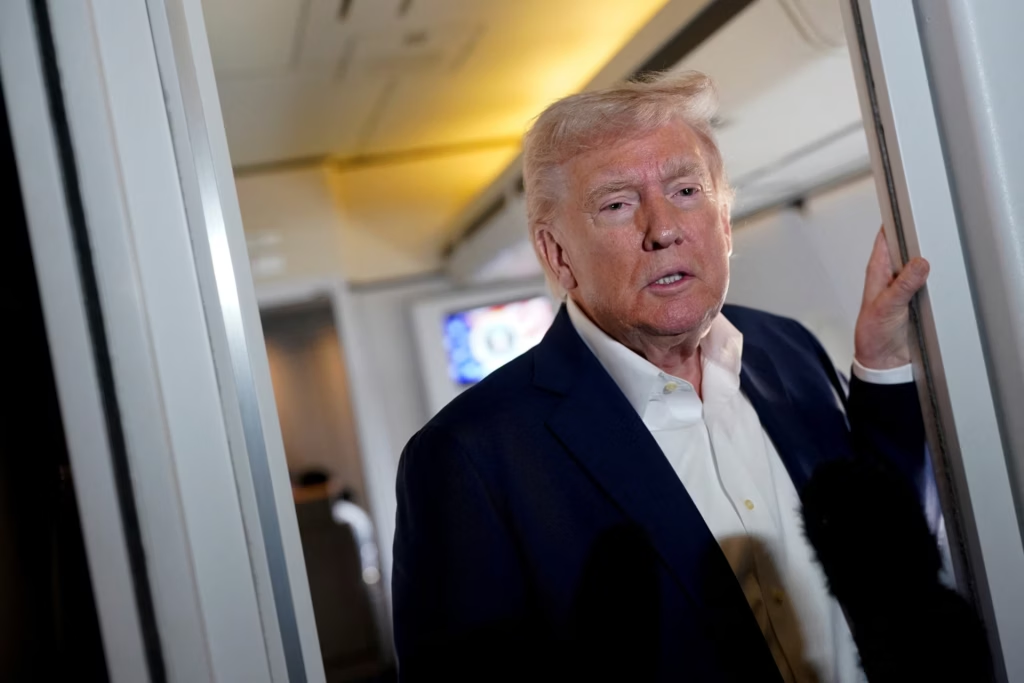
Following the release of the medical report, Trump reinforced its findings publicly. Speaking to reporters, he emphasized that he had completed a cognitive evaluation, answering all questions correctly.

He highlighted the breadth of the examination, which went beyond basic screening to include cardiovascular assessments, neurological checks, and multiple diagnostic procedures.

His remarks conveyed confidence and aligned with his long-standing messaging about remaining in peak condition despite advancing age.

Supporters of Trump pointed to these evaluations as authoritative evidence that he remains physically and mentally fit, emphasizing the direct clinical observation over speculation.

However, the conversation did not end with the physician’s report. Outside official channels, questions and criticism emerged from mental health professionals and public commentators.

One of the most prominent voices is Dr. John Gartner, a psychologist and former Johns Hopkins University instructor.

Gartner has publicly suggested that observable behavioral and physical patterns may indicate early signs of neurological conditions, such as frontotemporal dementia, a progressive disorder associated with changes in behavior, speech, judgment, and motor coordination.

While Gartner’s commentary has attracted attention, it is important to note that he has not conducted an in-person evaluation or reviewed Trump’s medical records; his observations are based on publicly available video footage and behavioral analysis.

In interviews and public statements, Gartner has highlighted changes in Trump’s physical coordination and gait over the decades. He contrasts older footage from the 1980s, showing Trump playing volleyball with agility and balance, with more recent appearances in which Trump appears slower, more rigid, and occasionally unsteady.

According to Gartner, these changes extend beyond what would typically be expected from normal aging. In particular, he points to a semicircular swing of the right leg while walking as a potential indicator of impaired motor control associated with frontotemporal dementia.

He also references instances where Trump appeared to have difficulty navigating stairs or momentarily lost balance during public events. While these moments are observable in video, Gartner emphasizes that they are presented as patterns rather than clinical diagnoses.

He notes that early symptoms of frontotemporal dementia often manifest through physical and behavioral changes rather than memory loss, a distinction frequently cited in neurology literature.

Gartner has cited additional input from another medical professional, Dr. Zoffman, who reviewed video footage and reportedly expressed agreement with his assessment regarding gait patterns.

These observations, while noted in interviews and media commentary, remain informal opinions and have not been corroborated by direct medical evaluation.

Importantly, neither Gartner nor Zoffman has conducted personal examinations or reviewed Trump’s medical history, so their conclusions cannot be considered formal diagnoses. This distinction between clinical assessment and external analysis is central to understanding the debate, especially when it circulates widely in the public sphere.

Adding to public speculation are unverified claims circulating online about potential medical devices, such as a catheter, which Trump may be wearing.

These claims remain unconfirmed and have not been addressed by Trump’s medical team, but they have fueled online discussion and amplified interest in evaluating the former president’s health.

Medical professionals caution that drawing conclusions from images or videos without context can easily lead to misinformation. Analysts also note that public figures are often subject to heightened scrutiny and that casual observation does not replace formal evaluation.

Trump and his representatives have not issued public responses to Gartner’s commentary, instead relying on the April medical report as the authoritative statement of his health status.

Supporters argue that Barbabella’s evaluation, based on direct clinical observation and diagnostic testing, carries far greater weight than analyses derived from publicly available footage.

The situation highlights a recurring tension between transparency, privacy, and public interest: while citizens may be curious about the health of national leaders, only verified medical evidence should inform formal conclusions.

Historically, presidential health has been disclosed selectively, balancing the need for public reassurance with respect for privacy.

Critics argue that limited disclosure can leave room for speculation and rumor, while supporters emphasize that formal assessments are sufficient when conducted by qualified medical professionals. In the context of Trump’s health, this tension has been amplified by high-profile commentary and the intense political scrutiny associated with his ongoing influence in public life.

The debate has taken on additional dimensions in the media. News outlets, political commentators, and social media users have highlighted the contrast between official findings and external analysis, sometimes framing the discussion in partisan terms.

Analysts point out that interpreting visual evidence is inherently subjective, and that behavioral observations must be considered cautiously.

The interplay between perception, media framing, and medical expertise complicates public understanding, emphasizing the difficulty of separating verified information from opinion or conjecture.

As attention to Trump’s health persists, questions about age, stamina, and leadership capability remain intertwined with broader political conversations.

While Barbabella’s report affirms his cognitive and physical fitness, external analyses continue to attract attention, demonstrating the ongoing public appetite for evaluating leaders’ ability to perform under the demands of office.

The debate reflects not only medical considerations but also societal expectations about transparency, accountability, and the responsibility of high-profile individuals whose decisions affect millions. The public discussion surrounding Donald Trump’s health extends far beyond the medical report itself, illustrating the complex intersection of politics, media scrutiny, and societal expectations for national leaders.

Presidential health is not just a private matter; it is inherently linked to public accountability, as decisions made at the highest level of government affect millions of citizens.

This dynamic has fueled both curiosity and controversy, especially when assessments from qualified physicians appear to clash with commentary from external experts or public observation.

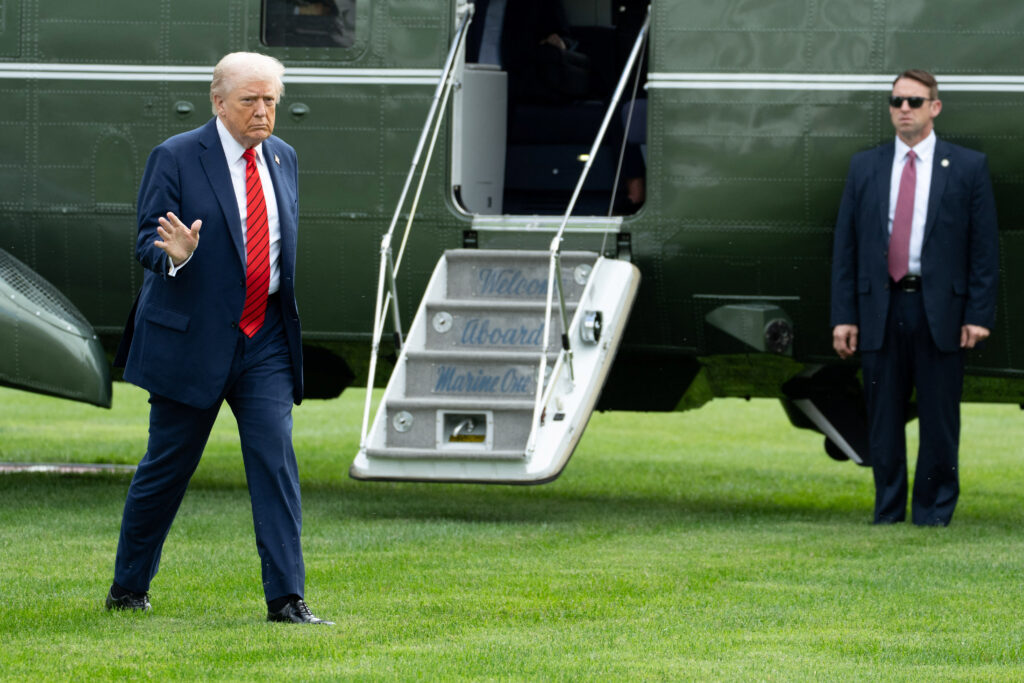
One of the most notable aspects of the ongoing debate is the way visual media has influenced public perception. Analysts have observed that footage of Trump walking, gesturing, or attending events is frequently analyzed frame by frame to identify potential signs of cognitive or physical decline.

Gartner and other commentators have emphasized patterns in movement and posture that they believe may indicate early neurological changes, even though these observations cannot replace formal examinations.

The proliferation of online clips and social media commentary amplifies this effect, as millions of viewers can compare past and present appearances in real time, often drawing their own conclusions.

This phenomenon highlights a broader challenge: the public’s demand for transparency often collides with the limits of medical confidentiality.

Presidential health has historically been selectively disclosed, with official statements designed to reassure the public without revealing exhaustive detail. While this approach is rooted in both privacy and legal considerations, it also leaves space for speculation.

Critics argue that the absence of continuous, verifiable information fuels uncertainty and can be exploited in partisan debates, while supporters insist that detailed medical disclosure beyond formal evaluations is unnecessary and potentially invasive.

The political dimension of Trump’s health discussion is significant.

Age and cognitive stamina are frequently cited in the context of executive decision-making, particularly as citizens evaluate leadership capacity during election cycles.

Questions about physical agility or mental acuity can be amplified when leaders engage in demanding public schedules, as Trump does through rallies, interviews, and ongoing political involvement.

Analysts note that even minor missteps or perceived hesitations are quickly interpreted through political and cognitive lenses, creating a situation in which every public appearance carries scrutiny far beyond that faced by private citizens.

Social media, in particular, has accelerated the conversation. Posts highlighting gait, balance, or speech patterns often go viral, sparking debates that combine humor, concern, and political interpretation.

While many users clearly understand these discussions are speculative, others interpret them as evidence of declining capacity.

This dichotomy demonstrates the challenge of separating fact from perception in an environment where visual content spreads faster than formal evaluations can respond.

The contrasting approaches of official medical reports and external commentary also reflect differing methodologies. Barbabella’s assessment is grounded in direct clinical observation, standardized testing, and detailed physical examination.

In contrast, Gartner’s analysis relies on observational patterns and historical comparison, drawing on expertise in psychology and neurology but without personal evaluation or access to Trump’s medical records.

Both perspectives provide insight, but only one is grounded in direct, verifiable data. The distinction is critical for audiences seeking to understand the limits of public information versus private medical expertise.

These debates have consequences beyond Trump himself, influencing broader expectations of transparency in political leadership. Citizens increasingly demand accessible and credible information about the health of public figures, especially those in positions where cognitive and physical capabilities directly impact national policy.

At the same time, medical experts caution against drawing conclusions based solely on public appearances, stressing that nuanced evaluation requires context, repeated testing, and access to comprehensive health records.

The tension between these demands — for transparency and for professional accuracy — is a recurring feature of discussions about presidential health.

Historically, other presidents have faced similar scrutiny. Ronald Reagan, for instance, faced public concern regarding memory loss during his second term, while more recent leaders have voluntarily disclosed key medical information to maintain public confidence.

Trump’s case highlights both continuity and divergence from these historical precedents: continuity, in the sense that health remains a public concern, and divergence, in the scale and intensity of real-time scrutiny amplified by modern media and social platforms.

Political analysts also emphasize the potential implications for governance. While medical reports indicate that Trump is fit to perform executive functions, public speculation can shape perceptions of capability, influence voter confidence, and even impact political alliances.

In hyper-partisan environments, visible health debates are sometimes leveraged to question decision-making ability or leadership stamina, whether intentionally or not. Consequently, these discussions extend beyond medicine and into the strategic and symbolic dimensions of political life.

Beyond political considerations, the Trump health debate touches on societal attitudes toward aging and cognitive change. Observers have noted that public fascination with age-related decline reflects both cultural concerns about leadership longevity and anxieties about succession planning.

This dimension is particularly pronounced in the United States, where the president’s role is singular and highly visible. As such, evaluations of physical and cognitive function are not purely medical; they are also cultural barometers reflecting expectations for endurance, alertness, and presence.

The media’s role is especially critical in shaping these narratives. Traditional news outlets, cable networks, and online publications interpret, contextualize, and sometimes editorialize visible behaviors, offering analysis that ranges from medical commentary to political interpretation.

This multiplicity of voices can be informative, but it also contributes to polarization, as audiences often select coverage that aligns with preexisting beliefs.

Analysts highlight that while direct examination by a physician provides verifiable conclusions, interpretation of observed behavior without formal evaluation is inherently subjective and potentially misleading.

Looking forward, the debate surrounding Trump’s health is likely to continue as long as he remains politically active. Public appearances, campaign events, and media interviews offer ongoing opportunities for scrutiny, while formal medical evaluations provide the authoritative counterpoint.

This dynamic ensures that both the medical and public dimensions of presidential health remain intertwined, each influencing how citizens perceive leadership capacity and decision-making ability.

In sum, the discussion over Donald Trump’s cognitive and physical condition exemplifies the intersection of medical science, public transparency, and political interpretation.

It underscores the need for careful differentiation between verified medical information and external analysis, while also highlighting how modern media environments magnify public curiosity and speculation.

As political discourse evolves, the challenge of balancing privacy, professional evaluation, and public accountability will remain a central concern for evaluating the health of national leaders.

One Day, I Inherited a House from My Late Neighbor Who Hated Me, but His One Condition Forced Me to Act

I always believed my neighbor lived solely to make my life miserable.

The man next door was gruff, sharp-eyed, and perpetually scowling. He had perfected the art of silent hostility. Every slammed gate, every complaint about my fence line, and every time he “accidentally” sprayed weed killer a little too close to my garden felt deliberate. I told myself to ignore him. I told myself he was lonely, bitter, and bored. But the morning he dumped an entire mound of dirt onto my rose bed, I knew he had crossed a line.

What I did not know was that he had already planned something far worse, or perhaps far greater, something that would bind our lives together in ways I never imagined.

I loved mornings in the suburbs. The quiet weighted it, like a deep breath before the world woke up. I would sit on my porch with a mug of coffee, my notebook balanced on my knee, sketching bouquet ideas or jotting down orders. I was a florist, and my business ran mostly through online requests and word of mouth. Summer was my busiest season, especially wedding season. Brides loved roses grown by hand, roses with imperfections that proved they were real.

My garden was my pride. Rows of pale pinks, deep reds, and soft creams curved gently toward the fence line. At least, they had.

That morning, I took one sip of coffee and glanced toward the flower bed. I nearly choked.

Where my roses should have been stood a brutal heap of dark soil, dumped without care. Crushed stems poked through it like broken bones. The scent of fresh earth mixed cruelly with the sharp green smell of torn leaves.

“What the hell?” I whispered.

My heart slammed against my ribs as rage flared hot and fast. There was only one person who could have done this.

“Not again,” I muttered as I rose from my chair. “That miserable old man.”

I stormed across my yard, stones biting into the soles of my sandals, ready to unleash years of swallowed anger. I stopped short at the edge of his property.

Cars lined the driveway. They were unfamiliar, dark, quiet, and solemn.

A woman from the next street stood near the gate, her hands folded tightly in front of her.

“What happened?” I asked, my voice suddenly unsteady.

She looked at me with pity. “Oh, you didn’t hear? Harold passed away last night. Heart attack.”

The words drained the heat from my body. My anger collapsed in on itself and sank straight into the ruined soil of my garden.

D.3.a.d?

The man who had made my life hell was simply gone.

Before I could process it, someone cleared his throat behind me. A man in a dark suit stepped forward, calm and precise.

“Miss Miller?” he asked.

“Yes?”

“My name is James. I am Mr. Sloan’s attorney. After the funeral, there will be a reading of his will. You are required to attend.”

I stared at him. “Me? I think there’s been a mistake.”

“There is no mistake. It was his explicit request.”

My gaze drifted back to the mound of dirt and the roses he had destroyed. A chill crawled up my spine.

What did you do this time, I wondered. What trap did you set before you d.i.3.d?

The next day, I sat in the back row of the small funeral chapel, my hands clasped so tightly that my fingers ached. I watched the closed coffin and replayed every argument, every slammed door, and every bitter glance over the fence.

What kind of final joke leaves someone like me at your funeral?

After the service, the lawyer led me into a modest office at the back of the building. An elderly woman sat by the window, her posture small, her hands folded neatly in her lap. She wore a soft hat and stared outside as though bracing herself against something invisible.

We exchanged polite nods before sitting across from one another.

The lawyer opened a folder. “Mr. Sloan’s will contains two provisions relevant to the people in this room.”

My stomach tightened.

“First,” he said, “Miss Miller, you inherit Mr. Sloan’s house and the surrounding property.”

I laughed, a short and disbelieving sound. “That’s not funny.”

“I assure you, this is not a joke.”

My mind reeled. His house. The same house he guarded like a fortress. The land I had secretly envied for years.

“There is one condition,” the lawyer continued.

Of course, there was.

“You must provide a home for Mrs. Rose Dalton,” he said, gesturing toward the woman by the window. “She will live with you for as long as she wishes, and you will be responsible for her care.”

The woman turned then. Her eyes were warm, and her smile was gentle. “I won’t be any trouble, dear.”

I swallowed. “And if I refuse?”

“Then the inheritance is forfeited.”

I thought of my rental bills. I thought of my destroyed roses. I thought of the neighboring garden overflowing with the same varieties brides begged me for. That land could save my business. It could change everything.

I looked at the woman again. She was frail, polite, and harmless.

What harm could one sweet old lady do?

“I accept,” I said quietly.

At first, I told myself I could handle it.

The land was mine. The roses would grow again. All I had to do was help an elderly woman live out her days in peace.

That illusion shattered within a week.

It started small. Steamed vegetables were prepared exactly the way she liked them. Milk warmed to the precise temperature she preferred. Lights adjusted, pillows fluffed, and windows checked for drafts only she could feel.

Then came the nights.

A bell rang from down the hall at midnight. She needed tea. At two, she wanted help finding her glasses, which were already perched on her nose. At dawn, she insisted her medication might have expired and begged me to fetch replacements from the city pharmacy.

I biked through darkness and fog, exhaustion weighing down my limbs, only to return and find her sleeping peacefully.

When I protested, she smiled. “Sleep is the best medicine, dear.”

Something in me cracked that morning.

Later, while searching the garage for a watering can, I found an old cardboard box with its lid slightly ajar. Inside were photographs, faded black and white images curled at the edges.

One of them stole my breath.

A young woman stared back at me, holding a baby. Her face was too familiar. The same eyes. The same curve of the mouth.

On the back, written in shaky handwriting, were the words: Rose and my girl, August 1985.

My heart thundered.

“My girl?” I whispered.

I did not hear her approach.

“Oh,” Rose said softly from the doorway. “You found those.”

“That woman,” I said. “That’s you?”

She nodded. “You look just like I did.”

The room tilted.

I had grown up in foster care. All I had ever known was that my mother had left me. There were no names, no photos, and no explanations.

That night, the truth finally surfaced.

She told me everything. The reckless love. The poverty. The impossible choice. They believed letting me go was the only way I would survive. How Harold had watched me from across the fence for years, too ashamed to speak.

“He thought you’d hate him,” she said. “I think he hated himself enough for both of you.”

When she handed me the letter, my hands shook.

I was never brave enough to be your father when it mattered, it read. But watching you grow into who you are was the only thing that gave me peace.

I cried harder than I ever had before.

All that anger. All that resentment. It had been grief in disguise.

Spring came quietly that year.

Together, Rose and I rebuilt the garden. She sat nearby telling stories while I planted new roses beside the old ones. Some days were still hard. Forgiveness did not come all at once.

But healing never does.

The roses bent in the wind, their petals fragile yet stubborn.

And for the first time in my life, I understood what it meant to belong.

We did not break.

We grew.

I Covered $6 for a Mom’s Baby Formula — The Next Day, My Manager Called Me In and Handed Me an Envelope

I’m a 40-year-old grocery store cashier, and covering $6 for a tired mom’s baby formula seemed like nothing—until the next morning, when my manager handed me an unexpected envelope with my name on it.

I covered $6 for groceries for a mom with a baby at the store — the next day, the manager called me in and handed me an envelope.

I’m Amelia, 40F, and I work as a cashier in a small neighborhood grocery store.

Not what I dreamed of as a kid, but it pays the bills. Mostly.

When you stand behind a register long enough, you learn to read people.

The rushed ones. The lonely ones.

The parents who smile at their kids while their eyes are screaming math. It was almost 11 p.m., 10 minutes to closing. The store was half-dark, aisles quiet, that hum of the refrigerators louder than the music.

My feet hurt, my patience was running low, and I was already planning what sad snack I’d eat before bed.

Then she stepped into my lane.

I work as a cashier in a small neighborhood grocery store.

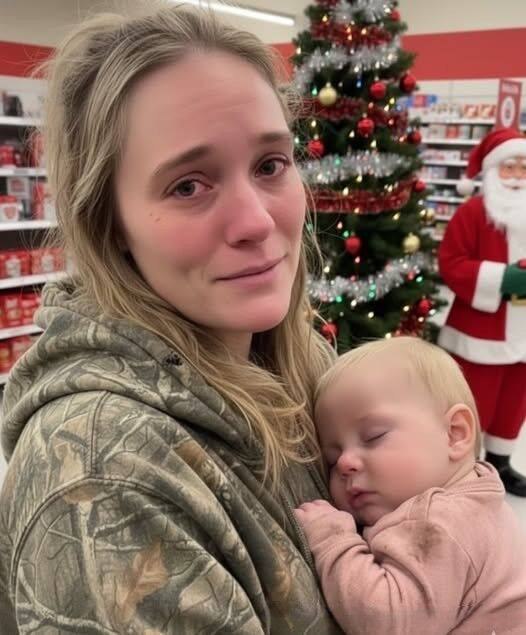
Early 30s, maybe. Hair in a messy bun, hoodie that had been washed a hundred times, cheap leggings, old sneakers. She had a baby strapped to her chest in a soft wrap, his cheek mashed against her collarbone.

She gave me a tired, polite smile.

“Hey,” I said. “You’re our last customer. Lucky you.”

“Lucky is not the word I’d use. But we made it.”

She started unloading her cart. It didn’t take long. Bread. Eggs. A half gallon of milk. One big can of baby formula. No snacks. No extras. Just basics. I scanned everything and hit total.

“That’ll be $32.47.”

She opened her wallet and pulled out a thin stack of bills.

I watched her count, lips moving. Her forehead creased. She checked another pocket. Then her little zipper pouch. Then, the back of her wallet, like money might appear if she believed hard enough.

I’ve seen people put things back a lot. Steaks. Snacks. Even medicine. But formula?

Her shoulders sagged. “Oh no.”

“How much are you short?” I asked, trying to keep my voice soft.

“Six dollars. I’m really sorry. Can you cancel the formula? I’ll just take the rest.”

Her eyes stayed glued to the formula, like she couldn’t bear to look at me. The baby shifted, made a tiny sound, and relaxed again.

I’ve seen people put things back a lot. Steaks. Snacks. Even medicine. But formula? That wasn’t something you could skip out on.

I reached into my apron pocket and pulled out my tips from the day. Wrinkled bills, mostly ones. I peeled off six dollars and slid the money toward the register.

“I’ve got it.”

Her head snapped up. “What? No, no, you don’t have to—”

Six bucks. Whatever.

“I know. I want to. Keep the formula.”

“I can pay you back,” she rushed out. “Next time I—”

“You don’t have to pay me back. Really. Just take your groceries. Go home. Sleep if you can.”

Her eyes filled so fast it threw me. “Thank you. You have no idea.”

She hugged the baby tighter, wiped her face, grabbed the bag, and headed for the doors. The automatic doors slid open, cold air rushed in, and then she was gone.

I dropped my six dollars into the till, finished closing, clocked out, and went home. By the time I microwaved leftovers and crawled into bed, it already felt like a small blip in a long shift. Six bucks. Whatever.

“You’re in trouble.”

The following morning, the store was slammed. People grabbing coffee, cereal, and way too many energy drinks. I clocked in, tied my apron, and took my spot at register three.

Scan. Beep. Bag. Smile.

“Good morning.”

“Rewards card?”

“Paper or plastic?”

I was halfway through ringing up a guy with a cart full of junk food when the loudspeaker crackled.

“Amelia to the manager’s office. Amelia, please come to the manager’s office. It’s urgent.”

The customer smirked. “Uh oh. You’re in trouble.”

“Story of my life,” I joked weakly.

Never what you want to hear at work.

I finished his order, called a coworker to cover my lane, and headed to the back.

Every step toward the office, my brain replayed last night.

Her face. My money on the counter. The camera overhead.

I knocked on the office door.

“Come in,” my manager called.

He was at his desk, glasses on, staring at his computer. He looked up when I walked in.

“You wanted to see me?”

“Yeah. Close the door and sit down for a sec.”

Never what you want to hear at work.

My face went hot.

I sat. He clicked something, then turned his monitor toward me.

Grainy security footage filled the screen.

My register. The woman. The baby.

Me pulling cash from my pocket.

We watched in silence as I slid my money across the counter. He hit pause.

“Did you cover part of a customer’s groceries last night?”

My face went hot. “Yes. She was short, and it was for baby formula. It was my money, not the store’s. I know it’s probably against policy, and I’m sorry, I just—”

He held up a hand.

“Am I in trouble?”

“I’m not mad. We’re technically not supposed to do that. But that’s not why I called you in.”

“Oh.”

He opened a drawer and pulled out a plain white envelope. He set it on the desk between us.

“This was left for you this morning. She came back and asked me to give it to you.”

My name was written on the front in neat handwriting. Amelia.

“You didn’t read it?”

He shook his head. “Not my business. You can open it here or later. Just wanted to make sure you got it.”

“Am I in trouble?” I still asked, because anxiety doesn’t listen.

“Just don’t make a habit of paying out of your own pocket. But… it was a kind thing you did.”

That hit harder than any lecture would’ve.

“Okay,” I said quietly.

I slipped the envelope into my apron and went back to my lane.

“There’s something else I need to tell you.”

For the rest of my shift, I could feel it against my hip every time I moved.

By the time I clocked out, my hands were shaking. I went straight to my car, shut the door, and finally pulled the envelope out. I ripped it open and slid out a few folded sheets of paper. I unfolded the first.

“Dear Amelia,” it started. “I’m the woman you helped last night with the baby and the formula.”

My throat tightened.

“I wanted to say thank you,” she wrote. “Not just for the six dollars, but for how you treated me. You didn’t make me feel stupid or ashamed. You just helped.”

She wrote about skipping dinner. About doing the math in her head. About realizing she was short and wanting to disappear. Then the letter changed.

“There’s something else I need to tell you,” she wrote. “I was adopted as a baby.”

She’d given that baby up.

My heart started pounding.

“I always knew there was a woman out there who had me and then let me go,” she wrote. “My adoptive parents are good people, but they didn’t have many answers. I’ve wondered about her my whole life.”

I thought of my mom.

One night, she started crying at the kitchen table. She told me she’d had a baby before me. Too young. Too scared. Too alone.

She’d given that baby up. She’d called me her second chance.

We never talked about it again.

She died five years ago.

The whole thing stayed like a bruise. I didn’t press on.

I kept reading.

“Our biological mother died a few years ago.”

“After my son was born,” she wrote, “I started looking for information. I wanted to know where I came from. I didn’t want to wreck anyone’s life. I just needed answers.

“Eventually, I found some records. I found a name that kept appearing with mine. Your name. Amelia. And our biological mother’s name. Scarlett.”

My hands shook. Scarlett. My mom.

“Our biological mother died a few years ago,” she wrote. “I’m sorry if this is how you’re finding out, in case no one told you.”

I already knew, but seeing “our biological mother” on the page hit differently.

“I didn’t know how to approach you,” she went on. “I found where you worked, but I was scared to walk in and say, ‘Hi, I think we’re related.’ I kept putting it off.

“I really was short on money. I didn’t plan that.”

“Yesterday, I came in to buy formula. I was exhausted. I wasn’t thinking about anything except getting through the night.”

“Then I saw your name tag. Amelia. I realized the woman ringing me up was the person from the records. The one connected to Scarlett.

“My sister.”

I stared at that word until my vision blurred.

She continued.

“I really was short on money. I didn’t plan that. When I told you to cancel the formula, I felt like a failure. And then you reached for your own money.”

“I don’t expect anything. You don’t owe me a relationship.”

“You didn’t know who I was. You didn’t know we might share a mother. But you still helped. In that moment, I knew something about you that no file could tell me.”

The last lines were short.

“I don’t expect anything. You don’t owe me a relationship. I just wanted you to know I exist, and that we’re connected. At the bottom is my number. If you ever want to talk, or meet, or even just text, I would really like that.”

She signed it: “Isabella.” Then one last line: “Thank you, big sister.”

I sat there in my car, letter trembling in my hands, the parking lot noise fading out. Big sister. Me.

I’d grown up as an only child. Or so I thought.

Before I could talk myself out of it, I grabbed my phone and typed in the number from the bottom of the page.

I hit call. It rang. Once. Twice. Three times.

“Hello?” a woman said, cautiously.

“Isabella?” I asked.

Small pause.

“Yes. This is Isabella.”

“It’s Amelia,” I said. “From the store.”

She let out a shaky breath.

“You got my letter,” she said.

“I did. I’m sitting in the parking lot right now, actually.”

“I’m sorry if it was too much,” she rushed out. “I didn’t know if I should leave it, or if that was crossing a line, or—”

“I’m glad you did,” I cut in. “I’m… still processing. But I’m glad you wrote it.”

Silence, but not heavy.

“Do you… Want to meet?” I asked.

“Yes,” she said immediately. Then softer: “If you do.”

“I do,” I said, surprising myself with how true it felt. “There’s a café a couple of blocks from the store. Tomorrow?”

“Tomorrow works,” she said. I heard a baby fuss in the background. “Thank you. For calling.”

We picked a time and hung up.

The next day, I got to the café embarrassingly early.

Every time the door opened, my heart jumped.

I picked a table by the window and wrapped my hands around a mug of coffee I barely drank from.

Every time the door opened, my heart jumped. Then she walked in. Same hoodie. Same tired eyes. Same messy bun. Baby in a carrier this time, wide awake and staring around. Our eyes met.

“Hi,” she said.

“Hi,” I echoed.

We stood there for a second, then stepped toward each other. She shifted the baby. We hugged. It was a little awkward, a little tight, and weirdly right. We sat.

“This is Elijah,” she said, bouncing the baby lightly. “Your nephew, I guess.”

“Hey, Elijah,” I said, letting him grab my finger. “I’m your aunt Amelia.”

Saying “aunt” felt strange. Strange, and good. We talked about Scarlett.

I told her how Mom always burned toast, cried at dog commercials, and sang off-key in the car. How she was stubborn and funny and flawed, but loving. Isabella listened as every detail mattered.

“I always wondered if she thought about me,” Isabella said quietly. “I didn’t want to believe she just moved on.”

“She didn’t,” I said. “She just didn’t know how to look back.”

We didn’t fix everything that day. We didn’t rewrite the past. But we agreed on one thing: we wanted to keep talking. We started texting. Sending pictures. Meeting up when we could.

A few weeks later, we did a DNA test. Mostly to shut up the tiny voice in both our heads that whispered, What if? The results came back: full sibling match. Not just a tired mom at my register.

Not just a letter. My sister.

Now, Isabella and Elijah come into the store sometimes. He reaches for me when he sees me, little hands grabbing my apron. I keep his picture in my locker, right above my schedule, and a stupid old coupon.

We’re still figuring it out—how to go from strangers to family. It’s messy and emotional and awkward and good. All because one night, a woman was six dollars short at my lane.

I went to work thinking I was just a cashier.

I walked out with a sister and a nephew I never knew I had.

We’re still figuring it out—how to go from strangers to family

I Noticed a Little Boy Crying in a School Bus, and I Jumped in to Help after Seeing His Hands

I’m Gerald. I’m 45. I drive a school bus in a town most people would pass through without noticing.

And until last week, I thought I understood exactly what my job was.

Rain, snow, fog thick enough to swallow headlights—I’m there before dawn, unlocking the gate, climbing into that creaky yellow beast, and coaxing the heater to life like it’s an old friend that needs encouragement. It’s not glamorous work, and my wife, Linda, is quick to remind me of that whenever the bills land on the kitchen counter like threats.

“You make peanuts, Gerald. Peanuts!” she snapped just last week, waving the electric bill in my face like it had personally insulted her.

“Peanuts are protein,” I muttered.

She didn’t laugh. Not even a little.

Still… I love this job. I love the rhythm of it. The way kids climb aboard half-asleep and leave wide awake. The way brothers argue for three stops straight and then share a snack like nothing happened. The way little ones whisper secrets into the air like the bus is a vault.

Those kids are why I show up.

Last Tuesday started like any other.

Except the cold.

It wasn’t normal cold. It was the kind that feels like it has teeth. The kind that crawls up your legs and settles in your bones, making you feel older than you are. My fingers stung just turning the key in the ignition.

I stomped my boots on the steps, shook frost off my scarf, and put on my usual “stern-but-not-mean” voice.

“Alright, hustle up! In quick! The air’s got teeth this morning!” I called out, trying to sound tough while my breath came out in little white bursts.

The kids laughed as they piled on—scarves flapping, boots clunking like tiny soldiers, backpacks bouncing against seatbacks.

Then little Marcy appeared at the bottom step. Five years old. Pink pigtails. Bossy stance. Mitten hands on her hips like she paid taxes.

“You’re so silly, Gerald!” she said.

And then she squinted at my fraying scarf like she’d spotted a crime.

“Ask your mommy to get you a new scarf!”

I leaned down and lowered my voice like I was sharing state secrets. “Sweetie, if my momma were still around, she’d buy me a scarf so fancy it’d make yours look like a dish rag.”

Marcy squealed with laughter and trotted down the aisle, humming like the world was safe.

That tiny exchange warmed me more than the heater ever could.

We finished the route. I dropped the kids off. The doors hissed shut behind the last one, and the bus went quiet.

Normally, after the morning run, I do my usual sweep—checking seats for mittens, homework, forgotten granola bars. I’ve learned the hard way that if you don’t check, you’ll find an apple rotting under seat 12 three days later and wonder why your bus smells like sadness.

I was halfway down the aisle when I heard it.

A sniffle.

Soft. Small. Wrong.

I froze, one hand braced on a seatback.

“Hey,” I called, keeping my voice gentle. “Someone still here?”

No answer. Just the sound again—like someone trying not to be heard.

I stepped toward the back corner and found him.

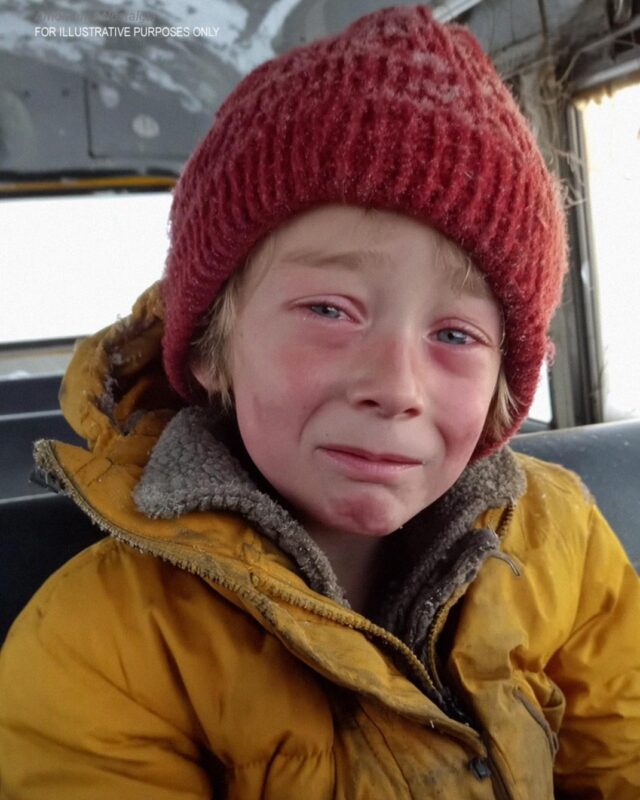
A little boy—seven, maybe eight—huddled against the window. Thin coat pulled tight around him like it was all he had. Backpack on the floor near his shoes, untouched, like he hadn’t moved since everyone got off.

“Buddy?” I crouched down a few feet away so I wouldn’t scare him. “Why aren’t you heading inside?”

He stared at his lap. Wouldn’t look up. His shoulders trembled slightly.

“I… I’m just cold,” he whispered.

Something tightened in my chest.

“Can I see your hands, bud?”

He hesitated, then slowly brought them forward like he expected to get in trouble for them.

And I swear my brain went quiet for a second.

His fingers weren’t just pink from the cold. They were bluish, stiff. Knuckles swollen like the cold had been chewing on them for hours. Like he’d been exposed for longer than any kid should be.

“Oh no,” I breathed, and before I could even think about it, I tugged off my own gloves and slid them onto him.

They swallowed his hands. Hung past his fingertips. Ridiculous.

But warm.

“There,” I said softly. “Not perfect, but they’ll help.”

He finally looked up at me. His eyes were watery, red-rimmed, the kind of eyes that belonged to a kid who had learned how to be quiet about big things.

“Did you lose yours?” I asked.

He shook his head. “They ripped. Mommy and Daddy said they’ll get me new ones next month. Daddy’s trying hard.”

That sentence hit me harder than the cold ever could.

He didn’t complain. He didn’t blame anyone. He just… accepted it. Like a seven-year-old was supposed to understand budgets and hard months and grown-up worry.

I swallowed, trying to keep my voice steady.

“Well, I know a guy,” I said, adding a wink like we were in on a joke together. “He sells the warmest gloves and scarves you’ve ever seen. After school, I’ll get you something. But for now—these are yours. Deal?”

His face shifted—just a little. Like hope tried to peek through.

“Really?” he asked.

“Really,” I said, giving his shoulder a gentle squeeze.

And then he stood up and hugged me.

Not a polite hug. Not a quick one.

A real one.

The kind that doesn’t ask permission, because it isn’t about manners—it’s about need. About relief. About being seen.

He let go fast, like he was embarrassed, grabbed his backpack, and ran toward the school doors without looking back.

I sat there for a moment in the quiet bus, staring at my empty hands, my chest aching in a way I couldn’t name.

That day I didn’t get my usual coffee. Didn’t stop anywhere to warm up.

I went straight to the little shop down the block—nothing fancy, just a place with reliable winter stuff. The owner, Janice, knew me well enough to recognize my face and not ask too many questions. When I told her what happened, her mouth tightened like she wanted to cry and fight someone at the same time.

I picked a thick pair of kids’ gloves and a navy scarf with yellow stripes—one of those scarves that looks like it belongs to a kid who still believes in superheroes.

I used my last dollar and didn’t hesitate once.

Back on the bus, I found a shoebox and put the gloves and scarf inside. Then I wrote on the lid with a marker:

“If you feel cold, take something from here. — Gerald, your bus driver.”

I set it behind my seat like it belonged there all along.

I didn’t announce it. Didn’t wave it around. I just drove my afternoon route and watched through the rearview mirror.

Kids noticed.

They stopped. Read the note. Looked at each other. Whispered.

No one said a word to me.

And then, halfway through the ride, I saw a small hand reach forward and take the scarf.

The same boy.

He didn’t look up. Didn’t smile like he was caught. Just tucked it into his coat like it was a normal thing to do, like he was allowed to have warmth.

When he got off the bus, he glanced toward me—just a flicker—and smiled.

That should’ve been the end of it.

But it wasn’t.

Later that week, my radio crackled as I finished a drop-off.

“Gerald, the principal wants to see you.”

My stomach dropped right into my boots.

I did the mental scramble: Did someone complain? Did a parent see the gloves and assume the worst? Did I break some policy I didn’t know existed?

When I stepped into Mr. Thompson’s office, he greeted me with a smile and a folder in his hand.

“Have a seat, Gerald,” he said warmly.

I sat stiffly. “Am I in trouble?”

He chuckled. “Not even close.”

Then he told me the boy’s name—Aiden. And he told me what I didn’t know.

Aiden’s father, Evan, is a firefighter. He’d been injured during a rescue months earlier—out of work, stuck in physical therapy, the family struggling to keep everything afloat. Mr. Thompson said Aiden’s parents were embarrassed. Not about their son—about needing help. About coming up short.

“What you did,” Mr. Thompson said, leaning forward, “meant the world to them. And it reminded the rest of us what we’re supposed to be.”

I blinked, feeling something sting behind my eyes. “I just didn’t want him freezing.”

“That’s exactly why it mattered,” he said.

Then he slid a sheet of paper across the desk.

They were starting a school-wide clothing fund—coats, boots, gloves, scarves. No questions asked. No kids singled out. Discreet, quiet help. A way for families to breathe without shame.

And it started because of one shoebox on one bus.

I walked out of that office feeling… strange.

Not proud like you feel when you win something. Proud like you feel when you realize you can still be useful in a world that’s always trying to make you feel small.

After that, things moved fast.

A local bakery dropped off boxes of mittens and hats. Parents donated gently used coats. A retired teacher offered to knit wool caps. Janice from the shop called and told me she’d donate gloves weekly.

The shoebox behind my seat became a bin. Then the bin became another bin. Then the hallway by the office had one. The cafeteria got one. The project spread beyond our school to others in the district.

Kids started leaving notes inside.

“Thank you, Mr. Gerald. Now I don’t get teased.”

“I took the red scarf. I hope it’s okay. It’s really warm!”

Every note made my throat tighten.

Because kids don’t write those things unless they mean it.

Then came the day I’ll never forget.

The spring assembly.

They asked me to attend, which was unusual. I wasn’t staff. I was “just the driver.” But I showed up anyway in my cleanest coat and sat at the back of the gym as the kids sang “You’ve Got a Friend in Me.”

When it ended, Mr. Thompson stepped up to the microphone.

He talked about community. About kindness. About how the smallest actions can change the shape of a whole place.

Then he said my name.

“Please welcome Gerald—our district’s bus driver and local hero.”

The gym erupted.

Kids stood on benches waving. Parents clapped. Teachers smiled like they were proud of something they hadn’t even known they needed.

I walked to the stage feeling like my boots were too heavy, like I didn’t know where to put my hands, like I didn’t belong up there.

Mr. Thompson handed me a certificate and explained the expansion: what started on my bus had become The Warm Ride Project across multiple schools.

And then he paused.

“There’s one more surprise,” he said. “The man you helped most wants to meet you.”

I turned.

Aiden stepped onto the stage, clutching someone’s hand.

Behind him was a tall man in a firefighter uniform. His posture was careful, his gait slow, like pain still lived somewhere in his body. But his eyes were clear. Proud. Wet with emotion he didn’t try to hide.

Aiden looked up at him, then back at me.

“Mr. Gerald,” he said loudly into the mic, “this is my dad.”

The firefighter stepped forward, extended his hand, and when I took it, his grip was strong enough to make my chest ache.

“I’m Evan,” he said. “Thank you. That winter was the hardest we’ve ever faced. You didn’t just help my son. You helped our whole family.”

I nodded, unable to speak like a normal person.

Then he leaned in, close enough that only I could hear.

“Your kindness… it saved me too.”

That sentence sat in my bones.

Not because it was dramatic.

Because it was true.

Sometimes people don’t need miracles. They need one person to notice them before they disappear.

When the applause finally faded and I stepped off the stage, I didn’t feel like a hero.

I felt like a man who finally understood his own job.

It isn’t just driving carefully and showing up on time.

It’s paying attention.

It’s seeing the kid who stays quiet.

It’s one pair of gloves.

One scarf.

One small moment that tells a child, You matter. You’re not alone. You don’t have to freeze in silence.

And for the first time in a long while, I felt proud—not of what I did, but of who I chose to be when it mattered.

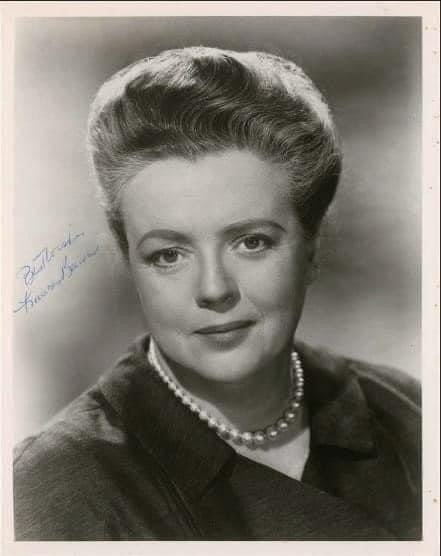
Frances Bavier! The Lasting Legacy Behind Televisions Beloved Aunt Be

The golden age of television was defined by characters who felt less like fleeting images on a screen and more like permanent fixtures in the American home. Among these, few figures possessed the enduring gravitational pull of Aunt Bee. As the maternal heart of Mayberry on The Andy Griffith Show, Frances Bavier became the universal embodiment of warmth, domestic stability, and gentle moral authority. To millions of viewers, she was the steady hand that kept the world from spinning too fast, a woman whose calm presence suggested that any problem—no matter how daunting—could be solved with common sense, a kind word, and perhaps a slice of kerosene-flavored pickles. Yet, behind the floral aprons and the soft-spoken wisdom was a woman of immense complexity, a classically trained powerhouse whose commitment to the art of acting was as deep as the character she portrayed was beloved.

The story of Frances Bavier did not begin in a fictional North Carolina town, but rather in the rigorous, high-stakes theater scene of New York City. Born in 1902, Bavier was a product of the prestigious American Academy of Dramatic Arts. Long before she was a household name, she was a seasoned veteran of the stage, appearing in numerous Broadway productions and working alongside the heavyweights of the era. This classical training instilled in her a profound respect for the craft. To Bavier, acting was not a hobby or a path to celebrity; it was a disciplined profession rooted in tradition, technique, and a relentless pursuit of perfection. By the time she transitioned into film and television, she brought with her a standard of excellence that defined her every movement on set.

When she was cast as Beatrice “Aunt Bee” Taylor, Bavier did not simply play a caricature of a small-town aunt. Instead, she infused the role with subtle layers of humanity and a quiet, steely strength. While the show was a comedy, Bavier approached Aunt Bee with a dramatic weight that gave the series its emotional center. She understood that for the humor of Andy and Barney to land, the domestic world they inhabited had to feel real, safe, and morally grounded. Aunt Bee was the family’s compass, a woman who commanded respect not through volume, but through a dignified consistency. It was this authenticity that allowed the character to transcend its 1960s origins, resonating with audiences decades later as a symbol of unconditional care.

However, the intersection of Bavier’s serious theatrical background and the lighthearted, often improvisational atmosphere of The Andy Griffith Show created a fascinating, and sometimes difficult, dynamic behind the scenes. History has often focused on the alleged friction between Bavier and her co-stars, particularly Andy Griffith. Tales of her being “difficult” or “humorless” have circulated for years, but these labels often overlook the reality of her professionalism. Bavier was a woman of the theater in a world of sitcom banter. She believed in the sanctity of the script, the precision of blocking, and a certain decorum on set. While the men of Mayberry were prone to practical jokes and casual revisions, Bavier stood as a sentinel of the old guard. Her “seriousness” was not a lack of joy, but an abundance of integrity. She cared so deeply about the quality of the production that she refused to treat it as anything less than high art.

This commitment to quality is precisely what gave Aunt Bee her depth. Every time she looked at young Ron Howard with a mixture of exasperation and pride, or navigated the eccentricities of her neighbors, she was using a lifetime of theatrical skill to make the moment feel earned. She knew that warmth without a foundation of truth is merely sentimentality, and she refused to let Aunt Bee become a cliché.

As the show eventually drew to a close and its spin-offs faded, Frances Bavier made a choice that stunned the industry: she withdrew. In a move that mirrored her desire for authenticity over artifice, she left the neon lights of Hollywood behind and moved to Siler City, North Carolina. It was a case of life imitating art, as the woman who had made a career out of portraying small-town life chose to live it in reality. She sought privacy, opting for a quiet existence filled with her beloved cats and the peace of a community that respected her boundaries. Far from being the recluse that tabloids often suggested, Bavier was simply a woman who had completed her work and felt no need for the continued applause of the public. She lived out her days in reflection, far removed from the industry that had turned her into an icon.

It was only after her death in 1989 that the full extent of Bavier’s character was revealed to the world. When her estate was settled, it became clear that the woman who had spent years caring for a fictional family had spent her life preparing to care for a real community. She left behind a significant fortune, but rather than seeking to preserve her own name in monuments, she directed her wealth toward the institutions that supported the public good. She made substantial donations to hospitals, charitable organizations, and public broadcasting stations. Her philanthropy was as quiet and deliberate as her acting; she did not seek recognition for her kindness in life, preferring to let the impact of her gifts speak for itself after she was gone.

Today, the legacy of Frances Bavier is a multifaceted one. To the casual viewer, she remains the quintessential Aunt Bee, the woman whose presence on screen feels like a warm blanket on a cold night. But to those who look closer, she is a model of professional integrity—a woman who took a “simple” role and elevated it to the level of classic American literature through sheer force of will and talent. Her story reminds us that kindness is not weakness, and that seriousness of purpose is the true ingredient of lasting impact.

She proved that one could be a television superstar without losing their soul to the machine of fame. By choosing to live and die on her own terms, she ensured that the character of Aunt Bee remained untarnished by the typical scandals and desperation of the entertainment world. Her wealth helped heal the sick and educate the curious, while her performances continued to heal the hearts of those seeking a simpler, kinder time. Frances Bavier may have played the most famous aunt in history, but her true role was that of a pioneer—a woman who mastered her craft, protected her peace, and left the world significantly better than she found it.

Military Dogs Blocked Access to Their Handlers Casket, And Refused to Move Until One Person Entered the Room!

The growling erupted from twelve throats simultaneously, a low, guttural vibration that seemed to shake the very foundations of the room. Master Chief Brick stumbled backward, his hand instinctively reaching for the sidearm on his hip—a reflex born of seventeen years in the Navy SEALs. He had stared down insurgents in the mountains of the Hindu Kush and navigated the treacherous waters of the South China Sea, but he had never witnessed a mutiny quite like this.

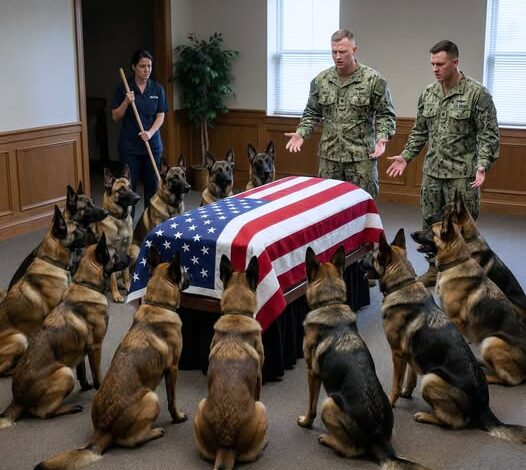
Twelve military working dogs—a lethal mixture of Belgian Malinois and German Shepherds—lay in a perfect, impenetrable circle around the flag-draped casket of Chief Petty Officer Caleb. They were the “Ghost Unit,” the elite of the elite, canine assets trained for black-ops missions that officially never occurred. Now, they were on strike. Not a single dog moved. Not a single one obeyed the frantic commands of the base handlers.

“Get them out of there!” Lieutenant Commander Cyrus shouted, his voice cracking with a frustration that bordered on panic. “The Admiral is flying in personally. The memorial service starts in two hours, and we can’t have a pack of snarling animals blocking the aisle.”

Petty Officer First Class Fletcher, the highest-rated handler on the base, stepped forward with practiced confidence, a leash in one hand and a bite sleeve on the other. He reached for the lead dog, a jet-black Malinois named Phantom. The response was immediate: Phantom didn’t just growl; he bared fangs that looked like ivory daggers, his eyes fixed on Fletcher’s throat. The handler retreated so fast he nearly tripped, his face draining of color.

“They won’t… they won’t listen to anyone, sir,” Fletcher stammered.

Brick turned his attention away from the dogs toward a woman standing in the far corner of the room. She was a small, unremarkable janitor clutching a mop, her head bowed as she focused on a non-existent spot on the floor. Her name tag read “Amber.”

“Hey, civilian!” Brick barked, redirecting his anger. “I already told you: restricted area. Get out. Now.”

The woman nodded slightly and began backing toward the door. But as she moved, a ripple went through the pack. Phantom lifted his head. His nose twitched, catching a scent that seemed to override his protective instinct. His tail wagged once—a singular, rhythmic thump against the concrete. Then, he settled back into his vigil. No one noticed the gesture except Amber. She paused at the threshold, her eyes lingering on the casket where her husband rested—the man she was legally forbidden from mourning.

For three months, Amber had been a ghost within the walls of the base. To the sailors and officers, she was just the “cleaning lady,” a background character who emptied trash and scrubbed toilets. In reality, she was “Whisper,” a Senior Handler for Ghost Unit 7, a joint CIA-JSOC operative with a service record that would make Brick’s look like a scout manual. She had inserted herself into the base under a fabricated identity because she knew the truth: Caleb hadn’t died from enemy fire in Syria. He had been betrayed.

Inside the room, the tension was reaching a breaking point. Specialists from Pendleton had been called, but they were hours away. Dr. Hazel, the base veterinarian, stood by with a medical bag, her eyes narrowing as she studied the dogs.

“They’re not distressed, Master Chief,” Hazel noted, her voice calm amid the chaos. “Their vitals are stable. They aren’t confused; they’re waiting.”

“Waiting for what?” Brick demanded. “The man is in the box!”

“Not what,” Hazel corrected. “Who.”

As the clock ticked toward the arrival of the Admiral, the political pressure mounted. Specialist Derek, a young officer with an overly eager demeanor, suggested sedation. “We can just put them under for a few hours, sir. Move them to the kennels and get the service over with.”

“Absolutely not,” a new voice boomed. Senior Chief Silas stood in the doorway, his silver hair catching the light. He was the only man who had served with Caleb in the early days. “You don’t drug a man’s family because they’re an inconvenience. These dogs are honoring their leader the only way they know how.”

The standoff continued until Admiral Fiona arrived. She was a four-star legend who walked with a weight of authority that silenced the room. She didn’t look at the officers; she looked at the dogs. She recognized the formation immediately—it was a tactical perimeter, the “Shield of the Fallen,” a behavior Caleb had taught them for the battlefield.

Fiona pulled Cyrus aside. “I want the personnel file on the janitor,” she commanded quietly.

When the tablet was handed to her, the truth was revealed. The fingerprints were non-existent; the background check was a masterpiece of intelligence-agency fiction. Fiona looked out the window and saw Amber standing near the mess hall, her posture too balanced, her movements too efficient for a civilian.

“She’s a ghost,” Fiona whispered to Silas. “Whisper. Caleb’s wife.”

The Admiral realized that the dogs weren’t just guarding Caleb; they were waiting for their second handler to give the final “Stand Down” order. Moreover, Whisper wasn’t just there to mourn; she was hunting the traitor who had executed her husband.

Fiona turned to Silas. “Go get her. Tell her Phantom is waiting. Tell her it’s time to come home.”

Silas found Amber in a storage closet, her hands steady as she organized supplies. He didn’t use her civilian name. “Phantom is waiting,” he said.

The transformation was instantaneous. The submissive janitor disappeared, and in her place stood a predator. Her eyes became sharp, assessing the room for threats. She didn’t say a word as she followed Silas back to the kennel.

As they entered, the room went silent. Every officer watched as the “cleaning lady” walked directly toward the snarling circle of dogs. Brick opened his mouth to shout a warning, but Silas gripped his arm, shaking his head.

Phantom stood up first. Then Odin, then Reaper. One by one, the twelve lethal animals rose. There was no growling now—only a chorus of soft whines. Amber reached the edge of the circle and spoke a single word in a language none of the men recognized—a specialized tactical dialect used only by the Ghost Unit.

“At ease.”

The dogs instantly broke formation, parting like the Red Sea to create a path. Amber walked to the casket, laying her hand on the flag. For the first time in three months, she allowed herself a single tear. The dogs crowded around her, leaning their heavy heads against her legs, a collective mourning that transcended the military hierarchy.

The traitor was eventually found—Specialist Derek, whose frantic suggestions of sedation had been an attempt to hide the fact that the dogs recognized his scent from the night Caleb died. But that afternoon, the justice was secondary. What mattered was the woman and the twelve loyal guardians who refused to move until the truth walked into the room.

One Car Per House? Neighbor’s Plan Backfires Big Time!!

The first warning showed up as a curl of paper under our wiper blade: block letters, three exclamation points, and a threat that sounded like it came from a neighborhood HOA that didn’t exist. “One car per house! Move the extra one or else!”

We laughed. Our street has no such rule, and both of our cars were tucked legally along the curb in front of our place. We figured a grumpy welcome-to-the-block, nothing more.

Three days later, the morning yanked us awake with the grind of winches and the metallic clank of chains. I pulled the curtains and saw two tow trucks squatting by the curb like vultures. Both of our cars were already lifted by their front wheels.

We shot outside in pajamas and slippers, hearts thudding. And there she was—our new neighbor, arms folded, a satisfied little smile that said she’d been waiting for this moment since we unloaded the moving van.

“Well,” she called, loud enough for the tow guys to hear, “maybe now you’ll listen when someone tells you the rules.”

I couldn’t help it; a laugh bubbled up. It just slipped out.

Her smile twitched. “What’s so funny?”

“Wow,” I said, drawing it out, “you really went through with it, huh?”

She frowned, confused by the lack of panic. “Yes. Because there’s one car per house on this street.”

“There isn’t,” I said, still trying not to grin. “And also… you might want to sit down.”

The nearest tow operator, a guy with forearms like bundled cables, looked from me to her and back again. I walked to the driver’s side, tapped the small etched plate on our windshield—one on each car, a twin pair of tiny, official-looking tags that catch the light if you know where to look.

“See this?” I asked.

She squinted. “What is that?”

“It’s a government permit,” I said. “These are registered under a classic-and-specialty vehicle program. They’re street-legal, insured, and yes, allowed to be parked here. But—” I tapped the plate again, gently. “—they also come with very specific towing restrictions.”

The tow guy’s posture changed like someone had just handed him a live grenade. He leaned closer, read the code, and swore softly. “You didn’t tell dispatch about this,” he muttered to the other driver.

Our neighbor’s bravado wobbled. “O-okay, but the rule is—”

“There is no rule,” I said. “And when you arrange an illegal tow on protected vehicles, the fines don’t hit the vehicle owner. They hit the complainant.” I nodded toward the operator, who was already unhooking the chain like it was burning him. “They’ll pass everything on to the person who made the false report. Tow fees, penalties, administrative fines, the whole package.”

“How much?” she asked, voice barely a whisper.

I did the math out loud, mostly for the benefit of the tow guys, who were now working with the frantic precision of surgeons backpedaling out of a malpractice suit. “Two trucks. Two vehicles. Permit violations. Weekend rate. Administrative processing. We’re… what, around twenty-five thousand, give or take?”

Her face went paper-white. “I—I didn’t know!”

I kept my tone light, friendly even. “That’s the problem. You didn’t ask, you didn’t check, and you tried to invent rules because you didn’t like what you saw.”

The second truck clunked our front tires gently back onto the asphalt. The operators avoided her eyes and climbed into their cabs. One of them leaned out the window long enough to say to me, “Ma’am, sir… we’re real sorry. Dispatch didn’t flag it.”

I waved it off. “You fixed it. Drive safe.”

As the trucks rolled away, our neighbor stood there, small and stunned, the morning sun catching the edges of her pride as it flaked off. She opened her mouth like she wanted to argue with physics itself, then shut it again.

“Look,” I said, softening, “we’re new. We want to be good neighbors. If there’s ever a problem, knock on our door. But please—don’t make up rules and threaten people. It doesn’t end well.”

She nodded, once. Then she turned and walked to her house without another word.

We haven’t heard a peep about parking since. No notes, no glares, no phantom “policies.” If we pass her on the sidewalk, she studies the clouds very intently. The street is exactly the same as it was the day we moved in—two cars, legally parked, sun-faded mailbox, lazy oak tree throwing shade across the curb. The only thing that changed was the lesson: sometimes you can keep your cool, keep your paperwork, and let consequences do the talking.

A LEGEND OF STAGE AND SCREEN!

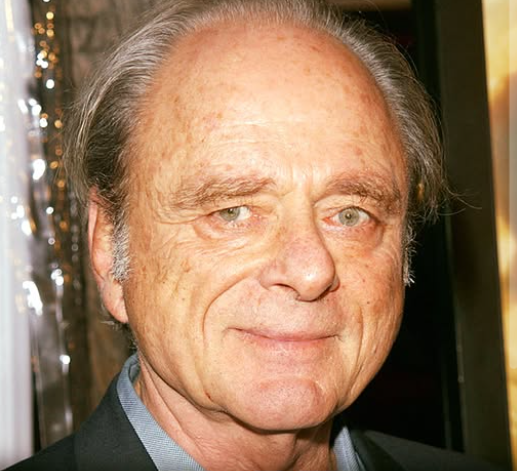
A singular presence in American acting has come to rest. Harris Yulin died at the age of 87 in New York City, closing a life devoted not to fame, but to the disciplined, enduring work of performance. His passing, attributed to cardiac arrest, was met with a quiet wave of respect across film, television, theater, and the classrooms where he shaped future artists.

Yulin’s career spanned decades, not as a pursuit of stardom, but as a sustained commitment to craft. He was the kind of actor whose authority did not come from volume or spectacle, but from precision. Whether on screen or stage, he brought gravity to every role, inhabiting characters fully and without concession. Audiences recognized him not because he sought attention, but because his work demanded it.

His film and television credits traced the arc of modern American storytelling: Ghostbusters II, Scarface, Training Day, Frasier, and Ozark. In each, he anchored scenes with a steadiness that elevated those around him. He was rarely the loudest figure in a frame—but often the most memorable.

Beyond the screen, Yulin’s devotion to the art form found its fullest expression in teaching. At Juilliard School, he passed on not only technique, but ethos: that acting is a responsibility, not a shortcut to recognition. Students and colleagues alike described him as exacting, generous, and deeply serious about the moral weight of the work. Director Michael Hoffman once called him “one of the greatest artists,” a praise rooted not in sentiment, but in observation.

He is survived by his wife, actress Kristen Lowman, and by a community of performers who carry his influence forward—in rehearsal rooms, classrooms, and moments of quiet preparation before stepping into the light.

Harris Yulin’s legacy is not measured by headlines or awards alone, but by continuity. By the way his work still teaches restraint. By the way his students still listen before they speak. By the way his performances remind us that seriousness of purpose can coexist with humanity.

A life like his does not end with applause. It settles into memory—steady, instructive, and enduring.

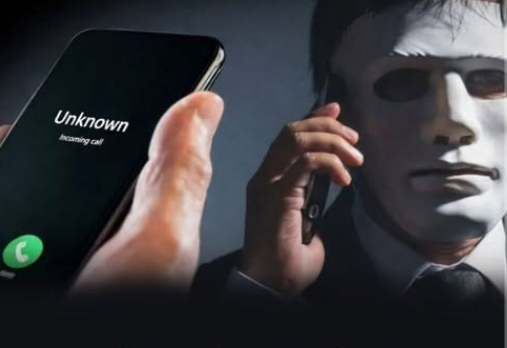
Discover How Scammers Can Steal Your Voice and Exploit You!

In the rapidly evolving landscape of digital security, artificial intelligence has moved far beyond the realms of simple text generation and creative imagery. It has entered a far more personal and unsettling territory: the ability to replicate the human voice with chilling precision. While voice synthesis technology provides groundbreaking benefits in fields such as medical accessibility for the speech-impaired or more natural customer service interfaces, it has simultaneously opened a Pandora’s box of risks involving fraud, manipulation, and sophisticated identity theft.

Unlike the primitive voice scams of the past, which required hours of high-quality recording or direct personal interaction, modern AI voice cloning can now generate a near-perfect digital doppelgänger from as little as three to five seconds of audio.

These audio snippets are often harvested from sources we consider harmless or mundane. A casual phone conversation with a supposed telemarketer, a recorded voicemail greeting, or a ten-second video uploaded to social media can provide more than enough data for a malicious actor. In this new reality, what once seemed like polite, automatic filler words—such as “yes,” “hello,” or “uh-huh”—are no longer just parts of a conversation. In the hands of a criminal, they are the building blocks of a powerful tool used to dismantle your financial security and personal reputation.

To understand why this technology is so dangerous, one must first recognize that your voice is a biometric identifier. Much like a fingerprint or an iris scan, your vocal signature is unique to you. Advanced AI systems do not just record the sound; they analyze the deep architecture of your speech. They map the rhythm of your breath, the specific pitch and intonation of your vowels, the subtle inflections at the end of your sentences, and even the microscopic timing of the pauses between your words. Once the AI builds this digital model, it can be commanded to say anything, in any language, while maintaining the unmistakable “feel” of your presence.

This capability enables a new generation of “high-fidelity” scams. Criminals can use a cloned voice to impersonate a victim to their own family members, creating high-pressure scenarios such as the “grandparent scam” or an emergency medical crisis. They can also target financial institutions or employers, using the cloned voice to authorize fraudulent wire transfers or gain access to secured corporate data. One of the most insidious tactics is the “yes trap,” where a scammer calls and asks a simple question like, “Can you hear me?” The moment the victim responds with a clear “yes,” that audio is captured and spliced into a recording to serve as verbal consent for a contract, a loan, or a subscription service

The sheer believability of these AI-generated voices is what makes the threat so pervasive. Modern systems are capable of reproducing emotional nuances that were once thought to be purely human. An AI can be programmed to sound distressed, fearful, or panicked, adding a layer of psychological pressure that bypasses the victim’s critical thinking. When a parent hears the voice of their child crying on the other end of the line, their biological instinct to help overrides their suspicion of fraud. Scammers exploit this biological loophole, using urgency and manufactured fear to force victims into making rapid, irreversible financial decisions.

Furthermore, these tools are no longer the exclusive domain of high-level hackers or state actors. AI voice cloning software has become inexpensive, user-friendly, and widely accessible on the open internet. This democratization of cybercrime means that geographic distance offers no protection; a scammer in another country can instantly transmit a localized, familiar-sounding voice to a target thousands of miles away. Even the rising tide of nuisance robocalls has taken on a more sinister tone. Many of these calls are no longer trying to sell a product; they are “phishing” for voice samples, waiting for the recipient to stay on the line long enough to provide the few seconds of data required for a clone.

Protecting yourself against voice-based fraud requires a fundamental shift in how we approach phone communication. Vigilance must be the default setting. Experts suggest several practical steps to mitigate the risk of being cloned or exploited:

Avoid Affirmative Responses: When answering a call from an unknown or suspicious number, refrain from using the word “yes” or “I agree.” If a caller asks, “Can you hear me?” respond with a neutral “I am listening” or simply hang up.

The “Two-Factor” Family Rule: Establish a private “safe word” or a specific verification question that only family members would know. If you receive an urgent call from a loved one asking for money, ask for the code word. If they cannot provide it, it is a high probability that the voice is a clone.

Silence the Scammers: Use call-blocking apps and settings on your smartphone to automatically filter out unverified callers. The less you interact with unknown numbers, the less data you provide for potential cloning.
Update Voicemail Greetings: Avoid using your own voice for your voicemail greeting. Use the generic system-generated greeting provided by your carrier. This prevents scammers from harvesting a clean sample of your voice without even having to speak to you.

Secure Biometric Access: If your bank or any other service uses “voice print” as a password, consider disabling this feature in favor of traditional two-factor authentication (2FA) via an app or physical security key.
Awareness is the first and most vital line of defense. By understanding that your voice is now a valuable digital asset—a key that can unlock your life—you can change your habits to reflect that value. Education is equally important; take the time to explain these risks to elderly relatives who may be more susceptible to the emotional manipulation of a familiar voice.

While the evolution of artificial intelligence will continue to present new challenges, our ability to remain skeptical and cautious remains our greatest safeguard. We are living in an era where “hearing is no longer believing.” By treating our voices with the same level of security as our social security numbers or banking passwords, we can navigate this new technological landscape without falling victim to those who seek to use our own voices against us. The future of communication may be artificial, but our judgment must remain authentically human.

Popular

A Mother’s Love: Vienna’s Journey with a Birthmark

0
Love compels parents to do extraordinary things for their children’s well-being. Celine Casey, a British mother, took remarkable steps to ensure her daughter Vienna’s...