
Entertainment

The ultimate guide to cloves! Benefits, uses, and common mistakes!

Cloves are far more than a seasonal aromatic or a humble ingredient tucked away in the back of the spice rack. They are the dried, unopened flower buds of the Syzygium aromaticum, an evergreen tree native to the volcanic soils of the Maluku Islands in Indonesia, though they are now cultivated across the tropical landscapes of India, Madagascar, and Tanzania. For centuries, these tiny, nail-shaped buds have served as a cornerstone of global trade, a prized culinary asset, and a potent tool in traditional pharmacopeias. To understand the clove is to appreciate a unique intersection of intense flavor and remarkable biological activity.

The distinct, warming profile of cloves is driven by their high concentration of essential oils, particularly eugenol. This bioactive compound accounts for up to 90% of the oil found within the bud and is responsible for the spice’s characteristic numbing sensation and antiseptic properties. When used in the kitchen, cloves act as a bridge between sweet and savory, providing a foundational “bass note” that grounds more volatile spices like cinnamon or citrus zest. From the complex spice blends of Indian garam masala to the mulled wines and pomanders of Western winters, cloves command a presence that is both comforting and bracing.

However, the true power of cloves lies in their medicinal potential, which modern science is beginning to validate through rigorous study. Perhaps the most celebrated application of cloves is in the realm of oral health. Long before the advent of modern dentistry, clove oil was the primary remedy for dental distress. Eugenol acts as a natural anesthetic and antiseptic; when applied to a troubled tooth or inflamed gums, it works by temporarily deadening the nerve endings and inhibiting the growth of oral pathogens such as Porphyromonas gingivalis. This makes cloves a formidable ally against plaque formation, bad breath, and gingivitis. Even today, many professional-grade dental cements and temporary fillings utilize clove-derived compounds for their soothing and antimicrobial effects.

Beyond the mouth, cloves offer systemic benefits that touch upon metabolic and cardiovascular health. Emerging research suggests that cloves may play a supportive role in regulating blood glucose levels. Compounds found in cloves have been shown to mimic the action of insulin in certain capacities, helping to move excess sugar from the bloodstream into the cells more efficiently. For individuals managing pre-diabetes or looking to avoid post-meal energy crashes, incorporating cloves into a balanced diet can provide a gentle, natural assist in maintaining glycemic stability. Furthermore, the antioxidants in cloves—ranking among the highest of any spice on the ORAC (Oxygen Radical Absorbance Capacity) scale—protect the body’s cells from oxidative stress and chronic inflammation, which are the silent drivers of heart disease and premature aging.

Digestive wellness is another area where cloves shine. In traditional Ayurvedic and Chinese medicine, cloves are classified as a “warming” spice that stokes the digestive fire. They stimulate the secretion of digestive enzymes, which can significantly reduce instances of bloating, flatulence, and dyspepsia. By relaxing the smooth muscle lining of the digestive tract, cloves help move food along more comfortably, making them an excellent addition to heavy, protein-rich meals that might otherwise lead to sluggishness.

When transitioned from internal use to topical application, the benefits of cloves continue to manifest. Clove essential oil is a staple in natural skincare, prized for its ability to address minor irritations and fungal issues. However, the potency of this oil is its greatest risk. Because eugenol is a “hot” oil, it can cause severe chemical burns or sensitization if applied directly to the skin or mucous membranes. The golden rule for clove oil is dilution. When mixed with a gentle carrier oil like jojoba, almond, or fractionated coconut oil, it can be used to soothe muscle aches, treat acne due to its antibacterial properties, or even repel insects. Inhaling the vapor of cloves through a steam bath is also a time-honored method for clearing respiratory passages, as the expectorant properties of the spice help to break up mucus and calm a persistent cough.

Despite these expansive benefits, the potency of cloves necessitates a cautious approach. A common mistake is the belief that because a spice is natural, it can be consumed in unlimited quantities. Cloves are highly concentrated; consuming more than two whole buds a day over a long period can lead to internal irritation. The eugenol that heals in small doses can, in excessive amounts, place a significant burden on the liver. Furthermore, those on blood-thinning medications or scheduled for surgery should exercise extreme care, as cloves can slow blood clotting. Similarly, because of their impact on blood sugar, they should be used mindfully by those already taking glucose-lowering drugs to avoid the risk of hypoglycemia.

To preserve the integrity of this “black gold,” proper storage is non-negotiable. The volatile oils that give cloves their punch are sensitive to light, heat, and oxygen. Whole cloves generally retain their potency for about a year if kept in an airtight glass container in a cool, dark pantry. Ground cloves, having more surface area exposed to the elements, lose their medicinal and culinary vitality much faster—usually within six months. A simple freshness test is to place a whole clove in a cup of water; if it floats vertically or sinks, it is still rich in oils. If it floats horizontally, the oils have dried up, and the spice has lost its efficacy.

The story of the clove is one of balance. It is a spice that demands respect for its strength and appreciation for its versatility. Whether you are using a single bud to elevate a slow-cooked stew, applying a diluted drop of oil to a sore gum, or simply enjoying the fragrance of a clove-studded orange, you are participating in a multi-generational tradition of natural wellness. When used thoughtfully and with an understanding of its chemical makeup, the clove remains one of nature’s most effective remedies—a tiny bud with the power to support the heart, protect the mind, and heal the body. By integrating this ancient spice into a modern lifestyle with intention and moderation, we can unlock a broad spectrum of health potential that has stood the test of time.
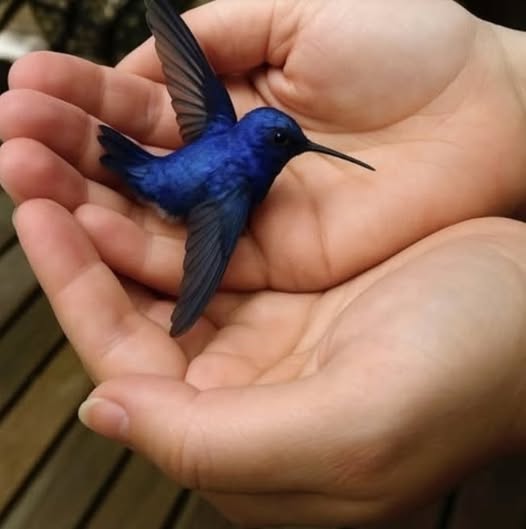

SOTD – Did You Know That If a Hummingbird Comes to Your Home, It Means Something Special?

In the frantic, high-definition blur of the twenty-first century, it is increasingly rare to experience a moment that demands our absolute, undivided presence. We are a society of multitaskers, forever tethered to the digital hum of our pockets, often ignoring the profound narratives unfolding in our own backyards. Yet, there is one small creature capable of piercing through this noise with a single, iridescent flash of its wings: the hummingbird. Across countless cultures, disparate geographies, and many generations, the sudden appearance of a hummingbird at one’s home is rarely dismissed as a mere biological coincidence. Instead, it is greeted as a visitation—a small, feathered messenger carrying a spiritual weight that far exceeds its literal mass.

To understand why a hummingbird’s visit is considered so special, one must first appreciate the staggering biological defiance of the bird itself. Weighing less than a nickel and capable of flapping its wings up to eighty times per second, the hummingbird lives on the razor’s edge of the impossible. Its heart beats over a thousand times per minute, and its metabolism is so demanding that it must consume more than its body weight in nectar every single day just to survive the night. When such a high-velocity miracle chooses to pause at your window or hover inches from your face in a quiet garden, it creates a “stillness inside movement” that is almost hypnotic.

In many Indigenous traditions throughout the Americas, the hummingbird is revered as a sacred being, a harbinger of blessing and renewal. For the Navajo, the hummingbird is a symbol of beauty and integrity; for the Aztecs, they were the reincarnated souls of fallen warriors. When a hummingbird arrives at a home today, many still interpret it as a sign that stagnant energy is being cleared away. It is seen as a gentle nudge from the universe that renewal is not only possible but imminent. Their presence suggests that good news is on the horizon and that the “heaviness” of a difficult season is finally beginning to lift. It is an invitation to open a new door in one’s life, even if that door is simply a mental shift toward optimism.

Beyond the cultural lore of renewal, there is a deeply personal, emotional layer to these visitations. For those navigating the hollow landscape of grief, a hummingbird’s visit often feels like a bridge to the beyond. It is a common phenomenon for people to report a hummingbird appearing shortly after the loss of a loved one, or on a significant anniversary of a passing. While skeptics may point to the seasonal patterns of migration, for the person standing at the window, the timing feels precise and intentional.

In this context, the hummingbird becomes a symbol of the enduring nature of love. Its ability to hover—to stay perfectly suspended in mid-air while the world moves around it—serves as a metaphor for a love that remains fixed even after the physical presence of a person has departed. Many people find a profound sense of reassurance in these moments, viewing the bird’s shimmering colors and sudden proximity as a soft whisper from a lost parent, spouse, or friend. It is a reminder that while the form of the relationship has changed, the connection is still woven into the fabric of the present. The message is simple but powerful: you are not forgotten, you are not alone, and love is a force that transcends the boundary of death.

There is also a significant psychological benefit to the presence of these birds, often referred to as “nature’s therapy.” In the field of ecopsychology, researchers have long noted that observing small, intricate wildlife can trigger a physiological state of “soft fascination.” Unlike the “hard fascination” required to navigate a computer screen or heavy traffic—which eventually leads to mental fatigue—soft fascination allows the mind to rest while the eyes remain engaged. When we watch a hummingbird, we are forced to slow down our own internal rhythm to match its delicate hovering. We become observers of the minute, noticing the way light refracts off its gorget feathers or the way it deftly navigates a flower’s bloom.

This act of observation is a call to return to the present moment. In a world characterized by “future-anxiety” and “past-regret,” the hummingbird exists only in the now. It cannot afford to be anywhere else. Its visit serves as a spiritual nudge to step out of the stress of our to-do lists and return to a state of gratitude. It invites us to savor what is simple and nourishing, reminding us that life—much like the bird itself—is precious, fleeting, and vibrant.

For those who wish to invite this “special meaning” into their lives, the act of creating a sanctuary for hummingbirds is a rewarding endeavor. By planting native, tubular flowers like honeysuckle, bee balm, or sage, homeowners can transform a simple yard into a spiritual crossroads. The effort required to maintain a clean feeder and a pesticide-free environment is a form of stewardship that connects us back to the land. When we take care of the hummingbird, we find that the hummingbird, in its own way, takes care of us.

The significance of the hummingbird lies in its role as a mirror. It reflects our own capacity for resilience, our need for beauty, and our desire for connection. Whether you view its visit through the lens of ancient tradition, personal remembrance, or simple biological appreciation, the effect is the same: the heart is softened. We are reminded that magic doesn’t require grand spectacles; sometimes, it arrives in a creature no larger than a thumb, hovering on wings of impossible speed.

Ultimately, a hummingbird’s visit is a testament to the fact that the world is still capable of surprising us. It is a small spiritual intervention that asks us to orient our hearts toward joy. It tells us that even the smallest life can have the greatest impact, and that sometimes, the most important messages are the ones delivered without a single word. When a hummingbird comes to your home, it isn’t just a bird passing through; it is an invitation to see the world—and your own life—with a renewed sense of wonder and meaning.

A Childhood Drawing That Taught Me the Value of Seeing Things Differently!

In the sterile, fluorescent-lit world of the fourth-grade classroom, art class was intended to be an exercise in compliance rather than a journey of discovery. The assignment was deceptively simple: draw a Christmas tree. On the chalkboard, the teacher had provided the blueprint—three perfect, green triangles stacked atop one another, crowned by a yellow star. It was a geometric shorthand for nature, a tidy symbol that every child in the room was expected to replicate. As the sound of crayons dragging across construction paper filled the room, I watched my classmates dutifully produce rows of identical, symmetrical trees.

I, however, found myself unable to follow the script. I had grown up in a house where art supplies were as ubiquitous as forks and spoons, and where my parents encouraged me to look at the world not as a collection of symbols, but as a tapestry of details. When I closed my eyes and thought of a tree, I didn’t see stacked triangles. I saw the rugged texture of bark, the chaotic spray of needles, and the way a trunk might lean toward the light or buckle under its own weight. I began to draw. My tree featured uneven branches that dipped and swayed; I used fine, erratic lines to suggest the prickly density of the needles. It was a tree that looked like it had survived a winter storm, leaning slightly to the left with a quiet, organic dignity.

I was immensely proud of it. To me, it felt alive. When the teacher approached my desk, I felt a surge of anticipation, expecting her to notice the effort I had put into the texture or perhaps ask why I had chosen that specific tilt. Instead, her face clouded with a frown. She didn’t see a creative interpretation; she saw a failure to follow instructions. She picked up my paper, held it next to the “perfect” triangles of the student sitting beside me, and told me, quite flatly, that my work was “wrong.”

Before I could process the word, she produced a red pen—the universal tool of academic correction. With sharp, clinical strokes, she began to mark over my pencil lines. She reshaped my branches into flat planes, flattened the needles into smooth edges, and forced my leaning trunk into a rigid, vertical line. She was literally redrawing my reality to fit a more predictable, familiar mold. “Look how the other children drew it,” she said, her voice carrying a weight of disappointment. “This is how a tree is supposed to look.”

In that moment, the classroom felt as though it were shrinking. I wasn’t filled with the hot, prickling heat of anger, nor was I moved to tears. I was simply struck by a profound sense of confusion. I looked at the walls, which were already being lined with identical, three-triangle trees, and I wondered why my tree—a tree that actually resembled the ones growing in the woods behind my house—wasn’t allowed to exist in this space. The red ink felt heavier than mere pigment; it felt like a withdrawal of permission. It was a message that my perspective was a defect that needed to be corrected.

However, a strange thing happens when someone tries to force your eyes to see a certain way: it often makes you look even closer. I stared at the red ink bleeding into my gray pencil lines, and a realization began to take root. I realized that the teacher wasn’t just correcting a drawing; she was defending a boundary. She wanted a world that was easy to grade, a world where everyone stayed within the lines.

I didn’t argue, and I didn’t pull the paper away. Instead, I waited for her to finish her “corrections.” When she finally looked up, her red pen poised for the next victim, I asked a question in a voice that was calm and genuinely curious: “But don’t real trees look different from each other?”

The effect was instantaneous. The teacher’s hand paused in mid-air, and the ambient noise of the classroom—the whispering, the shuffling of papers—suddenly vanished. It was a question so simple it was undeniable. She looked at me, then down at my mangled drawing, and for a fleeting second, I saw a flicker of uncertainty in her eyes. She didn’t have an answer. Without saying another word, she moved on to the next desk, leaving my paper behind—a strange, hybrid artifact of my vision and her “correction.”

That afternoon was a pivot point in my life, a lesson that was never officially included in the school’s curriculum. It taught me that standing out is an inherently uncomfortable act, especially in environments that are designed to prioritize sameness. It taught me that institutional rules are often arbitrary and that “normal” is frequently just a consensus of the unimaginative. Most importantly, it taught me the power of the thoughtful question. I learned that you don’t always have to shout to challenge a system; sometimes, simply pointing out a fundamental truth is enough to make the walls of that system tremble.

Decades later, that drawing remains one of the most vivid memories of my childhood. I don’t cherish it because it was a masterpiece of technique, but because it represented my first stand for individuality. It was the moment I realized that creativity doesn’t fit into the neat boxes people try to build for it, and that approval is a poor substitute for truth. The red pen did not erase my perspective; it acted as a catalyst that clarified it. It forced me to decide whether I valued the teacher’s “A” or my own integrity. I chose the tree.

Over the years, I have encountered many “red pens”—bosses who wanted me to conform to corporate “best practices,” peers who urged me to follow social trends, and the internal voice of self-doubt that whispered I should just be like everyone else. Each time, I remembered that fourth-grade art class. I realized that being told you are “wrong” is often the first and most necessary step toward understanding exactly who you are.

The most meaningful response to the pressure of conformity is neither silent submission nor blind rebellion. It is the steady, quiet insistence on seeing things as they are. Life is full of fine lines, uneven branches, and trees that lean to the left. To pretend otherwise is to live a flattened, two-dimensional existence. That drawing taught me that there is more than one right way to see a tree, and more than one right way to live a life. The red ink eventually fades, but the courage to see the world in all its textured, imperfect glory is something that stays with you forever.

Growing up, he was so poor and lived in a tent, He worked as a janitor after school just to help out – today, he is on of the!

The story of Jim Carrey is often framed through the lens of his rubber-faced antics and the manic energy that defined a golden era of 1990s comedy. To the millions who grew up watching Ace Ventura, The Mask, or Dumb & Dumber, Carrey was a living cartoon, a kinetic force of nature who could hijack the collective consciousness of a theater without saying a single word. He was electric, a physical genius who bypassed the crutches of profanity and shock tactics in favor of pure, unadulterated slapstick. Yet, beneath the layers of colorful costumes and the iconic, exaggerated grins lies one of the most poignant narratives of resilience in Hollywood history. Now, at 62, as he steps further away from the glare of the industry, the world is beginning to see the man behind the mask—a philosopher-artist who survived the depths of poverty to prove that fame is not the ultimate destination.

Jim Carrey’s journey began in a landscape far removed from the palm-lined streets of Beverly Hills. His childhood was defined by a brutal, sudden descent into hardship when his father lost his job. The family’s stability vanished, leading them to a life that fluctuated between a yellow Volkswagen van and a tent on a relative’s lawn. At an age when most teenagers are navigating high school social hierarchies, Carrey was dropping out of school to work an eight-hour shift as a janitor in a factory, followed by nighttime stand-up sets at local comedy clubs. He was working to survive, carrying the financial weight of his parents on his adolescent shoulders. He famously recalled sleeping in his car during those early years, staring at the Hollywood sign and manifesting a future where he would one day make the world laugh. It was a dream born not of vanity, but of a desperate need to heal his own circumstances through the joy of others.

The 1990s belonged to Jim Carrey. He achieved a level of success that few actors ever reach, becoming the first performer to command a $20 million salary for a single film. He was unstoppable, delivering a string of hits that transitioned from zany comedy into profound dramatic explorations, such as The Truman Show and Eternal Sunshine of the Spotless Mind. But as his star rose, the internal fractures began to deepen. The meteoric rise took a predictable toll on his personal life. His marriage to Melissa Womer ended, subsequent relationships were scrutinized by a relentless tabloid press, and a persistent, heavy depression began to creep into the edges of his brilliance. It was during this peak of influence that he began to share the uncomfortable truth he had discovered at the top of the mountain: “I wish people could realize their dreams of wealth and fame so they’d see it’s not the answer.”

Carrey’s daughter, Jane, was a constant anchor during these turbulent decades. He eventually became a grandfather to Jackson, a role he has embraced with far more fervor than any blockbuster premiere. He found a sense of purity in family that the transactional nature of Hollywood could never provide. This realization eventually led to his shocking announcement in 2022. During the press tour for Sonic the Hedgehog 2, Carrey told the world he was retiring, or at the very least, taking a very long break. “I have enough. I’ve done enough. I am enough,” he declared. It was a statement of radical self-acceptance that felt like a quiet revolution in an industry built on the pursuit of “more.”

In his retreat from the public eye, Carrey has traded the camera for the canvas. He sold his longtime Los Angeles estate and moved into a more secluded existence, dedicating his hours to painting and sculpting. His artwork is not the casual hobby of a bored celebrity; it is a visceral, emotional outpouring. His studio is filled with enormous canvases saturated in vibrant colors and haunting imagery, reflecting both his deep capacity for joy and his intimate relationship with pain. However, this isolation has sparked concern among those who care for him. Insiders have noted that he rarely makes public appearances and often “locks himself away” for weeks at a time, leading many to worry about the mental health of a man who spent his life giving so much of his spirit to the world.

However, the “golden ink” Jim Carrey once spoke of seems to have appeared in late 2024. Despite his retirement claims, the actor returned to the big screen to reprise his role as Dr. Robotnik in Sonic the Hedgehog 3. For his global fan base, this wasn’t just another movie role; it was a breath of fresh air. It was a signal that the fire of his creativity still burns, even if he chooses to keep it shielded most of the time. Carrey’s return, however brief, reminded the public why he remains an essential cultural figure. After the tragic loss of Robin Williams, the world began to cling more tightly to the comedic legends who dared to be honest about the darkness. Carrey doesn’t just provide escapism; he provides a roadmap for surviving the human condition.

The legacy of Jim Carrey is built on the foundation of honesty. He proved that even a broken person, someone who grew up in a tent and cleaned floors to pay the bills, could make a broken world feel whole again. He showed us that laughter is not the absence of suffering, but a defiant response to it. As he navigates his sixties, whether he is standing in front of a lens or a canvas, he continues to teach us the ultimate lesson of his life’s work: “You can fail at what you don’t love, so you might as well take a chance on what you do.”

We owe Jim Carrey a debt of gratitude that goes beyond the box office. We owe him for the laughter that pulled us through our own dark seasons and for the courage he showed in walking away from a throne to find his own soul. He made the world lighter, and in doing so, he became an enduring landmark of what it means to be truly, vibrantly human. Whether he ever returns to Hollywood full-time or remains in the quiet sanctuary of his art, his influence is etched into the very fabric of modern storytelling. Thank you, Jim, for surviving long enough to tell us the truth and for reminding us that being “enough” is the greatest success of all.

Farewell To A Sharp Tongue!

The passing of a cultural icon often arrives with a thunderous public outcry, but for Prunella Scales, the woman who gave the world the indomitable Sybil Fawlty, the final curtain fell with a quiet, poetic symmetry. The news of her departure at the age of 93 landed like a soft punch to the collective chest of Great Britain and the global comedy community. One of the sharpest tongues in the history of television has gone silent, leaving the world feeling suddenly, markedly too quiet. Her exit was not a scene of cinematic rage or dramatic flair; instead, it was a masterclass in agency. She chose her room, her rules, and a final companion that felt both haunting and beautiful: the glow of the television screen playing the very show that made her immortal.

In a small, sun-drenched London room, surrounded by the familiar scent of home and the steady presence of her sons, Scales slipped away while watching herself on screen. As Fawlty Towers flickered in the half-light, the legendary character of Sybil—with her signature trilling “Basil!” and her steel-trap wit—was present in the room one last time. It was an extraordinary moment of a life coming full circle. The woman on the screen was a titan of British comedy, a woman who could dismantle John Cleese’s towering Basil Fawlty with a single, dry look; the woman in the bed was simply a “darling mother,” finally finding the rest she had earned over a nine-decade journey.

For the better part of the last decade, Scales had been locked in a slow, dignified battle with vascular dementia. It was a journey she shared publicly alongside her devoted husband of over sixty years, Timothy West, in their beloved documentary series Great Canal Journeys. Through that show, audiences witnessed a different kind of bravery. It wasn’t the bravery of a scripted role, but the raw, vulnerable courage of an artist losing her grip on her memories while refusing to lose her grip on her life. Dementia may have thinned the threads of her recollection, making names and dates elusive, yet it proved powerless against her fundamental essence. It never dulled her impeccable comic timing, her inherent warmth, or that flinty, intellectual wit that could slice through the heaviest silence.

To the public, Prunella Scales was a cornerstone of the “Golden Age” of British sitcoms. Her portrayal of Sybil Fawlty was a masterclass in restraint and power. While Basil was a whirlwind of frantic, misplaced energy, Sybil was the immovable object—the true engine that kept the fictional hotel running. She represented a specific kind of British strength: softness wrapped in surgical-grade steel. Outside of the Torquay hotel, her career spanned Shakespearean stages, West End triumphs, and subtle film roles, proving that she was a character actress of immense range. Yet, she never let the gravity of her “legend” status change the humbleness of her private life.

The decision to spend her final moments watching Fawlty Towers was not an act of vanity, but perhaps a final bridge to her own history. In the fog of dementia, the bright, sharp images of her younger self—vibrant, witty, and in total command of her craft—may have served as a familiar comfort, a tether to the brilliant mind she once inhabited. Her sons reported that she met her final scene with the same grace she brought to every role: a quiet bow, perfectly timed, leaving a legacy of laughter and love echoing in her wake. There is a profound dignity in a woman who, after a lifetime of giving her voice to others, chooses to reclaim her final moments on her own terms.

The loss of Scales marks the end of an era for a specific brand of British humor—one rooted in social observation, timing, and the ability to find the ridiculous in the mundane. According to geriatric psychologists, the “reminiscence effect”—the clarity and joy found in viewing one’s past achievements—can be a powerful source of peace for those in the advanced stages of cognitive decline. Scales utilized this to its fullest extent, transforming her final hours into a celebration of her life’s work. She lived a life of extraordinary discipline, having appeared in over 100 different television productions, yet she always insisted that she was just a “working actor.”

Her marriage to Timothy West remained one of the most enduring and respected partnerships in show business. Their relationship was a testament to the idea that love is not just about the mountain peaks of success, but about the long, slow walks through the valleys of old age. Together, they navigated her diagnosis with a transparency that helped de-stigmatize dementia for thousands of families. They showed that a life with memory loss could still be a life filled with adventure, canal boats, and shared laughter.

As the screen finally went dark in that London room, the silence was heavy, but it was not empty. It was filled with the collective gratitude of generations who found joy in her performances. Prunella Scales taught us that a sharp tongue is a gift, but a warm heart is a legacy. She showed us how to age with a defiant kind of elegance and how to exit the stage with one’s head held high.

She was the face of a generation that valued craft over celebrity, and substance over flash. While the character of Sybil Fawlty will live on in digital archives and late-night reruns, the woman who created her leaves behind a more personal blueprint for a life well-lived. It was a life of “darling motherhood,” artistic excellence, and a final, quiet victory over the shadows of the mind. The world is indeed too quiet without her voice, but we are left with the rich, resonant echo of her laughter—a sound that, much like the woman herself, will never truly fade.

Inside Alfonso Ribeiro’s Close-Knit Family and His Role as a Devoted Dad

They may come from different chapters of his life, but Alfonso Ribeiro’s four children are united by one constant force: a father who is consistently present, supportive, and deeply invested in their lives. While many people remember him for his iconic television role in The Fresh Prince of Bel-Air, his most meaningful work happens away from the spotlight. Now in his mid-50s, Ribeiro often shares moments from family life that reflect pride, gratitude, and a strong commitment to parenting within a blended household built on mutual respect.

His oldest child, Sienna Michele, was born during his first marriage and grew up alongside her father’s evolving career. Despite the challenges that can come with divorce, both parents remained actively involved, prioritizing stability and encouragement. As Sienna pursued acting herself, she did so with steady family support, gradually building confidence and independence. Her journey reflects a home environment where ambition is nurtured without pressure and individuality is respected.

Years later, Alfonso remarried and welcomed three more children, expanding his family with renewed joy. Each child brought a different energy into the household—thoughtful leadership, curiosity, athletic enthusiasm, and imaginative creativity. Together, they form a close-knit sibling group where emotional connection matters as much as shared experiences. Parenting, for Alfonso and his wife, has meant being intentional: celebrating small milestones, teaching empathy, and making sure every child feels equally valued.

What stands out most is not fame or public recognition, but consistency. Through career changes, family transitions, and the complexities of blended parenting, Alfonso Ribeiro has remained steady and engaged. His children’s closeness, confidence, and warmth speak to a home grounded in love and reliability. Long after the applause fades and roles change, his lasting legacy is clear—not as a television personality, but as a father who shows up every day with purpose and pride.

I Left My Apartment Door Open for Five Minutes—and Discovered the Kindness of a Stranger

My parents gave me an old one-bedroom apartment. I was weeping with happiness. I did the repairs myself and tried to make it cozy, and my dad helped me. And then finally, when everything was done, I ran out to the stairwell to chat with a neighbor and forgot to close the door. I was away only for five minutes, but when I came back… my heart dropped. The apartment looked different. Not destroyed, not messy—just unfamiliar in a quiet, unsettling way that made my stomach tighten.

At first, I thought I was imagining it. Then I noticed the small details. The crooked picture frame I hadn’t fixed yet was suddenly straight. The throw blanket I’d folded earlier was neatly draped over the arm of the chair. Even the light felt warmer, as if someone had turned on a lamp I rarely used. Nothing was missing. Nothing was broken. But someone had been there. In my space. In the home I had poured weeks of effort and hope into.

I stood frozen until I heard soft footsteps behind me. It was my neighbor—the same one I’d been chatting with moments earlier. Embarrassed, she explained that she’d seen my door wide open and panicked, thinking something was wrong. She’d stepped inside, called out, and when no one answered, she did the only thing she could think of: she made the place look “lived in” so no one passing by would suspect it was empty. She said it reminded her of her first apartment after a hard chapter in life.

I didn’t know whether to laugh or cry. Instead, I thanked her. That moment changed how I felt about the building, the apartment, and even myself. What started as fear turned into a lesson about community, kindness, and how fragile new beginnings can feel. That apartment wasn’t just walls and furniture anymore—it was a place where I learned that sometimes, when you forget to close the door, life surprises you with humanity instead of harm.

Simple DIY Ideas to Repurpose Old Plates

If you have old plates stored away at home, there is no need to throw them out or let them collect dust. These unused dishes can be repurposed in creative ways and transformed into decorative or artistic items that add personality to your space. Reusing household items is an eco-friendly choice that helps reduce waste while encouraging creativity. Old plates often carry unique patterns, colors, or textures that make them ideal for DIY projects. Before getting started, it helps to think about what you would like to create and where it might be displayed. Whether your goal is simple decoration or a more detailed craft project, repurposing plates is a practical and rewarding way to give everyday items a second life.

Plates come in many sizes, shapes, and styles, which makes them suitable for a wide range of ideas. Some projects focus on decoration, while others serve a functional purpose. Even chipped, cracked, or mismatched plates can be reused in creative ways instead of being discarded. With a little imagination, these imperfections can add charm and character to your finished piece. For example, smaller plates or plate fragments with attractive patterns can be used to create hanging decorations or accents. These projects are beginner-friendly and do not require expensive materials, making them accessible for anyone interested in simple DIY crafts.

One popular idea is turning plates or plate pieces into hanging decor. By carefully creating a small hole and adding a hook, wire, or strong string, plates can be displayed on walls, fences, or covered outdoor areas. They can also be layered with other decorative elements to create a unique display. Old plates are also great for seasonal decorations. With a bit of paint, ribbon, or removable embellishments, they can be updated to match different holidays or occasions. Neutral designs work well year-round, while brighter colors can highlight festive themes. These projects allow you to refresh your decor without constantly buying new items.

Another creative option is using old plates to make mosaics. Plates can be broken into smaller pieces and arranged into colorful patterns for tabletops, stepping stones, picture frames, or garden features. This approach allows you to mix colors and designs for a custom look. Plates can also be painted or arranged together on a wall to form an eye-catching display that reflects your personal style. Repurposing old plates combines creativity, sustainability, and self-expression in a meaningful way. With simple tools and thoughtful design, everyday dishes can become lasting decorative pieces for your home.

When a Sudden Office Policy Change Led to an Important Career Decision

When my boss called me late one afternoon, I expected a routine check-in. Instead, he informed me that starting immediately, I was required to work full-time from the office. This came as a shock, because I had been hired as a remote employee from the very beginning. I calmly explained that I didn’t own a car and that the office was nearly two hours away from my home. His response was short and dismissive: my commute, he said, was not his concern. There was no room for discussion, no acknowledgment of the original agreement. Rather than argue or escalate the situation, I thanked him for the call, hung up, and spent the rest of the evening quietly thinking through my next steps.

The following morning, I did exactly what was asked. I woke up early, planned my route using public transportation, and made my way to the office. The journey was long, exhausting, and involved multiple transfers, but I arrived on time and ready to work. I greeted my coworkers politely and settled into a desk, saying little about the commute. Throughout the day, I noticed a sense of surprise from management, as if they hadn’t expected me to actually show up under those conditions. I focused on my tasks, contributed during meetings, and maintained a professional attitude, even though the situation felt unfair and unsustainable.

What my boss didn’t know was that I had been quietly preparing for this moment for months. While working remotely, I had been improving my skills, updating my portfolio, and networking in my spare time. I had learned the importance of having options, especially when workplace expectations can change without warning. That evening, after another long trip home, I reviewed an offer I had recently received from a company that truly valued flexible work and clear communication. The contrast between the two environments was impossible to ignore. One demanded compliance without consideration, while the other emphasized trust and balance.

Within a short time, I made my decision. I submitted my resignation respectfully, thanking my employer for the opportunity but explaining that the new requirements no longer aligned with my circumstances. Walking away felt empowering rather than risky. The experience taught me that professionalism doesn’t always mean accepting unreasonable conditions; sometimes it means knowing when to move on. The long commute, the unexpected policy change, and the quiet preparation all led to a better outcome. In the end, showing up wasn’t about proving a point to my boss—it was about proving to myself that I deserved a workplace built on fairness, clarity, and mutual respect.

Halle Berry and Gabriel Aubry’s Daughter Appears Alongside Her Mother in New Photos

From the moment she was born into a well-known family, Nahla Ariela Aubry’s life naturally drew public interest. As the daughter of Academy Award–winning actress Halle Berry and former model Gabriel Aubry, her early years were quietly documented through occasional public appearances alongside her parents. What once showed a curly-haired toddler nestled safely in her parents’ arms has, over time, become a visual record of steady growth and change. Now 16, Nahla’s transformation into a tall, poised teenager reflects not only the passage of time but also the care taken by her parents to balance public life with private childhood moments.

During her early childhood, Nahla was often photographed during simple, everyday outings—walks through city streets, shopping trips, or time spent holding a parent’s hand. These moments revealed a close bond with both her mother and father, highlighting warmth and attentiveness rather than celebrity spectacle. Like many parents, Berry has shared that raising a young child came with both joy and fear, recalling how easily a toddler’s curiosity can turn a routine outing into a stressful moment. Despite occasional challenges, Nahla’s early years were marked by affection, stability, and the freedom to grow at her own pace while remaining largely shielded from unnecessary attention.

As Nahla entered her pre-teen years, her height and evolving sense of style became more noticeable, often sparking online commentary. While some observers expressed surprise at how quickly she had grown, others focused on her clothing choices, reflecting the broader reality that children of public figures are frequently scrutinized more closely than their peers. Throughout this period, Berry consistently emphasized the importance of protecting her children’s individuality and privacy, explaining in interviews that she wanted them to define themselves outside of public expectations. These years marked a quiet transition from childhood into adolescence, shaped by family support rather than public opinion.

Today, at sixteen, Nahla stands confidently at a new stage of life. Recent moments shared by Berry, including reflections during her appearance at CinemaCon while promoting her film Never Let Go, underline how deeply her children remain her top priority. Berry has spoken proudly of Nahla’s maturity, describing her children as her greatest treasures. Nahla’s journey—from infancy to young adulthood—tells a story not of fame, but of growth, family connection, and the quiet strength of being raised with love and intention, even under the public eye.

Popular

A Mother’s Love: Vienna’s Journey with a Birthmark

0
Love compels parents to do extraordinary things for their children’s well-being. Celine Casey, a British mother, took remarkable steps to ensure her daughter Vienna’s...