Entertainment

The Story Behind Seal’s Facial Scars and How He Might Look Without Them

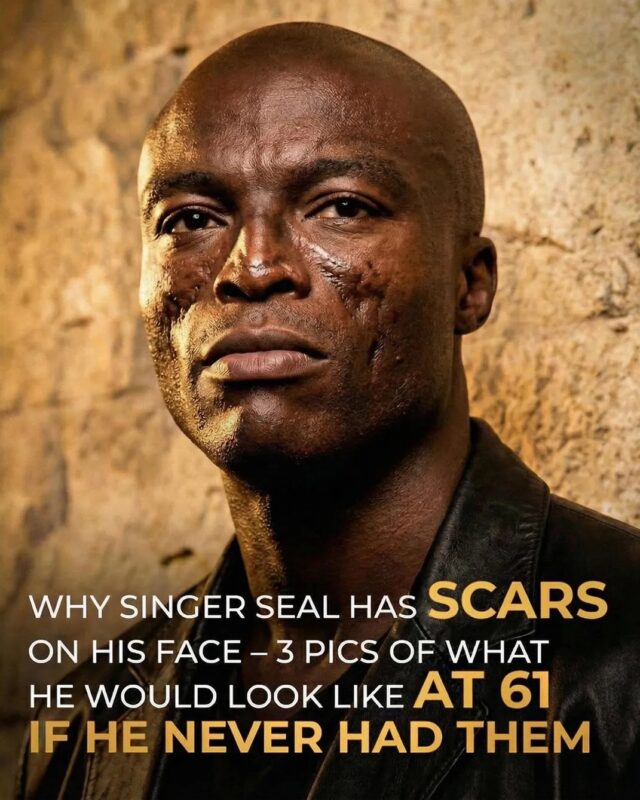
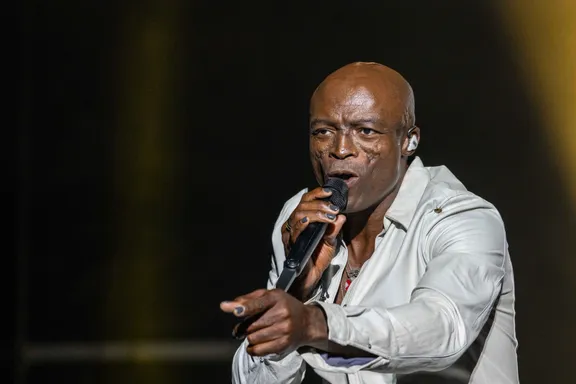
Seal is widely recognized for his powerful voice, emotional depth, and the distinctive facial scars that have become part of his public image. Few fans realize that these marks are linked to a rare medical condition that began when he was in his early twenties. What started as a small spot on his face led to years of uncertainty, frequent doctor visits, and frustration, as no one could immediately provide a clear diagnosis. During this time, Seal faced not only physical challenges but also emotional strain, learning early in life how to navigate adversity with resilience and determination.

Born in London in 1963, Seal’s early years were shaped by hardship. Of Nigerian heritage, he spent time in foster care before being raised in a difficult household. Despite these obstacles, music became his refuge and sense of direction. His breakthrough came through a collaboration with Adamski on the song Killer, which quickly climbed to the top of the U.K. charts. That success led to a recording deal with a label run by renowned producer Trevor Horn, a partnership that would shape the foundation of his career.

In 1991, Seal released his self-titled debut album, featuring the hit single Crazy. The song’s thoughtful lyrics and distinctive sound resonated with listeners worldwide, earning a place on the Billboard pop charts and establishing Seal as a unique voice in modern music. His second album followed in 1994, further confirming his versatility and artistic depth. From the beginning, his facial scars were visible, making him instantly recognizable and helping him stand out in an industry often focused on conventional appearances.

Over time, Seal learned to embrace his scars as part of his identity rather than something to hide. Today, modern technology can imagine what he might look like without them, but those visual interpretations only highlight a deeper truth. Seal’s lasting impact comes not from appearance, but from authenticity, perseverance, and the emotional honesty he brings to his music—qualities that continue to inspire audiences around the world.

A Bright and Flavorful Salad You’ll Want to Make Again

There are salads that feel like an obligation—and then there are salads that completely change how you think about them. This is firmly the second kind. Colorful, fresh, and full of contrast, this salad brings together ingredients that don’t just coexist but truly complement one another. Crisp cucumbers, juicy cherry tomatoes, and vibrant greens create a refreshing base, while creamy feta adds richness and depth. Every bite delivers balance: crunchy and soft, light and satisfying, simple yet memorable. It’s the kind of dish that proves healthy food can be exciting, comforting, and full of personality.

What makes this salad especially appealing is its versatility. It works beautifully as a side dish at gatherings, adding brightness to grilled foods, but it’s just as satisfying on its own for lunch or a light dinner. You can easily adapt it to suit your preferences or what you have on hand. Add grilled chicken, chickpeas, or beans for protein, swap feta for goat cheese for extra creaminess, or toss in nuts and dried fruit to add crunch and subtle sweetness. A simple homemade vinaigrette brings everything together without overpowering the natural flavors.

Beyond taste, this salad offers real nutritional benefits. Leafy greens are rich in vitamins that support immunity, bone health, and overall wellness. Cucumbers add hydration and fiber, while tomatoes contribute antioxidants that support heart health. Nuts provide healthy fats that promote brain function, and cheese adds protein and calcium. When eaten regularly, meals like this can support digestion, help maintain steady energy levels, and encourage healthier eating habits—especially when they replace heavier, highly processed options.

The key to enjoying this salad again and again is balance. Measuring portions of cheese and nuts helps keep it light, and choosing simple dressings made with olive oil and citrus avoids unnecessary additives. For the best texture and flavor, assemble it fresh and store dressing separately if preparing ahead. This isn’t a salad you eat because you “should.” It’s one you genuinely look forward to—proof that nutritious food can be both nourishing and crave-worthy.

A Fitting Room Conversation That Changed the Way She Saw Herself

I’m standing near a fitting room. A woman walks out, goes up to the mirror, and kind of asks the air, “I don’t even know if I should buy it or not?” Without thinking too much, I answer honestly. I point out that the blouse looks a bit tight, that the fabric pulls across her back and the sleeves sit awkwardly short. My tone isn’t cruel, just practical, the way you’d speak to a friend who asked for real feedback. She blushes immediately, her eyes dropping for a second before she looks back at her reflection, clearly caught off guard.

After a quiet pause, she exhales and says softly, “Actually, I’m trying to lose weight. I thought buying this size would motivate me.” There’s no drama in her voice—just vulnerability. In that moment, the mirror stops being about fabric and stitching and becomes something heavier. I realize she wasn’t asking about the blouse at all. She was asking for reassurance, for permission to feel okay in her body right now, not in some imagined future version of herself.

I choose my next words carefully. I tell her that clothes are meant to fit us, not challenge us. That comfort isn’t a reward we earn later—it’s something we deserve today. I suggest she try the next size up, not as giving up, but as being kind to herself. She nods, disappears back into the fitting room, and a few minutes later steps out again. This time, the blouse sits smoothly, her shoulders relax, and her posture changes before she even smiles.

She looks at herself, then at me, and says, “I feel better.” Not thinner. Not fixed. Just better. As she heads to the register, I’m reminded how easily we turn everyday moments into quiet battles with ourselves. Sometimes, all it takes is one honest, compassionate exchange to remind someone—and ourselves—that self-worth isn’t measured by a label, but by how gently we choose to live in our own skin.

We Opened a Wall in Our 100-Year-Old Home and Discovered an Unexpected Piece of the Past

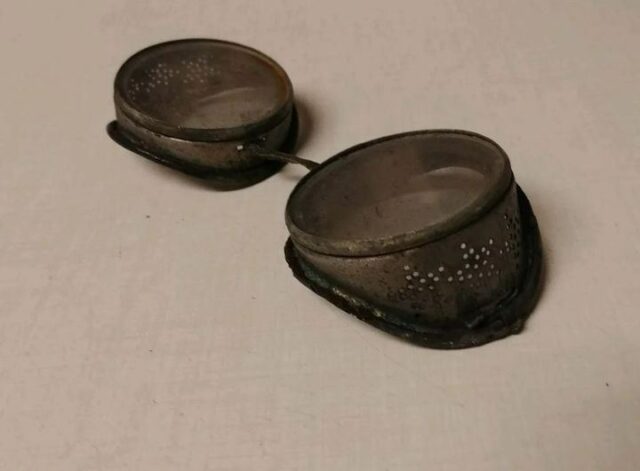
When we decided to renovate our 100-year-old home, we anticipated the usual surprises that come with old houses—layers of dust, worn wood, and perhaps a few forgotten nails lodged where time left them. What we did not expect was to uncover something quietly intriguing hidden behind the walls. As one section was opened, two small metal objects appeared, tucked neatly between the studs. Darkened with age and connected by a thin strip of metal, they looked deliberately placed rather than accidentally lost. There were no markings or labels to explain their purpose, yet the wear suggested they had once been handled often. Holding them felt oddly personal, as if the past had briefly reached forward through time.

Discoveries like this have a way of transforming a renovation project into something more reflective. A house that has stood for a century is more than wood and plaster; it is a container of lived experiences. Every repair, upgrade, and adjustment was once made by someone trying to improve daily life, often with tools or methods that are unfamiliar today. These objects may have served a simple function, something entirely ordinary in their time, yet that context has faded. What remains is mystery, and with it, a renewed appreciation for how quickly everyday knowledge can disappear as generations move on.

Old homes quietly preserve stories in ways modern buildings cannot. Hidden spaces—walls, floors, attics—often hold traces of practical problem-solving, craftsmanship, and routines shaped by the era they belonged to. Finding something unexpected reminds us that the people who lived here were not so different from us. They fixed things, adapted to challenges, and left behind evidence of their lives without intending to. These small artifacts are reminders that history is not only made of major events but also of ordinary moments, repeated day after day, until they quietly slip into obscurity.

In the end, the true value of such a discovery is not measured in rarity or worth, but in perspective. It encourages us to slow down and consider the passage of time, to respect the hands that built and maintained the spaces we now inhabit. Renovations often focus on renewal and progress, but moments like this gently pull our attention backward, offering a sense of continuity rather than disruption. A hidden object, rediscovered decades later, becomes a bridge between past and present—proof that even the most unassuming homes can hold meaningful connections waiting to be uncovered.

Setting Boundaries for the Sake of Our Home

My MIL does nothing but Zumba and gossip with friends. I asked her to babysit our 2 y.o. while my husband and I work full-time. She declared, “That’s not a grandma’s job!” My husband stayed silent. I banned her from seeing my baby and hired a nanny. Days later, the nanny called in tears. She was trembling. I rushed home and almost fainted when I found,

the living room filled with an unbearable tension that had nothing to do with danger, but everything to do with betrayal. My mother-in-law was sitting on the couch as if she owned the place, calmly lecturing the nanny about how she was “raising the child wrong.” The nanny, young and kind, had been cornered, criticized, and made to feel incompetent in her own workplace. My baby was safe in the crib, but the atmosphere was toxic and heavy.

I asked my MIL to leave immediately. She protested, insisting it was her “right” to be involved, but I stood firm. That evening, I had a long, painful conversation with my husband. For the first time, I explained that silence can hurt just as much as harsh words. To his credit, he listened—really listened—and admitted that avoiding conflict had allowed things to spiral out of control.

Over time, boundaries were rebuilt slowly and carefully. The nanny stayed, trust was restored, and our home became peaceful again. My mother-in-law was eventually allowed back into our lives, but only under clear conditions rooted in respect. What I learned most was this: protecting your child sometimes means making uncomfortable choices, and protecting your family means finding the courage to speak when silence feels easier.

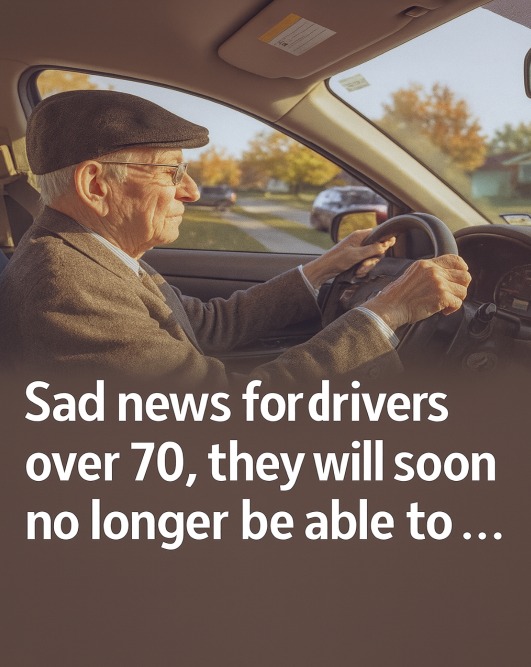
Sad news for drivers over 70, they will soon no longer be able to!

The intersection of individual liberty and public safety is rarely as fraught with emotion as it is in the debate over the licensing of senior drivers. For many, the automobile is more than just a mode of transportation; it is the ultimate symbol of autonomy, a rolling testament to one’s ability to participate in the world without reliance on others. However, as 2026 begins, a tragic event in the coastal city of La Rochelle, France, has reignited a fierce global conversation regarding the physiological realities of aging and the point at which that cherished independence becomes a profound liability to the community.

The incident began as a quintessential scene of childhood joy. A group of children, vibrant and full of the boundless energy that defines youth, were enjoying a bicycle ride through the picturesque streets of La Rochelle. It was a moment of absolute innocence—until the world fractured in a matter of seconds. An 83-year-old driver, reportedly disoriented and traveling the wrong way down a designated street, struck the group with devastating force. The aftermath was a visceral tableau of chaos: mangled bicycles, the cries of injured children, and a community left in a state of shock. It was an unthinkable tragedy that instantly transformed a quiet afternoon into a catalyst for national policy reform.

This tragedy has forced a question into the public consciousness that many have long sought to avoid: At what point does the natural process of aging render a person unfit to sit behind the wheel? The debate is notoriously difficult because it pits cold, hard statistics against the lived experiences of real people—our parents, our grandparents, and our neighbors. These are individuals who may have logged fifty or sixty years of impeccable driving records, and the suggestion that they should relinquish their keys can feel like an assault on their dignity and a forced march into isolation.

Yet, the biological evidence is increasingly difficult to ignore. Aging brings about a slow but inevitable erosion of the faculties required for safe driving. Reaction times lengthen, peripheral vision narrows, and the ability to process complex, multi-sensory information in real-time begins to fray. According to data from France’s Road Safety Authority, the statistical reality is jarring: drivers over the age of 75 are now involved in as many accidents per mile driven as those in the notoriously high-risk 18-to-24 age bracket. The difference is that while young drivers often suffer from a lack of judgment or an excess of bravado, senior drivers are often betrayed by a body and mind that can no longer keep pace with the demands of modern traffic.

The “sad news” circulating among drivers over 70 is the looming prospect of mandatory cognitive and physical testing—or, in more extreme proposals, a hard cap on licensing ages. Across Europe and parts of North America, legislators are grappling with how to implement “fitness to drive” assessments that are both rigorous enough to protect the public and compassionate enough to respect the elderly. The challenge lies in the fact that aging is not a uniform experience. One 80-year-old may possess the reflexes and mental acuity of a person twenty years younger, while another may be struggling with the early, often invisible stages of cognitive decline.

For the families of the victims in La Rochelle, the nuances of the debate offer little comfort. Their reality is defined by the trauma of a preventable accident caused by a driver who, by all accounts, should likely not have been on the road. This event has shifted the momentum toward a more “preventative” posture in road safety. Proponents of stricter regulations argue that we already accept age-based restrictions for the young—who must undergo rigorous training and graduated licensing—so it is only logical to apply a similar logic to the other end of the age spectrum as physical capabilities inevitably wane.

However, the sociological impact of removing a license cannot be overstated. In many regions, particularly rural areas, the loss of a driver’s license is effectively a sentence of house arrest. Without the ability to drive, seniors lose access to grocery stores, medical appointments, and social circles, which can lead to a rapid decline in mental health and a sense of profound loneliness. Critics of mandatory age-based bans argue that the focus should not be on “taking away the keys,” but on “transitioning to safety.” This includes better public infrastructure, subsidized transport for seniors, and the development of autonomous vehicle technology designed specifically to assist the elderly.

As the investigation into the La Rochelle accident continues, the legal and social repercussions are already being felt. There is a growing movement calling for “medical transparency,” where physicians would be required to report significant cognitive or physical impairments to licensing authorities—a move that would move the burden of the “driving talk” from family members to medical professionals. While this protects the domestic harmony of families, it raises significant concerns regarding patient-doctor confidentiality and the potential for seniors to avoid medical care for fear of losing their mobility.

The year 2026 may be remembered as the year the “managed illusion” of senior road safety was finally addressed with legislative action. The narrative is no longer just about a tragic accident in a French port city; it is about a global society that must learn to balance the rights of the individual with the collective right to walk down a street without being struck by a driver who is no longer capable of discerning the right way from the wrong.

Ultimately, the story of the children in La Rochelle and the 83-year-old driver is a tragedy of two generations. It is a reminder that while age may indeed be a number in many aspects of life, when it comes to the physics of a two-ton vehicle moving through a crowded space, numbers—and the biological realities behind them—matter immensely. We owe it to our children to keep the streets safe, and we owe it to our elders to ensure that when the time comes to step away from the wheel, they are met with support and alternative paths, rather than just a closed door. The road ahead requires a blend of technological innovation, legislative courage, and a heavy dose of communal empathy to ensure that the “freedom of the road” does not come at the cost of innocent lives.

My Brother Wont Sleep in His Bed, He Says the Cow Knows the Truth!

In the quiet, sprawling landscape of our family farm, silence has become a heavy, living thing. My younger brother, Leo, used to be the kind of child who filled every room with noise. He was wild, restless, and perpetually in motion, a blur of energy that neither our parents nor the boundaries of the farm could quite contain. He was the kid who climbed the highest branches of the oak trees and shouted his triumphs to the wind. But that version of Leo vanished last autumn, replaced by a ghost of a boy who refuses to speak above a low, trembling whisper.

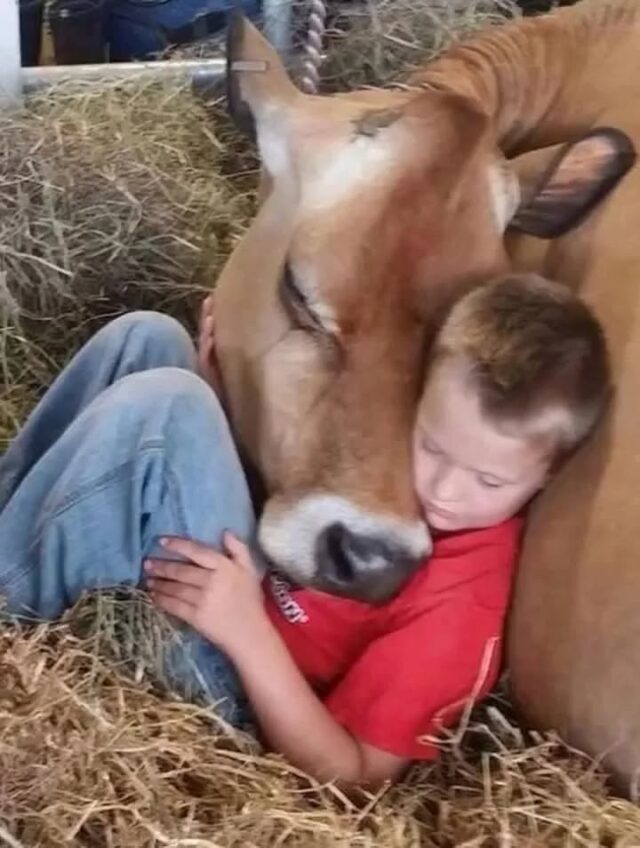
The change was immediate and absolute following our return from the back acres of the farm late last October. Since that day, Leo has abandoned the comfort of our shared bedroom, refusing to lay his head on a mattress or under a quilt. Instead, he has taken up a permanent residence in the hayloft of the old barn. He spends his nights huddled against Daisy, our gentlest Jersey cow. There is something profoundly unsettling about the sight of him wrapped around her large, warm frame, seeking a solace that the rest of us apparently cannot provide. My mother, ever the optimist, thinks it is a sweet, eccentric bond between a boy and his animal. My father dismisses it with a shrug, calling it a strange phase that will pass with the first frost of winter. But I have always sensed that Leo’s exile to the barn is not about affection—it is about sanctuary.

A few nights ago, driven by a gnawing curiosity and a growing sense of dread, I crept into the barn after the house had gone dark. The air was thick with the scent of dry alfalfa and the rhythmic, heavy breathing of the livestock. I stayed in the shadows, watching as Leo leaned his forehead against Daisy’s velvet-soft neck. He didn’t see me, and in the stillness, I heard him whisper. It was a voice filled with a desperate, crushing weight.

“I didn’t tell them it was me,” he murmured into the cow’s ear. “I know you saw, Daisy. I know you were there, but you didn’t tell either. Thank you for keeping it.”

Daisy didn’t move. She simply blinked her large, liquid eyes—slow and deliberate—as if she were a silent confessor absorbing the sins of a child. I felt a chill that had nothing to do with the night air. Leo wasn’t just sleeping in the barn; he was hiding in plain sight, protected by a witness that lacked the power of speech.

The following afternoon, I finally confronted him behind the grain silo. I expected him to run or to retreat into his usual stony silence, but instead, he crumbled. He didn’t cry out of fear or the dread of being caught; he cried out of pure, exhausted relief. It was as if the secret had become too heavy for his small frame to carry alone. He grabbed my hand with a strength that startled me, his knuckles white and his eyes wide with a frantic urgency.

“Don’t open the red toolbox,” he begged, his voice cracking. “And whatever you do, don’t show them the photo. Please. Promise me.”

I promised him, mostly to get him to let go of my arm, but the words “red toolbox” echoed in my mind for the rest of the day. My father has dozens of toolboxes, most of them scattered throughout the workshop and the tractor shed. I spent the morning searching, moving through the rust and the grease of the farm’s mechanical history. I finally found it tucked away in the crawlspace beneath the floorboards of the tool shed, hidden under a pile of moth-eaten burlap sacks. It was an old, battered metal chest, the red paint flaking off in jagged scales.

When I finally pried the lid open this morning, the first thing I saw was a Polaroid photograph, its edges yellowed and curled. I picked it up with trembling fingers. It was a shot taken in the back woods, near the old stone well that had been boarded up years ago for safety. In the frame, the light was filtered and sickly, catching the silhouette of someone standing at the edge of the pit. Even through the graininess of the film, I recognized the jacket. It was Leo’s favorite blue windbreaker. But it wasn’t the figure that made my stomach turn; it was what lay on the ground at the figure’s feet.

Below the photograph, tucked beneath a heavy set of iron wrenches, was a collection of objects that made no sense: a single silver cufflink, a set of keys to a car we don’t own, and a small, leather-bound diary that didn’t belong to anyone in our family.

The realization hit me with the force of a physical blow. The “truth” that Daisy the cow knew wasn’t a childhood accident or a broken window. It was something far more permanent. I remembered the news reports from last fall—the hiker who had gone missing in the state park bordering our land, the searches that had come up empty, and the way the police had eventually moved on, citing the vastness of the wilderness.

Leo hadn’t been wild or loud since that day because the noise in his head had become deafening. He had seen something, or perhaps participated in something, that had stolen his voice and replaced it with a permanent, shivering whisper. He slept with the cow because Daisy was the only creature on this farm that didn’t demand an explanation. She offered the warmth of a living body without the interrogation of a human soul.

I sat on the dirt floor of the shed for a long time, the red toolbox open before me, the weight of my brother’s secret now resting squarely on my own shoulders. I looked toward the barn, where I knew Leo was likely sitting in the hay, waiting for the sun to go down so he could retreat back to his silent guardian. I understood now why he didn’t want the photo shown. The photo didn’t just show a moment in time; it showed the exact second my brother’s childhood ended.

As I tucked the Polaroid back into the chest and slid the red toolbox back into the darkness of the crawlspace, I realized I was now part of the silence. I became a second Daisy—a witness who would not speak, a keeper of the truth that lay buried in the woods and hidden under the floorboards. I walked back toward the house, my footsteps heavy, knowing that for the rest of our lives, the two of us would be whispers in a world that used to be loud.

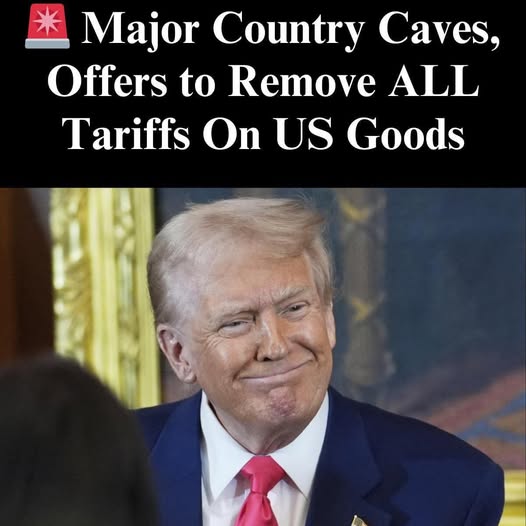
First Major Country Blinks, Offers To Eliminate All Tariffs On US Goods!

In a transformative development for global trade, the geopolitical landscape shifted significantly on Friday morning as a major manufacturing powerhouse signaled a willingness to capitulate to the burgeoning American tariff regime. President Donald Trump announced that Vietnam’s top leader, To Lam, has expressed a groundbreaking readiness to eliminate all tariffs on United States goods. This overture, characterized by the President as the result of a “very productive” phone conversation, suggests that Vietnam is moving to preemptively neutralize the economic impact of aggressive new duties imposed on its exports to the American market. For economists and policymakers, the “blink” from Hanoi represents a pivotal moment in the administration’s strategy of leverage-based diplomacy, potentially setting a precedent for other nations navigating the new era of American protectionism.

The strategic pivot came just days after the United States administration shocked the Southeast Asian trade corridor by imposing a steep 46 percent tariff on Vietnamese imports. These duties had initially sent a chill through the boardrooms of multinational corporations that have increasingly relied on Vietnam as a secondary manufacturing hub to bypass trade tensions with China. However, the tone of the communication between Trump and To Lam was surprisingly collaborative. Through a social media announcement, the President thanked the Vietnamese leader on behalf of the American people and expressed a desire for a high-level summit in the near future to formalize a zero-tariff agreement. This rapid transition from escalation to negotiation underscores the administration’s belief that punitive tariffs are not an end-state, but a catalyst for securing lopsidedly favorable trade concessions.

Financial markets, which usually recoil at the mention of trade volatility, reacted with a sharp surge of optimism. The prospect of a zero-tariff environment between the U.S. and one of its fastest-growing trade partners acted as a powerful stimulant for retail and manufacturing stocks. Multinational giants like Nike, which maintains a vast manufacturing footprint in Vietnam, saw their shares climb by more than four percent in the wake of the announcement. Investors, who had been bracing for a period of margin compression and supply chain disruption, suddenly found themselves eyeing a potential windfall: the removal of Vietnamese barriers to American agricultural and technological exports, paired with a path toward stabilizing the flow of consumer goods back to the United States.

While the trade breakthrough dominated the headlines, the broader economic context was bolstered by a blockbuster employment report from the Labor Department. New data revealed that the American labor market remains remarkably resilient, defying the gravity of global uncertainty. In March, U.S. employers added a staggering 228,000 jobs, a figure that blew past the 135,000 predicted by Wall Street economists. While the unemployment rate ticked up slightly to 4.2 percent—largely due to an increase in the number of people entering the workforce—the underlying momentum of the economy appeared robust. Despite downward revisions to January and February figures, the March surge provided a clear signal that the domestic engine of growth is still firing on all cylinders.

The job gains were notably broad-based, suggesting a holistic expansion rather than a localized spike. The private sector was the primary driver of this growth, contributing 209,000 new positions. Healthcare continued its decade-long expansion, serving as a pillar of stability for the workforce, while the retail, transportation, and social assistance sectors also posted significant gains. Interestingly, while federal employment saw a slight decline for the second consecutive month, the manufacturing sector remained in a state of flux, adding fewer jobs than some analysts had hoped. This mixed performance in manufacturing further emphasizes why the trade deal with Vietnam is so critical; it provides a potential relief valve for American manufacturers who require both stable supply chains and expanded export markets to maintain their footing.

However, the intersection of booming labor data and aggressive trade policy has created a complex puzzle for the Federal Reserve. Economists were quick to point out that while the jobs report reflects a period of strength, it does not yet account for the inflationary pressures that often follow the imposition of massive tariffs. Nancy Vanden Houten, an economist at Oxford Finance, warned that the current trade environment could potentially push inflation back toward the four percent mark this year. This leaves the Fed in a delicate position: the strength of the labor market gives them the freedom to keep interest rates steady, but the looming shadow of “tariff-flation” may eventually force their hand if consumer prices begin to climb in response to the 46 percent duties on non-compliant nations.

Within the halls of the administration, the March jobs report and the Vietnamese trade overture were hailed as a dual triumph of “America First” economics. Labor Secretary Lori Chavez-Deremer was vocal in her praise, suggesting that the data serves as a definitive validation of the administration’s policy mix of deregulation and assertive trade negotiation. From the perspective of the White House, the resilience of the labor market provides the necessary “economic armor” to weather any short-term volatility caused by trade disputes, essentially daring other nations to test American resolve.

As the dust settles on this week’s developments, the narrative of the 2026 economy is becoming increasingly clear. It is a world where the U.S. presidency utilizes the massive American consumer market as both a shield and a sword. Vietnam’s offer to move to a zero-tariff model suggests that the strategy of “maximum pressure” is yielding tangible diplomatic results far faster than many skeptics anticipated. If a formal agreement is reached, it could signal a new era of bilateral trade where countries are forced to choose between total market access or total exclusion.

For the American consumer, the stakes remain high. The success of the “Vietnam Blink” could lead to lower prices for shoes, electronics, and apparel, provided the 46 percent tariffs are indeed removed in exchange for the zero-tariff deal. For the American worker, the strong jobs report offers a sense of security even as the global order is reshuffled. The coming months will determine if this “very productive” phone call was merely a temporary reprieve or the beginning of a fundamental realignment in how the United States interacts with the global economy. One thing is certain: the margin for error in Washington is thin, and the world is watching to see who blinks next.

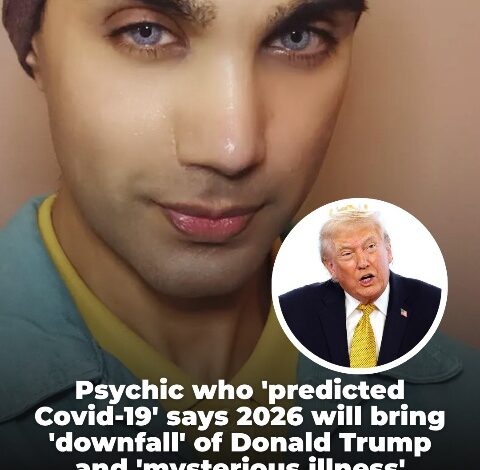
Psychic who predicted Covid-19 says 2026 will see downfall of Donald Trump!

The intersection of geopolitical volatility and the esoteric world of prophecy has always fascinated the public, but rarely has a warning been as specific or as ominous as the one recently issued for the year 2026. Nicolas Aujula, a 39-year-old London-based psychic who rose to international prominence after allegedly foreseeing the COVID-19 pandemic and the political ascent of Donald Trump, has now unveiled a series of visions that suggest the world is approaching a definitive breaking point. His latest prophecies paint a picture of a year defined by environmental upheaval, shifting royal dynamics, and a dramatic, highly public fall from grace for one of the most polarizing figures in modern history.

For Aujula, these insights are not the result of calculated guesswork or political analysis; rather, he describes them as intrusive, uninvited mental projections. A past-life regression therapist by trade, Aujula claims that since the age of 17, his mind has been a conduit for flashes of future history—images that crash into his consciousness without warning.1 In his recent sessions, he describes a recurring and vivid sequence involving the steps of a majestic aircraft. In this vision, he recognizes the unmistakable silhouette of Donald Trump. However, the scene is devoid of the usual fanfare. Instead of the adoring crowds and the triumphant music that have defined his rallies, Trump is depicted in a moment of physical and symbolic vulnerability. Aujula describes a “humiliating accident” on those very steps, an event that serves as a harbinger for a broader “downfall” characterized by scandal and a sudden loss of political momentum. To the psychic’s eye, this isn’t just a stumble; it is the visual representation of a legacy fracturing under the weight of accumulated pressures.

The 2026 forecast extends far beyond the borders of American politics, suggesting a period of intense geological and atmospheric instability. Aujula’s visions are punctuated by the sounds of the earth rending and the sights of raging seas. He specifically points to southern Europe, Turkey, and the high-activity zones of the Pacific “Ring of Fire” as the epicenters of violent earthquakes that could reshape coastlines and devastate infrastructure. Accompanying these seismic shifts is a “dangerous storm event” of such magnitude that it evokes biblical imagery—a weather pattern so severe it forces a global conversation about the fragility of human civilization in the face of nature’s wrath.

Perhaps most unnerving is Aujula’s mention of a “mysterious illness.” Unlike the slow-burn anxiety of the pandemic he claims to have predicted years ago, this 2026 ailment is described as a “sudden strike”—an event that hits like a collective aneurysm, appearing from nowhere and leaving medical professionals scrambling for answers. Whether this refers to a localized outbreak or a psychological phenomenon remains unclear, but its presence in his visions adds a layer of existential dread to an already tumultuous outlook.

The psychic also turned his gaze toward the British Monarchy, specifically the Duke and Duchess of Sussex. Harry and Meghan, who have spent years meticulously crafting a brand centered on independence and advocacy, may face a “fracturing” of their public image in 2026. Aujula suggests that the immense pressure of their self-imposed spotlight, combined with new, unforeseen scandals, could lead to a moment of public reckoning. While he had previously hinted at a possible reconciliation between the estranged royal siblings in 2025, his 2026 vision suggests that any peace reached might be fragile, threatened by the same glare of cameras that he sees haunting the steps of Donald Trump’s airplane.

As a figure who found “validation” in the accuracy of his 2024 predictions—including Trump’s electoral success and the explosion of generative artificial intelligence—Aujula remains humble about his gifts.2 He insists that he never asked for these visions, yet he feels a moral obligation to share them as a form of early warning system. Critics, of course, view his prophecies as a blend of high-probability guessing and cold reading, noting that the world is always in some state of political or environmental crisis. However, for those who watched his 2019 warnings about a “global respiratory illness” manifest into reality, Aujula’s words carry a weight that is difficult to dismiss.

The underlying theme of Aujula’s 2026 visions is one of “The Great Unmasking.” From the steps of Air Force One to the hills of Montecito and the fault lines of the Pacific, he sees a year where facades are stripped away and the truth of individual and institutional integrity is laid bare. It is a world where the “managed illusion” of power—whether held by a former president or a royal couple—can no longer withstand the light of scrutiny.

Whether one views Nicolas Aujula as a genuine seer or a gifted storyteller, his visions for 2026 force us to confront uncomfortable questions about our current trajectory. If the world is indeed headed toward a year of biblical storms, sudden illnesses, and the collapse of political titans, the true challenge may not be in predicting the chaos, but in finding the resilience to navigate it. As 2026 approaches, the world remains in a state of anxious anticipation, waiting to see if these mental flashes of collapsing buildings and stumbling leaders are merely dreams—or the inevitable headlines of tomorrow.

Three Little Pigs went out to dinner one night!

In the grand tradition of folklore and humor, few figures are as enduring or as versatile as the pig. From the industrious architects of the “Three Little Pigs” to the clever inhabitants of farmyard parables, these animals have long served as the perfect vessels for our jokes, our lessons, and our lighthearted observations about the human condition. When we look at the following tales, we see a blend of classic wordplay and sharp social commentary, reimagined to highlight the absurdity of modern life and the timeless joy of a well-timed punchline.

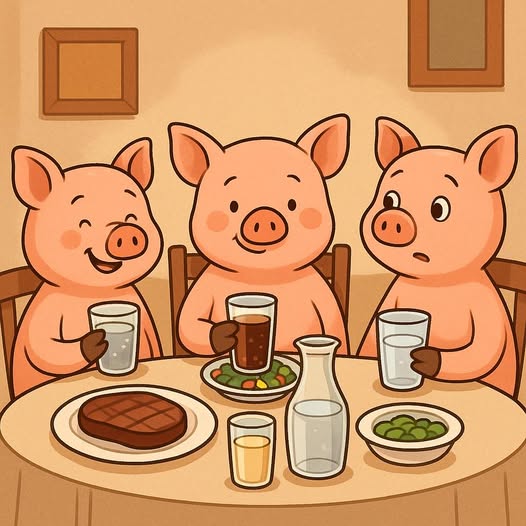
The first tale takes us to a surprisingly upscale bistro on a Tuesday evening, where three legendary brothers—the Three Little Pigs—decided to enjoy a night out on the town. These were not the frightened piglets of the old nursery rhymes, huddled behind walls of straw or sticks. These were sophisticated, modern pigs who enjoyed the finer things in life. As they were seated at a pristine corner table, a waiter approached, flickering his pen over a notepad, ready to take their drink orders.

The first little pig, a fan of classic carbonation, didn’t hesitate. “I’ll have a Sprite,” he said with a confident nod. The second little pig, preferring the caramel notes of a traditional cola, chimed in, “I’ll take a Coke, please.” Then the waiter turned his attention to the third little pig. This particular pig was leaning forward, eyes wide with a strange intensity. “Water,” he declared. “And not just a glass. I want lots and lots of water. Keep the pitcher coming.”

The waiter, used to eccentric diners, shrugged and delivered the beverages. When he returned to take the dinner orders, the pattern continued. The first pig ordered a massive, juicy steak, medium-rare. The second pig, perhaps watching his waistline or embracing a more leafy lifestyle, opted for a garden salad with vinaigrette. The third pig, however, didn’t even look at the menu. He simply tapped his empty glass. “More water,” he insisted. “Gallons of it. I want to be practically swimming in it.”

By the time dessert rolled around, the atmosphere at the table was a mix of festive indulgence and watery preoccupation. The first pig was happily tucking into a towering banana split, while the second enjoyed the frothy peaks of a root beer float. The third pig sat behind a veritable fortress of empty water carafes. “Water!” he shouted before the waiter could even open his mouth. “More water! Lots and lots of water!”

The waiter’s professional veneer finally cracked. He leaned in, his curiosity getting the better of him. “Sir, I have to ask. Your brothers are enjoying sodas, steaks, and sweets. You have consumed enough water to fill a small pond. Is there a medical reason? A spiritual fast? Why are you only drinking water?”

The third pig leaned back, a mischievous glint in his eye and a wide, toothy grin on his face. “Well,” he chuckled, “it’s quite simple. You know the old rhyme, don’t you? Someone’s gotta go ‘wee-wee-wee’ all the way home!”

The brilliance of the joke lies in its subversion of a childhood staple, turning a phonetic nursery rhyme into a literal, biological necessity. But the humor of the farmyard doesn’t end with puns; it often extends into the realm of bureaucracy and the impossible standards set by the world at large. This brings us to the story of a hardworking farmer who found himself caught in the crosshairs of global scrutiny, all because of his modest herd of swine.

This farmer was a simple man who believed in the traditional ways of the land. He raised his pigs with care, providing them with a steady diet of acorns, corn, and organic scraps from the harvest. To him, this was the natural order of things. One afternoon, a stern-looking man in a sleek charcoal suit arrived at the gate, clutching a clipboard like a shield.

“What exactly are you feeding these animals?” the man demanded, peering over the fence at the pigs rooting in the mud.

The farmer wiped his brow and smiled. “Well, I give them acorns, corn, and whatever bits and bobs are left over from the kitchen. Why do you ask?”

The man’s face reddened with indignation. “I am a representative from the Animal Protection Association! These animals are sentient beings, and it is a disgrace to feed them waste and scraps. They deserve a balanced, high-protein diet free from refuse.” Before the farmer could argue, the man slapped a heavy fine onto the gatepost and marched away.

The farmer, shaken but determined to comply, decided to upgrade his operations. He spent his life savings on the finest ingredients known to man. A week later, another official arrived—this one wearing a blue beret and carrying a briefcase embossed with a global insignia.

“Tell me,” the official said, looking at the pigs who were now lounging on silk bedding. “What is the daily regimen for these creatures?”

The farmer, proud of his newfound “compliance,” beamed. “Only the best for my boys! I feed them Atlantic salmon, Beluga caviar, tiger shrimp, and Wagyu steak. They drink nothing but sparkling mineral water.”

The official’s jaw dropped, but not in admiration. “I am from the United Nations! Do you have any idea how many people are suffering from famine across the globe? It is a moral atrocity to feed pigs like royalty while human beings go hungry. This is an insult to the global community!” He promptly issued a fine that was double the first one.

Distraught and confused, the farmer realized he was trapped in a “damned if you do, damned if you don’t” cycle of bureaucracy. He went back to his porch and sat in his rocking chair, contemplating his next move. A few days later, a third man walked up the driveway. He looked like a local census taker or perhaps just a curious neighbor.

“Afternoon, farmer,” the man said. “Nice looking herd you got there. Just curious—what do you feed them?”

The farmer sat in silence for several minutes, his eyes fixed on the horizon, his mind weighing the consequences of every possible answer. Finally, he let out a long, weary sigh.

“To be honest with you,” the farmer said, “I’ve given up on making those decisions. Now, I just walk out there every morning and give five dollars to each pig so they can go into town and buy whatever they want.”

In these stories, we find the two pillars of great humor: the playful manipulation of language and the pointed satire of a world that often makes no sense. Whether it’s a pig preparing for a very long walk home or a farmer navigating the conflicting demands of international organizations, the lesson is the same—sometimes, the only way to survive the absurdity of life is to meet it with a laugh. Humor is, after all, the most durable thread in the tapestry of our existence, allowing us to navigate our fears, our frustrations, and our interactions with the world with a bit more grace and a lot more joy.

Popular

A Mother’s Love: Vienna’s Journey with a Birthmark

0
Love compels parents to do extraordinary things for their children’s well-being. Celine Casey, a British mother, took remarkable steps to ensure her daughter Vienna’s...