Jimmy Kimmel and Donald Trump are clashing once again.
Tensions have escalated following the death of Rob Reiner and the remarks the president made about the tragedy.
Comments sparked widespread outrage
Jimmy Kimmel didn’t hold back during Monday night’s broadcast of Jimmy Kimmel Live! as he addressed Donald Trump’s comments on Rob Reiner’s death.
Trump had claimed Reiner died “due to the anger he caused others” through what he called “Trump derangement syndrome.” The comments sparked widespread outrage, with many — including prominent celebrities — strongly condemning Trump for his words about the iconic Hollywood director and actor.
Here’s what Jimmy Kimmel said during his broadcast:
“What we need at a time like this, besides common sense when it comes to guns and mental health care, is compassion and leadership. We did not get that from our president, because he has none of it to give. Instead, we got a fool rambling about nonsense,” Kimmel said. “For Rob and Michele Reiner, we got this post.”
Kimmel read Trump’s Monday morning Truth Social post aloud, in which the former president wrote:
“A very sad thing happened last night in Hollywood. Rob Reiner, a tortured and struggling, but once very talented movie director and comedy star, has passed away, together with his wife, Michele, reportedly due to the anger he caused others through his massive, unyielding, and incurable affliction with a mind crippling disease known as TRUMP DERANGEMENT SYNDROME, sometimes referred to as TDS.
”He was known to have driven people CRAZY by his raging obsession of President Donald J. Trump, with his obvious paranoia reaching new heights as the Trump Administration surpassed all goals and expectations of greatness, and with the Golden Age of America upon us, perhaps like never before. May Rob and Michele rest in peace!”
Thought it was fake
“It’s so hateful and vile,” Kimmel said of the post. “When I first saw it, I thought it was fake. My wife showed it to me this morning. I was like, ‘Even for him, that seemed like too much.’ But nothing is ever too much for him.”
He also addressed Trump’s comments at an Oval Office press conference, where the president was given a chance to retract or clarify his remarks but instead doubled down.
“I wasn’t a fan of his at all,” Trump told reporters. “He was a deranged person as far as Trump is concerned. He knew it was false. In fact, it’s the exact opposite. He said I was a friend of Russia, controlled by Russia. You know, the Russia hoax. He was one of the people behind it. I think he hurt himself career-wise. He became like a deranged person. Trump derangement syndrome. So, I was not a fan of Rob Reiner at all, in any way, shape or form. I thought he was very bad for our country.”
Scathing words
“That corroded brain is in charge of our lives,” Kimmel shot back.
“If you voted for that, it’s okay to reconsider. It’s perfectly fine. I have to say, I know from my personal interactions with Rob Reiner that he would want us to keep pointing out the loathsome atrocities that continue to ooze out of this sick and irresponsible man’s mouth. So we’re going to do that over and over again until the rest of us wake up.”
Kimmel wasn’t alone in acknowledging Reiner’s death. While not addressing Trump directly, Stephen Colbert began his Monday night show with a somber preface, referencing Reiner’s death alongside the shootings at Bondi Beach and Brown University.
“Hello, everybody,” Colbert said. “Normally, we start the show with a short cold open about a major news story of the day. But after the terrible news this past weekend, the horrifying Hanukkah massacre at Bondi Beach, the tragic shootings at Brown University and the heartbreaking deaths of Rob and Michele Reiner, all of the major stories are too dark for that. Other people’s tragedy is sacred ground, and we try very hard not to walk there. But we are going to do a comedy show tonight, in light of and in spite of the darkness.”
A ”very loud argument”
Rob Reiner, his wife Michele, and their son Nick were at Conan O’Brien’s Christmas party on Saturday night. According to Reiner family sources who spoke to TMZ, Rob and Nick got into a “very loud argument” during the event — so loud that many other guests could hear it.
The couple were then found dead on Sunday, December 14, inside their abode in Brentwood, California. According to The Mirror, authorities described the scene as a “horror double murder” involving what appeared to be stab wounds.
Reiner was 78, Michele was 68.
Their son, Nick Reiner has been arrested on suspicion of murder after the deaths of his parents, according to the Los Angeles police chief Jim McDonnell. Jail records first indicated his bail was set at $4 million, but authorities later ordered that the 32-year-old Nick Reiner be held without bail.
Tori Spelling, the enduring star of the iconic $90210$ series, recently found herself at the center of a swirling social media storm following the publication of photos from her sun-drenched beach day in Malibu, California. The images, which captured the 51-year-old enjoying the ocean and sand on Tuesday, July 2, while sporting a vibrant neon green two-piece swimsuit, immediately ignited a fierce debate among online commenters about her physique, cosmetic treatments, and the use of prescription weight-loss medications.
The divisive nature of the photos stemmed from Spelling’s notably slim figure, showcased prominently by the bold neon swimwear. The bikini design left little to the imagination, accentuating her flat stomach, defined rib cage, and cleavage, while also revealing hip piercings. To complete her premium beach look, the mother of five accessorized with a gold necklace, a subtle body chain draped across her midsection, and stylish sunglasses. Her time in the sun was shared with friend Laura Rugetti, who opted for a contrasting ensemble: a zebra-print one-piece and a fashionable white wide-brim hat. The two women reportedly spent over two hours basking in the California warmth.
Despite the undeniable effort the actress has put into achieving her toned body, the public reaction was far from unanimously complimentary. Instead of praise for her physical transformation, a significant portion of the audience took to various platforms like Facebook and Instagram to mock her appearance and raise suspicions that her figure was not attained through traditional means. The concept of natural weight loss versus medically assisted slimming became the central point of contention.
One blunt Facebook comment attributed her appearance to plastic surgery, a sentiment quickly echoed by another user who pointed out, perhaps inaccurately, the apparent lack of a belly button. The criticism escalated with several users simply declaring the look “NOT A GOOD LOOK,” often in capital letters to emphasize their disapproval. A particularly harsh critique advised the star to “employ a [cover-up].” Adding a layer of social commentary, one user expressed concern, noting that since Spelling “She’s had many babies,” her extremely trim physique—whether achieved through surgery or photo alteration—could lead other women to feel “inadequate” about their own post-pregnancy bodies. This reaction underscores the intense pressure and unrealistic body image expectations often placed on high-profile celebrities.
However, the tide of criticism was not absolute. A pocket of online defenders rallied behind Spelling, expressing admiration for her confidence and appearance. Among the notable supporters was reality TV personality Dolores Catania from The Real Housewives of New Jersey, who praised the actress, commenting, “She looks amazing.” Another fan offered effusive praise on a media outlet’s post, stating, “This is the best I’ve seen her look in a really long time,” highlighting a perceived successful fitness journey.
This public scrutiny gained added weight because Spelling has been remarkably candid about the tools she employed for her recent physical transformation. Photos of her on the beach were often accompanied by captions referencing her previous public statements. As reported by Page Six, the actress was showcasing her “slimmed-down figure after confirming she used Ozempic and Mounjaro to shed pounds following the birth of her son Beau.”
This crucial disclosure was made back in April 2024 on her podcast, “Misspelling.” During the segment, she addressed the use of the popular diabetic medications, which have become a trending topic in Hollywood weight management. She clarified her experience, stating, “Everyone now acknowledges that I completed Mount Everest. I tried Ozempic, but it wasn’t effective for me.” She explained that she subsequently transitioned to Mounjaro, a similar drug approved for treating Type II diabetes, but widely used off-label for effective weight reduction.
Spelling’s rationale for choosing this medical route over conventional methods like rigorous exercise was based on her unique history and circumstances. She expressed a modern acceptance of such methods, noting, “I don’t feel bad about saying that because it’s a different time.” She detailed her struggle with postpartum weight retention, a problem she had not faced with her first four children. “I was unable to shed the baby weight,” she explained, specifically after the birth of Beau McDermott, her youngest child with then-husband Dean McDermott.
Before this recent challenge, Spelling had enjoyed a natural propensity for thinness, a detail she emphasizes when discussing her health and wellness history. “I have never dieted in my life. I have pretty good genes from birth,” she previously revealed, underscoring her generally low-effort maintenance prior to her fifth pregnancy. Her weight, which she disclosed had historically peaked at $120$ pounds, soared to $160$ pounds after welcoming Beau.
When her attempts at conventional weight loss—including exercising, consuming protein, and various diets—failed, she consulted her physician. The doctor confirmed that her age, $44$ at the time, was presenting a significant obstacle. While receiving hormone therapy for menopause, she decided to explore pharmaceutical weight management. After her initial trial with Ozempic did not yield the desired effect, she switched to Mounjaro. Importantly, Spelling confirmed that she is no longer taking the medication. “I did drop weight, but I’m not on it anymore,” she stated, adding, “It was the end of January when I last used it. Because I didn’t want to drop too much weight, I did stop using it.”
Beyond the discussions of prescription medication for weight loss and body transformation, Spelling also took a moment to celebrate another physical milestone: maintaining her reproductive health after delivering all five of her children via Cesarean section. The recent beach photos, therefore, not only captured a moment of relaxation but also served as a catalyst for a multifaceted public conversation dissecting modern celebrity beauty standards, the accessibility and implications of advanced medical weight loss solutions, and the relentless social scrutiny faced by women in the public eye. The entire saga is a clear example of how digital media amplifies personal choices into global, polarized debates about health, authenticity, and appearance.
Susan Sarandon is perhaps one of the most iconic actresses of her generation. Apart from holding her own on screen, the actress is known for never holding back in real life either.
So when people started questioning her decisions, she decided to school them.
Susan Sarandon has had an impressive career in Hollywood and is still going strong. Her role as Janet Weiss in the 1975 cult classic musical film The Rocky Horror Picture Show cemented her worth as a talented actress.
After that, she went on to star in numerous movies, which earned her critical acclaim, including the much-loved Thelma & Louise. She received a nomination for Best Actress at the Academy Awards for her portrayal in the film. The actress ultimately earned an Academy Award for her role in Dead Man Walking.
The actress has always been a proponent of body positivity and always likes to express herself with her fashion choices. She has quite an unapologetic personality and is vocal about the causes she supports.
It was during a red carpet event that the actress was wearing a white jacket with a black bra which raised some eyebrows. A journalist went as far as to say her outfit was “totally inappropriate.”
But instead of trying to defend herself with words, the actress decided to use a picture.
She posted an old picture of herself in her underwear, proudly displaying her figure. After all, a picture is worth a thousand words, and Sarandon shut up anyone who was questioning what was ‘appropriate’ for her and what wasn’t.
The actress is not bothered about aging and focuses on what feels important to her. She said in an interview, “When your sense of time has an ending and isn’t finite, like how it feels when you’re young.” She added, “When you have an understanding that time is precious—you have a tendency not to waste energy on the small stuff and only to surround yourself with people who are vital, curious, brave, and adventurous.”
As for what she does to maintain her beauty, she simply said, “If you want to age gracefully, probably laugh a lot, and get the normal amount of exercise, and eat well and stay out of the sun would be the main things,” Sarandon stated. But the actress added, as is having an amazing makeup and hair team to help you keep looking good.
Susan Sarandon is surely one of a kind! The actress marches to the beat of her own drum and does not pay attention to anyone who has something negative to say about her. What do you think of her response to haters? Let us know in the comments.
Make sure to share this piece with your friends and family so that next time they face criticism, they can adopt a strategy similar to Susan!
The NCIS: Los Angeles actress and McLeod’s Daughter star Rachael Carpani has died at the age of 45, her family announced. The Australian actress passed away “unexpectedly” after battling a chronic illness.
On Monday, December 15, Rachael Carpani’s sister, Georgia, shared a statement that the actress had died at the age of 45.
Rachael Carpani, born in Sydney, Australia, starred in several US shows and films. She featured in a 2009 episode of NCIS Los Angeles, with other credits including If There Be Thorns, and The Glaes, and had the lead role in Against the Wall.
The actress was best known for starring as Jodi Fountain in the Australian series McLeod’s Daughters, which ran from 2001 to 2009.
“It is with great sadness that Tony and Gael Carpani announce that their beautiful daughter, beloved Australian actress Rachael Carpani, unexpectedly but peacefully passed away after a long battle with chronic illness, in the early hours of Sunday, 7th December,” the statement read.
“The funeral will be a private event, to be held on Friday, 19th December with close family and friends,” the statement continued. “The family requests privacy at this very difficult time and will be making no further statements.”
Australian actress Rachael Carpani dead at 45
Carpani also starred in the 2009 movie Triangle alongside Australian star Liam Hemsworth. Exactly what type of chronic illness the actress suffered from is not known. However, in 2021, she was rushed to the hospital after experiencing acute abdominal pain.
“I was admitted to emergency with acute abdominal pain just over a week ago and spent a few days in the ICU,” she wrote at the time. “Was then moved to the surgical ward,” she added before telling fans: “listen to what your body is trying to tell you”.
In August, Rachael Carpani’s sister penned a birthday tribute to her. Now, fans have left comments and tributes under the post.
“I am so incredibly saddened to learn of your darling sisters passing, I am so sorry. I grew up watching & wanting to be her. Sending much love and enveloping hugs to your family,” one person wrote.
A second added, “Praying for your beautiful family,” and a third stated, “I loved your sister in McLeod’s daughters! Sorry for your loss! Xo.”
Suffered from chronic illness
Rachael Carpani’s co-star on McLeod’s Daughters, Bridie Carter, paid tribute to her on Instagram, writing,
“In love and respect, for our beautiful Rach, in prayer and with the deepest sorrow and profound sympathy for the Carpani family. Rest In Peace our beautiful girl….the “baby” of our [ McLeod’s Daughters] family. We love you, we cherish you.”
“This is the wrong order of things. We are better people for having the privilege of sharing time with you, we know Rach will not only be missed immeasurably by her family, by us, but she is loved and will be missed by you all, around the world. We love you Carpani.”
On a sunlit afternoon in Malibu, California, the air was charged with warmth and anticipation, though no stage lights shone and no music played before the event began.
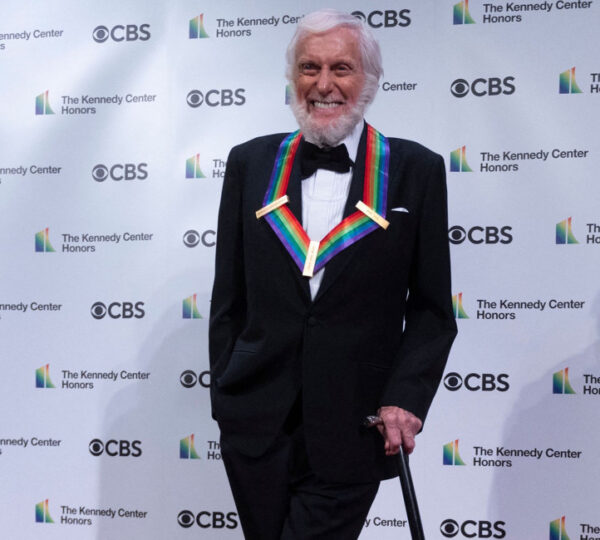
The room seemed ordinary at first glance, yet the moment Dick Van Dyke entered, it transformed.
At nearly 100 years old, the beloved actor and entertainer carried with him a familiar energy — that twinkle in his eye and infectious smile that instantly made everyone feel lighter, as if they had stepped back into childhood.
Minutes earlier, Van Dyke had led a two-hour sing-along, co-hosted with his wife, Arlene Silver.
The event was designed to raise funds for the Van Dyke Endowment of the Arts and the in-development Dick Van Dyke Museum, two initiatives close to his heart.
But more than a fundraiser, the gathering was a celebration of human connection, creativity, and the joy of music.
Van Dyke made it clear from the start that the afternoon was about more than nostalgia; it was about reviving a certain art that he feels is fading — the art of genuine conversation and presence.
“There are several reasons for doing this — all of them good — but for me, it’s about bringing back the art of conversation,” Van Dyke said, his voice gentle yet commanding attention without demanding it.
He observed the subtle ways people have grown disconnected despite being physically close: couples sitting together in restaurants or on buses, engrossed in their devices rather than sharing a moment.
He gently nudged the audience to acknowledge the common experience of living in the digital ether, while physically in the presence of others.
In a tone that combined humility with a touch of humor, Van Dyke revealed a detail that took the audience by surprise.
“I may be the only person in the United States over 10 who does not have a cell phone. I don’t have a phone,” he confessed.
A few chuckles rippled through the crowd, but many fell silent, struck by the weight of the observation.
The point was not the absence of a device itself, but what it represented: the displacement of simple, human interaction by digital distraction.
This moment crystallized one of the event’s underlying themes — the value of being present and engaged, of conversations held without interruption or expectation.
The afternoon’s program was a carefully curated journey through Van Dyke’s remarkable career.
Though the day was in part a celebration of his upcoming 100th birthday on December 13, it was also a testament to a lifetime dedicated to joy, artistry, and performance.
From the opening note, the audience was swept into the familiar, whimsical worlds Van Dyke has helped create over decades.
He opened with “Chitty Chitty Bang Bang,” the instantly recognizable song that immediately evoked a sense of playfulness and nostalgia.
Joining him were The Vantastix, a vocal group known for their harmony and energy, adding depth and texture to the performance.
As the set progressed, Van Dyke invited the audience to participate, creating a communal, interactive experience rather than a passive show.
Songs like “Supercalifragilisticexpialidocious” had the audience laughing and singing along, while classics like “You Two” and “Carolina in the Morning” prompted smiles of recognition and murmurs of delight.
Perhaps most poignant was the performance of the theme from The Dick Van Dyke Show, a melody so familiar that many attendees admitted they didn’t realize they were smiling until the tune lingered in their minds.
These songs were more than entertainment; they were a bridge connecting generations.
Children, parents, and grandparents alike shared a sense of belonging, remembering Van Dyke’s influence on their own lives and appreciating the shared cultural touchstones.
Beyond the music, Van Dyke’s interactions with the audience conveyed warmth and attentiveness.
He encouraged participants to join in, to raise their voices together, and to experience music as a communal act rather than a solitary one.
This emphasis on shared joy was consistent with his broader message about human connection.
He spoke with an awareness of the digital age’s challenges, where devices often replace dialogue, and presence is measured in status updates rather than attention.
During a Q&A segment, a member of the audience asked Van Dyke what he loves most about Christmas. Without hesitation, he replied: the singing and the caroling.
His answer reflected the entire ethos of the afternoon — a celebration not just of his career, but of community, shared experiences, and the simple pleasures that bind people together.
The event, after all, was as much about human presence as it was about music or nostalgia.
It was a demonstration of the enduring power of joy and togetherness, curated by someone who has spent a century perfecting the art of making others smile.
The sing-along was not just an exercise in reminiscence. It was a demonstration of the vitality and energy Van Dyke still possesses at nearly 100.
His movements were sprightly, his expressions animated, and his voice clear and engaging.
Volunteers and co-hosts noted that maintaining the pace of a two-hour event with interactive singing, storytelling, and audience engagement requires not only stamina but a deep understanding of performance.
Van Dyke’s ability to sustain both the energy and the intimacy of the experience was a testament to his lifelong dedication to his craft.
Arlene Silver’s presence alongside Van Dyke added another layer of warmth and accessibility.
She seamlessly facilitated transitions between songs, helped cue audience participation, and provided a supportive presence that highlighted the couple’s personal and professional partnership.
Together, they exemplified teamwork, balance, and shared passion for the arts.
Audience reactions reflected the unique nature of the afternoon. Families clapped and sang in unison, often pausing to absorb Van Dyke’s stories about the origins of certain songs or anecdotes from his career.
Laughter and applause punctuated key moments, but what stood out most was the quiet attentiveness during reflective parts of the event.
The confession about not owning a cell phone, for instance, prompted moments of silent contemplation among the crowd — a rare experience in today’s digitally-saturated world.
Behind the scenes, the event was meticulously organized to honor Van Dyke’s legacy while fostering meaningful engagement.
Technical staff ensured sound quality was pristine, volunteers coordinated seating and songbooks, and organizers carefully managed transitions to allow for both performance and audience interaction.
Every detail was designed to enhance the sense of community and immersion, reinforcing the evening’s central themes of connection, presence, and shared joy.
As the afternoon concluded, Van Dyke led the audience in a final sing-along, blending several iconic numbers into a medley that captured the spirit of celebration and continuity.
The crowd sang with enthusiasm, voices rising and intertwining in harmony.
The energy in the room was palpable, a collective acknowledgment of both Van Dyke’s artistic contributions and the shared human experiences he has long celebrated through music and performance.
When the event finally ended, attendees left with more than memories of songs and anecdotes.
They carried a reminder of the importance of conversation, the value of presence, and the joy of communal experience.
For Dick Van Dyke, the afternoon was not merely about performing or celebrating a milestone birthday.
It was a deliberate effort to reconnect people with the simple, yet profound, pleasures of shared humanity.
In reflecting on the event, one observer noted that Van Dyke’s influence extends far beyond entertainment.
His commitment to fostering real connection, maintaining kindness, and celebrating the small joys in life serves as a model for audiences young and old.
Nearly 100 years into his life, he continues to demonstrate that energy, curiosity, and a playful spirit can bridge generational gaps and inspire meaningful human engagement.
Ultimately, the Malibu sing-along served as a testament to a lifetime of artistry and empathy.
It underscored the enduring relevance of Dick Van Dyke’s work, not only for its musical and comedic achievements but for its celebration of human connection, community, and presence.
In an era dominated by digital distraction, the event offered a reminder that some of life’s most valuable experiences come from being fully present with one another, sharing voices, stories, and laughter in real time.
Cruelty toward animals is widely recognized as a sign of a lack of empathy and can evoke strong emotional responses in society.
Whether intentional or unintentional, acts that cause harm or distress to defenseless creatures remind us of the moral and ethical responsibilities humans bear toward other living beings.
Over the years, societal awareness and legal protections for animals have improved significantly, with laws against abuse and organizations devoted to rescue, rehabilitation, and advocacy.
Yet, despite these advances, incidents continue to occur that highlight the importance of vigilance, accountability, and public discourse around humane treatment.
In recent years, the internet has become a powerful tool for amplifying stories involving animals, particularly when the narrative involves a human stepping in to defend them.
Social media platforms allow for rapid dissemination of such incidents, often sparking widespread conversation and debate.
People tend to react strongly to cases where boundaries are crossed, whether in moments of cruelty or protective intervention.
These discussions frequently touch upon broader societal issues, including parenting, responsibility, ethical behavior, and the role of community norms.
One incident that captured public attention involved Shannon Cooper and her neighbor’s child.
According to Shannon, the incident began when she noticed the child pouring water onto her cat while it sat calmly on a fence.
The cat, a domestic pet that had known care and affection, was suddenly subjected to discomfort for no apparent reason.
The child laughed as the cat reacted, demonstrating a disregard for the animal’s well-being.
Observing this, Shannon experienced a surge of protective instincts, feeling both anger and concern for the cat’s welfare.
Her immediate response was to pour water back on the child. She described the act as a reflexive measure to communicate that harming another living being, even playfully, carries consequences.
Later, Shannon shared the story on the social media platform X, writing succinctly, “Don’t touch my cat.”
The post resonated with many animal lovers who identified with her protective stance, emphasizing the importance of setting boundaries for the safety of pets and promoting empathy toward animals.
The story quickly gained traction online, with thousands of reactions and comments.
Supporters praised Shannon’s response, framing it as a simple but effective lesson in cause and effect.
Many highlighted that the water caused no lasting harm to the child while simultaneously signaling that intentional misbehavior toward an animal would not be tolerated.
Several parents weighed in, agreeing that teaching children to respect animals from a young age is essential and that practical lessons — when safe and proportionate — can reinforce ethical behavior.
In these discussions, commenters often noted that early interventions can shape lifelong attitudes toward animal welfare and responsibility.
Beyond the immediate reactions, the incident prompted deeper conversation about societal attitudes toward animals and the ethical development of children.
Some observers emphasized that understanding empathy requires experiential learning, including seeing firsthand the impact of one’s actions.
From this perspective, Shannon’s response was a form of real-world feedback that could help the child develop a stronger moral compass.
Commentators frequently pointed out that small interventions, if handled carefully, can be educational rather than punitive, reinforcing the broader principle that animals deserve protection and respect.
Nevertheless, the story also attracted criticism. Some argued that Shannon overstepped boundaries by directly retaliating against the child rather than addressing the parents first.
These critics maintained that disciplinary measures for minors are ultimately the responsibility of guardians or caregivers, and that adults should model non-retaliatory conflict resolution.
They cautioned against replicating aggressive or reactive behavior, noting that children often learn social norms by observing adults’ responses.
From this standpoint, while the instinct to protect the animal was understandable, the method of response was debatable in terms of teaching constructive lessons about respect and boundaries.
The debate highlighted the tension between immediate, visceral reactions to animal cruelty and the longer-term approach of structured guidance.
Some commenters discussed alternative strategies, such as calmly explaining the consequences of harming the cat, guiding the child through empathy exercises, or involving the parents to reinforce behavioral expectations.
These approaches focus on cognitive and emotional learning, promoting understanding without potentially escalating conflict.
In a follow-up post, Shannon clarified that the incident had not led to lasting tension between herself, the child, or the child’s parents.
She explained that both the child and his father eventually laughed about the situation, and that the cat remained unharmed.
This clarification helped contextualize the event, illustrating that immediate reactions can coexist with amicable resolutions and mutual understanding once initial emotions have settled.
By sharing this update, Shannon reinforced the narrative that accountability, communication, and empathy are intertwined, both for children learning social responsibility and for adults navigating responses to unethical behavior.
The broader public reaction to Shannon’s story underscores the ongoing societal concern for animal welfare and the ways in which adults teach children to respect other living beings.
Social media platforms magnify these incidents, offering opportunities for collective reflection, debate, and learning.
Viral stories like this one often become cultural touchpoints, serving as catalysts for discussion about ethical behavior, parenting practices, and the moral responsibilities humans have toward vulnerable creatures.
Legal and social frameworks surrounding animal protection also play a role in shaping public responses.
In many countries, laws against animal cruelty are designed not only to penalize offenders but also to reinforce societal norms about humane treatment.
Educational initiatives, public awareness campaigns, and community programs supplement legal frameworks by teaching children about empathy, kindness, and responsible pet ownership.
In this context, real-world stories, even those shared anecdotally online, illustrate the principles that formal structures seek to promote.
Shannon Cooper’s experience exemplifies the complex intersections between human behavior, child development, and animal welfare.
It demonstrates how adults respond when witnessing harm to animals, the ethical considerations in immediate reactions, and the social expectations for teaching respect and empathy.
Her post and subsequent discussion reflect broader cultural values, emphasizing the importance of clear boundaries, ethical education, and the protection of vulnerable creatures.
For many viewers, the viral story also emphasized the importance of proportionate responses and community engagement.
While protective instincts are natural, discussions about the most constructive approaches highlight how adults can guide children to understand empathy and accountability.
The story also reminds readers that humor, reconciliation, and follow-up communication can help ensure that lessons are learned without lasting conflict.
Ultimately, the incident remains a potent example of how small actions can spark significant conversations about morality, responsibility, and compassion.
It demonstrates that even everyday interactions between neighbors can become opportunities for reflection on ethical behavior and the care of other living beings.
By carefully examining the narrative, both supporters and critics contribute to a broader understanding of how society negotiates the protection of animals, the education of children, and the reinforcement of community norms.
The case of Shannon Cooper and her cat serves as a reminder that vigilance, ethical guidance, and the cultivation of empathy are ongoing responsibilities.
Communities are challenged to foster environments in which children learn respect for animals and adults model constructive intervention.
In a world where stories circulate rapidly online, incidents like these become touchstones for public dialogue, illustrating both the power and the responsibility inherent in human actions toward the creatures with whom we share our lives.
Through reflection, conversation, and continued emphasis on ethical behavior, such stories help reinforce the values that underpin humane treatment and social accountability.
Shannon’s decision to act, share, and clarify demonstrates that the lines between instinctive protection and deliberate education can coexist, offering lessons for individuals, families, and society at large.
The narrative remains relevant as a case study in balancing immediate action with reflective guidance, and in understanding the profound impact of small acts on broader cultural attitudes toward animals and morality.
Some jokes land because they’re loud. Others land because they’re clever, quiet, and painfully honest about human behavior. This story falls squarely into the second category—a short, sharp reminder that timing, psychology, and attention are sometimes far more powerful than volume or repetition. What makes it funny isn’t the message itself, but the way it exposes a universal truth most people recognize immediately, whether they want to admit it or not.
It started late one evening, the kind of ordinary night that blends into a hundred others. The husband was wrapping up his day, sitting in his car before driving home, scrolling through his phone with that familiar mix of boredom and curiosity. At home, his wife was already settled in, winding down after a long day of her own. Nothing dramatic. Nothing unusual. Just two people living their routine lives.
That’s when the husband had an idea.
With a small grin—the kind that signals mild trouble but nothing truly dangerous—he decided to send his wife a message. Nothing outrageous. Nothing cruel. Just a straightforward request, delivered casually, as if it were the most natural thing in the world. He typed out a text asking her to wash his dirty clothes and prepare his favorite meal before he got home.
He read it once. Then twice. Satisfied, he hit send.
And waited.
At first, he expected a response almost immediately. Maybe a sarcastic remark. Maybe a laughing emoji. Maybe even a mock complaint followed by reluctant agreement. Anything would have worked. But minutes passed. Then more. His phone stayed stubbornly silent, screen dark, notifications empty.
No reply.
He checked the time. He checked his signal. He even unlocked the phone again, just to make sure the message had actually gone through. It had. Delivered. Read receipt off, of course, because of course it was.
The joke, it seemed, had gone nowhere.
At this point, many people would have shrugged and dropped it. But the husband wasn’t done. If anything, the silence only sharpened his curiosity. He knew his wife well enough to recognize that this wasn’t a technical issue. This was selective attention in its purest form—a phenomenon psychologists have studied for decades and married couples have mastered instinctively.
So instead of repeating himself, he changed tactics.
He opened the message app again and typed a second text. This one was shorter, brighter, and deliberately impossible to ignore. He wrote that he’d just received news of a significant salary increase at work and was planning to buy her a brand-new car as a surprise.
No demands. No chores. Just pure, sparkling financial optimism.
He hit send.
This time, the response was instant.
His phone buzzed almost violently in his hand. The screen lit up with enthusiasm, disbelief, and capital letters. “OMG really?” she wrote, followed by a string of excited emojis that practically leapt off the screen. The delay from silence to instant engagement was so sharp it felt like a punchline already forming.
That was all the confirmation he needed.
With perfect restraint and surgical comedic timing, the husband typed his final reply. No emojis. No buildup. Just one line, delivered cleanly and without mercy: “No. I just wanted to make sure you got my first message.”
And there it was.
The humor didn’t rely on exaggeration or cruelty. It didn’t insult anyone outright. Instead, it gently exposed a reality most people understand instinctively: attention is often tied to perceived value. Messages associated with obligation can disappear into the background, while those promising reward, excitement, or financial upgrade trigger instant engagement.
It’s a joke rooted in everyday relationship dynamics, behavioral psychology, and modern communication habits shaped by smartphones and constant notifications. In an era where attention is currency and timing is everything, this tiny exchange manages to feel both timeless and painfully current.
What makes it resonate so strongly is its simplicity. There’s no long setup, no elaborate scenario. Just two texts and a truth most people recognize immediately. It mirrors the way people respond not just in relationships, but in emails, marketing campaigns, workplace communication, and even social media algorithms. Offer perceived value, and people engage. Ask for effort, and attention suddenly becomes scarce.
From a digital communication standpoint, the joke accidentally highlights principles used in high-level marketing strategies and consumer psychology. Subject lines that promise gain outperform those that request action. Messages framed around benefits outperform those framed around responsibility. The husband didn’t just tell a joke—he ran a perfect A/B test.
But beyond the psychology, there’s warmth in the humor. It’s playful, not mean-spirited. The punchline doesn’t demand obedience or mock his wife harshly. It simply calls attention to the moment with wit, allowing both people to laugh at a shared truth rather than argue about it.
That’s why stories like this travel so well online. They’re short enough to digest quickly, clever enough to remember, and honest enough to spark recognition. They tap into universal experiences—marriage, communication gaps, selective listening—without turning them into conflict. Instead, they turn them into something lighter: a shared laugh.
In a world saturated with overproduced humor, viral pranks, and forced punchlines, this kind of understated wit feels refreshing. It reminds us that sometimes the smartest humor comes from observing real behavior and letting timing do the heavy lifting.
The husband didn’t raise his voice. He didn’t resend the message five times. He didn’t demand acknowledgment. He simply reframed the situation, waited for the reaction, and delivered the truth with perfect precision.
Timing, after all, isn’t just about when you speak. It’s about knowing how people listen.
And in that quiet realization—buzzing phone in hand, punchline delivered—the joke completes itself.
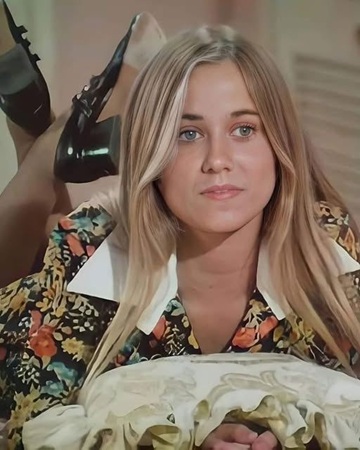
While “The Brady Bunch” initially aired from 1969 to 1974 with only modest ratings, it evolved into a cultural touchstone through syndicated reruns.
Eventually inspiring spin-offs, movies, specials, and a loyal multi-generational following.
The show’s concept — blending two families into one household — resonated with viewers, presenting an idealized version of suburban family life in a period of social change.
Yet beyond the bright sets, scripted laughter, and iconic theme song, the cast’s behind-the-scenes dynamics played a crucial role in the show’s lasting appeal, balancing camaraderie, youthful mischief, and personal challenges that reflected the complexities of growing up in the public eye.
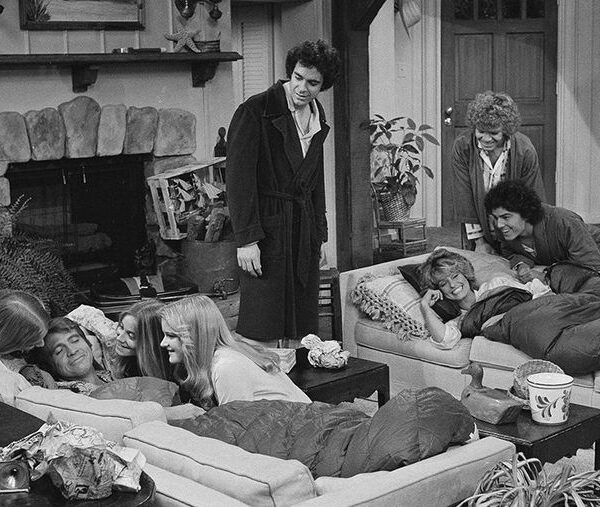
The young cast members, ranging from pre-teens to teenagers, developed close friendships during filming.
Their daily routines involved long hours on the Paramount Studios lot, a setting that became both workplace and playground.
Many of the actors recounted engaging in playful antics during breaks or between scenes, often exploring other sets or climbing scaffolding to discover new vantage points.
These explorations were more than mere entertainment; they fostered trust, cooperation, and a sense of community among cast members navigating the pressures of early stardom.
The shared experiences on set, from rehearsals to filming challenging scenes, strengthened bonds and created a support network that would remain meaningful for years.
Off-screen relationships also contributed to the cast’s unique chemistry. Romantic tensions emerged naturally as the young actors navigated adolescence in close proximity.
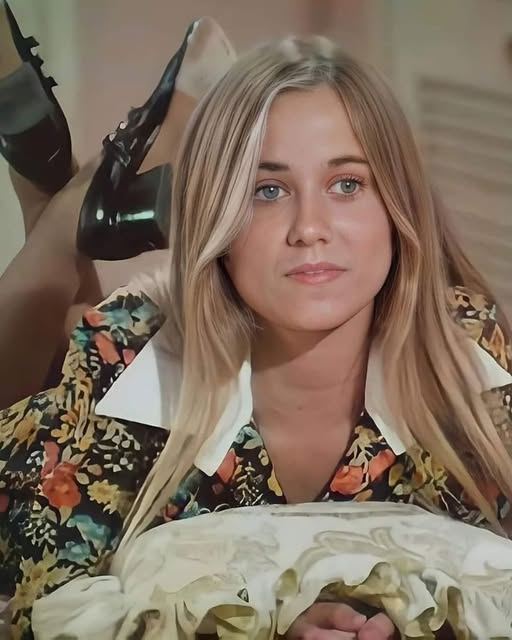
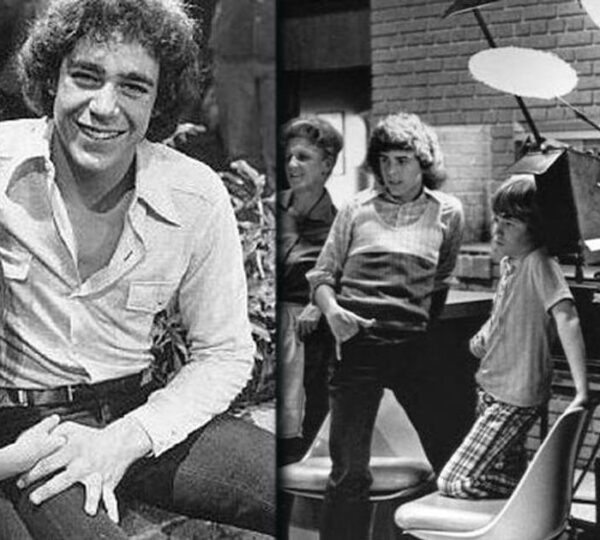
Barry Williams, who played Greg Brady, dated Maureen McCormick, known for her portrayal of Marcia Brady, while Christopher Knight, portraying Peter Brady, had a relationship with Eve Plumb, who played Jan Brady.
These relationships, though relatively innocent by contemporary standards, added depth to on-screen interactions and provided authentic insights into adolescent experiences.
The blending of personal life and professional responsibilities required maturity and negotiation, helping the young cast develop social and emotional skills alongside their craft.
Despite the show’s wholesome and comedic image, cast members faced significant personal challenges, both during and after filming.
Maureen McCormick, for example, later shared in her memoir her struggles with anxiety, depression, and addiction, providing a candid glimpse into the pressures of early fame.
The disparity between the public’s perception of the cheerful Brady household and the cast members’ private realities underscores the complexities of child and teen stardom.
The demands of maintaining a public image, coupled with rigorous filming schedules, created environments that could exacerbate underlying vulnerabilities.
Production itself presented numerous challenges, requiring dedication and adaptability from the cast.
Filming schedules were demanding, with long days that often extended beyond typical school hours.
Despite these pressures, the actors demonstrated professionalism, consistently delivering performances that balanced humor with genuine emotion.
Notable examples include scenes requiring physical coordination, precise comedic timing, or interactions with live animals.
Christopher Knight, for instance, recalled filming a scene with a real tarantula, which tested both his courage and concentration while providing authentic reactions that translated to on-screen engagement.
The show’s narrative structure — blending situational comedy with moral lessons — demanded versatility from the cast.
Episodes often addressed typical family issues such as sibling rivalry, dating, school challenges, and social responsibility, requiring actors to navigate emotional beats that resonated with viewers of all ages.
These storylines, while scripted, offered opportunities for the young actors to explore a range of emotions and interpersonal dynamics, strengthening their craft and fostering audience empathy.
Camaraderie among cast members extended beyond the immediate filming environment.
Social activities, informal rehearsals, and shared meals cultivated a sense of belonging and stability in an otherwise unusual professional context.
Interviews with cast members suggest that these experiences contributed to long-term friendships and mutual support networks that endured decades after the show’s original run.
The combination of work and play provided a unique formative environment, blending mentorship, peer support, and collaborative creativity.
The cultural impact of “The Brady Bunch” was amplified by the rise of television syndication in the 1970s and 1980s.
Initially underperforming in network ratings, the show found new life in reruns, reaching a broader audience and solidifying its status as a classic.
Syndication allowed younger viewers to experience the show for the first time, while older audiences reconnected with the nostalgia of its original run.
This phenomenon contributed to spin-offs, made-for-TV movies, and musical adaptations, each reinforcing the enduring charm and relevance of the Brady family.
Media coverage of the cast’s off-screen experiences added another layer to public fascination.
Stories of friendships, romances, and personal struggles humanized the actors and provided context for their performances.
The contrast between the scripted harmony of the Brady household and the individual journeys of the cast created a compelling narrative that extended beyond the television screen.
Fans were drawn not only to the storylines but also to the personalities and experiences of the actors themselves, enhancing engagement and fostering a sense of intimacy with viewers.
In addition to interpersonal dynamics, the production design and technical aspects of the show contributed to its lasting legacy.
Brightly colored sets, coordinated costumes, and signature hairstyles became visual shorthand for the show’s optimistic tone.
These elements, coupled with the actors’ performances, established a recognizable and appealing aesthetic that continues to be celebrated in popular culture.
Behind the scenes, actors often participated in shaping their performances to align with the show’s comedic timing and emotional beats, reflecting a collaborative environment that valued creativity and authenticity.
The Brady cast also navigated public expectations regarding behavior and image.
Child labor laws, studio guidelines, and parental oversight shaped daily routines, while fans and media exerted additional pressure on maintaining a positive image.
These factors required maturity and resilience, particularly as actors managed the transition from child performers to adult careers.
Long-term, these experiences influenced career trajectories, personal development, and public perceptions, underscoring the interconnectedness of professional and personal growth in the entertainment industry.
Ultimately, the enduring appeal of “The Brady Bunch” arises from a combination of factors: engaging storytelling, relatable themes, memorable performances, and the authentic connections formed among cast members.
Behind the polished on-screen experience, the actors’ friendships, romances, personal challenges, and shared experiences enriched the show’s authenticity and resonance.
Their collective dedication, creativity, and resilience allowed audiences to connect with the Brady family across generations, ensuring that the series remains a beloved cultural touchstone.
Even decades after its original broadcast, reflections on the show highlight lessons in collaboration, empathy, and personal growth.
The cast’s ability to navigate adolescence under public scrutiny, maintain professionalism amidst challenges, and foster meaningful relationships offers insight into the broader dynamics of child and teen stardom.
Their stories demonstrate that behind every iconic performance lies a complex interplay of talent, friendship, personal development, and perseverance.
In summary, “The Brady Bunch” represents more than a television series; it is a cultural phenomenon shaped by compelling performances, enduring storylines, and the intricate dynamics of its cast.
The bonds formed during production, the challenges navigated off-screen, and the dedication to craft collectively contributed to a legacy that continues to captivate audiences.
Through syndication, spin-offs, and continued engagement with fans, the show illustrates the enduring power of television to entertain, educate, and foster a sense of shared cultural experience.
The deadly crash on Rodovia do Sol has left residents shaken and communities asking questions that may never have clear answers.
Witnesses describe a scene that seemed to defy the randomness of typical accidents.
Just moments before the collision, locals reported hearing the violent screeching of tires — a sound that makes the heart stop — and spotting a Chevrolet S10 pickup swerving uncontrollably down the highway.
To some, the driving did not appear merely reckless but desperate, as though the vehicle and its driver were fleeing from something unseen.
The incident began as an ordinary roadside emergency.
A young couple had pulled their Chevrolet Cruze onto the shoulder to repair a flat tire, accompanied by family members including Ingrid and her brother, who were assisting in a safe and methodical way.
The afternoon, seemingly routine and uneventful, took a devastating turn in an instant.
The Chevrolet S10 barreled toward the parked vehicle at a dangerous speed, striking the Cruze with immense force.
The sound of metal crushing metal shattered the calm of the afternoon, leaving behind twisted wreckage and stunned witnesses struggling to process the sudden catastrophe.
Firefighters, paramedics, and police arrived within minutes, working under tense and chaotic conditions to rescue the injured.
Three people in the Cruze suffered injuries ranging from severe to moderate and were rushed to nearby hospitals for treatment.
While their physical wounds were addressed, the emotional scars — the trauma of an unanticipated life-altering moment — will take far longer to heal.
When authorities turned to the S10, it was empty. The driver had fled, abandoning not only the truck but also the victims and any immediate explanations that might clarify the circumstances leading to the collision.
Investigators have not ruled out alcohol as a contributing factor, yet witness testimonies complicate the narrative.
Several people reported that the pickup seemed “out of control,” weaving erratically as if the driver was terrified.
The central question remains: why flee if the incident was purely accidental? Was the driver fearing legal repercussions, or was there another factor — something deeper — motivating the escape?
As the investigation continues, the community grapples with a mixture of grief, anger, and confusion.
Residents along Rodovia do Sol are no strangers to accidents; the highway has claimed too many lives due to speed, fatigue, and intoxication over the years.
Yet this case resonates differently, stirring a more profound sense of unease and moral reflection.
Online discussions and social media posts reflect this duality — some suggest the driver acted out of panic, while others speculate about underlying motives beyond ordinary recklessness.
Amid the speculation, one truth remains unambiguous: a family’s life has been shattered, and their suffering transcends debate or conjecture.
For Ingrid and her family, the crash is not a statistic or a fleeting news item. It is the piercing reality of a life interrupted, a phone call that no one wishes to receive, and the haunting vision of headlights that did not slow or stop.
The consequences of a single moment of carelessness ripple outward, altering lives in ways that cannot be undone.
The tragedy underscores a fundamental truth about road safety and human responsibility: every decision made behind the wheel carries the potential for irreversible impact.
Beyond the immediate trauma, the crash prompts a broader societal reflection. Communities often confront their shared vulnerability in the aftermath of such events, questioning not only legal obligations but ethical responsibilities.
Every incident, from minor fender-benders to catastrophic collisions, tests the moral compass of those involved and those who witness it.
Rodovia do Sol’s latest tragedy illustrates the delicate balance between chance and consequence, highlighting the need for vigilance, empathy, and a heightened sense of accountability on the roads.
Emergency responders, from firefighters to paramedics, demonstrated extraordinary commitment during the aftermath.
Working under intense pressure, they managed to extract and stabilize the victims, showcasing the critical role of first responders in mitigating the consequences of roadway disasters.
Police officers faced their own set of challenges, coordinating a rapidly evolving scene while beginning an investigation into a driver who had vanished without a trace.
Collecting witness statements, reviewing surveillance footage, and analyzing the trajectory and impact of the vehicles involved are part of a painstaking investigative process that may take weeks or months to yield definitive answers.
For the broader community, the event has fostered both mourning and reflection.
Neighbors, many of whom had witnessed or experienced accidents on the same stretch of highway, expressed sorrow for the victims and their families while simultaneously questioning how similar tragedies could be prevented in the future.
Community leaders and local authorities have begun discussions about improving roadway safety, such as implementing more visible signage, traffic calming measures, and stricter enforcement of speed and sobriety laws.
The goal is not only to punish wrongdoing but to foster a culture of vigilance and care that can avert future calamities.
The human element of the story is particularly poignant. Ingrid and her relatives, while assisting the young couple, experienced an immediate transition from everyday concern to profound loss and shock.
Their narrative underscores the fragility of life and the unpredictable nature of roadway hazards.
For them, the incident is a constant reminder of vulnerability, and their efforts to support the injured have been both emotionally taxing and vital for recovery.
The family’s experience highlights the dual reality of accidents: the physical consequences are immediate, but the psychological ramifications persist long after the event.
The mystery surrounding the fleeing driver deepens the emotional impact. Witness accounts describing erratic driving and visible fear raise questions that complicate a straightforward assessment of responsibility.
The driver’s absence prevents authorities from obtaining a complete understanding of motive and intent, leaving a community in a state of uncertainty.
Was the act driven by alcohol, panic, or an attempt to evade an unknown danger? These unanswered questions create an atmosphere of unease and highlight the importance of accountability, both legally and morally.
Amid the grief, community members are seeking ways to honor the victims and advocate for systemic change.
Local support networks, including volunteer groups, neighborhood associations, and online forums, have emerged to provide assistance, share information, and foster dialogue about prevention and awareness.
These efforts reflect a collective desire to transform tragedy into action, ensuring that the lives affected serve as catalysts for greater caution and responsibility among drivers.
From a legal perspective, the case raises critical issues regarding hit-and-run incidents, vehicular negligence, and potential criminal liability.
Authorities face the dual challenge of locating the missing driver and establishing whether the act constitutes simple recklessness, impaired driving, or more complex circumstances.
Each scenario carries distinct implications for justice and restitution, emphasizing the multifaceted nature of road accident investigations.
Rodovia do Sol’s crash also serves as a cautionary tale about the broader societal implications of irresponsible driving.
Every vehicle on the road represents not only the autonomy of the driver but also a moral obligation to protect fellow travelers.
When that responsibility is neglected, the results are often catastrophic, leaving families, first responders, and communities to grapple with the aftermath.
The event underscores the ethical dimension of driving: legal compliance alone does not suffice; conscientious behavior is essential to prevent loss and preserve trust within a community.
In the days and weeks following the collision, the search for the missing driver continues. Authorities are reviewing vehicle registrations, nearby surveillance footage, and witness accounts to reconstruct the events leading to the crash.
The investigation is ongoing, with many critical questions yet unanswered. Why did the driver flee? Was alcohol involved, or was there another underlying factor driving the erratic behavior?
Until these questions are resolved, the community remains suspended between mourning and the hope for clarity and accountability.
Ultimately, the tragedy on Rodovia do Sol is more than an isolated accident; it is a stark reminder of human vulnerability, the consequences of inattention and recklessness, and the enduring need for moral responsibility on the roads.
For Ingrid, her family, and the victims, the incident has irrevocably altered the course of their lives.
For the broader community, it is a call to vigilance, awareness, and empathy, emphasizing that every choice behind the wheel has profound implications.
Lives have been torn apart, families shaken, and a community left in mourning. Yet, amid grief and uncertainty, one principle remains clear: justice must encompass more than punishment.
It requires remembrance, accountability, and active engagement to prevent similar tragedies in the future. The Rodovia do Sol crash exemplifies the human cost of negligence and the importance of collective responsibility.
As investigators continue their work, the memory of those affected serves as both a somber reflection and a rallying point for safer, more conscientious driving.
The road to healing may be long, but the hope is that lessons learned from this tragedy will resonate, ensuring that no one else becomes another name etched into the history of Rodovia do Sol.
The deadly crash on Rodovia do Sol has left residents shaken and communities asking questions that may never have clear answers.
Thanksgiving stopped meaning anything to me the year Marla died. She was only 49, and cancer took her piece by piece until she was more whisper than woman, more shadow than wife. I spent her last three months sleeping in a recliner beside her hospice bed, listening to breaths that grew thinner every night. After she passed, I forgot what it felt like to breathe without fear.
For a long time, my world was just Sarah. Our only child, my reason for getting out of bed. Holidays, birthdays, traditions — I let them dissolve while I quietly sank under the things I never learned to say out loud.
When Sarah moved overseas for work, I told her I was proud, and I was. But the moment the door clicked shut behind her, the silence swallowed the whole house. Even the walls felt like they shifted farther apart, stretching the emptiness wider.
That Thanksgiving morning, the house felt wrong. Too polished, too still, like everything was waiting for something that wasn’t coming. I made coffee out of habit, because I could still hear Marla’s voice reminding me to stick to a routine. It’ll help you get your feet back under you, Eric. I wanted to believe her.
I grabbed the brown jacket Sarah had given me years ago and stepped outside, just to feel the cold on my face and remind myself I still had a pulse. I walked to the grocery store and picked up food I didn’t need — rotisserie chicken, rolls, cranberry sauce, pumpkin pie. I told myself it was for a proper dinner. I knew I’d eat none of it.
That’s when I saw her.
A woman sat under a bare maple tree near the cart return, hands trembling, no coat, staring at the concrete as if she wished it would open and take her. People passed by, pretending not to see her. Something in me tightened.
Marla’s voice nudged me. Do something good, honey.
I walked over slowly. She tensed.
“I’m not here to bother you,” I said softly. “You just look cold.”
Her eyes flicked upward — wary, exhausted. I slipped off my jacket and held it out.
“You need this more than I do.”
She didn’t thank me at first. She just clutched the jacket like it was slipping through her fingers. I handed her one of the grocery bags, then scribbled my address on the pie box.
“If you need help,” I murmured, “I’m Eric.”
She whispered a tiny thank you — so small I wasn’t sure I heard it — and I walked away. That night, I lied to Sarah over video, pretending I’d eaten a proper meal. When the call ended, I couldn’t stop wondering whether the woman had eaten the rolls, or if she was warm, or if she had anywhere safe to go. Eventually I told myself I had done enough.
Two years passed.
I didn’t forget her — not exactly. I just learned to tuck the memory into the quiet places inside me. Then one Thanksgiving afternoon, the doorbell rang.
Sarah and her husband were arguing over board games and cocoa when I opened the door.
I froze.
It was her — healthier now, hair brushed, cheeks flushed from the cold. She held a small black backpack to her chest.
“I hoped you still lived here,” she said, smiling softly.
I stepped aside. She placed the backpack in my hands like it held something fragile. Inside was my brown jacket, folded neatly. On top sat a small wooden box.
I opened it.
A gold-faced wristwatch rested inside. Under it, a folded check.
$20,000.
“I can’t take this,” I stammered. “I don’t understand. I don’t even know you.”
“My name is Charlotte,” she said gently. “And you saved my life.”
We sat at the kitchen counter. Sarah and Jake slid closer, silent.
Charlotte told us everything.
Her husband, Levi — charming at first, then cruel — had manipulated her into signing over her inheritance. He’d lied, planted fake documents, destroyed her career, blacklisted her, and celebrated her pregnancy while cheating openly. And two months before I found her under that tree… she miscarried. At 42. A miracle gone.
“That day,” she whispered, “I didn’t plan to see another sunrise. I was deciding… how to disappear.”
Her voice shook, but she continued.
“You showed up. A stranger who didn’t want anything from me except to keep me warm. You gave me a jacket, food, and the first kindness I’d felt in months. And it was enough to stop me. Enough to make me walk to a retired attorney — an old friend of my father’s.”
He believed her. He helped her. They built a case. Private investigators dug. Records surfaced. Levi and his mistress were exposed and convicted of fraud. Her name cleared. Her inheritance restored.
“And I carried your jacket everywhere,” she said. “It reminded me that one person — one — believed I was worth saving.”
She slid the watch toward me.
“It was my father’s. He would’ve liked you. And the check… it’s not repayment. It’s seed money. For someone else who might need a moment of kindness.”
I didn’t know what to say.
“Then don’t,” she smiled. “Just use it well.”
Before she left, we exchanged numbers. When I closed the door, the house felt… alive again. Like air finally moved through rooms that had been sealed shut.
A year later, Charlotte spent Thanksgiving with us, carrying sweet potato casserole topped with toasted marshmallows, just like Marla used to make. Sarah teased her into trying cranberry sauce. She made a face and said it tasted like “jelly’s eccentric cousin.”
When someone asked what we were thankful for, I didn’t speak right away. I just looked at the people around my table — my daughter, my son-in-law, and the woman who had once sat under a bare maple tree ready to end her life.
Charlotte and I… we’ve built something. Quiet, steady, healing. A new chapter I never thought I’d have.
Sometimes I think Marla nudged me toward her that day.
The brown jacket now sits in a wooden box in our hallway. It holds more than warmth — it holds a moment that saved two people at once.
Because sometimes the smallest kindness doesn’t just echo far…
It finds its way back, carrying a name, a story, and a future you never expected.